At its press conference earlier today, the Department of Energy (DOE) released its weekly range of permitted price movements. As expected, due to tensions in the Middle East threatening a fragile peace agreement, fuel prices are going up again this week.
For the period of June 30 to July 6, 2026, gasoline prices will increase by up to P1.90 per liter, while diesel prices will become higher by up to P0.84 per liter. Finally, kerosene will have a price hike of up to P1.22 per liter.
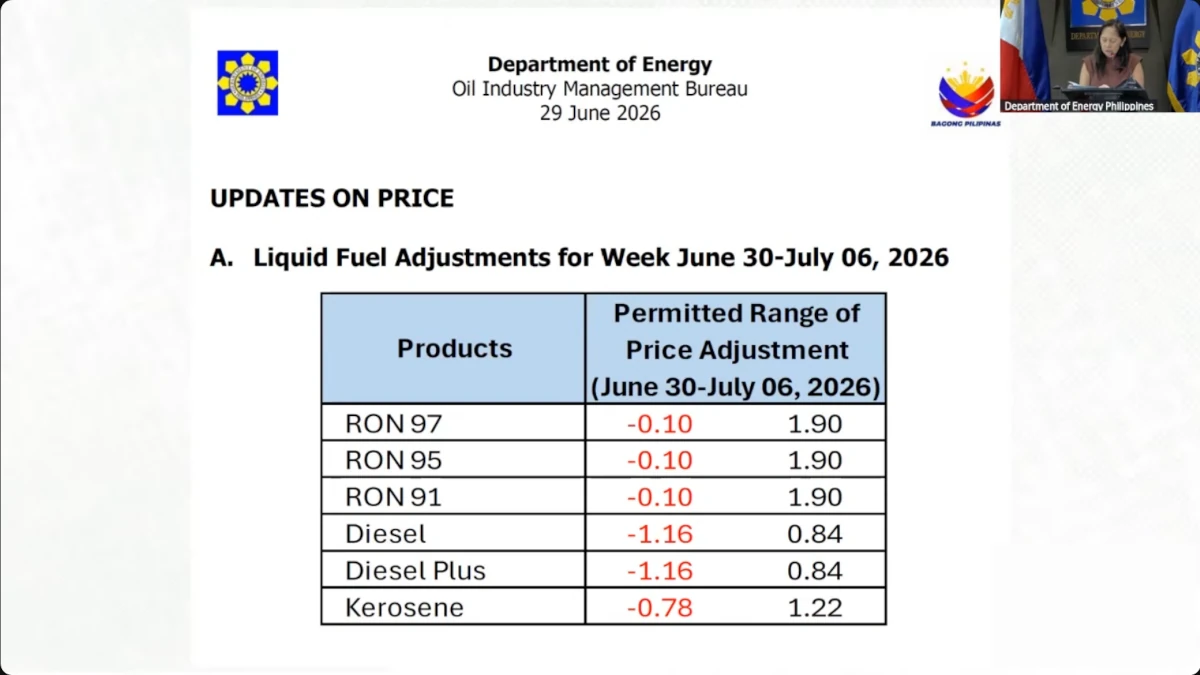
None of the oil players in the country has made public announcements for price adjustments specific to its dealers, save for Shell, which has announced that it will be raising fuel prices by the maximum allowed amount, except for gasoline (P1.65/L).
OTHER STORIES YOU MIGHT HAVE MISSED:
Heads-up: Higher SLEX, STAR toll fees to take effect on July 1, 2026
How to cool down your hot car quickly after it’s been left to bake under the sun
At the press conference, Secretary Sharon Garin of the DOE was asked to explain the purpose of providing price adjustment ranges when oil players consistently choose the maximum adjustment for price hikes and the lowest adjustment for rollbacks.

Garin explained that the dictated fuel price adjustments during the height of the fuel crisis were based on computed average industry costs. However, these were disadvantageous to certain oil players.
In other words, the DOE’s dictated hikes or rollbacks would not accurately reflect the true cost of securing fuel stock for some companies. With the fuel crisis calming down, Garin claims that suggesting price adjustment ranges will allow fuel players to make adjustments closer to what they actually spent in the market, as part of a deregulated fuel market.
In broader mobility news, the Chamber of Automotive Manufacturers of the Philippines’ latest sales report for the month of May indicates continued strong interest in electrified vehicles. So far this year, sales of xEVs (hybrids, plug-in hybrids, and battery EVs) have grown by 133.5% year-on-year, with 24,356 in 2026 versus 10,431 in 2025.