SC mandates use of MMDA single ticketing system...
“Local government units are ordered to stop issuing their own traffic violation tickets and confiscating driver’s licenses of violators following a Supreme Court decision that mandates the use of the single ticketing system of the Metropolitan Manila Development Authority (MMDA).
“Alfredo Benjamin Caguioa, the Associate Justice who penned the decision, cites the MMDA’s Joint Metro Traffic Circular 12-01 from 2012. It reads: ‘The Land Transportation Office (LTO) issues Temporary Operator’s Permit (TOP), [MMDA] issues Traffic Violation Receipt (TVR), and LGUs issue their respective Ordinance Violation Receipt (OVR) for traffic violations.
“‘Moreover, the TOP, TVR, and OVRs are being issued with varying fines and penalties for the same traffic violation, and under different procedure in apprehension, payment of fine, and redemption of license/plate. This multiple-ticketing and uncoordinated implementation of traffic laws result [in] confusion of the driving public and loss of money and productive hours, and if left unattended may create chaos to the detriment of the public in general.’
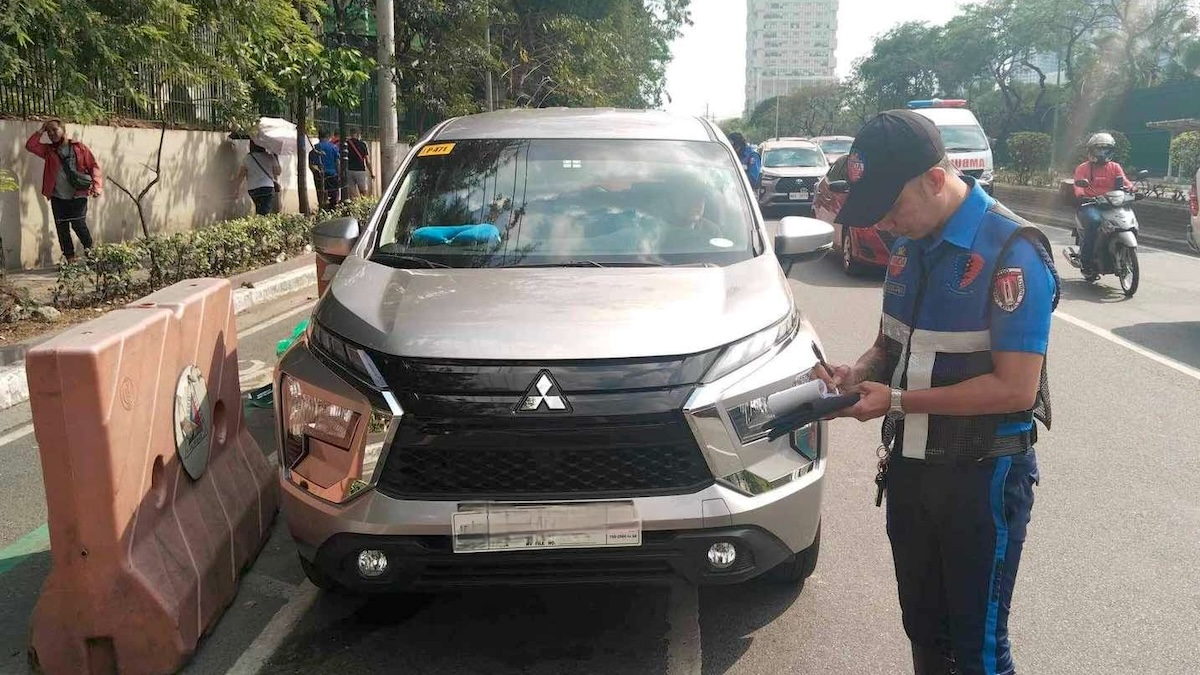
“The decision maintains that ‘the MMDA has exclusive authority to enforce traffic laws, rules, and regulations,’ but provides that traffic enforcers of LGUs ‘may participate in such functions’ when deputized by the MMDA—and even then, they are required to use the single ticketing system.
“‘All told, the Court thus declares as invalid the common provision in [local] traffic codes or ordinances of the LGUs in Metro Manila empowering each of them to issue OVRs to erring drivers and motorists. The other provisions of traffic codes or ordinances remain valid and unaffected by this Decision.’”
...but the MMDA says this order is not final and executory
“The MMDA is now saying the Court’s decision on the required use of the single ticketing system across Metro Manila is ‘not final and executory,’ and LGU traffic enforcers may still continue issuing their own ordinance violation receipts (OVRs).
“‘Sa ating mga kababayang motorista, kung kayo ay huhulihin ng mga local traffic enforcers, huwag kayong makipagtalo at i-argue na bawal na silang manghuli at mag-issue ng ticket dahil hindi pa ito final and executory,’ said MMDA acting chairman Atty. Romando Artes.
“Artes cited the number coding scheme as an example of how the Court’s decision may have an implication on both the enforcement of traffic rules and the traffic situation in Metro Manila. We all know that number coding rules vary per city based on the local traffic ordinance governing a specific jurisdiction, and LGUs whose rules differ from that of the MMDA currently enforce their own systems via their designated traffic officials.
“Artes added that the MMDA currently doesn’t have enough manpower to deploy throughout the capital region, and local traffic enforcers are needed ‘especially on inner roads.’ According to the Supreme Court, LGU traffic enforcers may apprehend violators if they have been duly deputized by the MMDA, but they are required to use the single ticketing system.
“LGUs may still file a motion for reconsideration within 15 days of the release of the Supreme Court’s decision, but should the ruling become final and executory, Artes ensured that the MMDA will prepare for its implementation: ‘Rest assured, we will study and plan for this, particularly the deputization of local traffic enforcers in Metro Manila which is needed for them to issue citation tickets. We will craft the guidelines.’”
Candaba third viaduct reaches 50% completion
“Metro Pacific Tollways (MPTC) and NLEX Corporation decided last year to begin building a third viaduct along the Candaba portion of the North Luzon Expressway (NLEX). It did face a few delays before construction began, but it’s halfway through completion.
“NLEX Corporation has just reported that the project is now 50% complete as of this writing. The first girder on the third viaduct has just been installed, which supposedly means a transition to road-level work that would allow for continuous operations under any weather condition.
“The Candaba third viaduct spans 5km long. Upon its completion, the Candaba viaduct will be widened to three lanes for easier and safer passage of motorists.”
Phase 1 of LRT-1 Cavite Extension on target for Q4 opening
“After completing its first test run in December 2023, the first phase of the Light Rail Transit Line 1 (LRT-1) Cavite Extension has now achieved 97% completion status, and is on target to start operations in the fourth quarter of 2024.
“Phase 1 of the LRT-1 Cavite Extension adds 6.7km and five stations to the rail line from Baclaran Station, the current terminus. Light Rail Manila Corporation, the operator of the train line, has also given the status of each station along the extension:
- Redemptorist Station – 93.3%
- Manila International Airport (MIA) Station – 93.5%
- Asia World Station – 83%
- Ninoy Aquino Station – 88%
- Dr. Santos Station – 94.1%
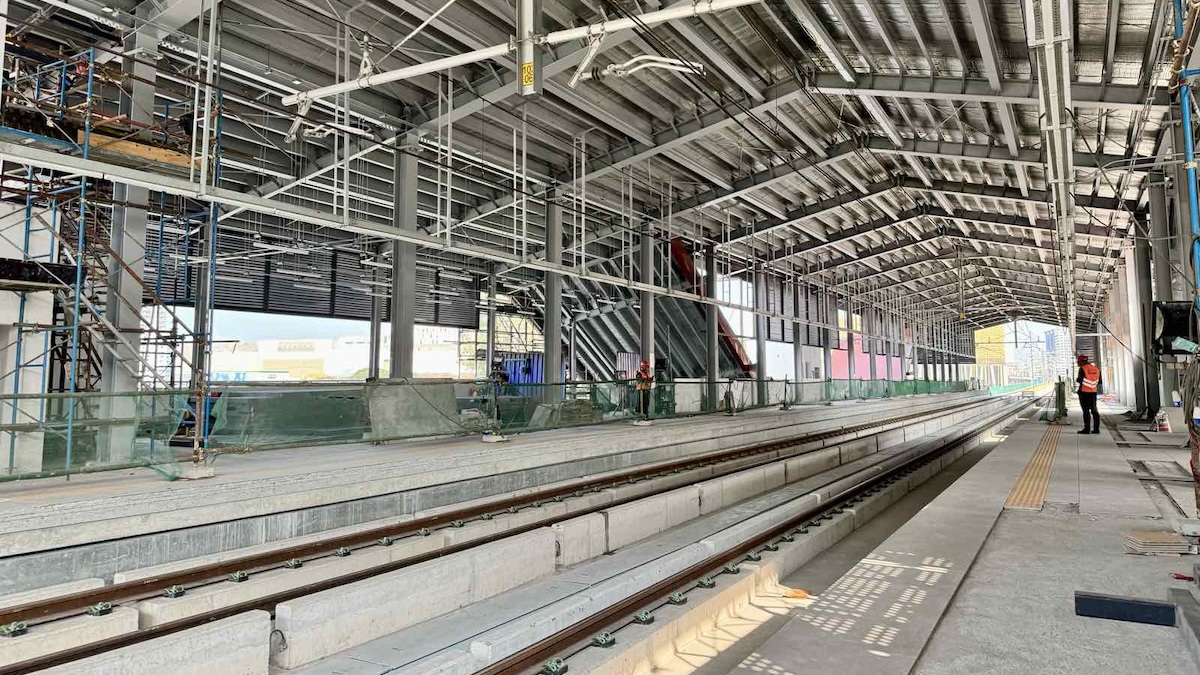
“The first phase of the extension is expected to benefit up to 600,000 passengers daily once it becomes fully operational.
“The subsequent phases of the project will extend the LRT-1 line to Bacoor, Cavite, via three additional stations: Las Piñas, Zapote, and Niog. In 2023, businessman Manny Villar voiced his intention to take over these last three stations and add seven more stops to extend the line all the way to Dasmariñas, Cavite, via Molino.”
Cebu BRT bus station design concept previewed
“The construction of the Cebu Bus Rapid Transit (CBRT) is already underway, and now we’re given a preview of what its future bus stations will look like.
“‘Foglia’ was the collaborative effort of Cebuano designer Kenneth Cobonpue and Architect Elman Martinez of the CBRT project implementation unit. The theme is based on the core principles of design by nature, craftsmanship, and emotion, and is said to be ‘the embodiment of the Cebuano spirit.’
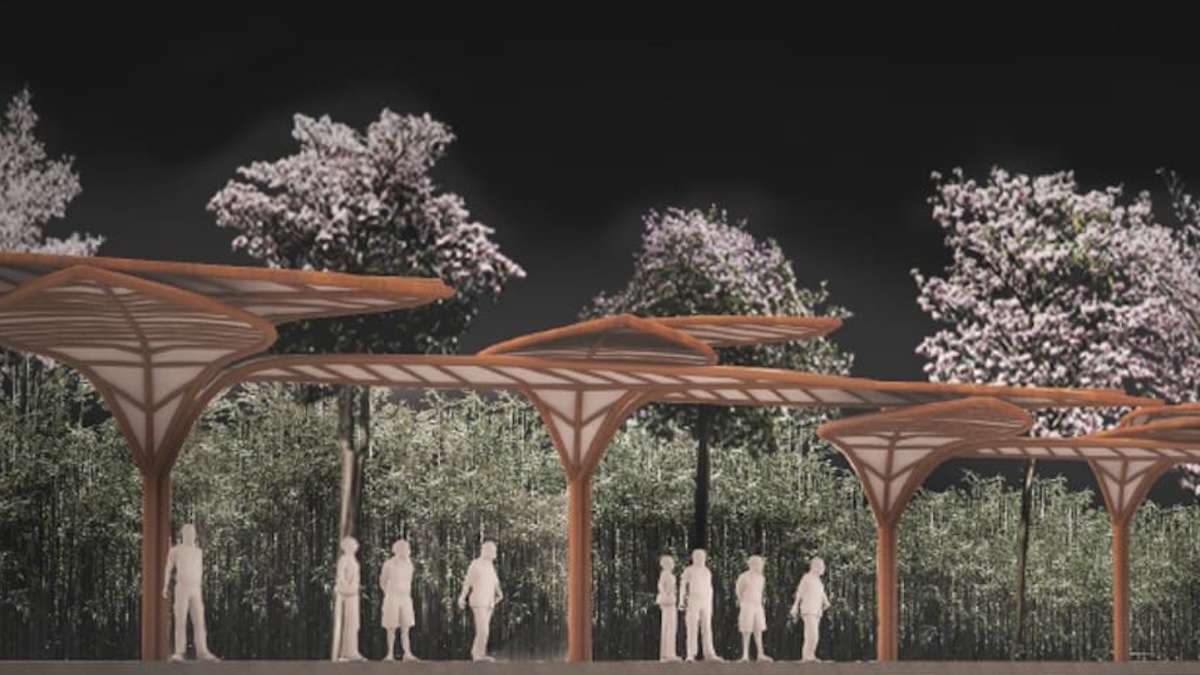
“‘The leaf-inspired design of Foglia resonates profoundly with Cebuanos, fostering a deep connection to nature and symbolizing the enduring strength and adaptability of the local community,’ reads the post on the Cebu BRT’s Facebook page. ‘The intricate details mirror the rich cultural tapestry of Cebu, proudly representing the region's heritage.’
“The ceremonial groundbreaking for package one of the Cebu BRT was held in February 2023. This portion is a 2.4km route with four stations: South Bus Terminal, Cebu Normal University, Fuente Circle, and Cebu Provincial Capitol. In the latest update of the Department of Transportation (DOTr) last month, the target start of operations for this section will begin in the second quarter of 2024, from the original December 2023 target.”