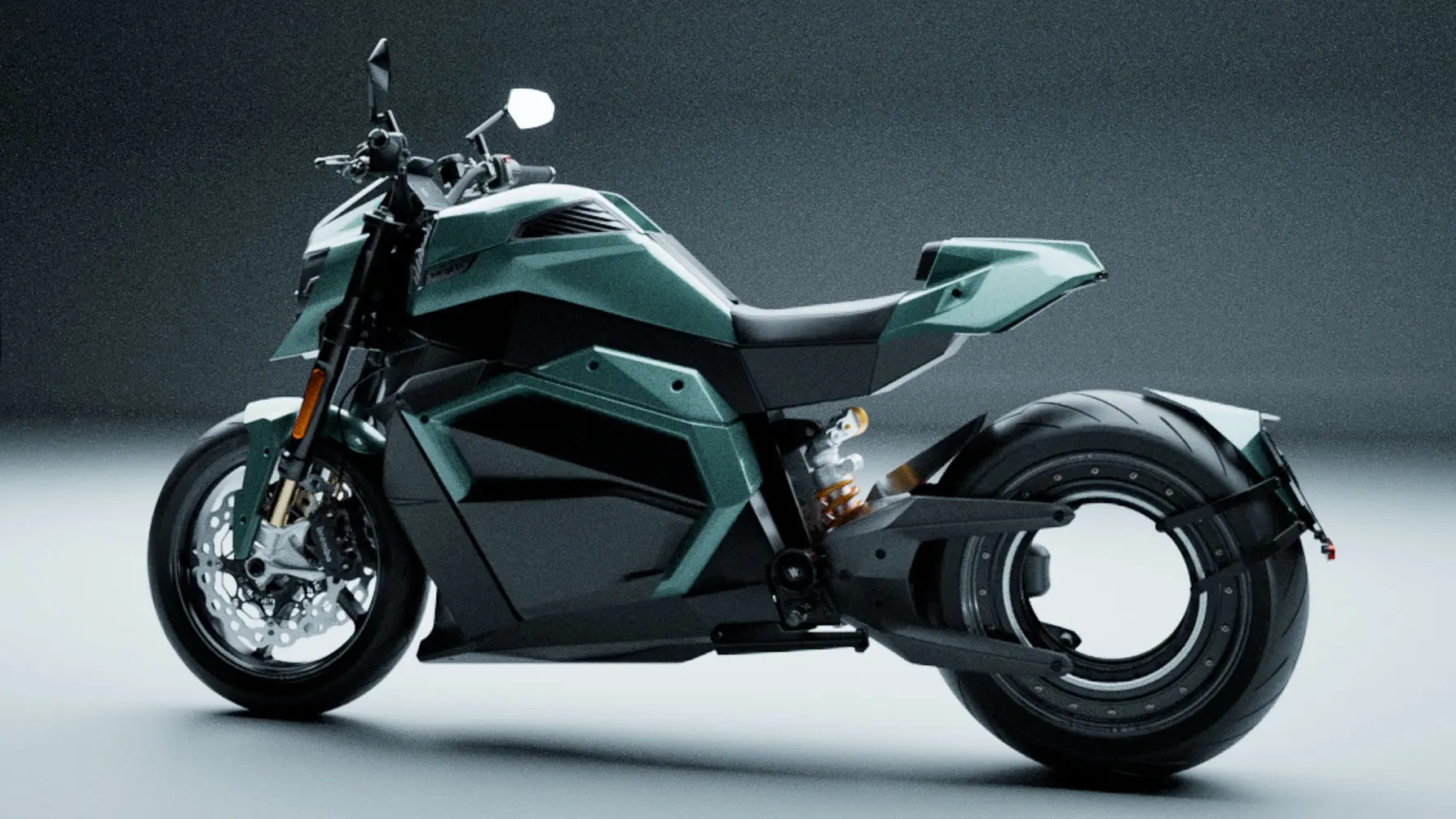
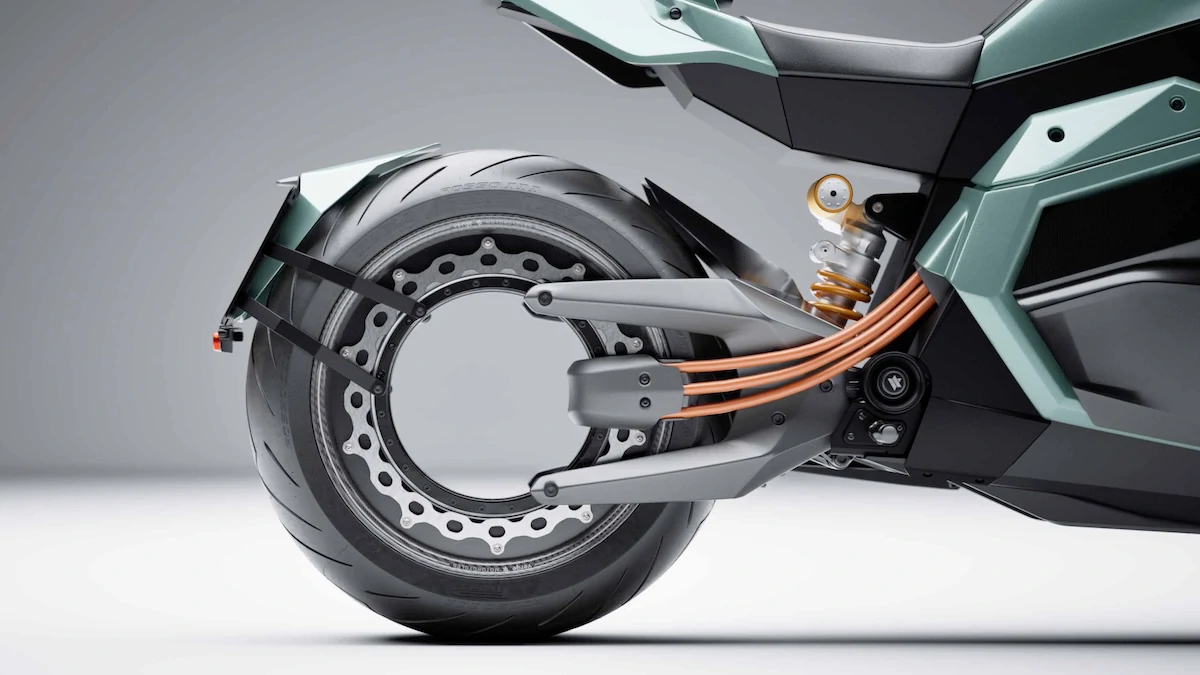
In-wheel motors are on the verge of real applications. That’s a terrible pun: The Verge motorcycle has one. It looks dramatic, with no central hub or axle. Verge is part of Donut Lab, a Finnish builder of motors in the shape of donuts.
The idea is wonderfully simple. A normal motor’s rotor, aka the spinning bit, is inside, with its output shaft emerging from the center. The stator—the coil windings that don’t turn—is fixed to the outer casing. A wheel motor flips that layout inside out: The rotor is on the outside diameter, in-unit with the wheel rim and so driving it. The stator is fixed to the suspension. The large diameter means much more torque than usual, so there’s no need for the reduction gears that come with inboard motors.
No gears and no driveshafts, and so less friction, complication, and weight. On a rear-wheel-drive car, each rear wheel has its own torque control for ultra-capable torque vectoring and all sorts of drift modes.
OTHER STORIES YOU MIGHT HAVE MISSED:
This kit turns the Toyota Hilux into a 7/8ths scale Tundra
It looks like the PH-spec Mitsubishi Triton will get updates soon
Better yet, there are exciting possibilities for design and packaging. Removing the center-mounted motor, gears, diff, and driveshafts will leave fresh space for batteries, luggage, or crash zones. So the car can be rangier, roomier, and shorter in overhang.
There is one obvious objection, but it turns out to be far less significant than I’d guessed. Wheel motors look heavy, and unsprung rotating mass is bad for dynamics. But actually, these power-dense motors weigh little. And a decade ago, with another pioneer Protean’s wheel motors in mind, Lotus Engineering did a study on a Ford Focus MkII. Drivers tested it before and after the engineers added unsprung mass—15kg rotating and 15kg static—to each corner. Handling, grip, ride, steering, and refinement all suffered. But in the opinion of Lotus, it’s nothing that couldn’t be regained by normal suspension tuning.

Besides—and this is me talking, not them—if a car is rear-wheel-drive, then the front wheels and the suspension stay as is. Which minimizes the effects on steering weight and feel, as well as response difference due to extra gyroscopic interference.
Mind you, given that the big manufacturers have invested squillions in EV platforms with central motors, world domination is some way off for this new invention. Well, I say new. Wheel motors were first used in the Lohner-Porsche hybrid in...1901.
NOTE: This article first appeared on TopGear.com. Minor edits have been made.