“Not even scraped, smooth as butter,” says the idiot, as he drops the front end of the new Toyota Land Cruiser off a rock shelf, the side steps landing with an excruciating crump on a sharply Paleozoic bit of Wales.
“That was it!” exclaims the second idiot, referring to the thing he should have warned the other about before he drove into it. Not the Toyota’s fault, but driver error. Or rather spotter error, and I’m sticking with that.
But that’s what you get when you allow the inmates access to the car keys of the asylum—halfhearted health and safety and a whole bunch of actively dangerous enthusiasm. And yet here we are, off-road in the kind of cars that can actually do it, rather than soft-roaders that have the butch visual cues of all-wheel drive, but the traction of a grayhound on a polished wooden floor.
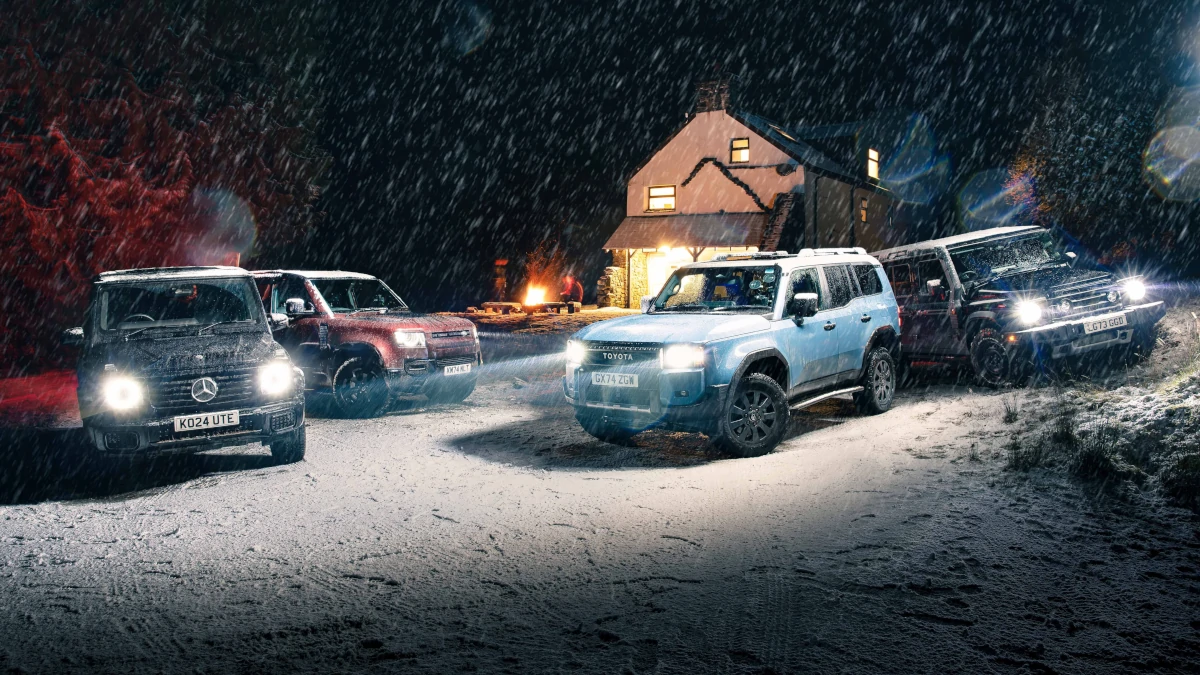
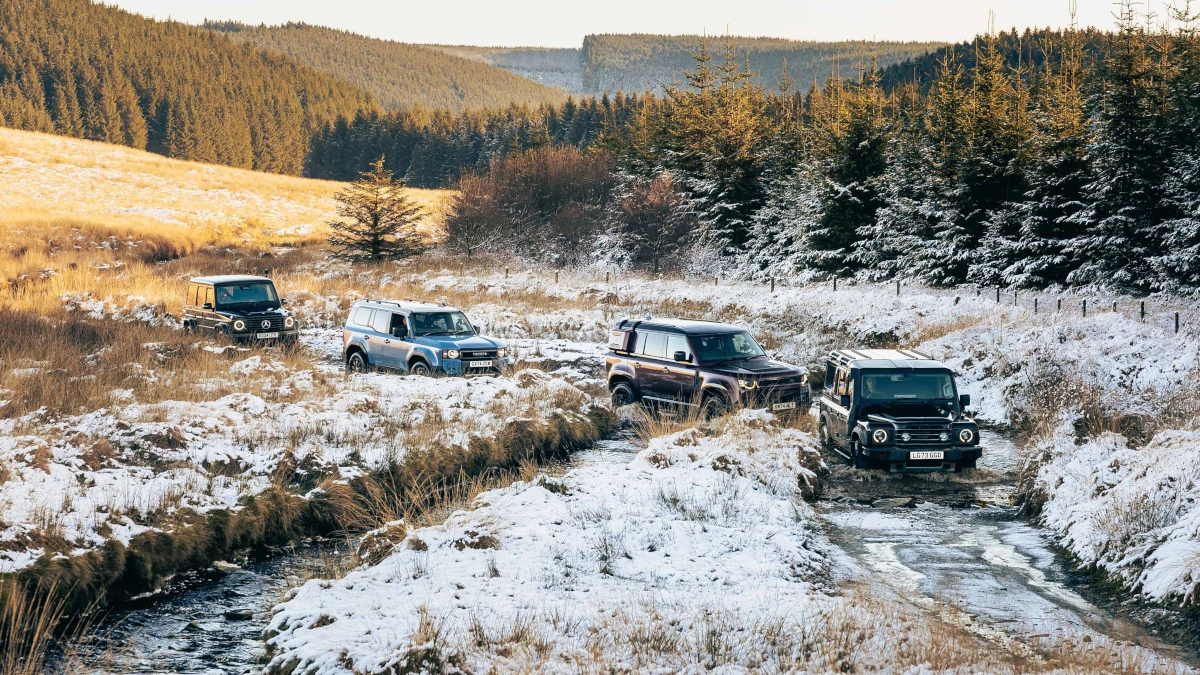
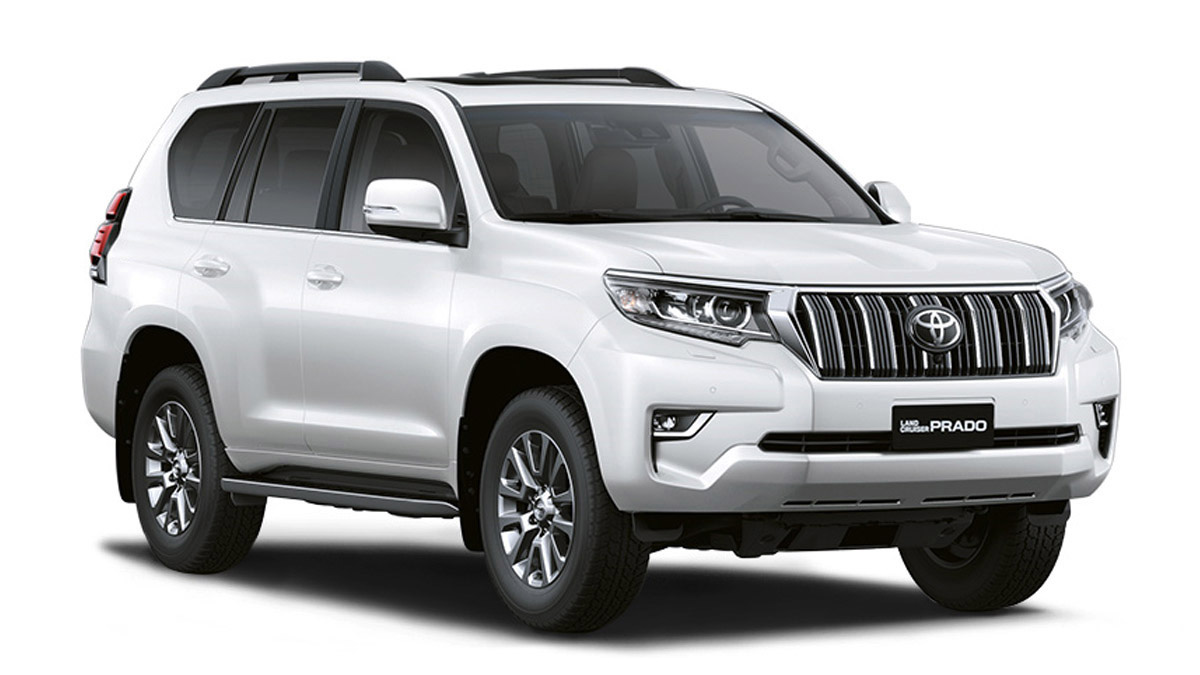
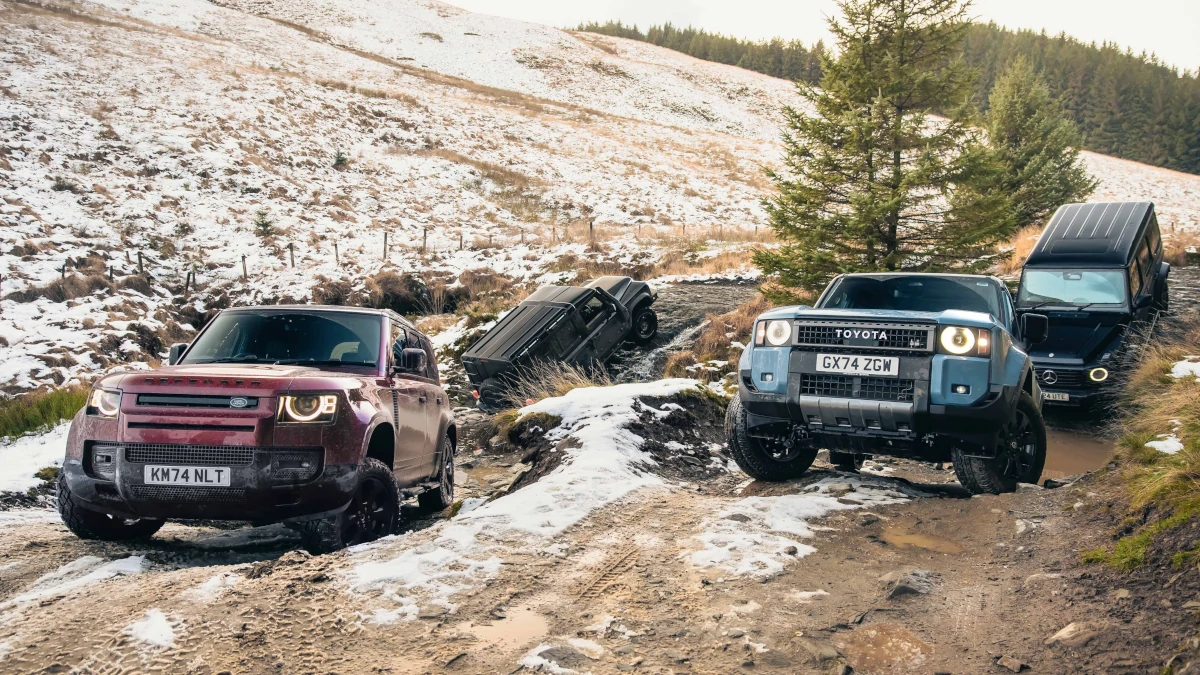
So what have we assembled? Well, the Toyota Land Cruiser 250—known as the Prado depending on where you are—is the newest, roughly £80,000 (P5.85 before taxes) worth of First Edition, with a guttural 2.8-liter four-cylinder turbodiesel up front. It’s got an eight-speed auto, an underwhelming 201hp and a more agreeable 500Nm of torque. Ladder chassis, two diff locks, and some tricks up its venerable nameplate sleeves. It’s not the full-fat 300 that still serves in the rest of the world, but it’s what we get in the UK.
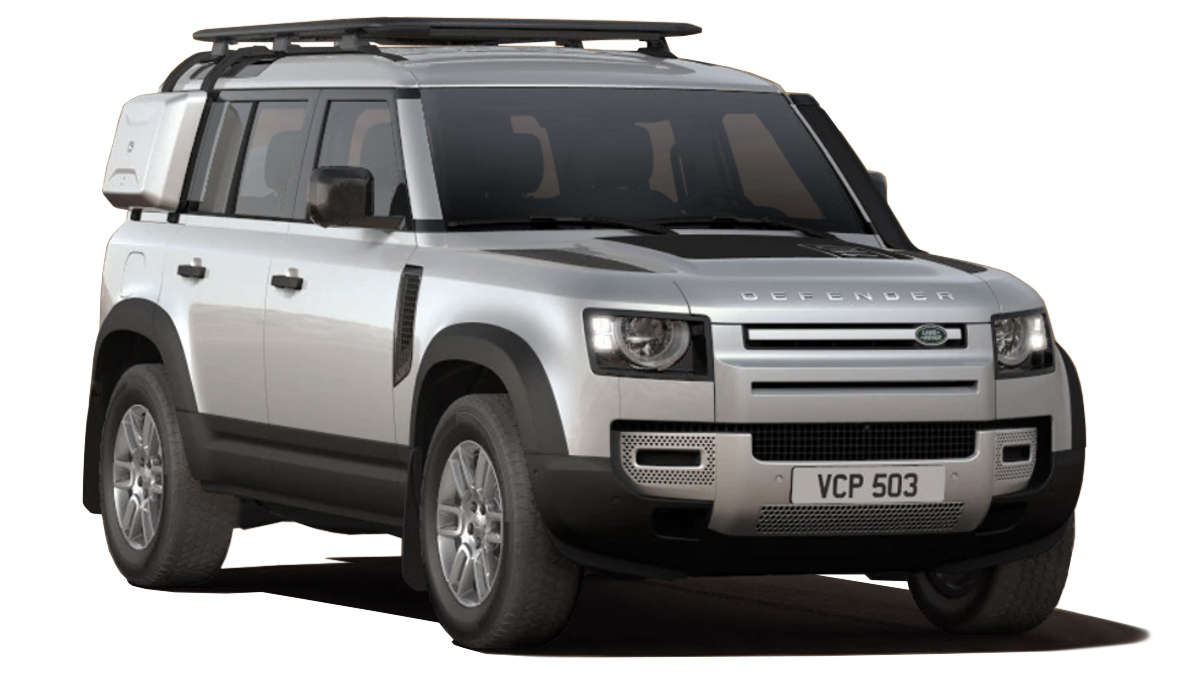
Next up is the Land Rover Defender P300e, possibly the LC’s biggest challenger. Just under £80,000, like the Toyota, this time with a 2.0-liter four-cylinder gasoline and plug-in hybrid assistance for happy tax. Again with an eight-speed auto, this time a monocoque, but more power and torque at 300hp and 639Nm. They’re also almost the same weight at 2.5-ish tons depending on spec, making this a proper showdown for a couple of the oldest names in off-roading.
OTHER STORIES YOU MIGHT HAVE MISSED:
The most basic version of the Toyota Land Cruiser Prado is the one we’d take off-road
First drive: Does the Ford Bronco live up to the legend?
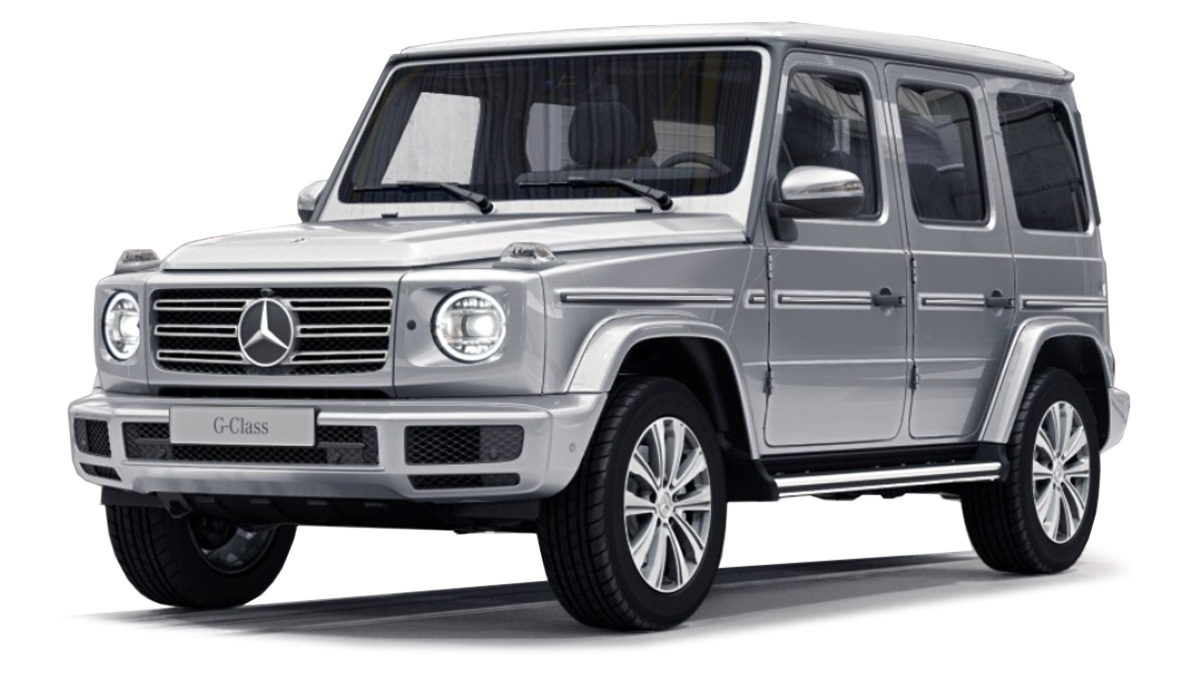
But we’ve brought along some context. The Mercedes-Benz G-Wagen is here because it also represents one of the most revered names in getting it done, albeit in an eccentric spec for this test. This is the new G500, a 3.0-liter straight-six turbopetrol with mild hybrid and 442hp/559Nm, a nine-speed auto ’box and near 2.7-ton curb weight. It’s also got a positively gilded £146,095 (P10.7 million before taxes) price. The straight-six turbodiesel G450d is also nine-speed and mild hybrid, but puts out 367hp and 749Nm and would have been a better fit, but it hasn’t arrived yet and neither has the intriguing all-electric G580e with its tank turn ability, so the petrol version will fly the flag here. Plus, you can’t really do expensive 4x4s without something G-shaped. It just wouldn’t be right.
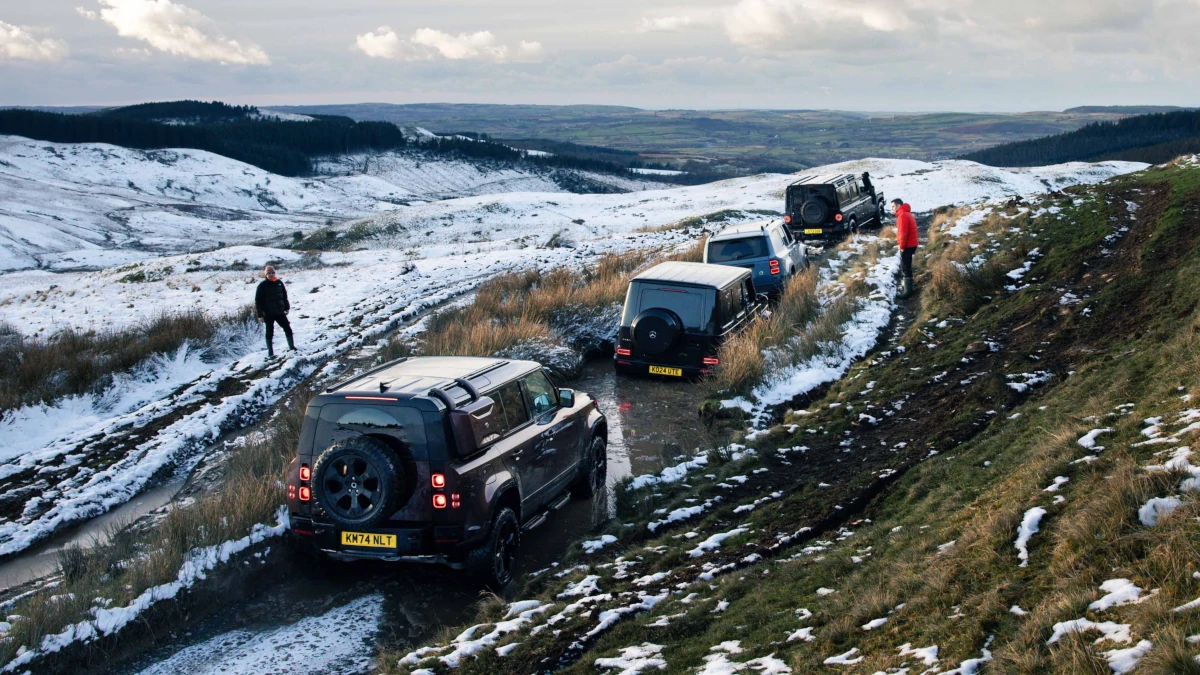
The young pretender with the old man’s face is the Ineos Grenadier. Defiantly off-road-biased, and it fits the bill in terms of cost. This is the chunky Trialmaster variant, and starts at just over £76,000 (P5.56 million before taxes)—the cheapest here—with a lovely 3.0-liter straight-six BMW B57 turbodiesel, eight-speed auto, and more levers than you can shake a lever-shaped stick at. Some 245hp and 448Nm means it splits the Defender and the LC250 in terms of output, but weighs a bit more if you chuck the options at it at 2.8 tons. Which means they’re all relatively evenly matched in parameters and cost. Well, apart from the vastly expensive G.
The test is simple: We’re going to do an off-road couple of days with the scoring weighted in favor of how these cars handle the rough stuff. On-road manners will be taken into account, but not as much as usual; this is more about dirt, scuffed knuckles, and ease of use. We’re using Welsh public-access byways in winter—not the scariest 4x4 trails possible, but they’re real. An off-road park might offer more punishing tests, but they invite extremity when you know you can get smartly pulled out by a tractor. Here, it’s about getting from point A (middle of nowhere) to point B (far side of nowhere) off-road without damaging the equipment, ourselves, or everyone’s dignity. Mostly.
To be fair, we did have a series of tests to deal with, each stitched together through the weft of gorgeous Welsh winter countryside. Snow, ice, slippery rock, and the warm greens and browns of heather that’s tucked itself up for the winter. The valley and forest views are postcard-worthy, the sunshine occasional, bright, and unheated. The tracks were never less than rough, mostly narrow—as in brushing both sides of the car narrow—often rocky and seriously rutted. And all the cars were on standard-but-optional off-road tires that you can buy directly from the manufacturers, although we did drop the pressures for a bit more friction. These are cars that you buy from the dealership, in other words.
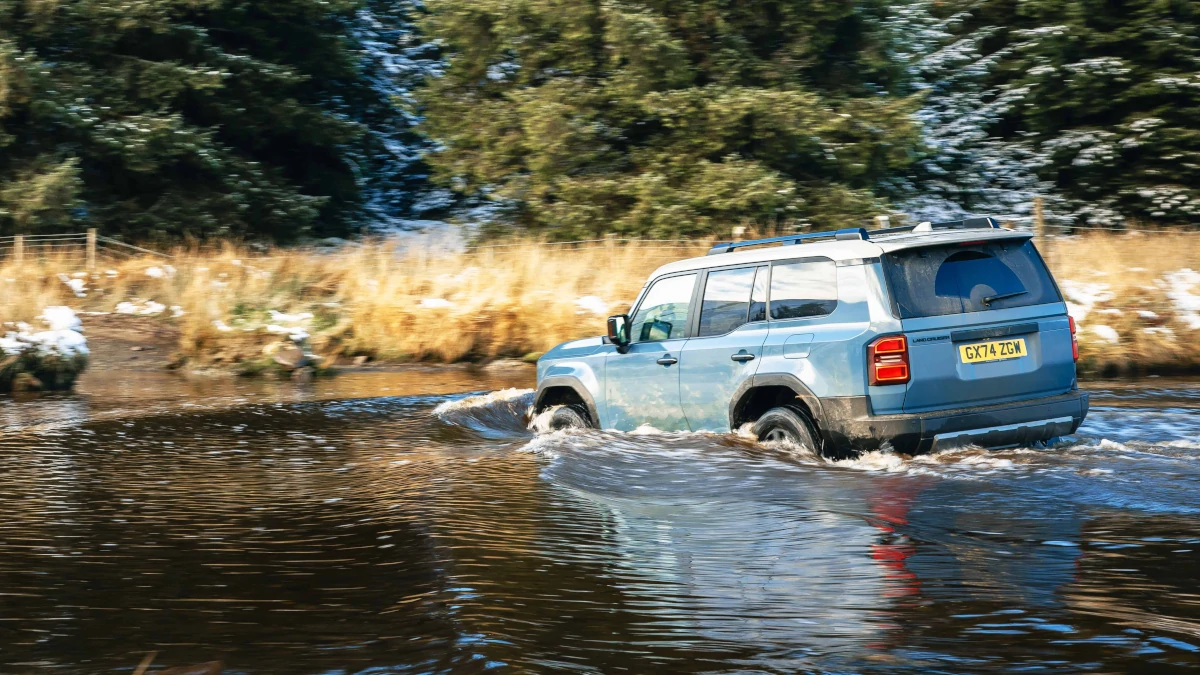
We began with wading, but to be honest, the rivers we crossed were only just up over the front bumpers. Technical enough to test, but with all of the cars capable of at least 700mm of swim depth (Land Cruiser and G-Wagen) or 800mm (Grenadier and Defender), none was bothered about getting wet. The G-Class and the LC don’t have specific wading systems, but the Land Rover has a wading function from the Terrain Response system as well as wade sensors that lift the only air suspension system here. And the Grenadier has a wading mode that does all sorts of things like disconnecting the seat heaters and pausing the fans to stop the car from drawing extra water into the engine bay. Not necessary in this case, but all were off to a flying/floating start.
It’s probably wise to note here that all of these cars were impressive without doing anything to them at all. Just leave them to it. But then things got a bit more serious, and it was time to start pressing some buttons and—in the Grenadier’s case—shunting some levers. The Land Cruiser is intuitive, easy to understand, and largely infallible: Pop it into neutral, flick the 4Low switch, and you’re in the meaty gearing. There’s a button for the center diff to pair the front and rear wheels in lockstep, a button for a rear differential to bind the back axle side to side, with no lockable front diff.
It does get a button to disconnect the anti-roll bar—excellent for extra articulation—and it has crawl control, which is a kind of off-road cruise control, but the throttle modulation was so good, it wasn’t really necessary. And the approach, breakover, and departure angles were solid enough to prevent most of the scrapes. In fact, the side steps were the things that touched down the most—lift or remove them and it probably wouldn’t have tapped the underside at all. But the main feature of the LC is the way it happily pottered around without any fuss. A little bit of diff switching, but otherwise unflappable.
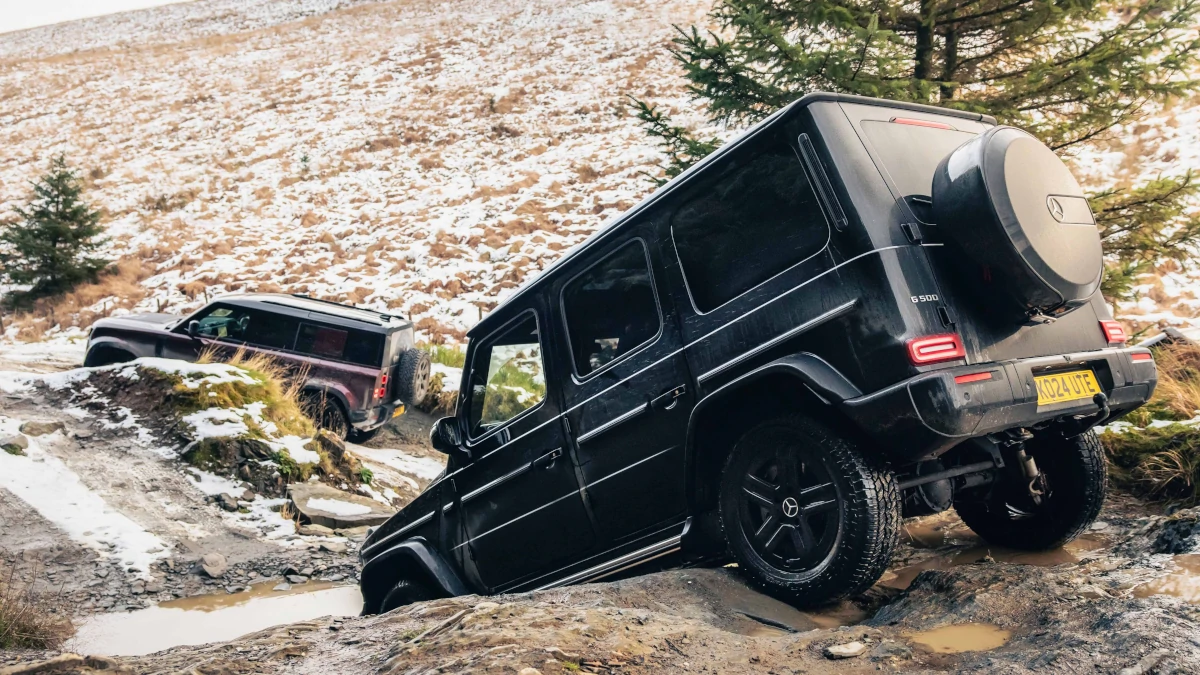
The same can be said of the G-Class, which proved to be an absolute master at deliberate calm, subduing the environment with casual ease. There’s a little off-road panel in the center of the dash that allows for one-press low ratios (from neutral), the center, rear, and front locking differential buttons handily marked as 1, 2, and 3 (on the fly). In fact, the G could manage most things with just the center diff locked and the other two lockers engaged as you encountered slip, like lock picks for the riddle of grip. It genuinely never struggled, and exuded a feeling of refined and expensive engineering shot through the whole experience. It’s a fancy machine for crunching around off-road, but my word, does it work. Mind you, the 500 also sounds remarkably like an old M3 doing dyno pulls in a room next door when you’re off-roading. It’s a weird sonic experience next to the others.
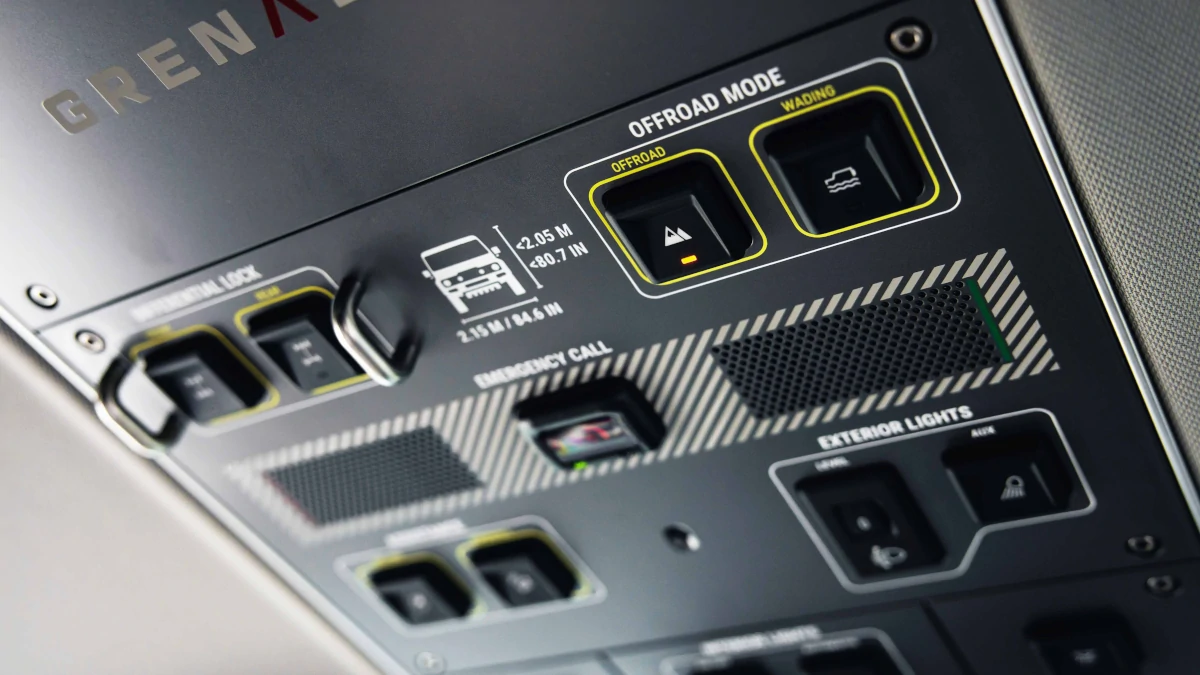
The Grenadier, on the other hand, is much more deliberate. It’s blindingly obvious where the Grenadier is coming from, eliminating points of failure, trying to engage the driver with what’s actually going on underneath the car. To get low ratio, you need to be in neutral from the ‘bat’ gear selector paddle (BMW-sourced), and hoik the ‘ball’ selector around. That locks the center diff if it’s in the correct position, and you can then lock the front and rear diffs from the roof-mounted switches, which takes a couple of presses and confirmations and a bit of patience while everything works itself out.
Off-road mode (in low ratio) does stuff like disable the parking sensors and seatbelt warnings, too, which is a nice touch, but there’s a lot to do in the Ineos, and it’s not always obvious. It’s intentional and considered, but not exactly the king of convenience. Once in the right settings, though, the Trialmaster was calm and unstoppable. It also felt like the one that really wouldn’t mind being bounced off a few fence posts—the only car here where a few dents would just add to the character, rather than looking like expensive mistakes.
The biggest surprise of the four was the Defender—because it made the most fuss when it came to the rougher stuff. It’s almost the least obvious of the four in the cabin with regard to off-road operations, the Terrain Response system hidden one press behind the heater controls in the touchscreen instead of in a separate dial. Although there’s a configurable mode that lets you choose individual settings, the Defender would rather you choose your terrain and let the system work it out. And it does, largely.
But when faced with nastier climbs and slippery sections, Terrain Response doesn’t make it look quite as easy as a car with full-locked diffs. The air suspension on full height also gets terribly stiff-kneed, meaning that the Defender was notably lifting wheels when the other cars weren’t, and then scrabbling as the system allowed enough slip to decide to lock the diff across the axle. The Defender did everything, but compared with the others, it looked fussier, pawed the air more, and generally made the obstacles more exciting. Some of that was probably down to a sharp throttle delivery that caused it to snatch across the slow dribbly bits, possibly caused by ‘help’ from the electric motor at small inputs. Whatever, it wasn’t the all-conquering manifestation of prowess we were expecting.
That feeling remained over a series of climbs and rock crawls, 200-foot water troughs, and various technical sections, the Defender dealing with things but making a slight meal of it, the Ineos confidently bullying its way through, and the G and the LC picking their way across the features with minimum, lightfooted fuss. And no, it wasn’t down to the drivers, either, as we swapped, and all the various modes were engaged for different sections, tried and tested.
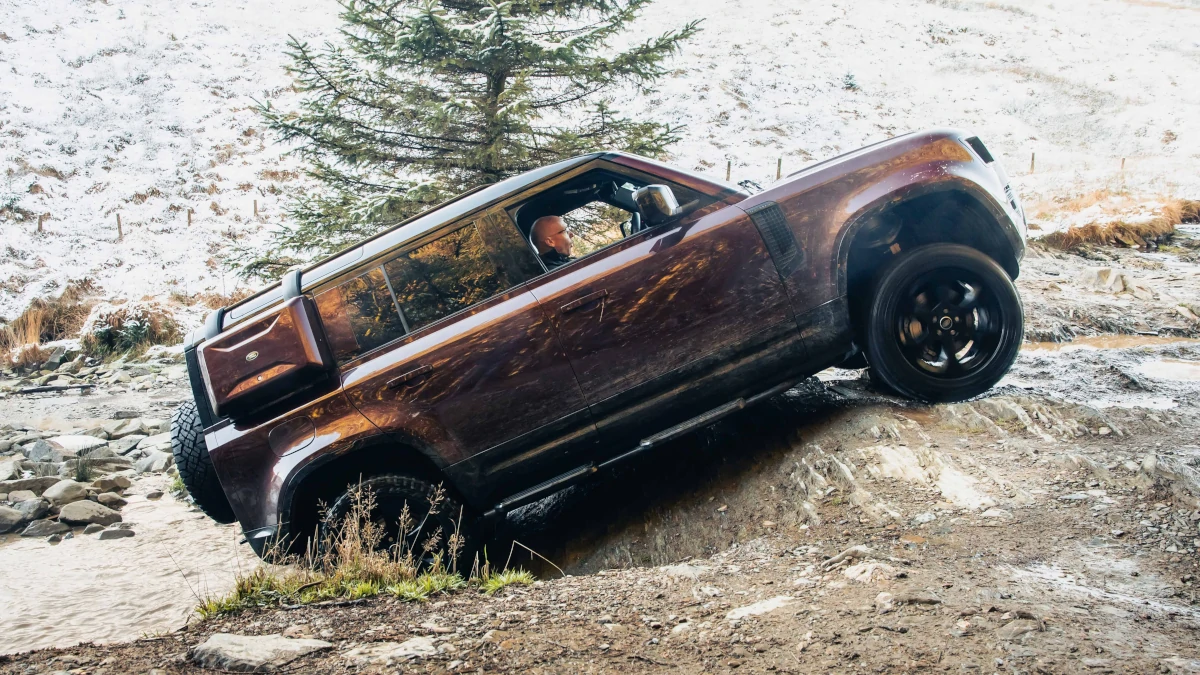
After two days of off-roading and a few hours of normal...roading, we had a solid appreciation of what each car was capable of. And the results were surprising. If you’re serious about going off-road, then the Defender might not be the best choice. It’s very capable, but Land Rover seems to have backed off the ultimate off-roader idea in favor of a car that’s much more capable on the road. A plug-in hybrid with genuinely impressive road manners is likely to be something most owners will appreciate more of the time, and when they do find themselves off-road, it’ll still do the business. But in this company, it’s not a smackdown. The Defender, bluntly, had to work the hardest to get where it was going.
The Ineos comes next, for a couple of reasons. The lesser being that it’s simply not that great to drive on the road, with slow, non-self-centring steering and lollopy body control. But more important in this test and off-road situations, it just needs a touch too much messing with. Diffs that don’t show up as locked until you move, multiple button presses, some big thunks, and quirks to the transmission engagements. You do get used to it and it has an industrial appeal, but it’s a car that needs you to be fully aware of what you’re buying into. And the thing you’re purchasing is a shire horse of a thing—heavy, deliberate, unstoppable. It appeals on a base, old-school level, but it’s not the most rounded.
Which leaves the G-Wagen and the Land Cruiser. The G almost takes itself out of contention by being a big petrol rather than the more torquey diesel, but we simply cannot ignore the price of either model. Based on asking price, the G is not fighting in the same battle. That’s a shame, because it really is a masterclass in lightfooted traversing. There’s just something so unflustered and commanding about the way it deals with any off-road situations, a feeling of marrow-deep engineering. It’s good on the road, inevitable off it. You can criticize the marginal cabin space and a slightly fancy interior that doesn’t suit being covered in Welsh silt, but you can’t argue with the capability.
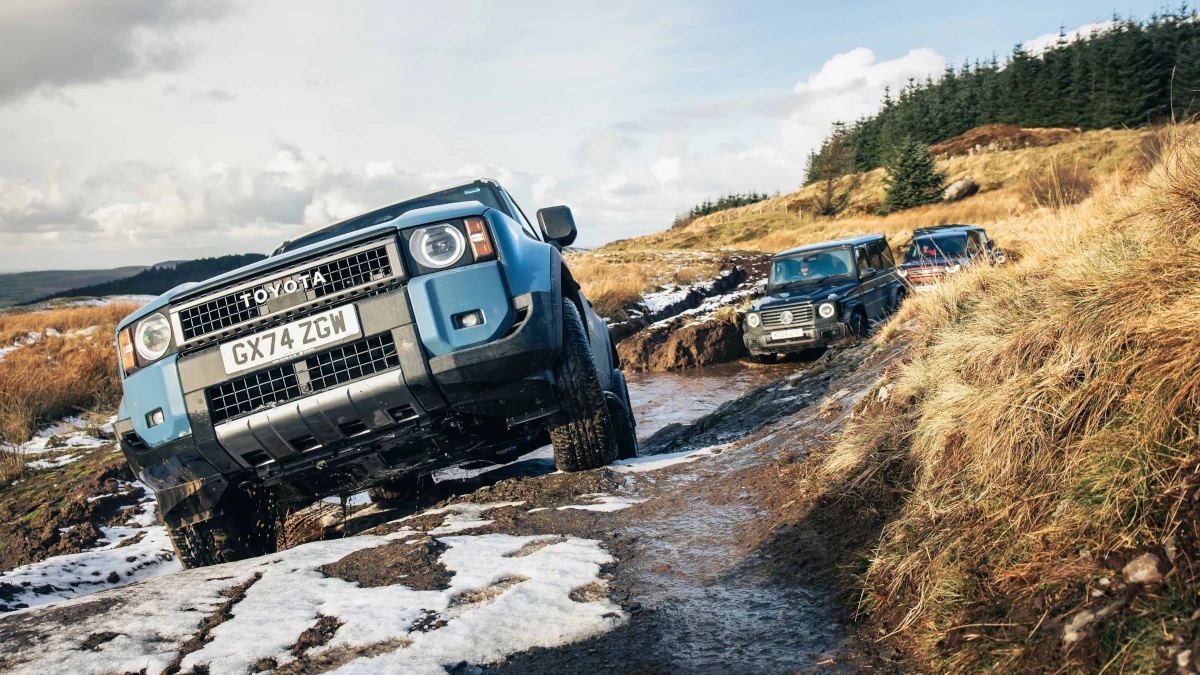
Which leaves our winner, the Toyota Land Cruiser Prado. A car that combines an array of talents without being standout in one discipline. It’s decent enough on the road, with the guttural four-cylinder diesel fading into the background after a bit, the impression being that it will continue to gargle away even if you ran it on whisky and goose fat. It looks good, has a pleasing if not overly plush interior, and feels small enough to get places and large enough to take things to them.
Off-road, it never gets concerning. You can flick it in and out of modes that make mincemeat of real situations. The Toyota doesn’t feel as posh as the Merc—less potential damage guilt, but still too expensive—isn’t as agricultural as the Ineos, is more poised than the Defender. More than that, it’s the best old-school 4x4 SUV for crossing a lumpy bit of Wales in winter without using a road. It’s a car that won’t just get you from A to B, but across a whole alphabet.
NOTE: This article first appeared on TopGear.com. Minor edits have been made.