
In the midsize SUV segment, there are arguably two top-of-mind choices right now. There’s the Toyota Fortuner, of course, and there’s the Ford Everest. Sorry, Mitsubishi, we’ll have to wait for the next-generation Montero Sport before we include you in this type of conversation again.
The Fortuner, well… is still the Fortuner. The currently available model was born out of a facelift a few years back. At its core, however, it’s still the same SUV that was launched several years ago, only bearing substantial aesthetic and tech upgrades.
The current Everest, on the other hand, is an all-new model. While it’s still powered by the same engines as the previous one, it feels like it’s been heavily rebuilt from the inside out, and it’s no surprise that we’ve been seeing a whole lot of these new Everests on the road.
We’ve actually already done quite a lot with the Everest—we had it go toe-to-toe with two of its biggest competitors in the Isuzu MU-X and the Montero Sport, and we also saw it duke it out with its biggest rival, the Fortuner. But this time around, we’re not comparing the Everest with anything.
We’re going to take a good look at this midsize SUV alone and see it for what it really is. Is it worth all this attention it’s been getting, or is it all just misplaced hype?
ALSO READ:
2021 Toyota Fortuner 2.8 4x4 LTD Review
Review: 2023 Nissan Terra 2.5 VL 4x4
Styling
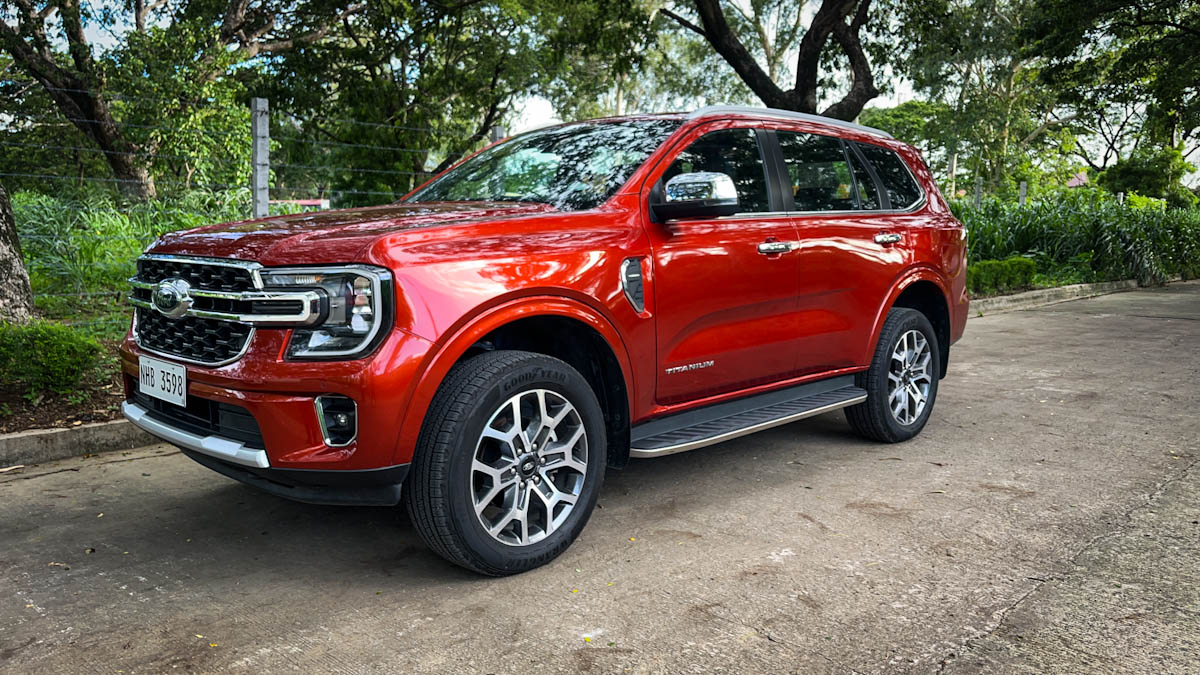
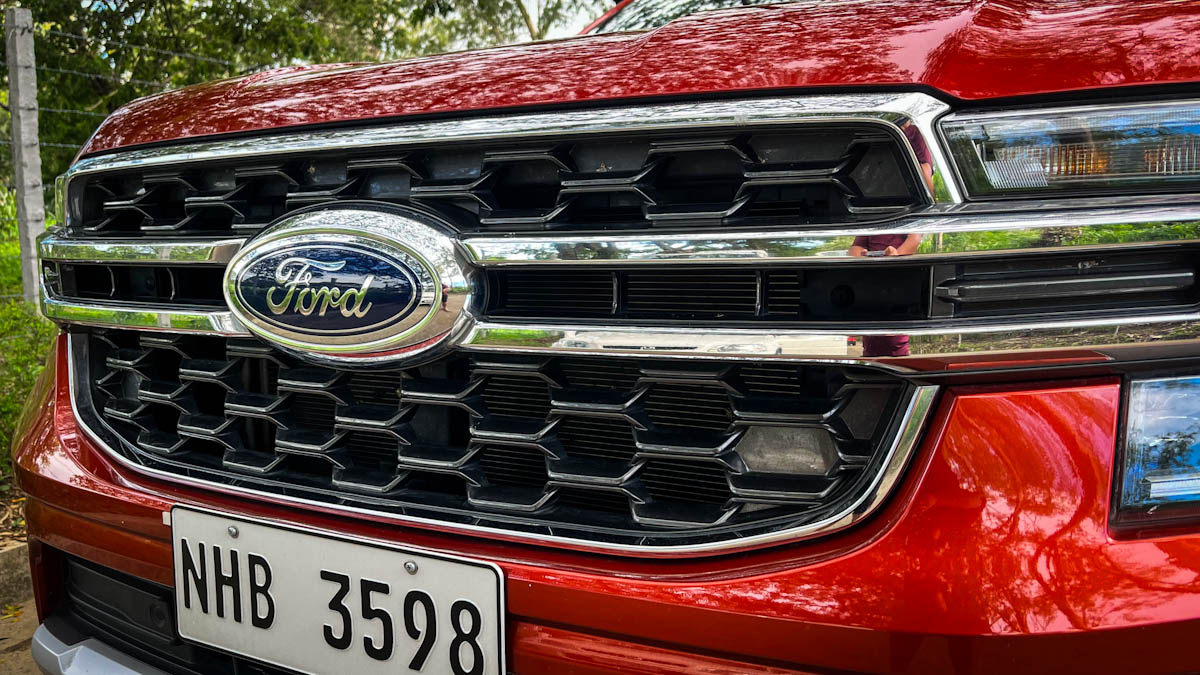
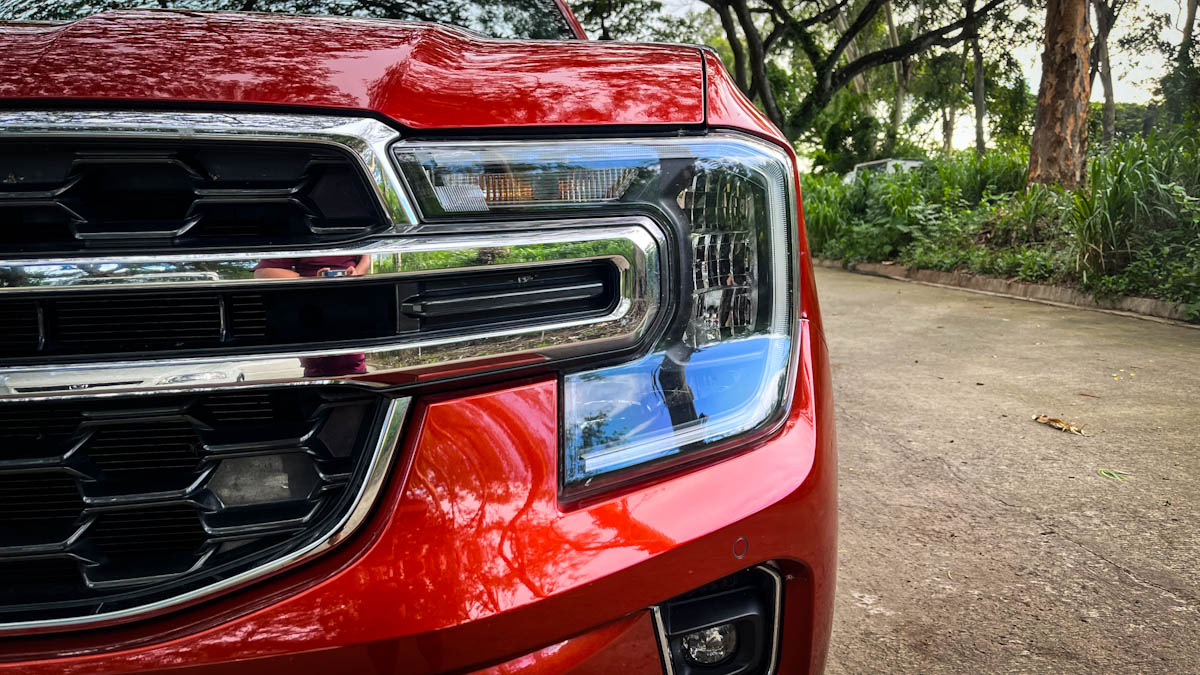
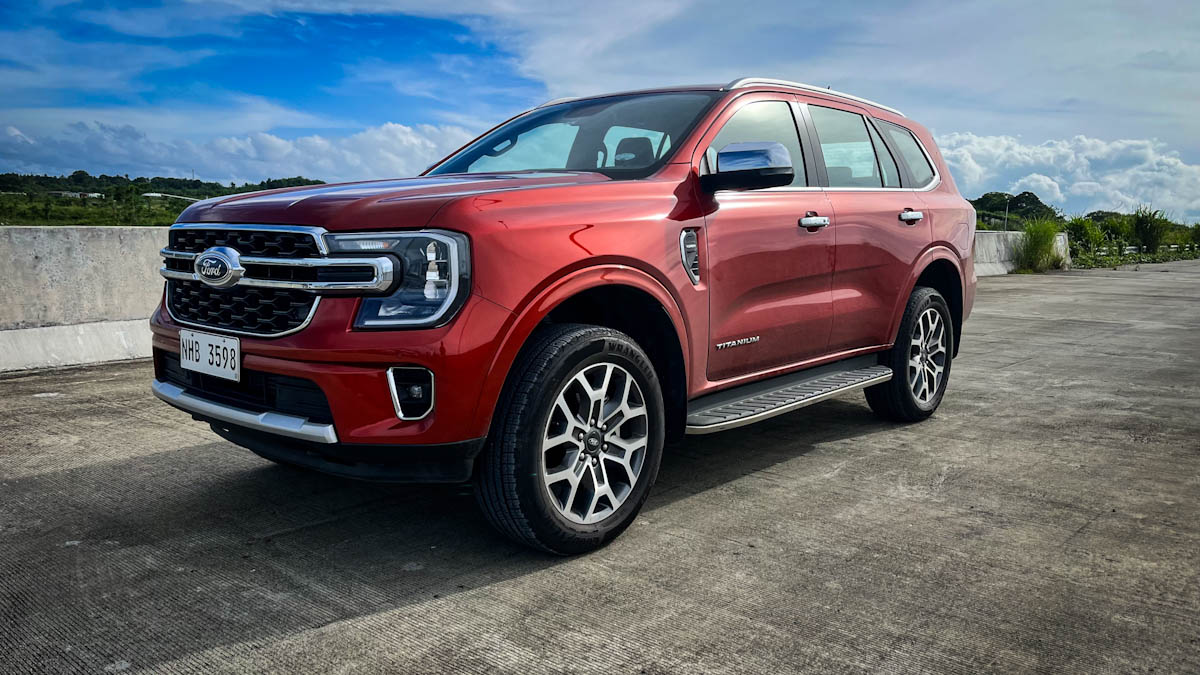
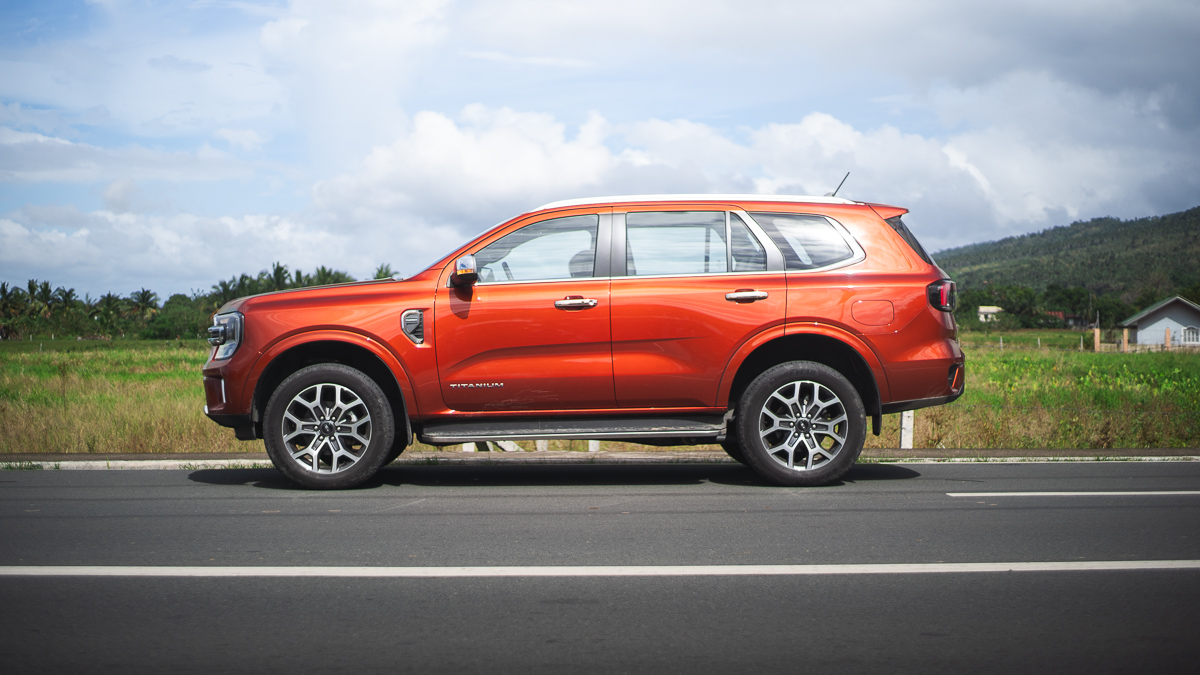
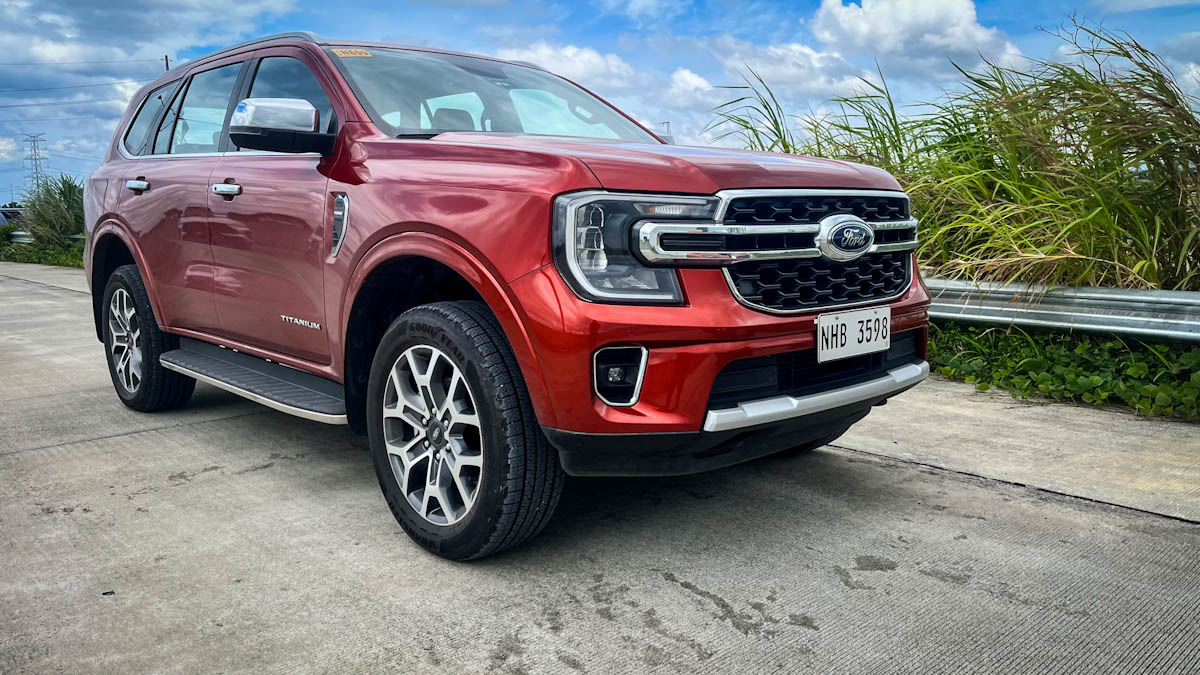
I particularly like Ford’s new design language not just for the Everest but also the Ranger, with the C-shaped headlights enclosing the wide grille. These Fords now truly look like next-generation models that belong in the same stable as the F-150.
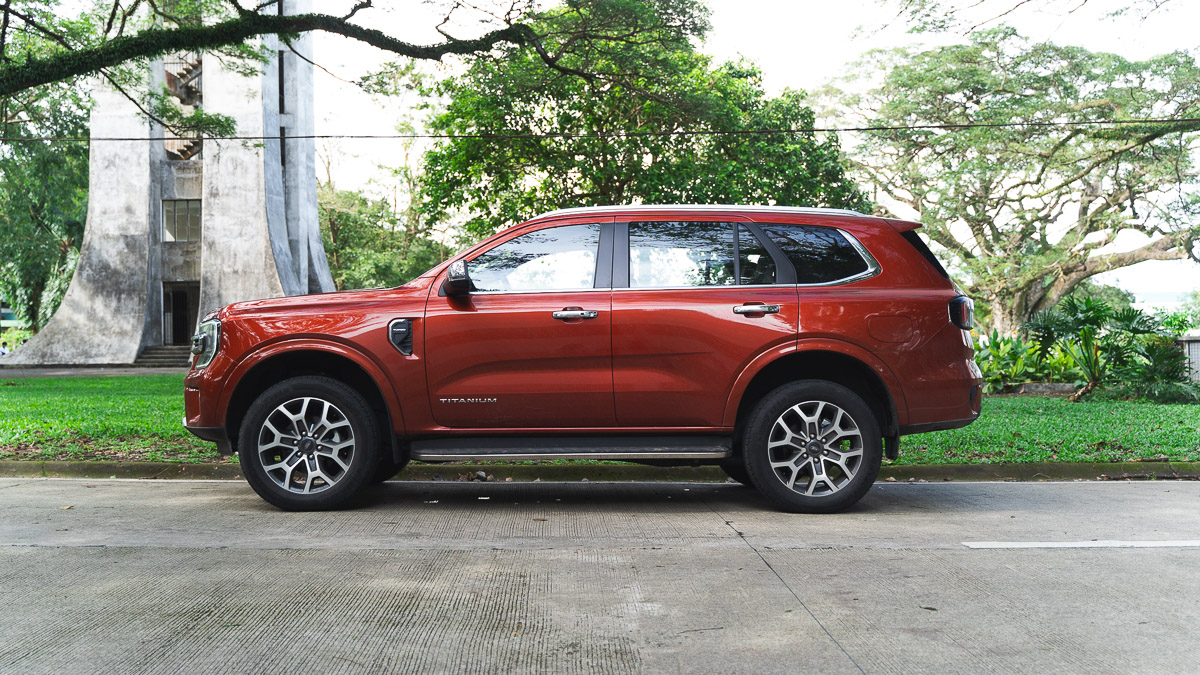
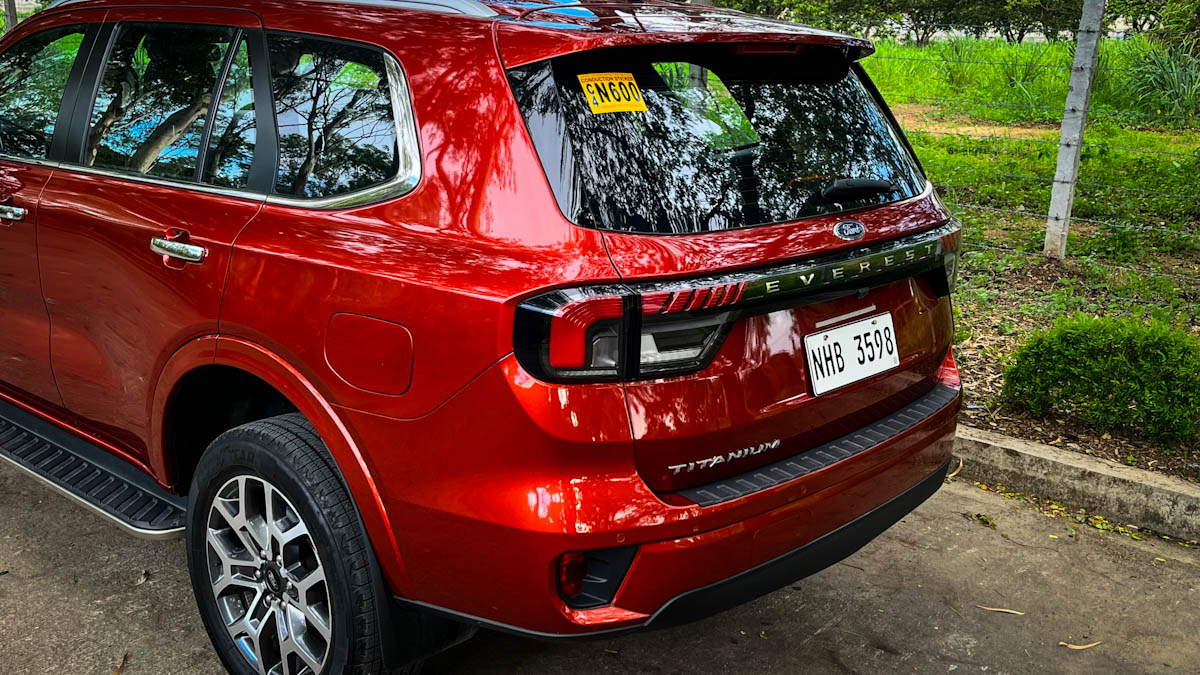
For this Titanium trim, the Everest gets just a nice touch of chrome up front. Ford didn’t go overboard with the black claddings underneath, too—just a little on the front and rear bumper, but none wrapping the vehicle all around. Those were the right decisions, in my opinion, as it gave the Everest a classy look.
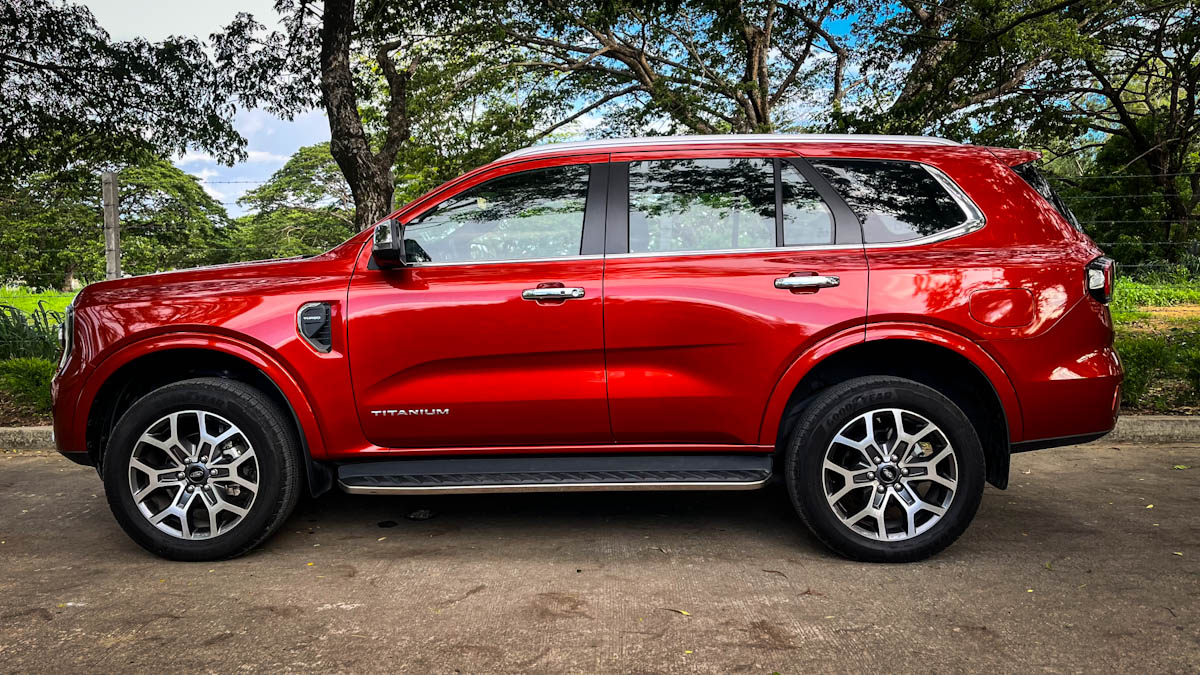
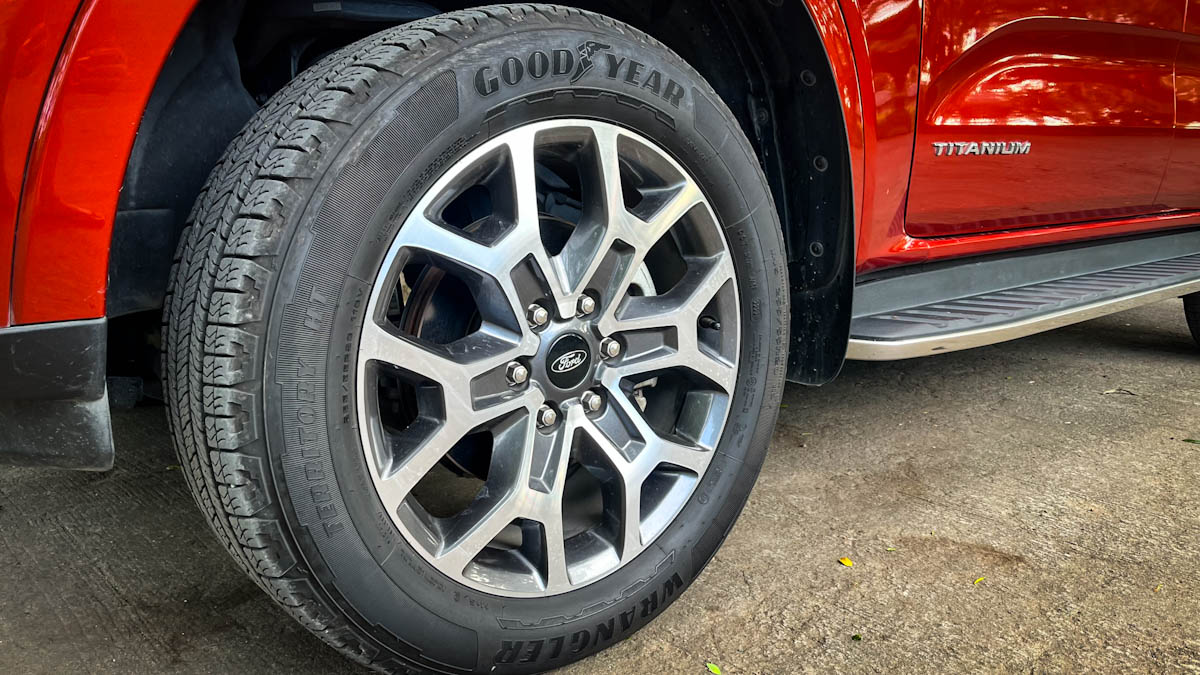
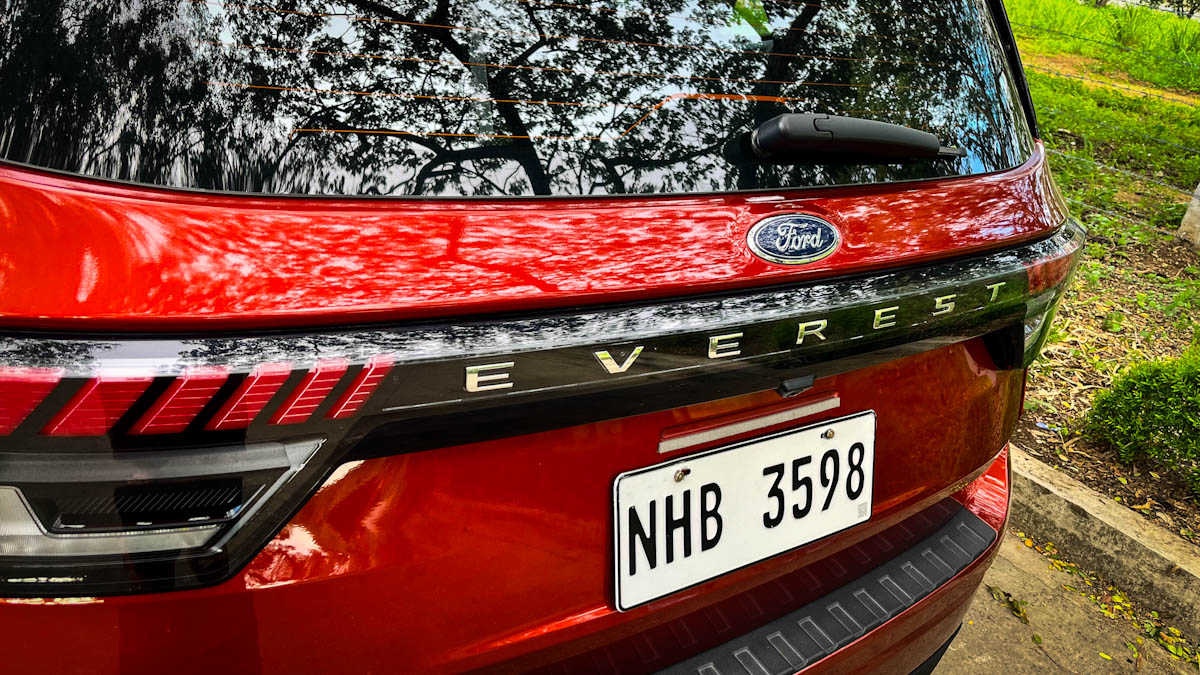
The alloy wheels look pretty good, too, and the spokes match the overall design quite well. The taillights with their snazzy new pattern also add a touch of flair to the rear, which I like. Overall, I honestly think Ford hit the mark with this generation’s design.
Interior
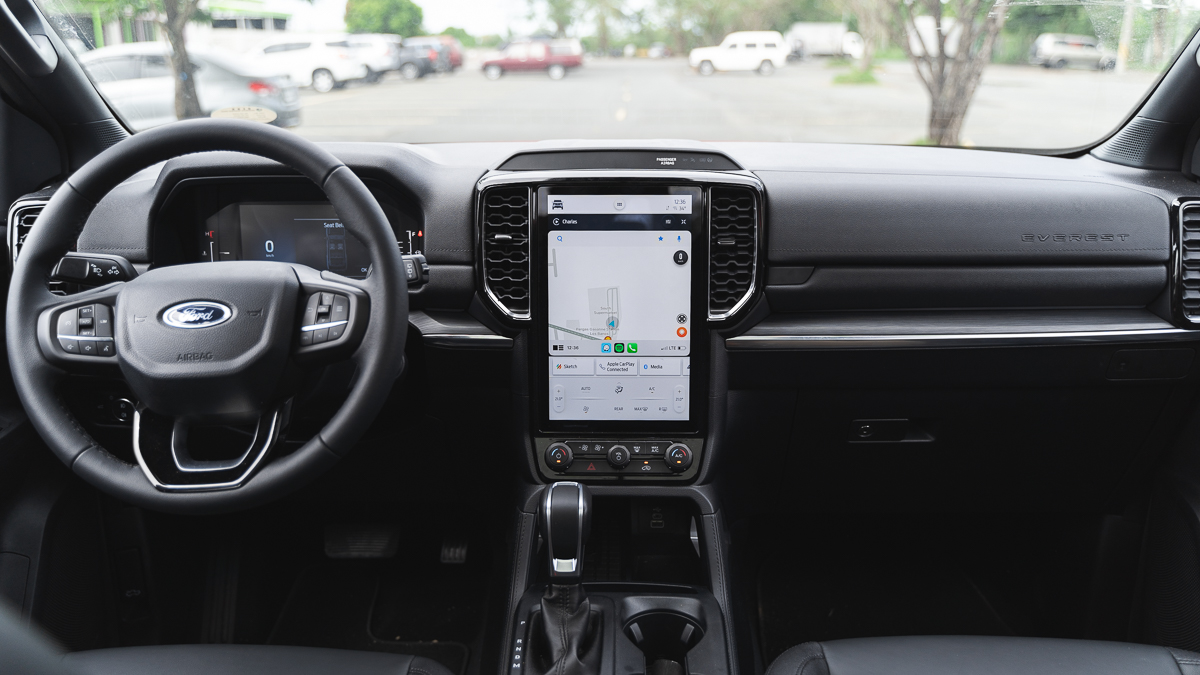
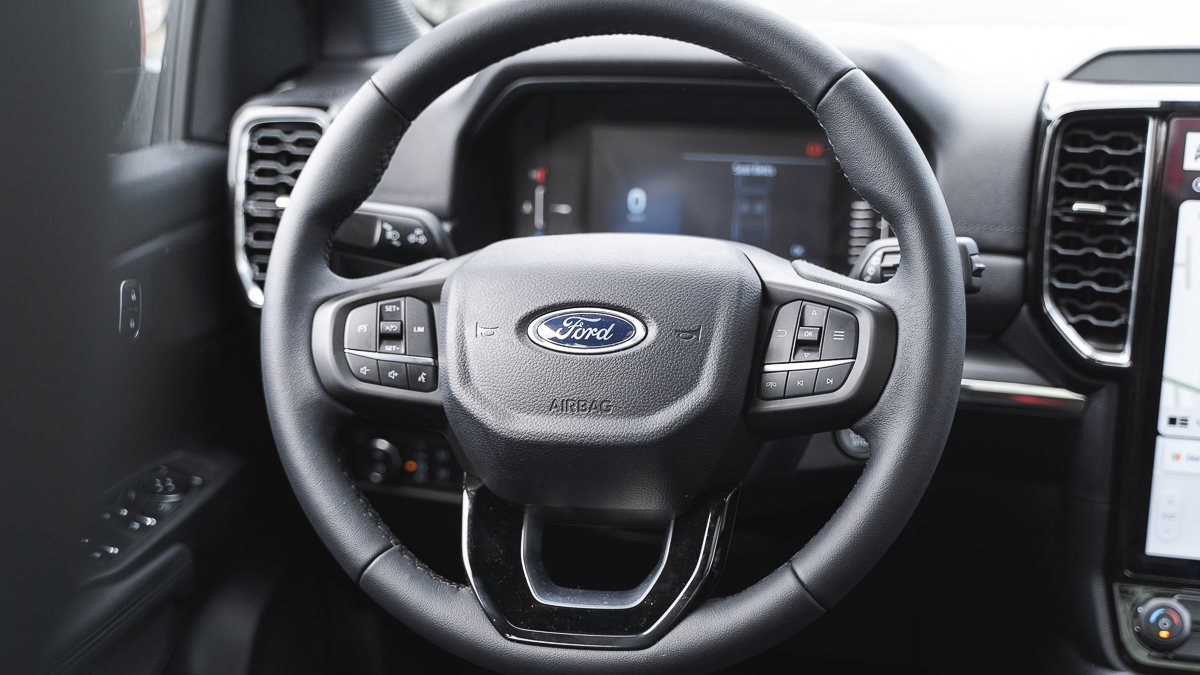
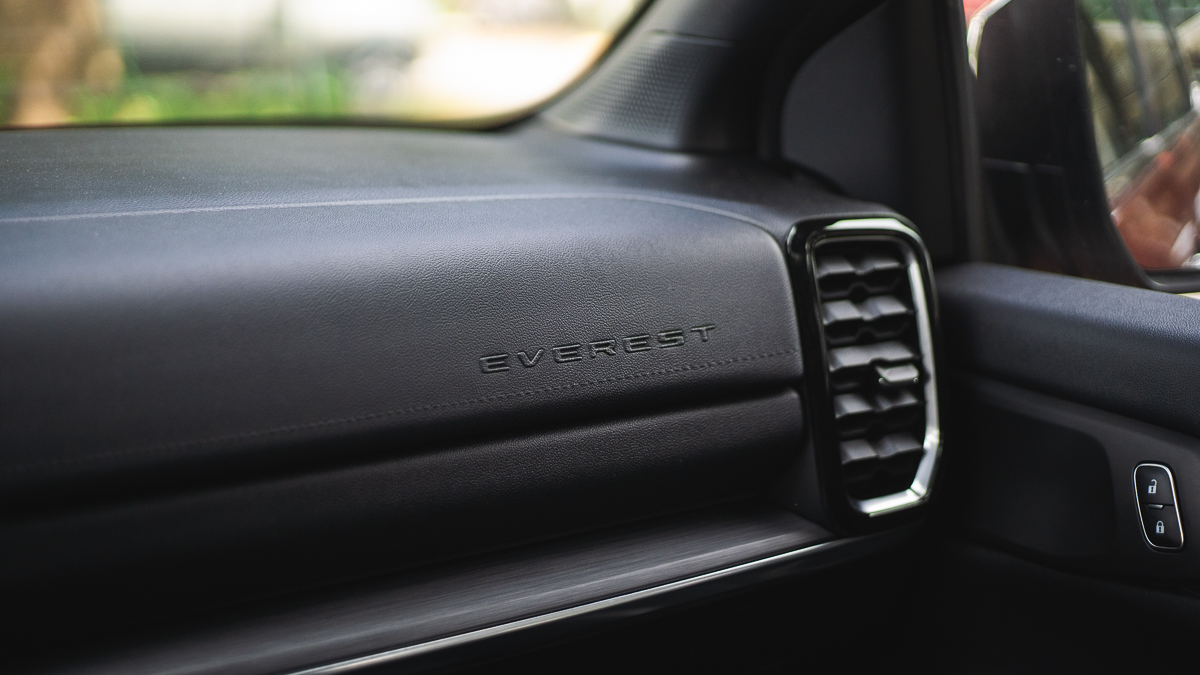
Inside, the Everest is also ‘just right.’ Nothing too fancy, but nothing boring, either. The black-laden cabin may lack a bit of contrast for some, but when you’re actually sitting inside it, you probably won’t feel that.
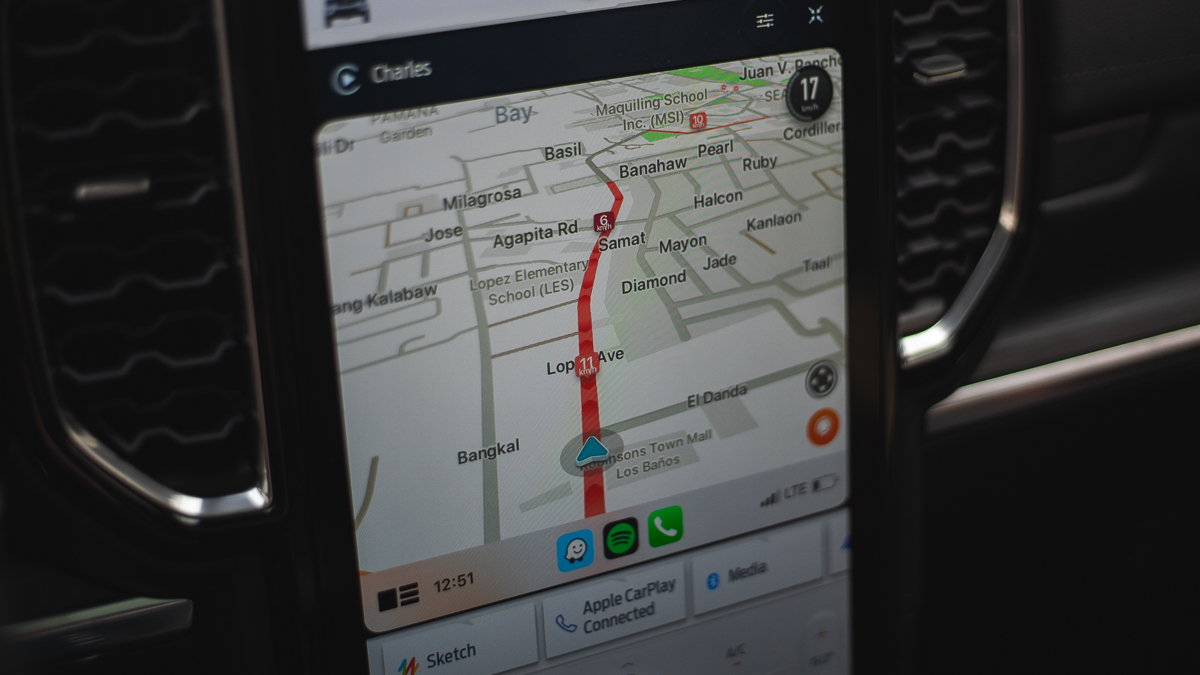
The door panels, the armrests, and even parts of the dashboard are soft to the touch, and clearly the build quality here is excellent, too. The seats are nice and soft and are comfortable to sit in. Of course, there’s also that humungous touchscreen display up front, too, which also adds to that modern, next-gen vibe.
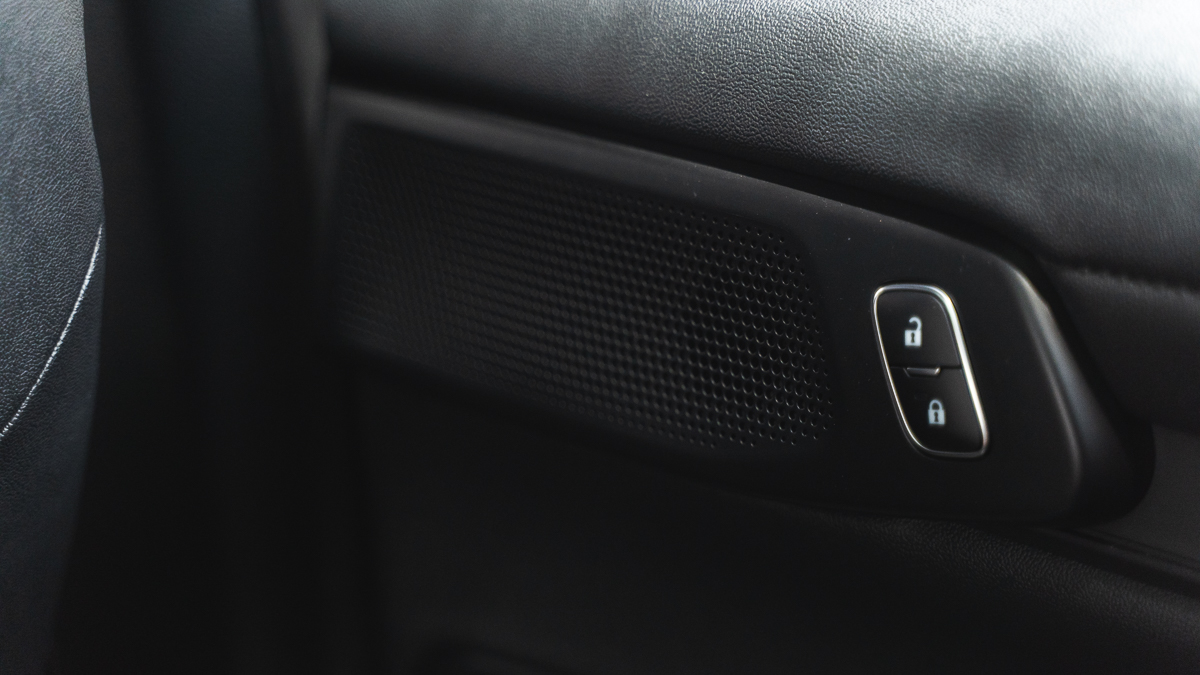
Bonus points for those ingenious door handles, too. They might take some time getting used to, but they’ll eventually grow on you. I’ve learned to appreciate just how much it keeps the side panels looking clean and less cluttered.
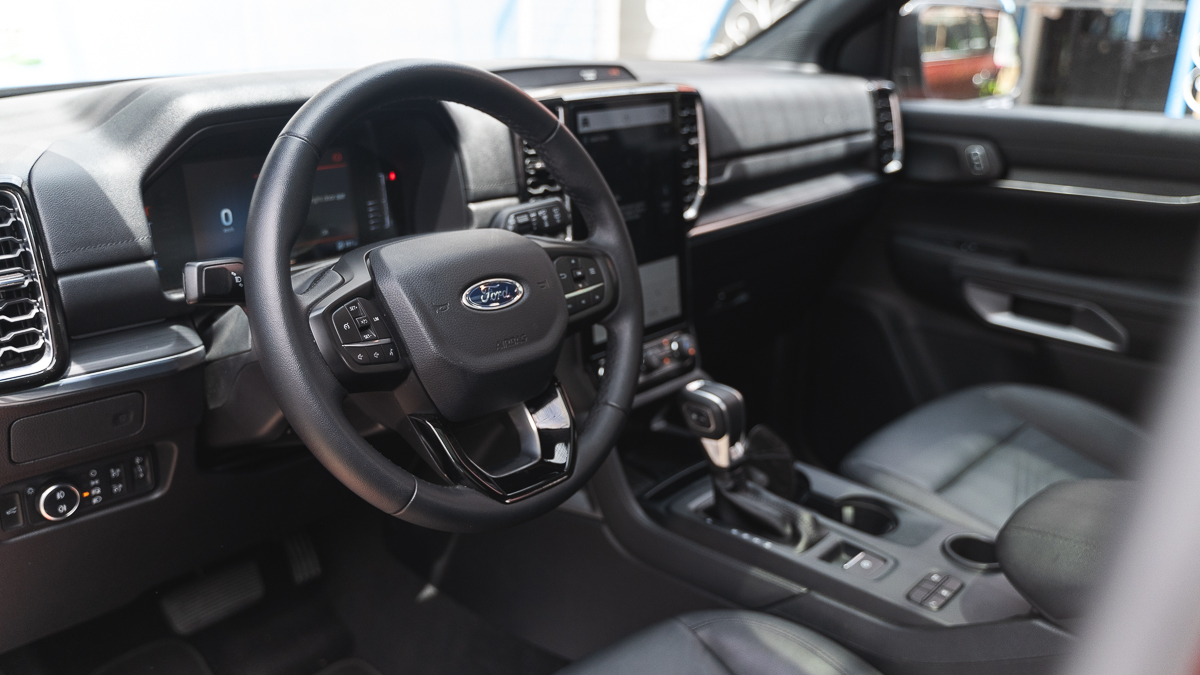
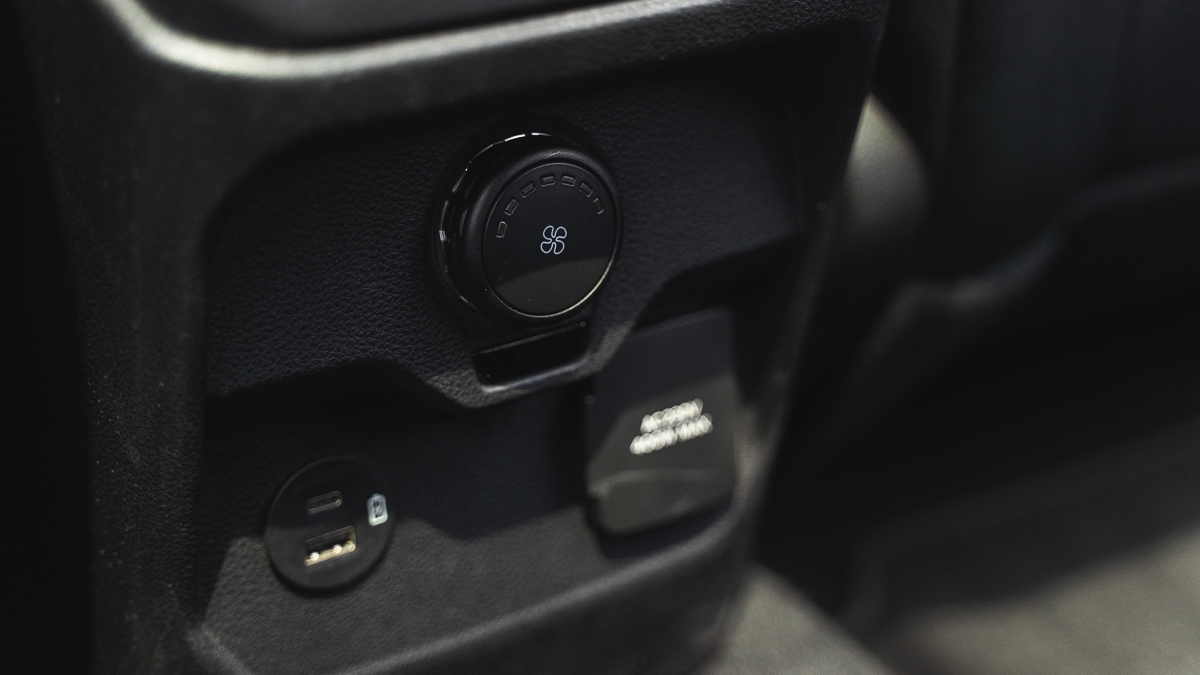
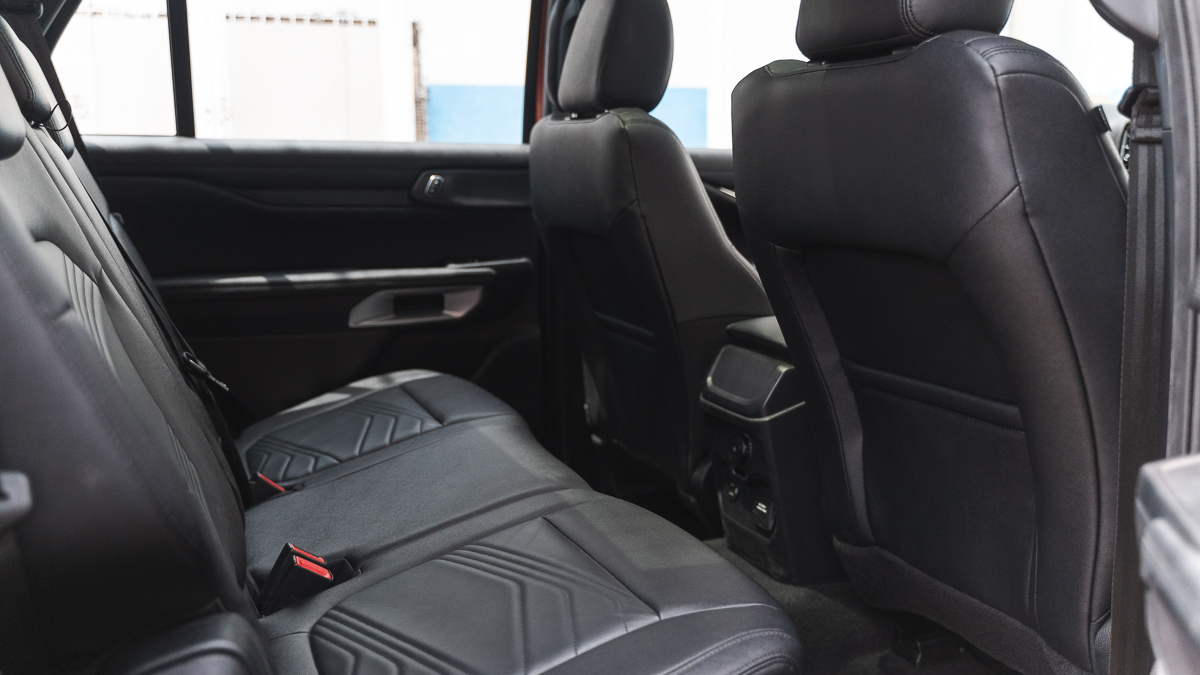
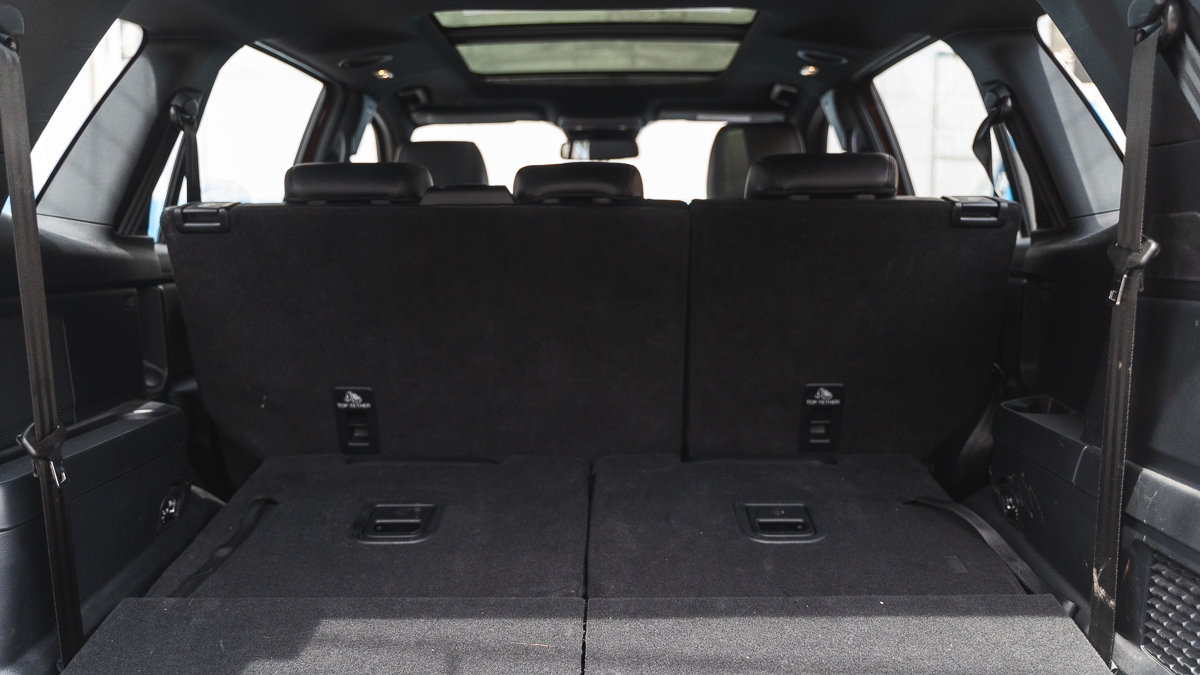
In terms of space, there’s plenty to go around with here. There’s more than enough legroom, headroom, and elbow room for the driver and passenger. In the second row, three average-sized Filipinos will have no issues fitting in. Also worth noting here that the second-row seats are adjustable to open up some more room for the third row.
Of course, the sixth and seventh passengers will have a tighter fit, but I the space out back is still pretty decent. Not best-in-class, but manageable for a 5’5” person like me. And with all three rows in use, there’s still some space at the back for, say, two small pieces of luggage.
Engine performance
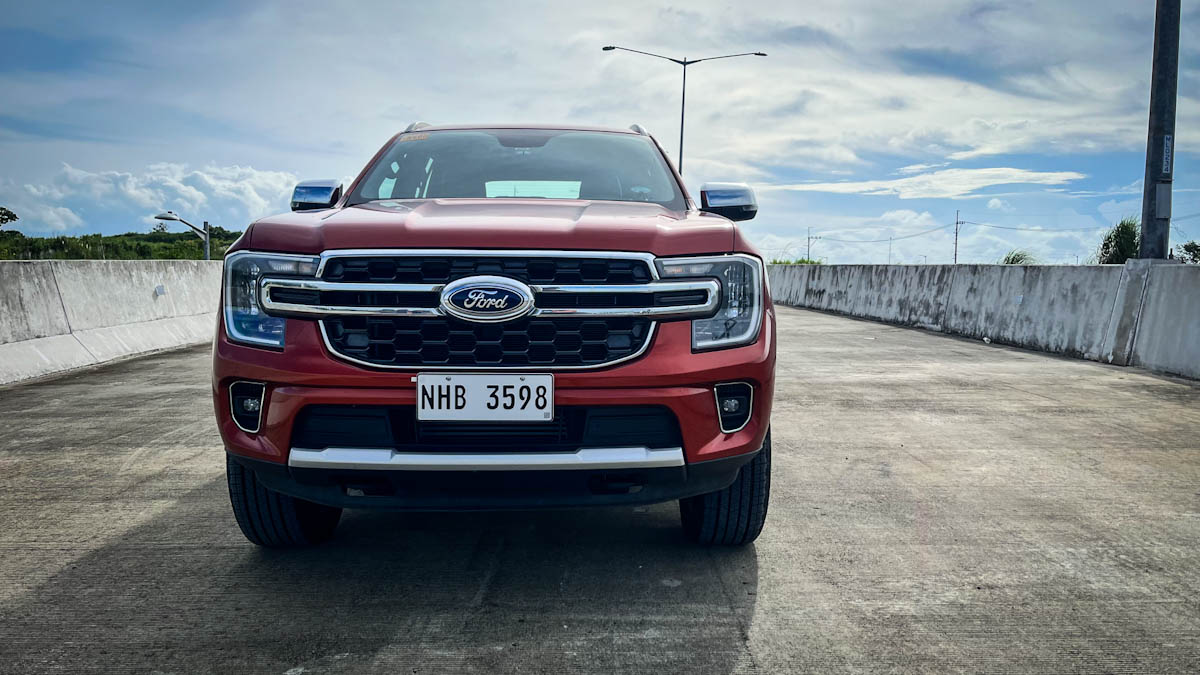
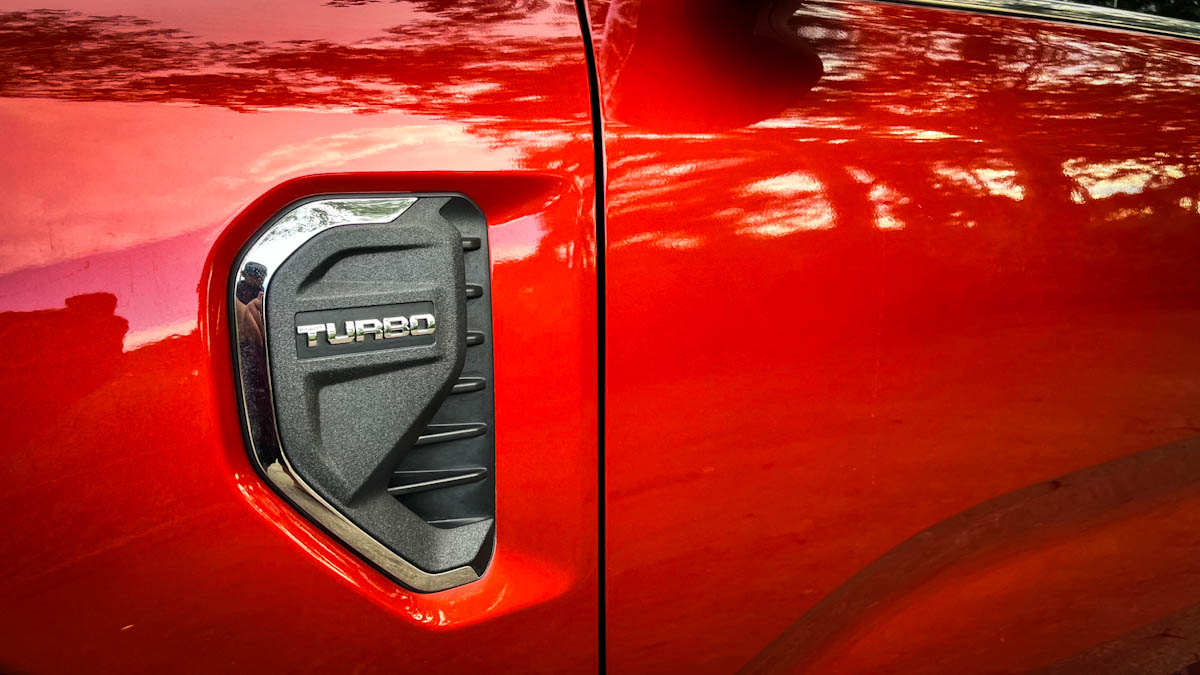
The Everest here in discussion is the 2.0 Turbo Titanium+ 4x2 variant, so it only comes with a single turbo to go with its 2.0-liter diesel powertrain. It isn’t as powerful as the bi-turbo engine with 207hp and 500Nm on tap, but it still churns out a healthy 168hp and 405Nm of torque.
That figure may be significantly lower, but believe me when I say that it’s enough even when the vehicle’s at full load. While it doesn’t run at sub-2,000rpm at 100kph like the bi-turbo with the 10-speed automatic does, it still cruises with ease at highway speeds with just its six-speed ’matic.
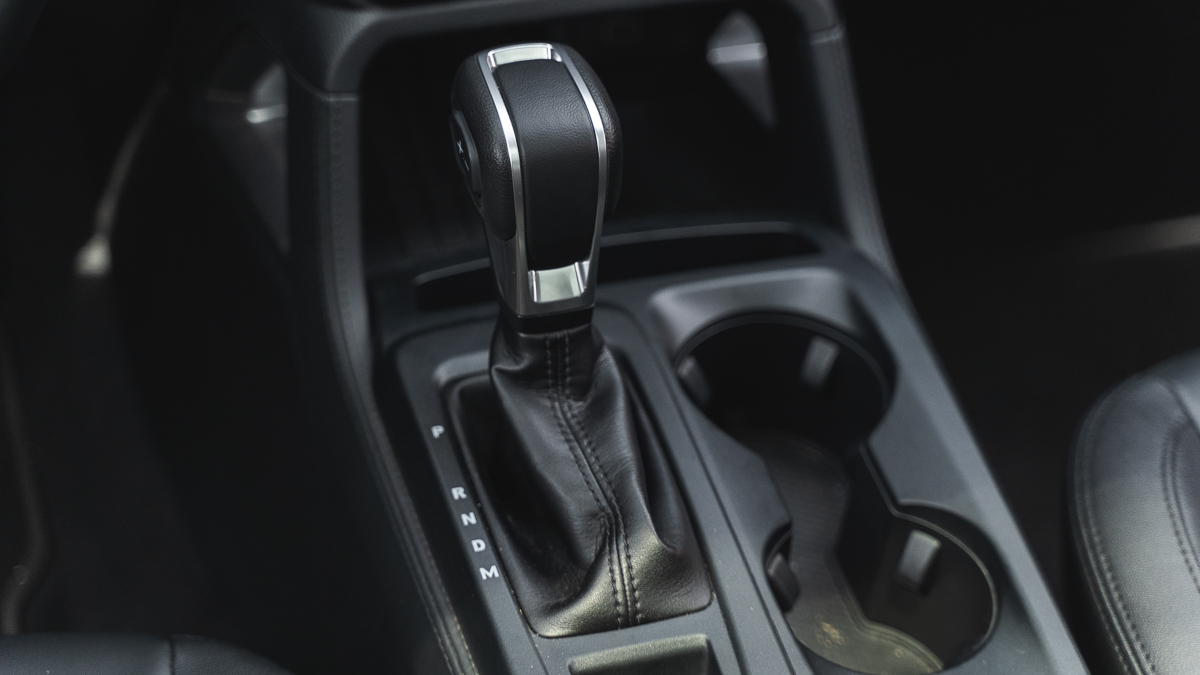
Speaking of the transmission, the six-speed actually feels smoother to use than the 10-speed, especially when trying to pick up speed on the expressway or when in slow-moving or stop-and-go traffic within the city.
As far as fuel economy goes, it’s still decent. In mixed conditions—a hundred kilometers of highway driving combined with a lot of time spent idling and crawling through Metro Manila traffic—I got a solid 10-11km/L. That’s more than bearable, considering the high prices of diesel these days.
Ride and handling
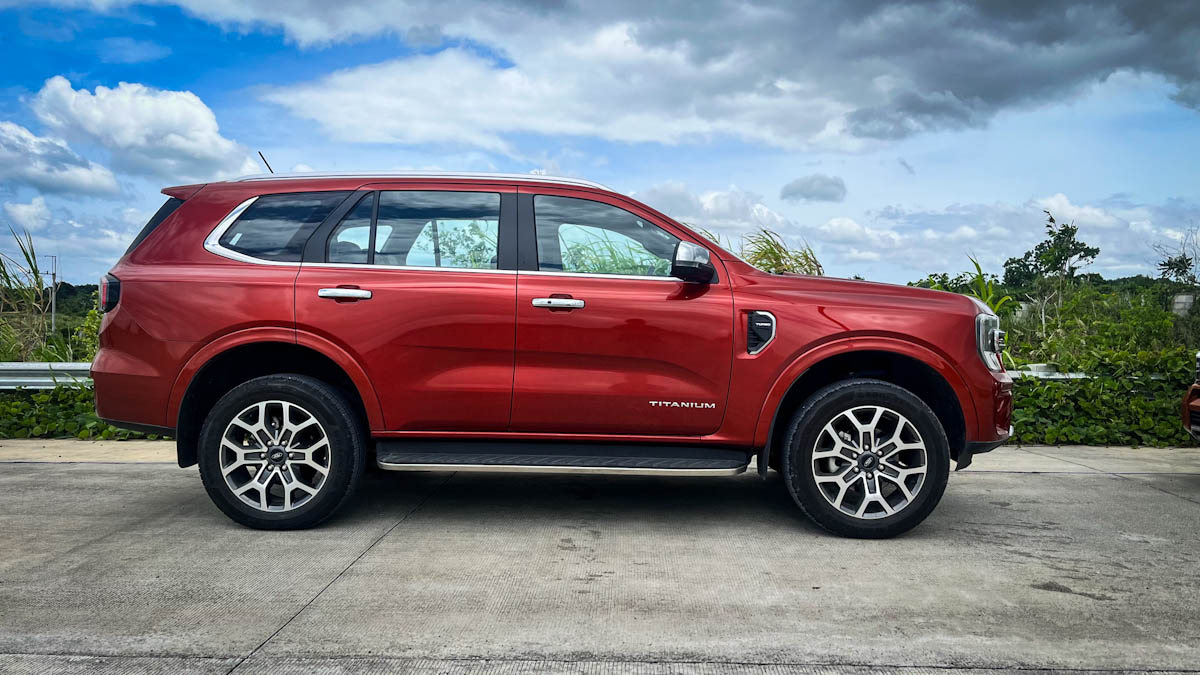
The previous-generation Everest was arguably the segment leader when it came to ride comfort. For this new model, I believe that’s still the case. The suspension does a stellar job of absorbing road imperfections with ease, and it feels a bit floaty when you’re driving on less-than-ideal road conditions around the metro.
If you prefer a firmer-riding vehicle with precise handling, however, the Everest may not be for you. While there’s not a lot of body roll through corners, handling is on the less-sporty side. I reckon I’d have more fun driving through twisties in a Nissan Terra than I would in the Everest.
Then again, most of you who are eyeing anything from this segment would most probably be driving in Metro Manila for the most part, with the occasional drive out north or south via the expressways, so you’ll probably be better off getting this floaty-riding SUV than something else.
Besides, the Everest is also fairly easy to maneuver despite its size, as its steering is pretty light. That’s a big point for consideration if you often find yourself driving around or running errands in traffic-riddled cities. Lest we forget, the grab handles all around plus the stepboard outside also make for easier ingress and egress, adding to the Everest’s appeal as an ideal daily driver.
OTHER STORIES YOU MIGHT HAVE MISSED:
The all-new Mitsubishi Strada is ready to take on Hilux, Ranger
Toyota could be releasing new Veloz E variant priced at P1.092-M
Extra features
It’s not just ride comfort that the old Everest excelled in—that one was also known to have the most toys among the midsize SUV bunch. Ford made sure that was still the case with this generation, as even this non-top-spec 4x2 variant still comes with a wide range of extra tech.
For starters, there’s that SYNC 4 system with the massive portrait touchscreen display up front that comes with Android Auto and wireless Apple CarPlay. Personally, though, I’m not that big of a fan of wireless smartphone mirroring as it can still get a bit wonky at times, so I just opted to keep my iPhone plugged in.
The thing I like about this screen is that it doesn’t have all the A/C controls integrated into it, unlike the top-of-the-line Everest with the off-road controls buried within the display.
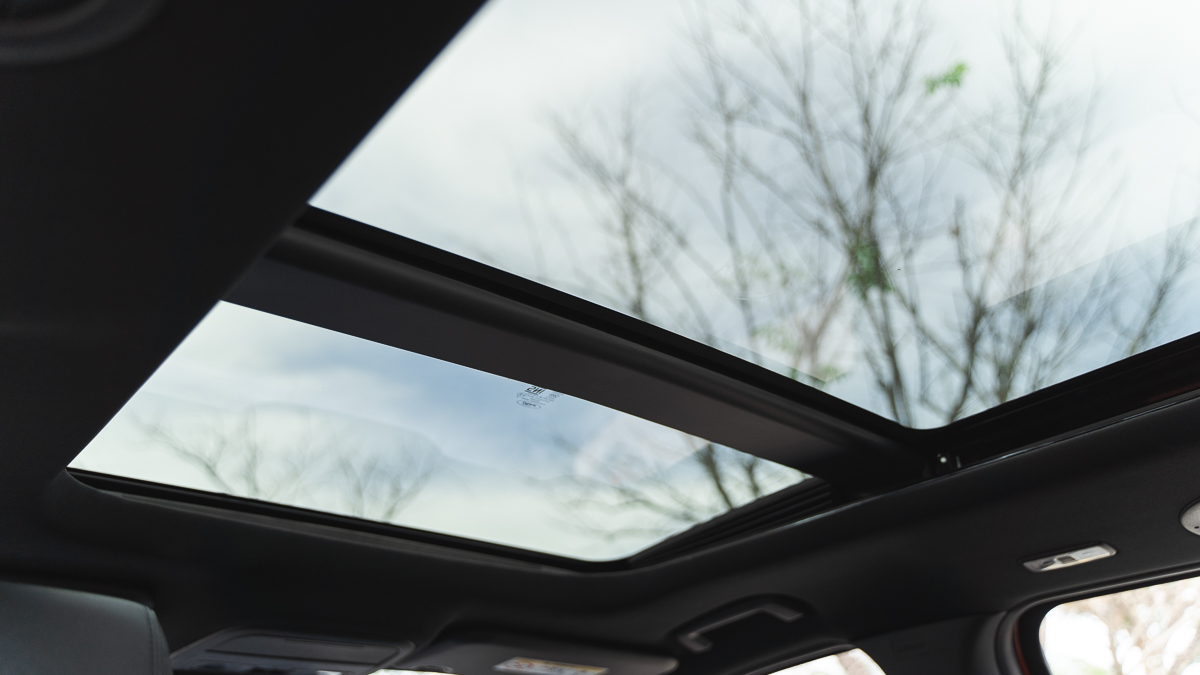
Other amenities here that I got to use often were the cruise control, the absolutely massive sunroof up top, and of course, the power liftgate. I appreciate the inclusion of other extra features like the power-adjustable seats for both driver and front passenger as well as the dual-zone climate controls.
I do wish this one had the power-folding seats, though, because I really find that very convenient. That and adaptive cruise control, which are both exclusive to the bi-turbo Everest along with a handful of safety and driver-assist features. But hey, the 4x2 variant can’t have all the bells and whistles, right?
Verdict
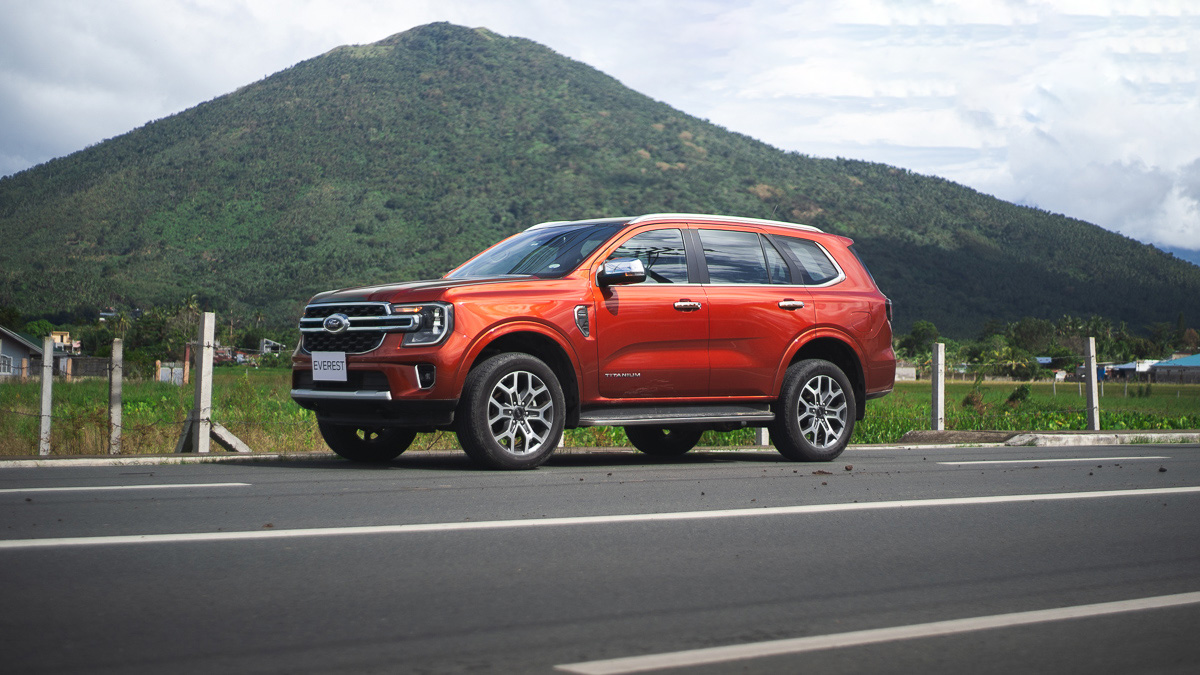
It’s hard to believe that it’s only been a year—yes, exactly a year as of this writing—since the next-generation Everest was launched in the Philippines. It’s already become one of the most common sightings on the road, whether in the metro or in nearby provinces. And it doesn’t really come as a surprise.
With this next-generation model, Ford has managed to retain basically all that’s good with the Everest and refine the rest. Engine performance remains superb, ride comfort and handling are now better, and available tech has improved by leaps and bounds.
Frankly, other midsize SUVs may be faster, comfier, or just flat-out sportier, but I feel like the Everest just has the best value for money in its segment right now, especially the non-4x4s like this P2.209 million variant I just drove. And until the next-generation Fortuner, Montero Sport, and Terra arrive, that might not change anytime soon.
SPECS: 2023 Ford Everest Titanium+ 4x2 AT
Price: P2,209,000
Engine: 2.0-liter turbodiesel I4
Power: 168hp @3,500rpm
Torque: 405 @ 1,750-2,500rpm
Transmission: 6-speed automatic
Layout: 4x2
Seating: 7
Score: 9/10
NOTE: As of January 2025 the price of this vehicle is now P2,259,000.
More photos of the Ford Everest 2023 Titanium+ 4x2 AT