Welcome to the 2026 Audi RS5, Audi Sport’s first foray into the world of plug-in hybrids and also the most complex car the company’s RS division has ever made, according to chief technical officer Steffen Bamberger.
The 503hp 2.9-liter twin-turbo V6 is joined by a 174hp electric motor, fed by a 25.9kWh battery for a total system output of 630hp and 799Nm of torque. It also gets RS-specific front and rear axles, a faster steering rack, sports suspension that sticks with steel springs but has clever twin-valve dampers, and bespoke tires with the option of 21-inch wheels and bigger rims on the rear. The body structure is 10% stiffer than the regular A5’s, though the same PPE platform obviously underpins it.
There’s also the option of carbon ceramic brakes —they measure 440mm up front and 410mm at the rear (only the Bentley Continental GT Speed and the Lamborghini Urus can match that), and weigh 30kg less than the standard steel discs. Maximum brake feel and minimal fade are key attributes here. There’s magic going on, for sure, and Audi Sport boss Rolf Michl is big on tactility and character, which bodes well.
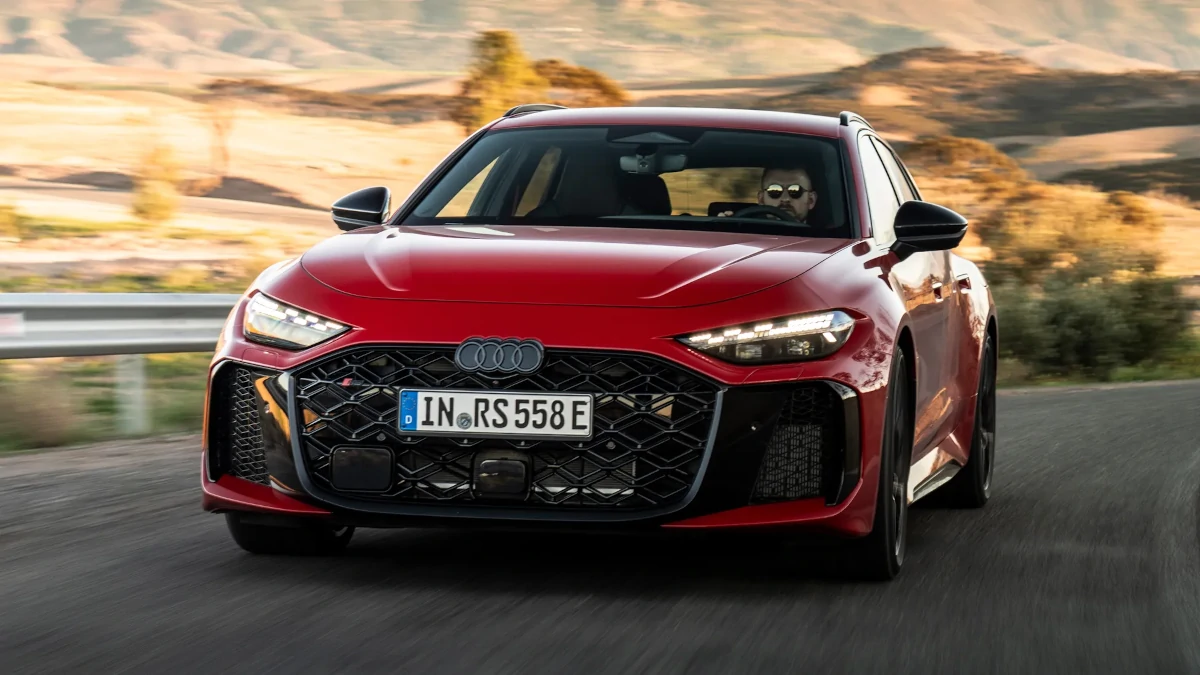
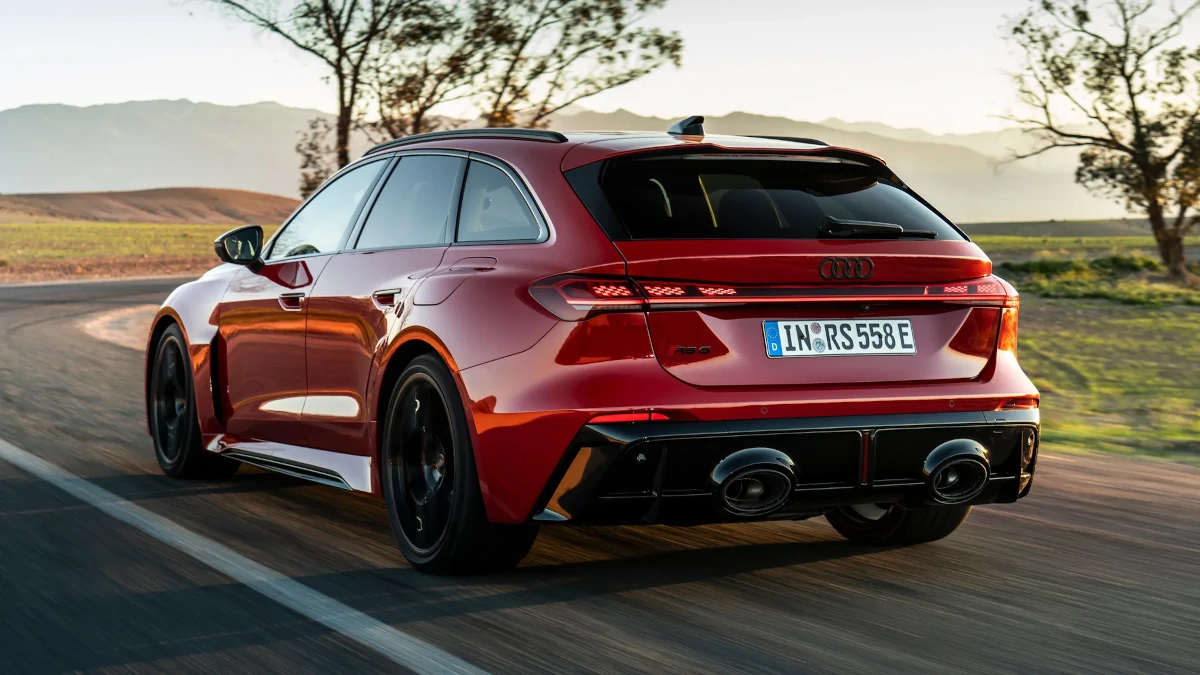
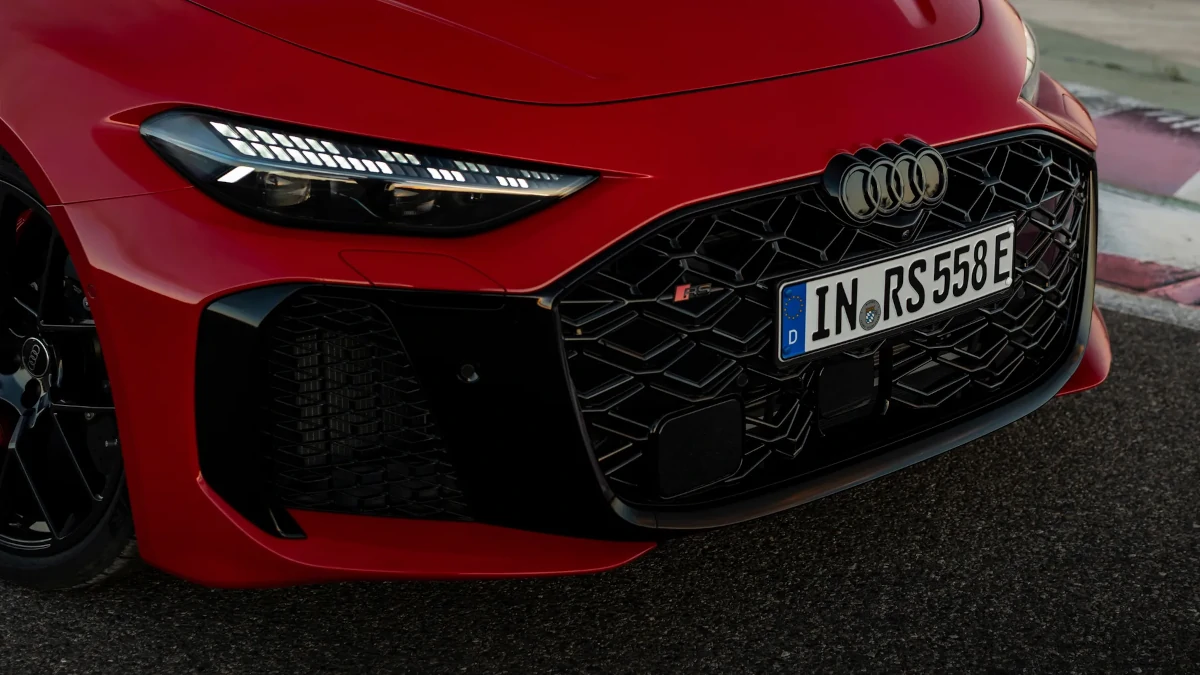
The car looks as awesome in the metal as in photos. Head-on, it gives the rather undernourished-looking A5 the mother and father of all glow-ups. It’s even better from the rear—check out its shoulders and those planet-sized exhaust exits. They sit further inboard because of the exhaust’s L shape and muffler.
It’s up against old foes, the BMW M3 and the Mercedes-AMG C63, but in terms of presence and visual execution, we reckon the RS5 has the edge. The sedan, too, not just the Avant.
Much of the exterior is new, and it’s 40mm wider overall. The new aero elements are finished in gloss-black or an optional carbon design, and there’s an RS matrix light signature. The rear lights also feature a ‘checkered flag’ pattern. Thankfully, the design team stopped short of tuner-style self-parody.
Audi will never deviate from its signature quattro all-wheel drive recipe, but the new RS5 introduces what you might term a side(ways) hustle: It combines a Torsen center differential with what it calls Dynamic Torque Vectoring on the rear axle—a world first, says the company. The center diff might be a throwback to quattros past, but it’s state-of-the-art here, with a preload function so that it’s always partially locked. The result is a torque split that varies between 70/30 and 15/85 front to rear—an unusually extrovert figure for an Audi with quattro functionality, and a pointer to the RS5’s more...shall we say, indulgent personality.
How does that work? This is where the electrified rear transaxle comes in. A water-cooled permanent-magnet e-motor operates as a high-voltage actuator to provide electromechanical torque vectoring to each of the rear wheels. It takes just 15 milliseconds, can cope with hefty torque loads (up to a theoretical 1,966Nm), and does its thing on and off throttle and under braking.
OTHER STORIES YOU MIGHT HAVE MISSED:
Opinion: Honda Cars PH has missed the mark with the Prelude’s pricing
Confirmed: The Toyota Urban Cruiser will make its PH debut in March
Has Audi created a high-tech sledgehammer to crack a traction-related nut? Perhaps. But there’s a genuine bandwidth here, and the promise of agility and interactivity to go with Audi’s trademark insane grip levels. And remember, the RS5 can also travel roughly 80km in pure electric mode, which is double the distance most people do in a day.
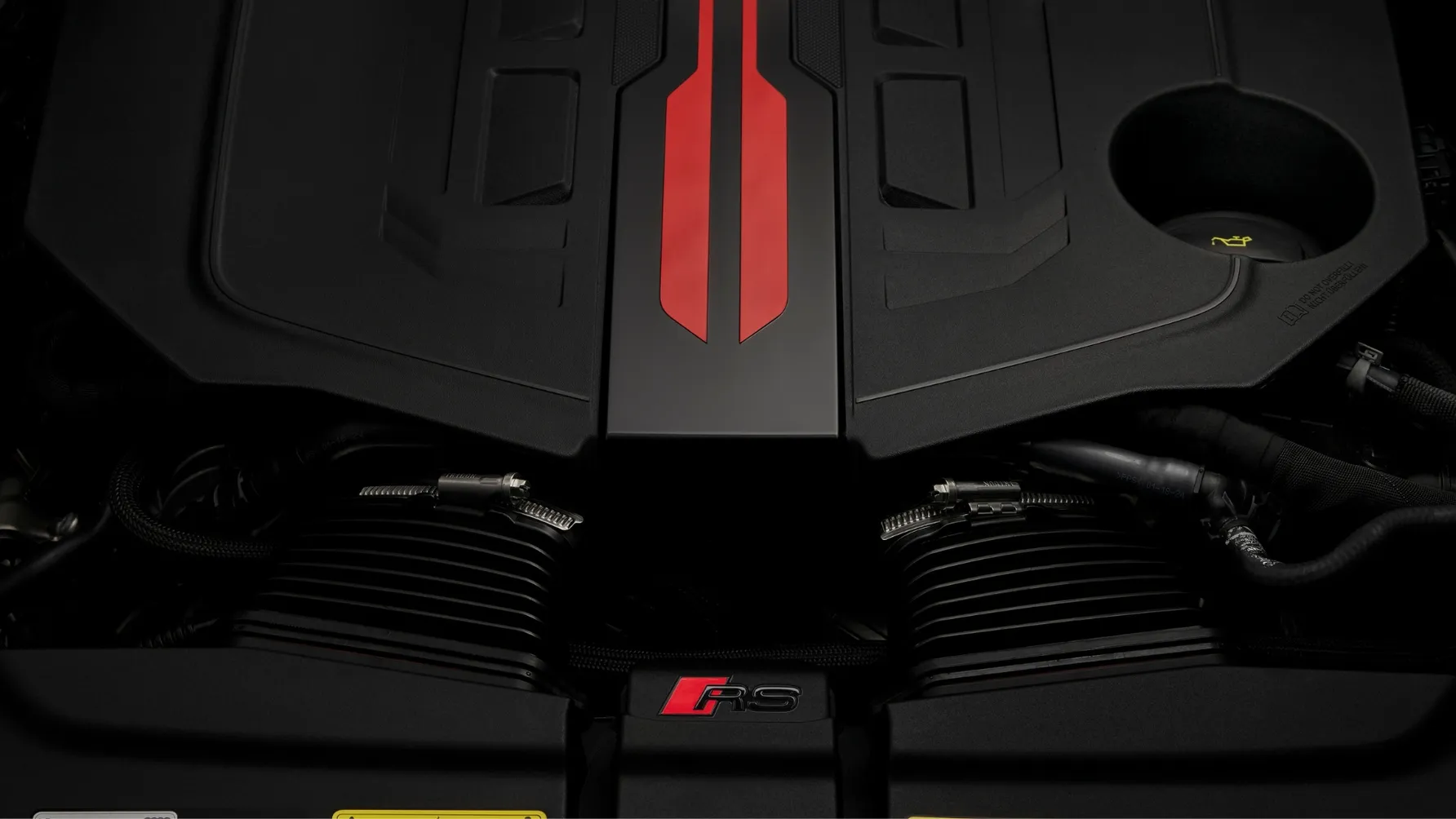
The engine has been carried over from the previous RS4, but the engineers reckon about 60% of it has been improved (power output from the engine is up 59hp on the old RS4). The turbo’s geometry has been revised, there are new water-to-air intercoolers to reduce intake temperatures, and it runs on a Miller combustion cycle for enhanced efficiency. There’s also a revised fuel-injection system.
The new RS5 will do 0-100kph in 3.6sec and 285kph all-out (with the Sport pack fitted). Audi claims 31.4km/L combined, but even with the battery discharged, the RS5 should be good for 12.3km/L. And while it might be packing 630hp overall, its plug-in hybrid status obviously reduces its CO2 emissions and makes it much less punitive in terms of taxation.
As for the electric bit, it’s clever. The battery lives under the cargo floor, and improved chemistry means that its power output remains impressive even if its state of charge is low. Thermal management has been improved, so it’s less temperature sensitive. The battery doesn’t just power the primary e-motor, it also supplies up to 8kW to the motor in the torque vectoring unit.
Here’s where it gets more complicated: The RS5 would feel half-baked if the battery’s state-of-charge was sub-optimal, so in RS Sport and RS torque rear (aka drift) modes, the SOC is held at 90%. Pumps, fans, and heat exchangers keep things at around 20°C, the temperature at which the battery does its best work.
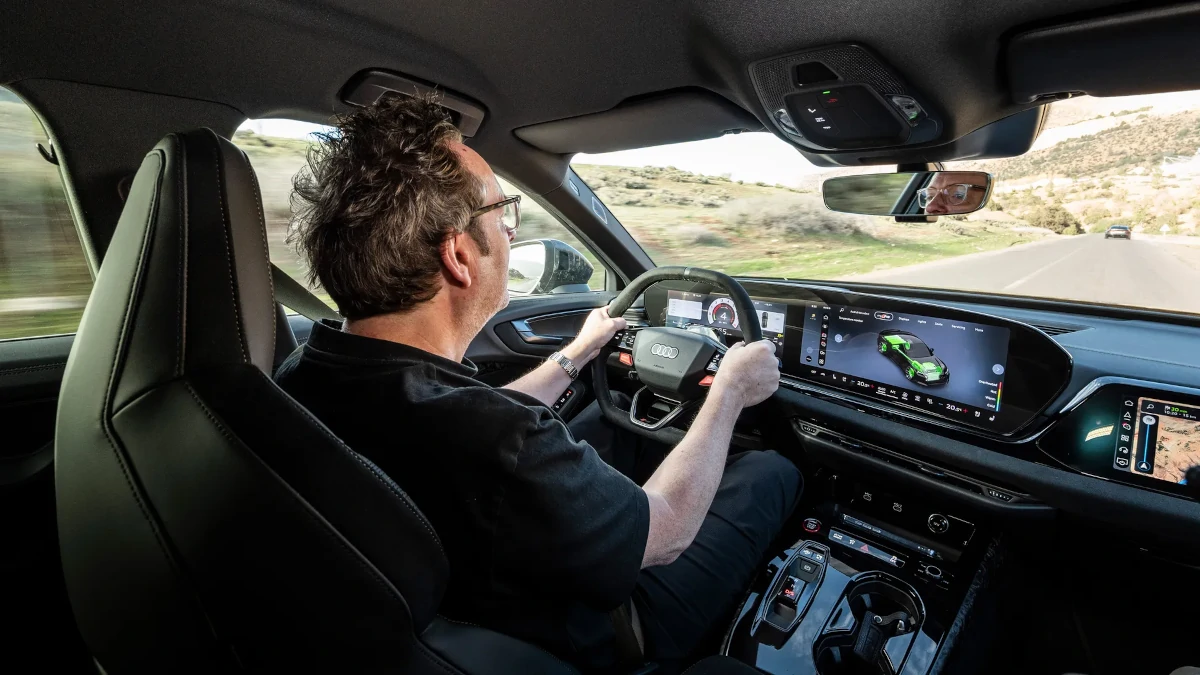
In Hybrid mode, the battery is always being topped up, although you can select a preferred SOC using a digital slider. There’s also a Boost mode, triggered by a button on the steering wheel, that summons up everything the car’s got for 10sec. You get a countdown on the instrument display.
But let’s discuss the elephant in the room: The RS5 is unavoidably chunky. It has eaten some pies, and then gone back for seconds. In Avant form, it weighs 2,370kg, a daft figure for something in this segment, but that’s what you get when you add a second powerplant. That’s half a ton more than an M3 Touring.
Of course, the RS team is adamant that the changes to the suspension and the DTV combine to serve up a car that feels much lighter and more agile. Like a car that doesn’t have a chunky hybrid apparatus, in other words. Being a PHEV, there are obvious benefits in terms of emissions and energy consumption. The RS5 wants to have its Black Forest gateau and eat it. To hell with the diet.
2026 Audi RS5 on the road
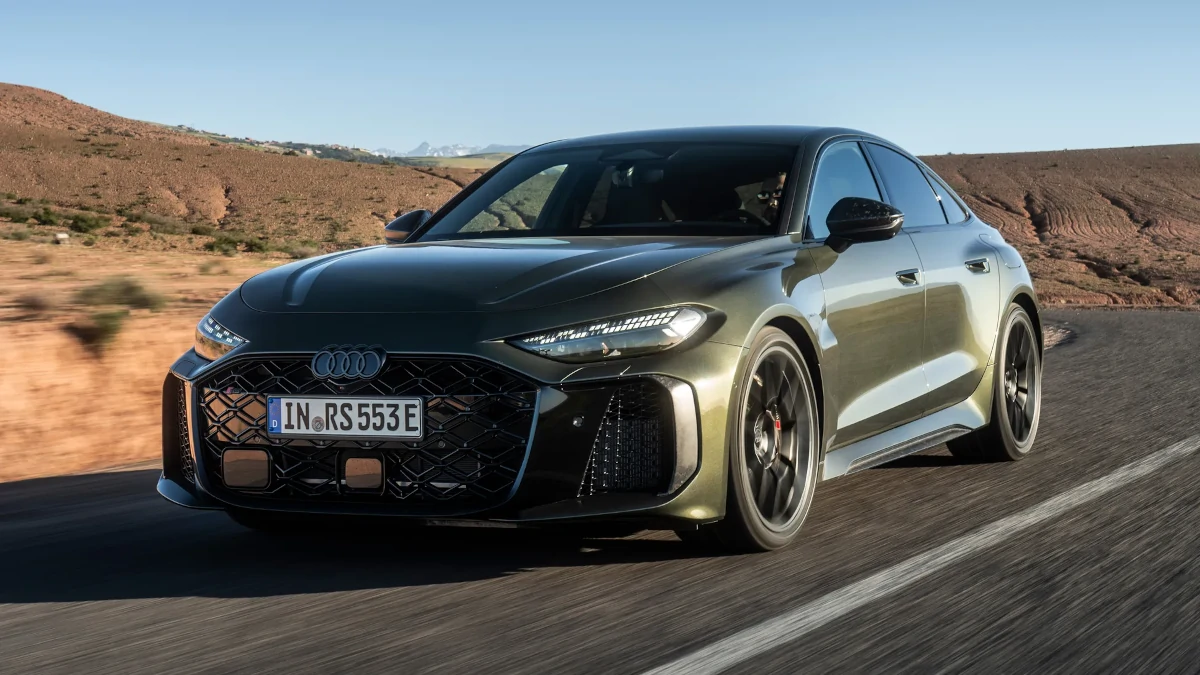
Michl says that the aim was to deliver a car with real bandwidth. It’s a complicated machine, the RS5, but he insists that it should be easy for the driver to get on top of. More than ever, then, this is a car for all seasons, a hooligan that keeps a pair of slippers in the cupboard.
But it definitely still takes some getting used to. The ingredients are certainly spicy, and long gone are the days when you could plonk a big-capacity engine into an existing chassis and sprinkle a bit of elastokinematic fairy dust over it. Harmonizing all the disparate elements is a major challenge.
But the RS5 instantly feels gym-honed and hard as nails. We’re straight in at the deep end, driving sedan and Avant versions in a final sign-off drive with the Audi Sport guys in Morocco. Our first taste of the car is at the semi-permanent street circuit Moulay El Hassan near Marrakech, a venue used most notably by Formula E. It’s tight and unforgiving, and not the sort of place you’d bring a whale of a car that had issues with body control or understeer.
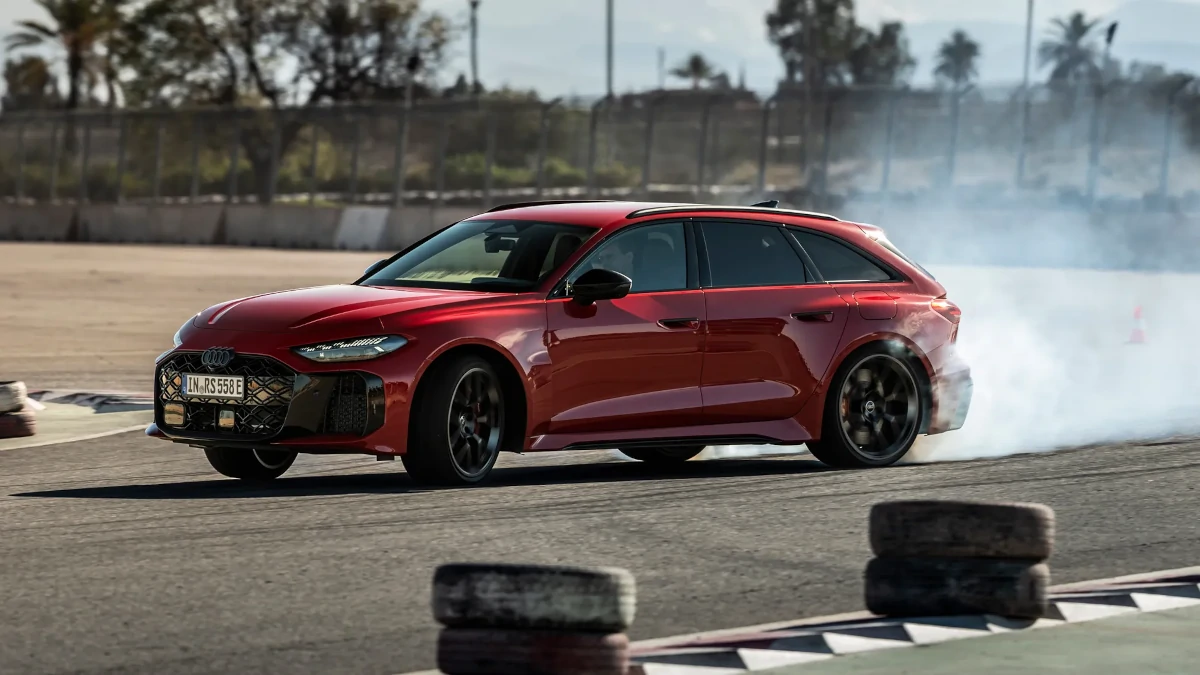
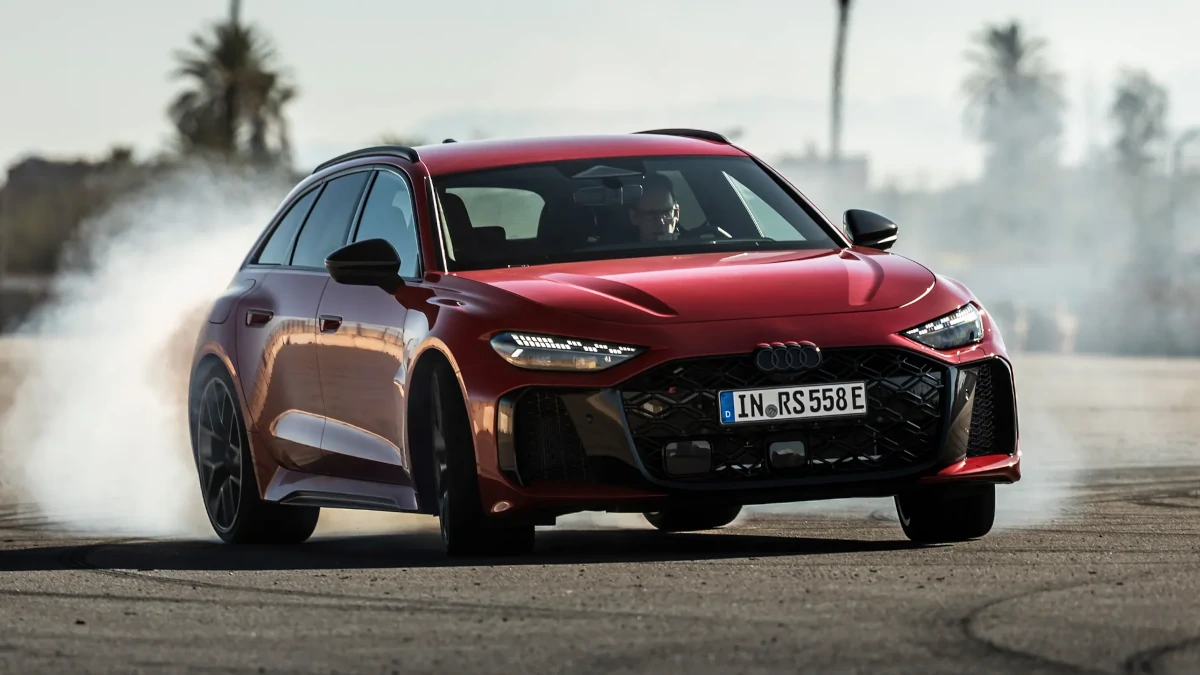
RS vehicle dynamics wizard Roland Waschkau slaloms the RS5 through cones before drifting it back around in a cloud of tortured hydrocarbons. In the hands of an average driver, getting slidey still takes technique. The trick is to maintain momentum as the yaw increases, then give it the full send at the end.
And it works: In RS ‘torque rear’ mode, it does a very accurate impression of a WRC car, maybe even the Audi S1 Hoonitron driven by the late Ken Block.
Michl insists that this part of the car’s armory is purely for fun, and that it’s unlikely many owners will bonfire their rear tires like this. But there’s a dashcam and on-board telemetry, so it’s fun you can share if you’re so-minded.
We also learn a new German word: ‘driftwinkel.’ The RS5 apparently manages a drift angle north of 70 degrees, a figure you can pore over thanks to an on-board ‘drift analyzer.’
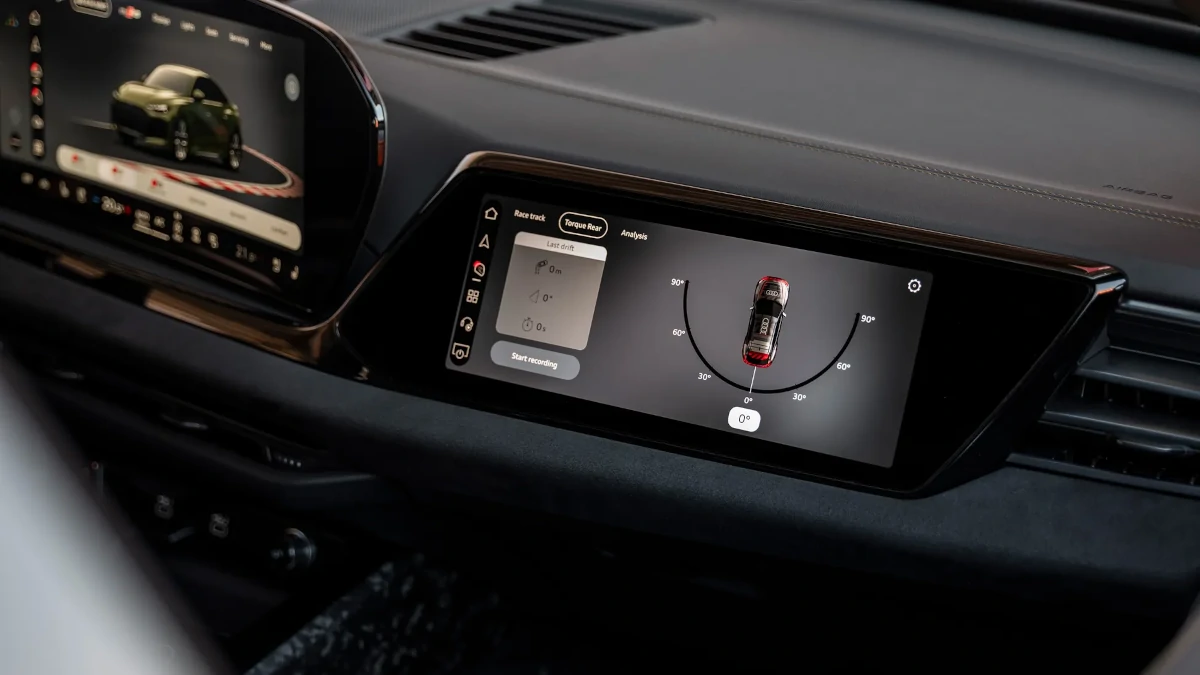
The track is a bit twiddly, to be honest, but this actually highlights the RS5’s playful character as you work through the chassis modes. What traces of understeer that do exist are easily extinguished with a bootful of throttle, and it’s amusingly adjustable and friendly on (and over) the limit.
It’s irritating that the message is one of excess mass successfully hidden, when really we should be avoiding the problem in the first place. But hide the kilos the RS5 most definitely does, and the extra electrons obviously give the car a mighty power and torque boost, as well as roughly 80km of zero-emissions running.
Away from the track, our route takes us swiftly away from the city and into the mountains. Morocco is a mixed bag when it comes to the quality of its road surfaces, but it’s the gnarly stuff that proves more illuminating—because it’s similar to the shambles that prevail in the UK.
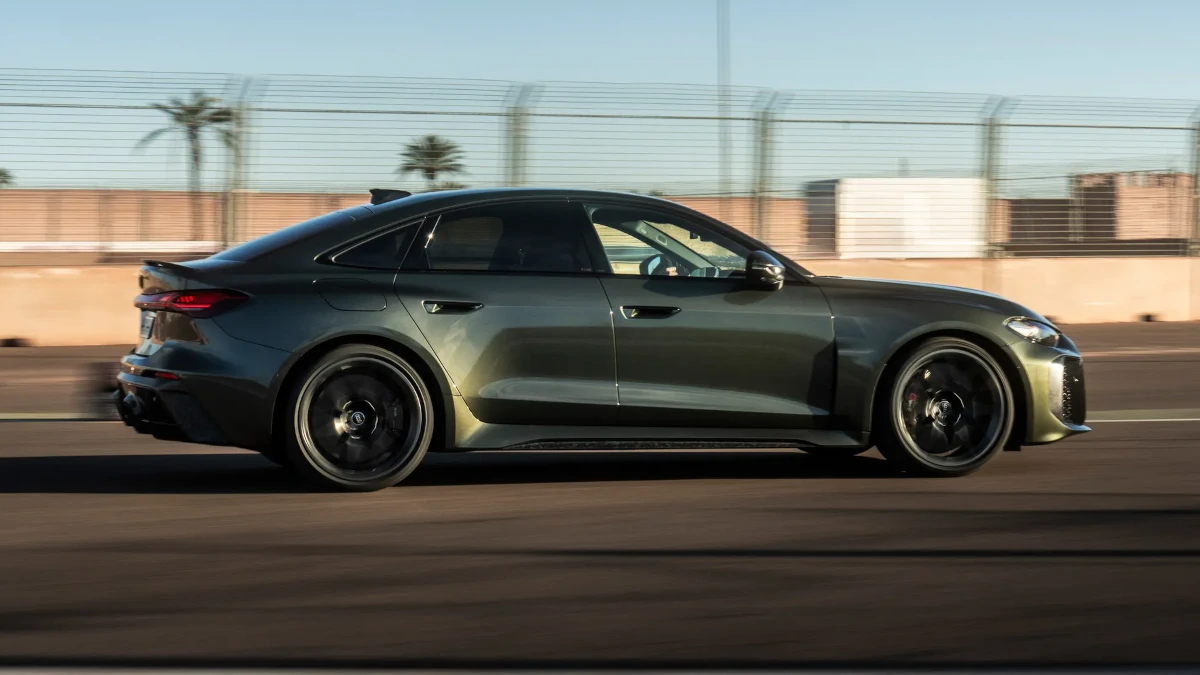
The RS5’s multilink coil-sprung suspension and twin-valve dampers do a fine job of cushioning occupants from sudden intrusions, and deliver separate control for rebound and compression. There’s sufficient amplitude that you can feel the car ‘breathe’—not a scenario that fast Audis past were acquainted with. Note that it makes do with conventional antiroll bars and doesn’t have an active rear axle...it would have been difficult to package all that.
As for the drive modes, they encompass Comfort, Balanced, Dynamic, Individual, RS Sport, and RS ‘rear torque’ modes, but on this early drive, we mostly alternate between the first two. You can also mix and match the modes, and save the settings (Goldilocks mode, as it’s not called).
The RS5 is clearly not short of grunt, but find a good section of road and it will attack it with a zeal and application that’s really something. The eight-speed transmission is a torque converter rather than a DSG, and it’s fast enough in most use cases, if a touch uncouth in the more aggressive setups.
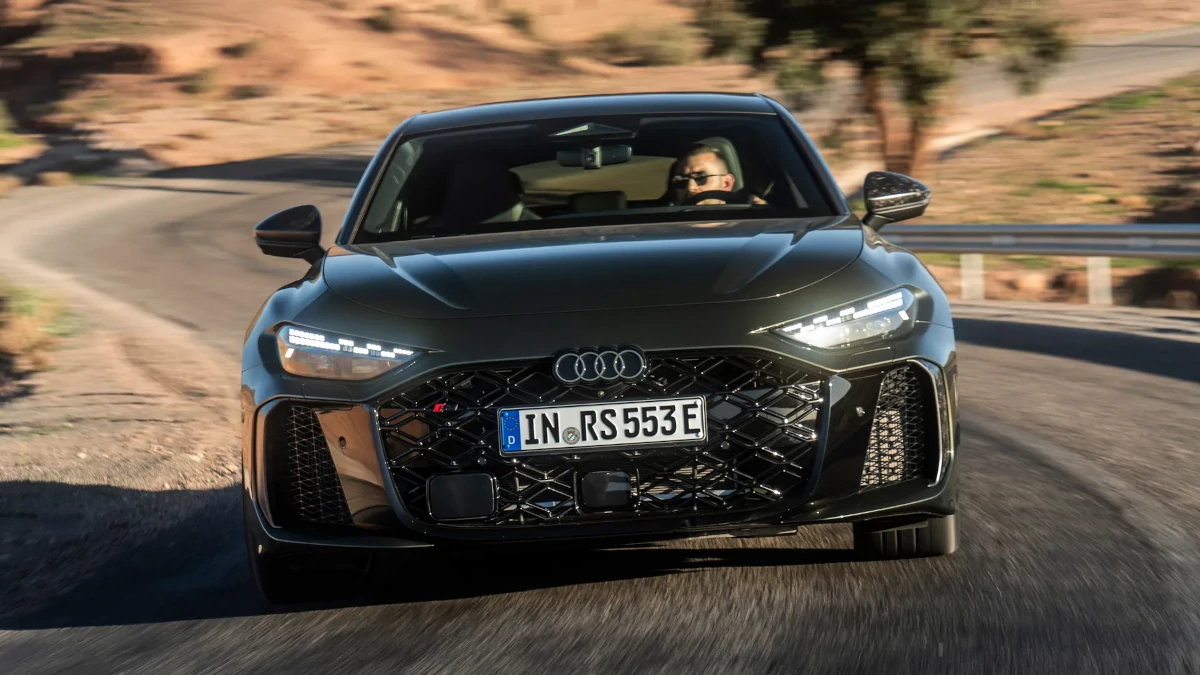
In a straight line, in any of the modes bar the pure EV one, the rear-axle torque vectoring means that the RS5 hooks up in a heartbeat and rockets off the line. At corner entry, it maximizes stability and sharpens turn-in. At corner exit, the torque shifts to the outer wheel and helps rotate the car. There’s a driving dynamics controller in play here that measures steering angle and throttle position as well as monitors g-forces, yaw, and slip angle—and helps target the differential torque as required. All in five milliseconds.
Aside from all that, the RS5 starts in EV mode for silent neighbor-friendly progress. You can alter the sound in this setup for a little more character, and when the engine is on song, it sounds pretty sweet. If not quite as sonorous as those lovely old Audi five-pot engines (which happen to be celebrating their 50th birthday this year).
Notably, the steering is more alive than ever. At 13:1, its ratio is faster and more direct than lesser A5 models. It’s a bit light for our tastes, but what it lacks in feel it makes up for in linearity. In terms of input, it’s ‘one and done’, so you can guide the car with impressive accuracy and fidelity.
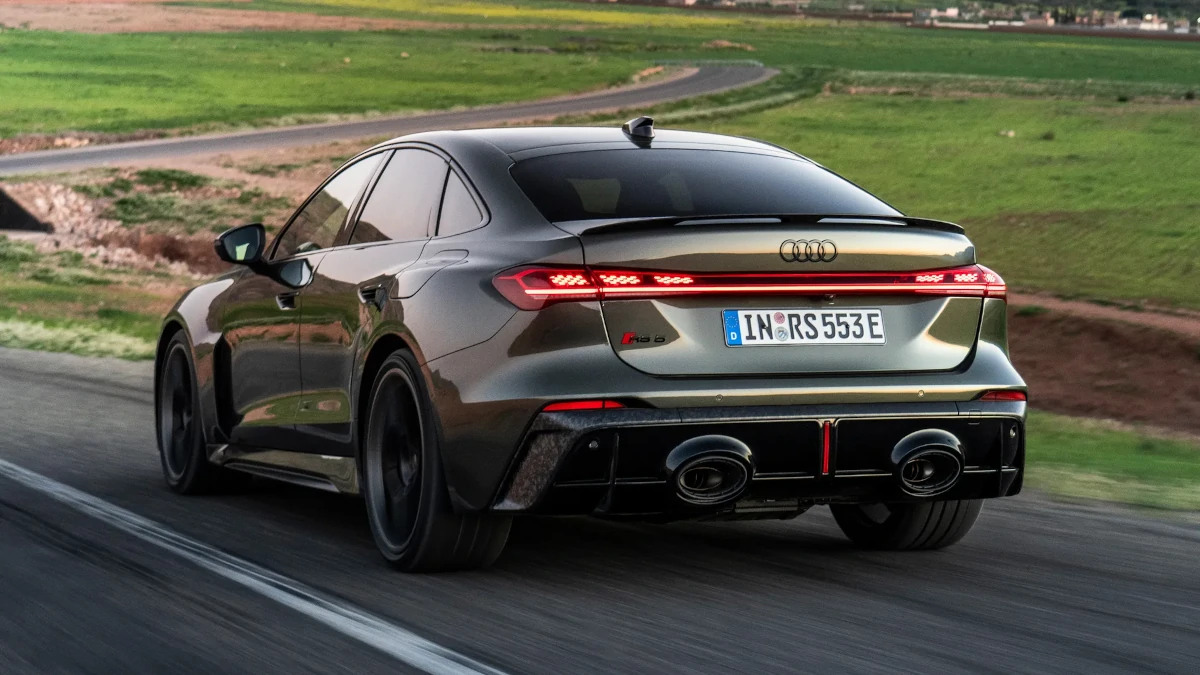
A shout out to the Pirelli rubber, too, a bespoke compound and measuring 285/35 on all corners. Interestingly, the rear tires are fractionally wider than the fronts, and that larger contact patch means they can manage higher lateral loads. There is no shortage of grip or traction in the RS5, and it steadfastly refuses to run out of answers even at full tilt or when asked to change direction suddenly.
It’s also one of the best Audis we’ve ever experienced in terms of braking. At 440mm, the RS5’s front discs are at the limit of what can actually be accommodated. Indeed, those dimensions equate to 17 inches—the diameter of the entire wheel on some early ’90s Ferraris.
The system is brake-by-wire, and relies on regenerative retardation in most situations—the paddle shifters on the wheel handle not just gearshifts but also the amount of regen. Only when you need to wipe off more speed do the friction stoppers actually come into play, and they do so with impressive force and feel. The ABS runs the latest software update and does its thing unobtrusively, even if you absolutely stand on the brakes. We should point out that steel discs are standard, and that the ceramics are an option. We’re waiting to confirm their cost.
2026 Audi RS5 on the inside
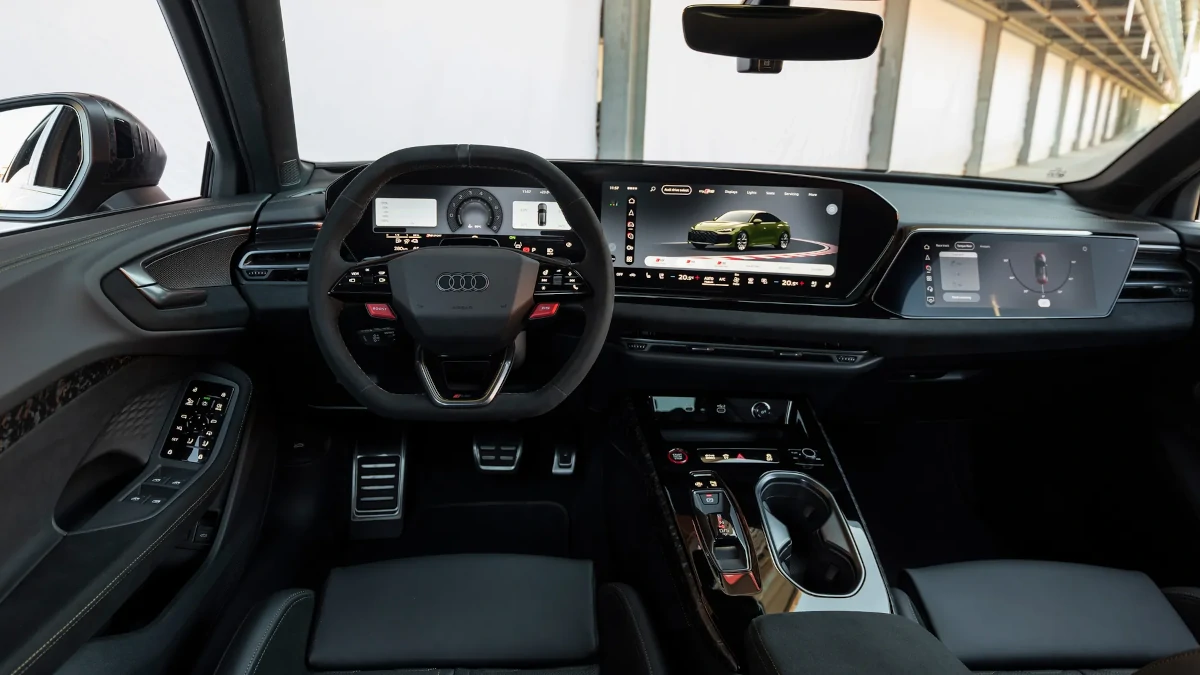
Well, here’s a thing: Gernot Döllner, Audi’s personable CEO, recently set the company on a new path as it ‘strives for clarity.’ Did you know that the brand currently offers more than 100 different steering wheels? That number is coming right down, and you can also expect interior quality to improve and old-school haptics to return.
Not that the RS5’s cockpit is bad. It’s dominated by a single-piece curved ‘MMI Panorama’ screen that contains both an 11.9-inch OLED instrument cluster and a 14.5-inch infotainment display. Passengers also get a display to play with, which is either a nicely democratic move or a waste of time, money, and resource. Personally, we don’t see the point.
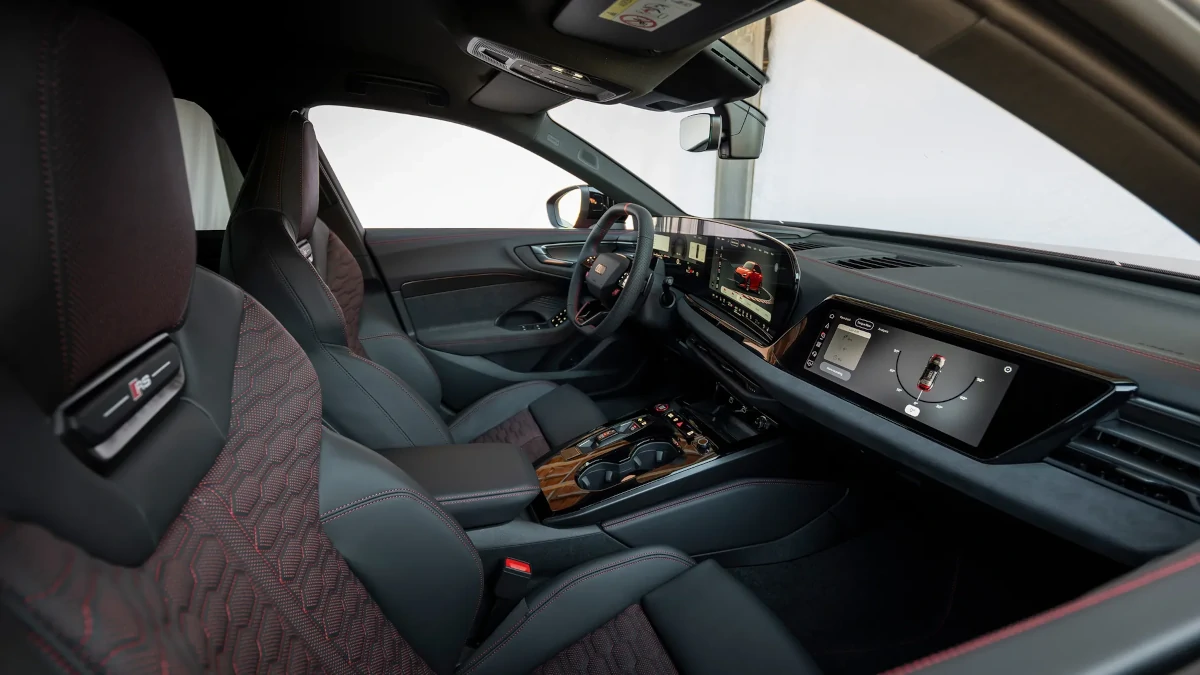
The screens are easier to use than some rivals’ efforts, with less scope for distraction and an easily understood hierarchy. There are useful shortcuts, most of the graphics are pretty cool, and we like the augmented-reality head-up display. But we’re less enamored of the panel on the doors for mirror adjustment, and the overall lack of physical switchgear. Also, the buttons that are here feel rather cheap.
For RS-specific bits, the dials in the main display are more sporty, and you can configure the instrument cluster to show a big rev counter and a shift light. There’s additional performance data, including g-force readouts, tire temp and pressure monitoring, lap times, and more on the powertrain and launch control. The HUD (still optional) also relays more RS info.
Audi’s driving experience function enables detailed analysis of what the driver gets up to, and records data on accelerator and brake use, oversteer, understeer, and driftwinkel, as well as lateral, longitudinal, and overall acceleration. The system creates new track profiles, too, and allows the driver to compare individual sectors and split times. Our car also featured a built-in dashcam.
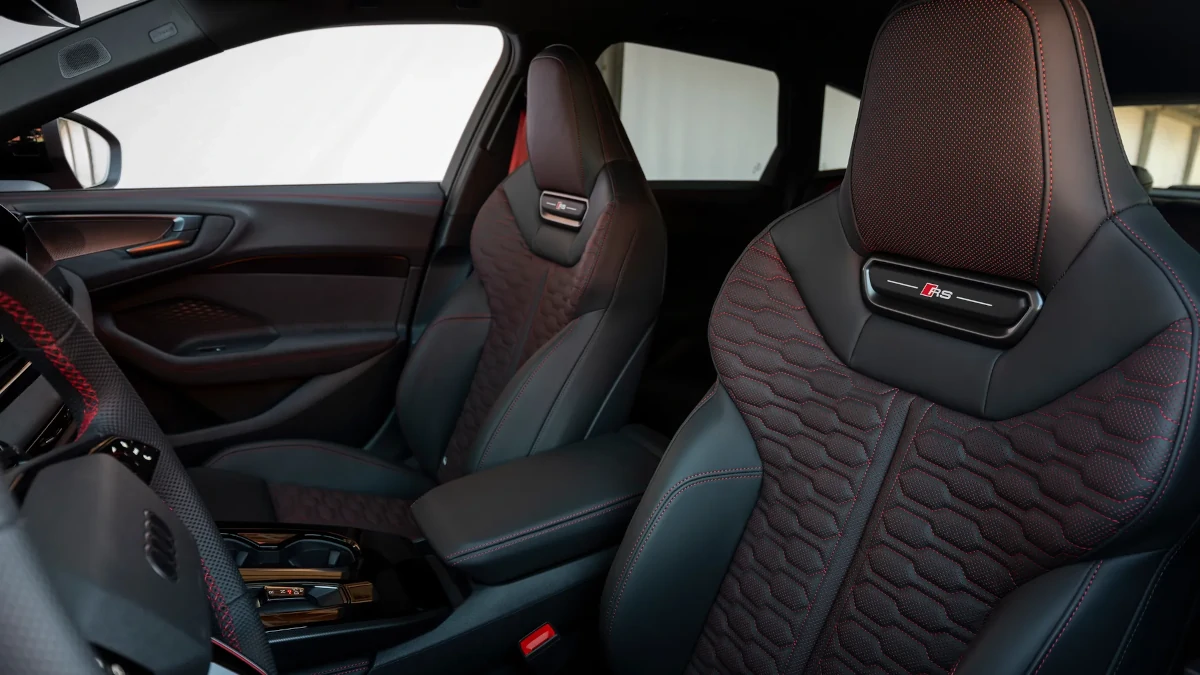
Funnily enough, we didn’t love the look or shape of the steering wheel, although the RS and Boost buttons are cool.
Overall, the cabin is a little overcooked in places, perhaps. But the seats are highly supportive and come in five different designs. The RS5 gets color-coded seatbelts and logos on the floor mats, there’s contrast stitching, and the interior is leather-free. Suede-mimicking ‘Dinamica’ microfiber is much in evidence. Various inlays are available, including the RS-specific aluminum rhombus in black lacquer.
Over at the back, the Avant has 361 liters of cargo space with the rear seats in place—134 liters less than its RS4 predecessor and far less than you get in the M3 Touring. Oops. The new car can swallow 1,302 liters with the seats folded, at least. No prizes for guessing that the battery’s location under the cargo floor has compromised practicality.
Final thoughts on the 2026 Audi RS5
The PHEV format means compromise, and there are plenty of us who yearn for simpler times. Maybe we’ve gotten used to it, or maybe the engineers are getting the hang of it all now, but the RS5 manages to surmount the various challenges and blend the elements more successfully than most.
Rather than wring their hands at the weight penalty, Audi’s RS team has taken the opportunities the hybrid system presents and run with it. Forget the drift mode, as fun as it is—the RS5 torque-vectors its way out of trouble very convincingly. It might be heavy, but there’s light and shade to its dynamics, and some real personality here, too.
Keith Richards once famously said of Rolling Stones frontman Mick Jagger that “he was a lovely bunch of guys.” The RS5 certainly packs a disparate group of personalities into one package, and risks an identity crisis as a result. But they all seem to coexist harmoniously, and we can’t imagine anything covering real-world ground much faster than this—especially in greasy conditions. This time, the potential for extra amusement is baked in.
NOTE: This article first appeared on TopGear.com. Minor edits have been made.