M3? THERE'VE BEEN LOADS. REMIND ME…THE E46?
Let’s dive into code-speak. The first M3 in 1986—the square boxy one—was loosely based on the E30 3-Series and had a four-cylinder engine. That M3 really was a homologation special, spun off a car created for racing. Back then, everyone understood M stood for motorsport, which it no longer officially does.
Then came the 1992 M3, based on the E36, a car that was a step-change different in style and engineering from the E30. That second M3 wasn’t at heart a racer, so the bodywork had fewer mods, and the engine was a straight six—wonderful in a road car but not built with any competition class in mind.
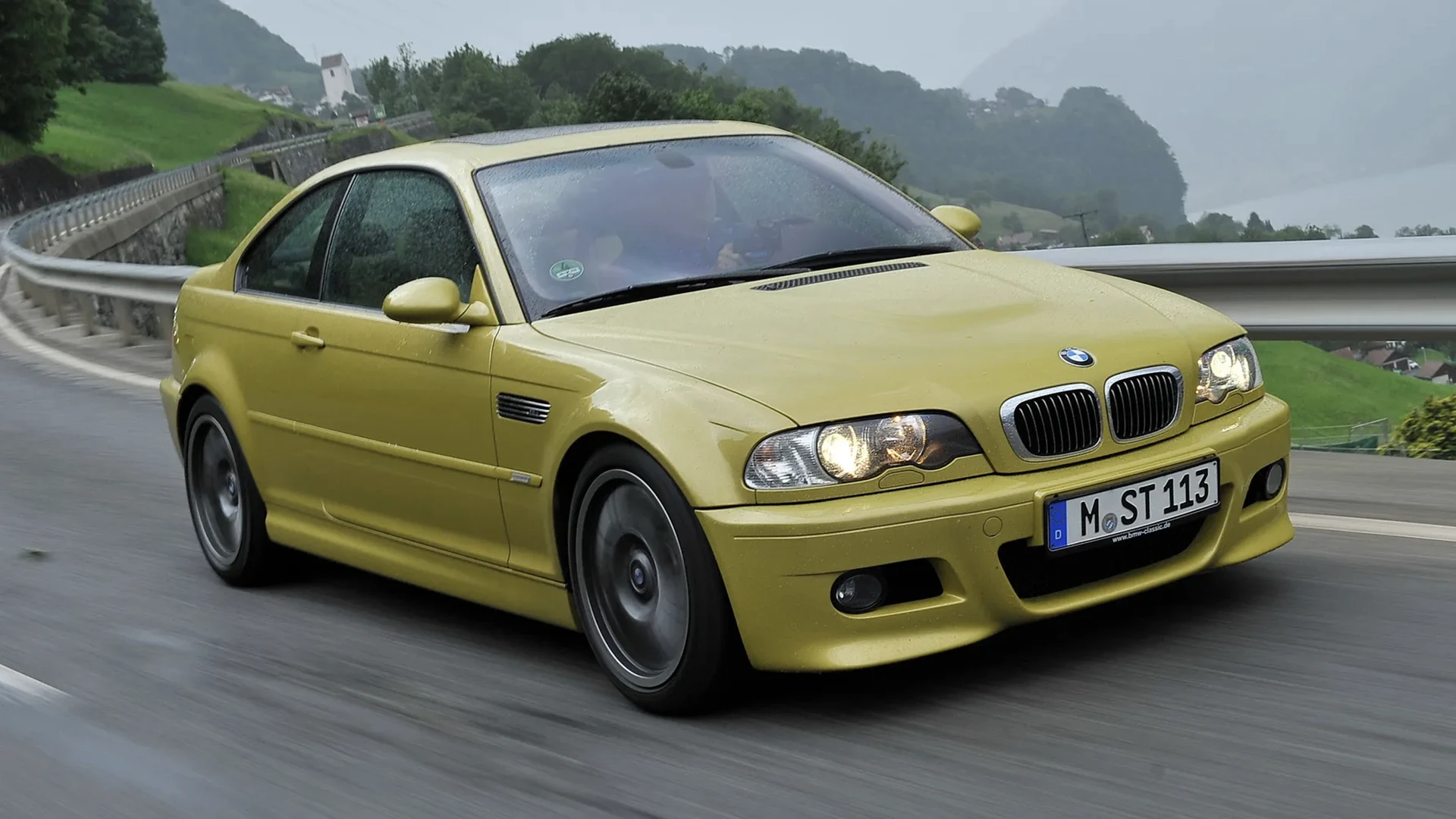
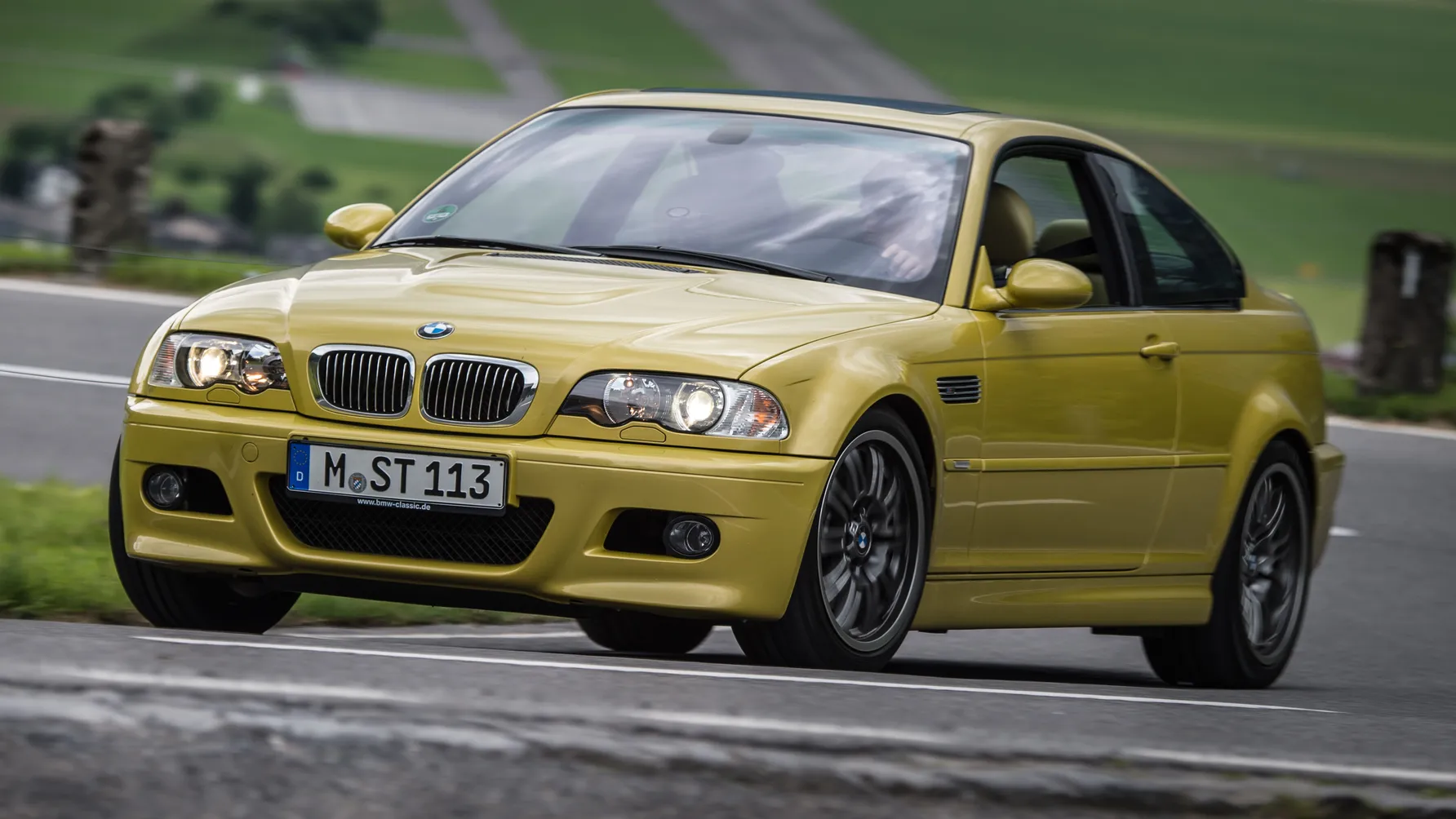
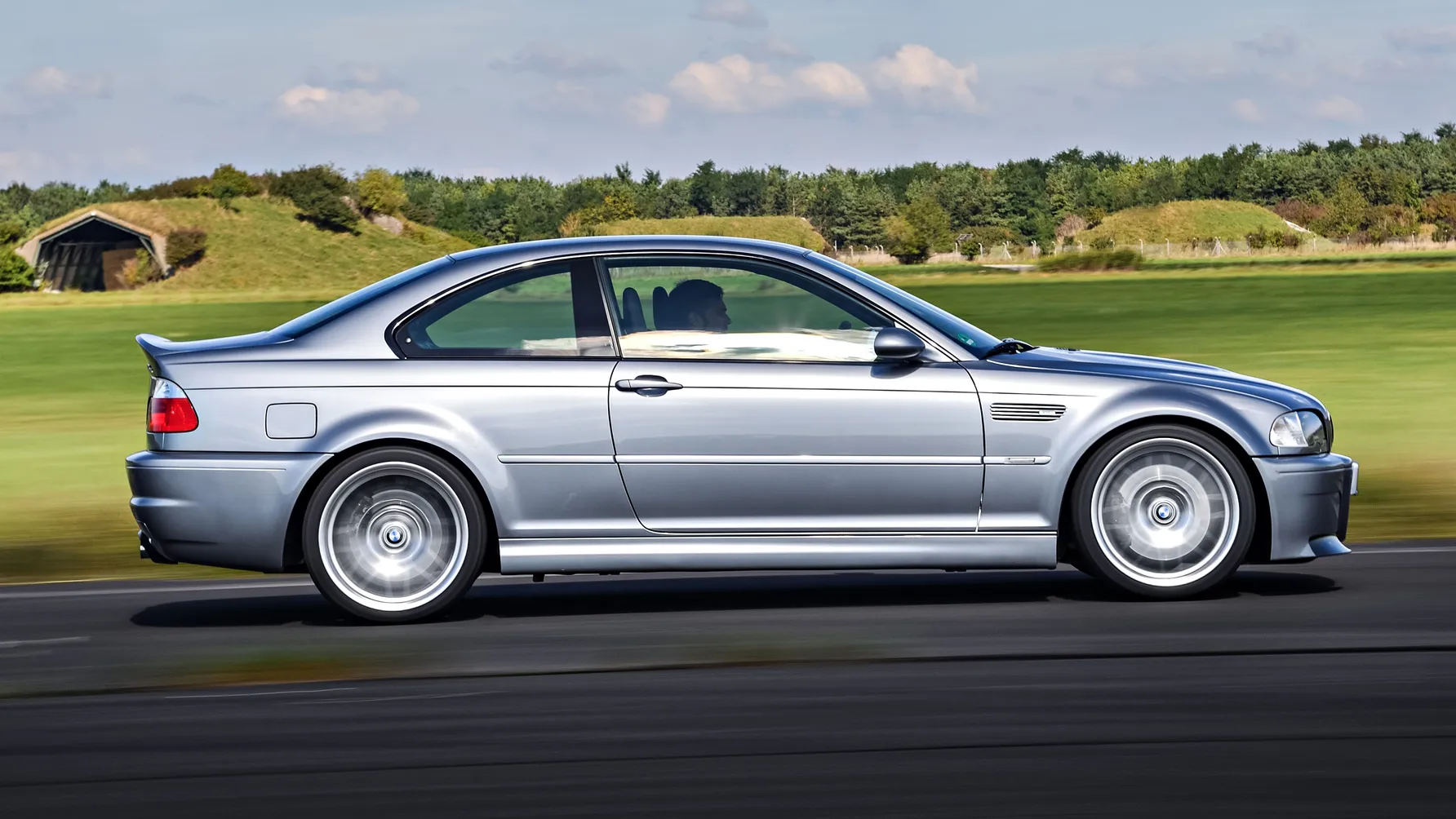
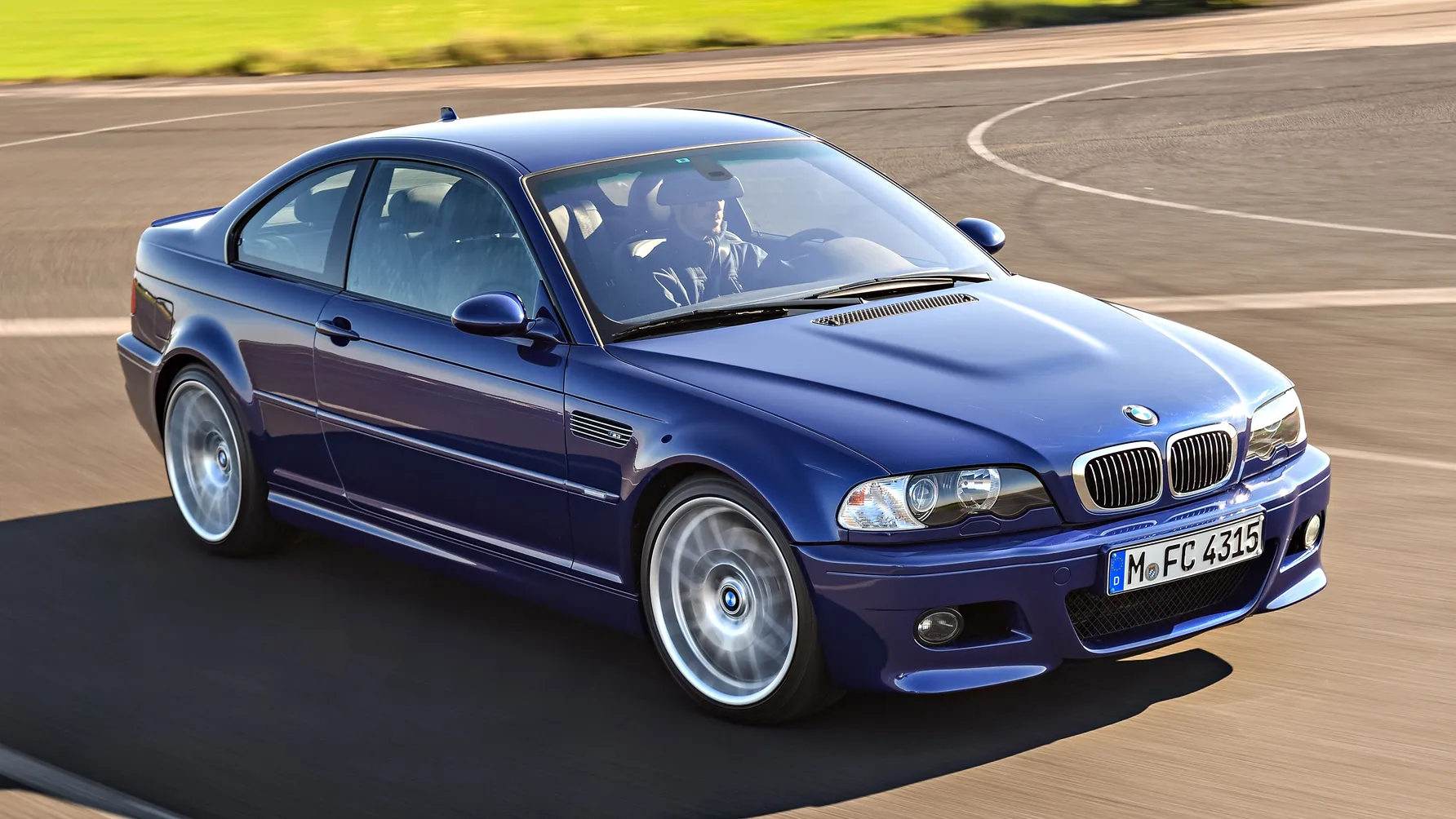
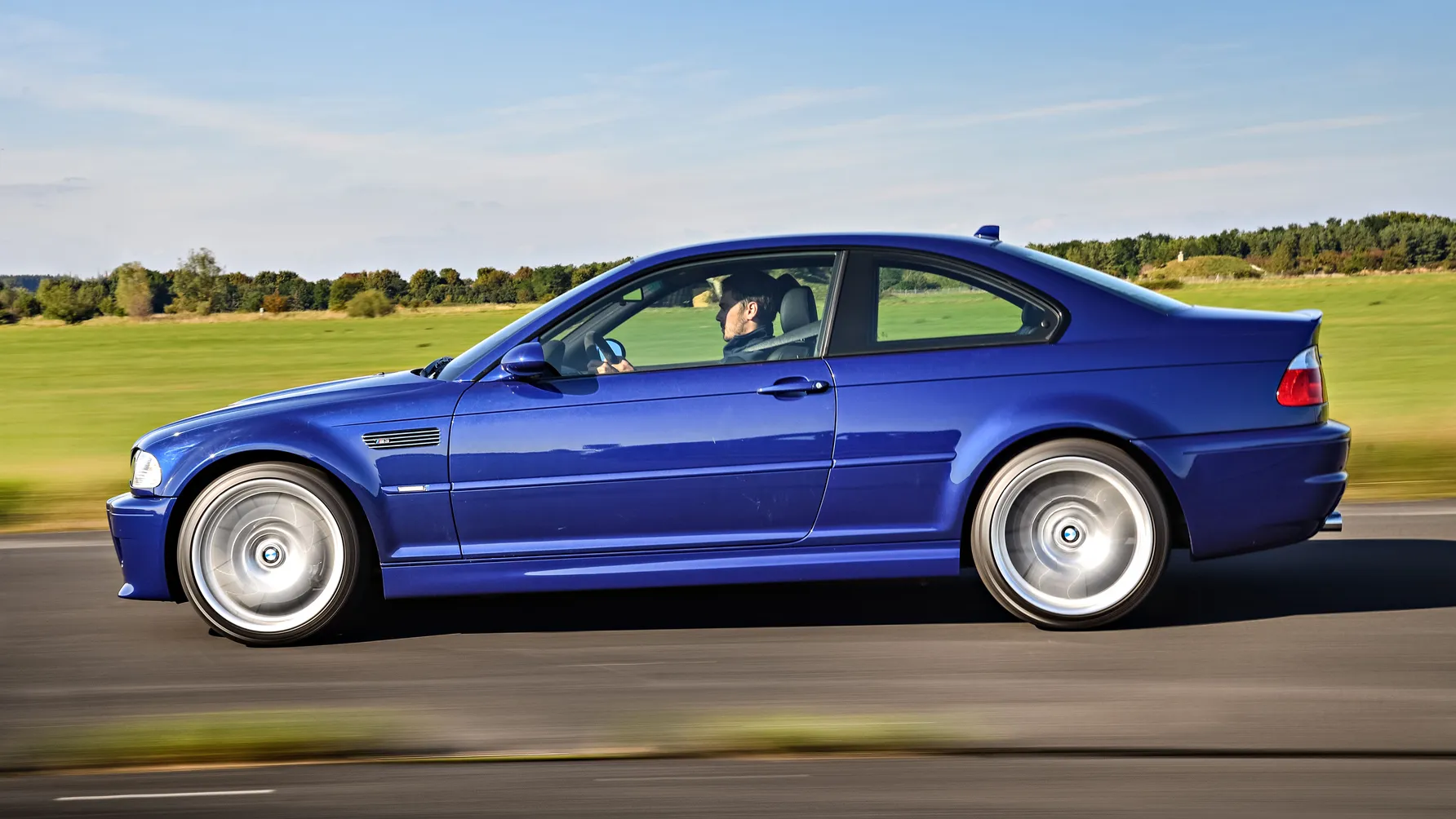
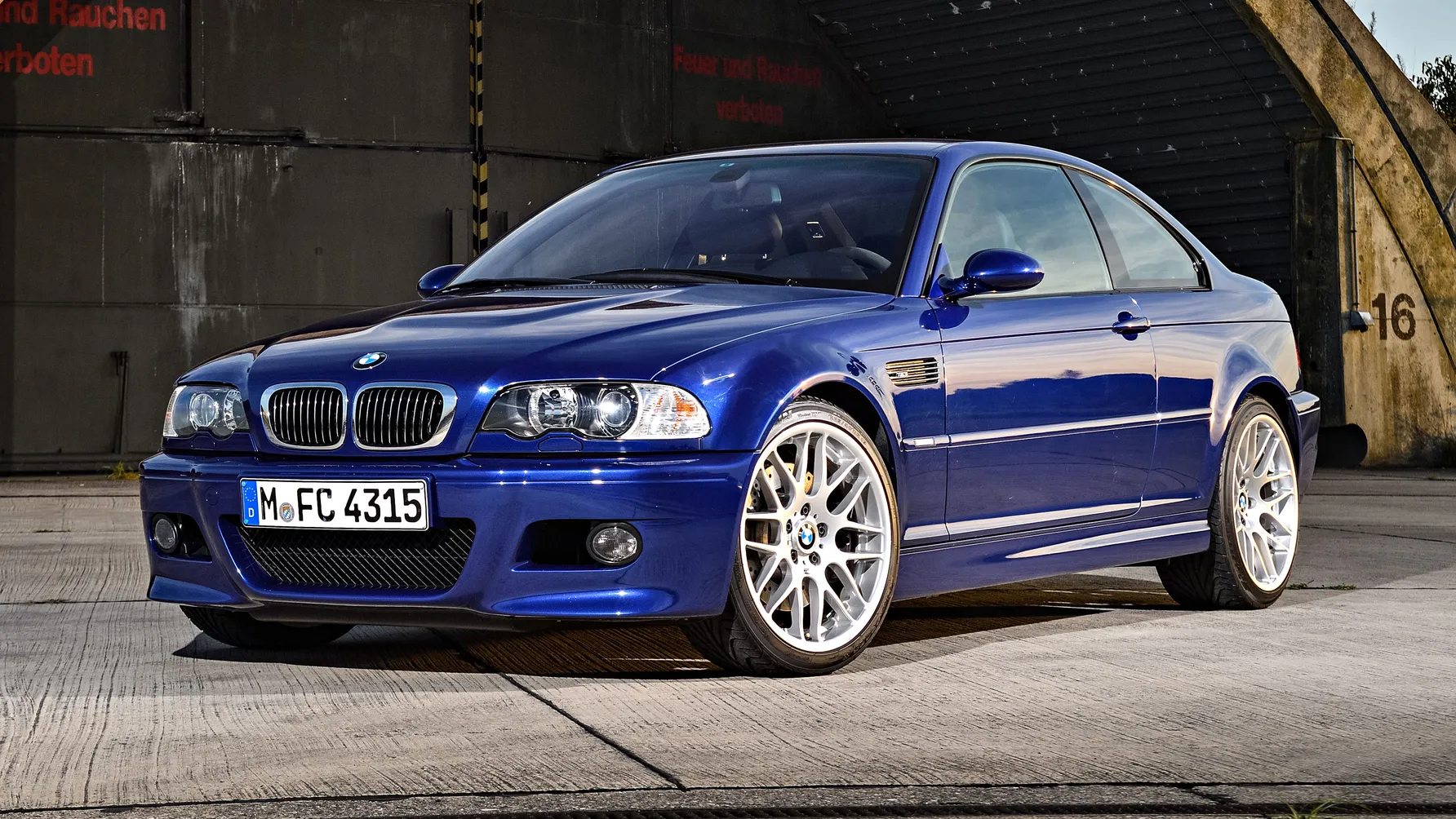
The M3 we’re here to look at, the E46 generation, arrived in 2000. The E46 evolved the E36’s design and engineering themes in smoother and more sophisticated directions. The M3 was built as a two-door hardtop or convertible.
AND WHAT SORT OF CAR WAS IT?
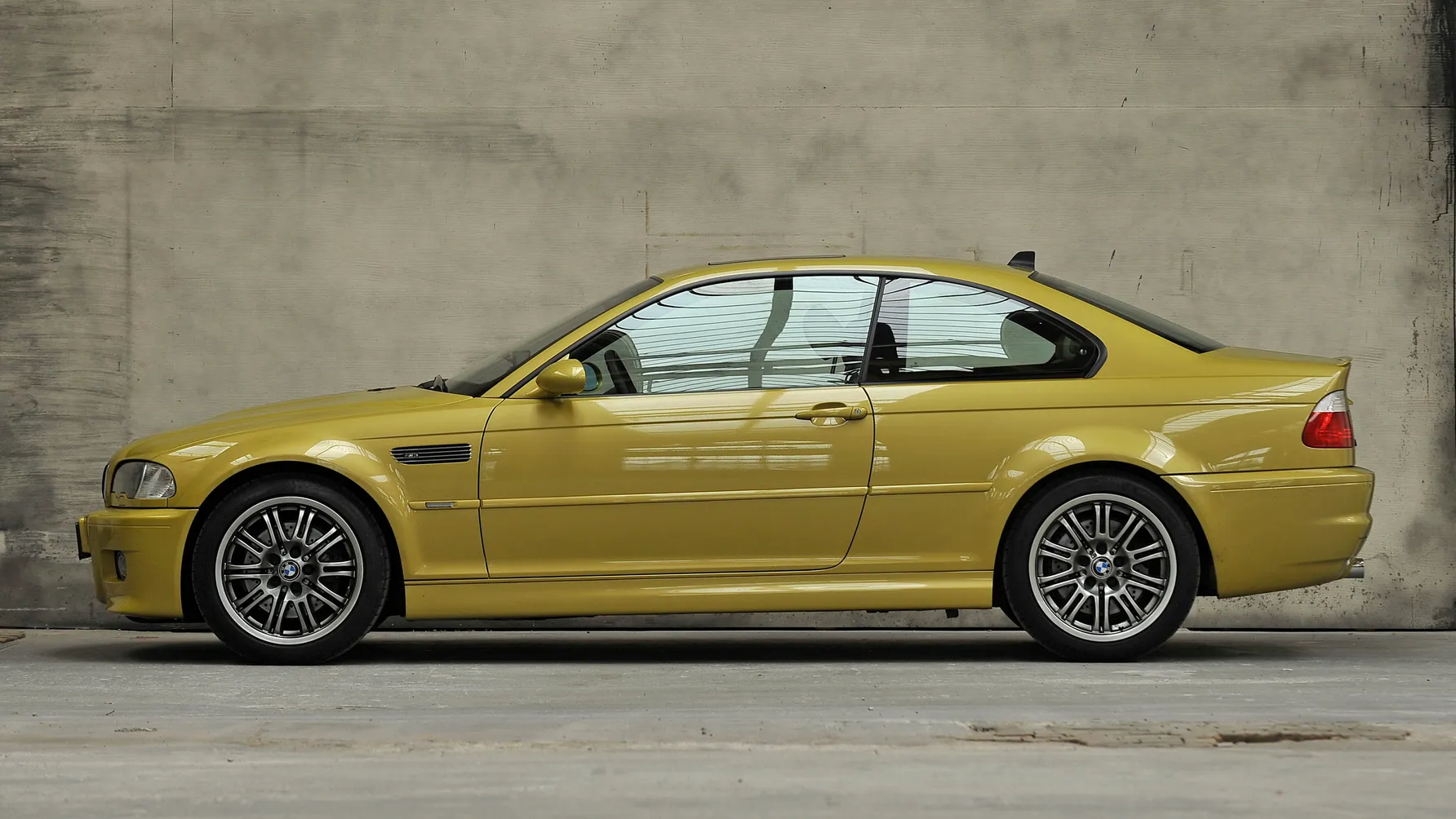
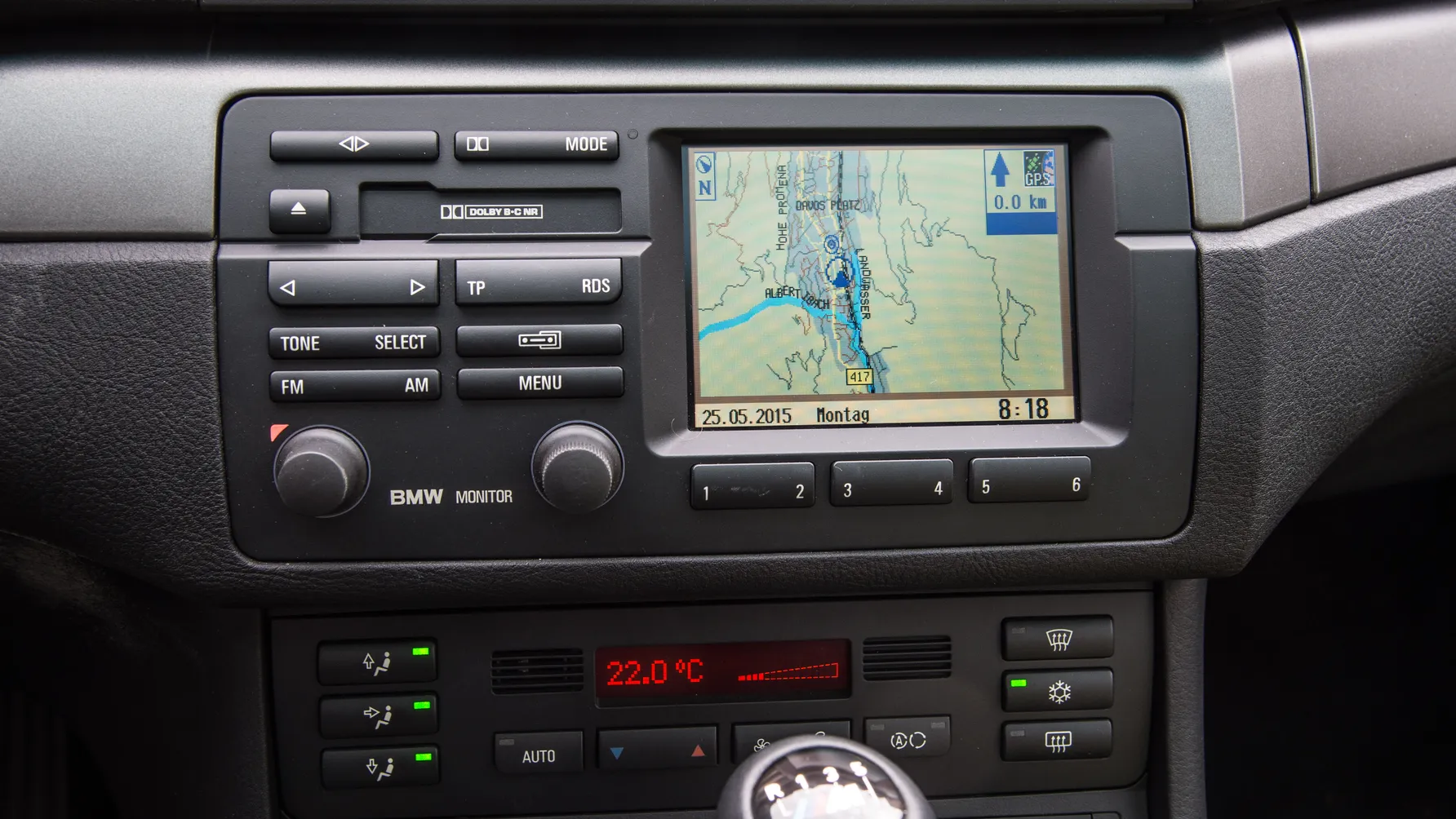
BMW realized most buyers wanted luxury, so this millennial M3 was stacked with all the kit the era could muster, including early versions of navigation and voice activation, though praise be it launched a year too soon to get BMW’s first-generation iDrive.
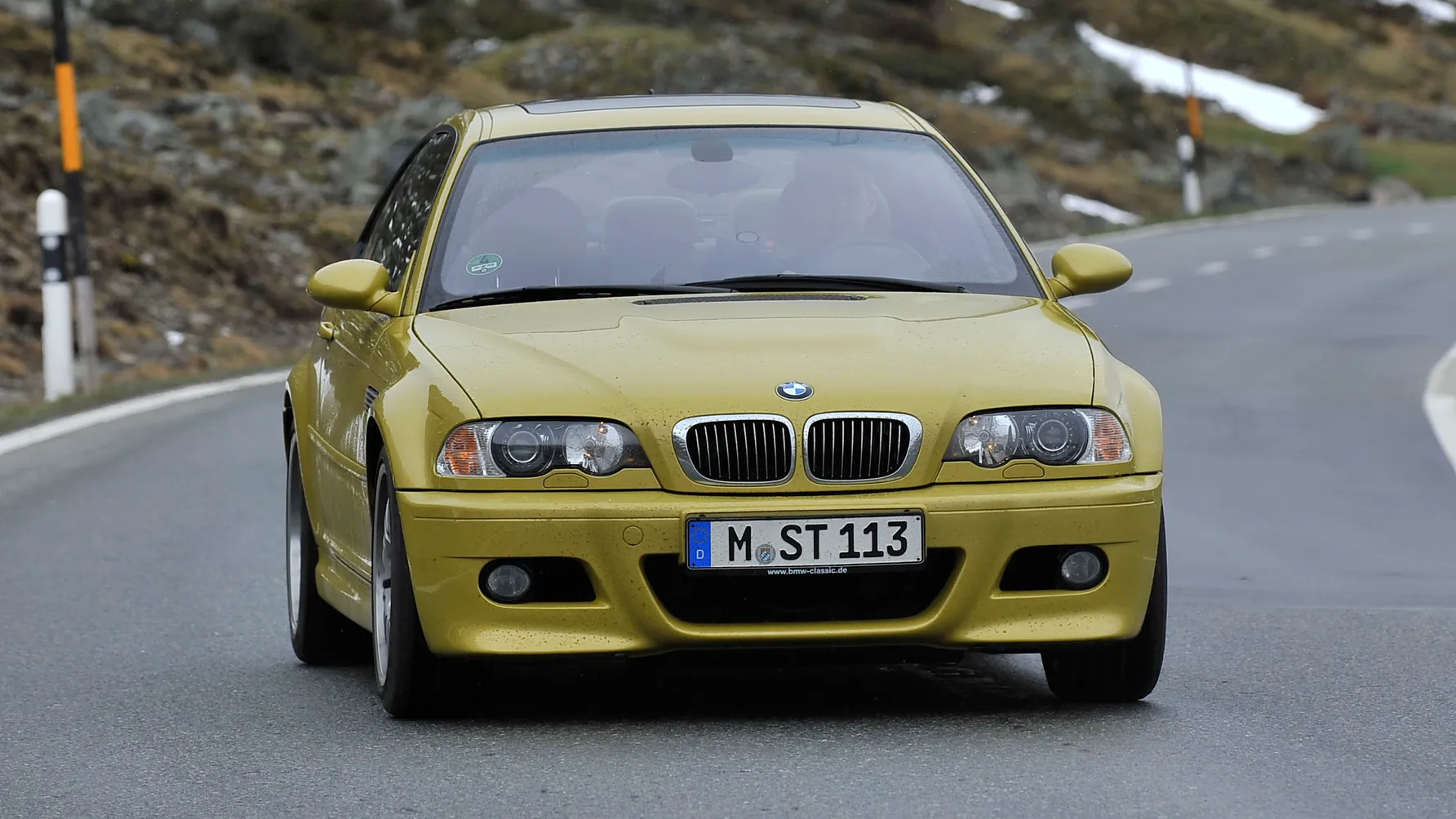
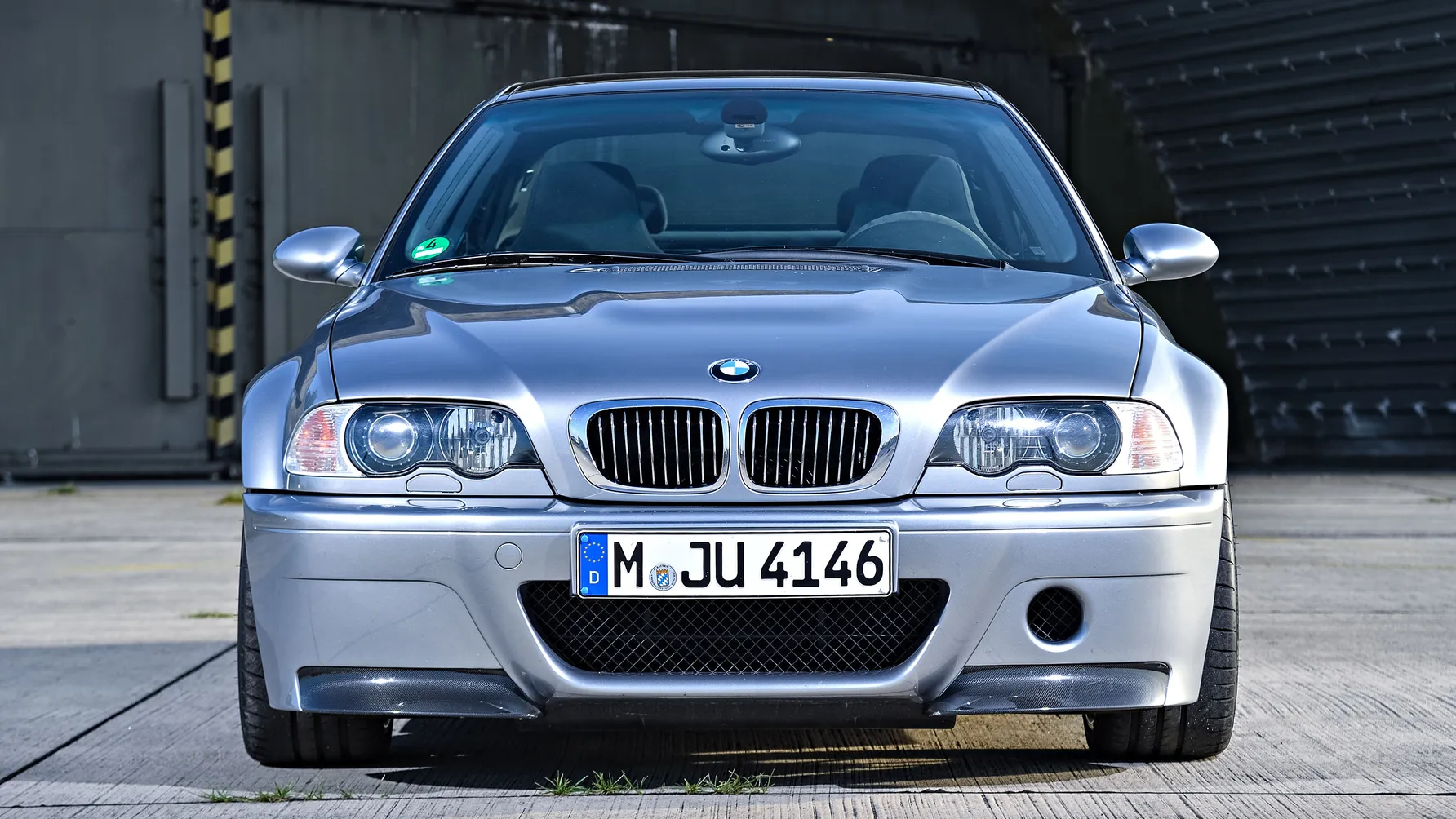
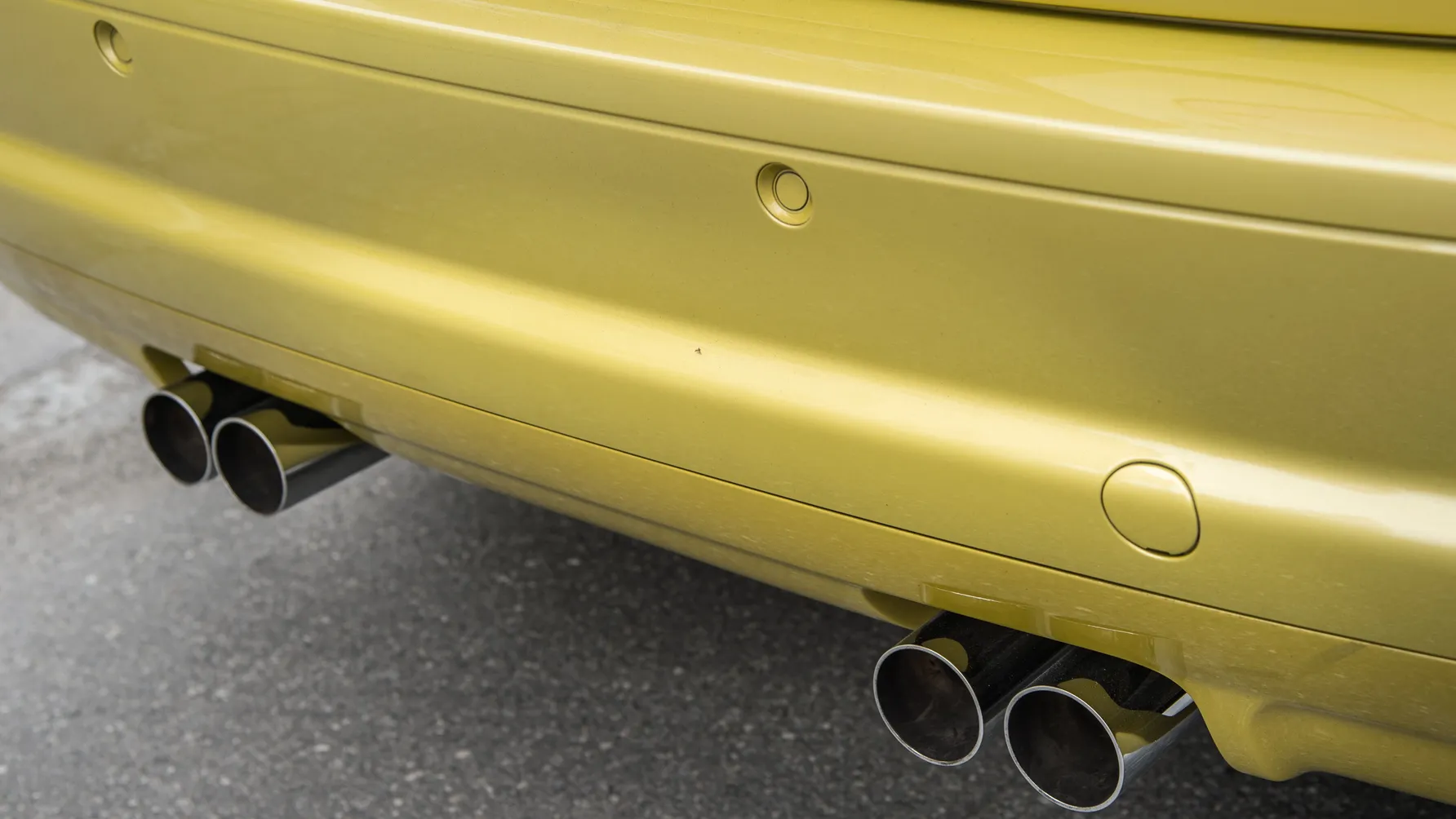
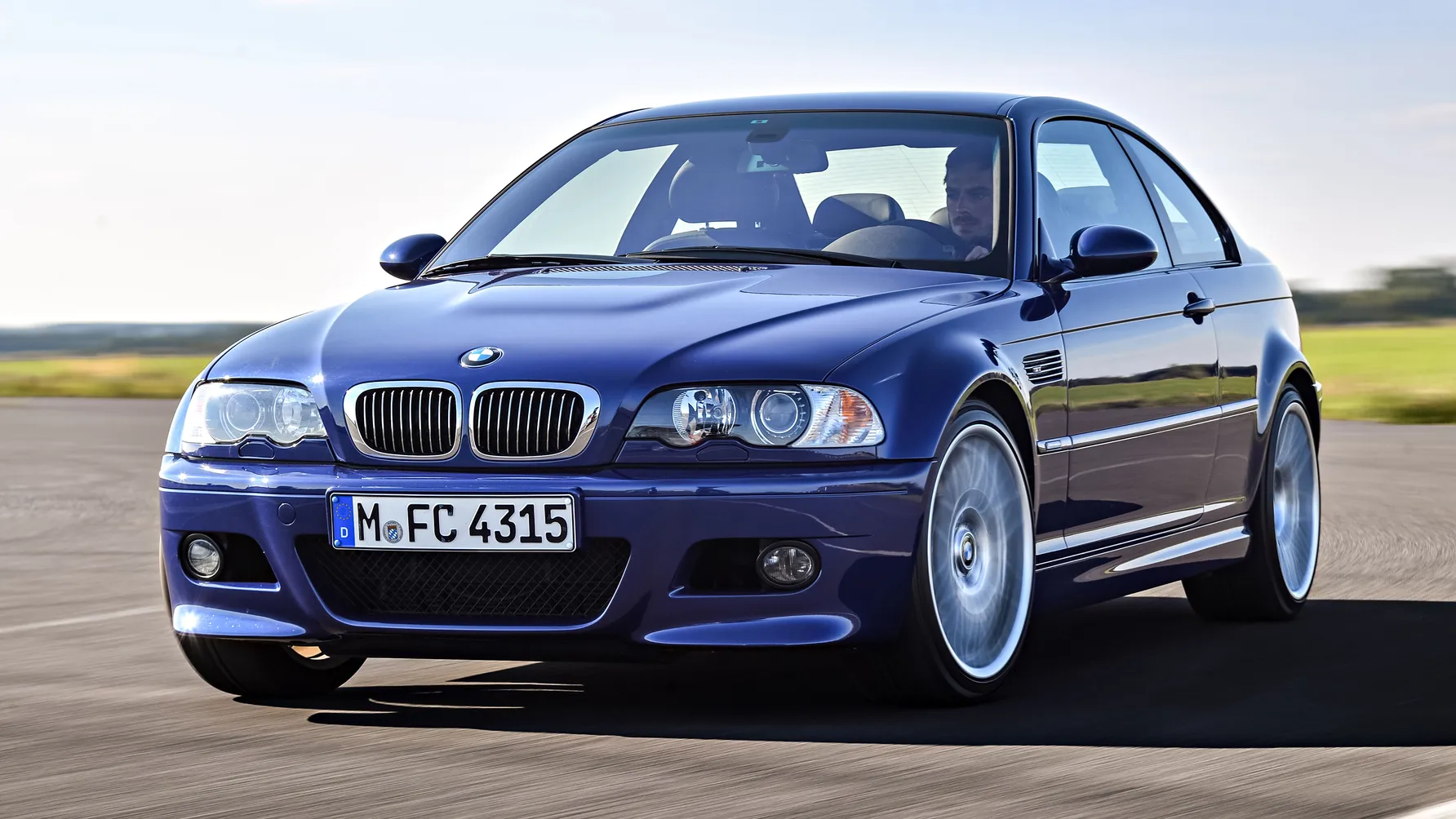
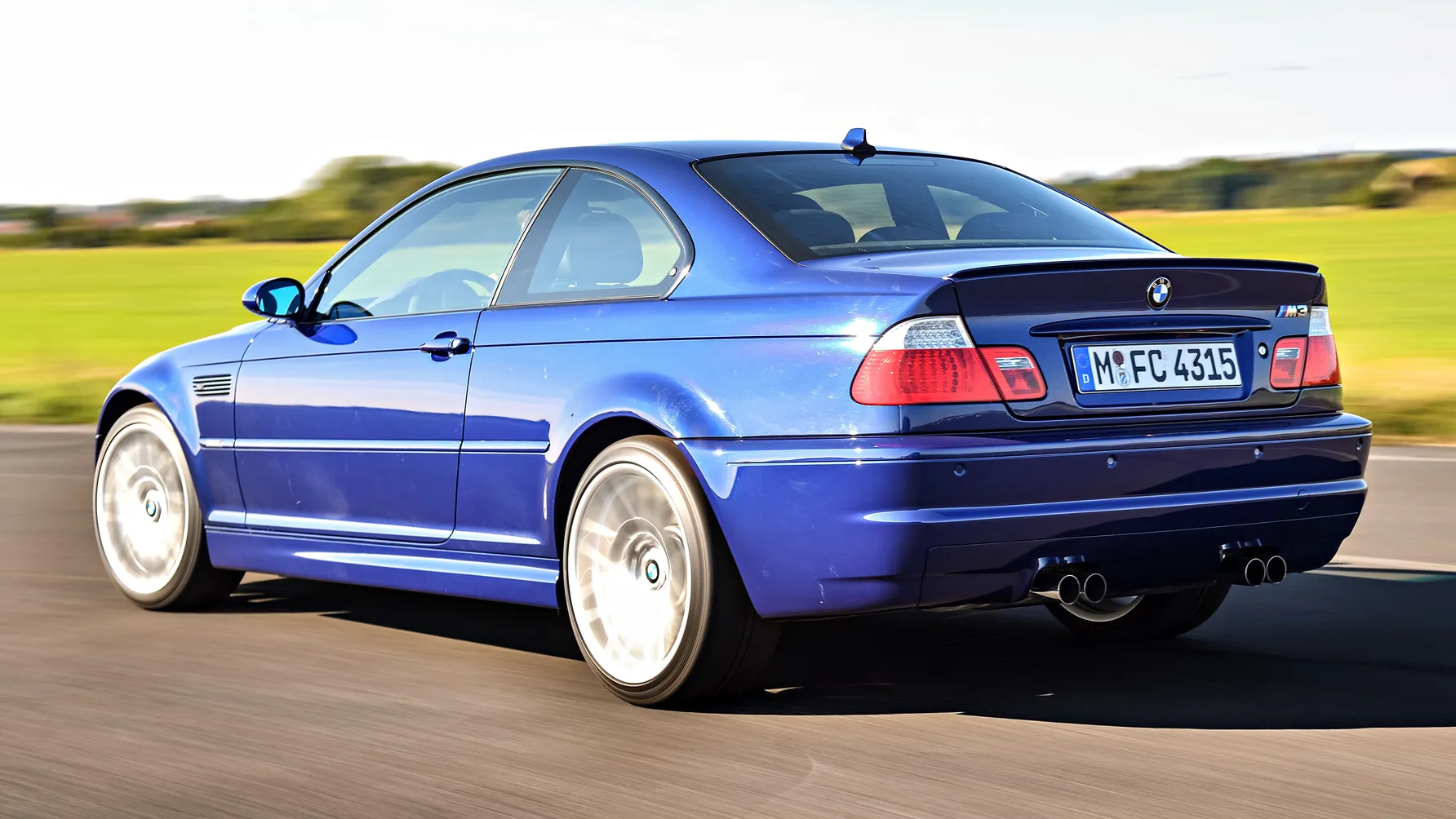
Because of the luxury, I guess some people must have been upsold into an M3 from a 330i. But those people can’t have been paying attention. It looked very different. The wheel arches were distended to cover a widened track and bolstered wheels, tires, and brakes. The hood bulged, and the front end had gulping intakes and snorting vents. The tail ended with a trunk spoiler and the four fat pipes. They all meant something.
MEANING WHAT?
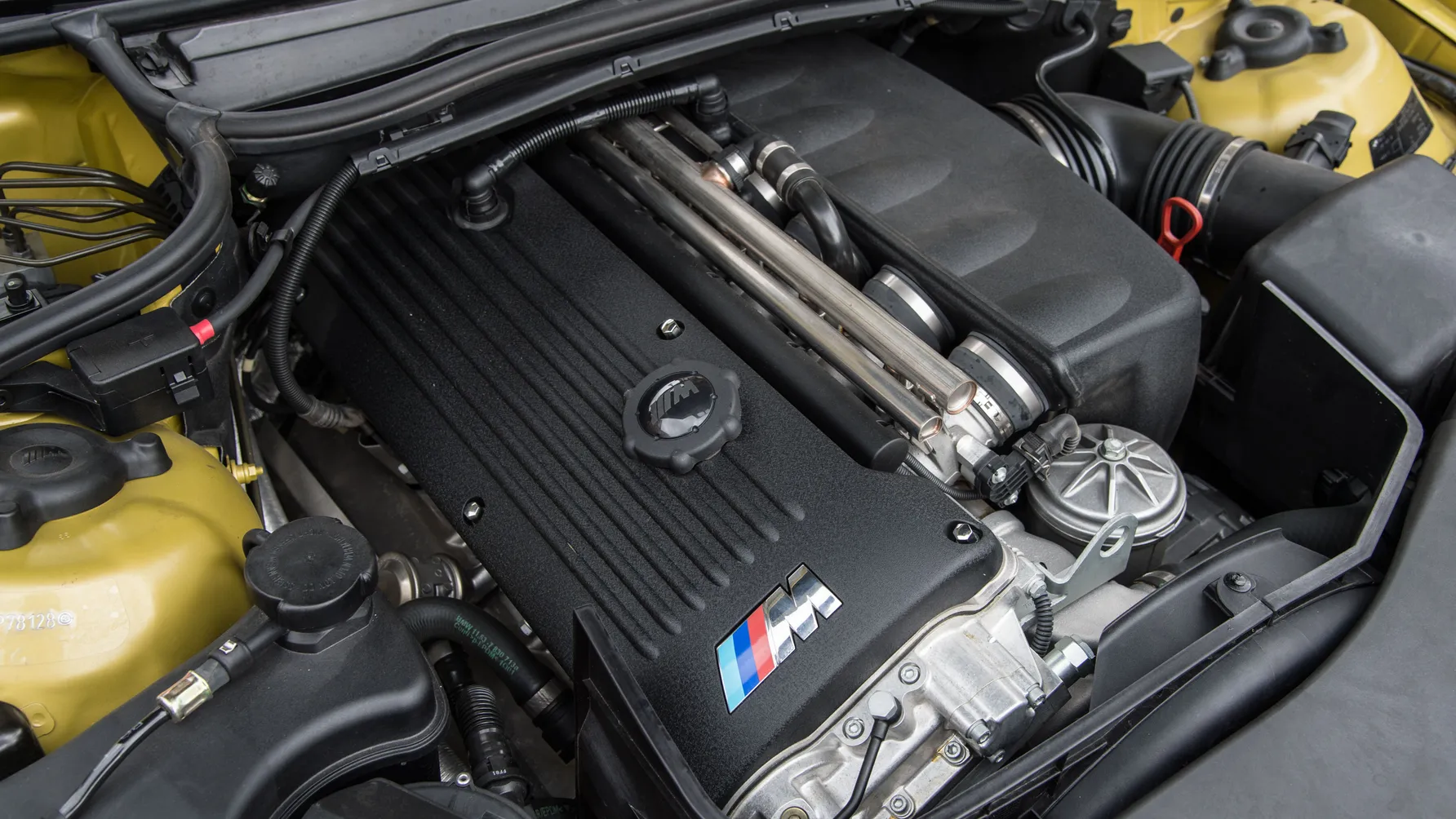
Those were the outward signs of the inner purpose: giving an honorable home to the S54 straight-six engine. This naturally aspirated gem had individual throttle bodies, an M trademark solution for ultra-quick and precise response. It was derived from the S50 engine in the previous M3, but got redesigned pistons, rods, and crankshaft—all stronger and lighter. There was also a super-brainy new engine management.
The numbers: 343hp from just 3.2 liters, an astounding specific output. It bolted to 100kph in around 5.0sec, which was 911 performance at the time.
That’s the dry and inorganic tech. For the driver, it meant an engine with an organic soul. At low revs, it was sweet but far from brutal—torque was just 364Nm. This doesn’t matter because all you want to do is rev the thing.
Any twitch of the pedal had it surging ahead with the energy of an unbound spring. The sound was a sweet harmony in the mid ranges, taking on an enthralling power chord toward the 8,000rpm limit. At that rotational speed, the S54 was absolutely revelling in the frenzy.
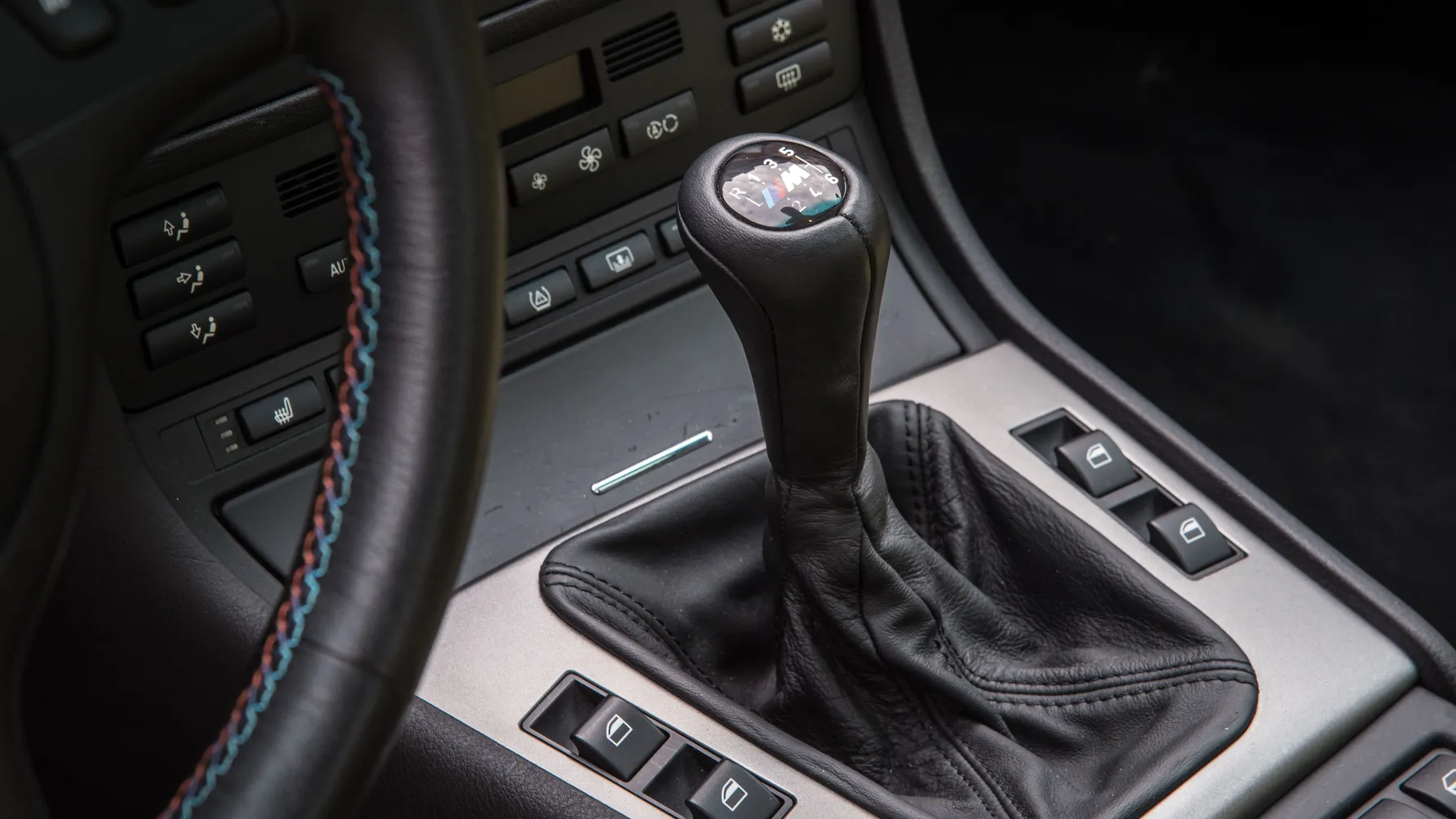
It came with a choice of manual gearbox or a single-clutch automated manual flappy-paddle (and they were flappy, cheapo plastic items) called SMG. Heaven help the buyers who just ticked every box for the dearest 3-Series and thought they were getting a proper auto. The SMG had a rocker switch allowing you to choose from six different sorts of jerk in the shift, from slow thunk to vicious bang.
ALSO READ:
First drive: The fully electric BMW i3 Prototype is rather impressive
The ‘Superhooligan’ is a custom R1300 R that celebrates BMW’s first Daytona win
DID IT HANDLE AS WELL AS IT WENT?
Grip was huge, traction slightly less so, but this car was beautifully behaved at or beyond that limit, when a clever limited-slip differential kept things as tidy as your skills allowed. Great for playing on a track.
But here’s the thing. Up to that point, you were (well, I always was) flummoxed by numb and gluey steering. On a real road at real speeds, especially if a bit bumpy or damp, the M3 seemed to be holding back from the conversation. It eroded your confidence a bit.
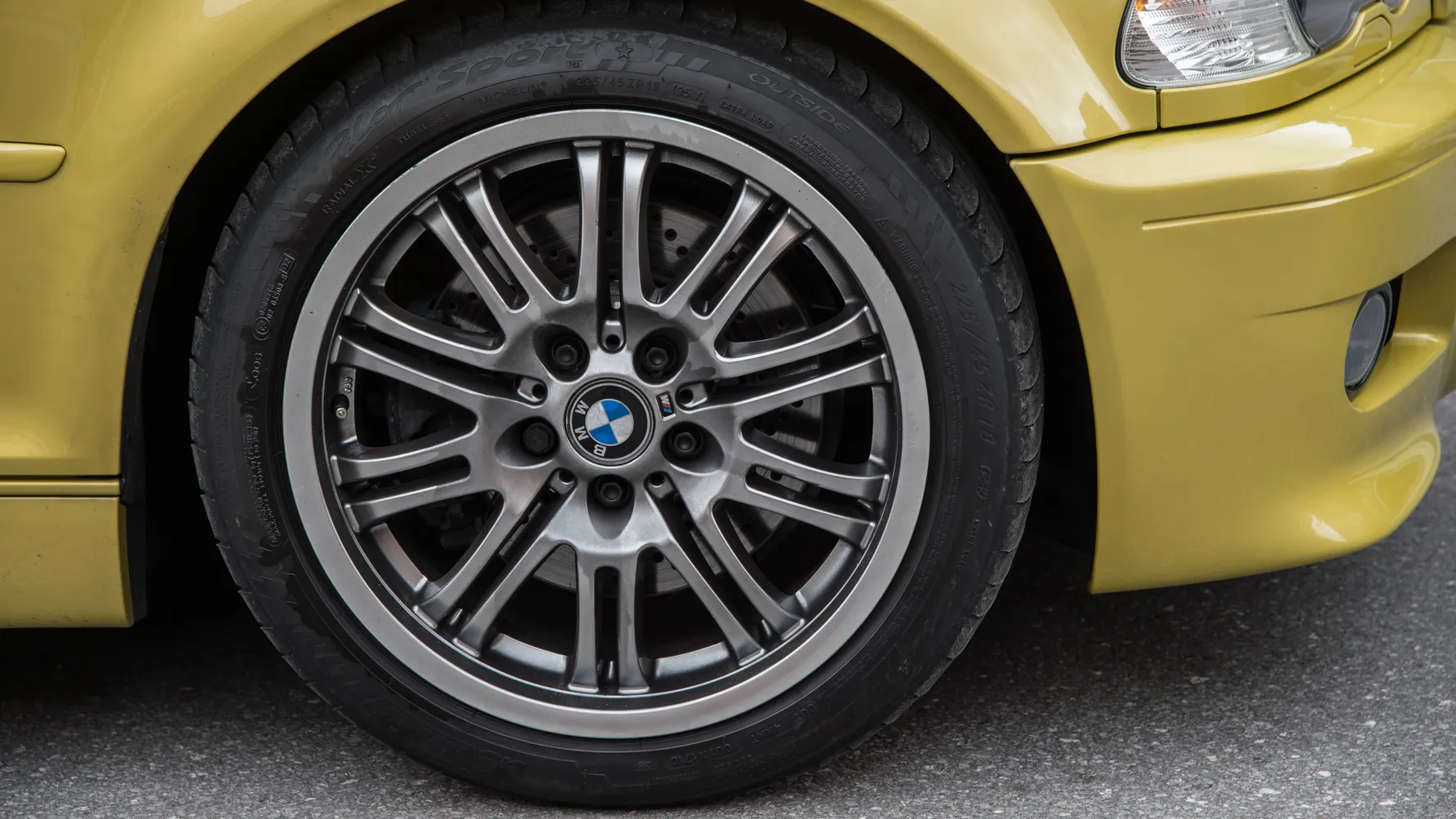
Still, at road speeds, the brakes were terrific. Hard users grumbled they weren’t so solid on track, and there’s your irony: The steering is track-friendly, the brakes the opposite.
But let’s not get all this carping out of hand. This was still a fabulous car. The performance and dynamics were 911-adjacent in degree, if different in character because the engines were at opposite ends. But it was more practical than even that most excellently practical sports car from Porsche.
SO I COULD, IN THE PHRASE THAT WAS NEVER USED IN 2000, ‘DAILY IT?’
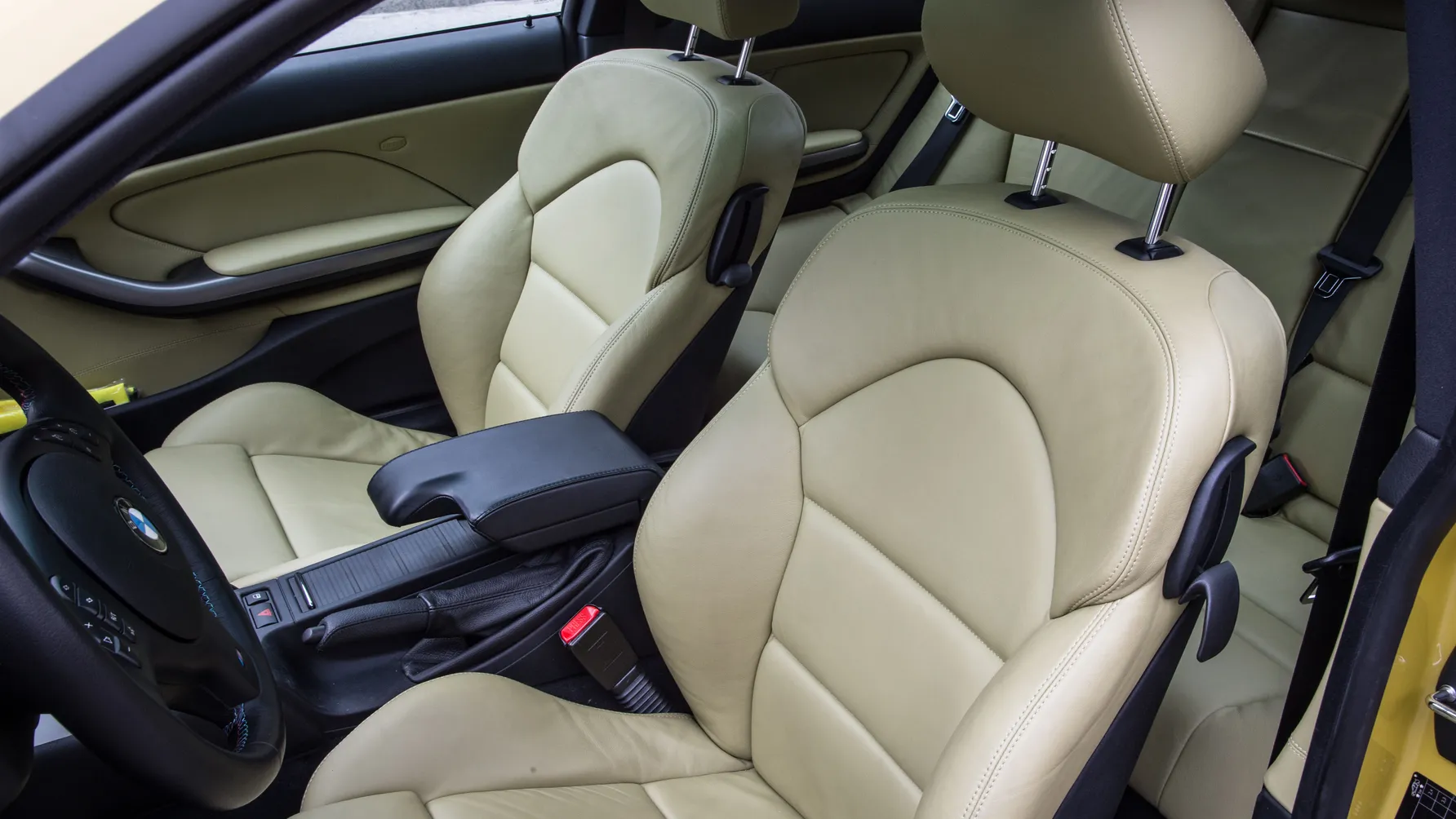
Well, it’s a 3-Series, so it has four seats and a trunk. It’s also got a cabin of beautiful and pretty long-lasting materials. That makes it satisfying, but from today’s perspective, it also means it’ll likely have survived with its dignity intact the quarter-century since it was built.
DID THEY DO AN M3 COMPETITION LIKE THEY ALWAYS DO NOW?
Nope. This time, the later hotter version was called CSL.
WHAT, LIKE THE 1972 3.0 CSL? THE BATMOBILE?
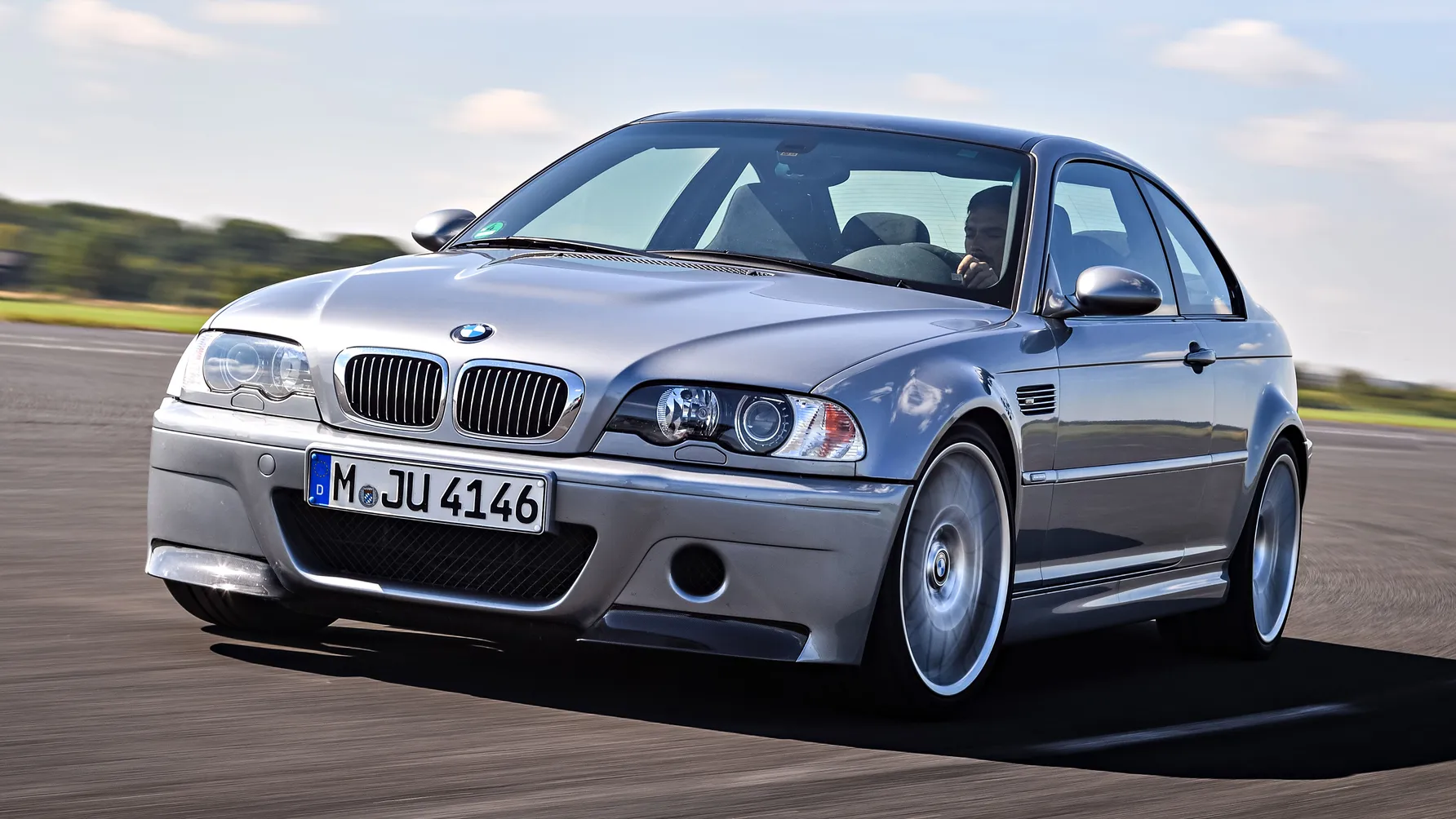
The very one. The 3.0 CSL was a homologation special (like the E30 M3), but the M3 CSL wasn’t really a racer. That said, the M3 CSL did carry enough changes to earn that hallowed badge. And ended up pretty darned special.
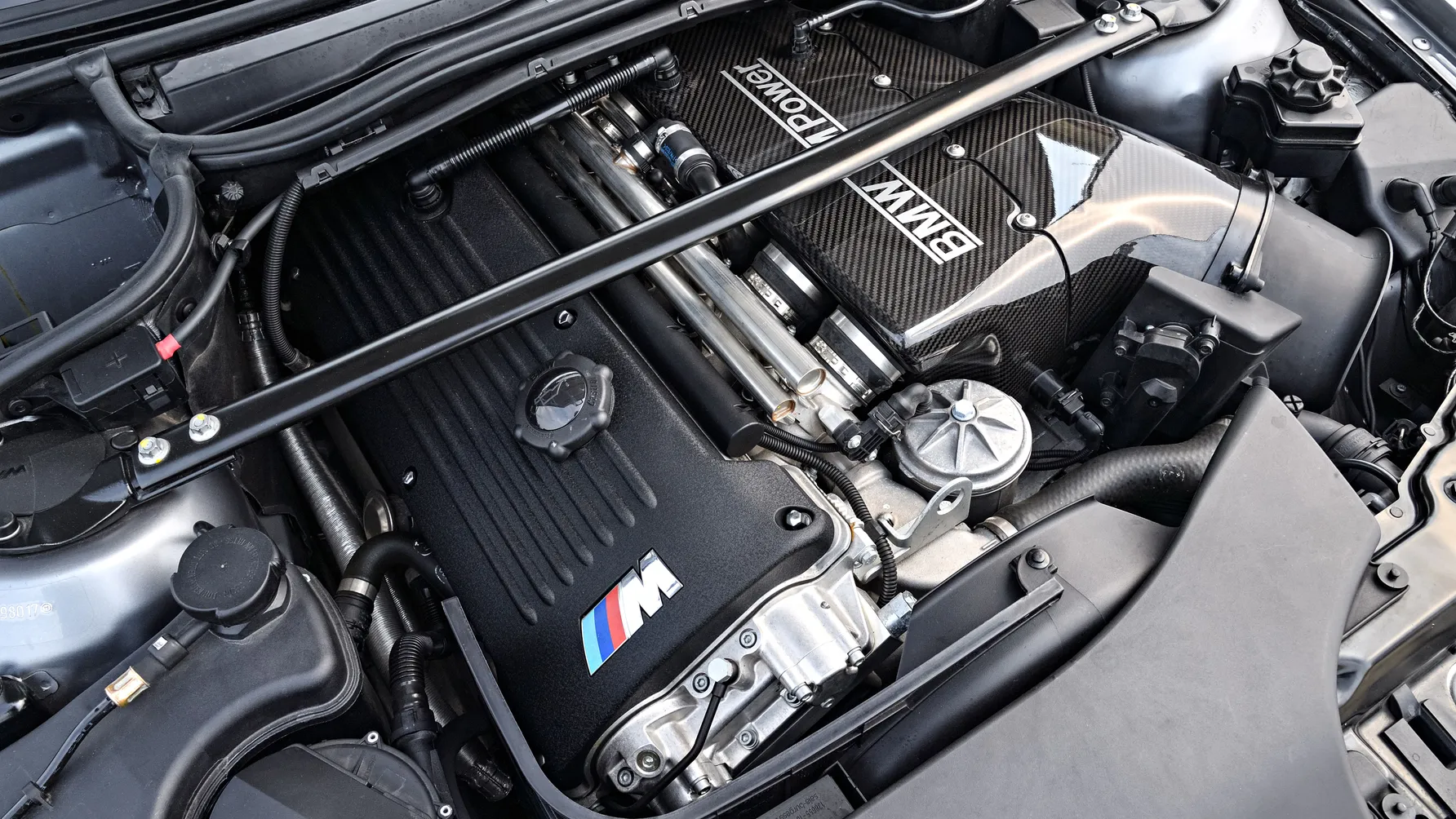
The engine was thoroughly gone over to reach a scorching 360hp—still from 3.2 liters, still with no turbo. A saucepan-sized inlet in the front airdam directed a flow of air to a carbon fiber resonating airbox under the hood, that feeding a new manifold with reprofiled cams operating new valves.
All of which brought the happy driver a vivid step of extra urge above 6,200rpm, and an even fiercer dash for the redline. Plus, courtesy of that musical instrument airbox, a snarl to die for.
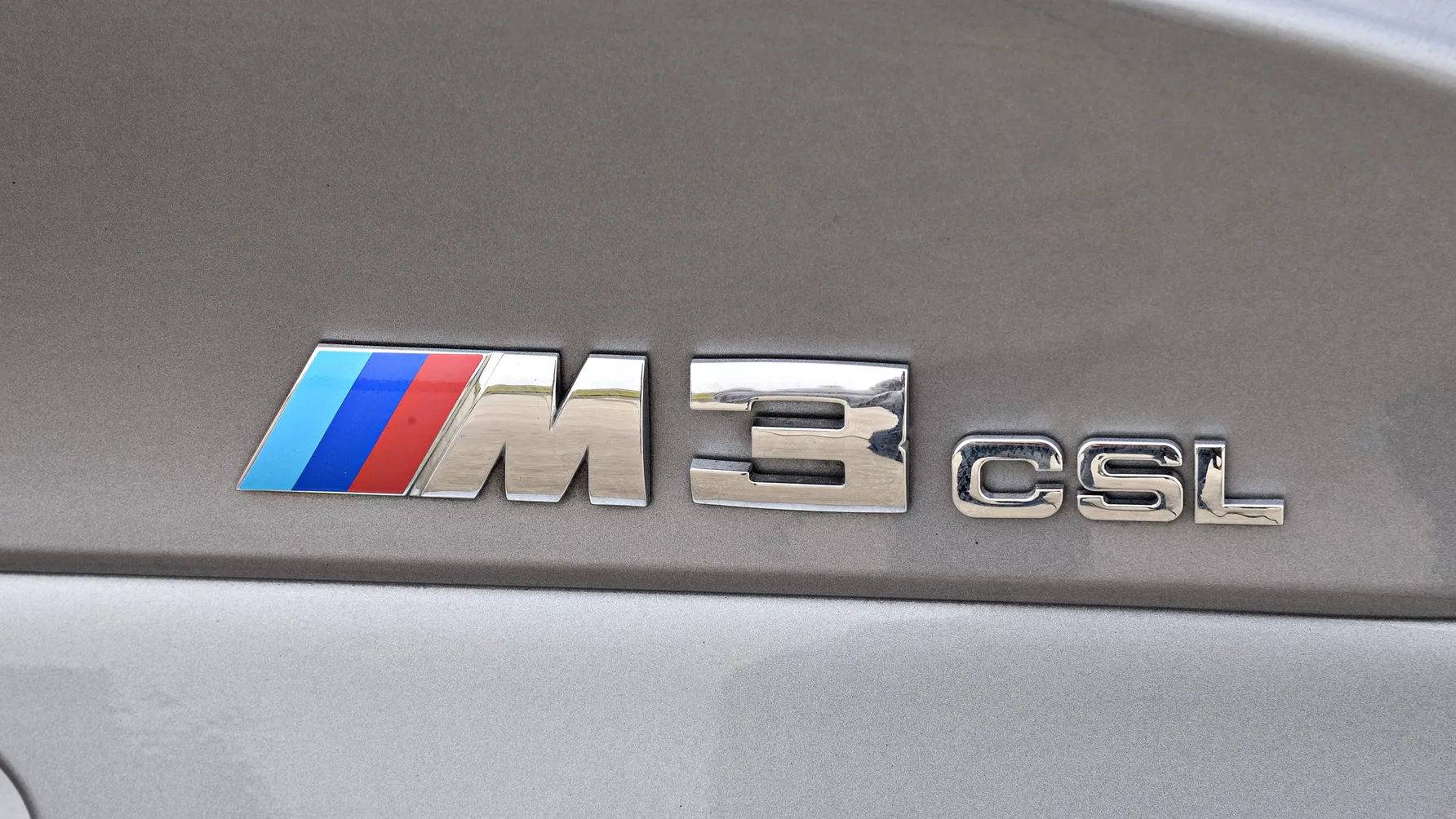
Now, do the maths, and it’s only 5% extra power, even if the sound of the thing told you it was more. Extra significance came from a 10% weight cut—carbon fiber for the roof and front bumper, light plastics for the trunk lid, glass thinner, the interior stripped of center console, door trims, and soundproofing. No A/C, no stereo, manual bucket seats.
It was SMG-only, but maybe that mattered less given it was such a banging entity all around. It got a different steering rack, bigger wheels, and lowered suspension with stiffer rates. And stronger brakes.
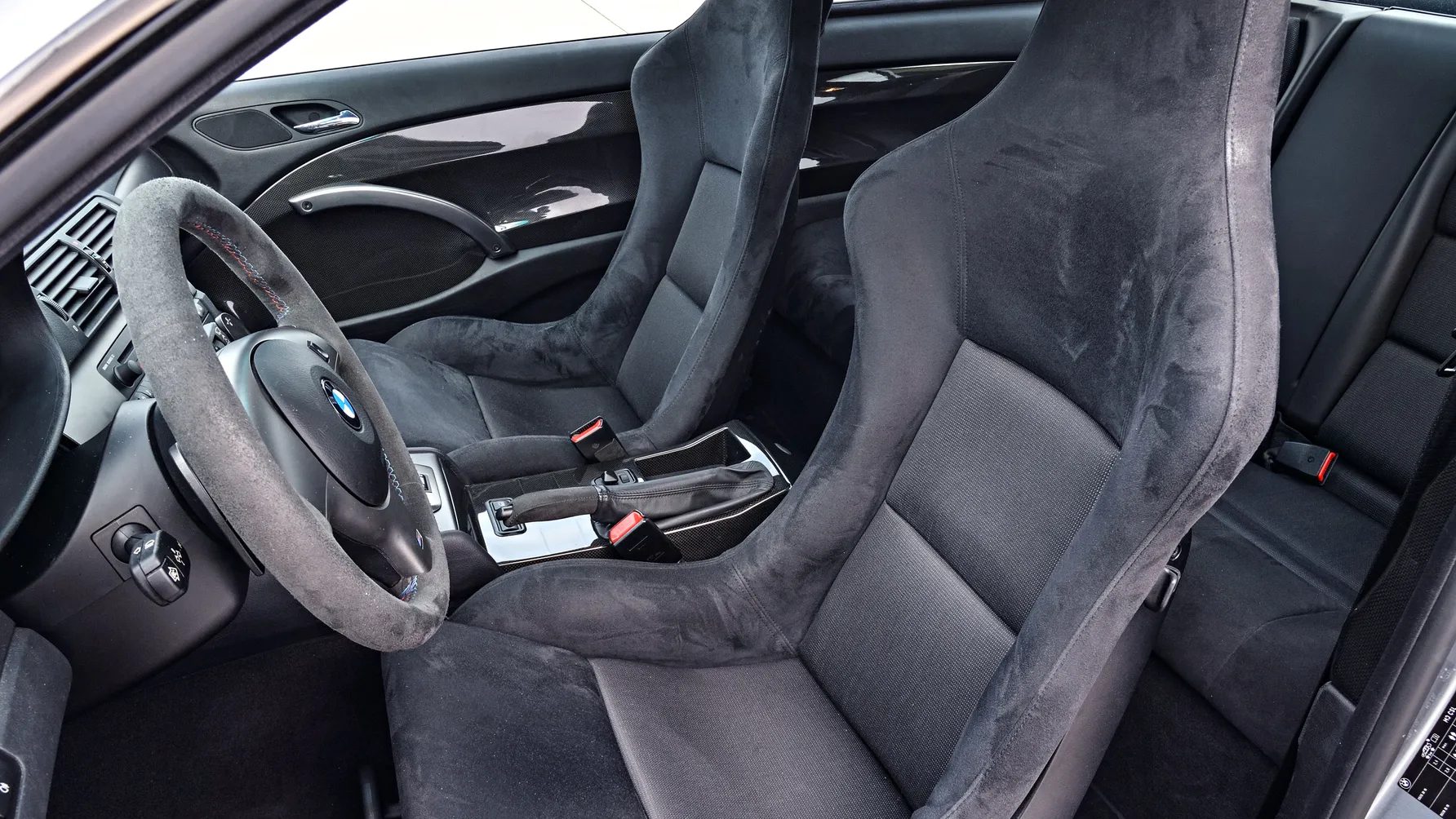
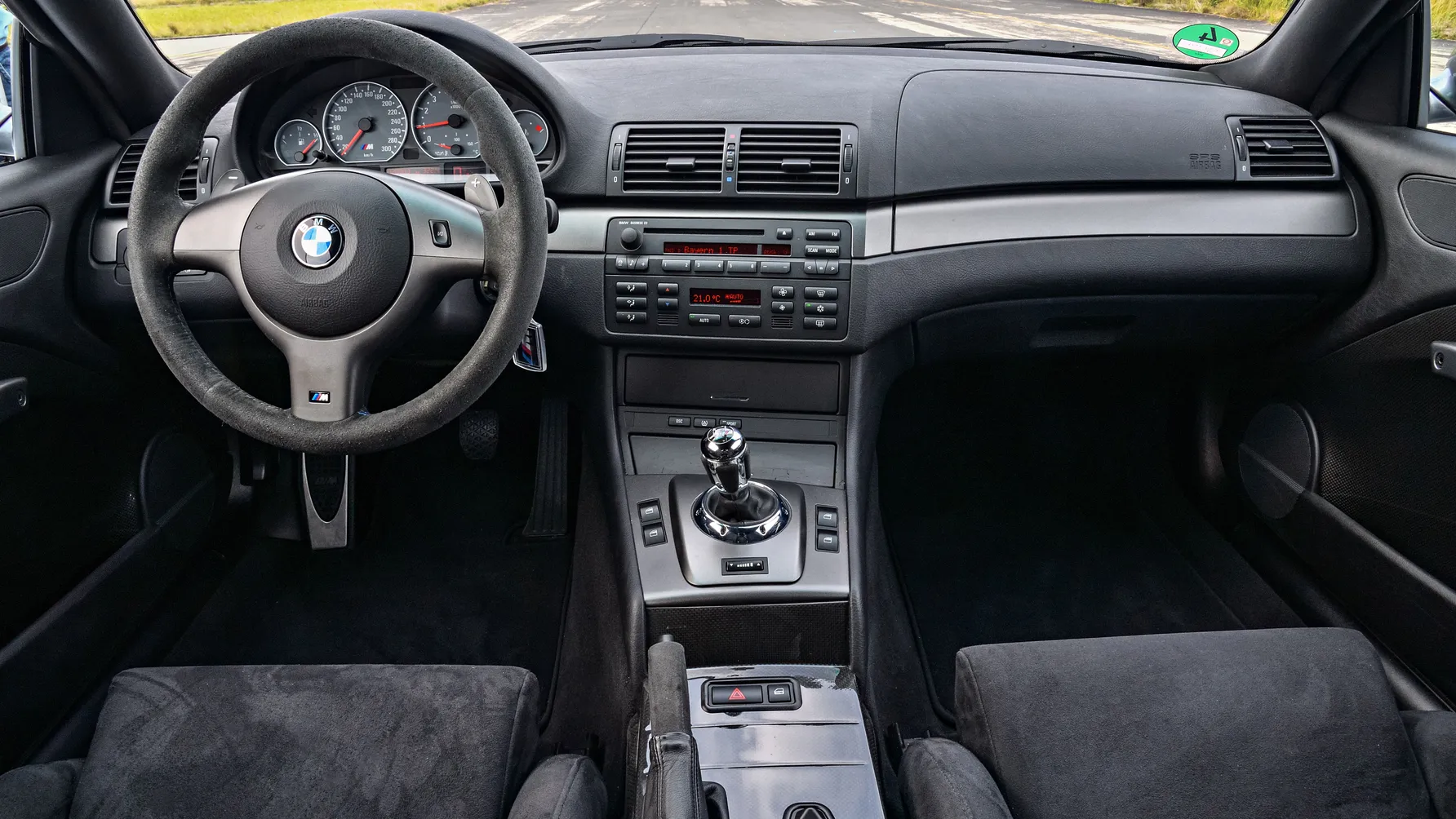
All these changes were made to the standard M3, remember. That was itself already vastly modded over a regular 3-Series.
Plus, the CSL came on tires biased for hot tracks, their tread pattern absurdly tokenistic. That made it a total handful in the wet. Or the cool or the damp. It also tramlined like crazy on a camber.
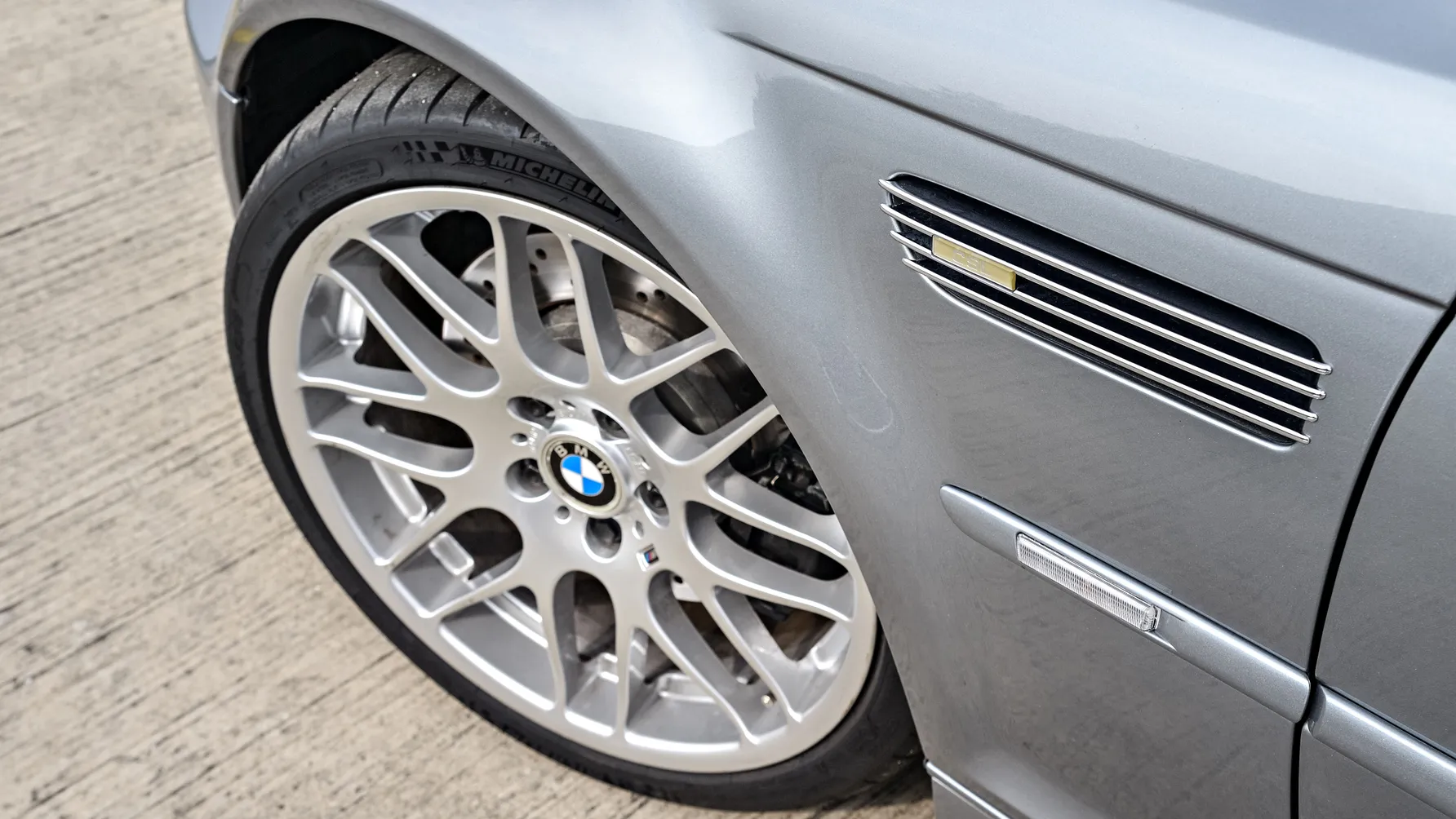
But driven with commitment in the right conditions, the CSL was sharper, grippier, more alert, more decisive. Yes the steering was still a little numb but the chassis feedback more than made up for it. Slack and lost motion were alien to the CSL’s nature. It was tied down and up for it. Every minute of the engineers’ effort was amply repaid.
In its element, the CSL was one of the great M experiences. Which means one of the great experiences, full stop.
More photos of the E46 BMW M3:
NOTE: This article first appeared on TopGear.com. Minor edits have been made.