
In the subcompact crossover segment, Honda has been fending off Chinese hybrids left and right with its HR-V RS e:HEV. Honda has a legacy in the Philippines, and along with the Civic, CR-V, and Prelude, the HR-V is helping keep the brand relevant in a sea of electrified newcomers.
But what about the rest of the line? This is the HR-V S CVT, the non-hybrid base variant of Honda’s subcompact crossover. It still has the looks, the storage practicality, and some of the tech. And being P339k cheaper than the hybrid, it might be an underrated catch. But is it? Let’s find out.
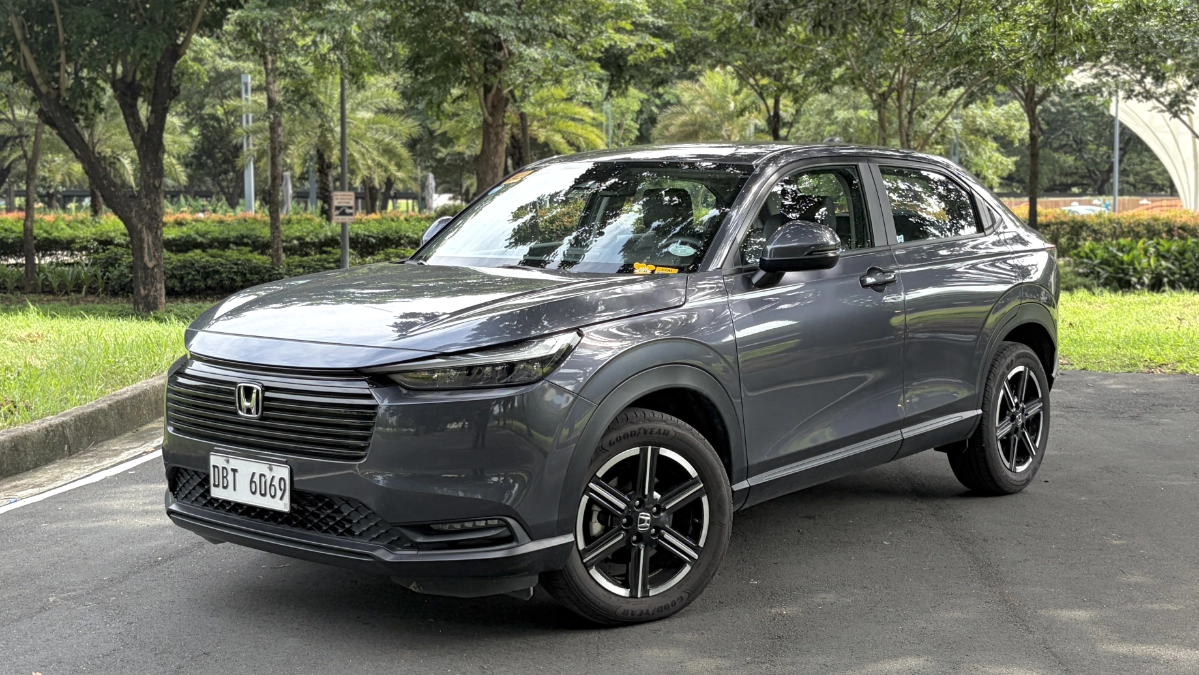
Styling
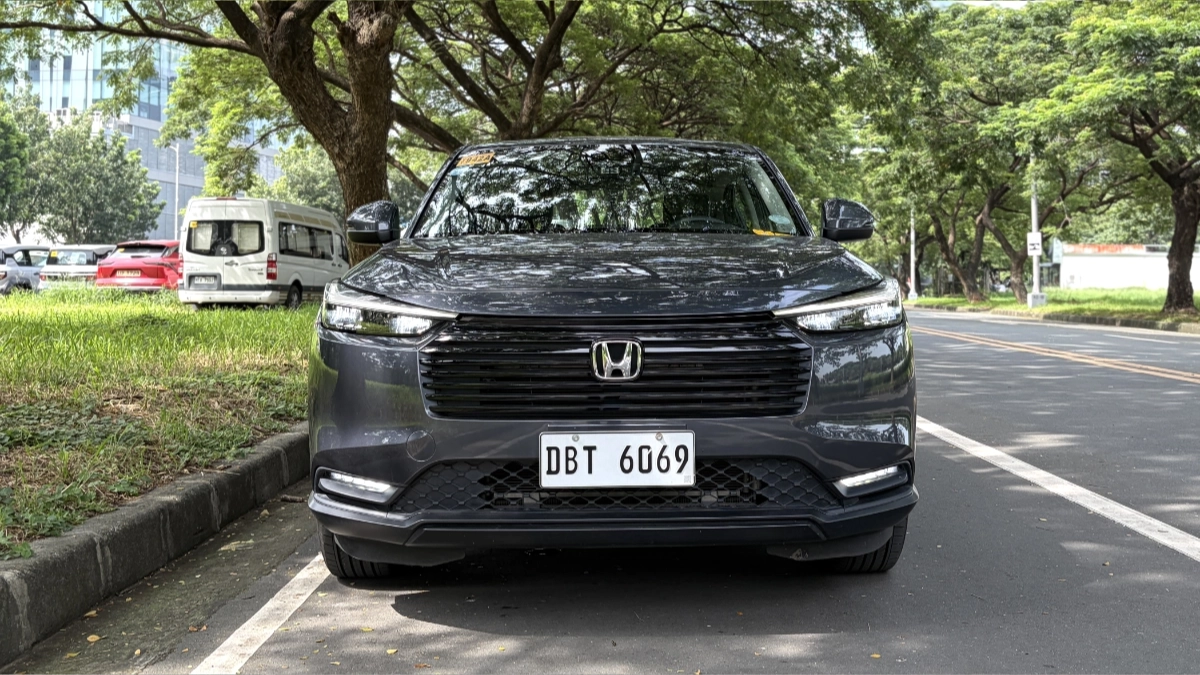
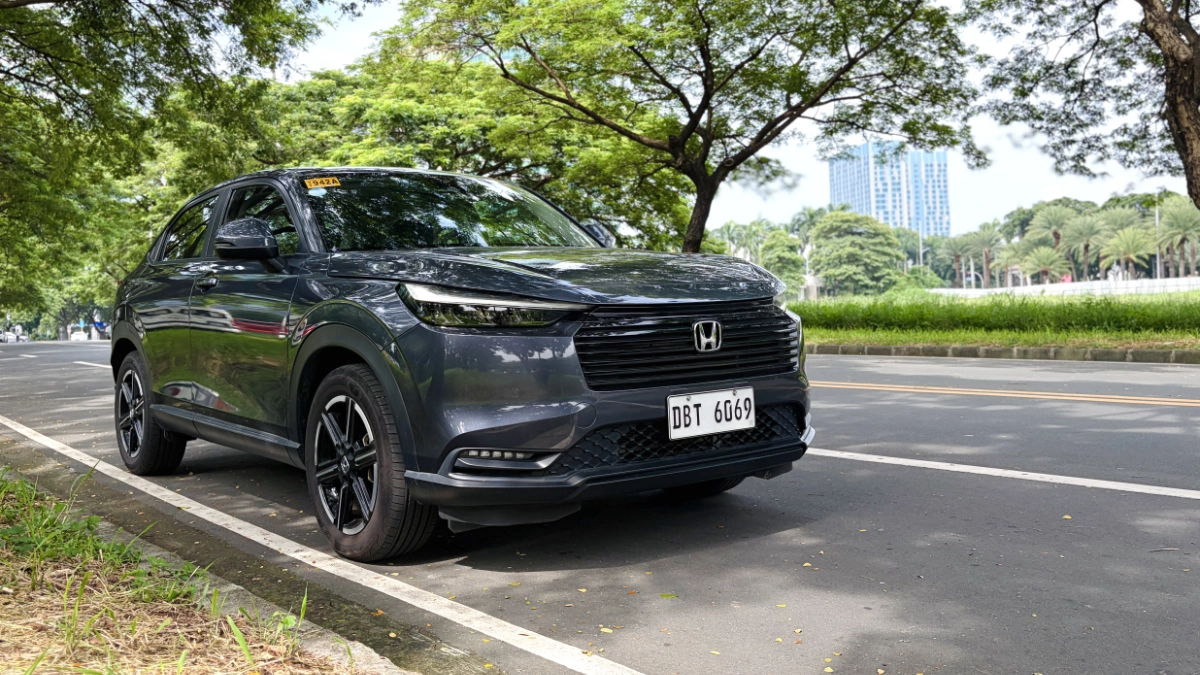
For a while, this category never came across to me as ‘stylish.’ If you asked me 10 years ago what the best-looking crossover was, I would’ve said the Nissan Juke—only because it looked more like a hatchback than a miniature SUV. Either I’ve matured since then, or crossover designs are getting better, because I genuinely like the styling of this HR-V.
OTHER STORIES YOU MIGHT HAVE MISSED:
Review: 2027 Subaru Crosstrek 2.0i-S EyeSight e-Boxer
Review: 2027 Toyota Hilux Conquest 4x4 A/T
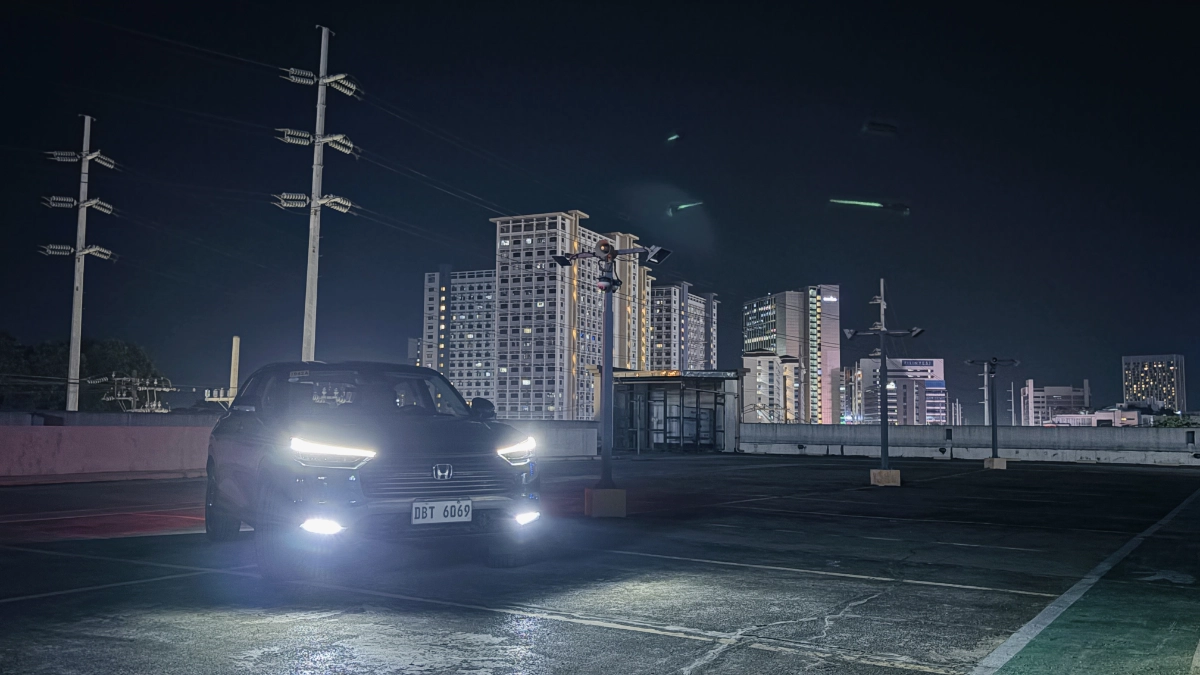
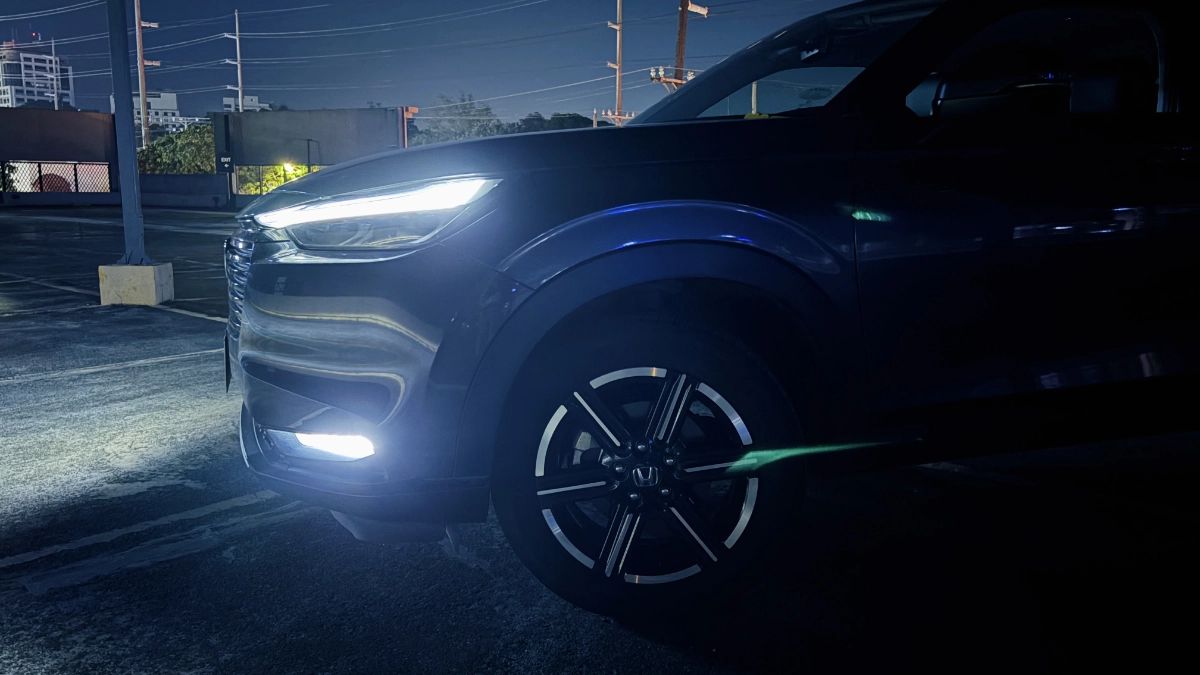
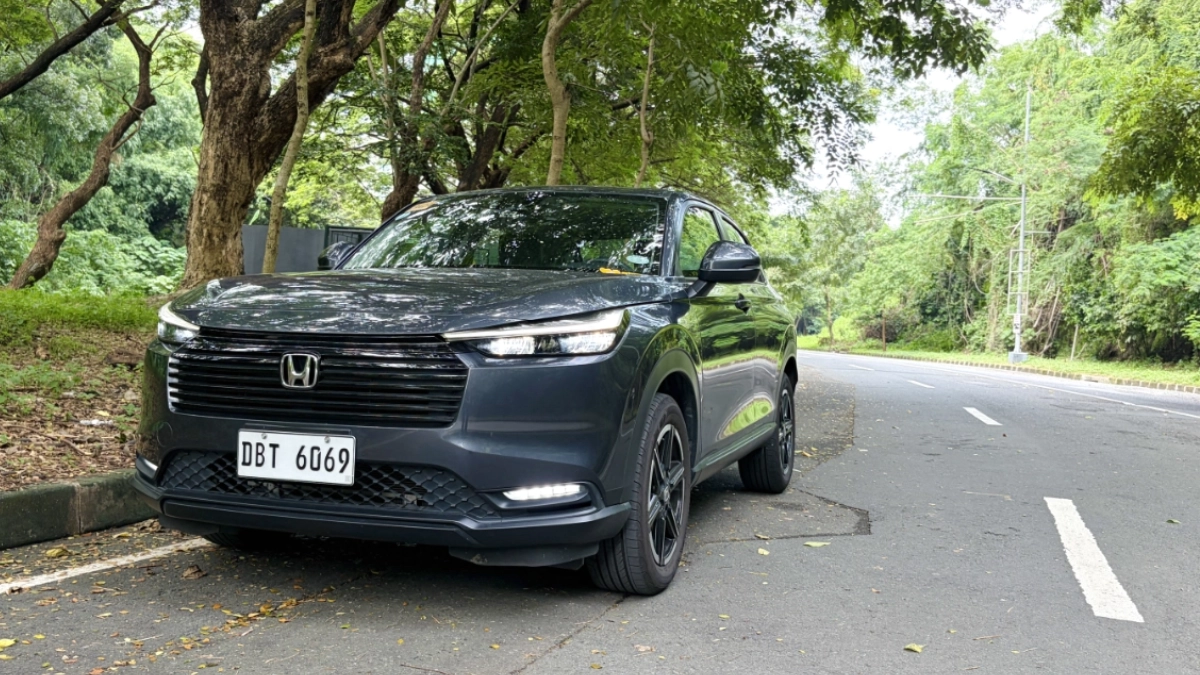
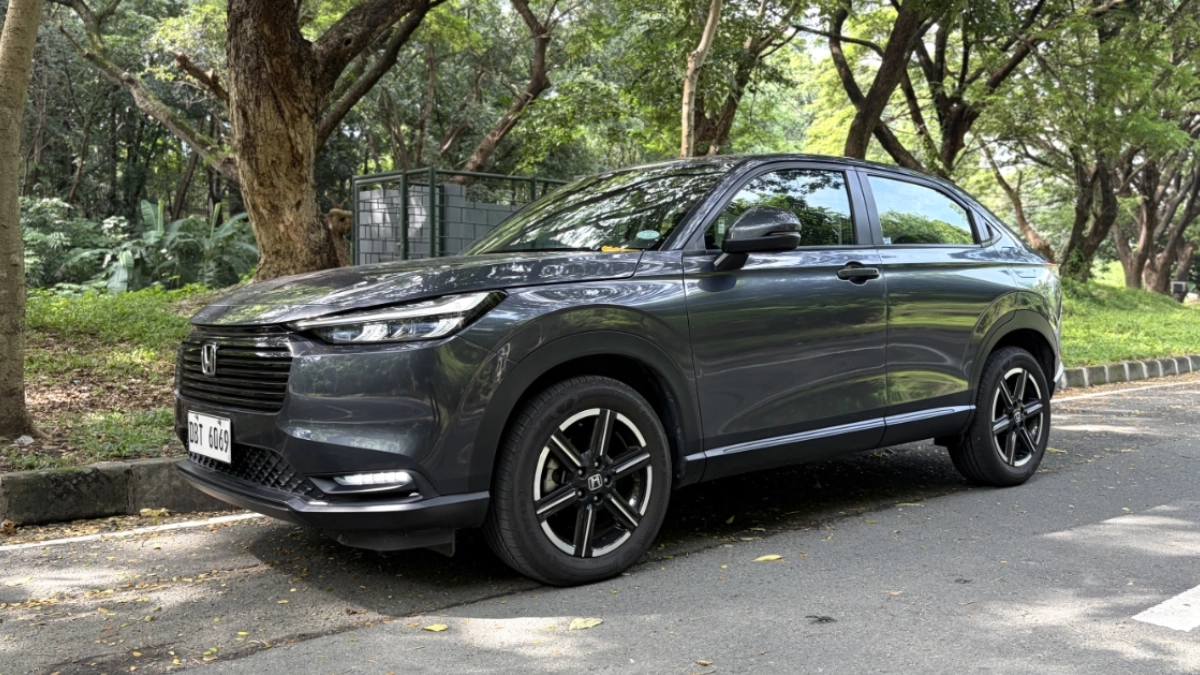
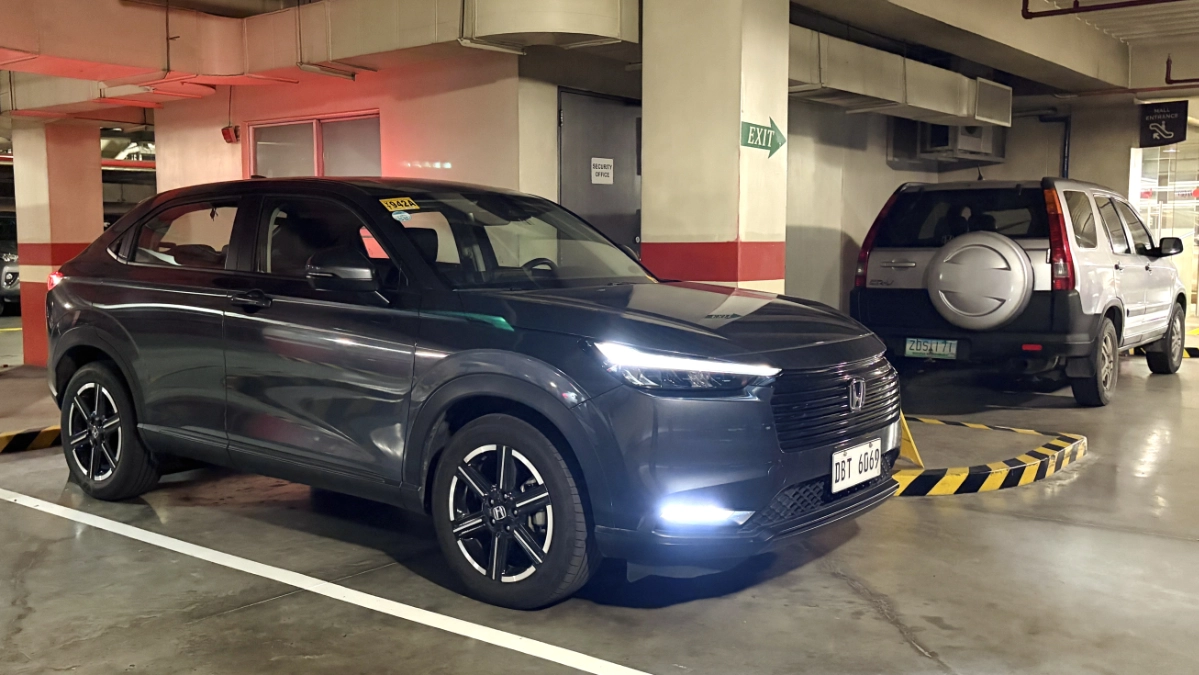
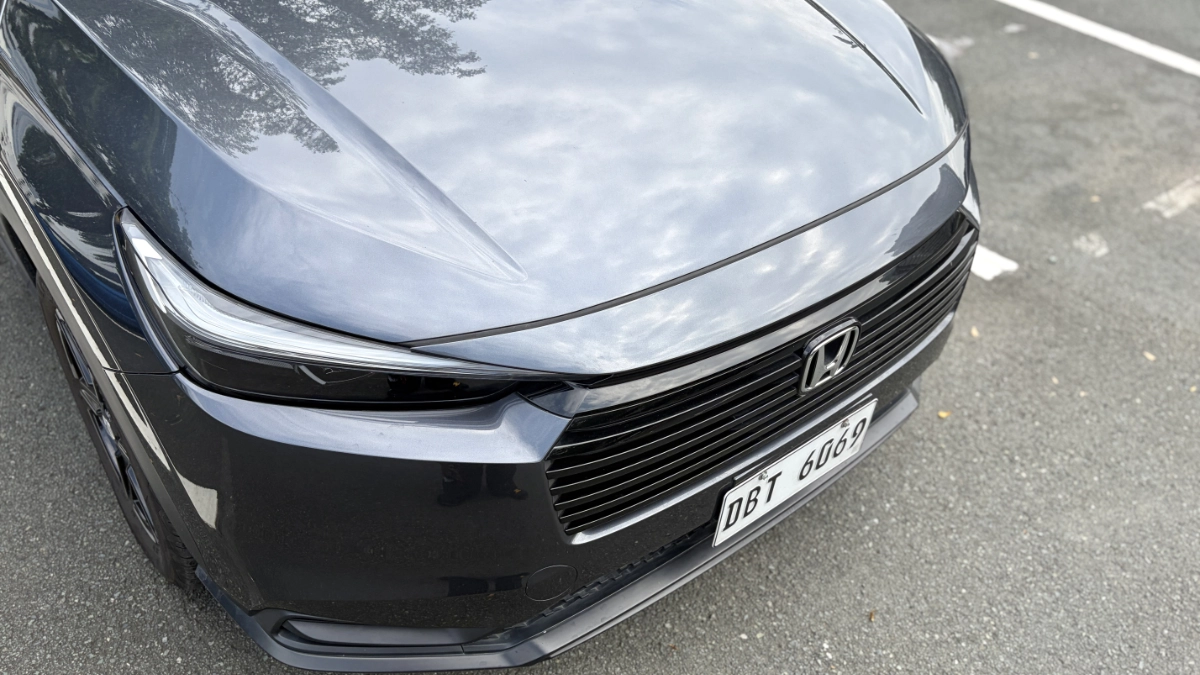
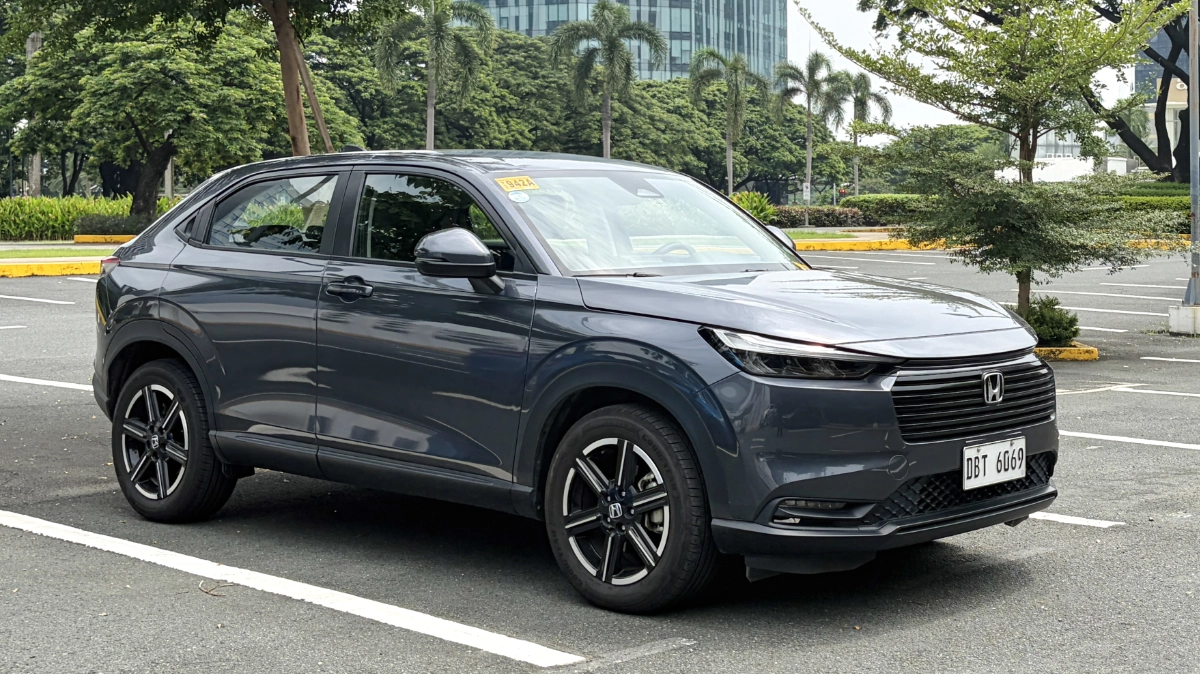
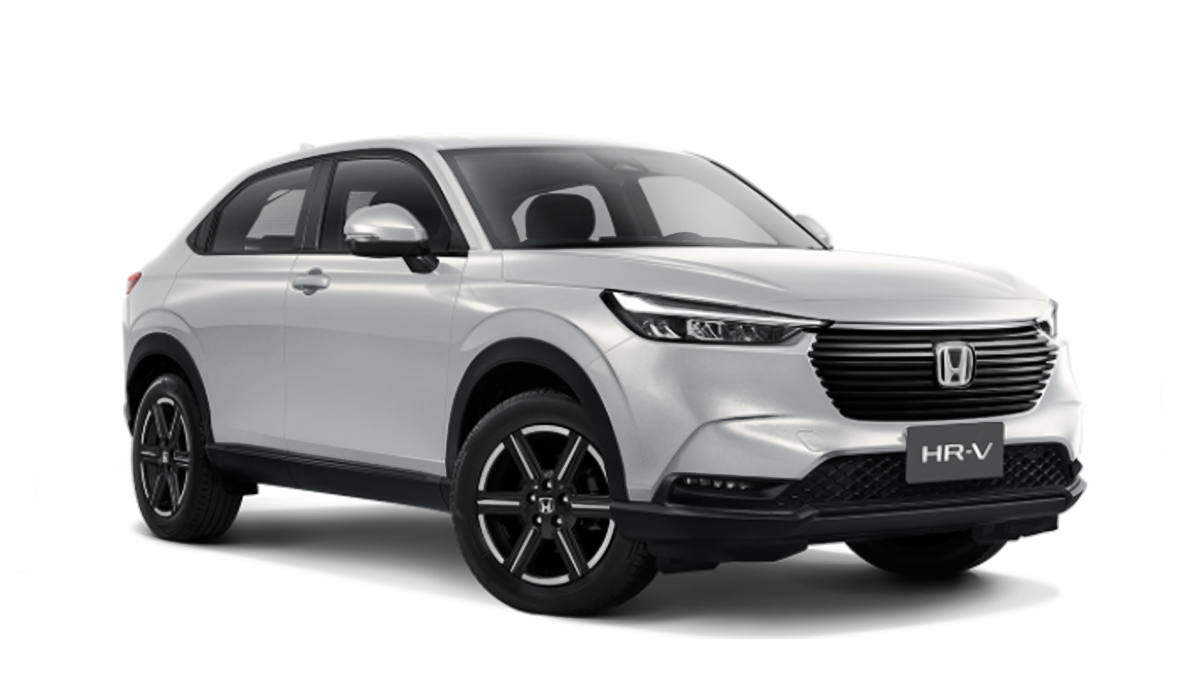
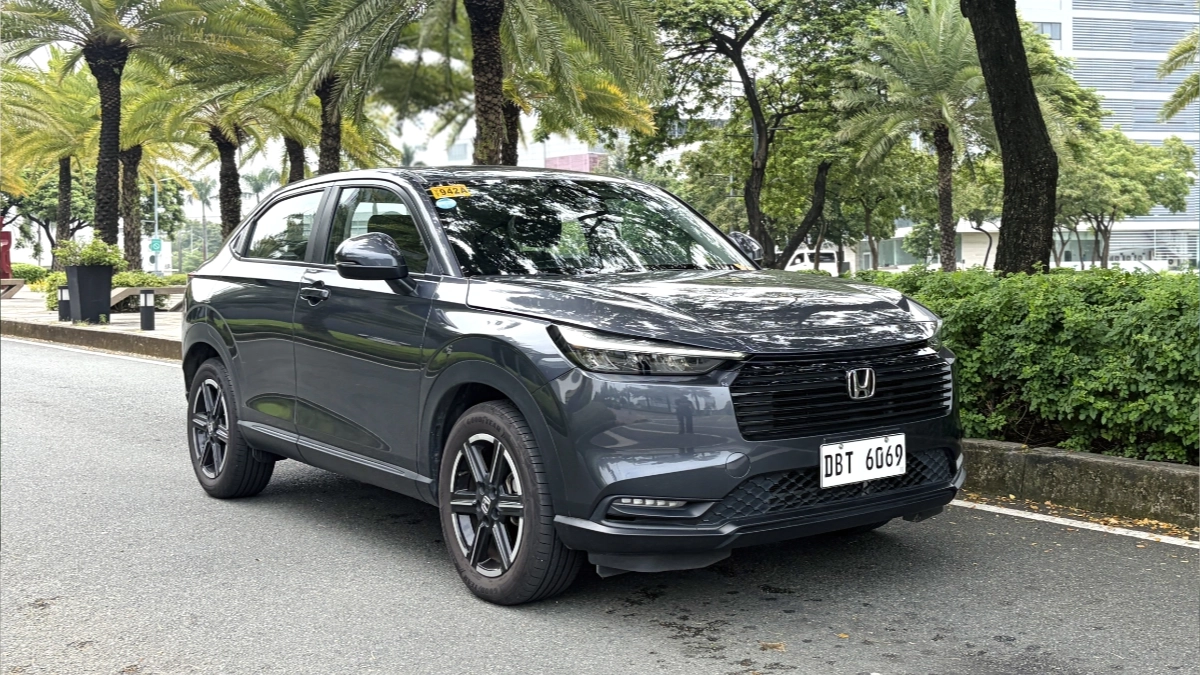
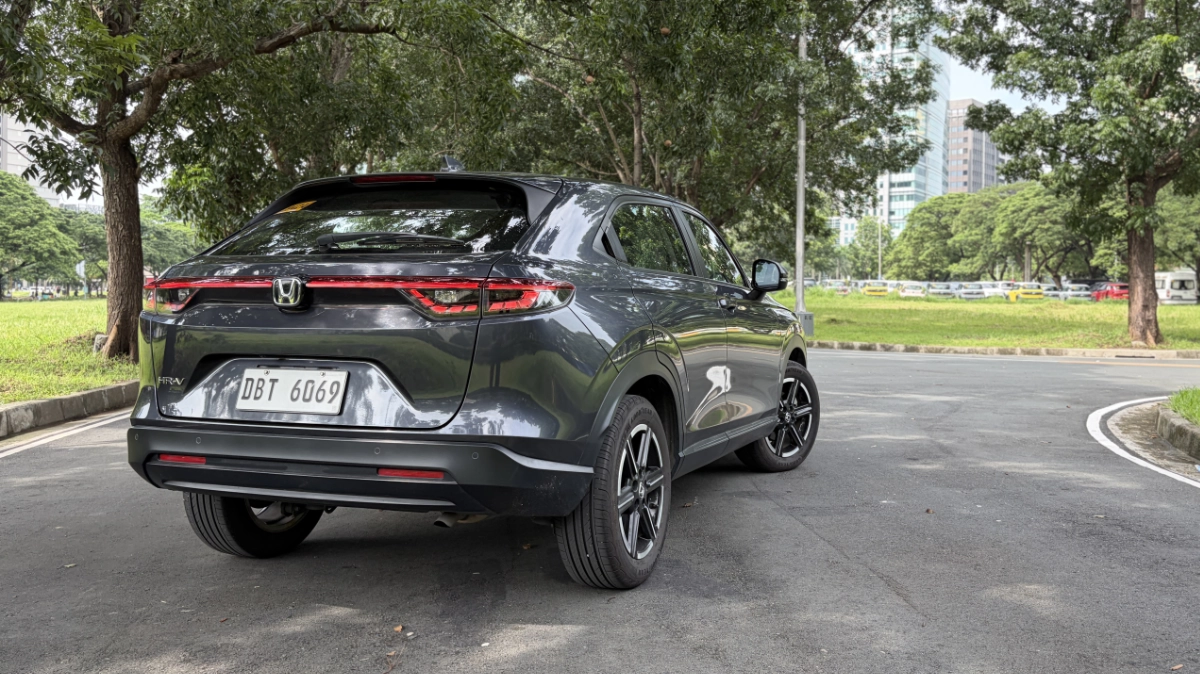
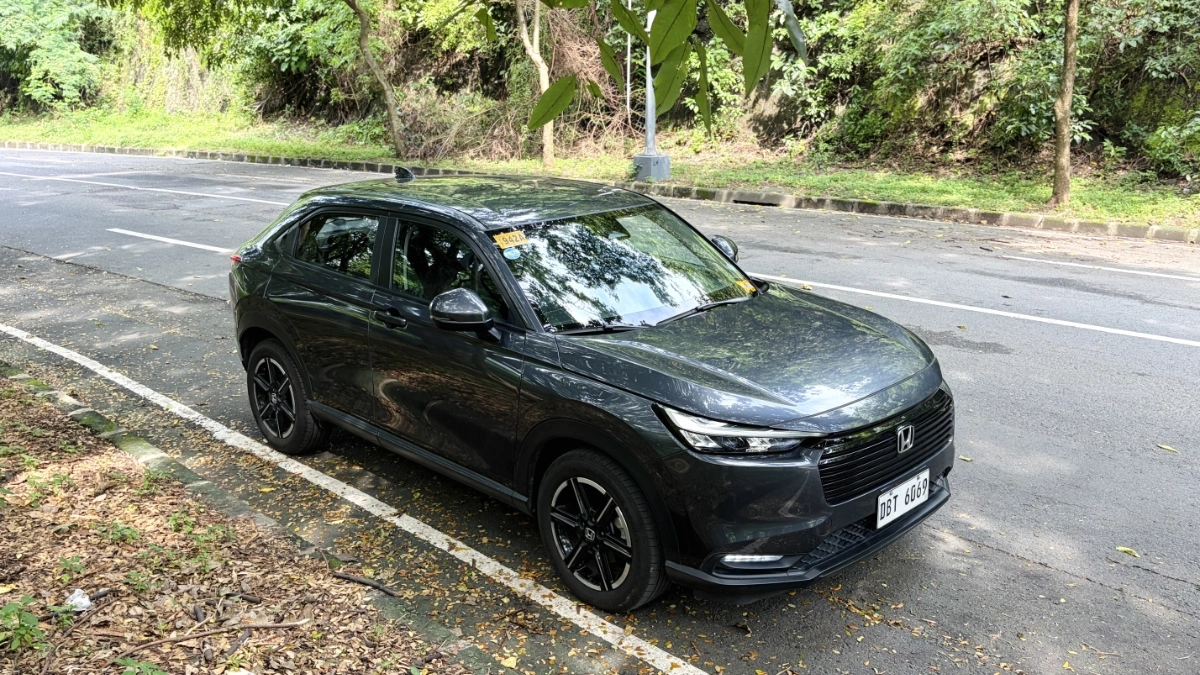
The front fascia wears an angry look like most cars these days, but the way Honda placed the headlights high up and tucked the auxiliary lights in the corners gives the crossover an uncluttered visage. While I do prefer the grille pattern on the RS, I like the wheels on this S variant more. These are six-spoke 17-inch wheels finished in black and silver, and they stand out. Meanwhile, grip comes courtesy of 215/60R17 Goodyear Assurance tires.
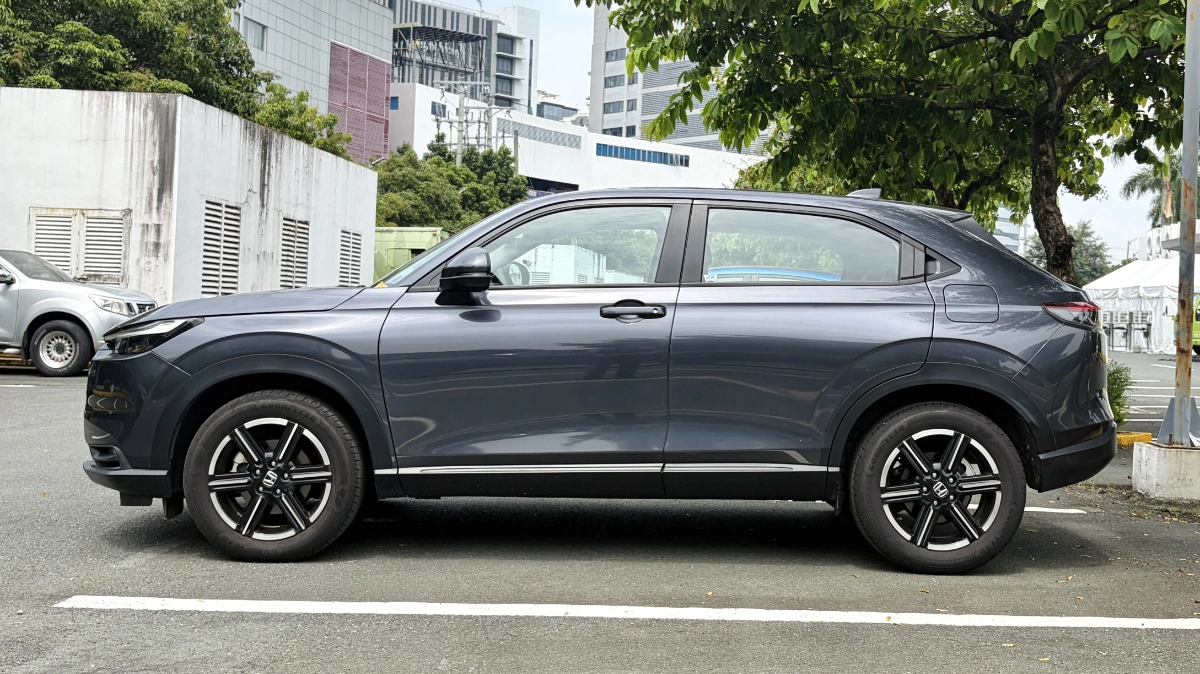
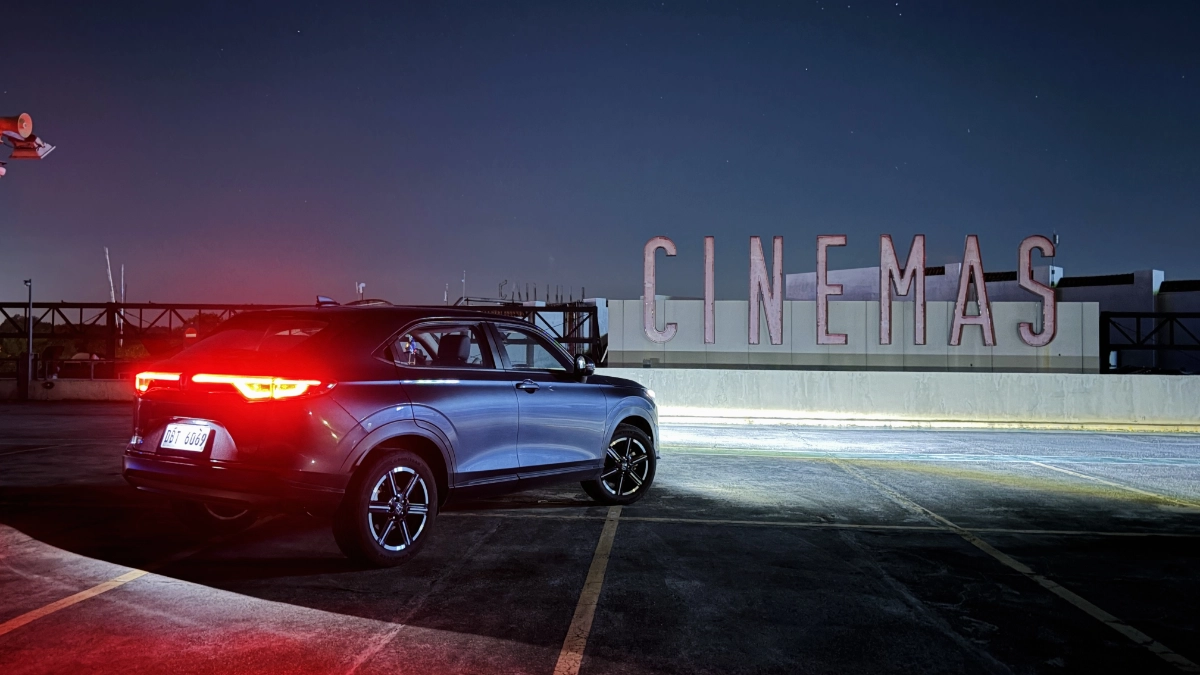
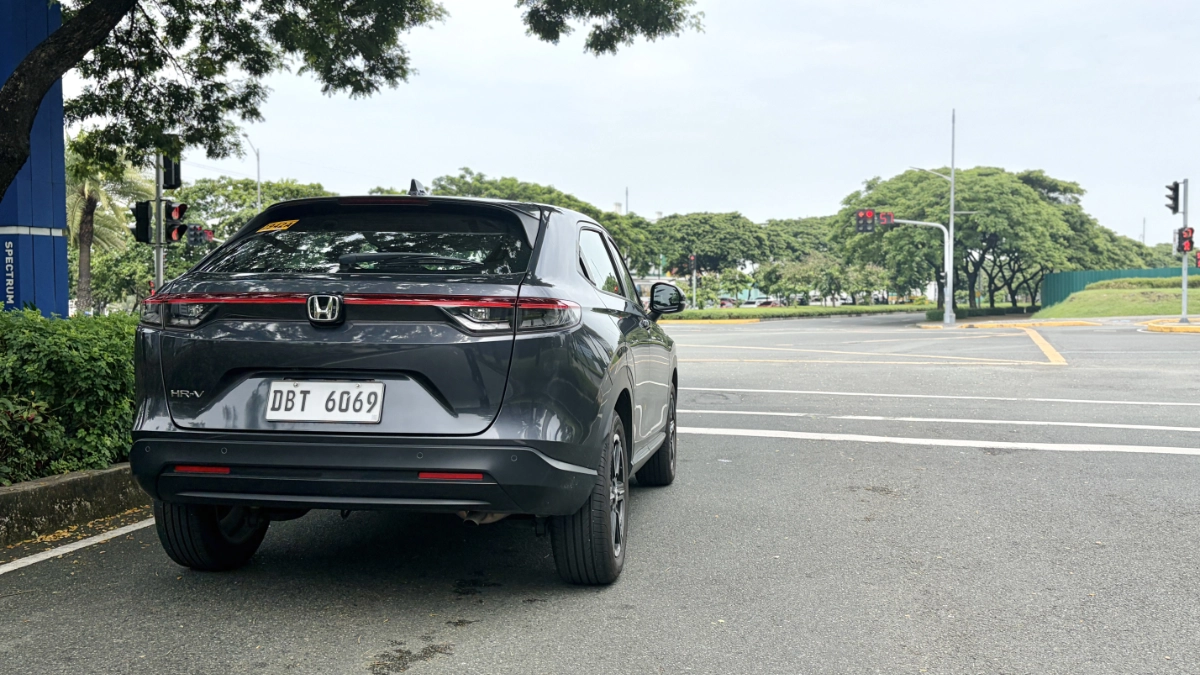
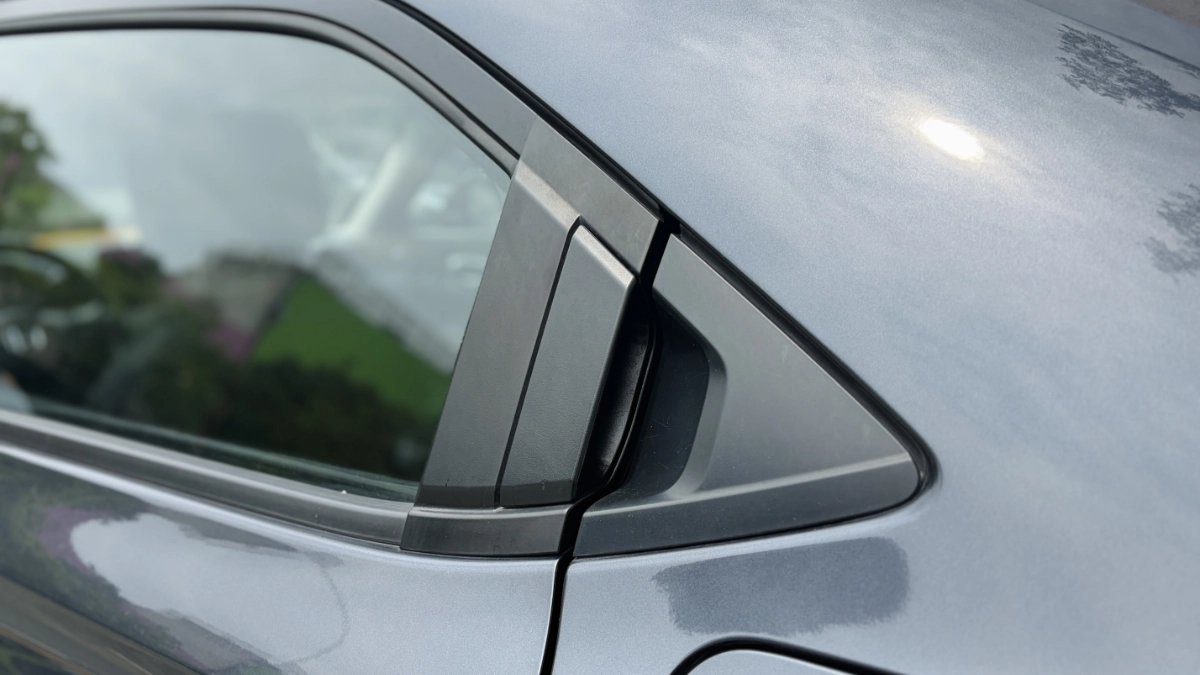
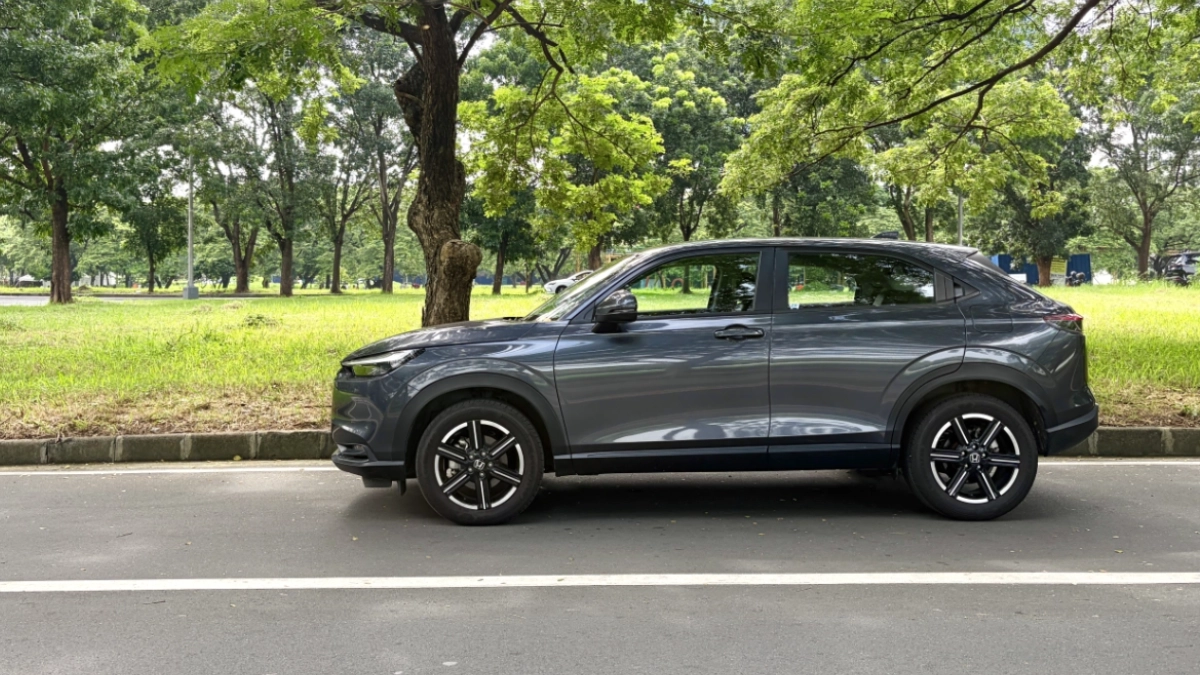
Looking at the side profile, the HR-V has one continuous line in the middle, leading your eyes from the tip of the hood all the way to the taillights. It also has a coupe-like rear section, which looks sporty and adds to the distinctive silhouette. Like the previous generation, the rear door handle was moved near the C-pillar for a cleaner look.
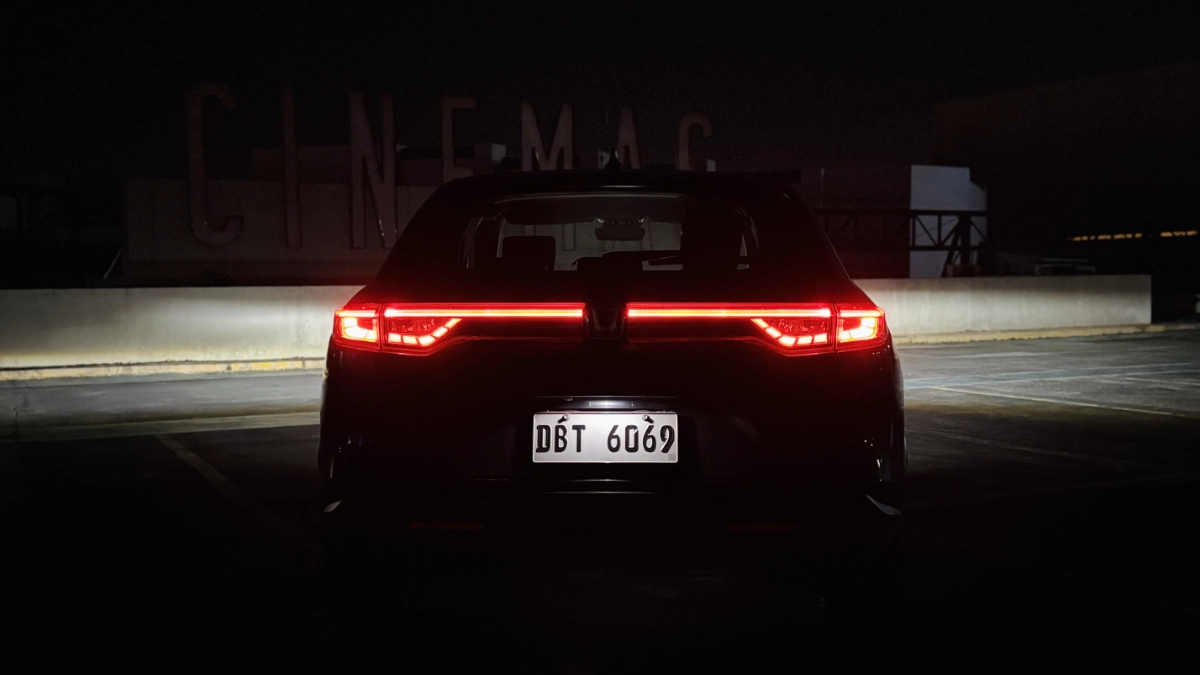
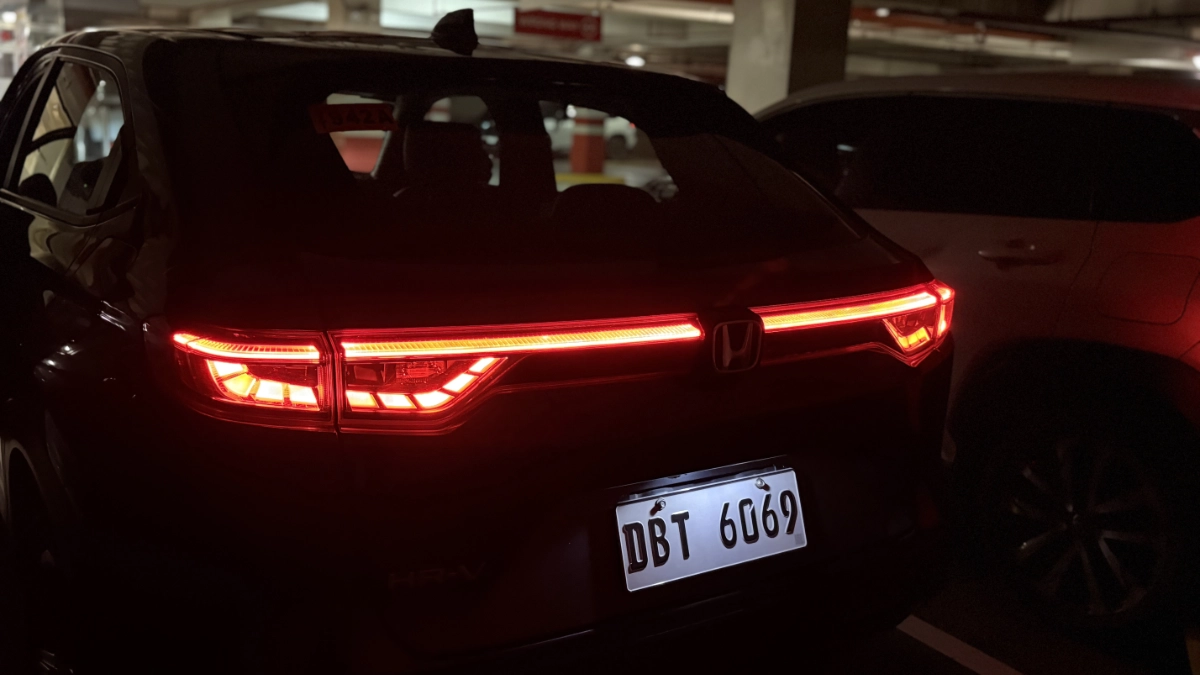
The taillights give the rear an equally aggressive appearance as the front. A lightbar spans the whole width of the car, interrupted only by the Honda badge in the center. Meanwhile, the angular brake light design adds to the serious rear end.
Interior
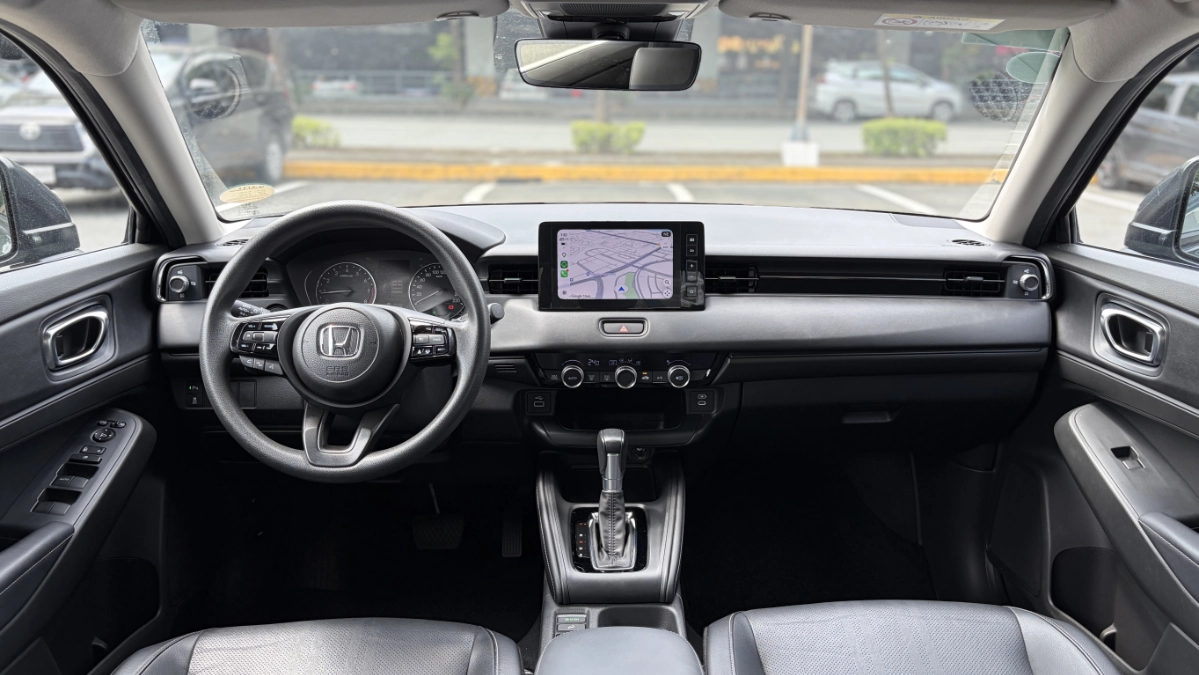
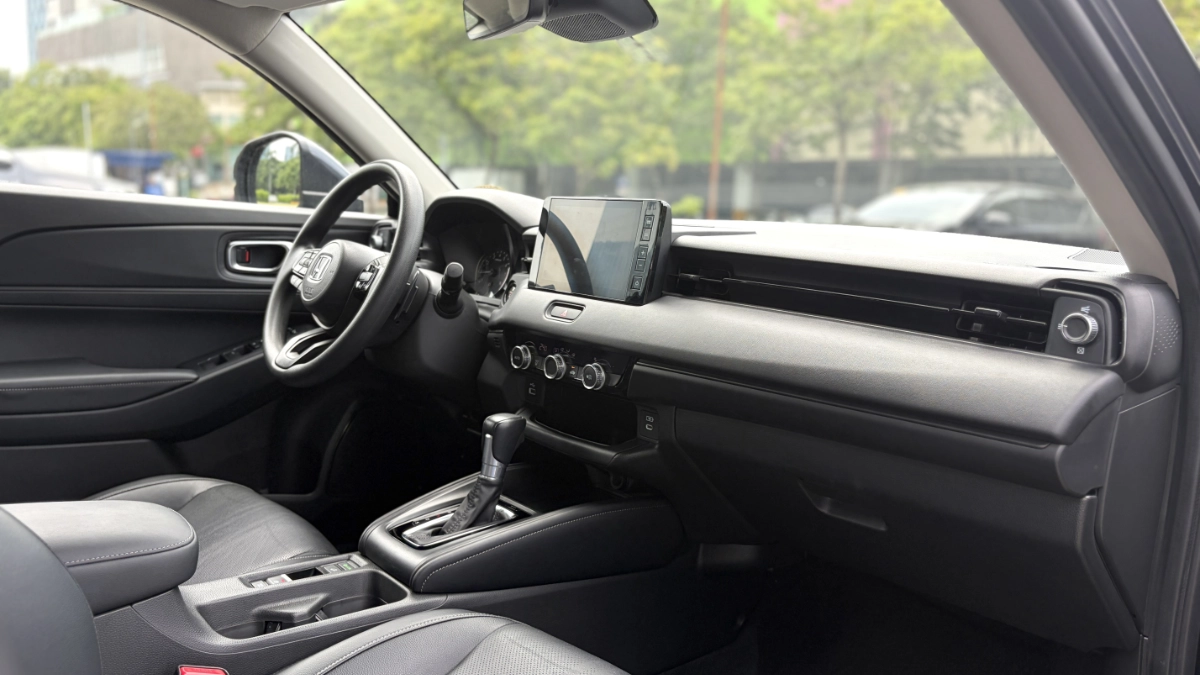
For a base model, the cabin is quite nice. The power-adjustable seats provide plenty of support, and the black leather upholstery stays comfortable even when the car is baking in the sun. The driving position feels low for a crossover, especially with the high window sills. Meanwhile, the urethane steering wheel features buttons to control your infotainment and ADAS, and also has a cushioned feel to it.
There are no wireless chargers here. Instead, you get USB-C and USB-A ports above the two cubbyholes in the center console. I appreciate that there are still lots of physical buttons and knobs on the dashboard; you don’t have to fiddle around a touchscreen just to lower the A/C temperature. At night, the rearview mirror comes standard with an anti-glare feature that helps keep high beams at bay.
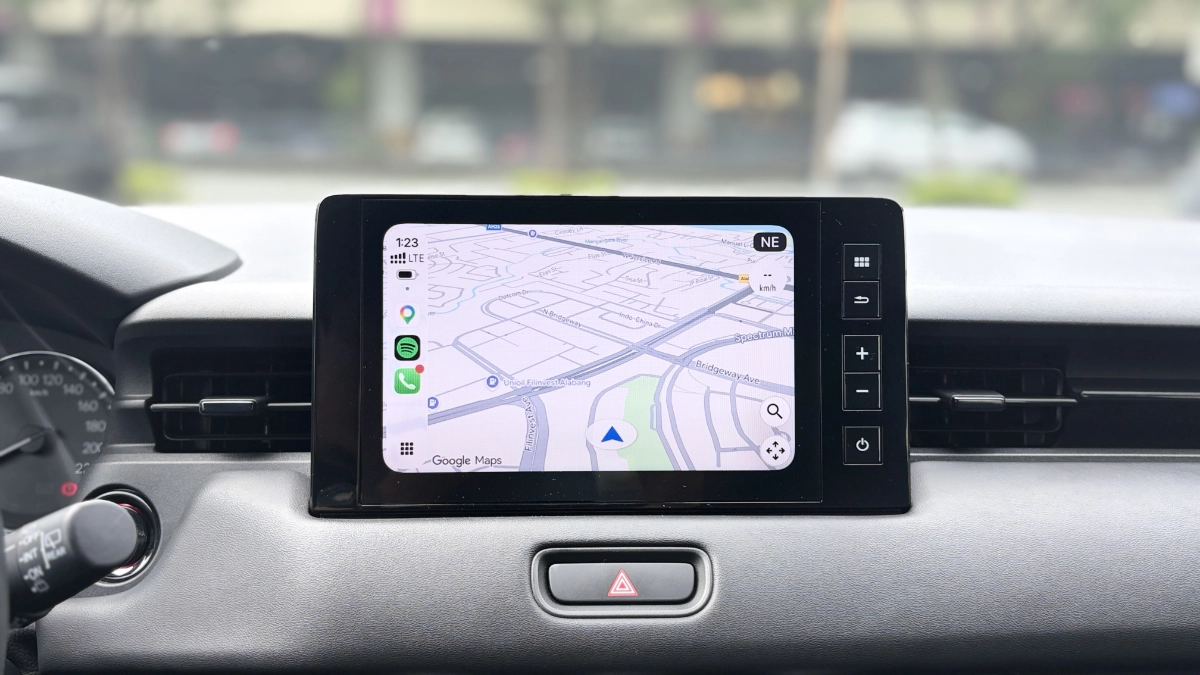
There’s an eight-inch touchscreen display with wireless Apple CarPlay and Android Auto. While it works fine, I do wish Honda used a rotary knob instead of ‘+’ and ‘-’ buttons to control the volume—it’s just much quicker and more precise. The speakers sound good, especially when you set your preferred settings on the equalizer. As for the reverse camera, it looks dated but gets the job done.
Moving to the back, the second-row seats put you in a relaxed position. I had no problem getting my lanky 6-foot-tall frame comfortable behind my usual driver’s seat setting. Backseat passengers also get their own A/C vents, plus an armrest with cupholders that folds out from the center seat.
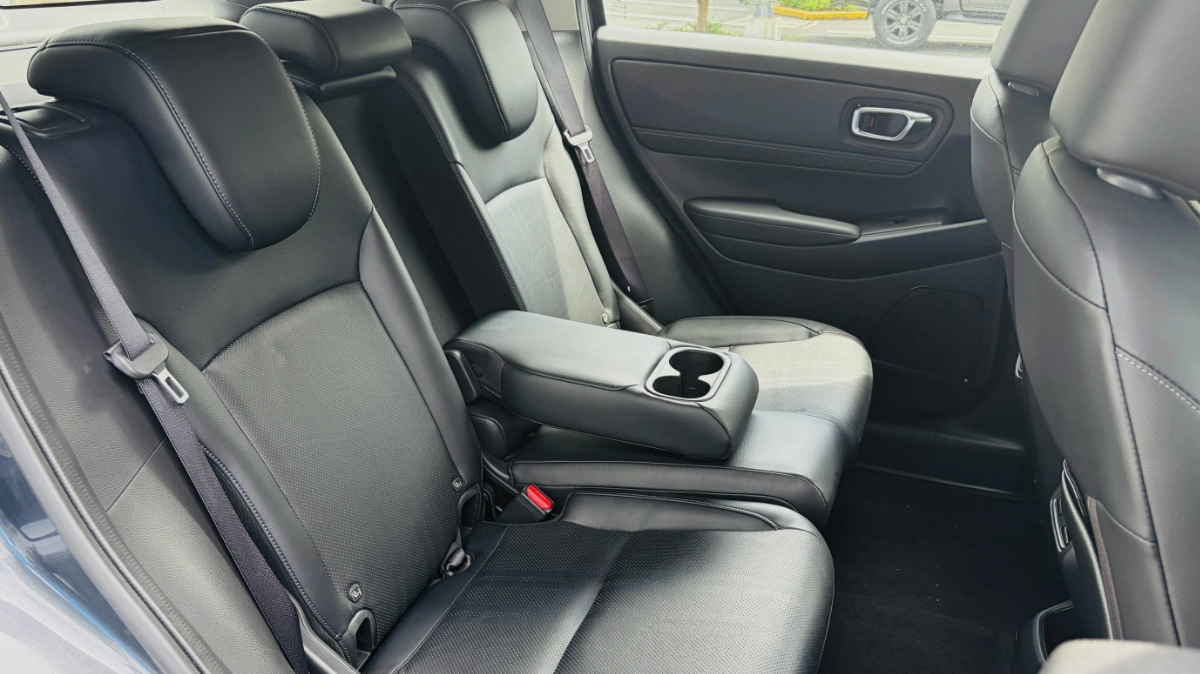
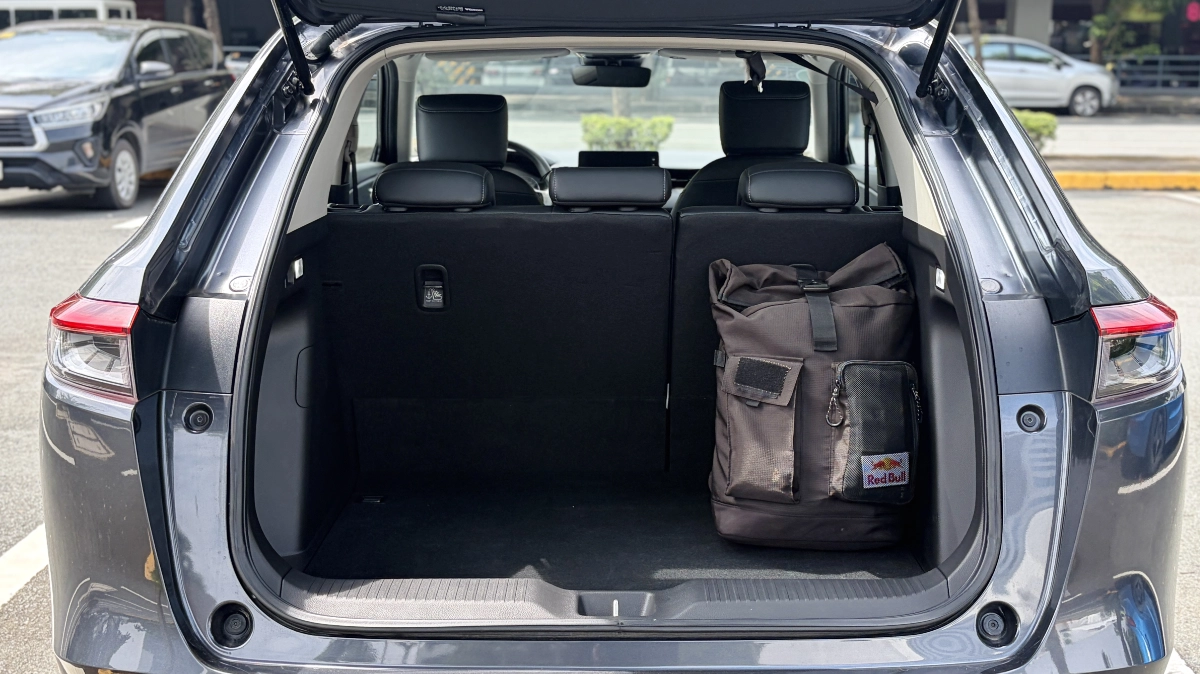
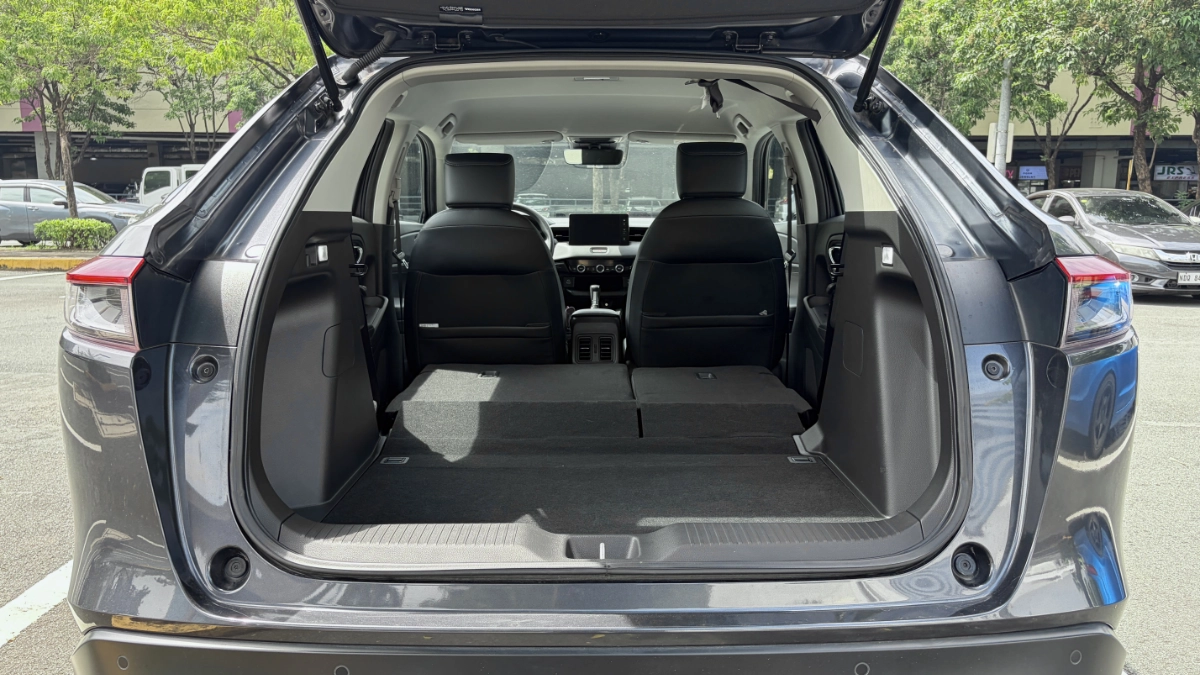
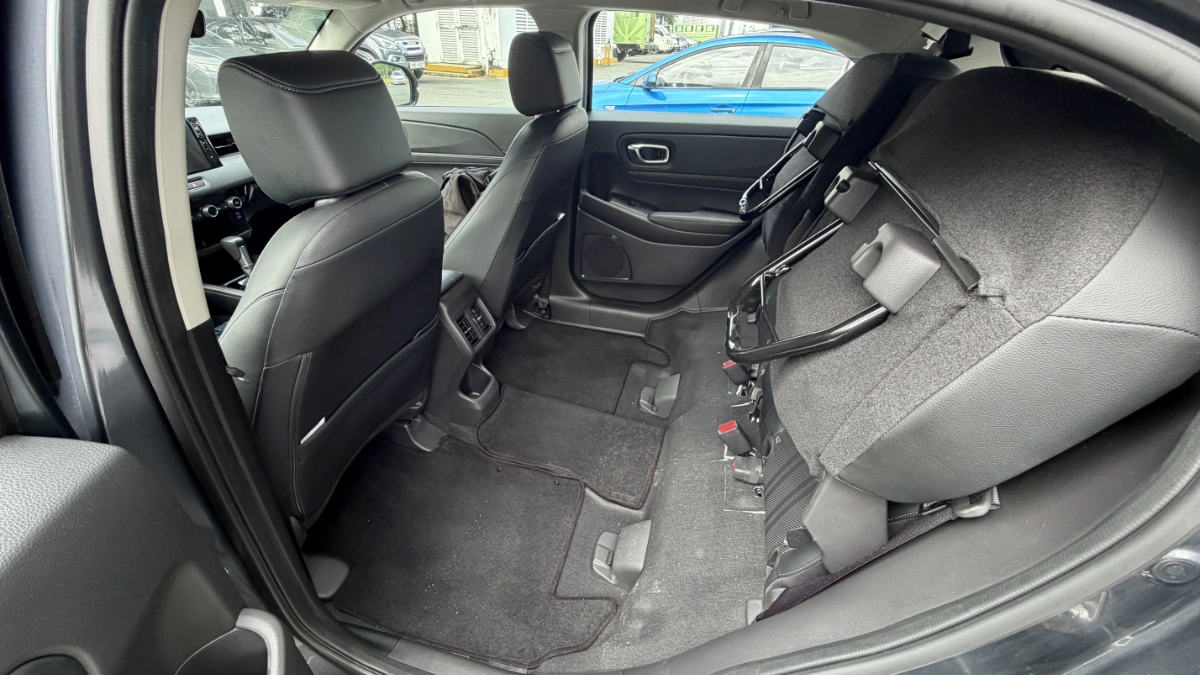
The HR-V also has Honda’s Magic Seats, which you can configure for different modes. Tall Mode allows you to flip up the rear seat cushions and lock them in place to transport taller items, while Utility Mode folds the rear seats flat for more cargo space. Meanwhile, Long Mode means reclining the front passenger seat while the rear seats are folded to store longer items.
Engine Performance
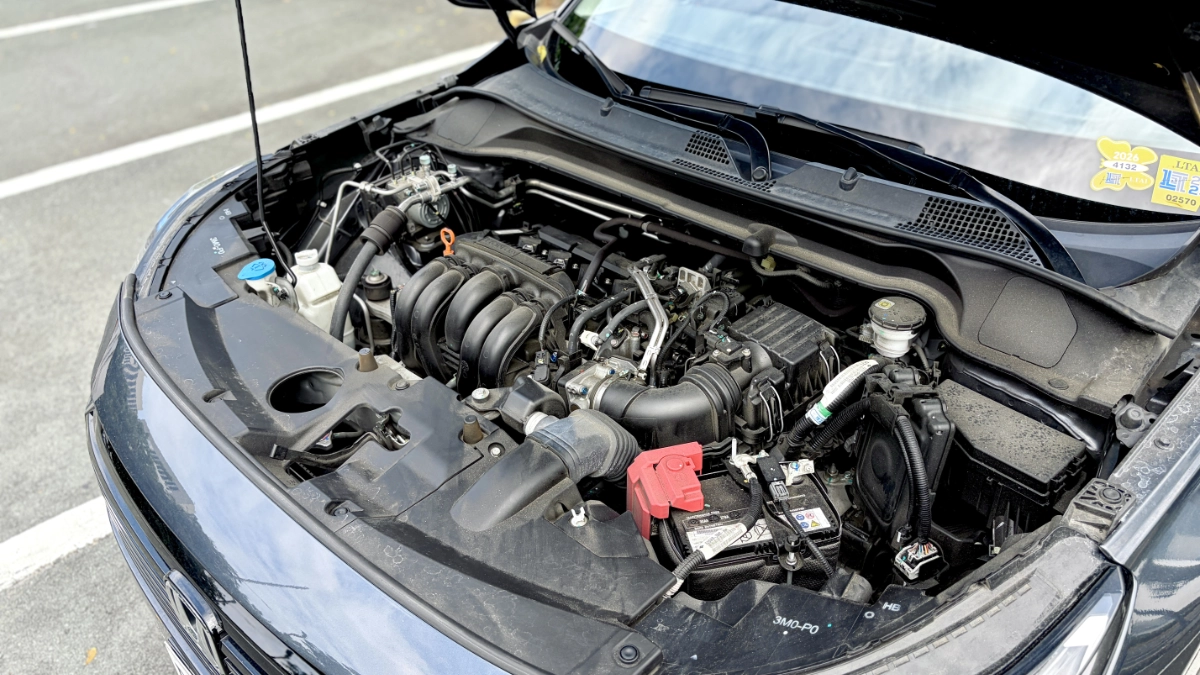
Pardon the dusty engine bay. This variant has a 1.5-liter naturally aspirated four-cylinder gasoline engine. It produces 119hp and 145Nm of torque and is paired with a continuously variable transmission. This car isn’t slow... most of the time.
Getting up to speed and overtaking on the highway isn’t an issue, but getting to highway speeds from a standstill is a different story. On the NAIA Expressway, tarps were obstructing the view of oncoming vehicles, so all cars in the merging lane had to stop before proceeding. With cars going 80kph, I had to time my merge in the HR-V more carefully, flooring the accelerator when I finally had an opening. While short bursts of acceleration aren’t a problem, going from 0 to 100kph won’t be the quickest. According to Honda, it takes 12.1secs to reach 100kph from a stop.
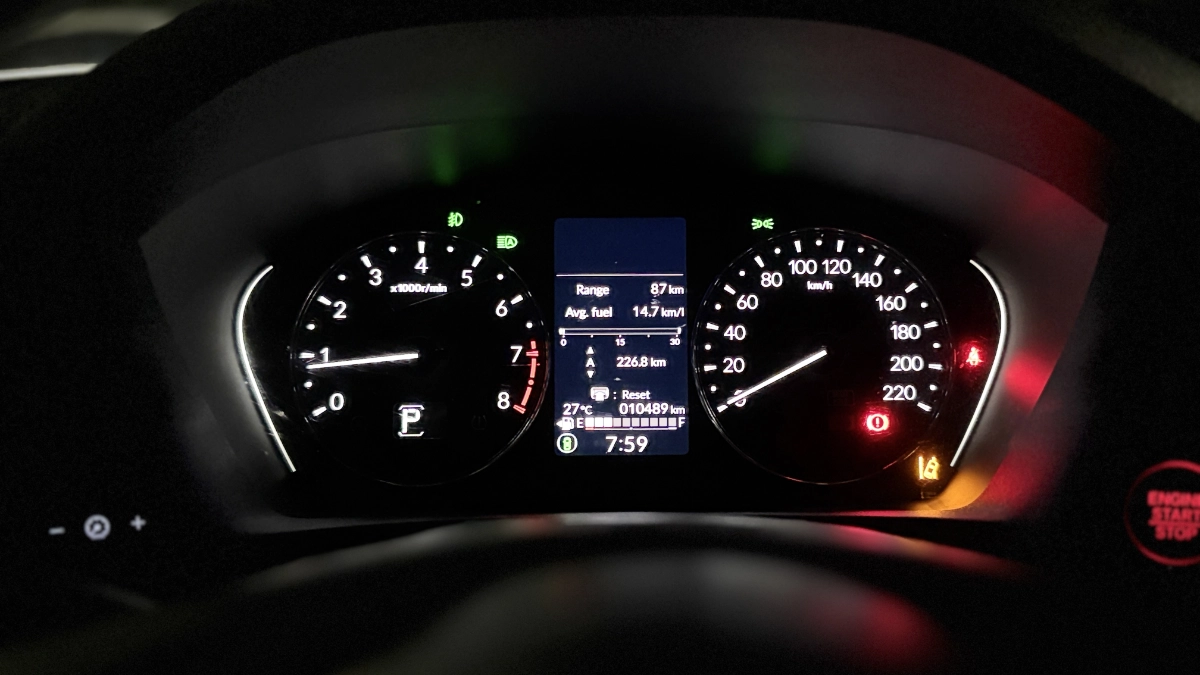
The engine’s real strength was its fuel consumption. During my time with the car, I put in over 250km—a mix of rush-hour traffic in cramped city roads and long expressways. The HR-V impressively hovered between 14km/L to 16km/L in mixed conditions. If you drive with ECON mode on, you’ll get even better economy.
As for enjoyment, I have mixed feelings. The engine itself sounds good from inside the cabin, but the way the CVT holds on to a specific RPM when accelerating doesn’t give the same satisfaction as linear acceleration through gears in a traditional automatic transmission. Of course, you can always put it in S Mode and use the paddle shifters. But I found that unless you’re constantly shifting, it doesn’t take long for the system to take back control of the virtual gears.
Ride and handling
The MacPherson struts in the front and torsion beam suspension at the rear felt well-balanced. While the HR-V soaked road imperfections well, it also felt relatively planted around the corners—just don’t expect it to handle like a Civic. Honda did a nice job with the steering feel. It had good feedback while being light enough to easily maneuver in and out of tight parking spaces. Braking also felt responsive and predictable with minimal nose dive.
The HR-V is easy to bring around the city. It has a turning radius of 5.5 meters, and its compact dimensions of 4,347mm long and 1,790mm wide make it friendly enough for new drivers. Ground clearance is also decent at 196mm—plenty enough to take on craters along C5.
Extra Features
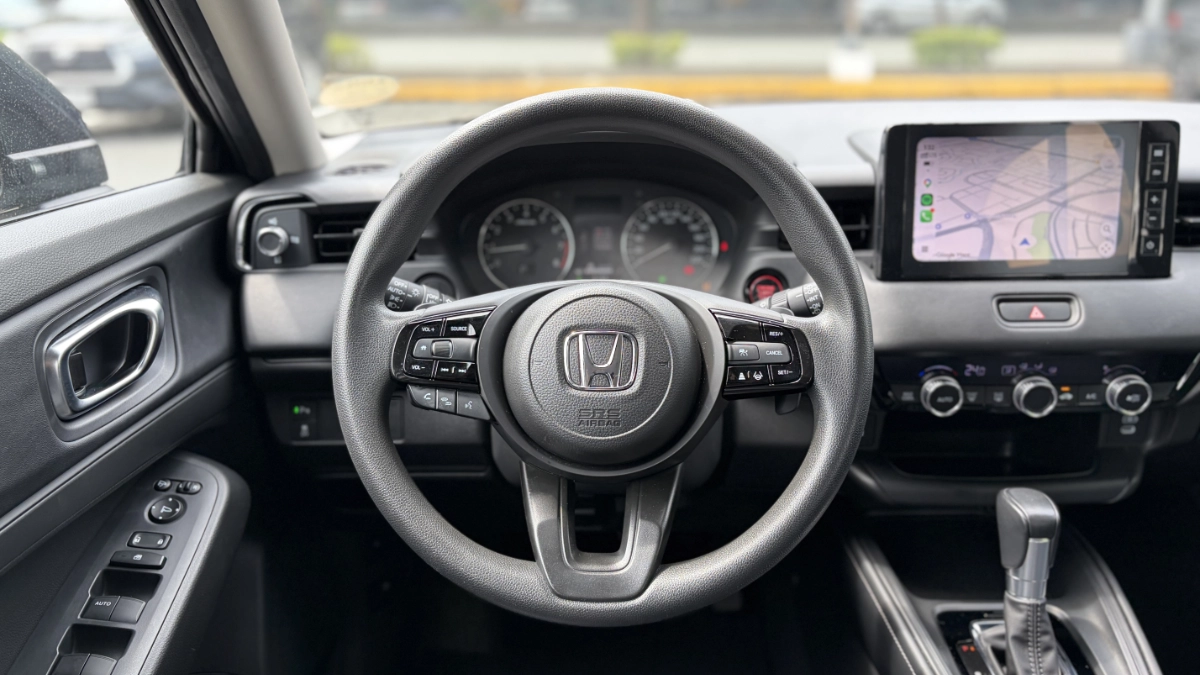
What I enjoyed most about the HR-V was its Honda Sensing technology. Honda Sensing is the company’s suite of driving assist features and includes adaptive cruise control, lane-keeping assist, lane-departure warning, lead car departure notifications, and a collision-mitigating braking system.
I tried the adaptive cruise control and lane-keeping assist features from the Skyway Balintawak On-Ramp to my exit in Alabang. The system is smooth. Braking feels composed with ample space from the car in front, and the acceleration is gradual. As someone who wasn’t totally comfortable with ADAS, the system in the HR-V assured me. “Hindi siya nakakapraning,” I repeatedly told my girlfriend, who was even more of a sceptic than I was.
Other features on the HR-V include ISOFIX anchorage points as standard, a Headlight Auto Off Timer which leaves the lights on for 15 seconds after you turn off the car, hill-start assist, hill-descent control, remote start, and automatic brake hold—incredibly useful in standstill traffic.
Verdict
Gone are the days when ‘base variant’ meant a bare-bones car. The Honda HR-V S CVT is full of tech that makes everyday driving more comfortable. The crossover by itself is already easy to drive; add in the Honda Sensing features and you’ve got yourself a city car that’s more than ready to take on longer journeys.
The HR-V has a comfortable cabin, smartphone connectivity, lots of physical switches, and various modes to put the rear seats in if you’re hauling bigger items. It has the versatility of the Honda City Hatchback with a taller ground clearance that a lot of you will like.
Of course, this variant isn’t without its faults—the main thing being lack of power. With a less punchy engine compared to the top-of-the-line RS e:HEV’s hybrid powertrain and the model’s previous turbocharged motor, customers may be disappointed if they’re expecting a sportier drive. As mentioned, the car isn’t slow for day-to-day situations, but there will be instances where you’ll need to adjust your driving to make up for the lack of horses.
So, is it a good buy in 2026? It depends. Priced at P1,460,000, the HR-V S CVT faces tough competition. From other legacy brands, there’s the non-hybrid Toyota Yaris Cross and the Nissan Kicks e-Power. And there are the electrified offerings from Chinese brands within the same price range. Where I’d argue for the HR-V S CVT is its inclusion of Honda Sensing. The system works really well, and if confidence in your car’s ADAS is a high priority, rest assured Honda spec’d its base HR-V with something too good to ignore.
SPECS: 2027 Honda HR-V S CVT
Price: P1,460,000
Engine: 1.5-liter naturally aspirated four-cylinder DOHC i-VTEC engine
Power: 119hp
Torque: 145Nm
Transmission: Continuously variable transmission
Layout: FWD
Seating: 5
Score: 8/10
More photos of the 2027 Honda HR-V S CVT: