iCaur is wading into a crowded market.
There’s no shortage of brands to compete against, many of which also come from China, and also offering an electrified lineup. It’s a tall order, breaking into the Philippine market right now. But if there’s one thing that the brand will be banking on to stand out, it’s the design—iCaur itself has stated as much.
Enter the iCaur V23, an SUV that’s managed to pique the interest of many readers. It’s an unapologetically boxy thing that wears its inspirations on its sleeve. This is all on top of an electric powertrain, and the promise of extensive customization—both big thumbs ups for Filipino motorists.
Check out those looks, though.
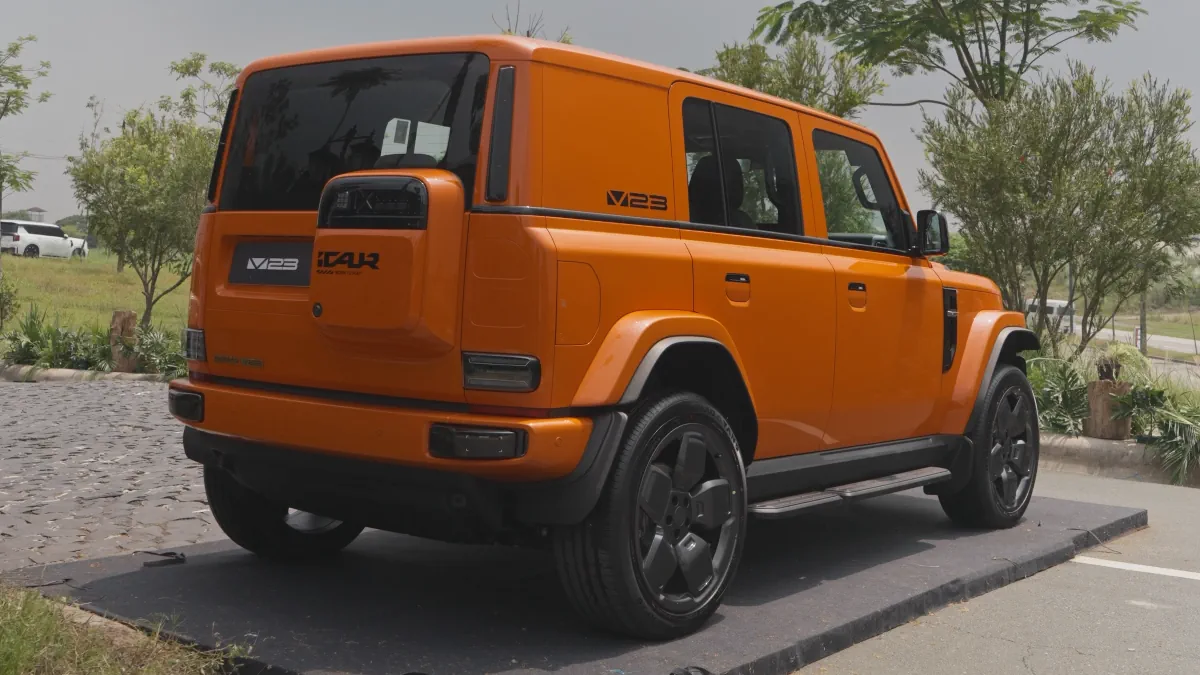
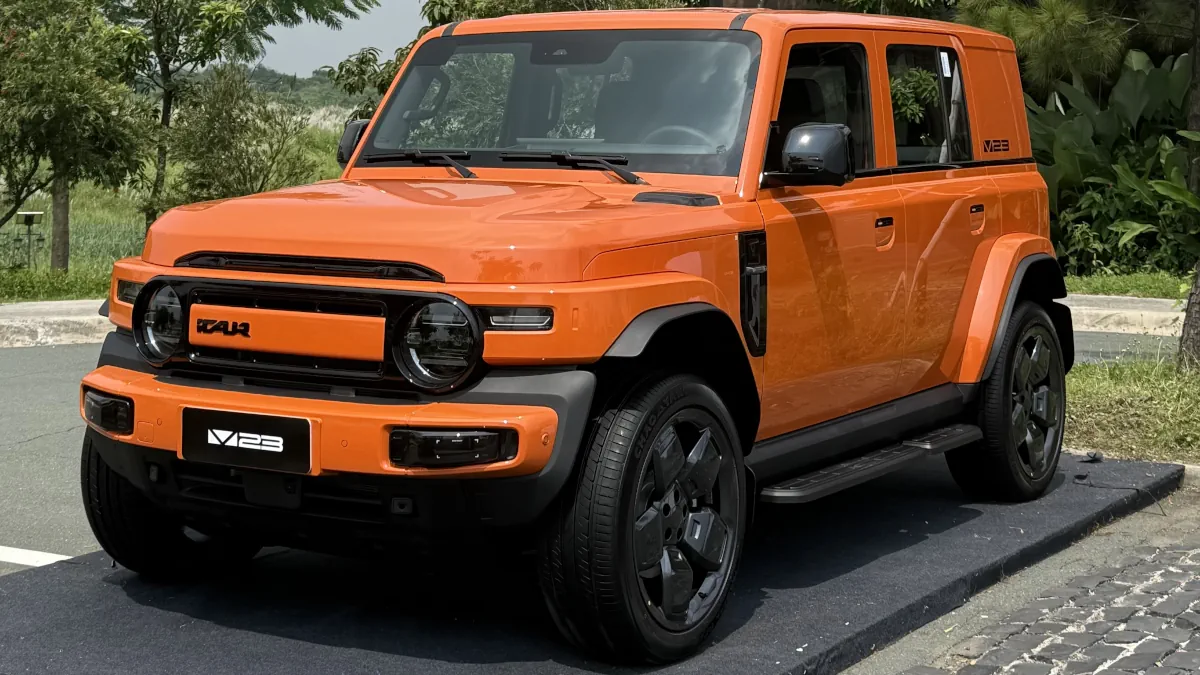
Looks like it’s still hip to be square. The V23 is just as eye-catching in the metal, carrying its boxy silhouette well. Overall, the looks strike a good balance between retro sensibilities and sci-fi edge. The 21-inch wheels tastefully jut out beyond the bodywork, giving it a properly wide stance that balances its square proportions. The striking orange paint job is the cherry on top, screaming for attention wherever it goes—as if the whole getup wasn’t doing that already.
Admittedly, I could have gone either way on the fascia. The round headlight units look tacked on a bit too close together. It ends up clashing too much with the angular elements found throughout the V23. Yes, it’s a callback to the old-school headlights its overlanding idols wore, but it just looks awkward here. Lighting up the line-pattern DRL array saves the look, at least.
OTHER STORIES YOU MIGHT HAVE MISSED:
iCaur signs first dealer-partners in preparation for PH launch
Size comparo: How big is the iCaur V27 versus the Jetour T2 Lightning i-DM?
But just how big is the V23, actually?
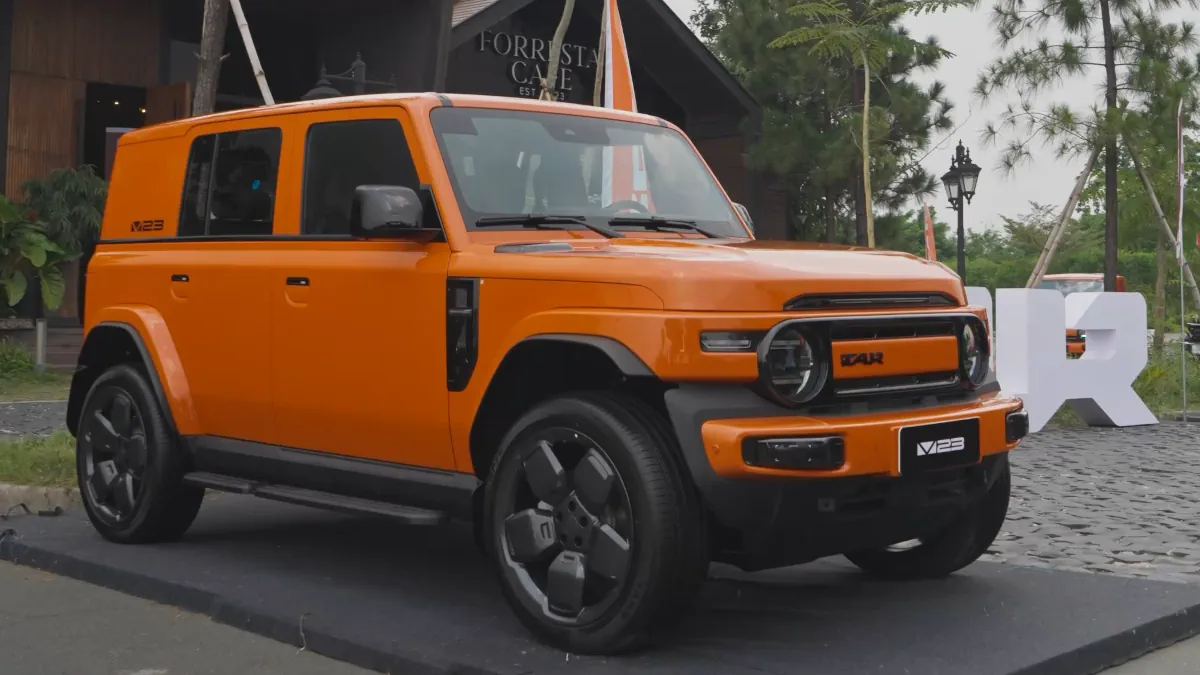
It’s a bit hard to judge its scale just from photos. From looks alone, it could be any size between a five-door Jimny and a Land Cruiser FJ. Officially, it measures 4,220mm long, 1,915mm wide, and 1,845mm tall, so it doesn’t actually line up exactly with anything else available in the market.
The V23 does match the length of most subcompact crossovers, but it takes on extra width and height. Effectively, it’s somewhere in between the two models mentioned above.
And what’s it like sitting inside?
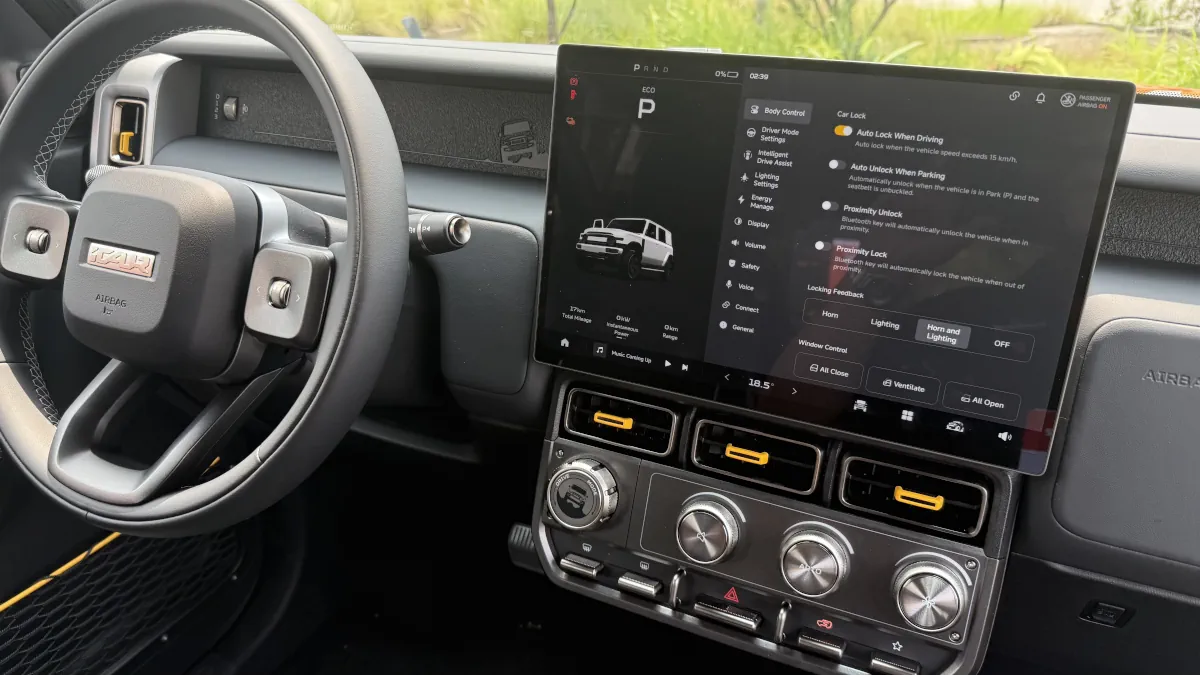
Spartan, but not uncomfortable. Very square and boxy just like the outside, but there’s plenty of soft-touch treatment on high-contact surfaces. Most of the physical controls—a variety of knobs, switches, and paddles—also have a metallic sheen. The shiny finish makes it all the more satisfying to click, push, and turn things into place.
These impressions extend to the second row seats. There’s plenty of legroom for passengers in the back, and the lack of a center tunnel is always a plus. The netting-style storage compartments are also a neat allusion to the car’s off-road aspirations. A solid compartment built into the door panels might still be more effective for securely holding items like bottles, though. Trunk space also feels a bit shallow; just usable enough at 234 liters. The rear seats fold 50/50 to expand cargo space to 744 liters, at least.
And it’s an EV, right?
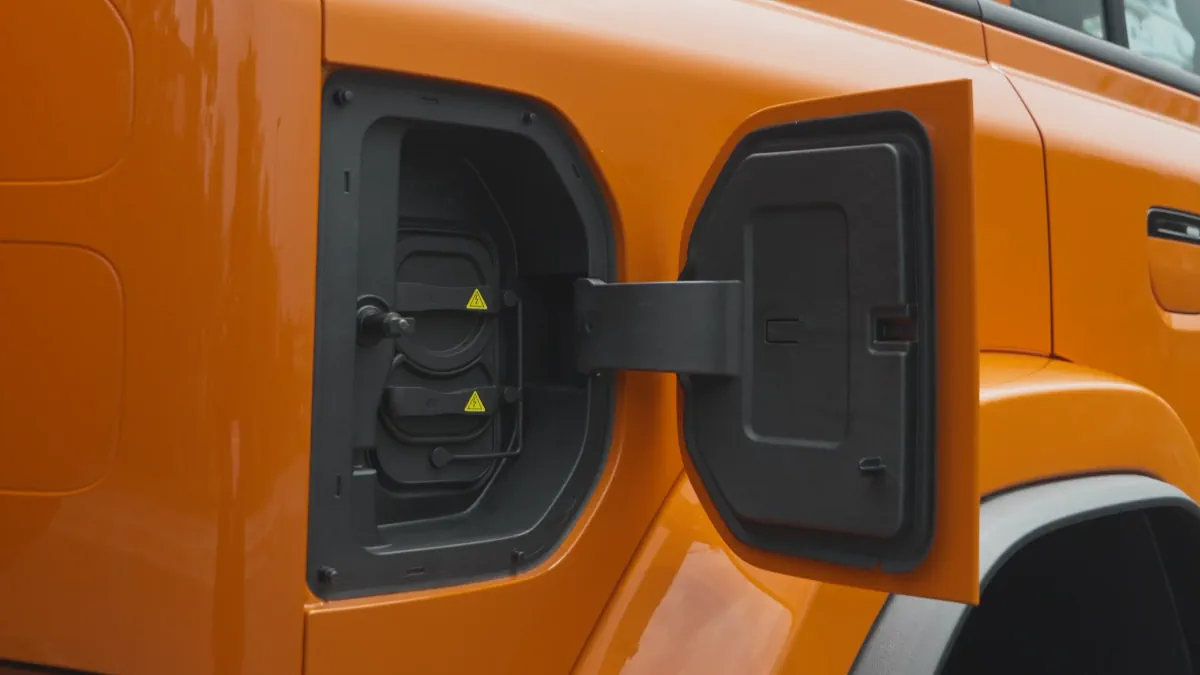
It’s fully electric, with four-wheel-drive to boot. This model is equipped with an 81.8kWh battery good for around 501km of range, while power is handled by two electric motors generating 201hp and 292Nm combined.
A single-motor rear-wheel-drive model will also be available, albeit with lesser specs: 59.93kWh battery, 401km range, and 134hp plus 180Nm.
How was it behind the wheel?
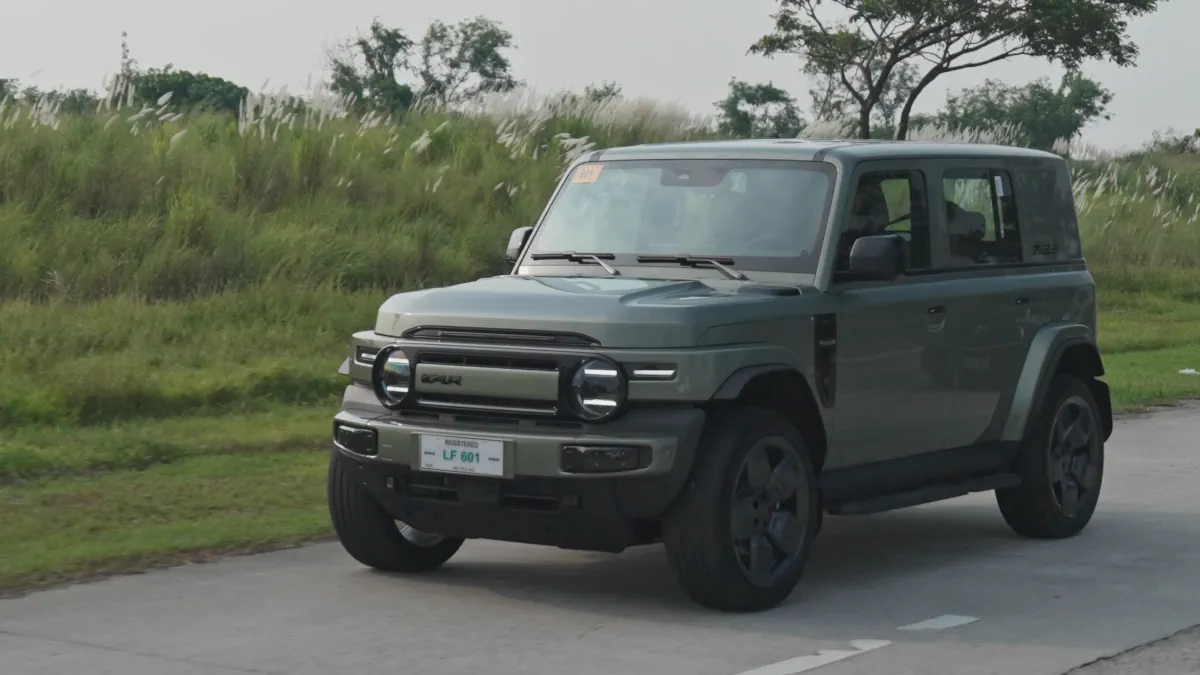
We were limited to paved roads for the test drive. Not exactly the mud and dirt it yearns for, but it was enough to get to know the V23 a little. In Sport mode, it’s punchy and raring to go. A little throttle discipline goes a long way with all the torque on tap, but it settles down accordingly in Comfort and Normal modes. It’s going to take a longer drive to figure out each of the seven drive modes available.
It’s also worth noting that with no gauge cluster to speak of, the laptop-sized infotainment screen handles vehicle readouts like current speed and battery percentage, on top of other functions. Not the most ergonomic setup. A HUD would have been a workable alternative; I’m just not a fan of getting rid of the instrument panel outright.
Back to driving dynamics, the steering did feel responsive while changing lanes and making U-turns. It looks bigger than it actually is, but it drives just like a subcompact crossover: easy and predictable. The cabin does rock a bit more than expected when taking the car over road imperfections at cruising speed, but that’s to be expected at this size.
So, what’s our take on all this?
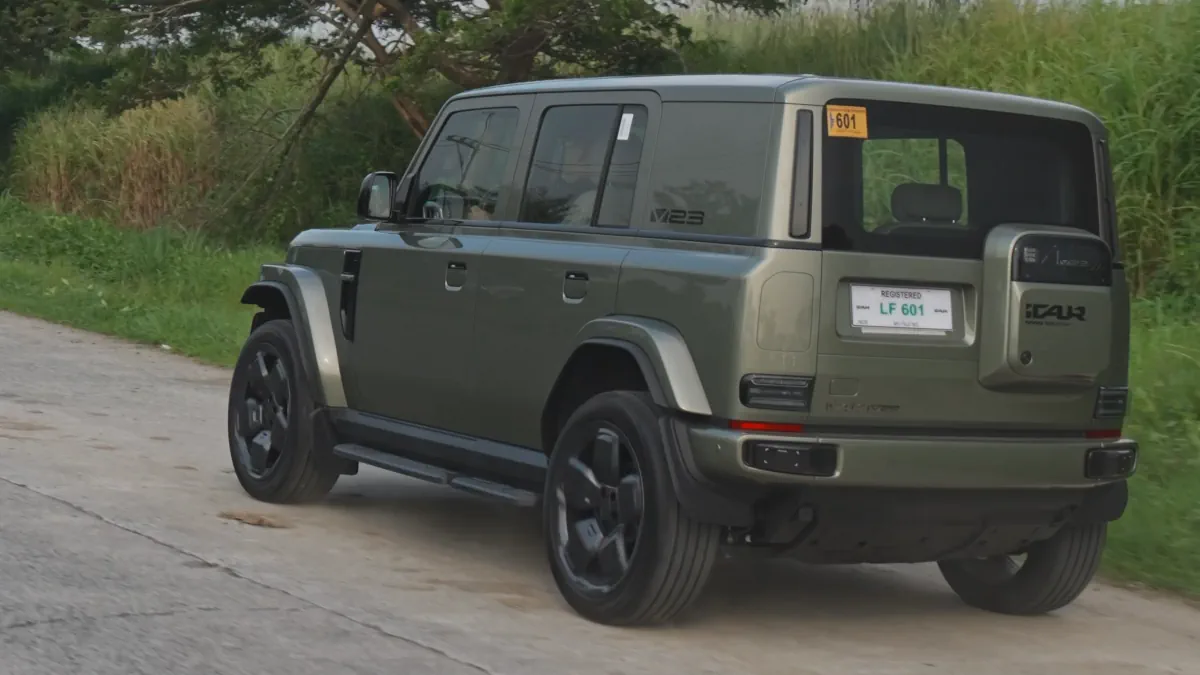
If nothing else, the V23 is a car brimming with personality from the get-go. That alone merits points in a market with plenty of anonymous BEVs. And then there’s the promise of serving as a blank slate for customization. iCaur has already said future owners can expect to trick out their units with all the appropriate overlanding bits and bobs, so we’ll have to wait and see just how deep that goes.
Pricing will be the big point of contention for the V23. Like I mentioned earlier, it’s a tight market with plenty of competitive products from a number of brands. No doubt iCaur is carefully mulling over how much both 4WD and RWD models should go for as we speak. But if the price is right, this newcomer brand could very well have a winner on its hands.