Unless you’re really a car nut or you happen to work in the automotive industry, just planning to buy a new set of wheels can be really confusing with all the acronyms and automotive jargon being thrown around. What the heck is EFI or OEM? Do you know the difference between AWD and 4WD?
There’s also the tricky world of transportation-related local government agencies in the Philippines and their penchant for turning everything into acronyms. Do you have any idea what MVUC stands for in your OR and why you have to pay it? Who’s in charge of what between the LTO, LTFRB, MMDA, and DOTr?
Whether you’re a clueless first-time car buyer who wants to make sense of the baffling terms in a spec sheet before pulling the trigger on a new vehicle or you’re a seasoned car owner who needs a refresher on the new terminology, we’ve got you covered.
Top Gear has compiled a list of frequently used acronyms in the local car industry, in alphabetical order, including what they actually mean in the simplest terms possible.
OTHER GUIDES YOU MIGHT WANT TO CHECK OUT:
Here’s your ultimate guide to the LTO driver’s license
Guide: What should you do when you witness a road accident?
Automotive acronyms and jargon in the Philippines
AAP: Automobile Association of the Philippines
The Philippines’ biggest and oldest auto club. Membership is required here to get an International Driver's License or Permit.
ABS: Anti-lock braking system
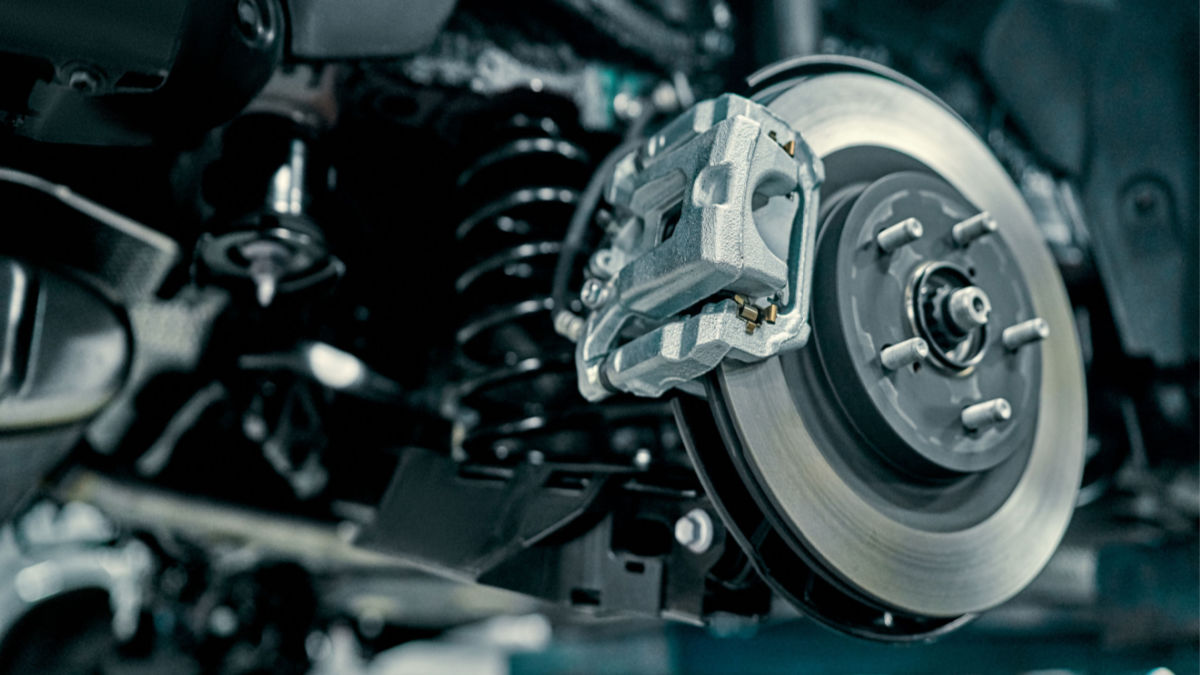
A safety system that prevents the wheels of a vehicle from locking up and skidding under heavy braking so that the driver can still take control of steering.
A/C: Air-conditioning
Absorbs heat and blows refrigerated air to keep the temperature cool inside the cabin of the car.
AT or A/T: Automatic transmission
A gearbox that can shift up and down automatically that does not require input from the driver.
AUX: Auxiliary point
An input jack within the car's interior, which allows a phone or audio device to be connected by a wire to the car's audio system This could also refer to auxiliary lights often installed on cars and motorcycles.
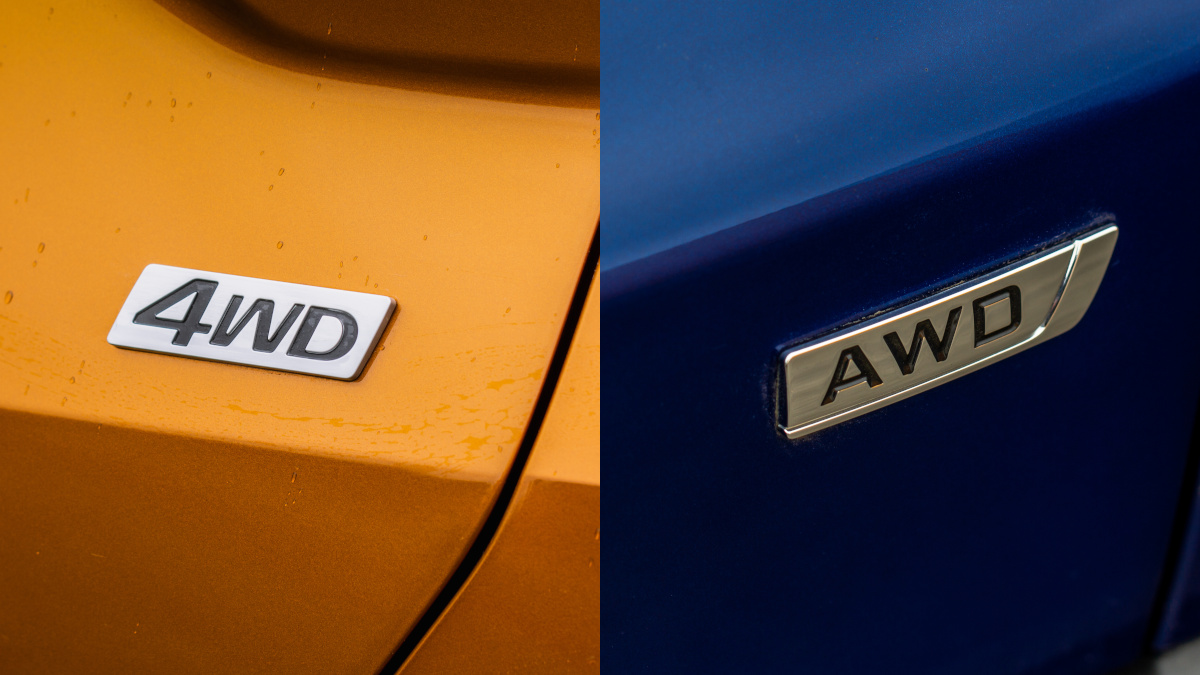
AWD: All-wheel-drive
Popular terminology for permanent four-wheel drive systems found in cars and SUVs where power is supplied to all four wheels of the car.
BEV: Battery electric vehicle
A vehicle that is primarily powered by at least one electric motor.
CDE: Comprehensive Driver’s Education
A refresher course for drivers and motorcycle riders mandated by the LTO for anyone who wishes to renew their driver's license in the Philippines.
CO2: Carbon dioxide
One of the main gases produced by cars and is emitted from the exhaust.
CRS: Child restraint system
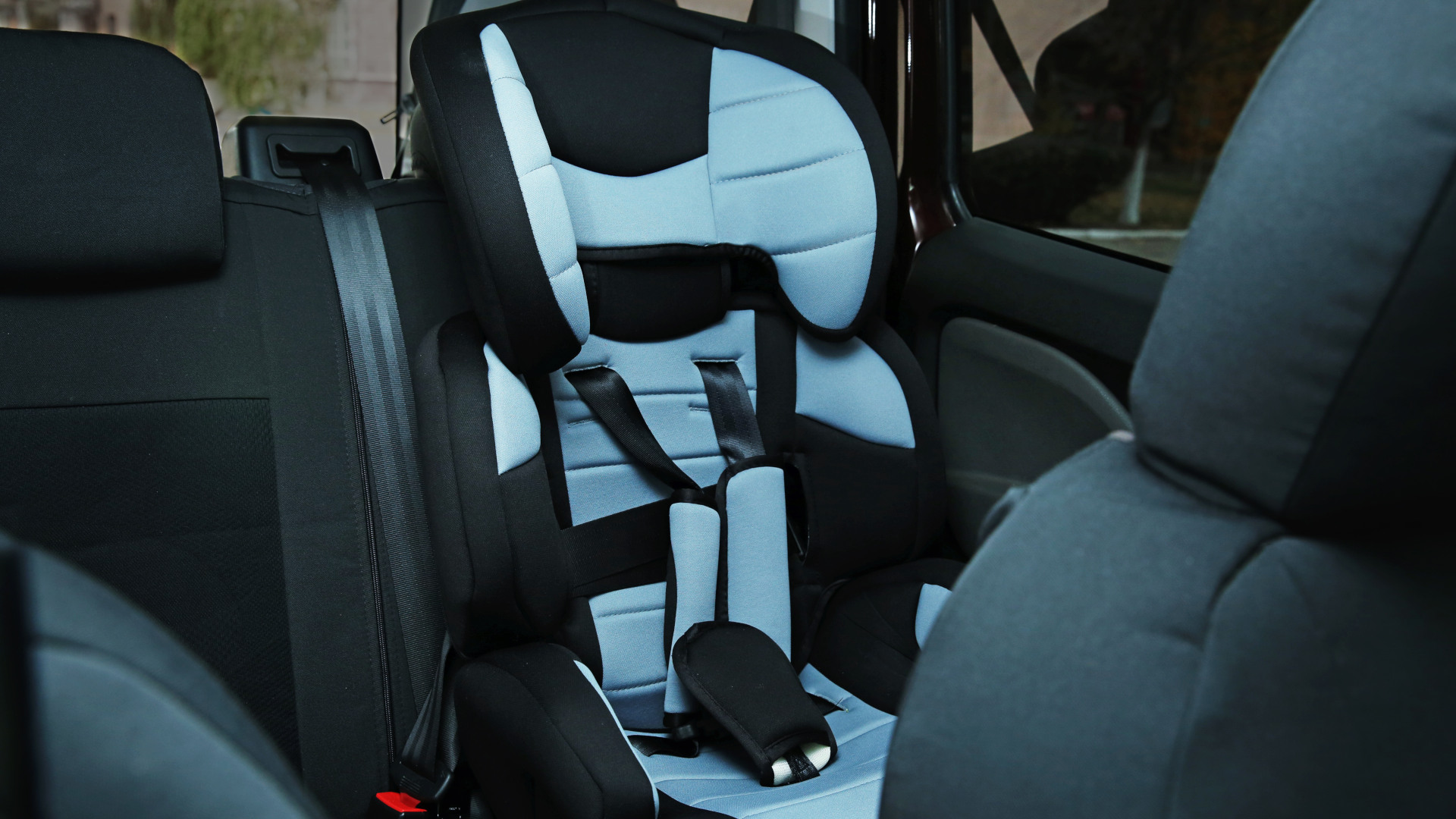
A device capable of accommodating a child occupant in a sitting position such as child car seats or booster seats.
CVT: Continuously variable transmission
A type of automatic transmission that has just one automatically varying gear ratio.
DOTr: Department of Transportation
Formerly known as the Department of Transportation and Communications (DOTC), the DOTr is responsible for the transportation sector, overseeing operations and policies of numerous attached agencies related to the country’s road, rail, water, communication, and aviation systems.
DPF: Diesel Particulate Filter
An after-treatment device that removes harmful particulate matter from diesel exhaust gas.
DRL: Daytime running lights
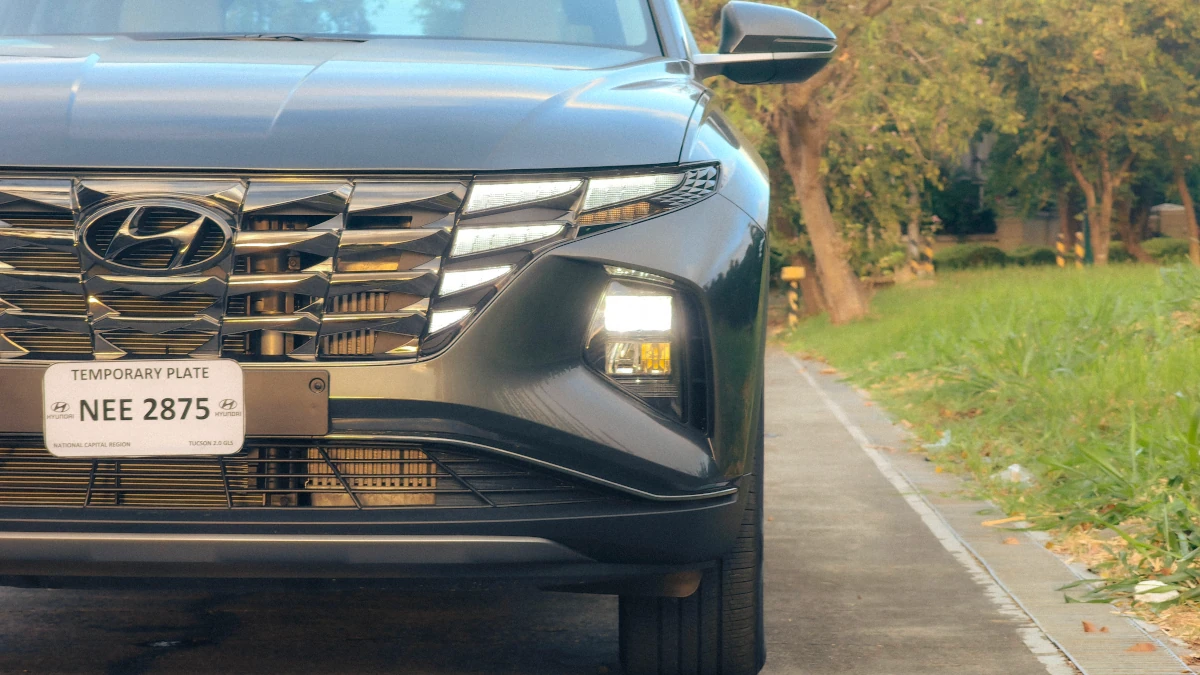
Lights on the front of the car that are permanently on whilst the engine is running.
ECU: Engine control unit
The ECU is a computer system that is considered to be the 'brain' of a vehicle's engine.
EFI: Electronic fuel injection
EFI systems replace carburetors as fitted to older vehicles. The electronically controlled fuel injectors deliver fuel more efficiently, improving economy, emissions, and drivability.
EGR: Exhaust gas recirculation
An after-treatment device that controls nitrogen oxide emissions.
EML: Engine management light
A dashboard warning light that warns the driver of any problems with the engine and/or exhaust.
EV: Electric vehicle
A vehicle that is primarily powered by at least one electric motor.
EWD: Early warning device
Safety tools used to signal other motorists that you have made an emergency stop.
FSH: Full service history
If a used car has a full service history, it means that servicing has been carried out in accordance with the manufacturer-recommended service schedule and records of all past services are available.
FWD: Front-wheel drive
Power is supplied to the front wheels of the car.
GPS: Global positioning system
A satellite-based radio navigation system, used in sat nav systems to help drivers reach their destination.
GT: Grand Tourer
Term originated from the Italian gran turismo. While gran turismo means ‘grand tour’ and typically refers to a cultural tour around Europe, a grand (or gran) tourer is a car, often luxurious, that’s been engineered for comfortable and enjoyable long journeys.
GVW: Gross vehicle weight
The maximum recommended weight for a vehicle, including: the weight of the vehicle itself, fuel and other fluids, passengers, and all cargo
HEV: Hybrid Electric Vehicle
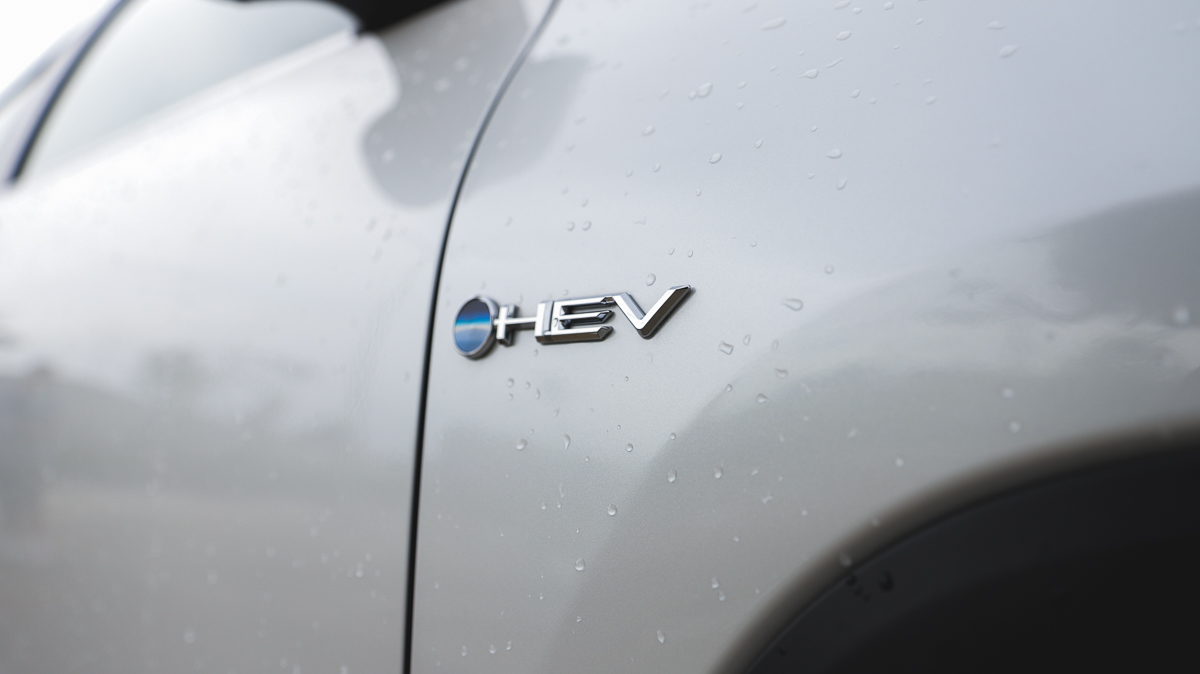
A vehicle powered by a combination of an electric motor and either a petrol or diesel internal combustion engine, they are self-charging so don't need plugging-in to recharge the battery
HP: Horsepower
Refers to how powerful an engine is. The higher the horsepower, the stronger the engine. Also referred to as brake horsepower or bhp.
ICE: Internal combustion engine
An engine that powers a vehicle through combustion, which is a basic chemical process of burning fuel and air to produce energy.
ISOFIX: International Standard Organisation Fix
The international standard for attachment points for child safety seats in passenger cars.
kW: Kilowatt
The metric equivalent of brake horsepower. Used to measure the energy output of a vehicle’s engine.
kph: Kilometers per hour
A unit of speed expressing the number of kilometers traveled in an hour.
LED: Light-emitting diode
A lighting technology commonly found on vehicles, replacing halogen bulbs due to an improved lifespan and offering enhanced visibility.
LHD: Left Hand Drive
The steering wheel and controls on the left hand side of cars driven on the right hand side of the road in countries such as the USA and the Philippines.
LPG: Liquid Petroleum Gas
A popular alternative fuel to petrol or diesel. The cost per liter is less than petrol but it is less fuel-efficient.
LWB: Long wheelbase
A vehicle, often luxury, with an extended wheelbase.
LTO: Land Transportation Office
The frontline government agency in the Philippines that is responsible for issuing driver's licenses and registering vehicles.
LTO OR/CR: Official Receipt and Certificate of Registration
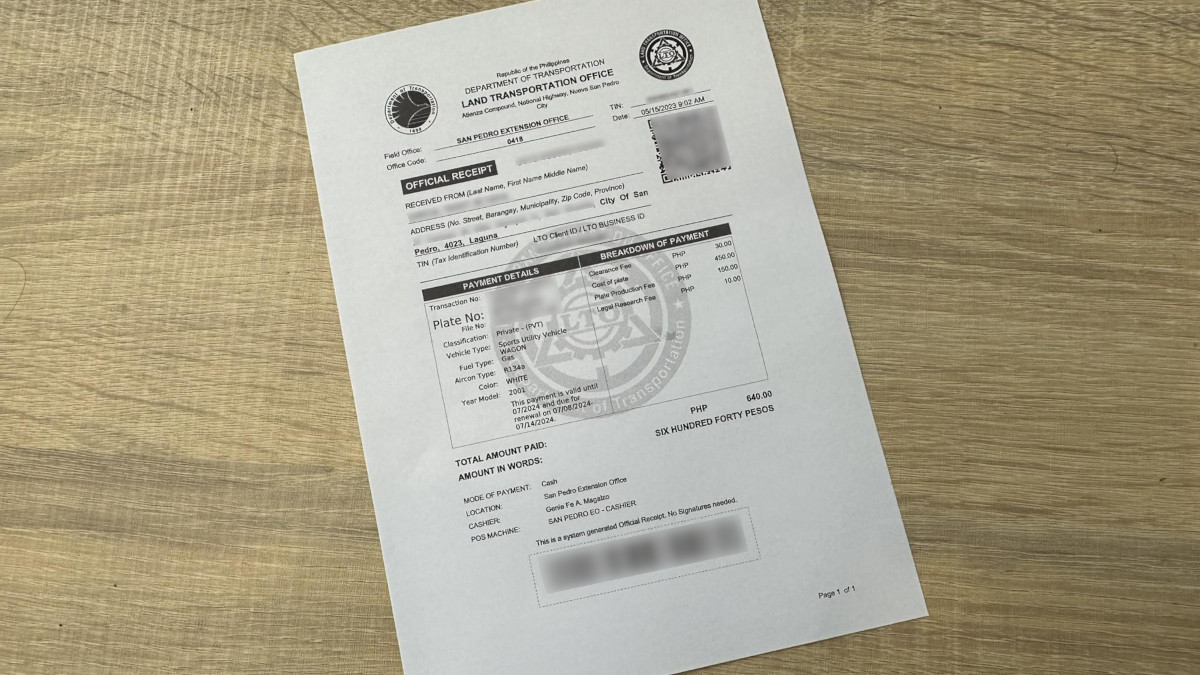
The LTO-issued Official Receipt is a document issued by the LTO that confirms your vehicle’s registration payment as it presents your name and the fee on it. This has to be renewed annually.
The Certificate of Registration is also a document issued by the LTO confirming ownership of the vehicle and more detailed technical information including vehicle model, vehicle class, motor number, chassis number, engine displacement, number of cylinders, gross weight, net capacity, the total number of passengers.
LTFRB: Land Transportation Franchising and Regulatory Board
The government agency that regulates and supervises all motorized land-based transportation services.
LTMS: Land Transportation Management System

A new one-stop online portal created by the LTO and rolled out in 2020 to integrate all LTO services in a single database and digital platform.
Make and model
Make refers to the vehicle’s brand, while model refers to the specific model. When you say Toyota Vios, Toyota is the make and Vios is the model.
MMDA: Metropolitan Manila Development Authority
The government agency that coordinates and monitors the mass transport system, parking rules and regulations, apprehension and ticketing system, and other matters related to the people and vehicles on Metro Manila’s thoroughfares.
MHEV: Mild Hybrid Electric Vehicle
A vehicle that is primarily powered by an internal combustion engine but has a battery driven electric motor to assist with powering the vehicle, reducing fuel consumption and lowering CO2 emissions.
mpg: Miles per gallon
A measurement of fuel efficiency that denotes the number of miles that a vehicle can travel per gallon of fuel.
mph: Miles per hour
Unit of speed that denotes how many miles are traveled in one hour.
MPV: Multi-purpose vehicle
A practical vehicle that can typically seat six or more passengers.
MY: Model year
The year a model was produced (e.g. 21MY).
MT or M/T: Manual Transmission
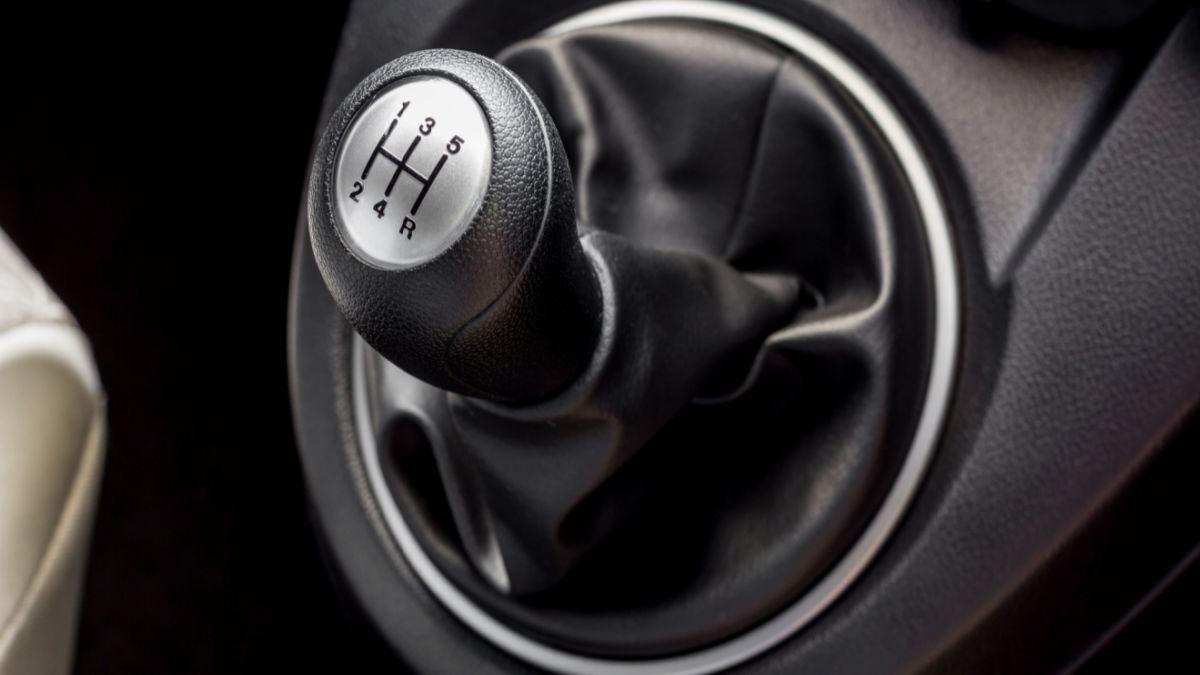
Motor vehicle transmission system where gear changes require the driver to manually select the gears by operating a gear stuck and clutch (which is usually a foot pedal for cars or a hand lever for motorcycles).
MV: Motor vehicle
Vehicles used for the transportation of people or cargo propelled other than by muscular power, such as automobiles, motorcycles, autocycles, and low speed vehicles.·
MVIS: Motor Vehicle Inspection System
A program in the Philippines to ensure the road-worthiness of the vehicles to be registered
MVUC: Motor Vehicle User’s Charge
Also known as the road user’s tax. This is collected by the Philippine government upon vehicle registration to help fund the maintenance of national and provincial roads and address the air pollution caused by vehicles.
NCAP: new car assessment program
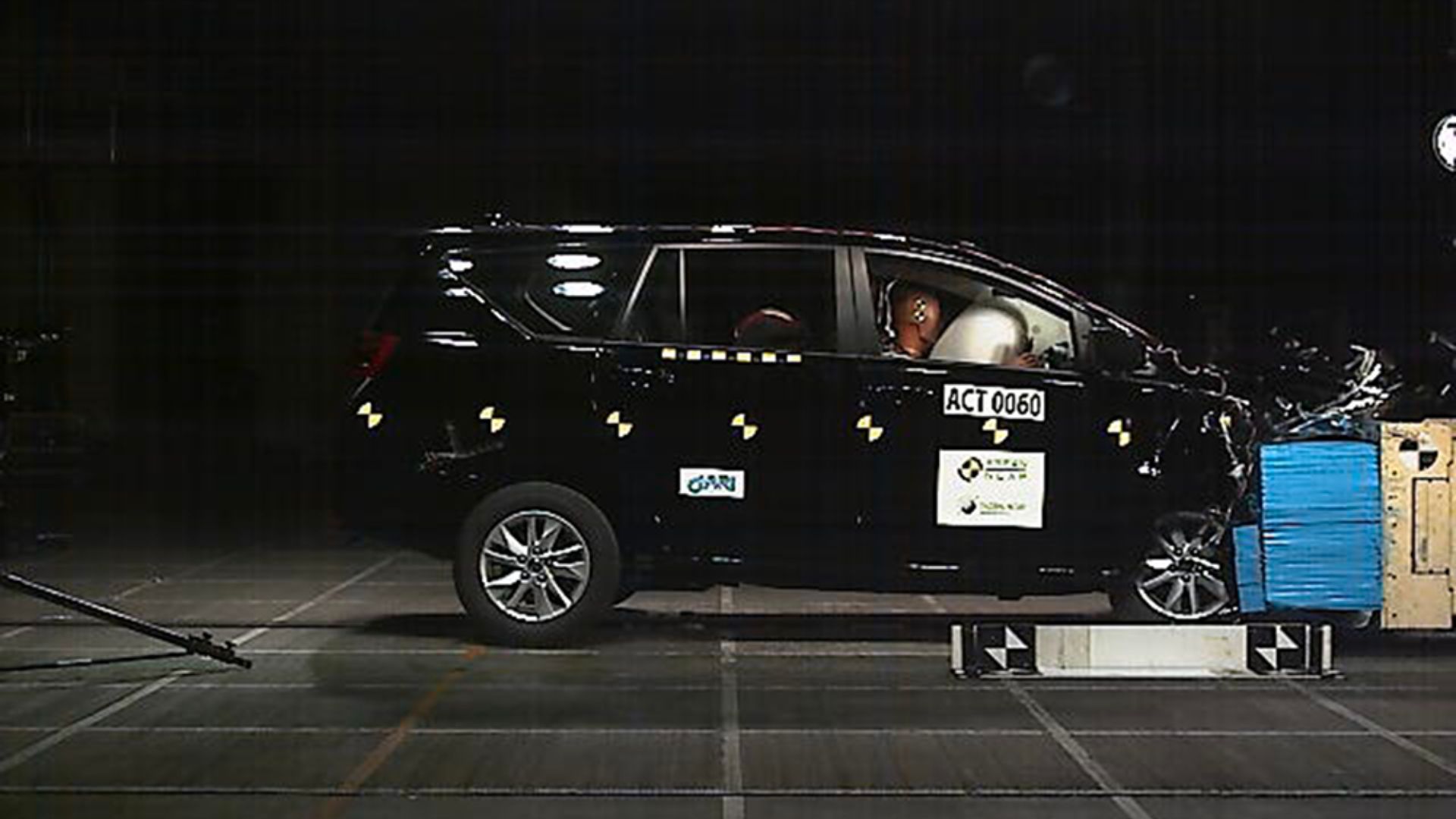
A test to determine the level of safety a vehicle provides. Variations include the ASEAN NCAP and Euro NCAP.
NOx: Nitrogen oxide
A harmful gas emitted from exhausts.
OEM: Original equipment manufacturer
OEM parts for a car that are developed by the car manufacturer rather than aftermarket.
OTR: On the road
On-the-road price is the total price of a new or used car with all additional fees included.
PCH: Personal contract hire
Also known as personal leasing, PCH is a way of financing a vehicle when you have no intention of owning the vehicle once the contract ends.
PHEV: Plug in-hybrid electric vehicle
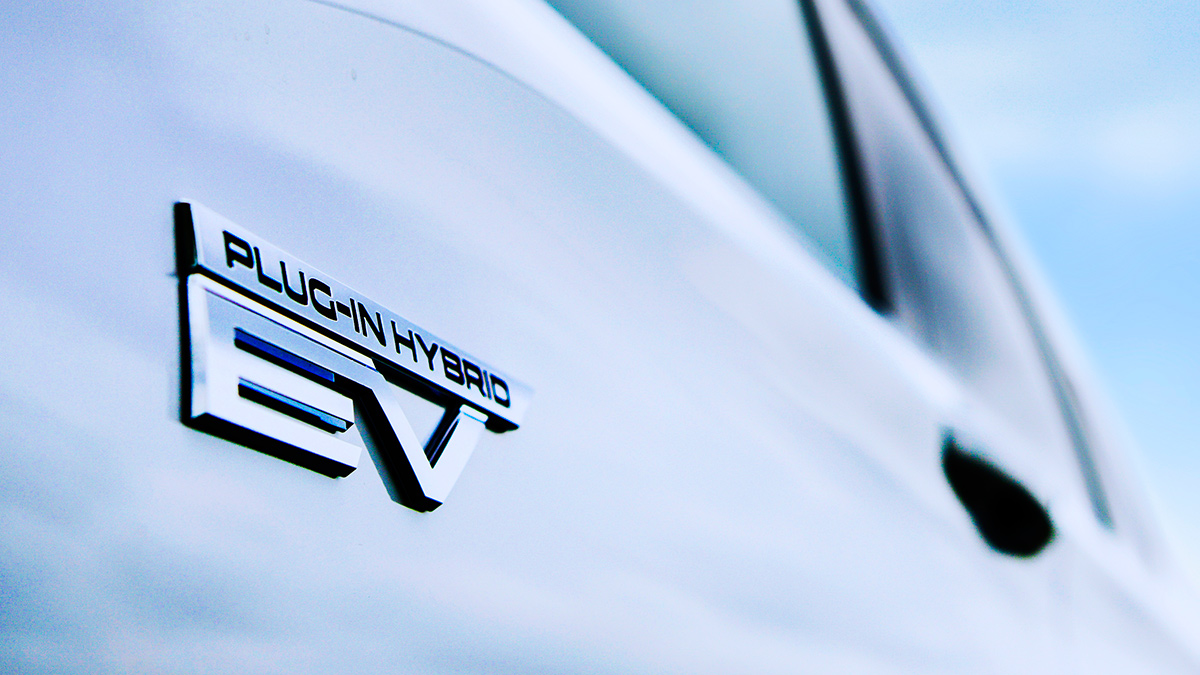
A vehicle that is powered by a combination of an electric motor and either a petrol or diesel internal combustion engine. It can be plugged in to recharge its battery and oftentimes can run on just electric power alone.
PMVIC: Private Motor Vehicle Inspection Center
LTO-accredited facilities wherein motorists can bring their cars for inspection prior to registration renewal.
PNP-HPG: Philippine National Police Highway Patrol Group
The Highway Patrol Group is a police unit under the Philippine National Police tasked to enforce traffic safety roles and provides general supervision to local police forces with regard to the enforcement of traffic laws.
PPF/GPF: Petrol/gasoline particulate filter
An after-treatment device that removes harmful particulate matter from petrol/gasoline exhaust gasses.
PS: Pferdestarke
The German term for horsepower. Actual figures between PS and hp also vary slightly.
PSI: Pounds per square inch
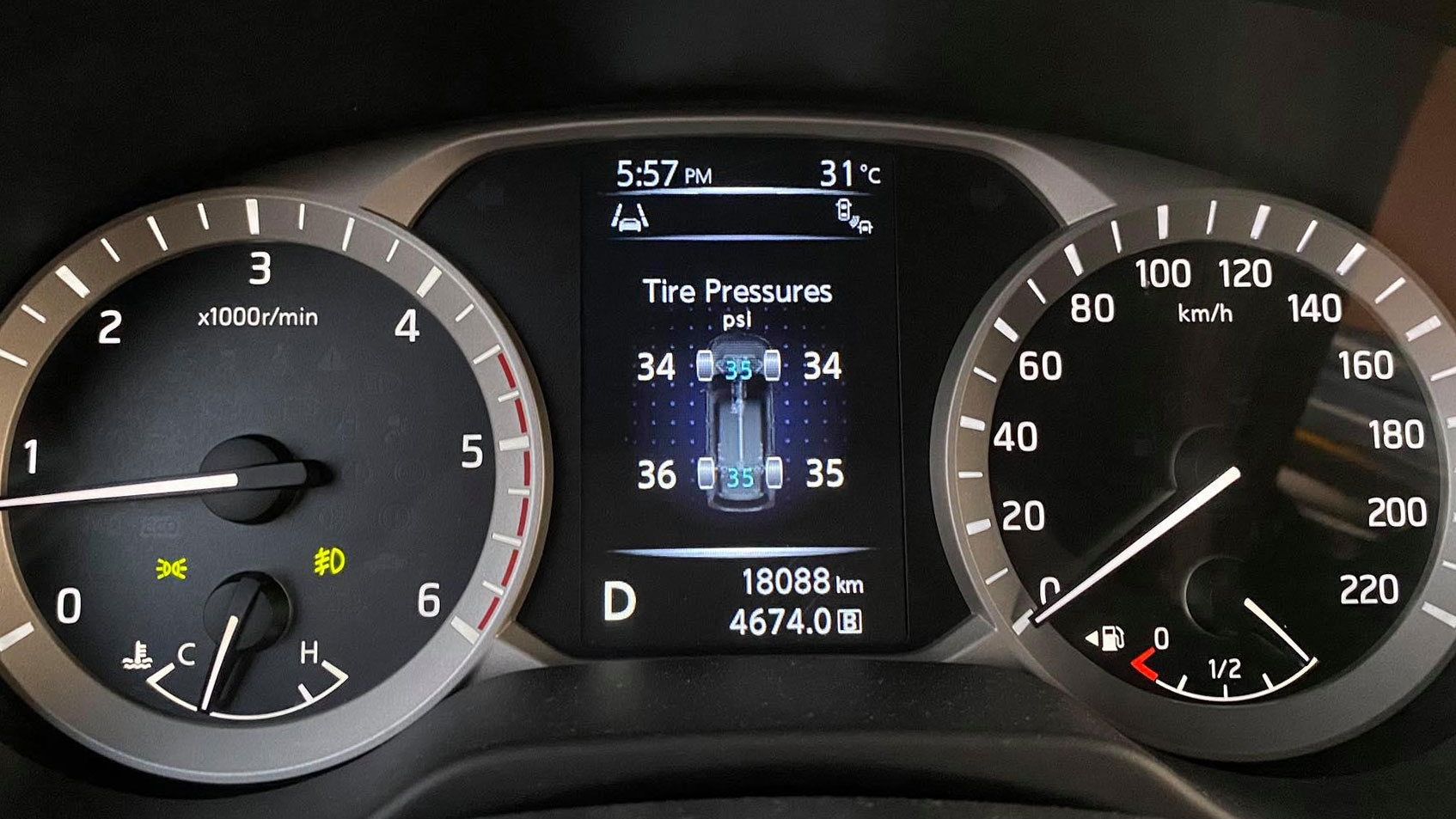
A unit of measurement used for tire pressure.
RHD: Right-Hand Drive
The steering wheel and controls on the right-hand side of cars driven on the left-hand side of the road in countries such as Japan and New Zealand.
RPM: Revolutions per minute
A measurement of the amount of times the engine's crankshaft makes one full rotation every minute and how many times each piston goes up and down in its cylinder
RWD: Rear-wheel drive
Power is supplied to the rear wheels of the car.
SAT-NAV: Satellite Navigation System
Also known as GPS (Global Positioning System). GPS technology interfaces with mapping software either built to provide spoken, turn-by-turn instructions to drivers.
SWB: Short wheelbase
Front and rear axles are closer together therefore the body or cargo deck of a commercial vehicle will be shorter.
SUV: Sport utility vehicle
A vehicle characterized by a raised driving position and a spacious interior.
TNCs: Transport Network Companies
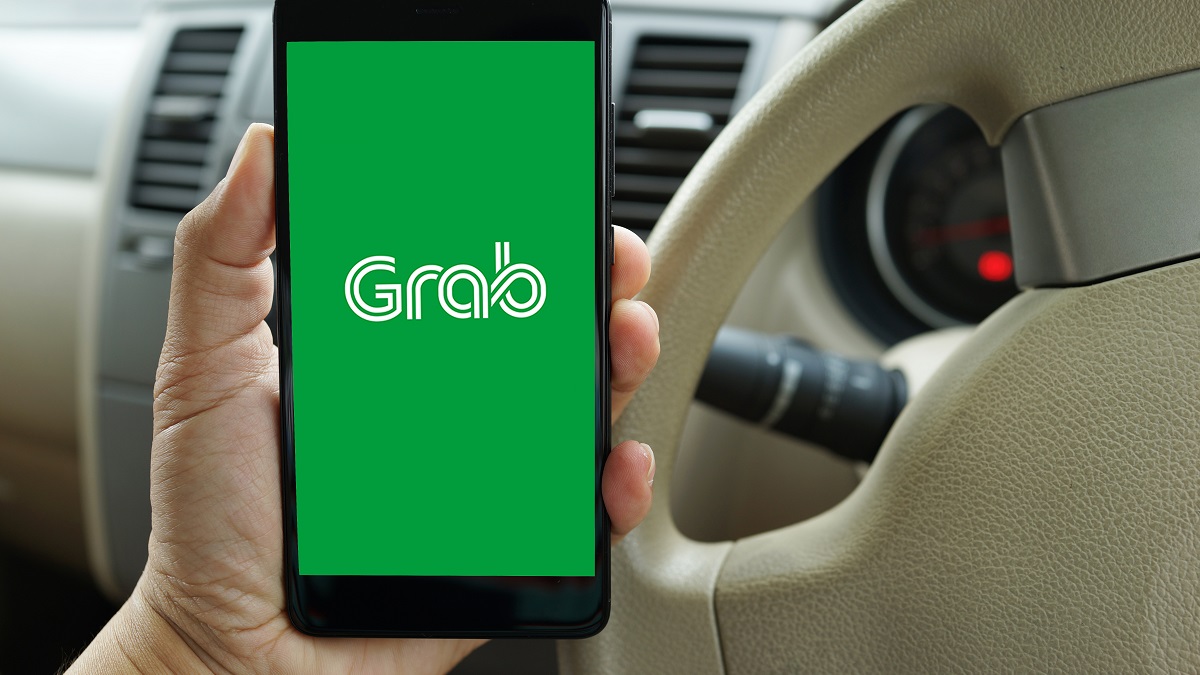
Refers to a person or entity that provides pre-arranged transportation services for compensation using internet-based technology or digital platforms.
TNVS: Transportation Network Vehicle Service
TNC-accredited private vehicle owners that uses technology and app-based transport network vehicle services where passengers know the fare before they book and confirm a ride. TNVS players in the Philippines include Grab, Angkas, Joyride, MoveIt and more.
VIN: Vehicle identification number
The identifying code that is unique for each vehicle.
2WD: 2-wheel drive
Power is supplied to two wheels of the car.
4WD: 4-wheel drive
Power is supplied to all four wheels of the car.
Did we miss anything? Let us know if we missed out on other vital automotive terms so we can add them in future updates.