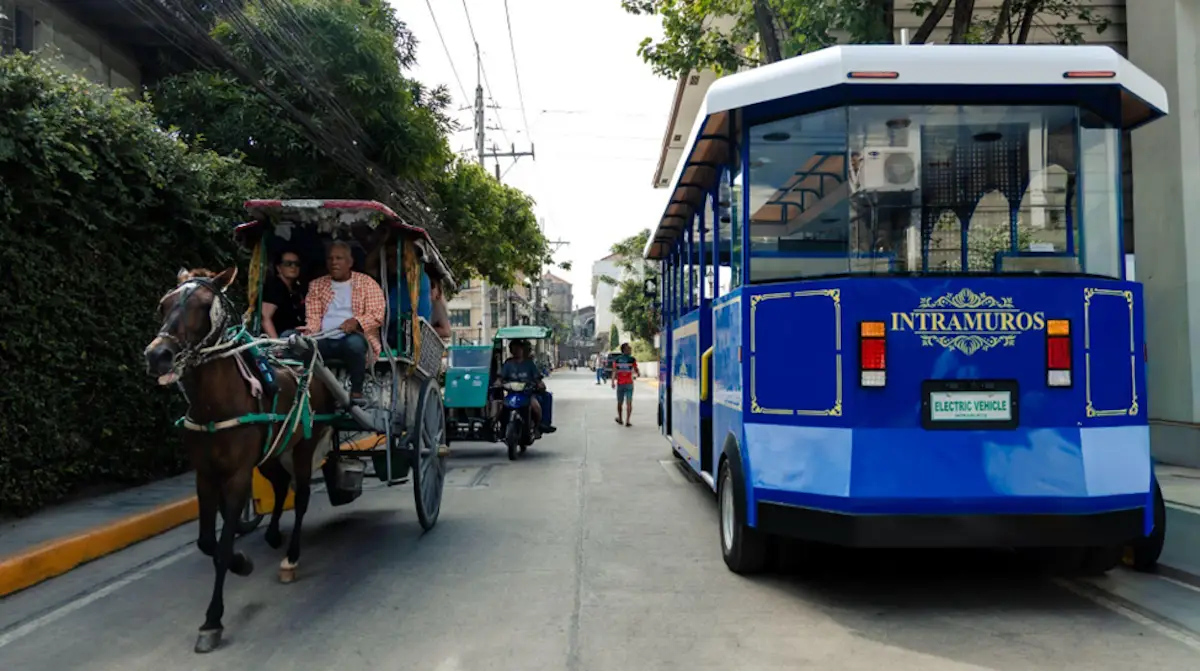
Looking for a new way to explore Intramuros? The country’s first locally developed electric tranvia or e-tranvia was recently launched to provide a heritage experience for tourists while promoting green transport in the Walled City.
The heritage-themed electric vehicle now offers free daily tours around Intramuros, stopping at 10 key historical sites, to promote tourism and cultural appreciation in one of Manila City’s most iconic destinations.
Here’s what you need to know about this sustainable new transport option in the Walled City and how you can catch a ride for free.
What is the e-tranvia?
The e-tranvia is said to be the first-ever Filipino-engineered all-electric tourist transport vehicle. The first unit was turned over by the Department of Science and Technology (DOST) to the Intramuros Administration (IA) in a launch ceremony held at Centro de Intramuros. A pilot run of the free e-tranvia ride took place at Plaza Roma in Intramuros on March 22, 2026.
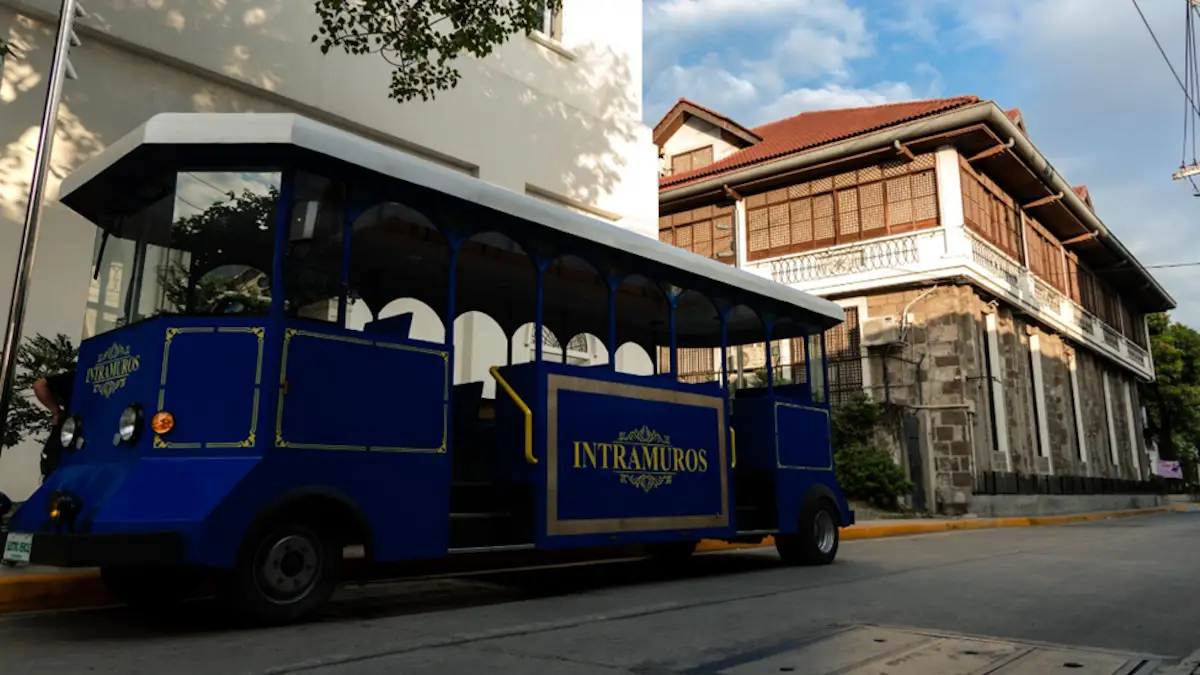
The 18-seater low-speed, battery-electric e-tranvia was developed through the initiative of DOST–National Capital Region, the DOST–Industrial Technology Development Institute (ITDI), the University of the Philippines Diliman (UPD), and Cagayan State University (CSU).
What’s the concept and design of the e-tranvia based on?
As explained by the DOST, the e-tranvia’s concept and design, vehicle frame assembly, suspension system, and paneling for the body and roof were developed by CSU. The vehicle makes use of locally manufactured abaca-fiber composite material for the body and roofing panels.
UPD led its electrical and electronic design, which includes a lithium-ion battery system, an electric motor and controller, and a charging system, as an alternative to the diesel-powered system of the existing trams in Intramuros.
Complementing Intramuros’ historic atmosphere, the design of the DOST-funded vehicle takes inspiration from the earlier models of the streetcar/tram system that operated as Manila’s first modern mass-transit network from 1888 until 1945. Initially horse-drawn, original trams were electrified by Meralco in the 1900s, and formed a massive transport network that was eventually destroyed during World War II.
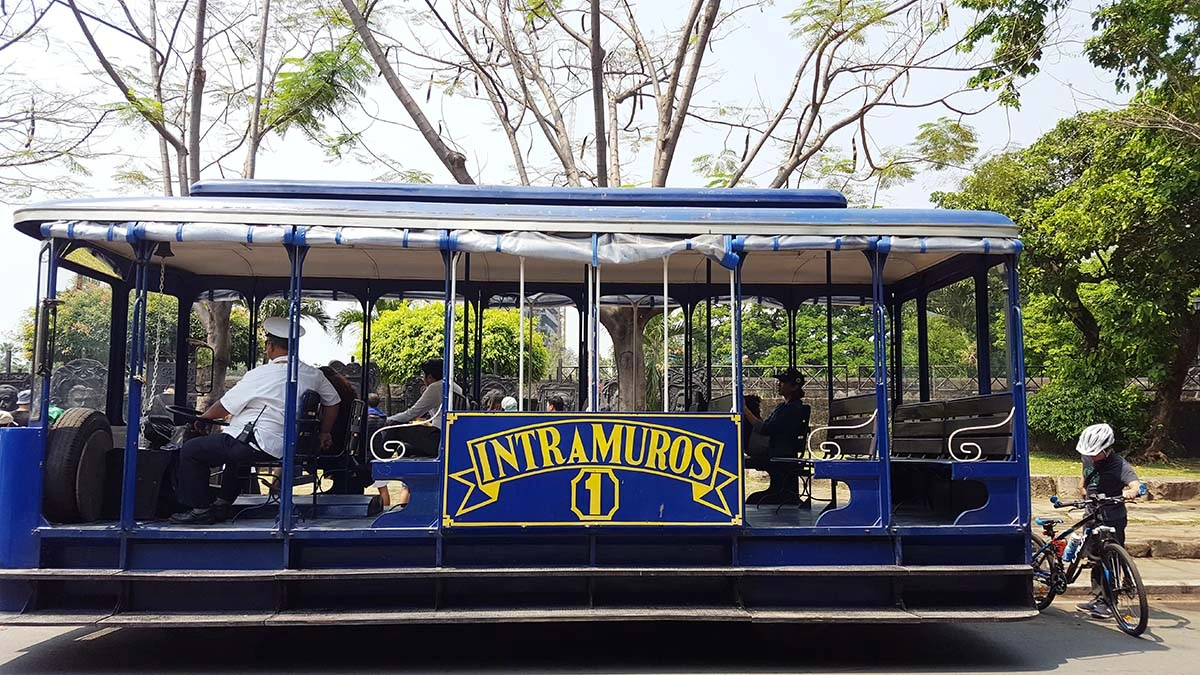
Modern versions of the tranvia, which have been available for rent for special tours around Intramuros, make use of diesel engines and can be noisy. This new e-tranvia is said to be quieter and emissions-free, offers a more sustainable way of getting around the Walled City, and boasts a charming design that matches the heritage theme of the area.
What’s the e-tranvia’s route? Is it only for Intramuros?
Initially, only one e-tranvia unit is available in Intramuros, though officials shared that it’s set to receive three more units soon. Another unit will be placed in Malacañang Palace, according to reports.
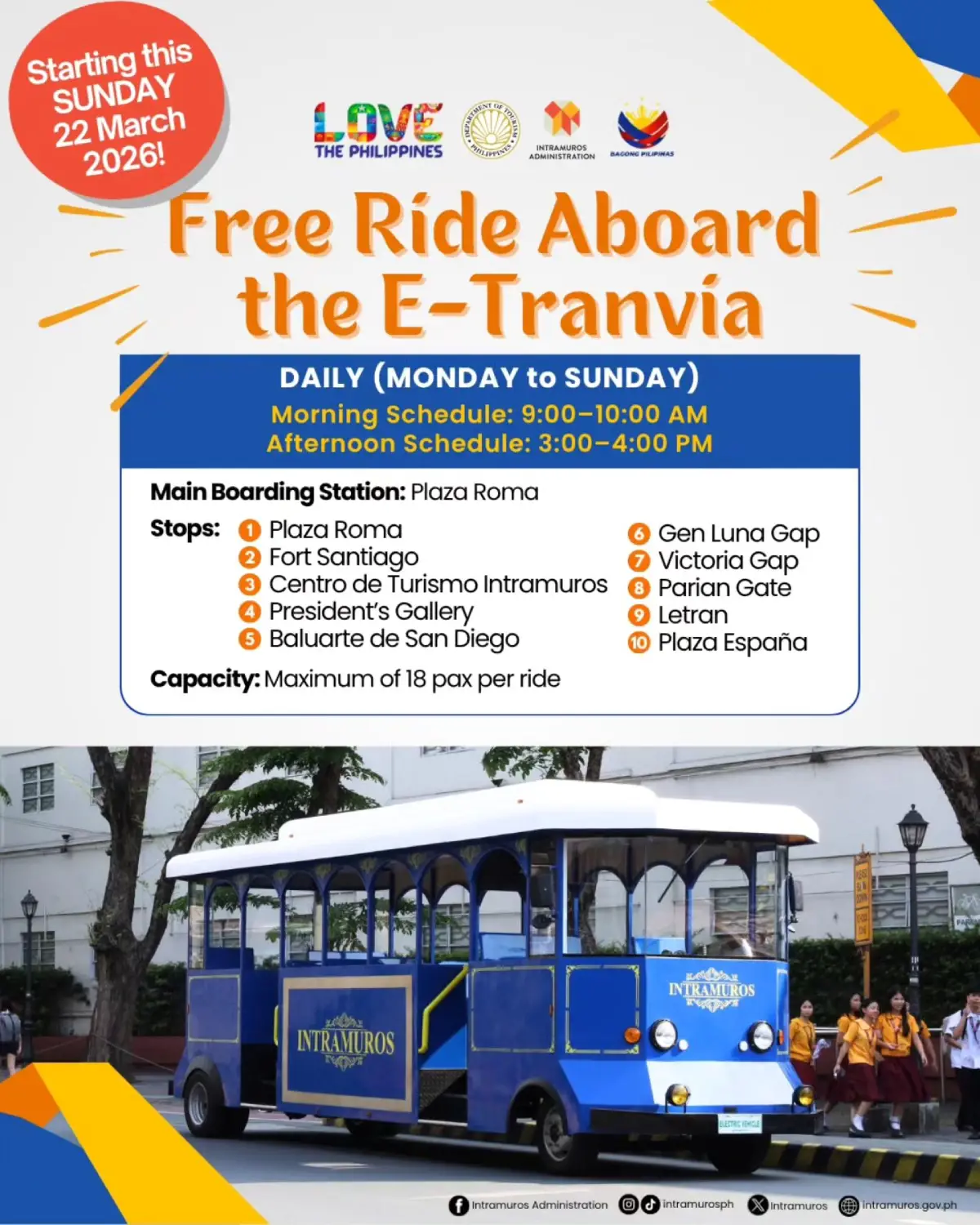
Currently, the Intramuros e-tranvia offers two scheduled tours daily:
E-tranvia schedules in Intramuros
- 9am to 10am (Monday to Sunday)
- 3pm to 4pm (Monday to Sunday)
Access to the Intramuros e-tranvia is now available to the public free of charge on a first-come, first-served basis, through rolling tours.
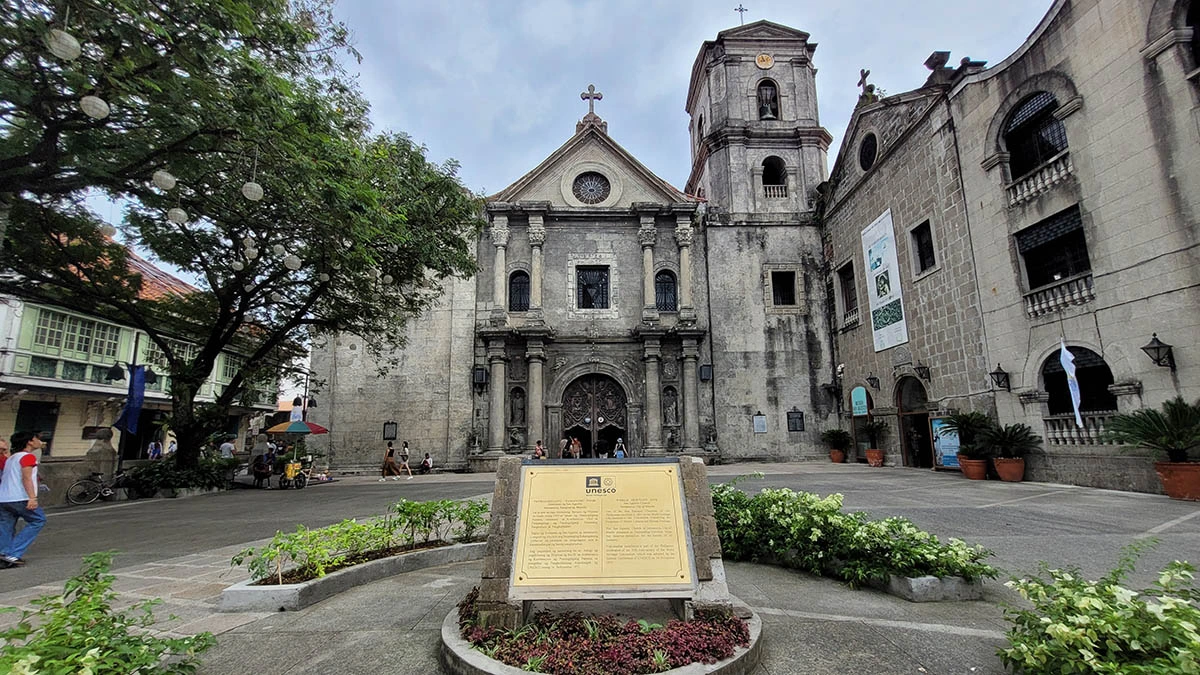
The e-tranvia will loop around Intramuros, making stops at iconic landmarks, including Fort Santiago, Centro de Turismo, Museo de Intramuros, Foro de Intramuros, Baluarte de San Diego, schools within the Walled City, and the Pasig River Esplanade. This gives tourists a quick overview of the main sites in the area, and a chance to get down and explore other landmarks further without having to walk long or book other forms of transport.
Given the limited space on board, a maximum of 18 passengers at a time will be allowed to ride. Passengers can wait at the main boarding station at Plaza Roma. From there, the e-tranvia will travel to Fort Santiago, Baluarte de San Diego, and all the way to Plaza España.
What are the stops along the e-tranvia’s route?
Planning to catch a ride soon? According to the Intramuros Administration, there are 10 main stops on the e-tranvia route around Intramuros, with each leading to various landmarks and museums within walking distance that you can explore further.
- Plaza Roma (Manila Cathedral, Ayuntamiento)
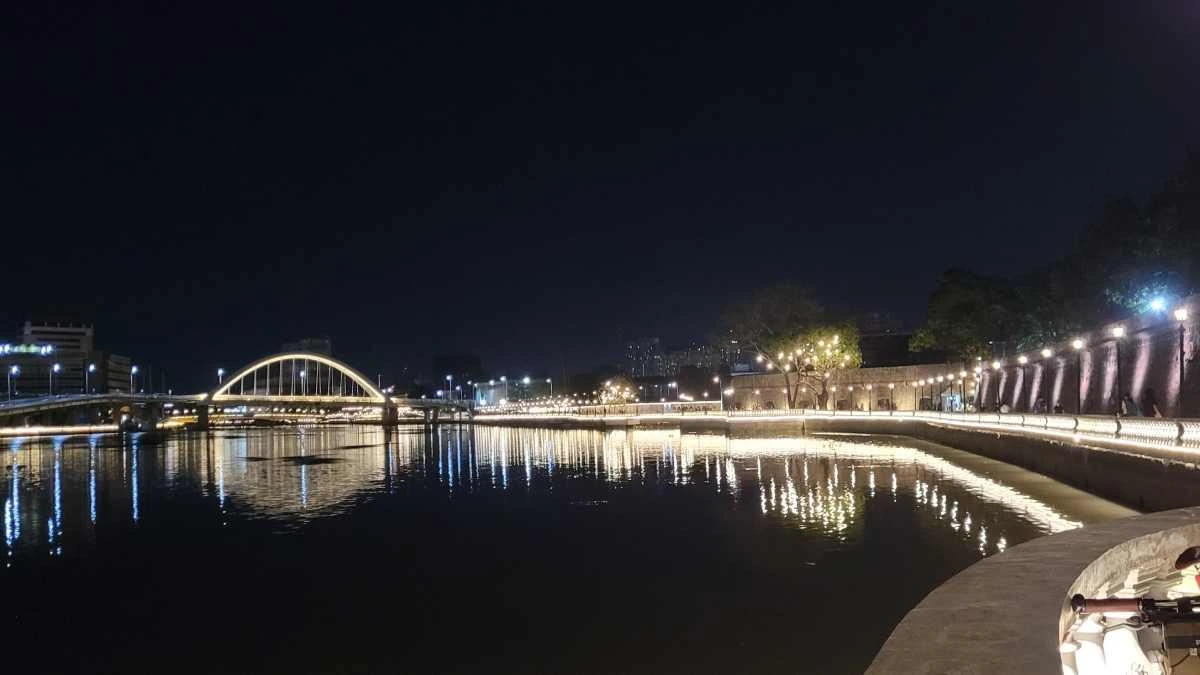
- Fort Santiago (Plaza Moriones, Rizal Shrine, Dungeons, Pasig River Esplanade)
- Centro de Turismo Intramuros (Museo de Intramuros, Foro de Intramuros, Memorare-Manila 1945)
- President’s Gallery (Plaza San Luis Complex, Casa Manila Museum, San Agustin Church)
- Baluarte de San Diego (Cinematheque, Light and Sound Museum)
- General Luna Gap (access to National Museum of the Philippines/Rizal Park, Puerto Real, Pamantayan ng Lungsod ng Maynila)
- Victoria Gap (Bayleaf Hotel, SM Manila/City Hall, Intramuros Golf Course, Mapua University)
- Parian Gate (Lyceum of the Philippines East, ASEAN Garden, Tiendas del Parian)
- Letran (access to Plaza Lawton)
- Plaza España (access to Pasig River Esplanade)
What’s the benefit of this kind of transport?
Amid the ongoing fuel crisis, Secretary Renato U. Solidum Jr. of the DOST underscored how innovations like the e-tranvia could help Filipinos.
“Developing it ensures that electric mobility becomes practical, reliable, and accessible for all Filipinos... Ang mga inobasyong gawa ng Pilipino, para sa Pilipino, ang gagabay at magiging tulay ng ating mga kababayan sa panahon ng pangangailangan,” Solidum stressed.
The official advocated the use of electric vehicles as a mode of transport to efficiently mobilize the nation, emphasizing the roles of research and development centers for e-mobility, partnerships with higher education institutions, and the need to establish more electric charging infrastructures in cities.
The e-tranvia is just one of DOST’s initiatives aimed at providing science-based solutions for sustainability and mobility.
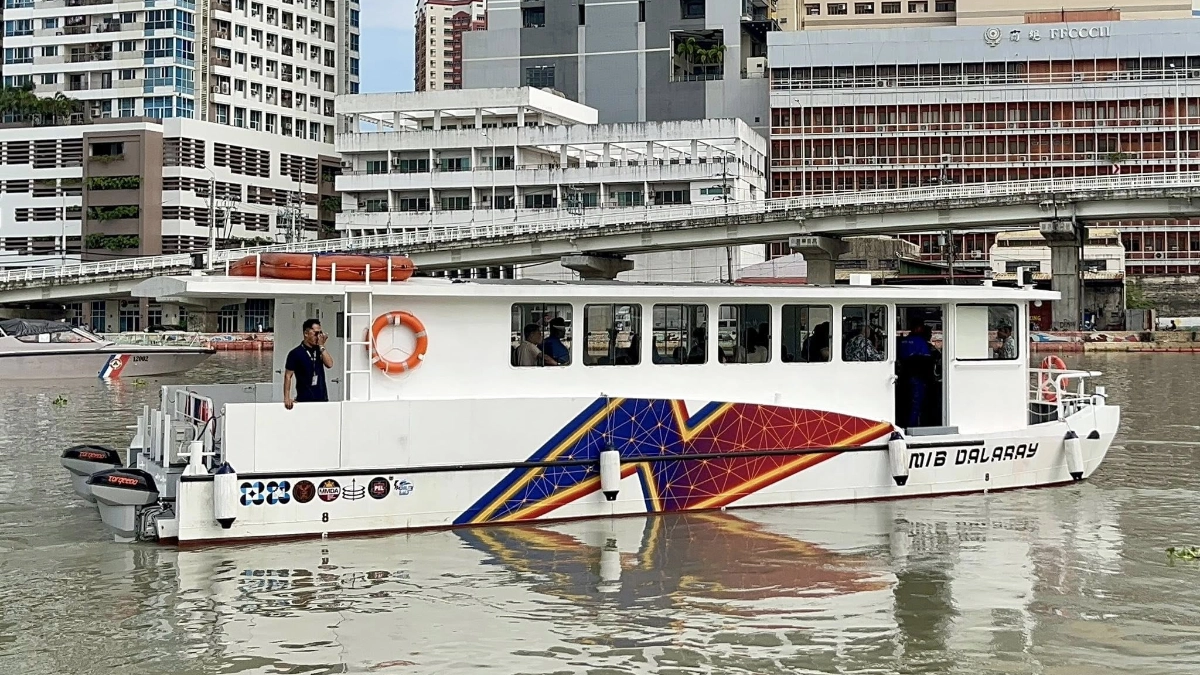
Late last year, the Pasig River Ferry Service fleet also welcomed its first Philippine-made and fully-electric vessel, christened M/B Dalaray, which translates to the ‘flow of current.’ The electric ferry was developed by a team from the University of the Philippines Diliman, with support from the DOST and the Philippine Council for Industry, Energy, and Emerging Technology Research and Development.
Rides on the Pasig River Ferry Service are also free. Check out our detailed transport guide here.