We know many of our readers drive cars to get anywhere around the metro, but with worsening traffic, parking challenges, and rising transport costs, train travel seems to offer a convenient alternative for north-to-south commutes.
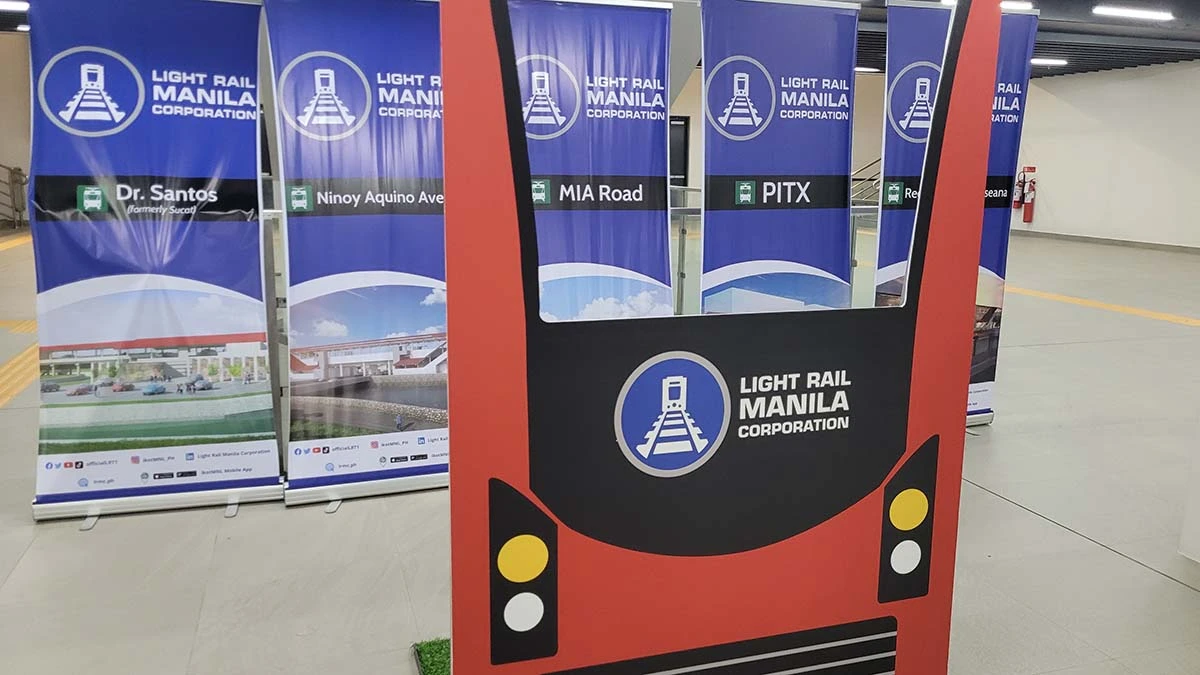
Since Phase 1 of the LRT-1 Cavite Extension opened on November 16, 2024, commuters from the south have been taking advantage of the five new stations beyond Baclaran to get to the north and vice versa. The new stations, which increase the total number of LRT-1 stations from 20 to 25, are Redemptorist-Aseana, Ninoy Aquino Avenue, PITX, MIA Road, and Dr. Santos, all of which are in Parañaque.
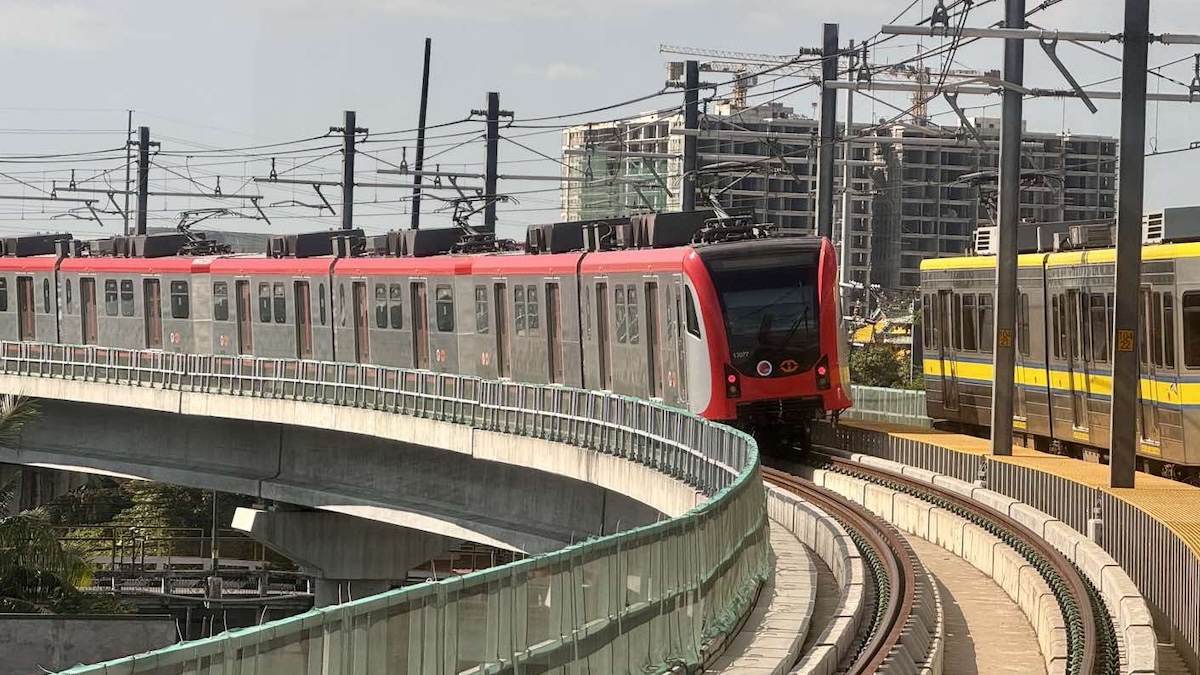
We recently tried riding the LRT-1 end to end to check out the five newest stations. Unlike the older LRT-1 stations from Balintawak to Baclaran, the newest stations come equipped with modern amenities that elevate the commuting experience. It was a novelty to see working escalators, elevators, first-aid stations, clean restrooms, lactation rooms, and other features in the stations. Some stations even have digital boards that show the estimated arrival times of the next two trains!
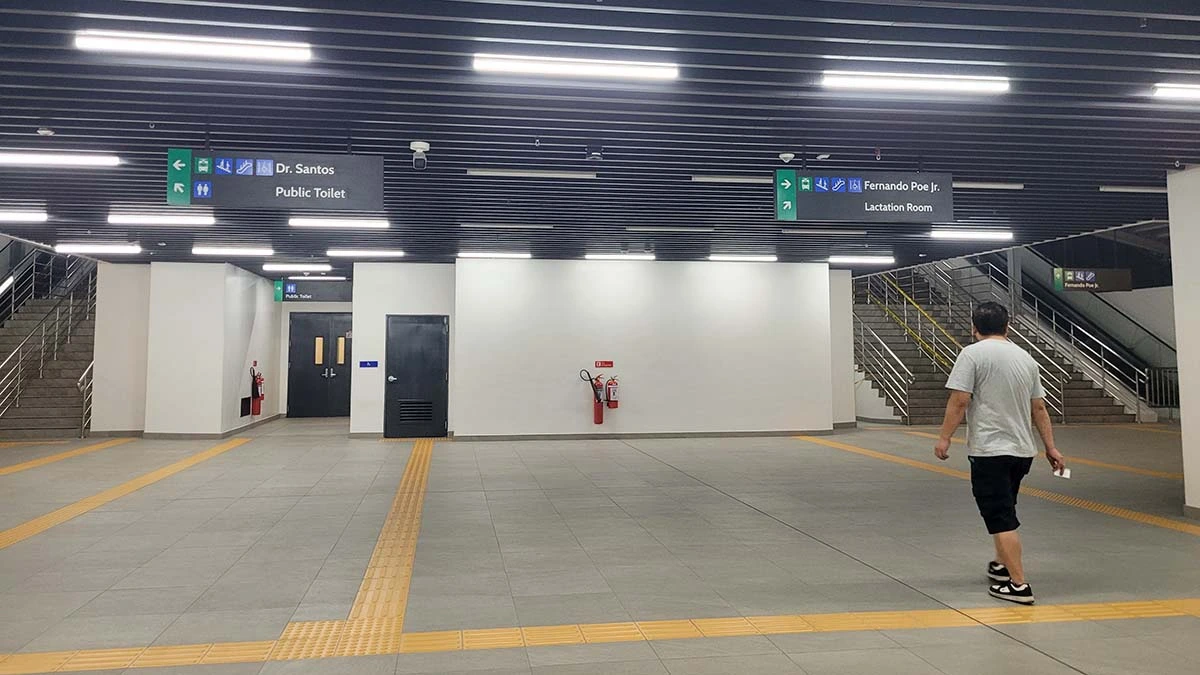
The travel time was pretty fast as well. Based on our ride, the train trip from Dr. Santos Station in Parañaque to Fernando Poe Jr. Station (formerly Roosevelt Station) in Quezon City took only 55 minutes.
For fare matrixes, service hours, and other basic commuter info, check out this previous article. In the meantime, here’s what you can find in and near each new station along the LRT-1 Cavite Extension line.
1) Redemptorist-Aseana Station
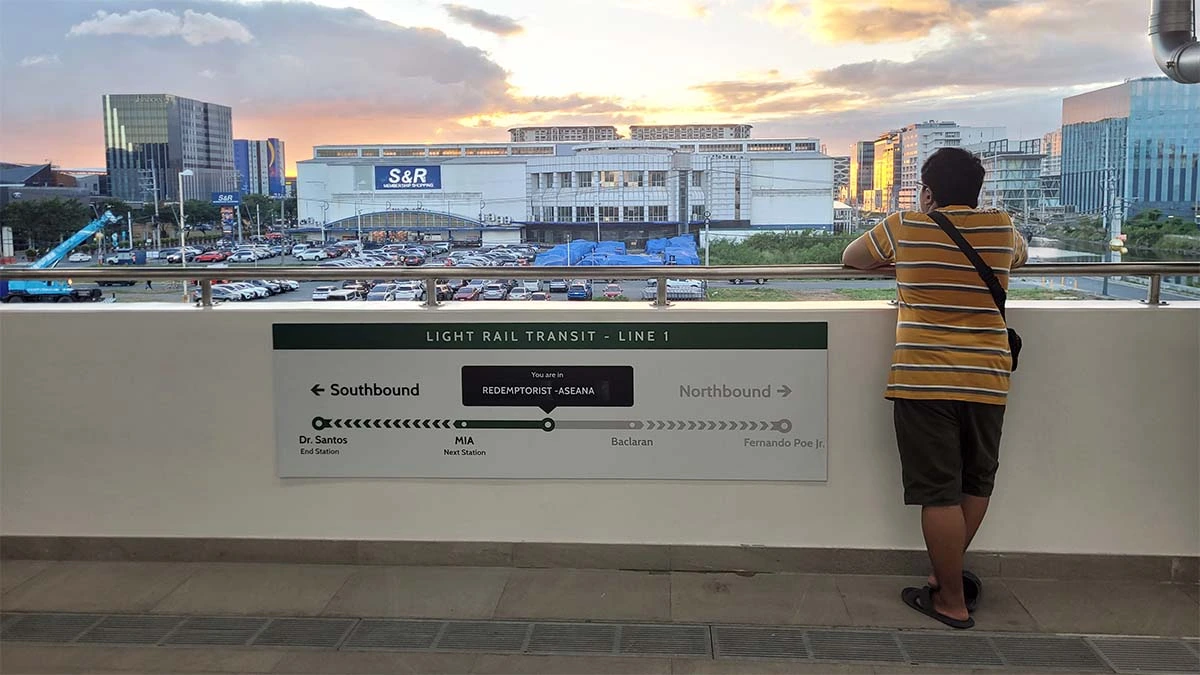
The Redemptorist-Aseana Station is located at Roxas Boulevard corner Bradco Avenue in Aseana City, Baclaran, Parañaque. The station is named after the district and the adjacent Redemptorist Road and Baclaran Church (also known as Redemptorist Church). This northernmost station of the LRT-1 Cavite extension comes right after the Baclaran Station, which originally served as the line’s initial southern terminus since 1984 before Phase 1 of the Cavite Extension was opened in 2024.
From the station, S&R Membership Shopping Aseana and Seaside Market Baclaran are visible. It’s also near the Baclaran Church, accessible via a pedestrian footbridge. If you’re headed to Parqal Mall or the Department of Foreign Affairs (DFA), this is the nearest station you can walk from. You can also avail of free rides to Ayala Malls Manila Bay from here.
Transport links: Free modern jeepney rides are currently available from the LRT-1 Redemptorist-Aseana Station and the LRT-1 MIA Road Station to and from Ayala Malls Manila Bay. The route operates daily from 9am to 9pm, with shuttles departing every 30 minutes.
2) MIA Road Station
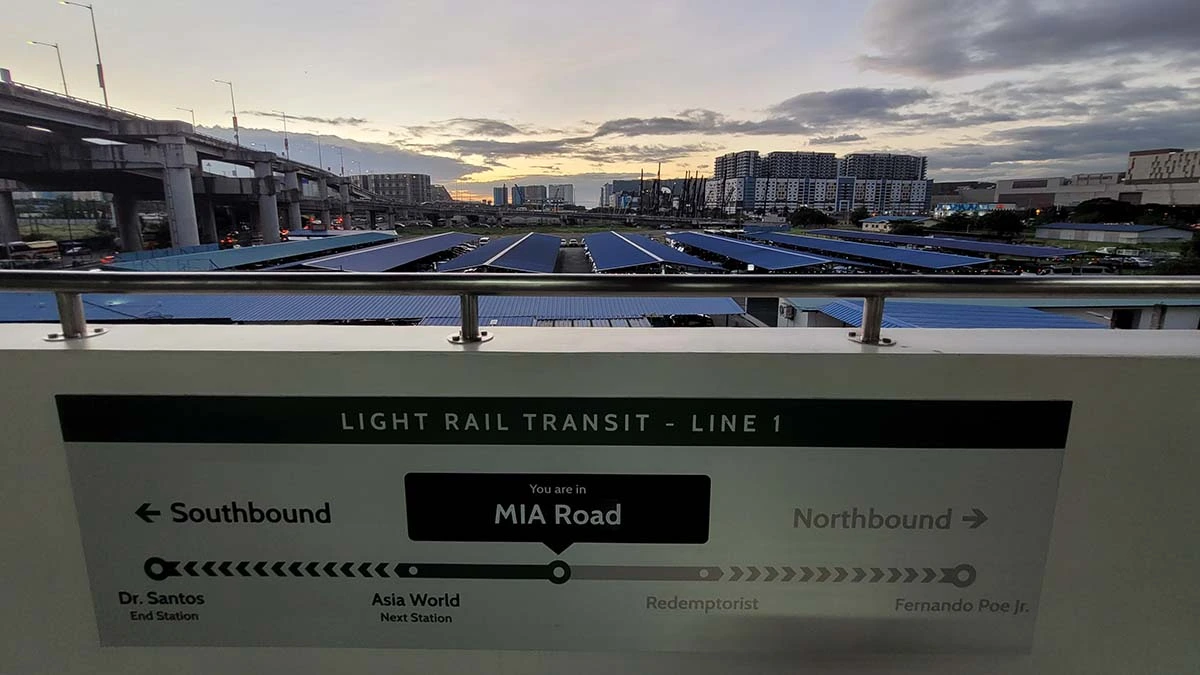
MIA Road Station is named after the nearby road formerly MIA Road (now NAIA Road), after the namesake airport was renamed in 1987. The station is located at Roxas Boulevard corner Seaside Drive (NAIA Road’s physical continuation to Bay City) in Tambo, Parañaque.
Despite its name, this station is not the closest link to the airport. If you’re catching a flight, it’s best to wait till either PITX Station or Ninoy Aquino Avenue Station to get to Terminals 1, 2, 3, and 4.
From the MIA Road Station, you can see the City of Dreams and other landmark buildings in the Bay City, such as Okada Manila and Solaire. This is also the nearest station to Ayala Malls Manila Bay and Palacio de Memoria, a historic mansion and events venue.
Transport links: Aside from the free modern jeepney rides between Ayala Malls Manila Bay and the LRT-1 MIA Road Station, you can catch buses, jeepneys, or UV Express vans plying the Roxas Boulevard route from here. You can also catch jeepneys passing the Baclaran–Sucat route.
3) PITX Station
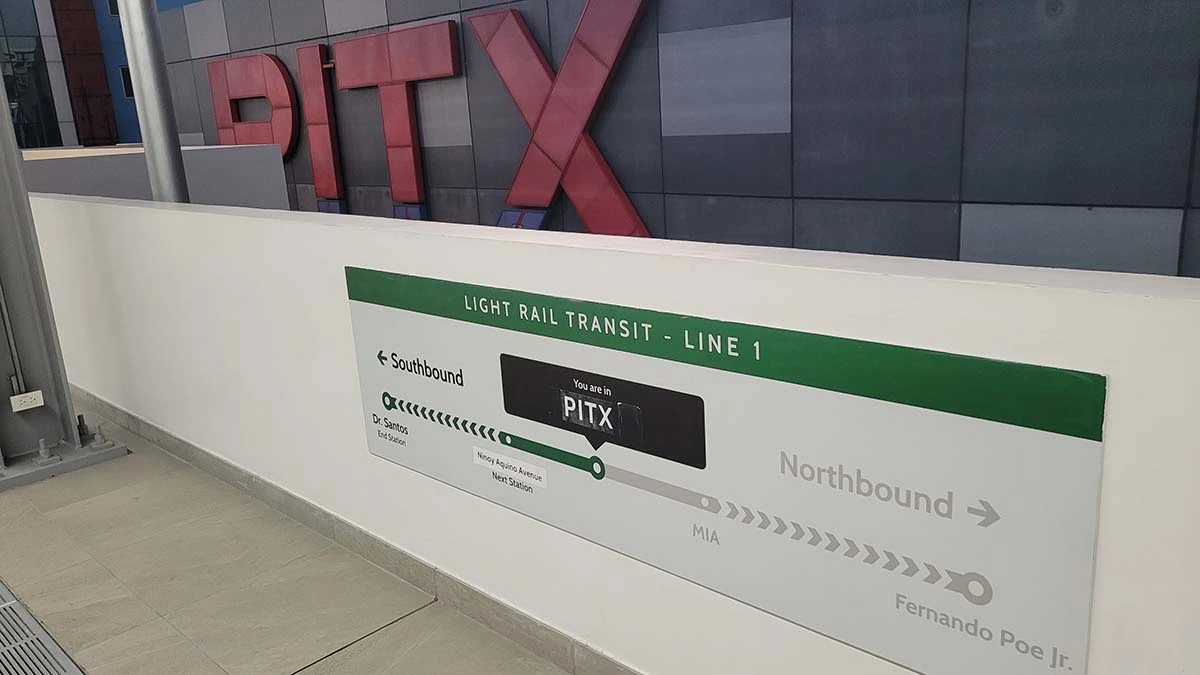
The PITX Station, also referred to as Asia World Station, is named after the adjacent Parañaque Integrated Terminal Exchange (PITX), which the station is linked directly to by an escalator. For travelers on their way to and from the airport terminals, seaport, or other provincial destinations by bus, this transportation hub is probably the one you’ll want to familiarize yourself with the most. Expect a higher volume of foot traffic here.
PITX has a food terminal that serves a wide selection of dining options catering to passengers. There’s a Land Transportation Office (LTO) branch within the PITX building, fast-food joints, and other commercial and retail establishments.
Of the five new stations, the PITX Station is the only one with an easily accessible footbridge for crossing to the opposite platform, so you can easily transfer going north or south from this line.
Transport links: From the PITX Station, you can get to NAIA’s T1, T2, T3, and T4 via the UBE Express Airport Shuttle or get to EDSA through the Carousel Bus. PITX also has docks for traditional PUJs, modern jeepneys, city buses, and provincial buses headed for various destinations including Quezon, Laguna, Baguio, Occidental Mindoro, Bicol, Batangas, and beyond. Check out the bus lines’ gate assignments and live bus schedules on PITX’s official website. PITX also launched an electric bus shuttle from PITX to MOA. More details on this soon.
4) Ninoy Aquino Station

While there’s a planned station along the Metro Manila Subway currently being constructed underground that will have a direct link to the airport in the future, sadly, the new LRT-1 stations near NAIA do not include a direct connection to the airport.
In a news report by ABS-CBN Online, the Department of Transportation (DOTr) said this is due to “regulatory constraints imposed by the Civil Aviation Authority of the Philippines (CAAP).” The stations were also designed based on right-of-way considerations.
The Ninoy Aquino Avenue Station is built on the east bank of the Parañaque River above its namesake Ninoy Aquino Avenue, the road named after former senator Benigno ‘Ninoy’ Aquino Jr. This is currently the closest LRT-1 stop to NAIA Terminal 1, but is still quite a walk if you’re loaded with luggage. You can opt to take a quicker cab ride to the airport from here if you don’t want to catch the UBE Express from PITX.
Landmarks located within the vicinity include the Parañaque Cathedral, the Parañaque Central Post Office, shopping establishments like Duty Free Philippines Fiestamall Store and S&R Membership Shopping Parañaque.
Students of the Parañaque Science High School, Santo Niño National High School, La Huerta Elementary School, and the Polytechnic University of the Philippines Parañaque can get to schools more easily through this station. The station is also near the residential areas of Barangays Santo Niño and La Huerta.
Transport links: From this station, passengers can transfer to PUVs like jeepneys and UV Express. Jeepneys ply the Baclaran-Sucat and Sucat-Lawton (or Sucat-Lawton via Mall of Asia) routes. Destinations include NAIA, Manila, Pasay, Parañaque, and Muntinlupa.
5) Dr. Santos Station
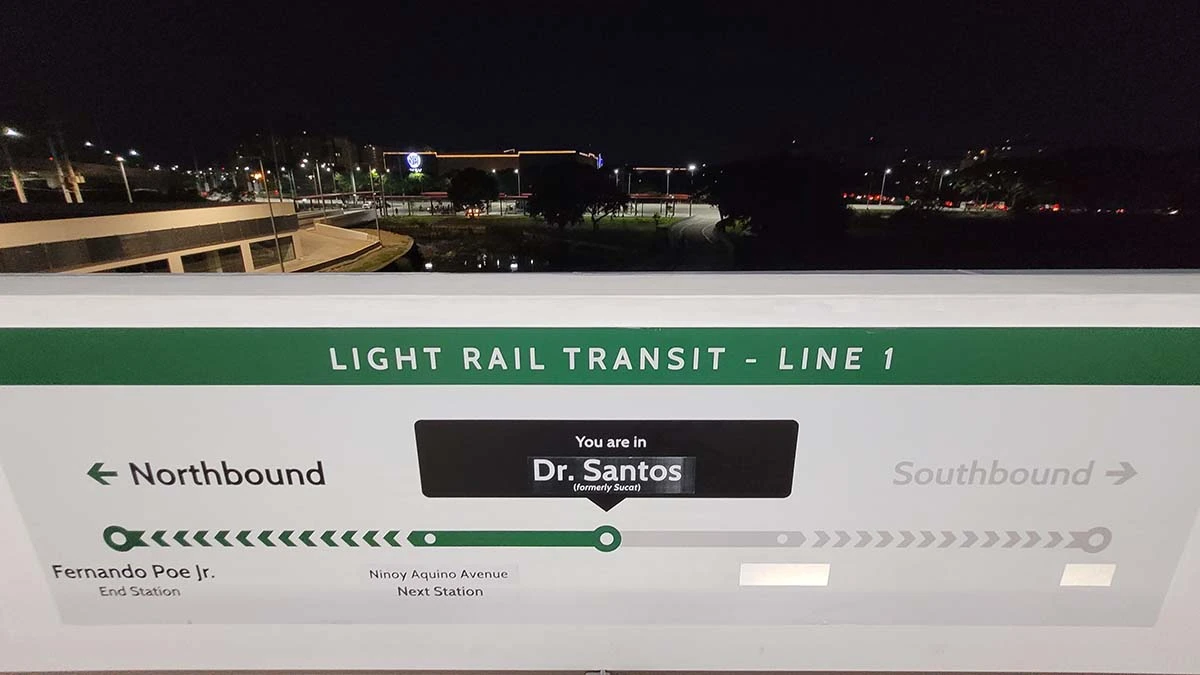
Dr. Santos Station, also known as Sucat Station, currently serves as the southern terminus of the LRT-1 until Phase 2 of the Cavite Extension toward Niog in Bacoor, expected to be completed in 2031. This station is situated between Dr. Santos Avenue, Cavitex-C5 Link, and C5 Extension, and is just a five-minute walk from SM City Sucat. The station is named after Dr. Santos Avenue (Arcadio Santos, a former governor of Rizal).
Aside from SM City Sucat, other nearby landmarks include San Dionisio Barangay Hall, Olivarez College, Olivarez General Hospital, The Premier Medical Center, and Amvel Business Park.
Other notable points of interest for tourists include the Las Piñas Bamboo Organ, St. Joseph Parish Church, and the Las Pinas–Parañaque Critical Habitat and Ecotourism Area, a nature reserve that protects the coasts of the cities of Las Pinas and Parañaque in Metro Manila, popular for birdwatching and nature activities.
Transport links: Dr. Santos Station is located next to an intermodal transport terminal where passengers can transfer to other public transport. Sucat-bound jeepneys also pass near the entrance. According to Cavite-based writer Joseph Bautista, who shared a detailed guide to the five new stations and day one riding experience on YouTube, there are now modern PUVs from Dr. Santos going to Sucat Interchange where passengers can take a bus going to One Ayala or Alabang where the VITX (Vista Integrated Terminal Exchange) in Starmall Alabang is located. From there, you can take a bus to Laguna, Batangas, Quezon, and even Bicol.
Have you tried riding from the new LRT-1 stations? Share your experience in the comments section.