In the past six months, the Department of Transportation said the Land Transportation Office issued 2,008 Show Cause Orders (SCOs) and revoked 420 driver’s licenses in the Philippines.
This record high figure is twice the number of SCOs issued last year, with LTO issuing 1,100 SCOs from January to December 2024.
In a press briefing on Wednesday (August 27), then DOTr Secretary Vince Dizon urged all drivers to simply follow the rules and regulations of the road to protect the safety of all citizens, whether they’re fellow motorists, pedestrians, or commuters.
OTHER STORIES YOU MIGHT HAVE MISSED:
Guide: How to get your LTO driver’s license and plates delivered to your home
The definitive guide to ride-hailing options in the Philippines
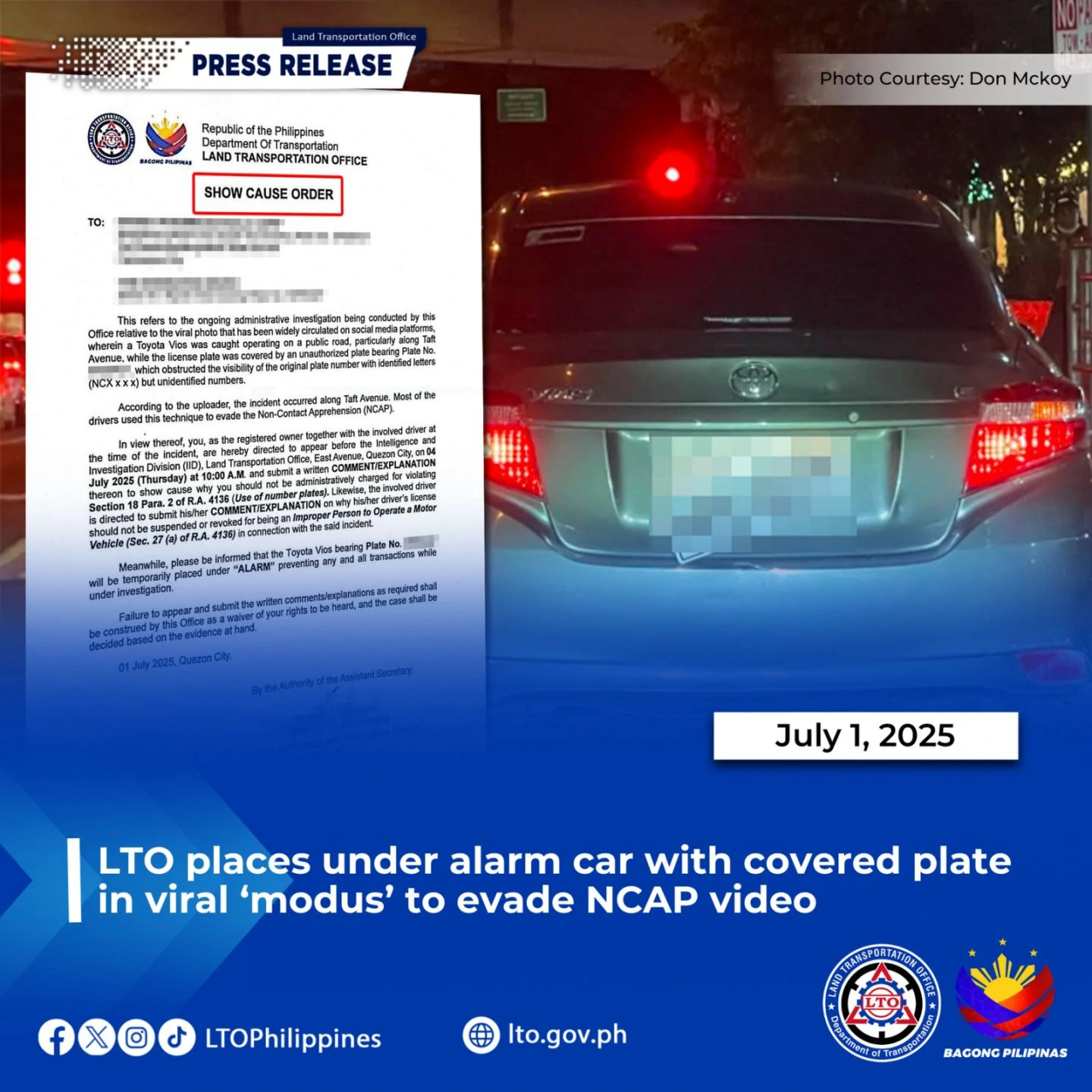
Every week, new viral incidents show blatant disregard for road safety and obvious traffic violations being committed in broad daylight. In many headlines related to these incidents, we’ve seen the term ‘Show Cause Order’ used a lot.
So what exactly is a ‘Show Cause Order’ and what happens to the errant motorists who get issued with these? Read on to find out.
What is a Show Cause Order?
In Philippine legal proceedings, a Show Cause Order, as defined by law firm Respicio & Co. is “a directive from the court (or a quasi-judicial body with the power to cite persons in contempt or enforce compliance) requiring a party to appear and explain why a specific adverse action—such as contempt, sanction, or default—should not be taken against them.”
For motoring cases, this comes as a formal directive from LTO requiring a motorist to explain why they should not be sanctioned for a certain violation.
Instead of immediately penalizing an individual for apparent traffic violations, this order gives people the opportunity to “show cause” or explain why they should not be sanctioned for a certain incident. The order contains an incident report citing evidence, specific traffic violations, and possible penalties.
This is all part of due process and often a first step for further legal action before a decision is made.
What type of traffic violations could result in SCOs?
Motorists can be issued SCOs for a variety of traffic and driving-related violations, including speeding, reckless driving, and driving under the influence (DUI).
If you follow Top Gear Philippines’ page, you’re probably read about individuals being slapped with SCOs for road rage, distracted driving, doing dangerous motorcycle stunts on a public road, and swapping license plates, just in the last few months.
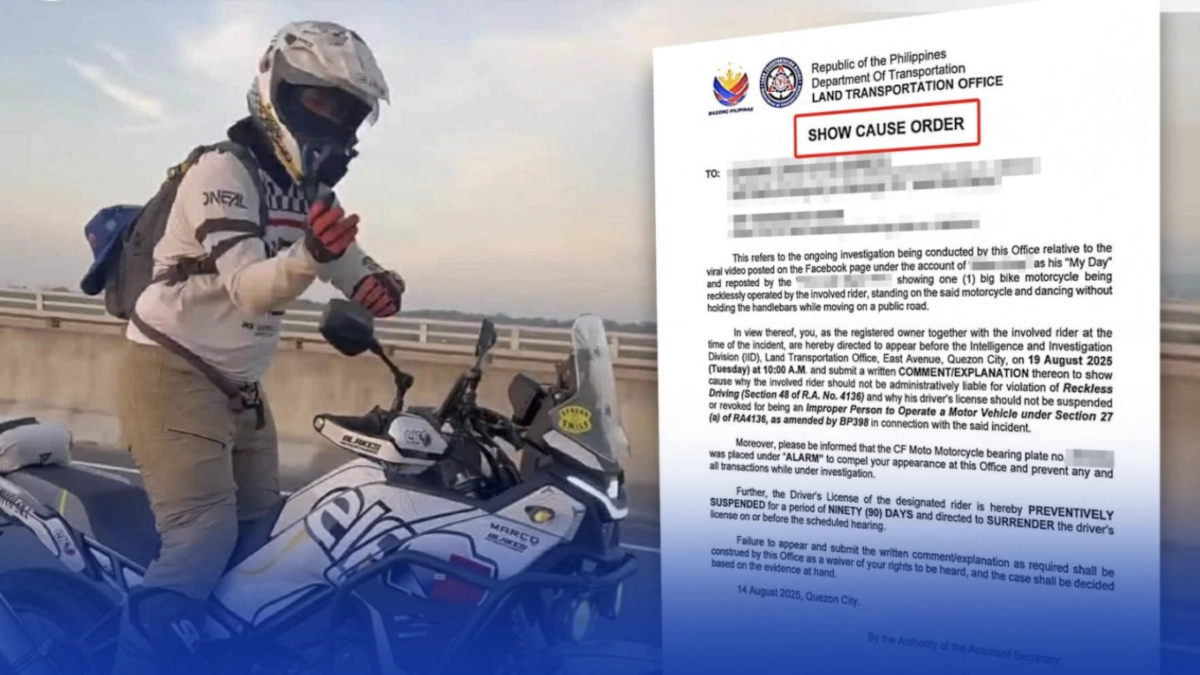
Recently, a driver who was flagged for a minor brush with a tricycle was caught on CCTV driving for 15 minutes with a cop clinging to the hood of their car, and refused to surrender their license after evading traffic officers.
Based on LTO data, half of the SCO cases last year were related to the violations of the provisions of the Republic Act 4136, or the Land Transportation and Traffic Code, and citations for being an “improper person to operate a motor vehicle,” which is punishable by either suspension or revocation of a driver’s license.
Other SCO issuances were related to the use of a fake license, violation of the Anti-Distracted Driving Act, having a double license, and various road incidents reported to the LTO Central Command Center.
What purpose does an SCO serve?
In many motoring-related cases, SCOs can act as a warning and an accountability mechanism between errant drivers and traffic authorities. It’s a legal way to ensure road safety and hold drivers accountable for their actions.
Responding to the SCOs gives erring motorists a chance to explain their side before their license is suspended, revoked, or before heavier penalties are imposed.
In more serious cases (such as road rage, hit-and-runs, and reckless driving resulting in injuries and deaths), the SCOs also allow authorities to react quickly without having to wait for lengthy court proceedings.
Putting errant driver’s licenses on preventive suspension for 90 days pending the investigations can protect the public from potentially dangerous drivers on the road.
What do SCOs look like?
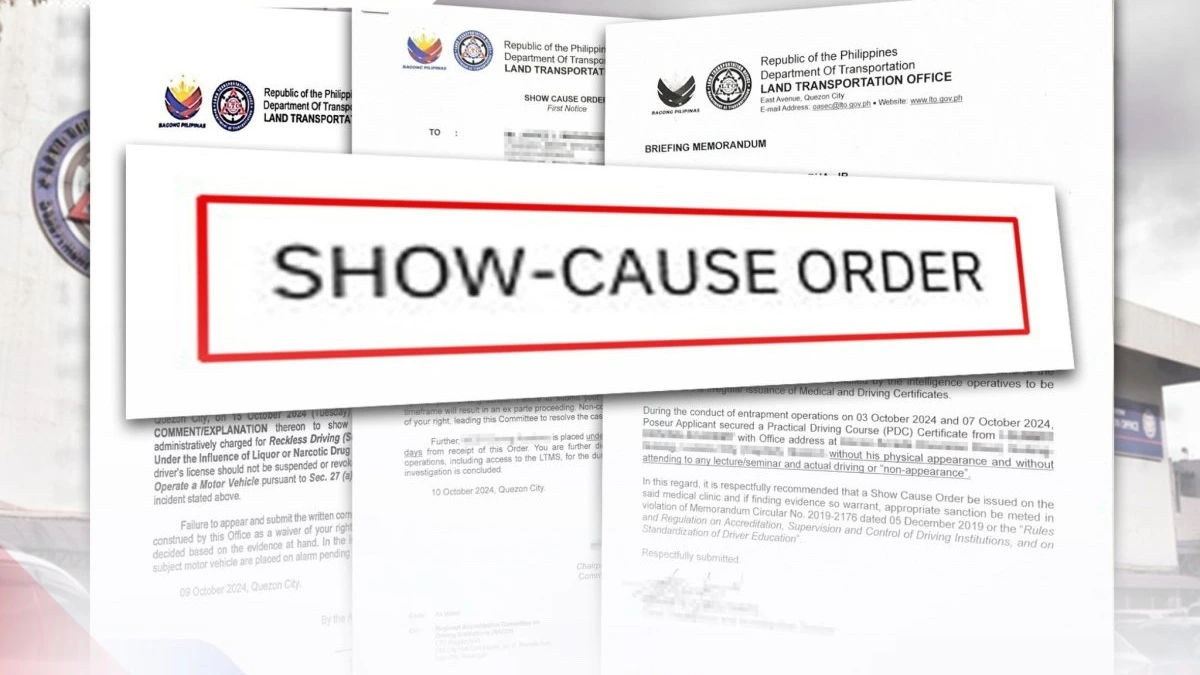
In an advisory warning the public over fake Show Cause Orders circulating on social media (which is apparently a thing), the LTO explained that legitimate SCOs are written in an official format and include a reference number for verification.
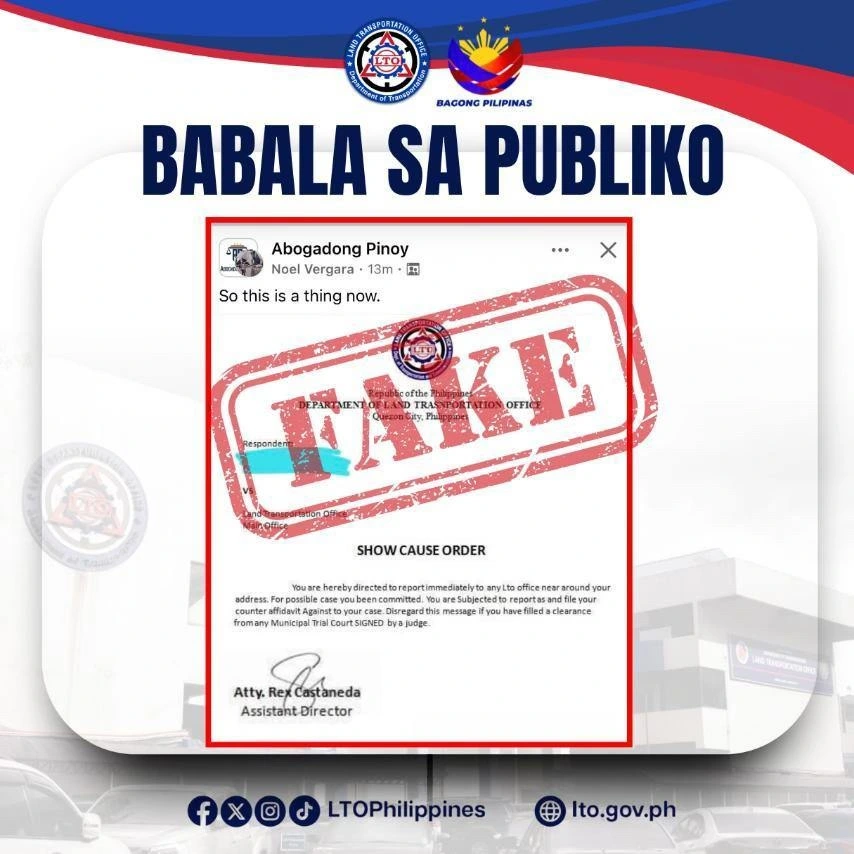
Official SCOs issued by the LTO contain complete details about the case or violation, clearly state the relevant charges, and state the time limit for erring motorists to respond or appear in court.
For viral road incidents, the SCO from the LTO Central Office is personally delivered by an authorized LTO personnel. The advisory is not sent via social media platforms. Meanwhile, for non-viral incidents, the SCO is only sent through accredited courier services such as LBC Express.
The SCO is also signed only by the Intelligence and Investigation Division (IID) Chief with the authority of the Assistant Secretary, with respondents directed to the IID at the LTO Central Office on East Avenue, Quezon City.
What should you do if you receive an SCO?
Motorists should take SCOs seriously because they are official government demands for an explanation of traffic violations. If you receive one, you are required to appear before the issuing authority and submit a written explanation for your actions.
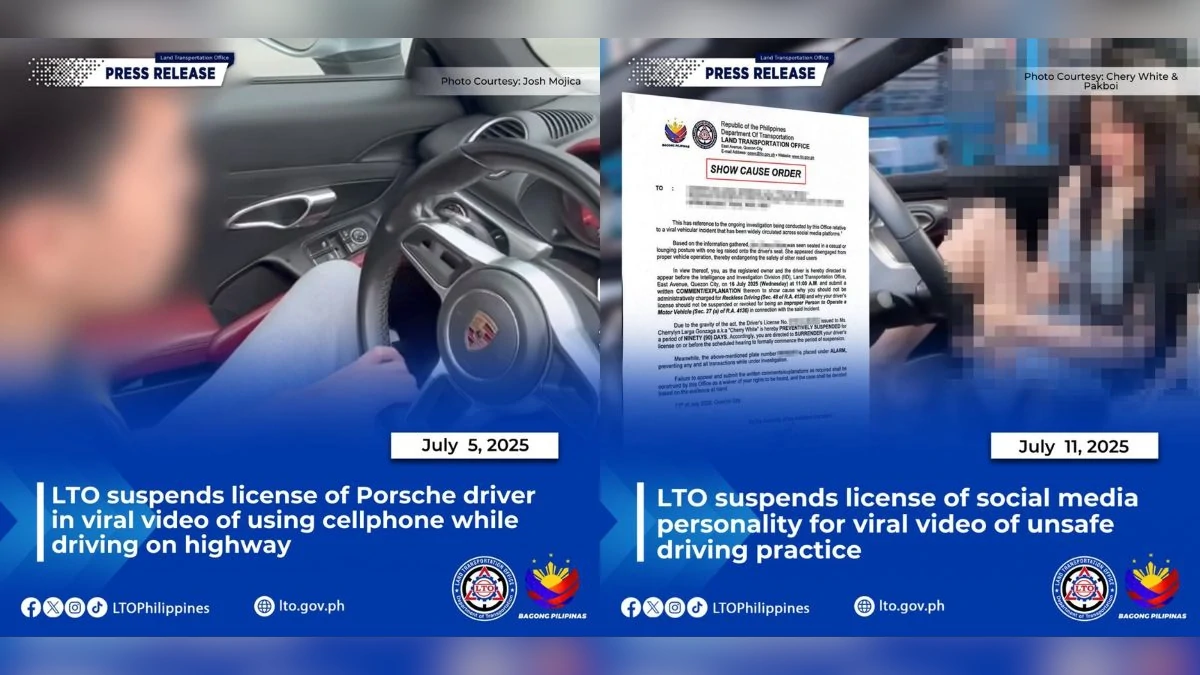
Acknowledging mistakes, explaining the circumstances, paying the necessary fines, and readily accepting any license suspension period should help settle the issue in due time.
In some cases involving content creators, showing accountability and deleting videos that promote irresponsible driving behavior also helps.
What happens if you just ignore the SCO?
Ignoring the summons or failing to respond can lead to more severe consequences, including the suspension or perpetual revocation of your driver's license.
In recent cases publicized online, the directive clearly states that: “Failure to appear and submit the written comment/explanation as required shall be construed by the Office as a waiver of your rights to be heard, and the case shall be decided on the evidence at hand.”
Why should you take traffic and motoring laws seriously?
As cited in news reports, most SCOs issued last year resulted in penalties against those involved, including suspension of the driver’s license and motor vehicle registration, and even revocation of the driver’s license. For those who rely on driving for a living, failure to comply could potentially cost their livelihood.
As Secretary Dizon said during a recent press conference, stricter enforcement of traffic laws would send a stronger signal that no one can get away with abusive driving behavior, unlike in the past.
“Tingin ko, kapag naintidihan ng mga kababayan natin na may consequence ang paglabag sa batas, tingin ko dahan-dahan titino tayong lahat. Simple lang naman ang hinihingi ng gobyerno sa ating mga driver—sumunod kayo sa batas. Yung lang. Sumunod kayo sa batas ng kalye,” said Dizon.
“Pag kayo hindi sumunod sa batas, kayang-kayang tanggalin ng gobyerno, ng LTO ang lisensya ninyo. Either temporarily, or in the case sa mga grabeng violator, forever. Hindi na kayo makakamaneho. Pwede pa kayong makasuhan," he added.
The traffic agency also said they’re studying the possibility of launching a “shame campaign” for grave violators, which includes publicly naming motorists so they learn their lesson.
Do you think a public shame campaign would work better than legal SCOs and penalties? Sound off below.