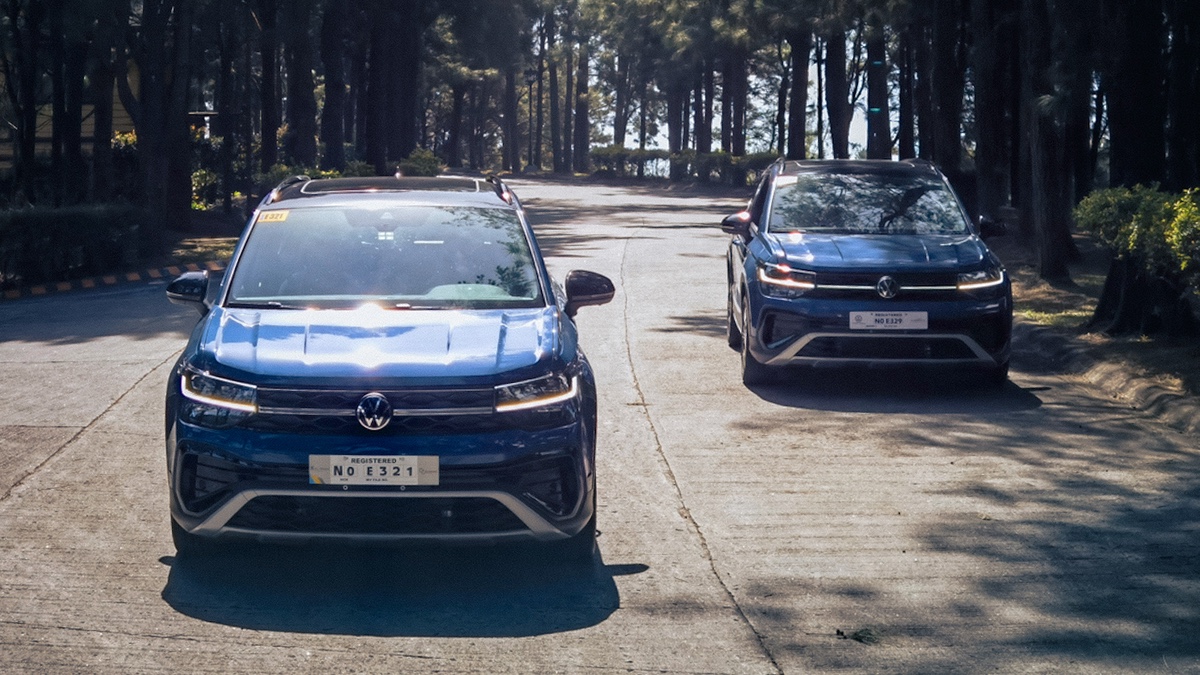

Standing in the Volkswagen BGC showroom in the early morning light, I contemplate how little VW’s modern line-up has in common with the Beetles and Sakbayans of my childhood—cars that made VW the undisputed number one in sales here back in the ’70s. Fifty years later, however, the brand isn’t even in the top five.

A shame, as VW makes some really good cars. And it sells a lot of them. With 9.24 million units sold in 2023, it was second only to Toyota globally. So why doesn’t it dominate here?
Well, with Volkswagen Philippines inviting us for a drive out in the new Tharu—a product that could determine the brand’s direction over the next few years—we have a chance to figure that out.
Our itinerary is simple: A drive out south to Tagaytay for lunch, down the newly opened CALAX extension at Silang, Cavite—for a quick stopover to make a special delivery for some very special people—and then back to the helter skelter chaos that is Manila.

First, a short talk and a presentation of the Tharu’s finer points and technology. While VW did promise to take us beyond the brochure, they needed to be sure we were familiar with it in the first place! Half an hour later, we’re out and off. The Tharu proves instantly familiar, the uncannily solid thwump of the doors, the refined, quiet demeanor as we trundle out of the garage and into mid-day traffic. From the very first twirl of the wheel, you feel echoes of Wolfsburg’s finest.
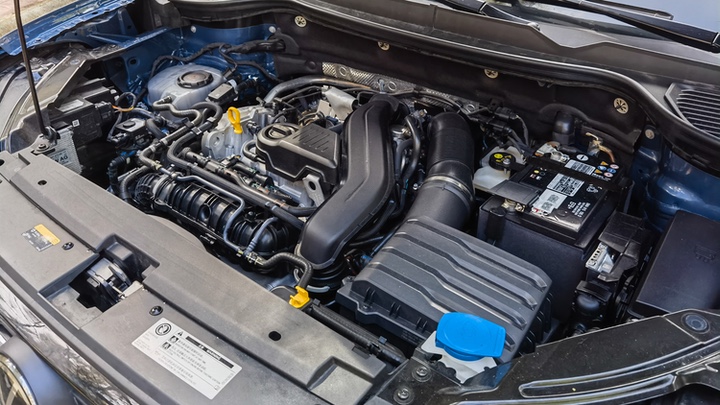
A weird thing to say about a China-sourced crossover, yes. But this one is sold in several overseas markets—including the US. A reflection of the brand’s confidence in the product. And a well-founded confidence, I say. The Tharu is a worthy successor to the discontinued Tiguan. The turbocharged 1.5 liter TSI Evo engine gives it 158hp and 250Nm, a hefty bump over the old 1.4 mill. Paired with a seven speed dual-sequential gearbox, that torque gets you going nicely. There are faster 1.5-liters, but nobody does the double-clutch better than Volkswagen. DSG shifts are as smooth as butter. And this smoothness came in the inevitable bumper-to-bumper grind on the SLEX.
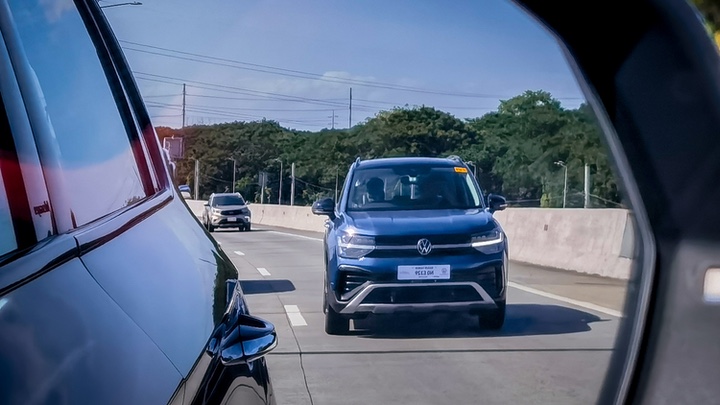
Hitting a sudden snarl of traffic at highway speeds is a good test of the Tharu’s brakes. Strong and easy to modulate, they prove worthy of autobahn-class deceleration. This also proves a good test of our bladder retention, as we clench up and pray that we don’t end up as the filling in a truck sandwich. Yes, the Tharu has a five-star crash rating on both the NCAP and NHTSA tests, but we’re not ready to test that out personally.
That traffic does give us a chance to appreciate the Tharu’s impressive infotainment system. Apple CarPlay and Android Auto come standard. As does a six speaker system with decent sound. Our playlist, well, both Rico J. Puno and Debbie Gibson were played once. Or twice. Don’t ask why.
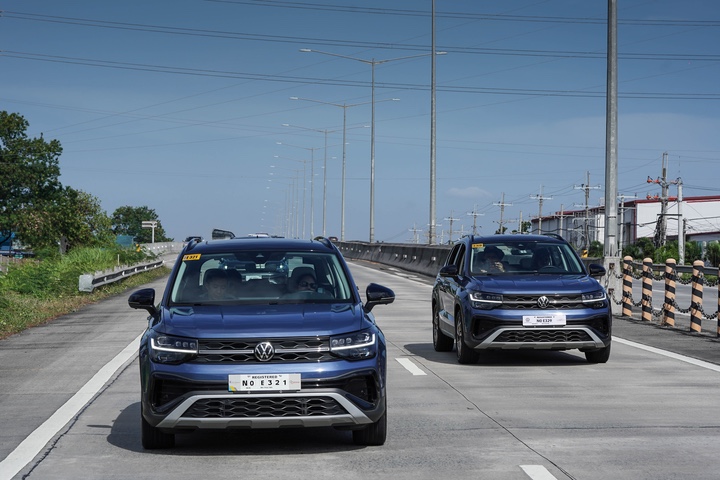
Further comfort comes via the plushly decked out cabin, with powered leather recliners topped by a truly enormous dual sunroof. Not a bad setting for a date night drive.
Once off the highway and onto provincial roads, the Tharu shines. Good body control and wheel control make it feel bigger than it is, while the neat dimensions allow you to thread it down narrow side roads like a smaller car. The steering is that perfect middle weight between heavy and light, and the handling is quite accomplished. Exactly as I remember from my Tiguan test of a hundred or so moons ago.

We soon find ourselves pulling into our first destination for the day, the Chosen Children Village—a community built around the needs of abandoned children. While there is no lack of orphanages in the Philippines, this one has proven to be a safe haven for orphans with special needs. Children with autism, cerebral palsy and other conditions that make finding foster homes difficult. It’s a sprawling compound, with beautiful landscaping and open air gardens providing a calming and restive environment. And impressively, it was built from and maintained with charitable donations.
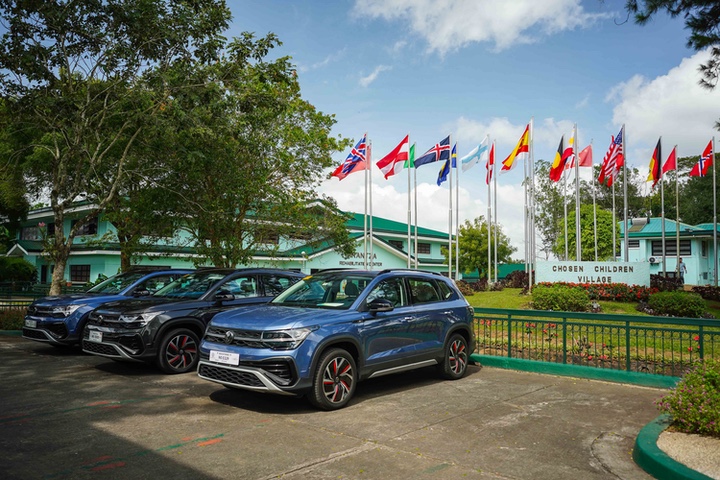
After this, it’s on to Tagaytay—reflecting on how well the Tharu fits into the jigsaw puzzle that is Philippine traffic. It isn’t as small and nimble as the T-Cross, but the addition of turbocharging makes it feel more at home on these mountain roads. The Tharu technically isn’t a successor to the Tiguan, but an in-betweener that fits between the larger new Tiguan and the T-Cross.
The most comparable competitors are the Toyota Corolla Cross and the Ford Territory—with the Tharu straddling the two size-wise. While not as long as the Territory, the Tharu’s interior packaging makes it surprisingly spacious for its footprint. This comes in handy when shooting video from inside the car. When we reach Crosswinds in Tagaytay, we lean out of windows and up through the sunroof to take footage of each other.
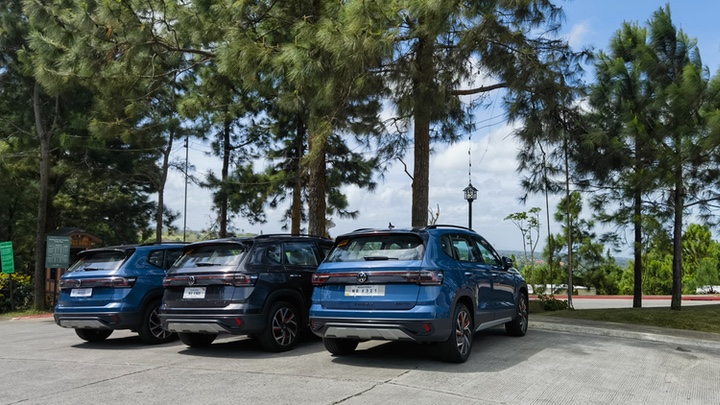
Here we stop for a casual lunch at Dear Joe, a coffeehouse nestled within kilometers of steep winding lanes, surrounded by low-rise condominiums styled in the fashion of a Swiss mountainside village. A faux-European experience for an Asian audience, mixing European, Asian and American flavors with wild abandon. Tapsilog with bone marrow is not a combination you expect, but certainly one you can enjoy.
The Tharu, on the other hand, is exactly what you expect of a VW. Earlier China-sourced VWs felt like a downgrade from their European counterparts, but newer models like the Tharu feel thoroughly modern. In the past, VW obsessively decontented their cars chasing a Toyota-beating price point—the philosophy there being that the ‘People’s Car’ should be affordable to all people. A difficult strategy for a major manufacturer without an ASEAN plant. Also, there can be only one Toyota.
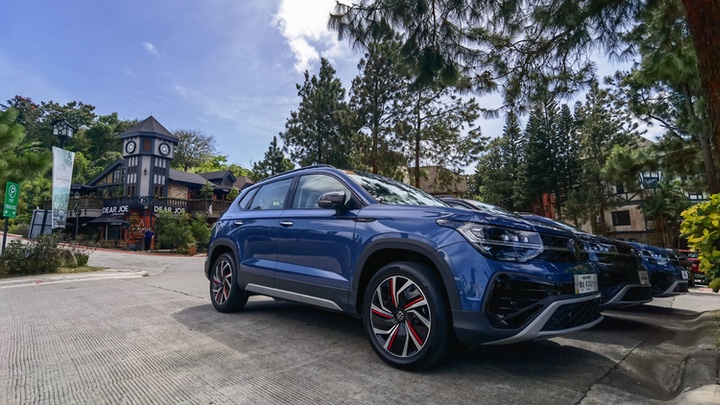
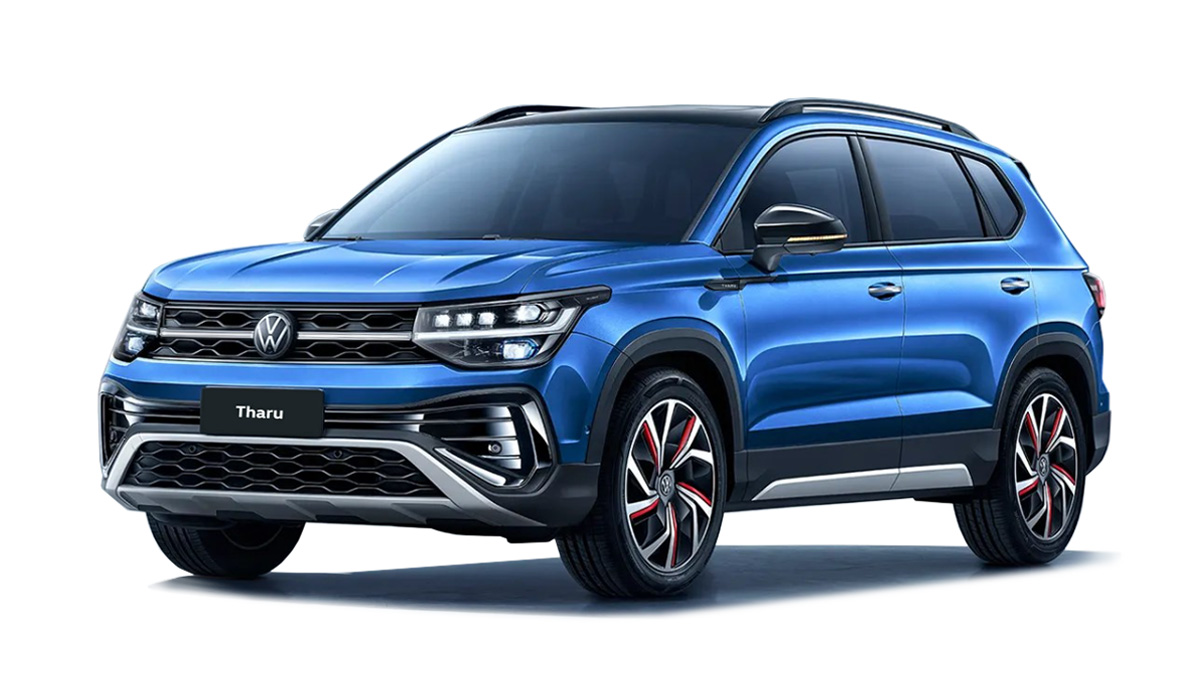
With the Tharu, VW is instead justifying the inevitable price premium with premium features. That giant dual pane sunroof. LED Matrix headlamps that automatically brighten or dim in sections in response to oncoming traffic. A kick-to-open automatic tailgate—no-contact kicks, only, please. Bright and crisp LED instrumentation that’s full-width, unlike the segmented and partial LEDs as on many other brands. And a big 12-inch infotainment screen connected to a 360-degree camera, which, not coincidentally, enables automated park assist.
Add to that the Matrix-type LEDs, eye-catching rear light bar and red-accented alloys on our SEL test unit, and the Tharu has the curb appeal to match its personality. Indeed, a lot of people were asking about it as we left Crosswinds on the long drive home, past the abandoned Marcos mansions out through the apocalyptic traffic at SLEX .
We doubt that all those inquiries will turn into sales. Again, there can be only one Toyota. But there’s some excitement about the brand again. VW has often felt like an orphan—sitting in that no-man’s land between mainstream and luxury. But as Japanese cars start demanding premium pricing, with some Japanese crossovers crossing over the two million peso threshold, perhaps buyers are finally ready to look beyond the brochure and see what Volkswagen has to offer.