Unless you’ve been living under a rock, you’ve likely heard of the fire incident at the Ninoy Aquino International Airport (NAIA) that torched several parked cars last month. A total of 19 vehicles including SUVs and sedans left at the parking extension were razed during the NAIA Terminal 3 fire in Pasay City last April 2024.
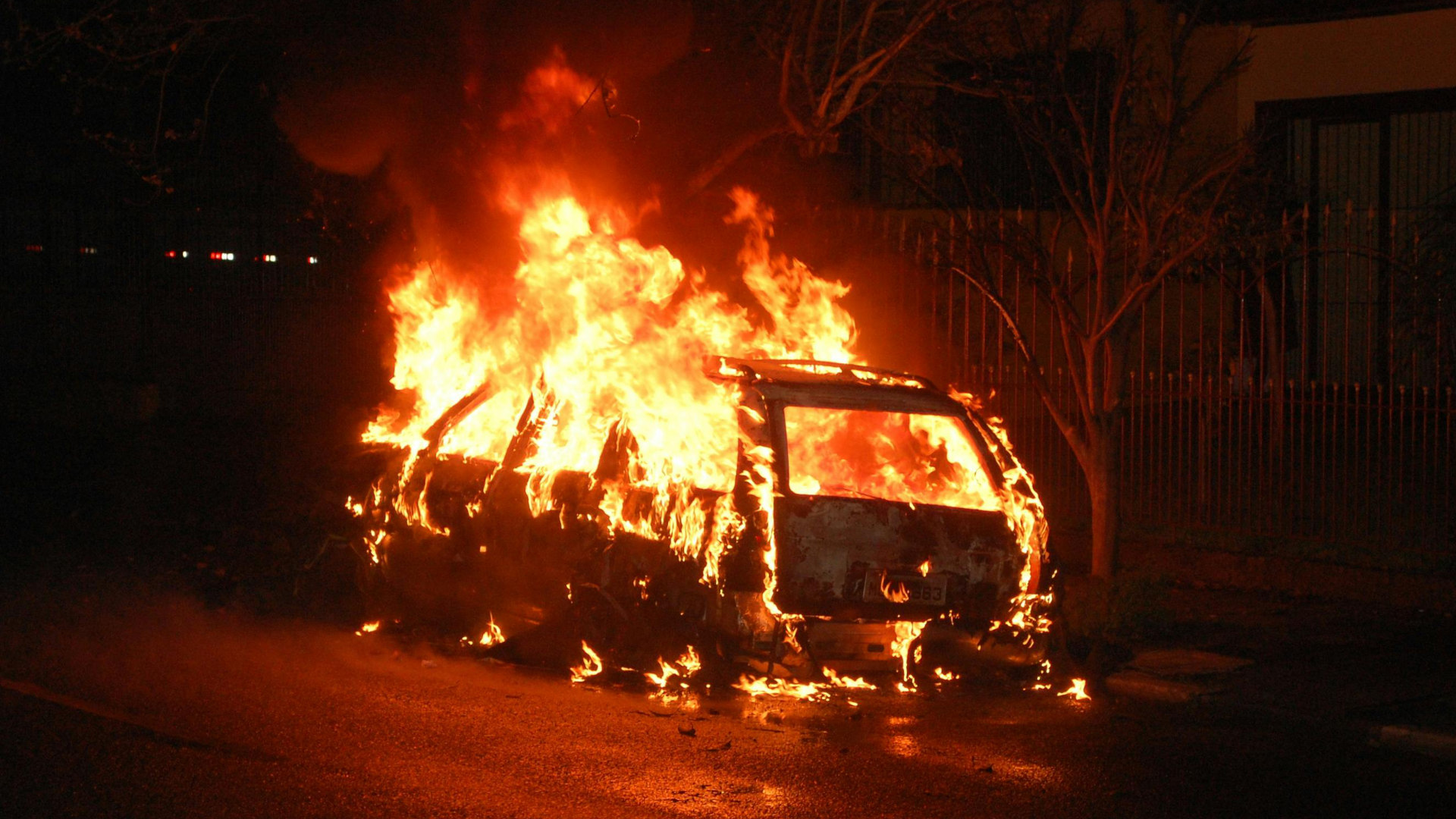
It’s not the first time vehicles catching on fire have made the news. Earlier this year, a vehicle carrying oil traversing the South Coastal Road in Barangay Mambaling, Cebu City burst into flames. Last year, a lawmaker’s beautiful vintage car caught on fire in the middle of EDSA, causing a heavy gridlock.
In the Philippines, fire incidents reportedly occur the most in March and April, as this coincides with the warm and dry season in the country. In a news report, the Bureau of Fire Protection in the Philippines (BFP) spokesperson Fire Supt. Annalee Atienza said that the three primary recorded causes of fires in the country include: “electrical ignition resulting from arching, electrical ignition caused by a loose connection, and fires caused by smoking or a lit cigarette.”
While a majority of fires occur in residential areas (as these are not covered by fire codes where annual safety inspections are conducted), car fires in public areas and parking lots can and do happen, as we’ve seen in the latest NAIA incident.
Various factors contribute to vehicles catching on fire. Here are just some common causes of car fires and what the driving public can do to prevent their cars from catching fire in the future.
OTHER STORIES YOU MIGHT HAVE MISSED:
The Dela Rosa 2 carpark in Makati will soon be transformed into an actual park
The refreshed Kia EV6 features an edgier front end, more range, and a fingerprint scanner
1) Extreme heat and grassfires
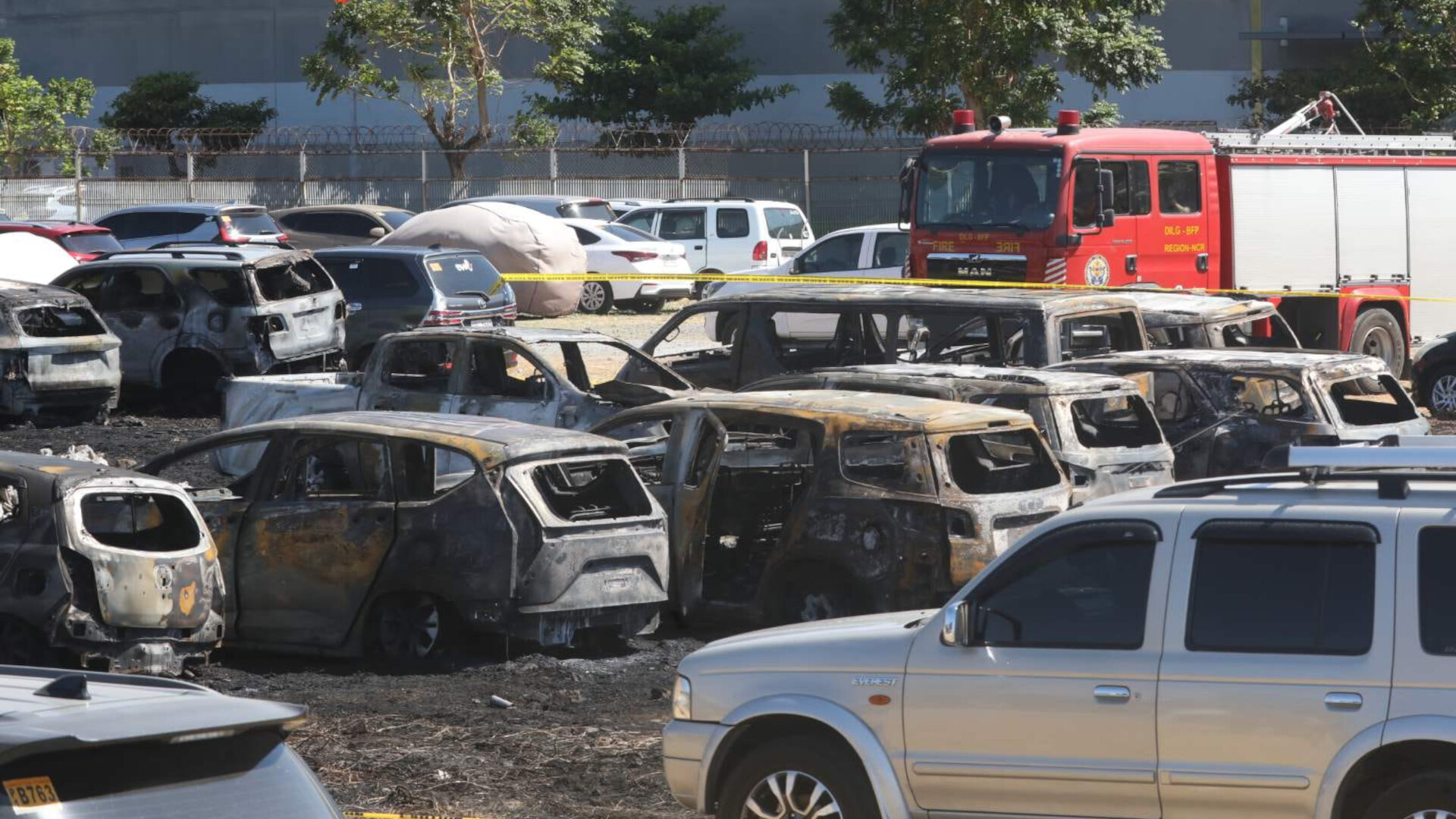
Due to the tropical weather in the Philippines, the extreme heat can be a cause for grassfires to start which in turn could spread to buildings and cars. Recent news reports point out that rising heat levels due to the El Niño weather phenomenon have been causing wildfires in various parts of Mindanao and the Visayas, with one fire engulfing the airport in General Santos City in April 2024.
In a statement following the NAIA incident, the Manila International Airport Authority (MIAA) said the blaze started “from a small grass fire which rapidly progressed, burning several nearby vehicles parked thereat.”
Parking in open areas under extreme heat where vehicles are parked closely together without proper fire safety measures can increase the risk of fire spread. Automotive websites also warn that: “Parking on a grassy field puts your car at risk of catching fire. It’s a combination of the heat of the sun and the heat coming from your car’s exhaust system that can easily start a fire, especially if it’s low to the ground.”
Dry grass can also catch fire quickly if someone carelessly tosses a cigarette on the ground.
Prevention tip: The MMDA has advised motorists to park in the shade or enclosed garages and avoid parking in open car parks and places that are potential fire hazards, especially during hot summer months.
2) Poor vehicle maintenance
Summer temperature aside, in general, the most frequent human and preventable cause of car fires based on figures from other countries is poor vehicle maintenance. The United States Fire Administration reports that “mechanical failure is the leading cause contributing to the ignition of a vehicle fire about 45% of the time.”
Forgetting or neglecting to properly take care of your car, especially older and vintage cars, can indirectly lead to a fire. Car owners who don’t maintain their vehicles risk mechanical failure that can contribute to a car fire due to fluid leaks, faulty hoses, leaky seals, excessive engine temperature, and worn-out electrical wiring that can ultimately lead to a dangerous fire.
Prevention tip: Maintain your vehicle regularly for roadworthiness.
3) Engine overheat
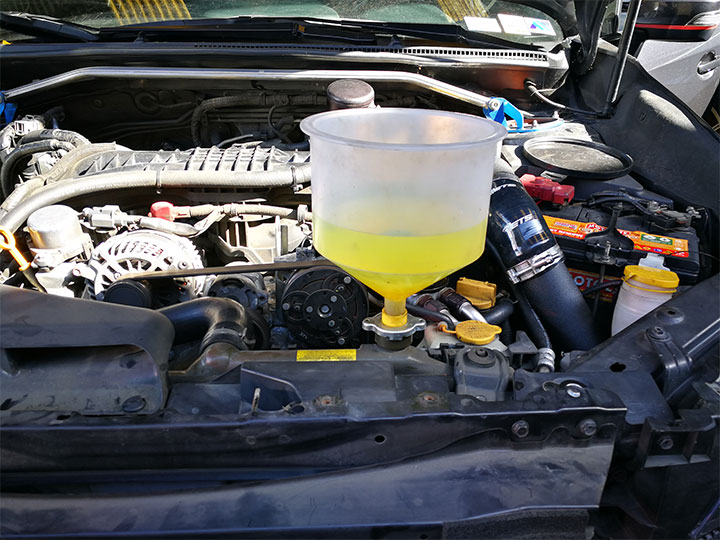
Engine overheating can be caused by many factors, including a faulty radiator fan, cooling system leak, broken water pump or clogged coolant hose. As pointed out by other automotive sites, your car’s engine alone will not cause ignition resulting in a car fire. Rather, the danger comes from internal liquids boiling when engines overheat, as “the fluids may spill out into the engine bay hitting hot components bringing them aflame.”
Or as firefighters explain it in simple terms: Hot water + live electrical wires = Spark = Fire.
So what should you do if your car begins to overheat? The first step is to pull over to the side of the road as soon as possible and try to cool it down immediately to prevent other problems from possibly taking place.
Prevention tip: Make sure to turn off your engine once the motor begins to cool down or if you think it needs to be stopped immediately.
4) Fluid leaks
Leaking oil, fuel, or other fluids can ignite when they come into contact with hot engine components. Storing flammable materials such as gasoline, oily rags, or aerosol cans inside a car can also increase the risk of combustion during accidents or collisions.
In the case of the vehicle bursting into flames in Cebu City, a spokesperson of the Bureau of Fire Protection Cebu City said that the vehicle was carrying oil, which could have possibly caused the fire.
Prevention tip: Conduct regular maintenance checks, including inspecting for leaks and ensuring proper coolant levels to help prevent mechanical failures. Authorities remind motorists to drive carefully, especially when carrying flammable liquids. Do not leave flammable materials inside your vehicle. Dispose of oily rags and other flammable materials properly.
5) Electrical problems
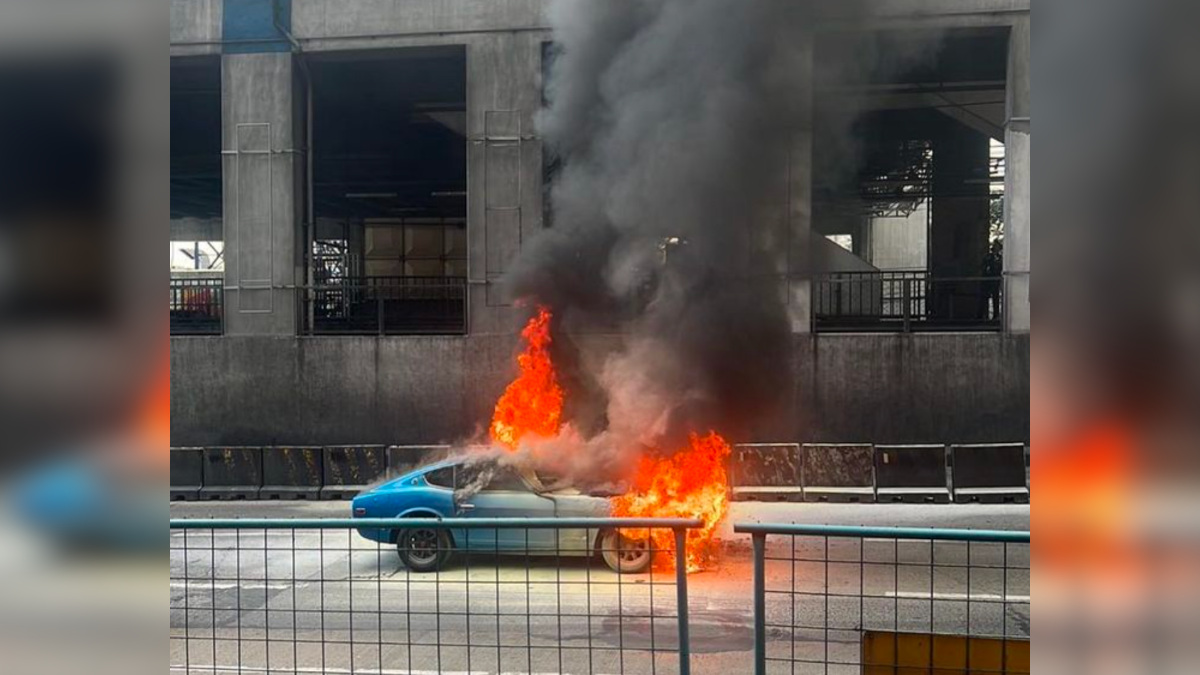
Faulty wiring or poorly installed or damaged electrical wiring can lead to short circuits and sparks. Electrical problems due to battery malfunctions, such as overcharging, loose connections, or old batteries can also be the cause of electrical fires in vehicles.
In the case of the classic Datsun 240Z which caught fire on EDSA, the BFP pointed to a faulty electrical connection as the most probable cause of the incident.
“Kasi nga old model na rin siya. Baka marami na ring inalter o dinagdag na mga electrical components. Oversupply na ng mga electrical equipment. Isa pa pong tinitingnan namin diyan ang loose connection ng battery cable niya,” Mandaluyong City Fire Marshall Superintendent Nazrudyn Cablayan said in a news report following the incident.
The BFP cautioned that this could happen to new vehicles as well as old ones.
Prevention tip: Adhere to a periodic maintenance schedule to determine the condition of their vehicle. Regularly inspect and maintain the electrical system, including checking for frayed wires, loose connections, and ensuring the battery is in good condition.
6) Fuel system issues
Leaking fuel lines can result from wear and tear, corrosion, or damage. According to some motoring sites, gasoline can catch fire from a simple spark or when reaching a temperature of 45 degrees. Punctures and leaks can also start from fuel tank damage brought about by previous impact or corrosion.
Prevention tip: Make sure your four-wheel vehicle is properly maintained. Routinely inspect the fuel system for leaks, damage, and corrosion. Ensure proper installation and maintenance of fuel lines and tanks.
7) Accidents
Many unfortunate accidents that end in fiery car crashes and deaths involve two or more vehicles colliding along a highway that burst into flames upon impact. This is because collisions and car accidents can rupture fuel lines, damage electrical components, or cause other damage leading to fires.
Other incidents of cars catching on fire involve speeding vehicles that ram into concrete barriers due to drunk driving or people falling asleep behind the wheel.
Prevention tip: Drive safely and defensively to minimize the risk of accidents. Adhere to speed limits. Be vigilant while driving and be responsible road users.
While some incidents of car fires are sadly unavoidable, regular maintenance, prompt repairs of any electrical and mechanical issues, and cautious parking and driving habits can significantly reduce the risk of car fires.