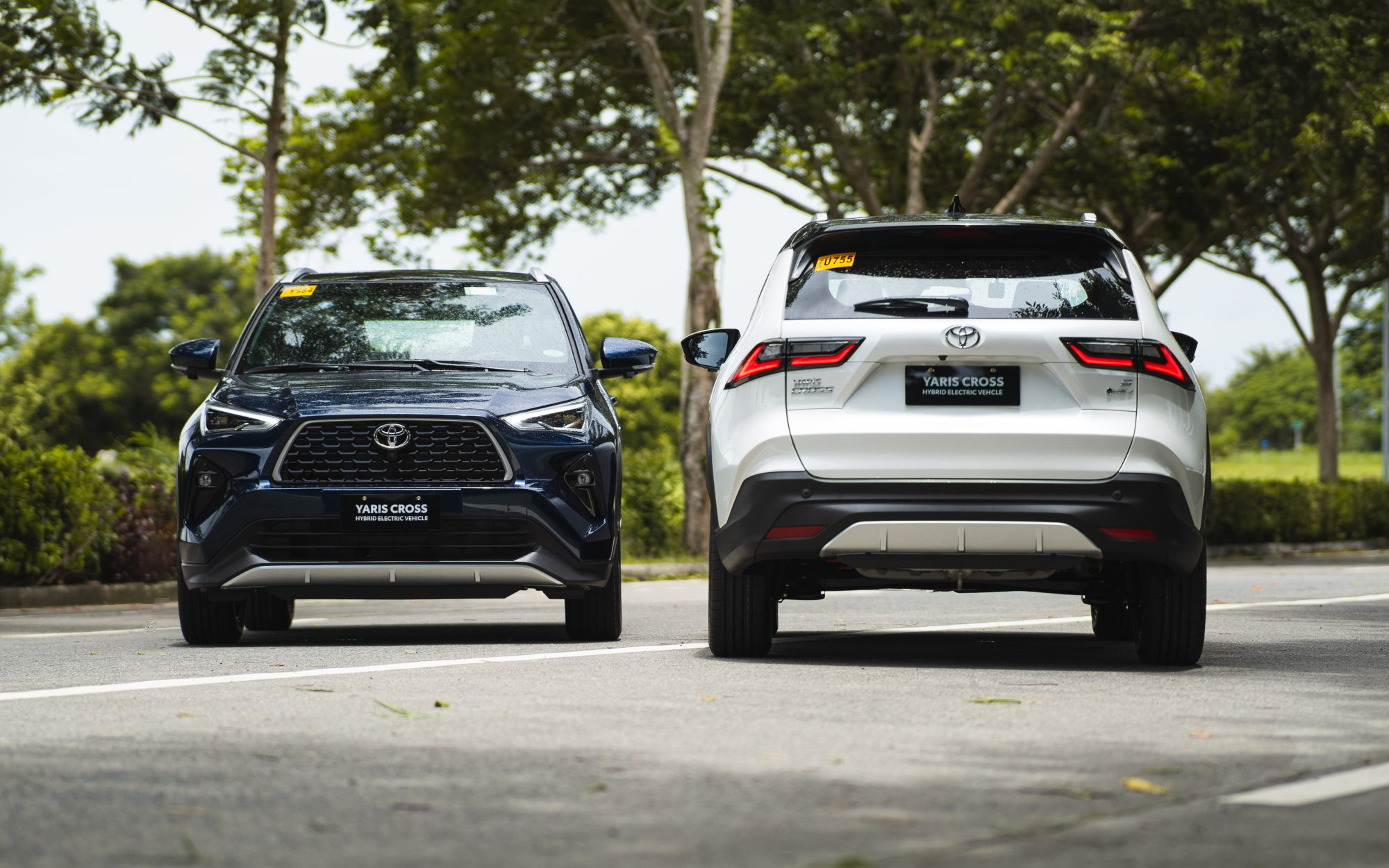
Toyota is paving the way to electrification with the new Yaris Cross

by Leandre Grecia | Aug 4, 2023

“Toyota is bridging the gap between EVs and combustion engines with hybrid tech”

Toyota was the first carmaker to roll out a mass-market hybrid electric vehicle with the launch of the Prius way, way back in 1997. In the past two decades since, it’s proven that it’s one of the authorities in the hybrid field.

But when it comes to fully electric vehicles, you probably can’t say the same about Toyota. Despite the release (finally) of the bZ4X and the Lexus RZ, the Japanese automaker has churned out significantly more hybrids than it has fully electric vehicles in recent memory. You would think the world’s biggest car brand would spearhead the transition to an electric future, but that isn’t exactly the case. Toyota’s still sticking to its non-flashy hybrids and is seemingly coming late to the EV party on purpose.

And it’s starting to pay off.

Quick question: What do you see first when you drive out to any central business district, a fully electric vehicle or a hybrid Toyota? Chances are, it’s the latter. No other carmaker apart from Nissan has any type of electrified vehicle that’s truly penetrated the market like Toyota has, and that’s a fact.

But unlike its rival, Toyota Motor Philippines (TMP) has more than one electrified option in its lineup. There’s the Camry, the Corolla Cross, the Corolla Altis, the RAV4, and most recently, the Zenix. But as many of us may have anticipated, TMP’s far from done launching new hybrids this year, and it’s now added another model to its hybrid stable with the launch of the all-new Yaris Cross.

And while the Yaris Cross is completely new metal, it actually feels pretty familiar. And that’s a good thing.
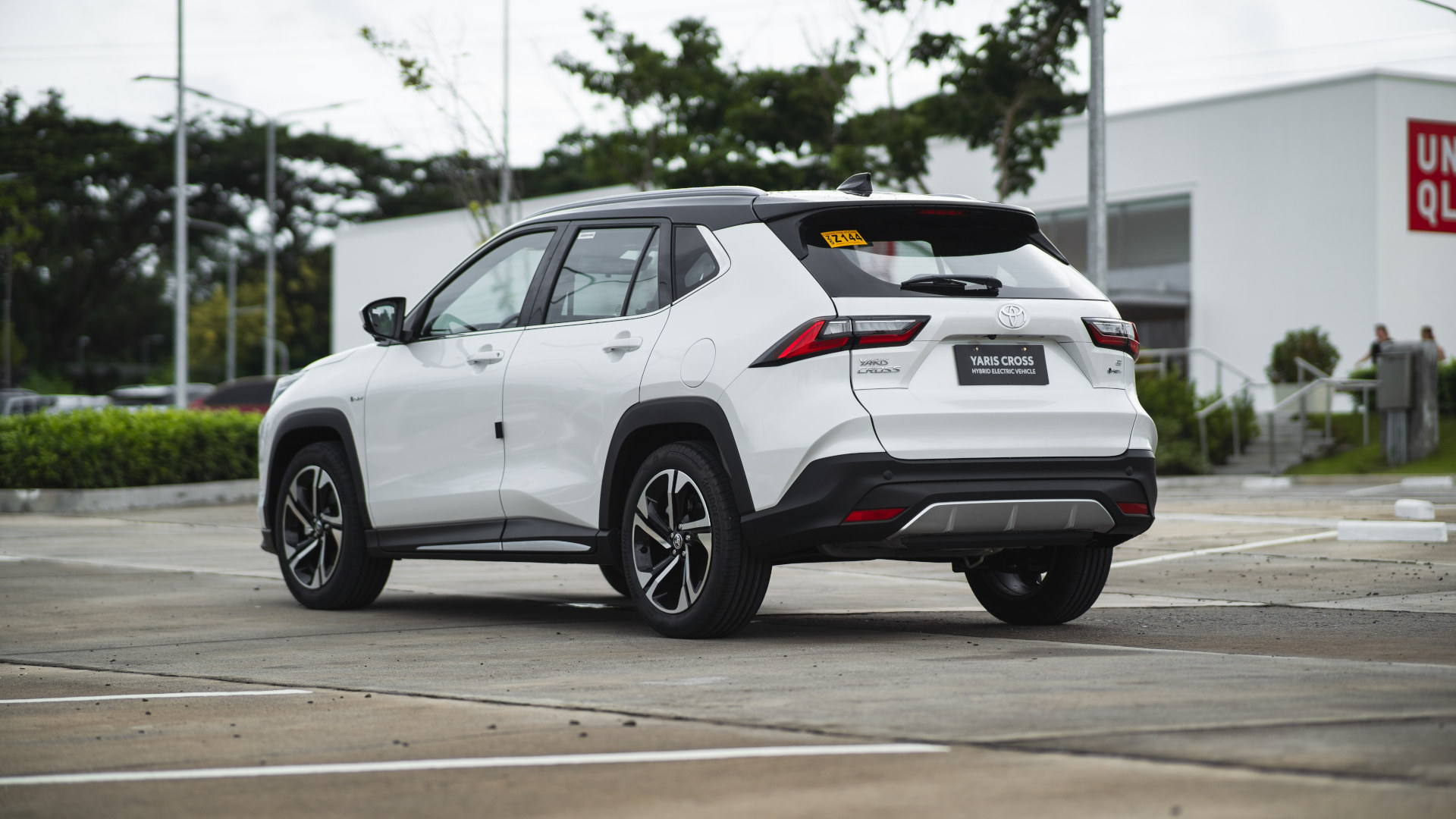
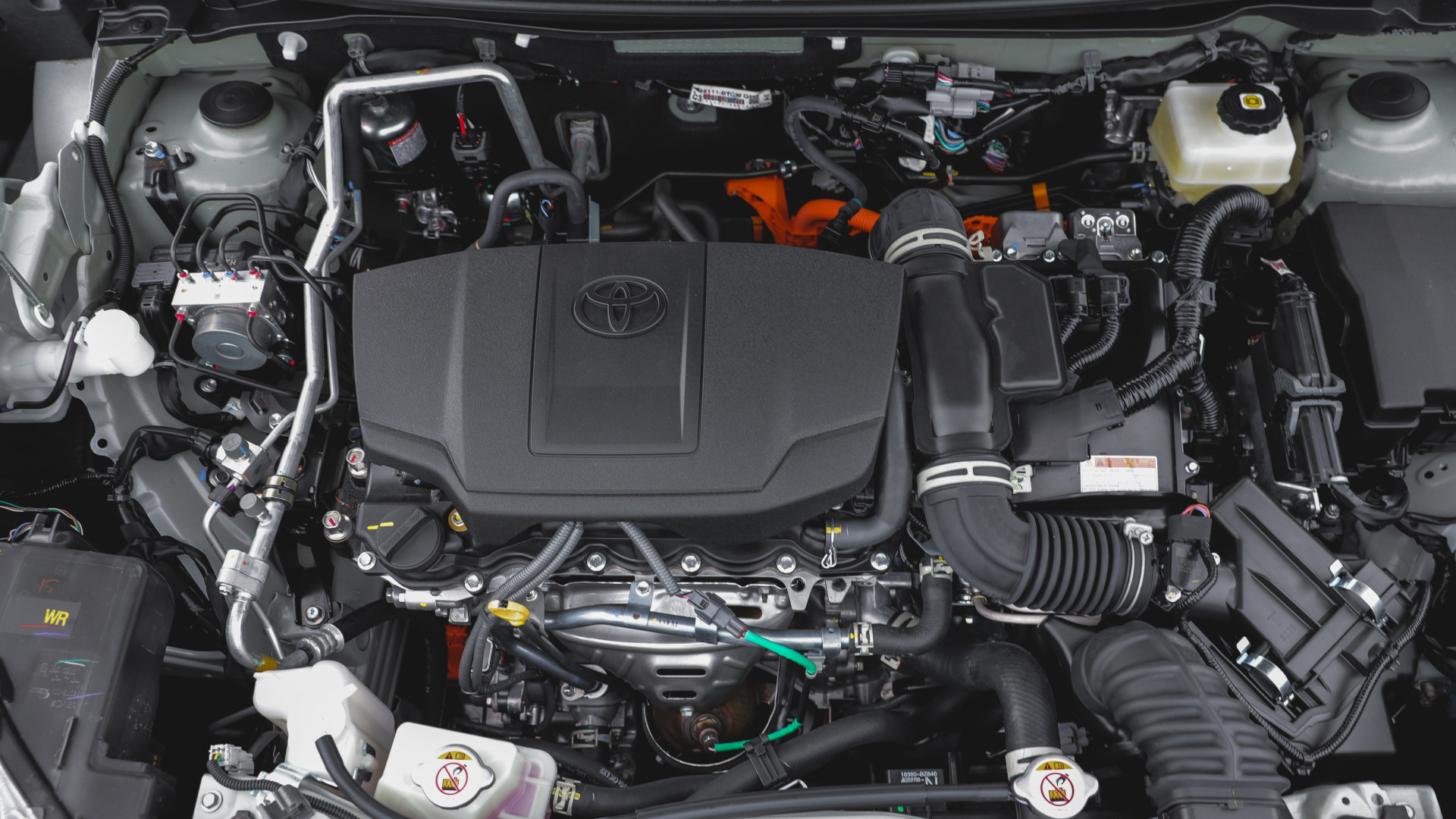
PHOTO: Charles Banaag

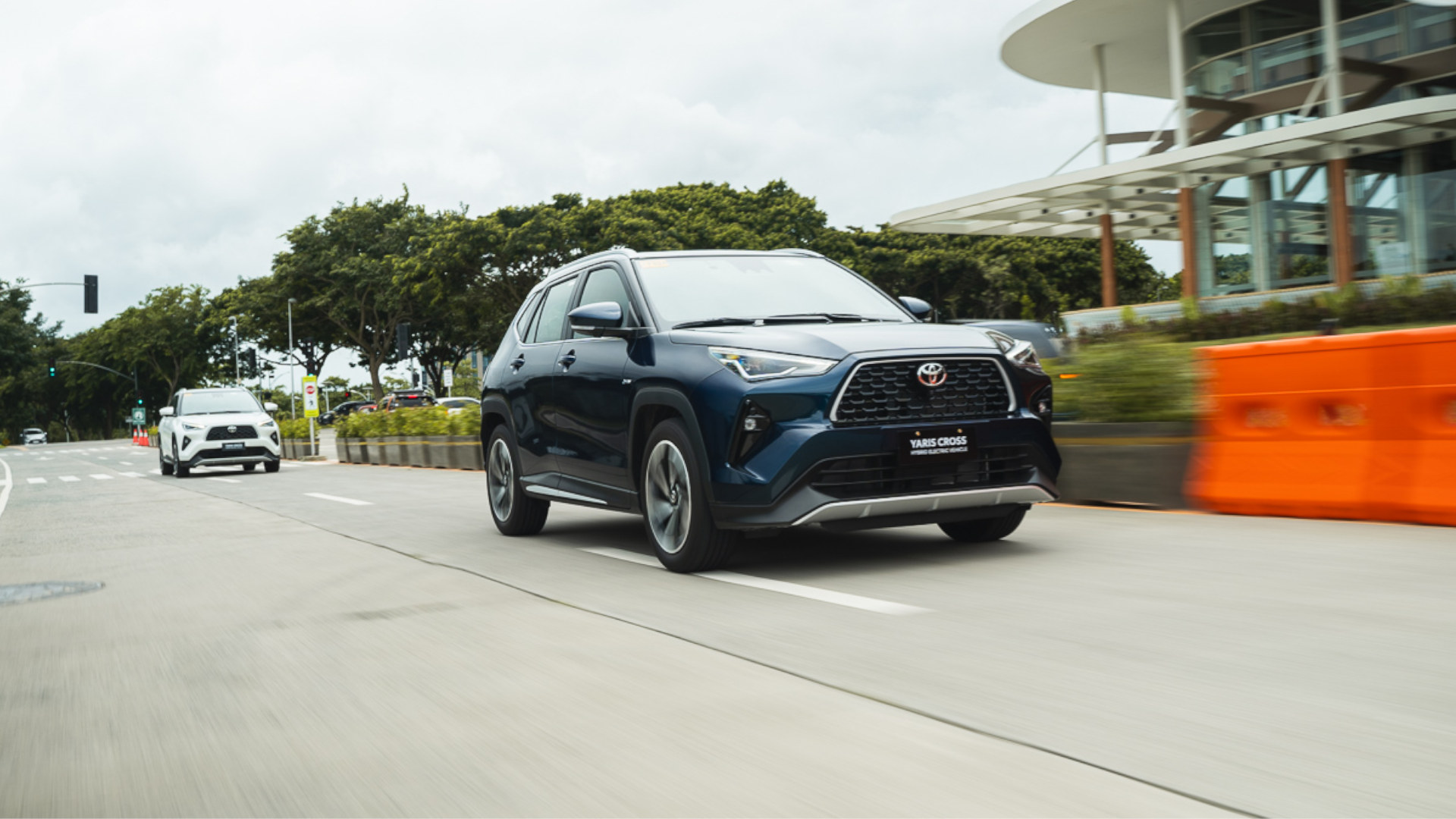
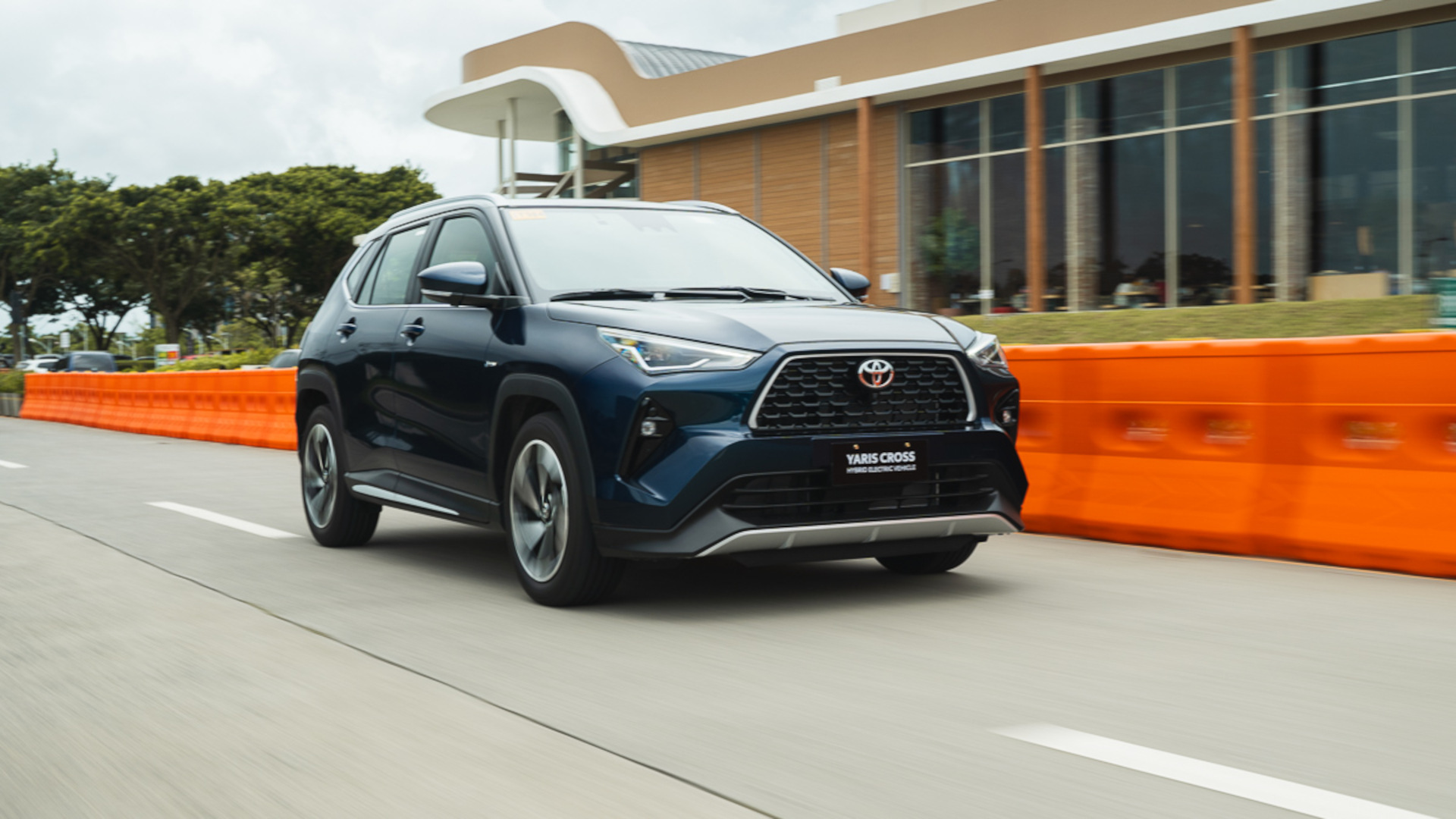
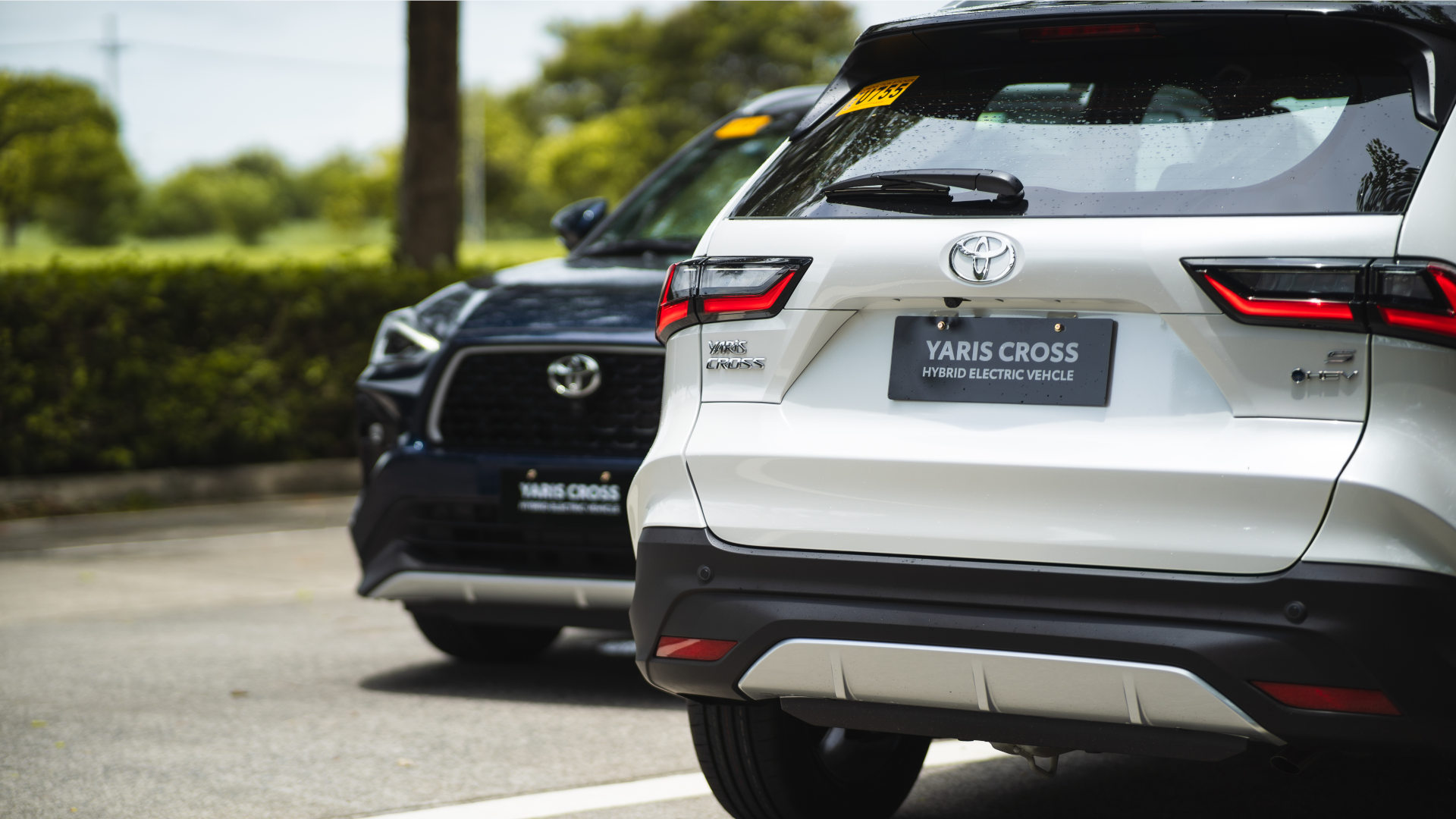
This isn’t just some jacked-up Yaris, but the overall design still doesn’t look that foreign. Its face actually looks a bit like the RAV4’s, with those sleek headlamps up front and that wide, gaping grille at the center. The wheels are very Raize-like, and the rear end is Zenix-ish. Size-wise, it’s close to the Corolla Cross.

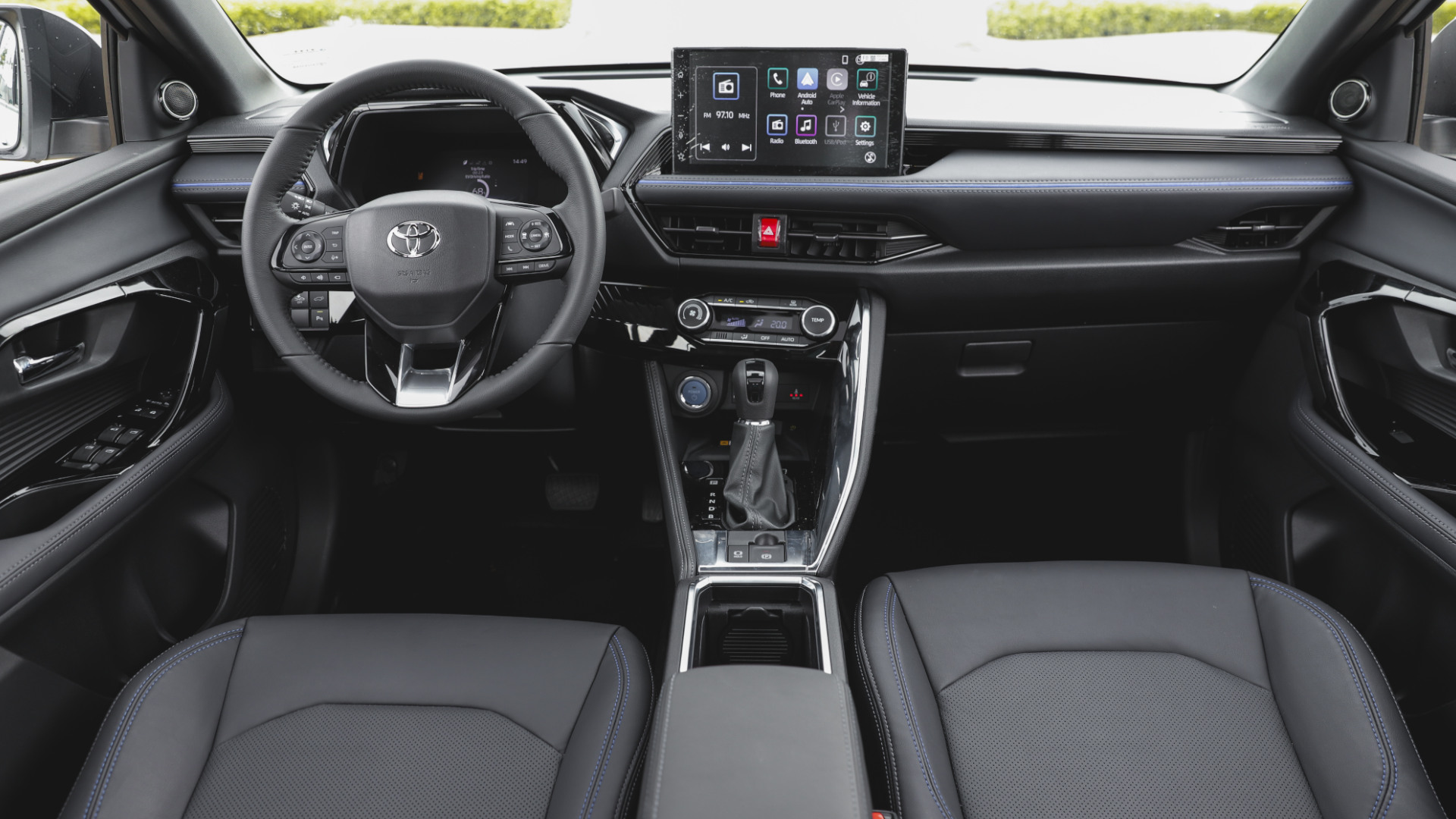
As you hop into the cabin, you’ll be greeted by an abundance of black leather with a hint of hard plastics and dashes of silver and gloss black trim. Sitting in the driver’s seat and looking around the cockpit feels familiar, too, especially with the floating touchscreen on the dashboard. It’s like a Corolla Cross interior with Raize-like accents. I wouldn’t call it premium, but just the right quality for its segment.

It’s pretty spacious, with decent headroom, legroom, and elbow room on both the first and second rows. There’s plenty of cargo space, too. Enough for a couple of large luggage or several weekend bags of five people. That’s amazing.

PHOTO: Leandre Grecia

Perhaps the most familiar aspect of all, however, is the powertrain. While there’s a new 1.5-liter gasoline engine under the hood—this one capable of 90hp at 5,500rpm and 121Nm of torque at 4,800rpm—it’s still the same Toyota Hybrid System II (THS II) as before. There’s a sizeable battery and an electric motor paired with the gas-powered unit, and together, the system produces a maximum of 109hp.

Since this is a Toyota, this is a *ahem* real hybrid. Charge the battery enough through regenerative braking or regular driving, and the vehicle will be able to run solely using electric power. The battery and motor can also work simultaneously with the gasoline engine when accelerating to provide some boost.

No more coding days. Hooray.

PHOTO: Charles Banaag

Operation is basically identical and is as straightforward as ever. User-friendly, even for those who’ve yet to drive an EV. Just gas up and go, no plug-in charging necessary. Toyota changed up the instrument cluster here, though, and I miss the old one in the Corolla Cross. The Yaris Cross’ digital panel still shows when the vehicle is using the internal combustion engine, the battery-powered motor, or both to propel the vehicle forward through a circular display. I preferred the old vehicle-like layout with red, yellow, and green indicators.

You do get other familiar creature comforts. With the exception of the massive sunroof up top, the Yaris Cross gets the same amenities as the bigger Corolla Cross, like Android Auto and Apple CarPlay (now wireless) connectivity, automatic climate control, and a 360-degree-view camera. The driver-centric tech in other Toyota hybrids are available in the Yaris Cross as well. We’re talking Toyota Safety Sense features like adaptive cruise control, lane-keeping and lane-tracing assist, and a pre-collision system that includes autonomous emergency braking.

Toyota Yaris Cross 2024

Mind you, these extra features are also available in the top-spec non-hybrid variant. Yes, there’s still an option to go for the gas-only Yaris Cross. If you opt for that, you’re looking at a 1.5-liter gasoline engine that churns out a healthy 105hp and 138Nm.

This, I believe, is what helps set TMP apart in the hybrid competition. It hasn’t failed to give car buyers options.

Unlike some of its competitors, Toyota isn’t shoving EVs down its customers’ throats. Instead, the carmaker is bridging the gap between fully electrified powertrains and internal combustion engines using hybrid tech. Whether or not this was the plan all along doesn’t matter, because it’s happening anyway.

PHOTO: Charles Banaag

With models like the Yaris Cross, customers now have even more options if they want to go down the electrification route. So while this new model won’t exactly shake the market, it’s still a very important one for TMP. In fact, you could argue that it’s the most important launch of the year, even more so than the Zenix.

You see, with a P1.598 million price tag, the Yaris Cross HEV now becomes the most affordable hybrid in TMP’s lineup. It’s still not far off from the hybrid Corolla Cross, but with its smaller engine and overall smaller footprint, the Yaris Cross will easily be the more practical and economical option between the two. And for skeptical car buyers who are thinking twice about finally making the switch to hybrids, those are very important considerations.

Now, they say familiarity breeds contempt, but in this case, I would beg to differ. The more Filipinos grow familiar with these hybrids, the more people will eventually buy them. And when the time comes that we’d have to bid farewell to non-hybrid gasoline and diesel cars, the market will be ready by then, and Toyota will have played a huge part in that.

PHOTO: Charles Banaag

See Also

[bg_related:0]
PHOTO: Charles Banaag
  • TGP Rating:
    /20

    Starts at ₱

    TGP Rating:
    /20
    Starts at ₱