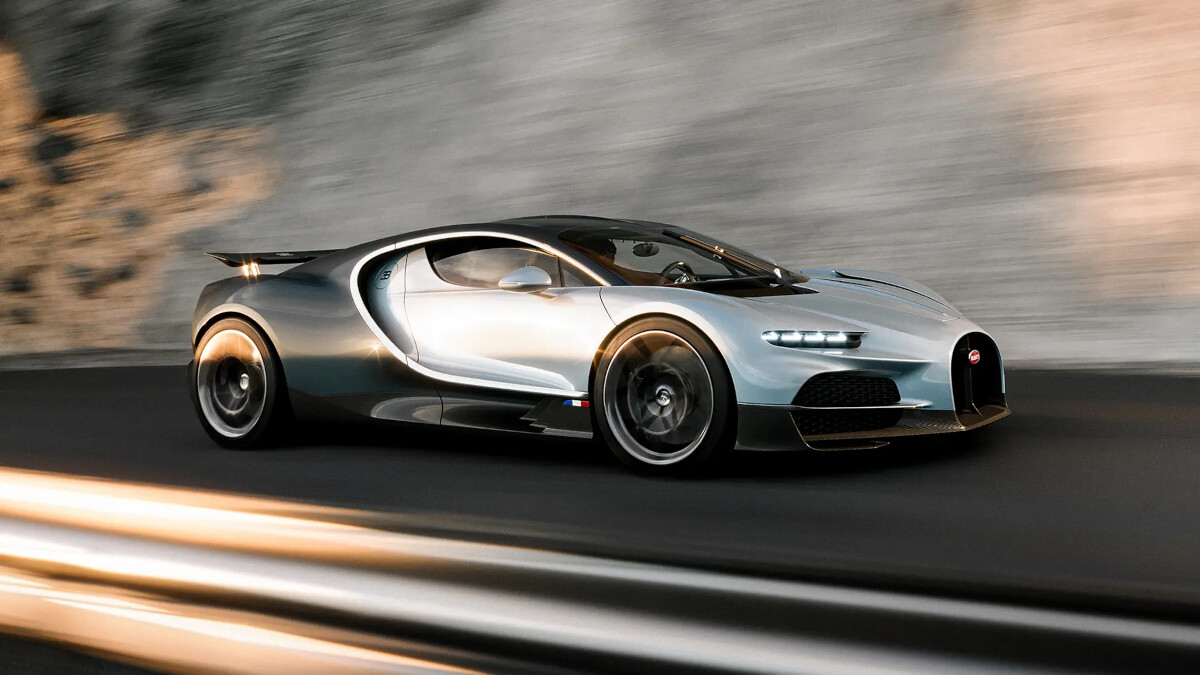

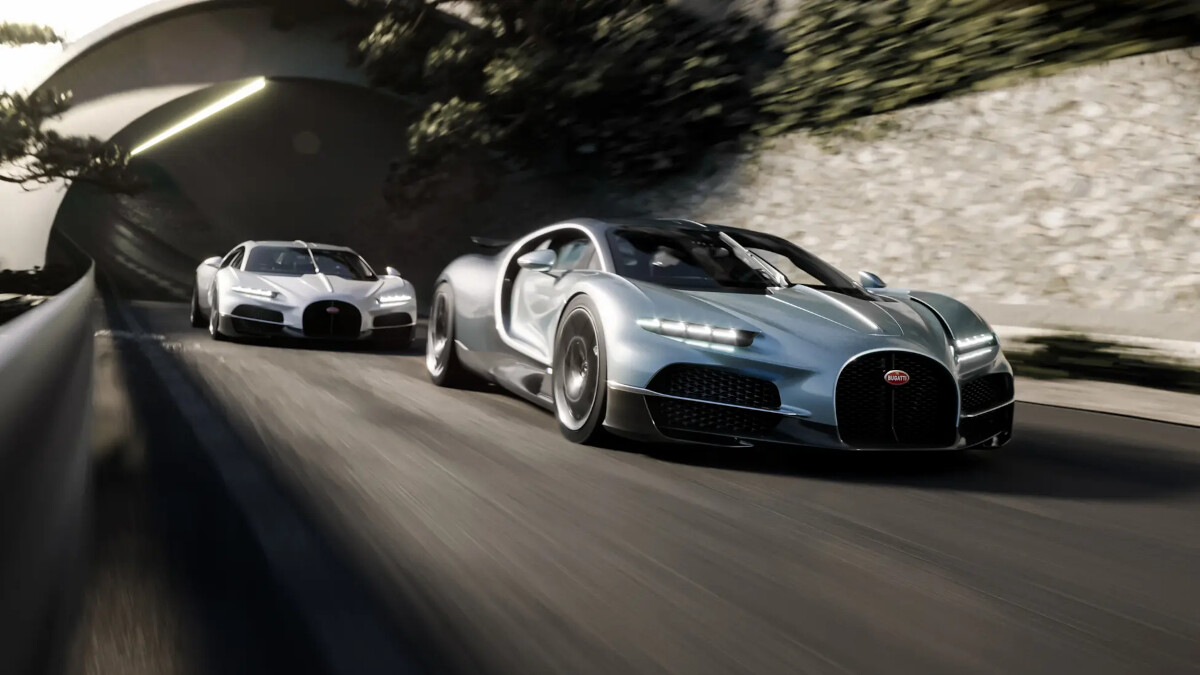
Behold, the new 1,775hp Bugatti Tourbillon—an all-new Chiron successor named after a (usually exposed) mechanism in silly-money watches that counters the negative effects of gravity. The name’s a nod to Rimac’s new obsession with skeletonized mechanical engineering (more on that in a bit), and possibly the new Bug’s commitment to picking a fight with physics.
It’s a car that’s 33mm lower and no longer than a Chiron, despite harboring an all-new Cosworth-developed 9,000rpm 8.3-liter naturally aspirated V16 engine with a meter-long crankshaft and an eight-speed dual-clutch gearbox bolted to the back. It weighs fractionally less than the Chiron’s 1,995kg curb weight—despite packing a 200kg 25kWh battery down the spine where the gearbox would normally be, two electric motors on the front axle, another on the rear—and takes advantage of that slimmer center console to pinch the glasshouse and reduce frontal area and therefore drag.
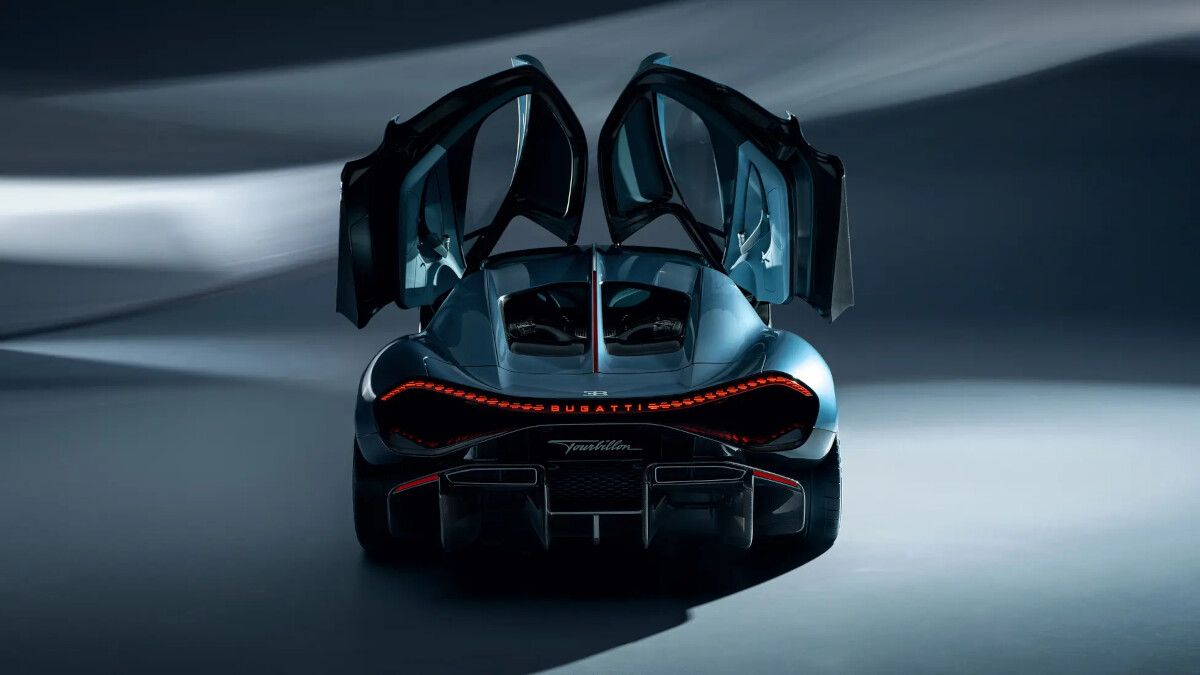
Lighter, more powerful and more slippery than a car capable of well over 480kph...the Tourbillon (impossible say without a French accent, much like ‘croissant’) is not cocking about.
We ask Mate Rimac, the new CEO of Bugatti Rimac who’s giving us the grand tour, wouldn’t a pure-EV have been...easier? “Sure, the [Rimac] Nevera could be a Bugatti if you re-skin it,” he said. “Financially, it’s the obvious choice, but it’s absolutely the wrong decision, which is why I fought against it so hard. Bugatti is all about heritage, craftsmanship, quality, and performance, but it’s more aristocratic, it’s about staying in the analog world.
“Then I thought, ‘Okay, let’s take the Chiron and make it hybrid.’ But that’s also bad because it would be super heavy, everything would be compromised. So I came up with a crazy proposal to make a completely new car.”
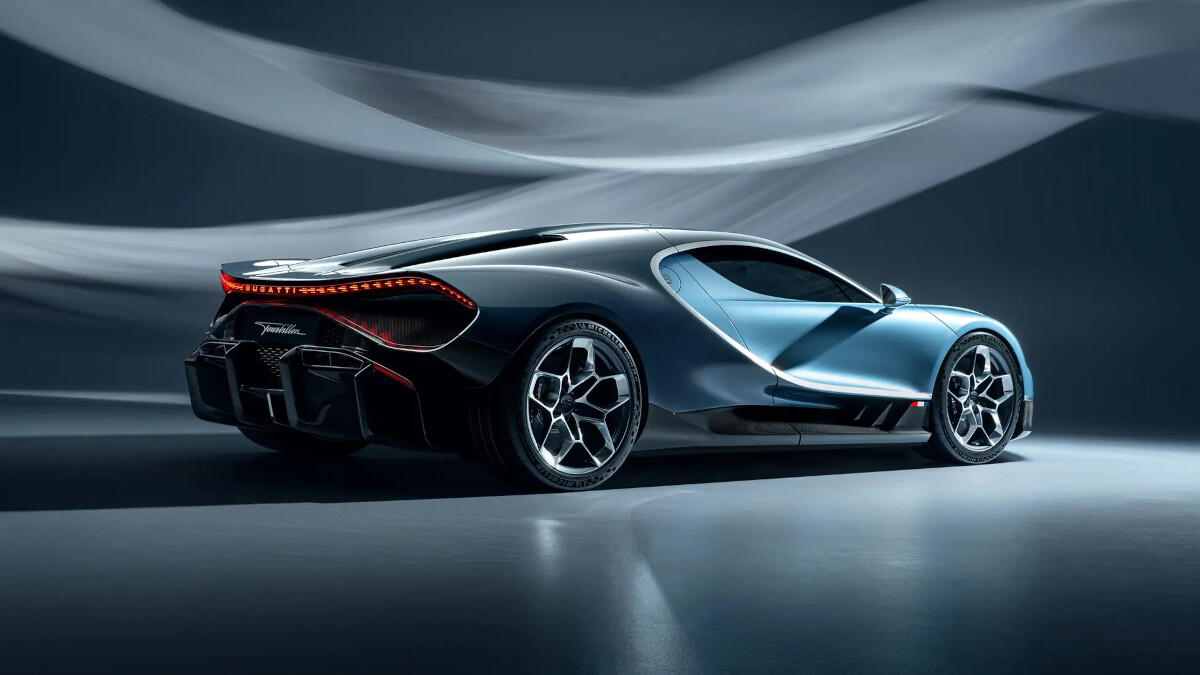
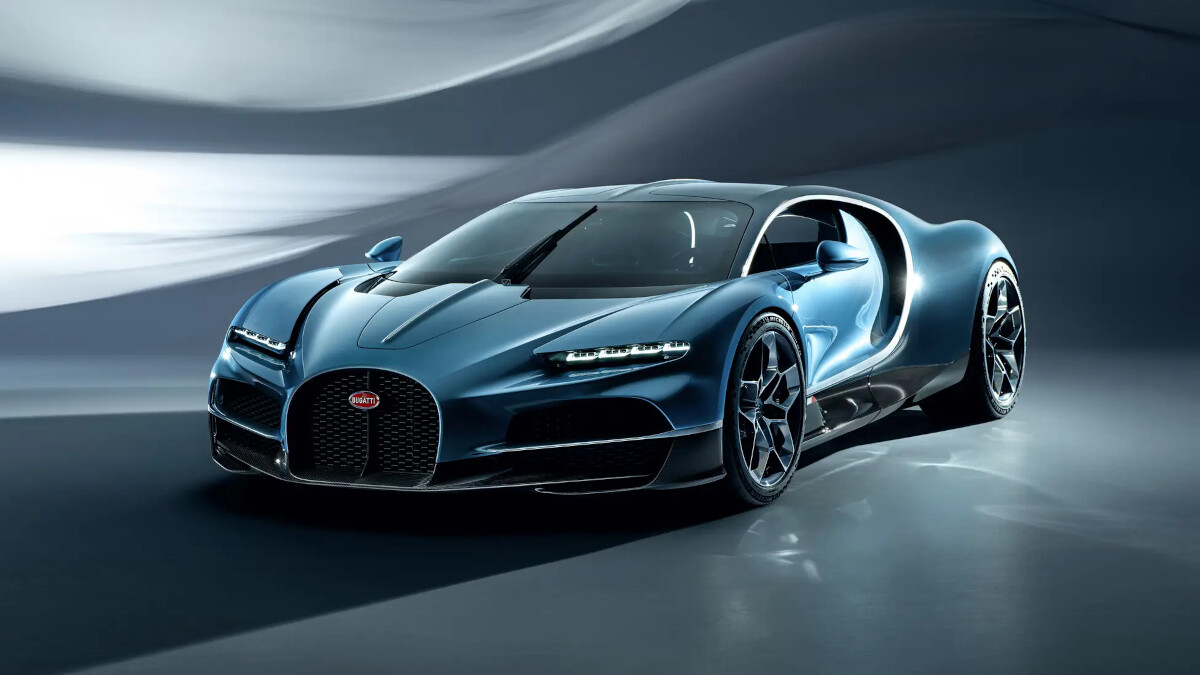
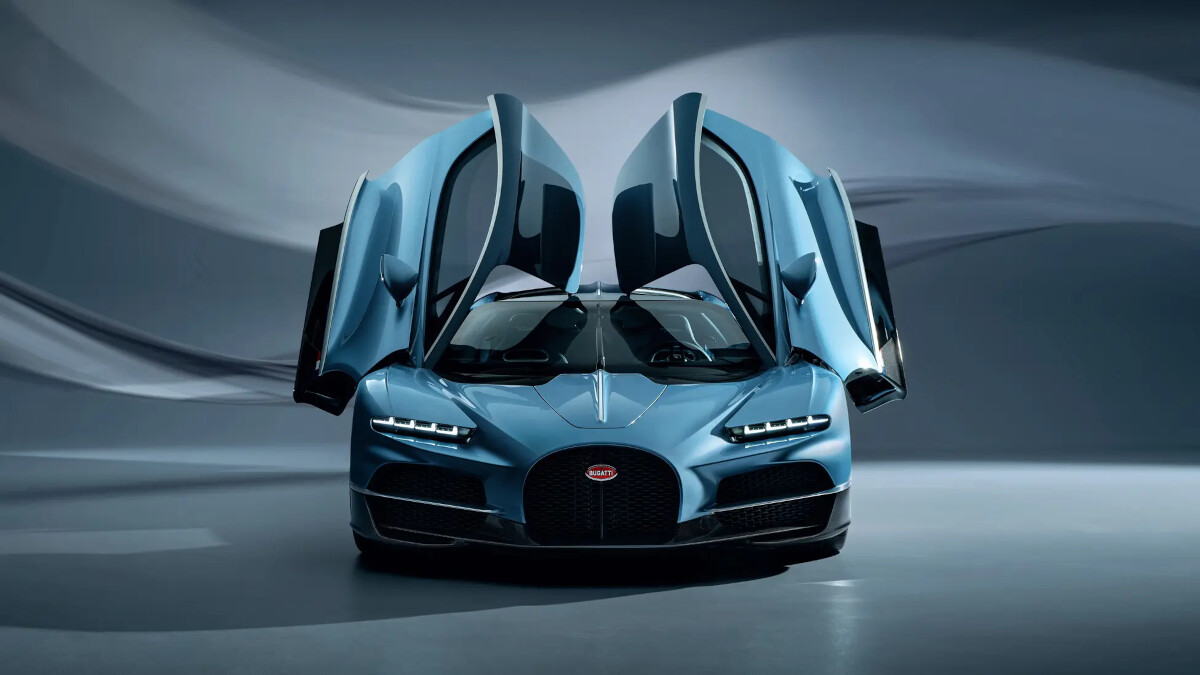
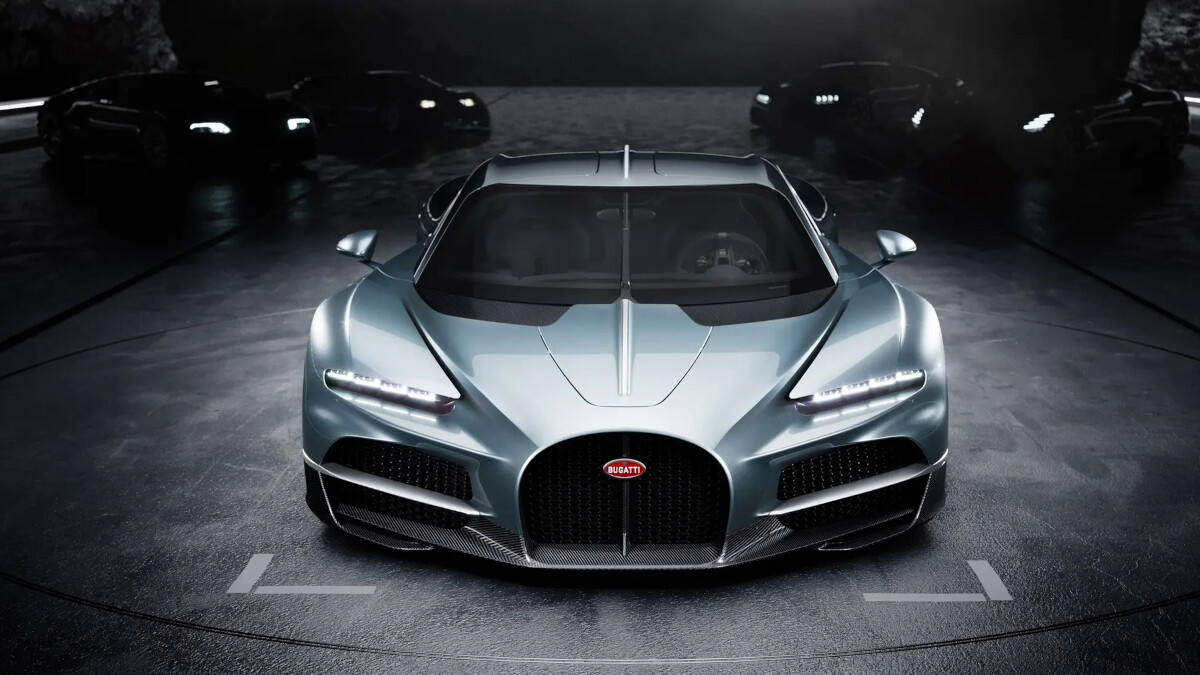
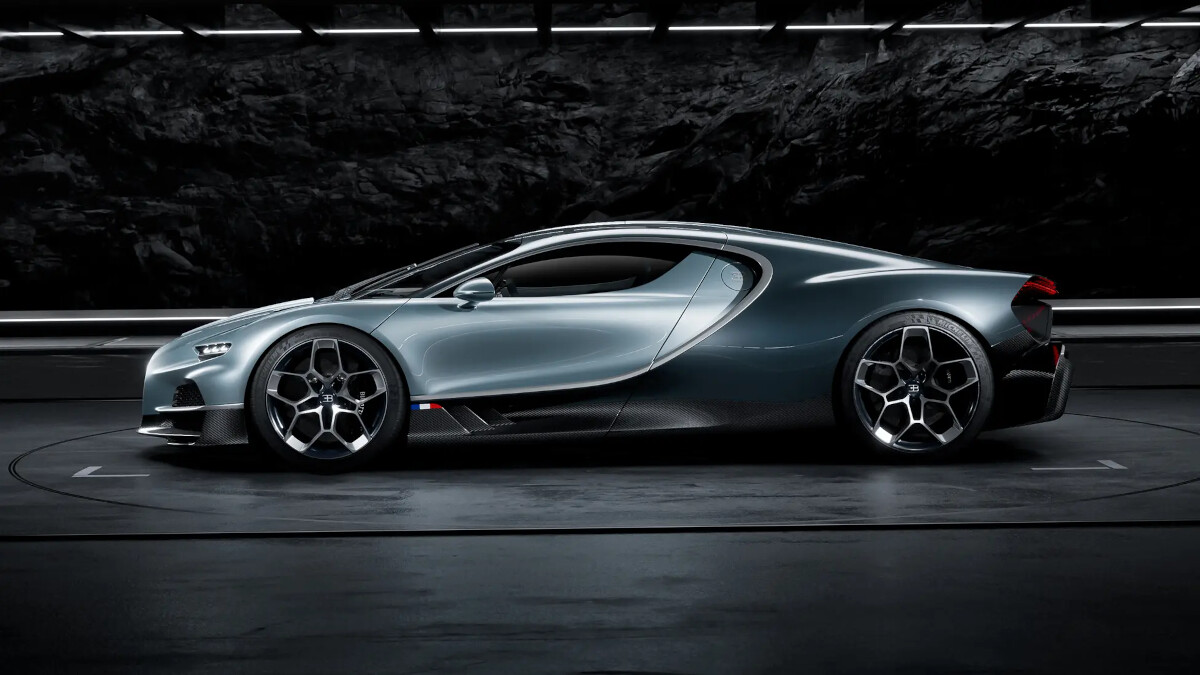
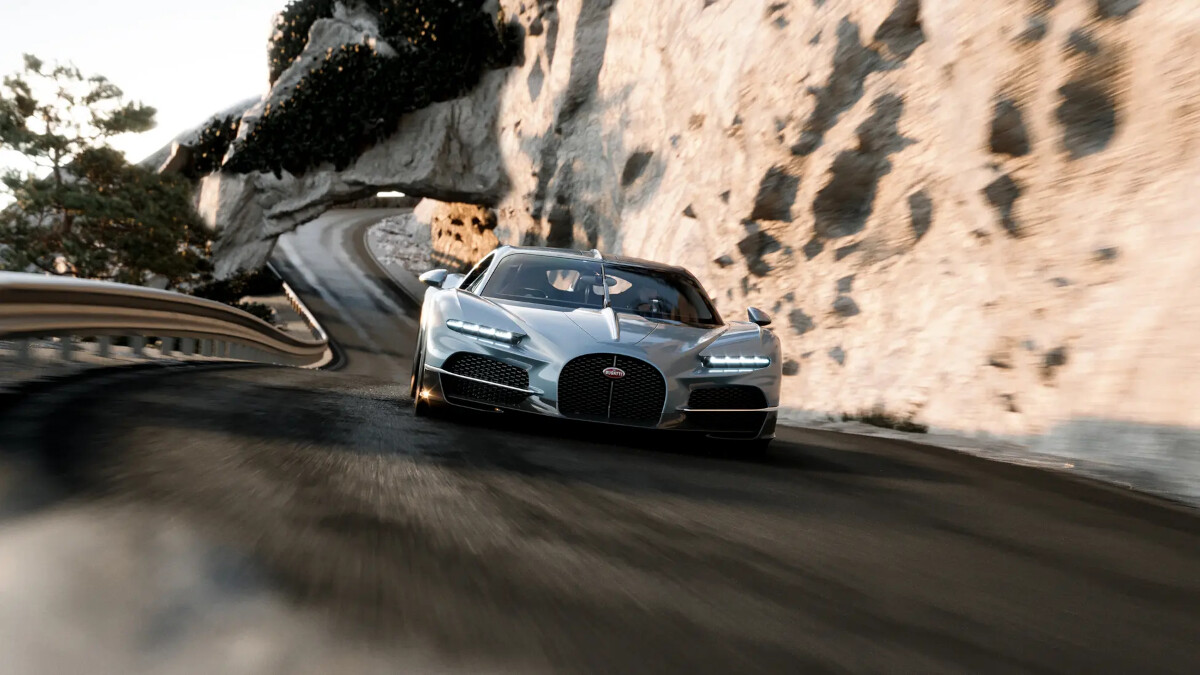
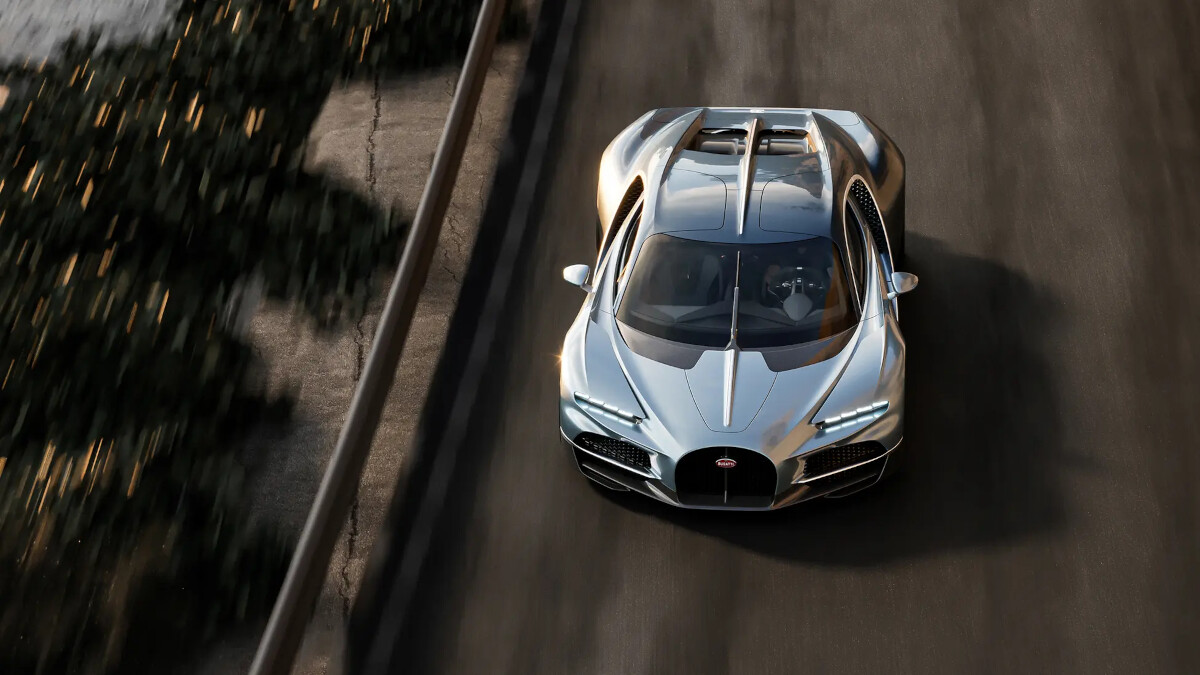
By now, you may well have remarked that the Tourbillon looks a bit like a ripped Chiron with anger issues, and I don’t disagree. First glance is tainted with familiarity, but take a beat and notice the floating headlights hanging on flying buttresses designed to feed as many precious air molecules as possible into the ravenous engine. Notice how the narrower glasshouse accentuates the shoulders and that the doors are pure theater—dihedral and electrically operated, a double Bugatti first.
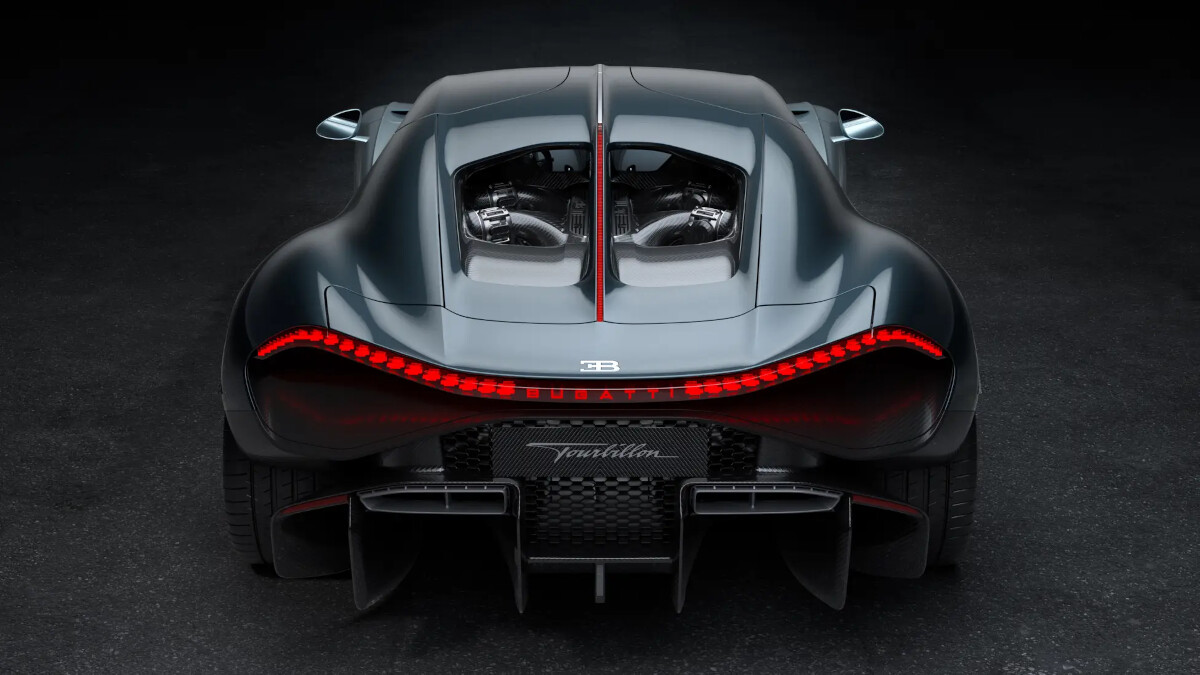
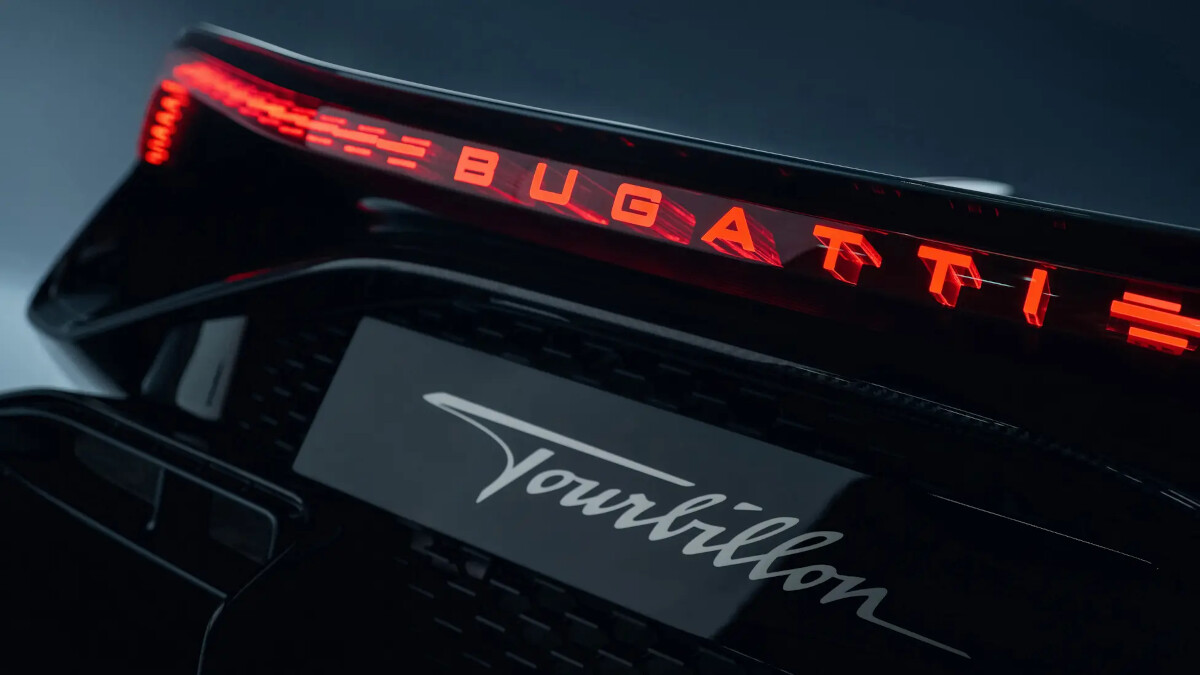
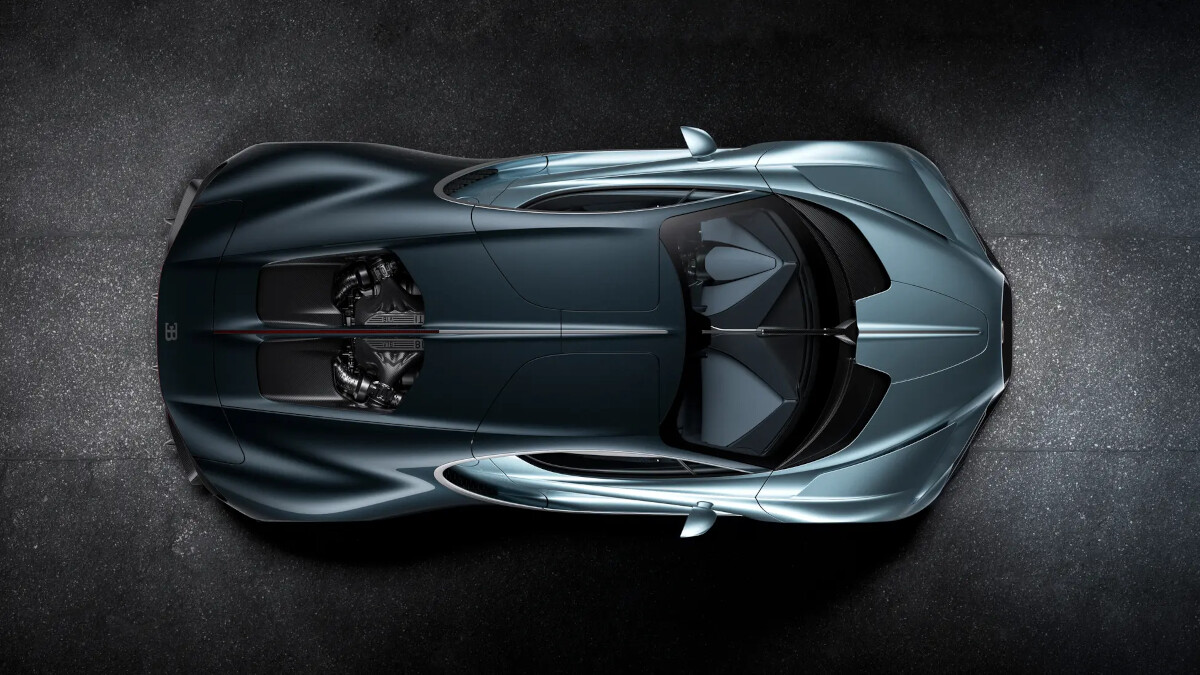
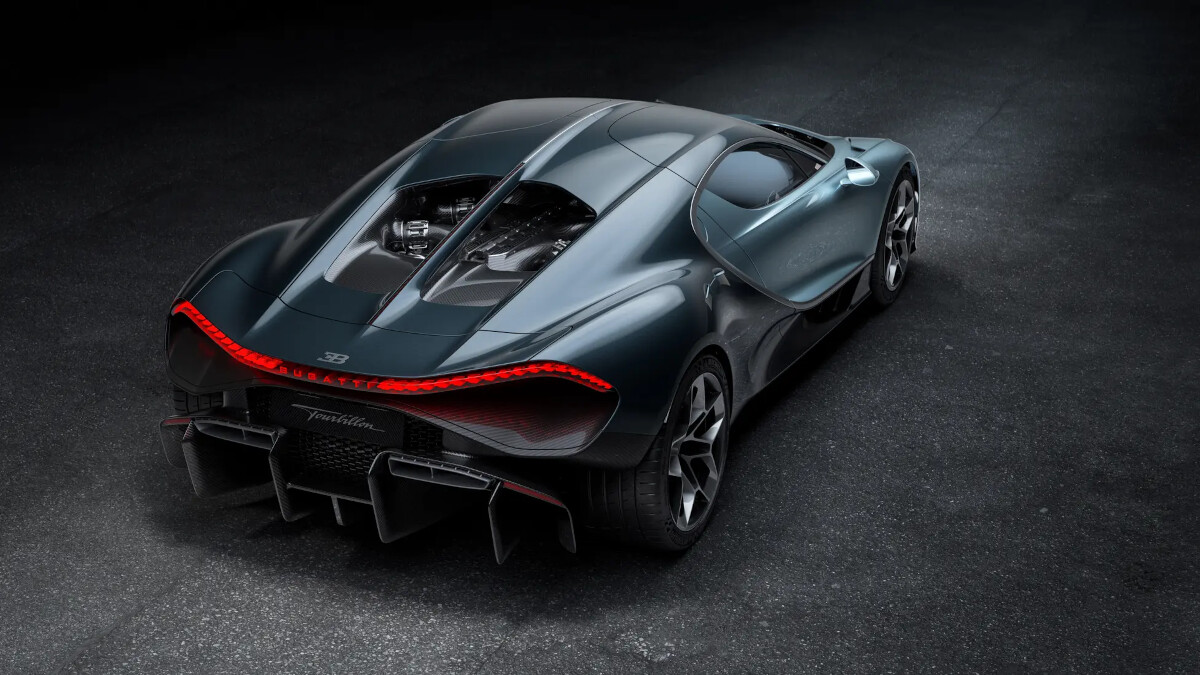
At the rear, things really kick off—an exposed V16, visibly tipped forward to accommodate the upward slope of the enormous venturi tunnels that run on either side. A diffuser with twice the volume of the Chiron’s means the deployable spoiler can stay tucked on Vmax runs, but pops up as an air brake and in Track mode. 3D-printed titanium exhaust tips sit high, while from the back, the rear tires are fully exposed like some uber-luxe hotrod.
OTHER STORIES YOU MIGHT HAVE MISSED:
Watch: One last ride with the Bugatti W16 engine
Opinion: Cars should be an inclusive hobby
“It would be easy to say, ‘Okay, let’s make a statement that it’s a new company, it’s new management, it’s a new powertrain,’ so let’s really make something wacky. And actually we had some proposals like that, but it felt wrong. We think long term,” Rimac explained. “This is a brand that’s existed for 114 years, and we want to exist for another 100-plus. It’s so precious to have these Bugatti design elements that you recognize from afar—the horseshoe, the center line, the two-tone paint—it would be such a shame to throw it away.”
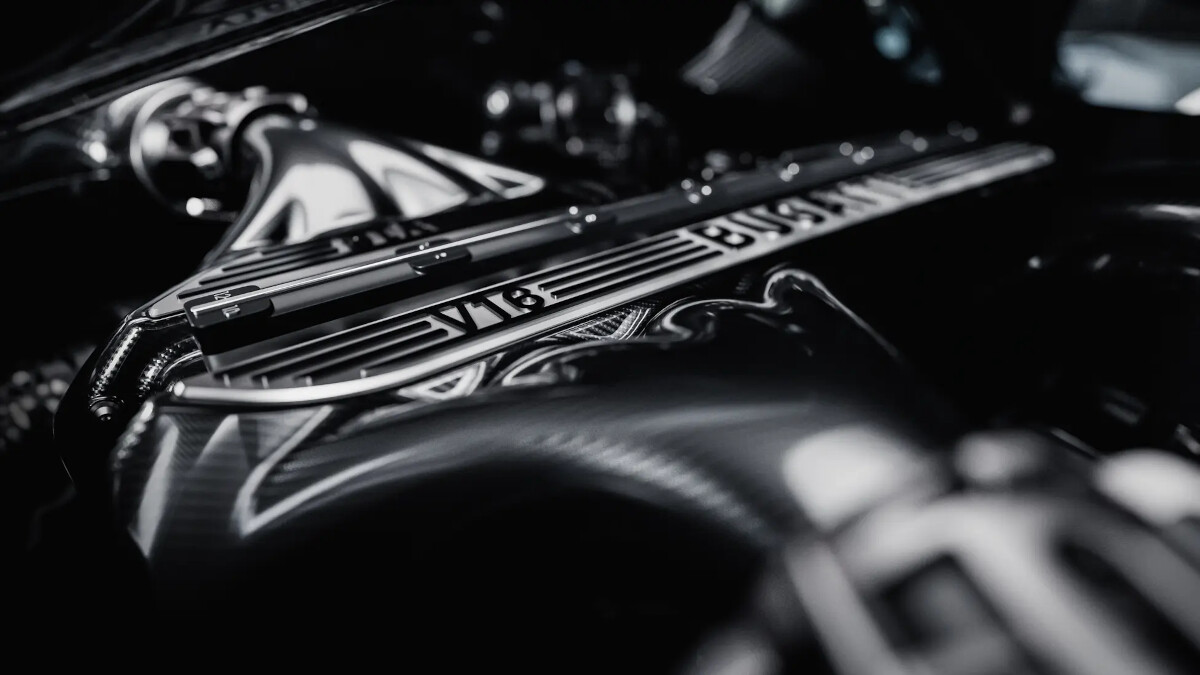
Performance is largely theoretical at this stage (first deliveries aren’t until 2026, so real-world testing has only just begun in earnest), but reliably incomprehensible. We’re promised a total of 1,775hp: 986hp from the engine, 789hp from the three e-motors, meaning without even waking the V16 from its slumber, you have 4WD, a 60km EV-only range, Ferrari 812 Superfast levels of grunt...and happy neighbors.
Top speed is limited to 445kph, which should keep you covered day to day, but clearly there’s more to give. Will they go after a new top-speed record? “Let’s see,” said Rimac, which means yes. Andy Wallace, the man who’ll probably pilot it into unchartered territory, pointed out that it gets the “boring bit, up to 250mph (400kph)” done so much faster than the Chiron (around 25sec versus 32.6sec) that it’ll give them so much more of the 8.7km Ehra-Lessien straight to play with when pushing beyond 480kph. At the other end of the curve, 0-100kph takes less than 2sec (a Chiron takes 2.4sec), 0-200kph takes less than 5sec (Chiron in 6.1sec), and 0-300kph less than 10sec (13.1sec).
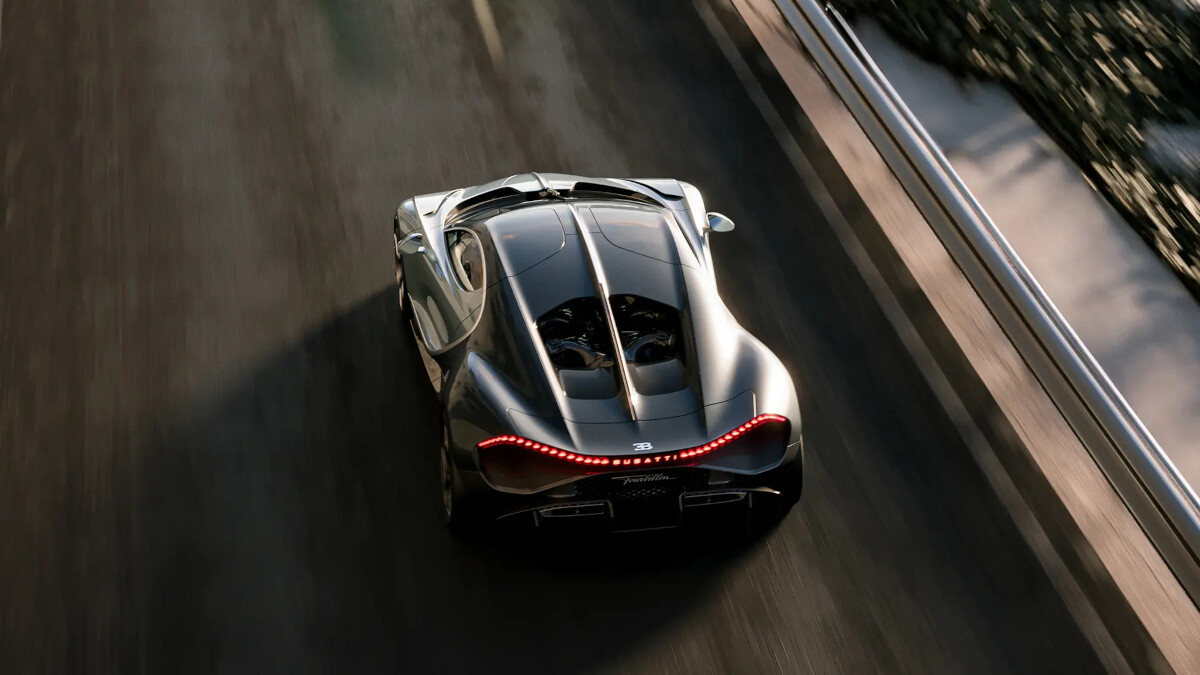
A veritable missile, then, but one with an attention to detail I’m not sure we’ve seen this side of a Pagani. “Normally, you have exterior design and interior design, but even when this car’s naked, we want it to look special, so we employed a rolling chassis designer,” Rimac told us with a grin. CEO: 1, finance department: 0.
Frankly, the wins are everywhere—all the hinges are anodized and machined aluminum (“I’m a bit of a hinge freak,” he admitted). Twinned with dual-valve active dampers, the suspension arms are 3D-printed by Divergent (the sister company to Czinger, remember them?) because they’re stiffer, stronger, and also more beautiful—organically grown like sinew and bone.
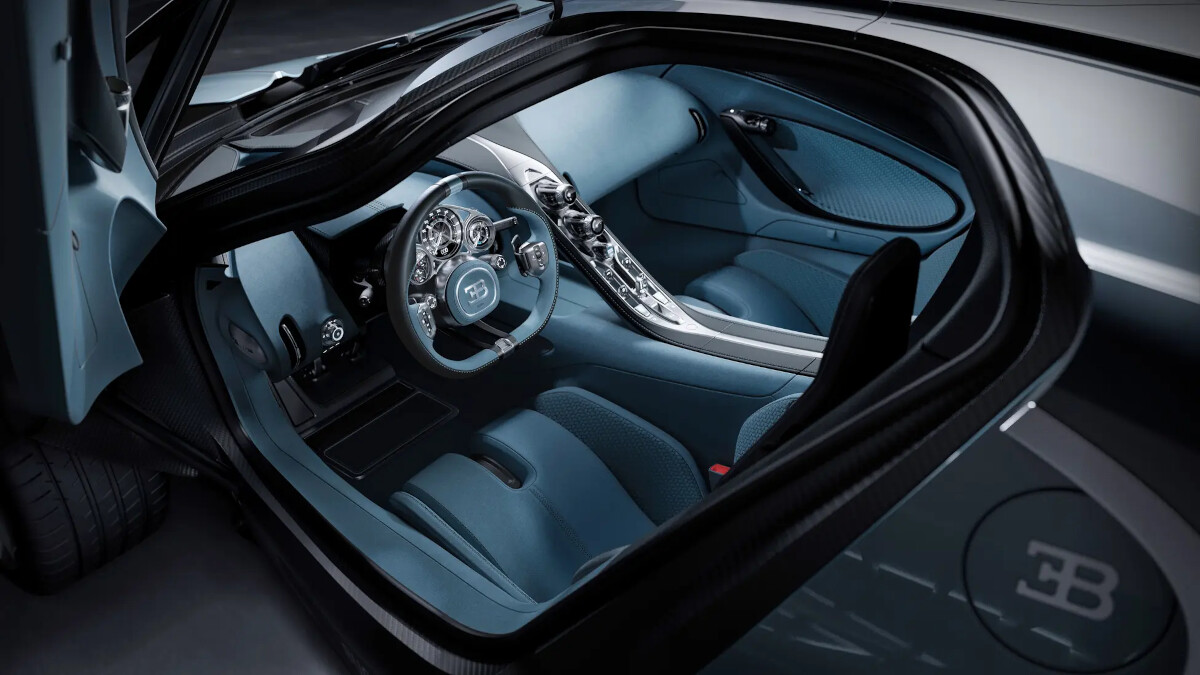
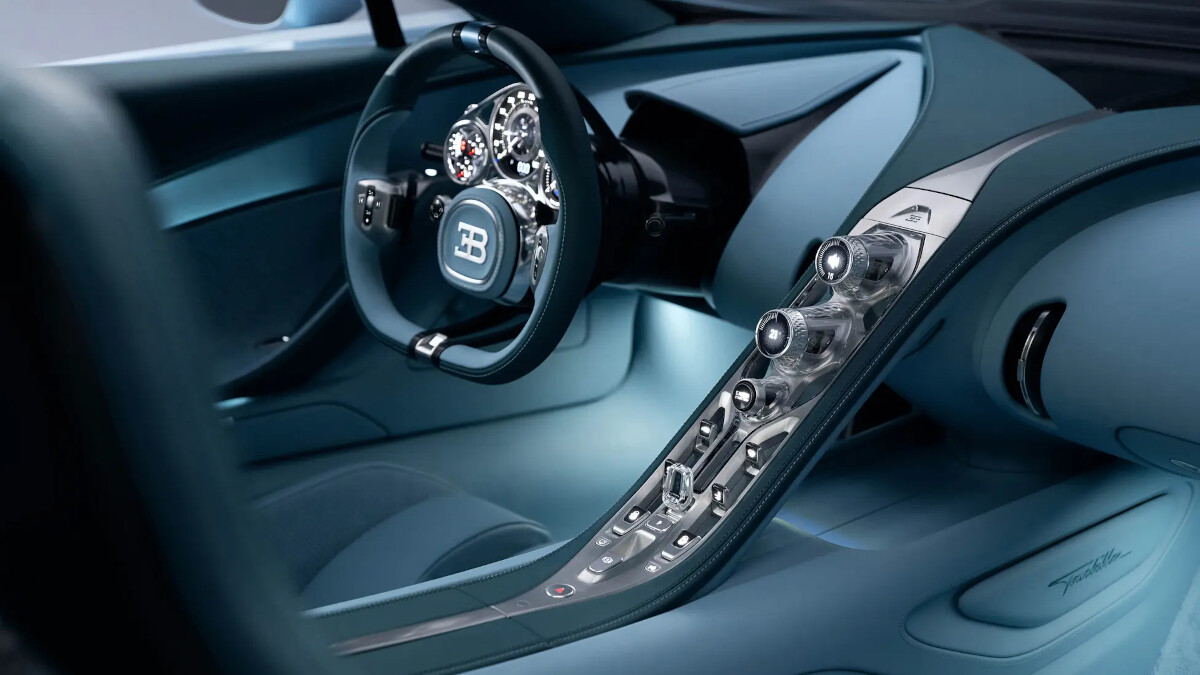
Allow the door to open itself and take a moment to marvel at the tactile mechanical wonders wherever you look. The skeletonized instrument dials are essentially Swiss watches scaled up—every cog and jewel on view. Two needles on the center dial take care of revs (the dial goes to 10,000rpm) and speed (all the way to 550kph). On the left, there’s analog battery, oil temp, and fuel gauges; on the right are dual needles showing real-time power draw from the motors and engine—simply add them together to find out how brave your right foot is.
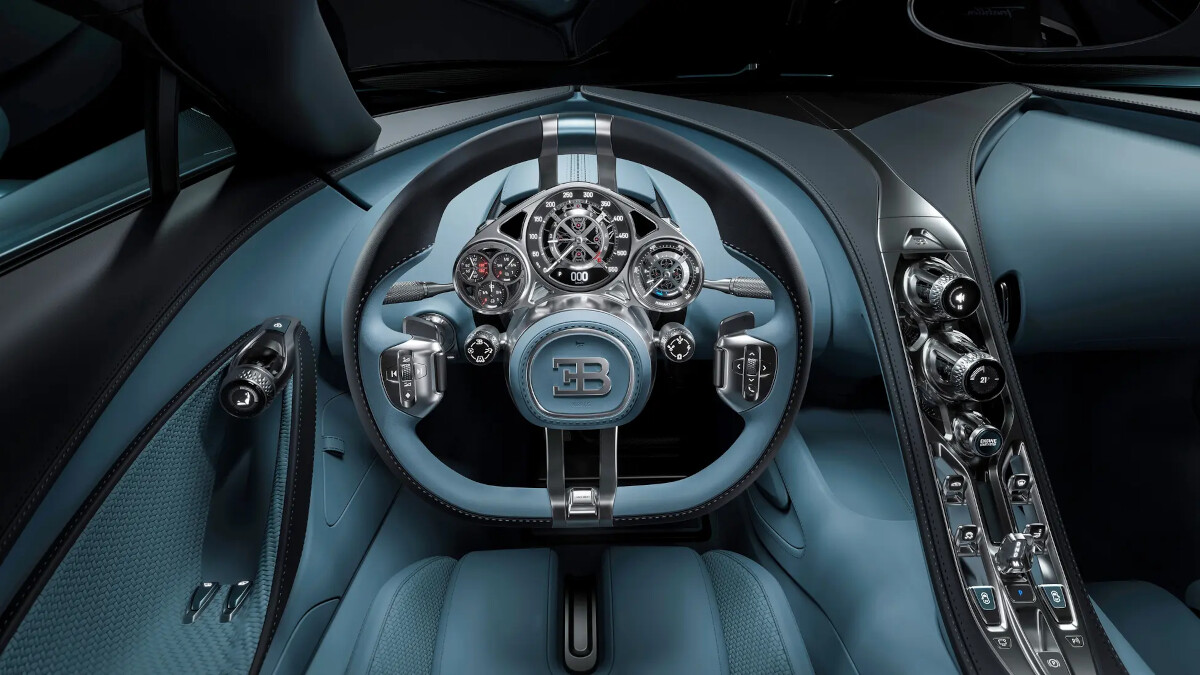
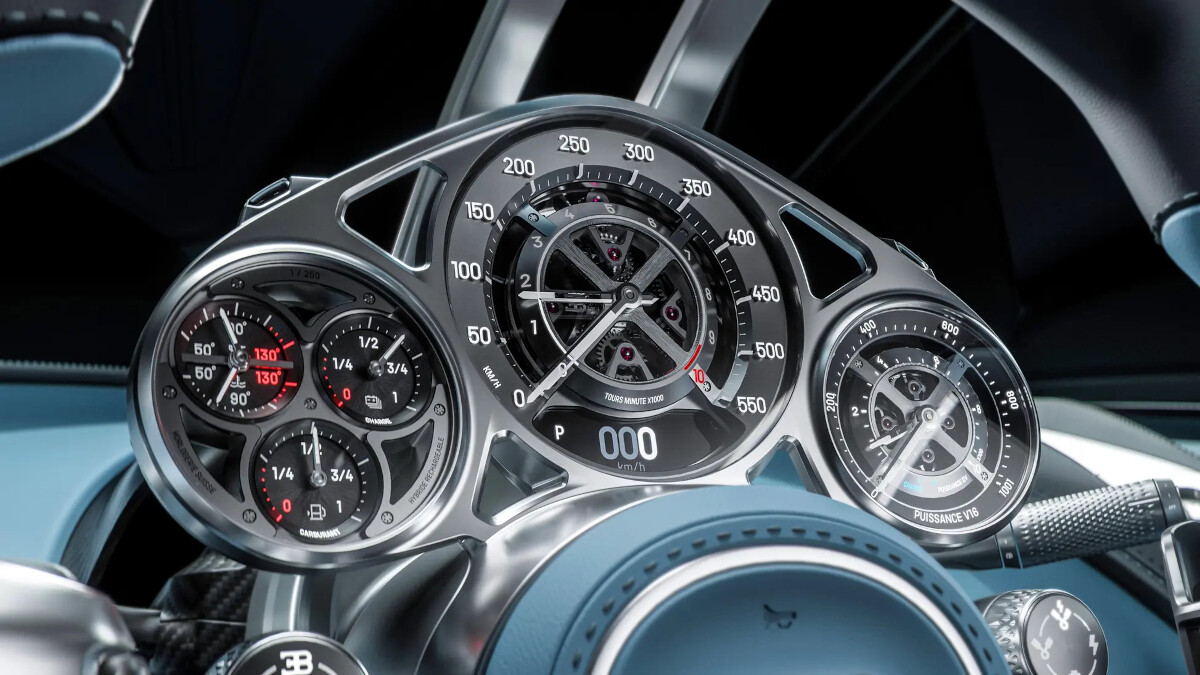
The real showstopper though is a two-spoke steering wheel that orbits the stationary center boss and instruments, with the paddle shifters hinged from the rim. It’s mesmerising, until I point out the Citroen C4 had something similar, which rather kills the mood.
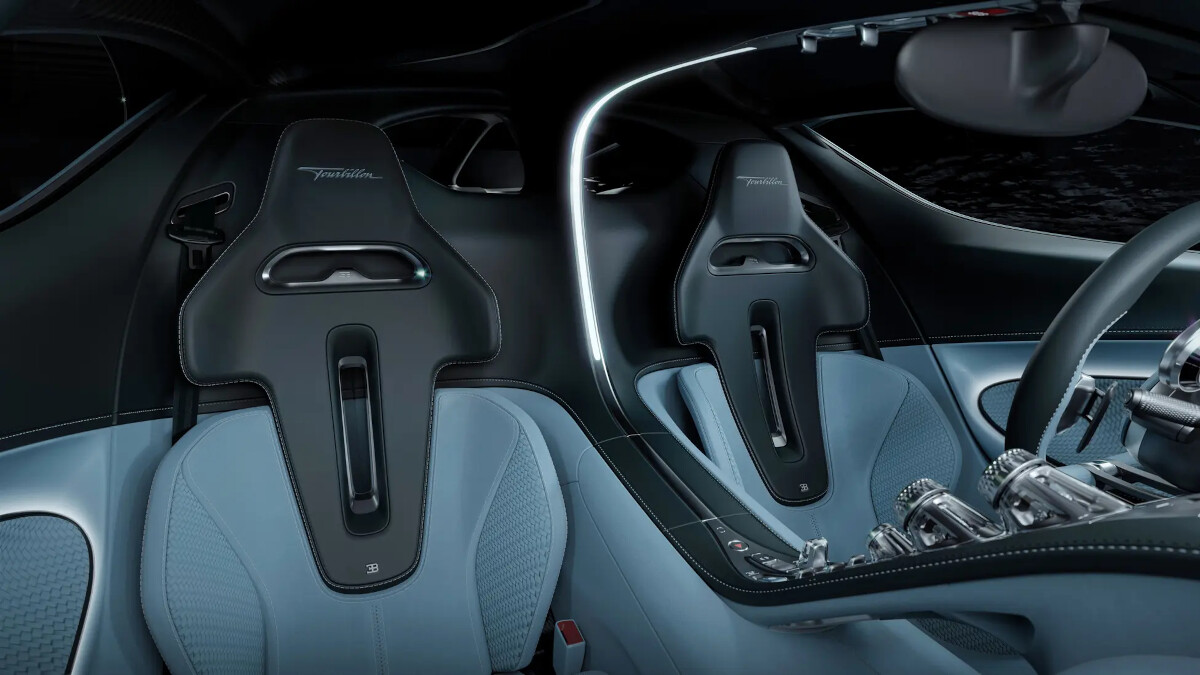
A strip of dials on the machined crystal glass center console, plus the seat adjustment knob on the door, also has exposed internal organs, and there’s a delightfully tactile way of firing up the engine by pulling an organ stop lever that protrudes from the dash. The seats are fixed longitudinally (an important move to keep the car’s overall length down), but they can be raised and the back angle adjusted, then you move the pedal box to suit.
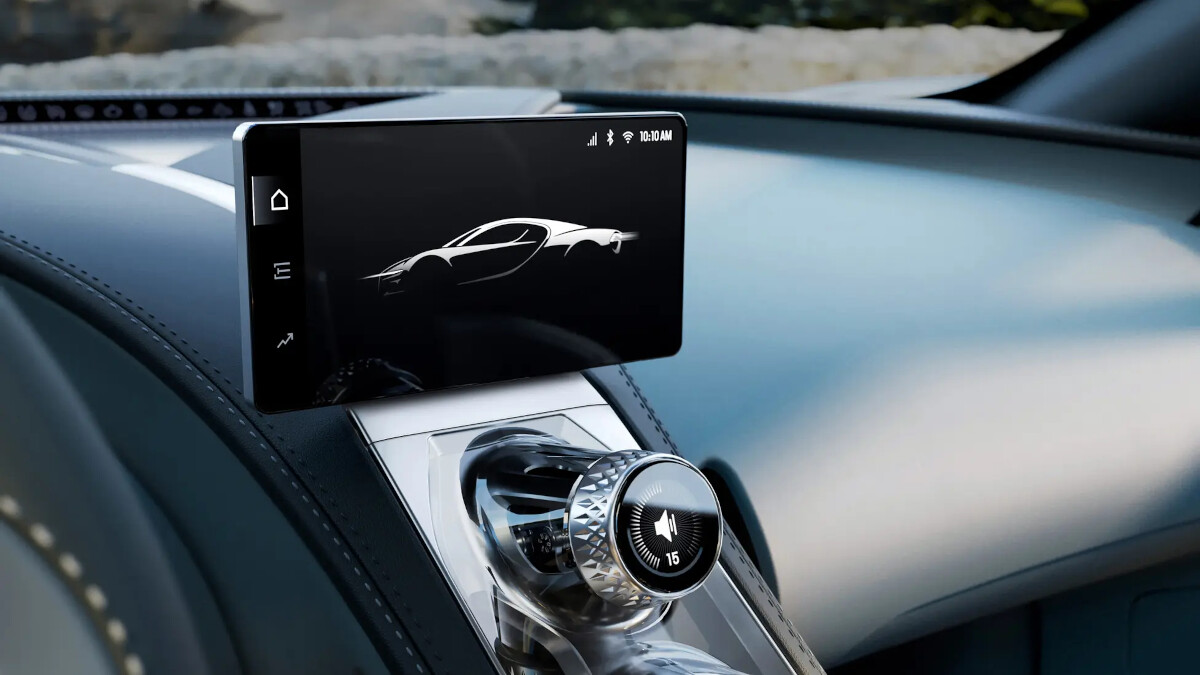
And what’s this? No screens? Almost...hit a button and a portrait-oriented display rises from the top of the dash before rotating to landscape and settling back down in an outrageously satisfying piece of mechanical ballet. A must-have for the reversing camera in some markets, but Rimac also hates drivers having to follow satnav instructions on their phones, balanced precariously on their lap. Here you get a super-simple interface with Apple CarPlay and Android Auto connectivity.
Everywhere you look and feel, then, a feast of handcrafted, milled, or printed unobtanium. Exotic materials, thoughtful touches, a sense of something approaching value for your €3.8 million (P239 million) plus tax. Bugatti will build 250 of these coupes initially, at a rate of around 80 a year, with derivatives hitting the production line from 2029 onwards.
The key to this car, unlike the Veyron, seems to be Rimac’s willingness to work with top-tier suppliers where appropriate, rather than going the full-Koenigsegg and making absolutely everything in-house: Brembo for brakes, Concepto for the instrument dials, Cosworth for the engine, Divergent 3D for the suspension, Rimac Technology for the electronics...naturally.
“The key is we worked super closely together—the designers, the engineers, and myself—from the beginning on every detail,” said Rimac. “Because if you come to this stage and say, ‘I don’t like something, it’s impossible to change,’ you throw the timing and money out of the window. We executed on the initial idea, and managed to get it exactly the way it was envisioned in the beginning.”
The Tourbillon isn’t just a new performance benchmark—it’s a victory for combustion and analog mechanical complexity in a world being frog-marched towards EVs. Or as Rimac puts it: “A hypercar that says yes to progress, but not at the expense of emotion.”
More photos of the Bugatti Tourbillon:
NOTE: This article first appeared on TopGear.com. Minor edits have been made.