Okay, our guess was off the mark.
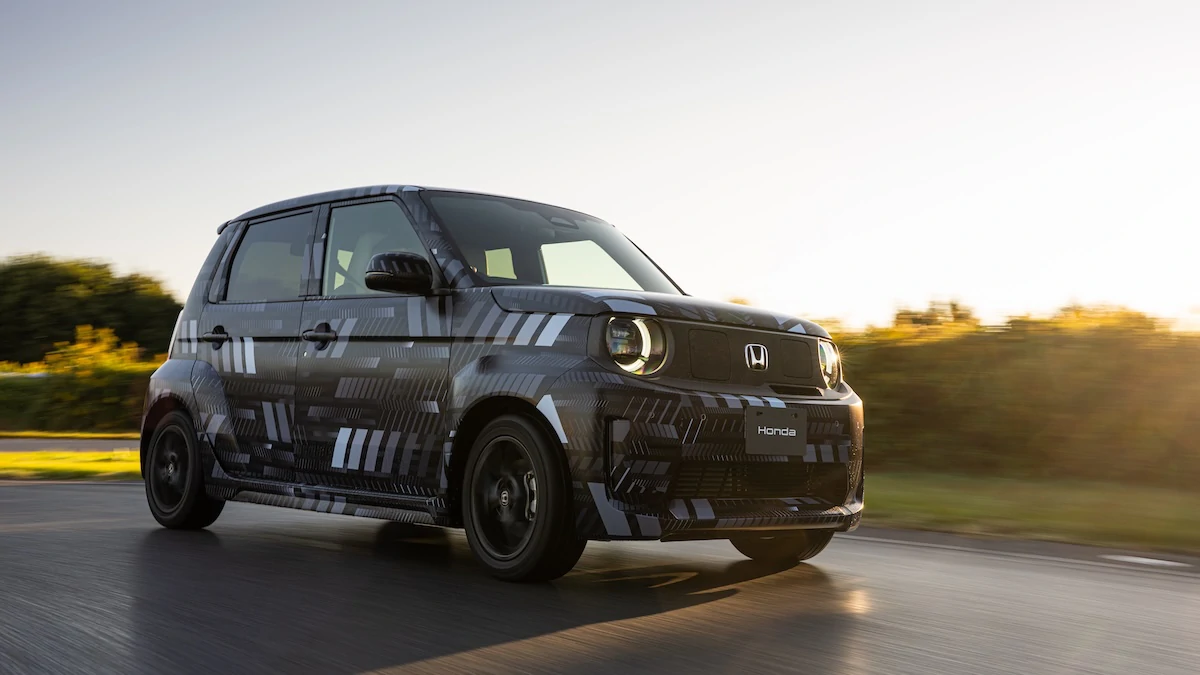
Remember the Honda Super-One Prototype unveiled at the 2025 Japan Mobility Show? One of the little electric hatchback’s key features is something called ‘Boost mode,’ activated via a nondescript button labeled ‘boost’ on the steering wheel. Since no other information was available to us at the time, we surmised it would be similar to the good old CR-Z hybrid’s S+ button, which gave an instant power bump for roughly 10 seconds, if the battery had sufficient charge.
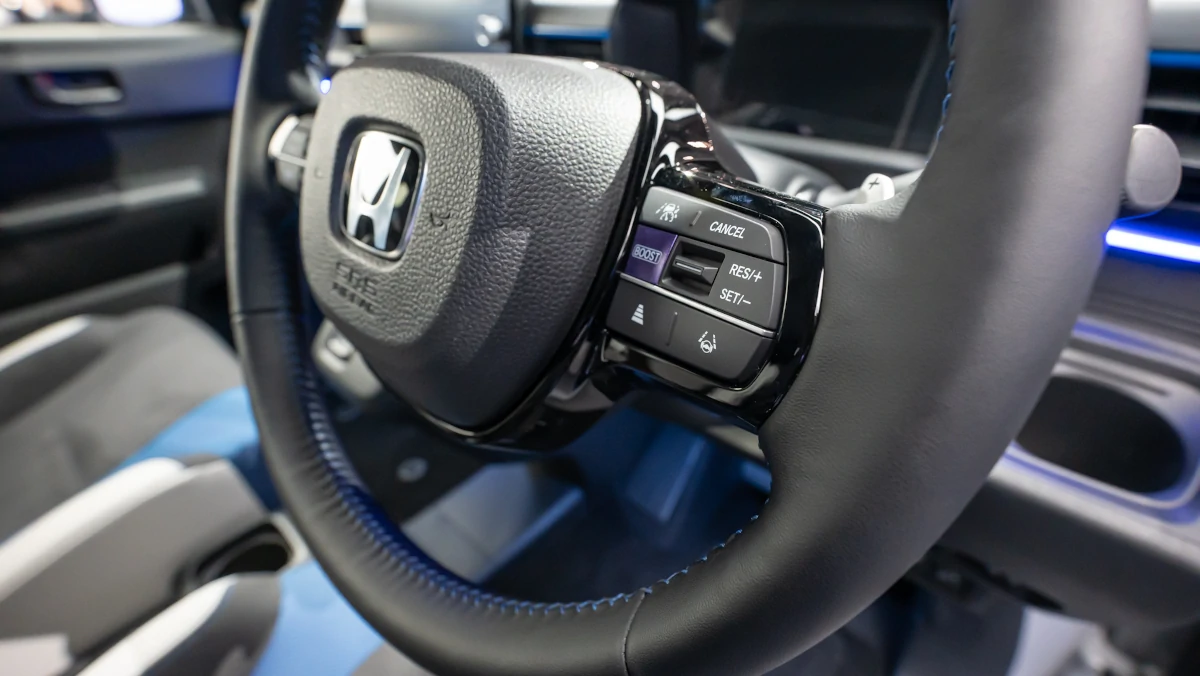
Well, the Super-One’s system works in a completely different way, as confirmed by Honda engineers during the Honda Automotive Technology Workshop a couple of days after JMS.
OTHER STORIES YOU MIGHT HAVE MISSED:
JMS 2025: Could this compact concept be the next Mazda 2?
Size comparo: How big is the new Toyota Land Cruiser FJ versus the popular Fortuner?
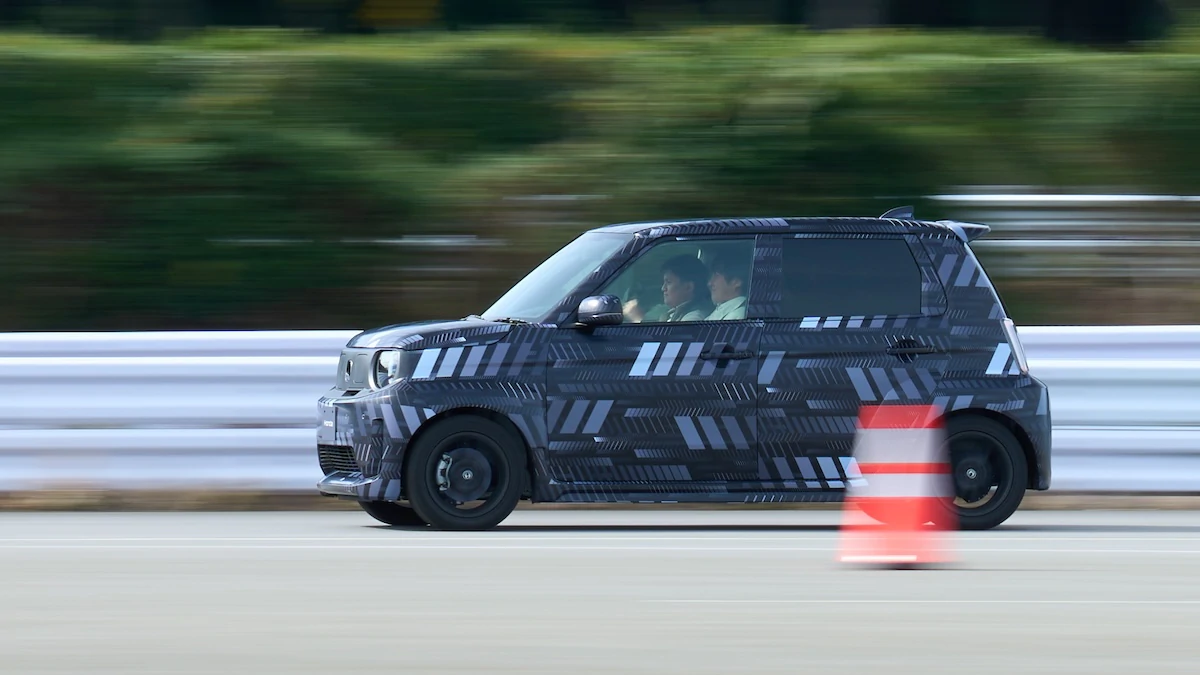
Instead of providing a short burst of extra power, Boost mode is more akin to a Sport setting, and stays engaged once you press the Boost button on the steering wheel. Putting the car in this mode then allows you to ‘shift’ through seven gears of a simulated dual-clutch transmission, with Active Sound Control piping in an engine soundtrack matched to the Super-One’s speed, acceleration, and gear changes. The transmission even mimics shift shock, which, ironically, carmakers have worked to eliminate over the last few generations of combustion-engined vehicles.
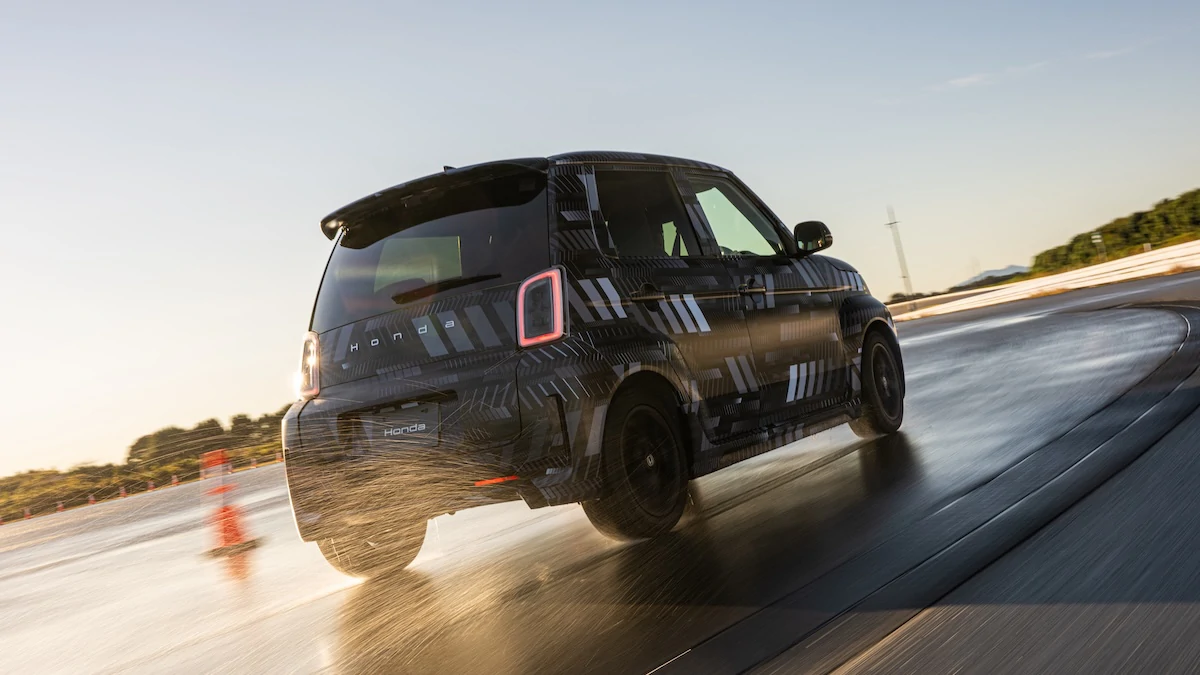
Honda is still being tight-lipped about the maximum power output unleashed by the system, but confirmed that it’s more than the 64hp that regular kei cars typically make. The reason is that while Super-One is based on the N-One e:, it falls outside of the kei category by having a wider stance than what’s allowed by the regulations—so why still limit the power, right?
I’ve actually tried out the Super-One during the Technology Workshop, but only as a backseat passenger. Even with three adults on board, the hatchback zipped up the curving slope on the short test course, with the synthesized soundtrack signaling the ‘downshift’ and then the acceleration up the small hill. It’s not entirely realistic-sounding, but it’s good for giggles when you just want to play around with the car.
The backseat experience was decent, but I could definitely feel every road imperfection we drove through. For one, the rear bench is on the thin side (a far cry from the heavily bolstered front seats), and also, it’s pushed back quite close to the rear wheels to maximize space. It’s still a more comfortable ride compared with early Jazz generations, though.
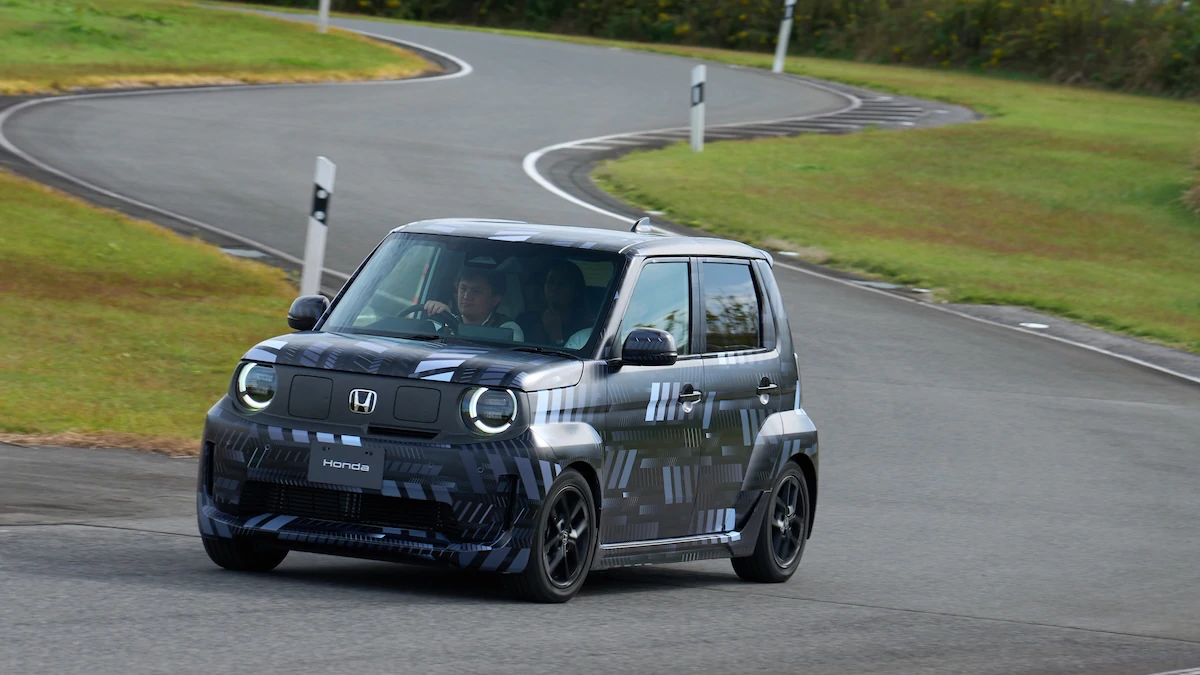
Since I’ve already mentioned the Jazz, the production version of the Super-One does have the potential to gain as big a following as Honda’s beloved subcompact hatchback: It lives up to the brand’s new ‘joy of driving’ proposition while remaining practical, and also looks to be a great base for aftermarket mods. The sad thing right now is that it’s only confirmed for right-hand-drive markets like Japan, Australia, the UK, and some Asian countries, which means we (along with most of Europe) will be missing out if nothing changes in Honda’s production plans.
But after my brief encounter with the Super-One, I’m keeping my fingers crossed, anyway.