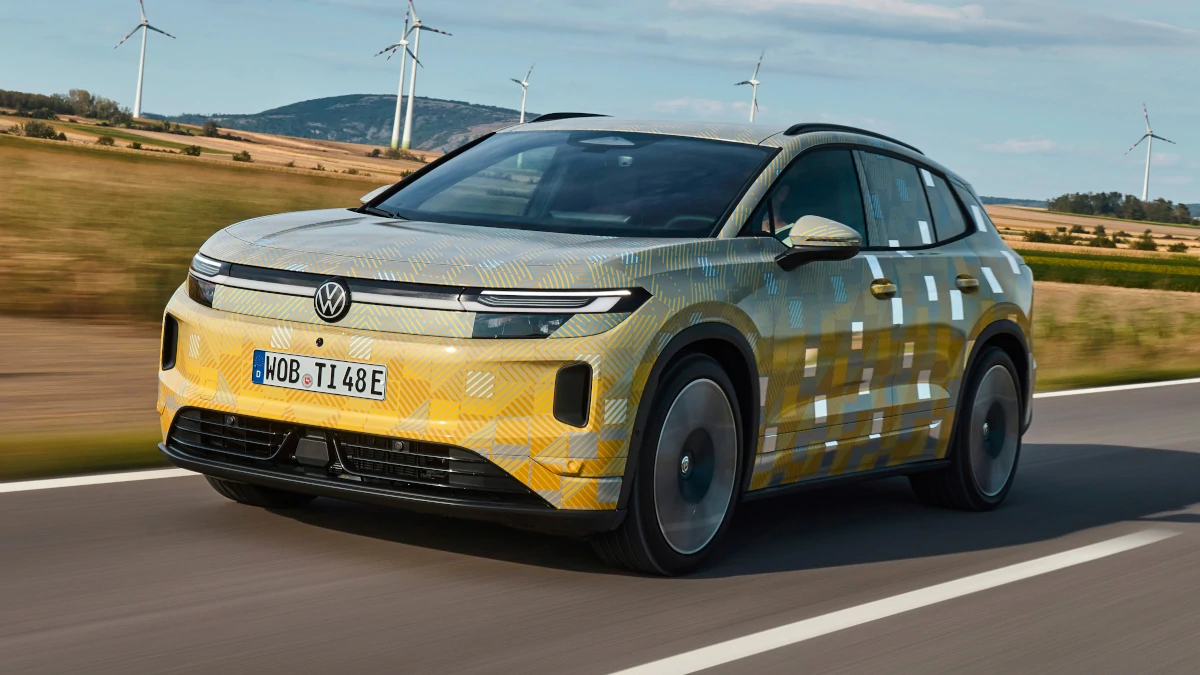
If you were ever confused by Volkswagen’s number-oriented naming strategy, things are about to get a little less like a mild case of dyscalculia. Because just as the ID.2 became the ID. Polo, now the ID.4 replacement is set to hit the streets as the Volkswagen ID. Tiguan.
So that’s a compact SUV based on the MEB+ structure, all-electric and with various batteries and trims to keep everyone happy. Think Tesla Model Y competitor—or any similar SUV-ish EV—and you won’t be far wrong.
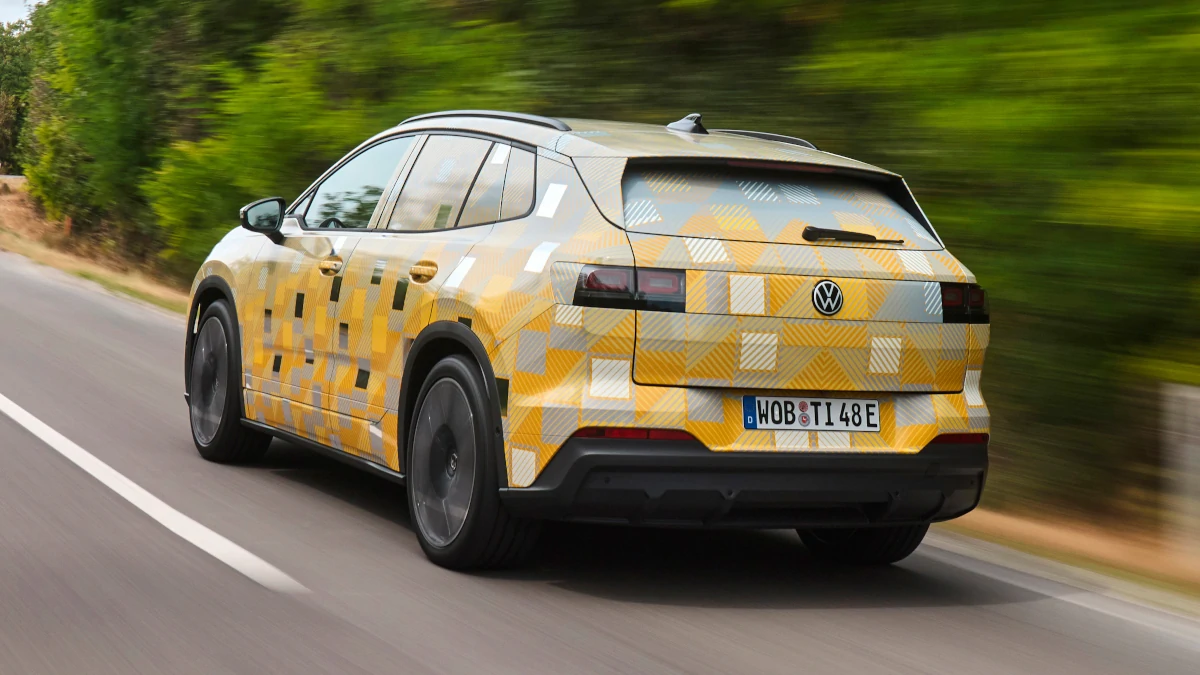
And we’ve driven it. Well, we’ve driven a ‘late-stage prototype,’ which apparently means a fully finished car with a jazzy wrap and an interior covered in carpet offcuts, making the dash hard to see, but probably really effective with ambient noise cancellation.
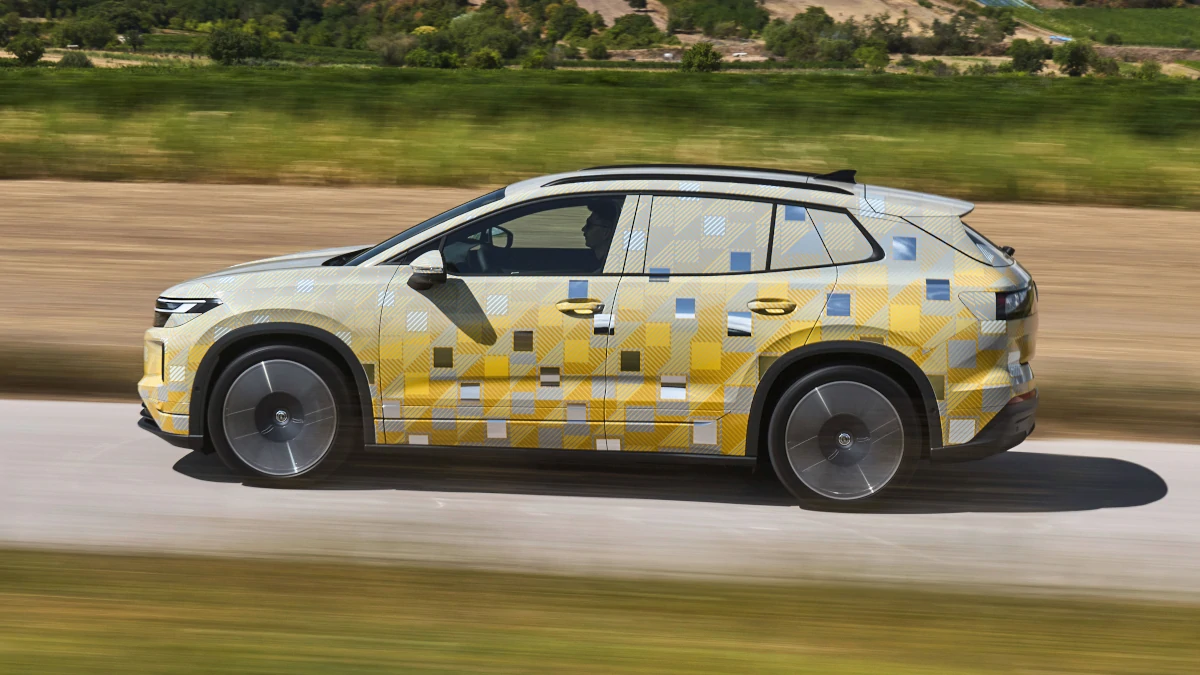
Pure dynamic thoughts first, then. The ID. Tiguan is more comfortable, quiet and plush than the ID.4 which it replaces. Even on the test car’s 21-inch alloys, the ride was refined and competent, the steering remaining unruffled even when we deliberately pointed the car at potholes and wobbly bits of road. Handling is confident, but definitely canted toward serenity for passengers; a good thing for a family SUV. It’s also properly quiet, smooth and generally fuss-free.
OTHER STORIES YOU MIGHT HAVE MISSED:
XX
XX
The version we tried had plenty of power, accelerated with a nice easy throttle map—no surging or excessive neck-strain—braked well and had some really useful brake regen. Generally a root-and-branch upgrade over the ID.4 in terms of how it actually goes down a road.
There’ll be two batteries available: a smaller 58kWh lithium-iron-phosphate (LFP) with 450km of range, and a larger 77kWh nickel-manganese-cobalt (NMC) pack in the Pro and dual-motor Pro 4Motion variants, the Pro getting the max-for-the-model 600km of WLTP. In terms of the competition, that’s okay, but not startling.
And the power outputs remain the same as the outgoing ID.4, so you’re looking at 188hp for that rear-wheel-drive 58kWh, 282hp for the rear-wheel-drive 77kWh Pro, and 295hp for the 4Motion with all-wheel drive. Spritely, rather than fast—but the test vehicle appeared to be a rear-drive Pro, and that felt like a 7sec-ish car to 100kph. But that’s just going on human dyno senses.
One suspects that the 4Motion will be for people who need to deal with slippery surfaces regularly, or tow—and the ID. Tiguan should now manage 2,000kg.
Inside, we couldn’t see much, but there did appear to be a physical button/switch bar a bit like the ID. Polo—not much of a surprise—plus buttons on the wheel and a generous screen peeking out from the glued-on carpet tiles. The general hush made it feel premium, again keeping it in line with the upscaling of the ID. Polo. It might not be the most dynamic of SUVs, but VW seems to have concentrated on making the ID. Tiguan comfy rather than sporty, and there’s absolutely nothing wrong with that.
VW’s Dynamic Chassis Control will be an option, but it’s probably not worth spending the money if you’re hauling kids and dogs and general paraphernalia. Apex-to-apex isn’t really necessary with the family on board.
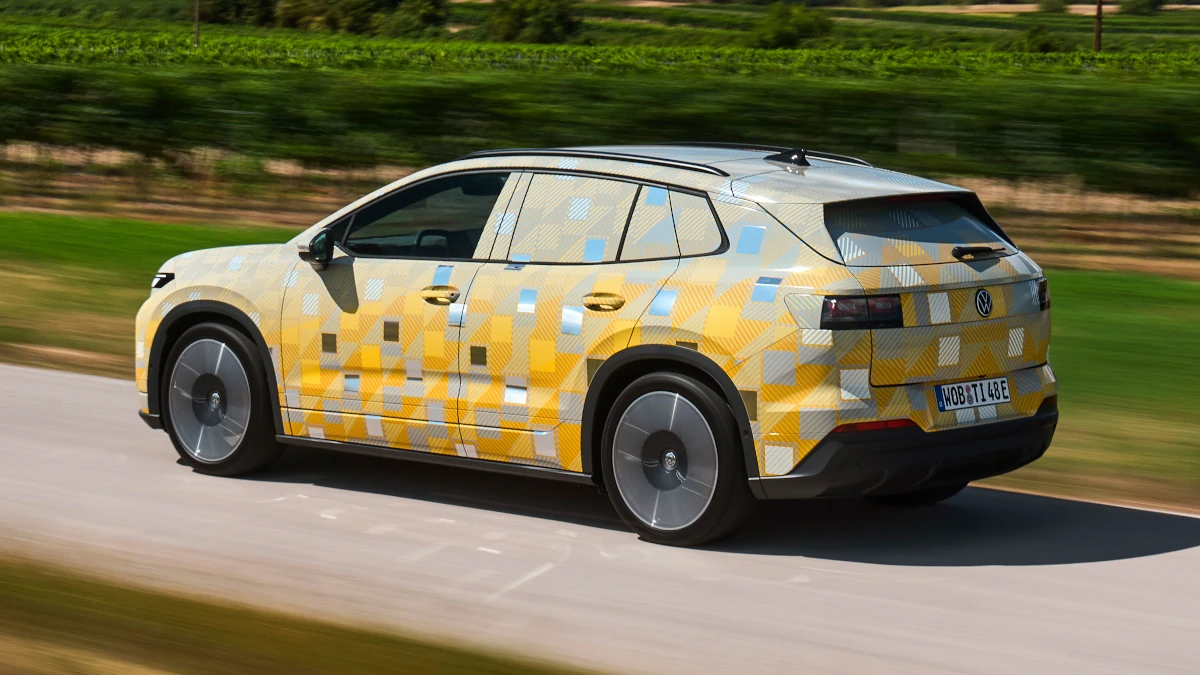
But in terms of hauling stuff, the rear seats definitely look bigger than in the ID4—and the ID. Tiguan’s 44mm upscale alludes to that fact. Plus, there’s a big rear cargo area and a frunk. Although they wouldn’t let us do any measuring, or fill it with water to get an exact literage.
So this follows pretty much like the Polo: It won’t be the trendiest of things, but it will do the job very nicely. It should look more like the ID range across the board, have better interior space and more practicality, and be supremely comfortable and well-equipped.
But the one thing it doesn’t feel is cheap. Knowing Volkswagen, that will probably translate into a premium over the current ID.4’s £37,000 (around P3.1 million before taxes) base price. But we’re happy to be proven wrong. The full reveal is coming in October.
NOTE: This article first appeared on TopGear.com. Minor edits have been made.