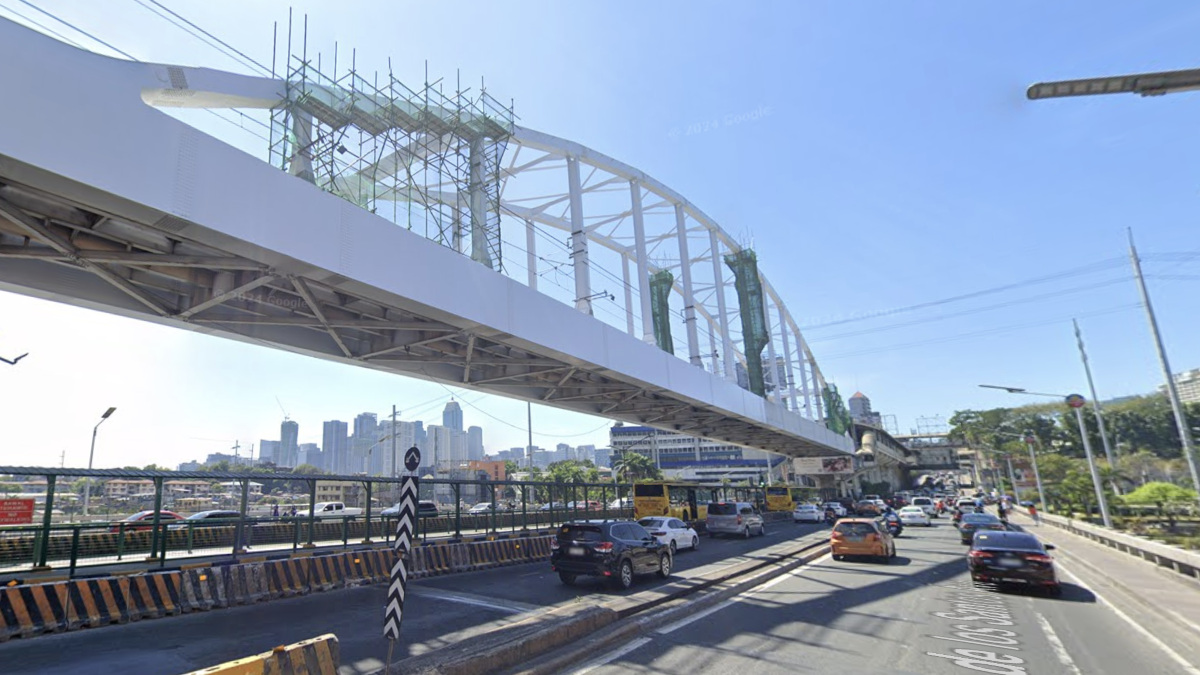
Sections of the Guadalupe Bridge, one of the busiest sections of EDSA, will be closed starting next year to undergo major rehabilitation. The bridge, which has an average of 141,000 vehicles passing it daily, is set to be closed for 17 months starting October 2025.
The Guadalupe Bridge, which crosses the Pasig River in Metro Manila, is a vital link that connects the cities of Makati and Mandaluyong and serves as a conduit for EDSA and the MRT Line 3.
The Department of Public Works and Highways (DPWH) explained that the repairs were necessary to ensure the structure would be more earthquake-resistant. While the construction won't start until next year, it's important for the motoring to know about the closure.
Here’s all you need to know about the impending Guadalupe Bridge closure.
OTHER STORIES YOU MIGHT HAVE MISSED:
The new look Honda HR-V makes its ASEAN premiere
Raize-fighting VinFast VF3 to be priced under P800k in PH
Will Guadalupe Bridge be completely or partially closed?
Once the rehabilitation work starts, only the two outermost lanes of the Guadalupe Bridge will be closed, as the inner part and the median are said to be still structurally sound. The partial bridge closure will only take place once temporary bridges are constructed.
Why is the Guadalupe Bridge being closed?

In a press conference, Metropolitan Manila Development Authority (MMDA) Acting Chairperson Romando Artes explained that the bridge’s construction work was needed to prepare in case the ‘Big One’ hits.
The nearly 60-year-old bridge requires structural reinforcement to withstand seismic activity, especially since it is located near West Valley Point, a major fault line in the region. According to MMDA officials, the area is vulnerable to liquefaction.
“Ito po ay necessary dahil meron na kasing nakita na medyo vulnerable na sya sa seismic activity dahil ang capacity niya ay mababa na at ang possibility na magkaroon ng liquefaction dun sa pinagtatayuan ng pundasyon ng Guadalupe bridge ay medyo hindi sigurado. Baka magkaroon ng epekto in case na magkalindol, even 'yung structure ng outer bridge ay medyo deteriorated na, itong nasa lower and middle portion. Meron na ring ilang cracks. Talaga pong medyo priority talaga ito na ma-rehabilitate in preparation for the Big One,” said Artes.
As early as 2012, the Japan International Cooperation Agency (JICA) recommended retrofitting the Guadalupe Bridge after identifying cracks in its columns.
By 2016, MMDA identified the bridge as one of the structures expected to collapse following a hypothetical strong earthquake in Metro Manila.
DPWH Undersecretary Maria Catalina E. Cabral said the design for the “seismic improvement” of the Guadalupe Bridge was already done and procurement of the needed materials has also started.
“Bear with us because you do not want to be stuck in the Guadalupe bridge when an earthquake happens. (The) JICA study said that the West Valley Point is due anytime, to emit an energy equivalent to a magnitude 7 earthquake,” she said during the Build Better More Infrastructure Forum in New Clark City as reported by the Philippine News Agency.
When will the Guadalupe Bridge close and how long will the closure take?
The actual closure of the two outermost lanes in Guadalupe Bridge will begin on October 2025 and is expected to be completed in 17 months.
“Nakalagay sa terms of reference na once sinara kailangan mabuksan within 17 months. In effect, more or less 17 months ang construction ng outer lanes nitong Guadalupe Bridge,” Artes said.
Ahead of the closure, the preliminary work for the alternative bridges will take around three to four months starting in January 2025, and construction of the temporary bridge could likely take 10 months. The installment of a temporary bridge aims to help ease congestion during this time.
“Hanggang hindi nagagawa ang temporary bridge, wala pong pagsasara na gagawin,” Artes said.
Initial plans were to start the partial closure by September or October this year, but according to Artes, the project was delayed due to problems with procurement. The government also decided to push back the start of construction to next year to avoid the heavy traffic with the coming Christmas season.
What will be done to make the bridge more earthquake-resistant?
Guadalupe Bridge was originally a narrow bridge conceived in the 1950s as part of Highway 54 (now EDSA) linking the north and south banks of the Pasig River. Construction on the modern-day Guadalupe Bridge began in 1962 or 1963 and finished in 1966, but the bridge was later widened sometime in 1974.
Similar to the treatment that was given to Kamuning Flyover, the Guadalupe Bridge will be retrofitted to improve its structural integrity and enhance its safety, capacity, and resilience to environmental challenges such as earthquakes.
Will roads near Guadalupe Bridge and Pasig River still be passable?
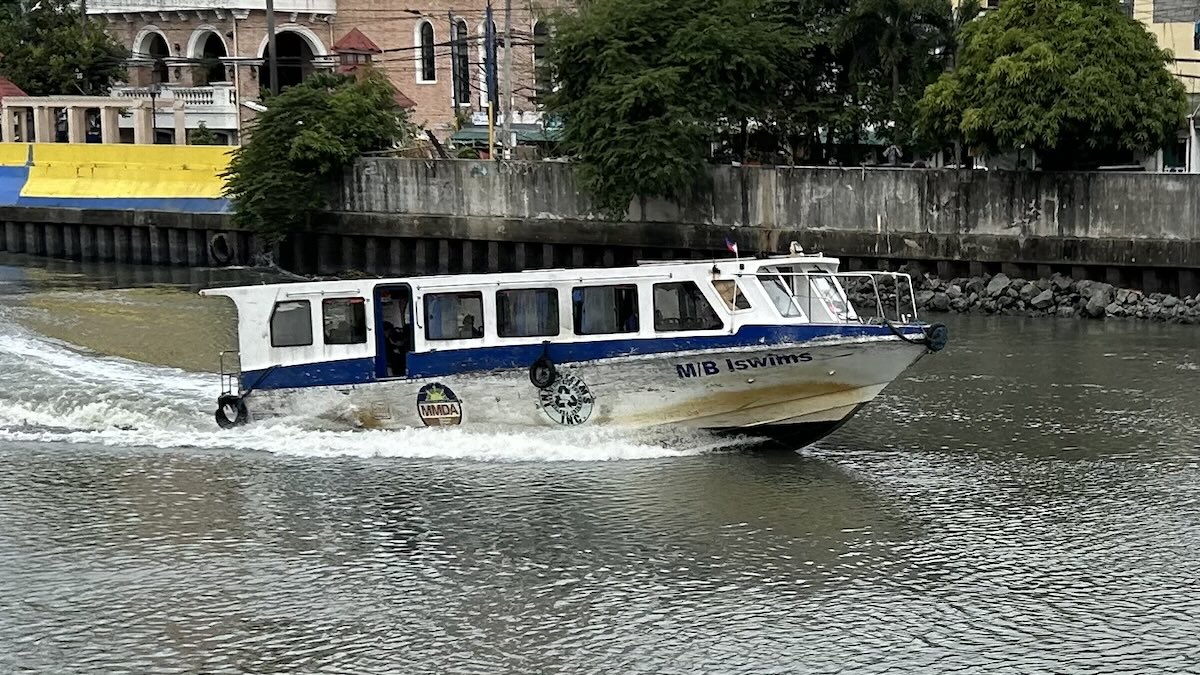
Artes said that DPWH assured that barges and ferries will still be able to traverse the Pasig River. The Pasig River Ferry will remain operational throughout the Guadalupe Bridge rehabilitation.
However, the construction of alternate bridges and the closure of the outer lanes of Guadalupe Bridge could affect some roads underneath, including JP Rizal. MMDA will be releasing a comprehensive traffic management plan to inform the commuting public in the following months.