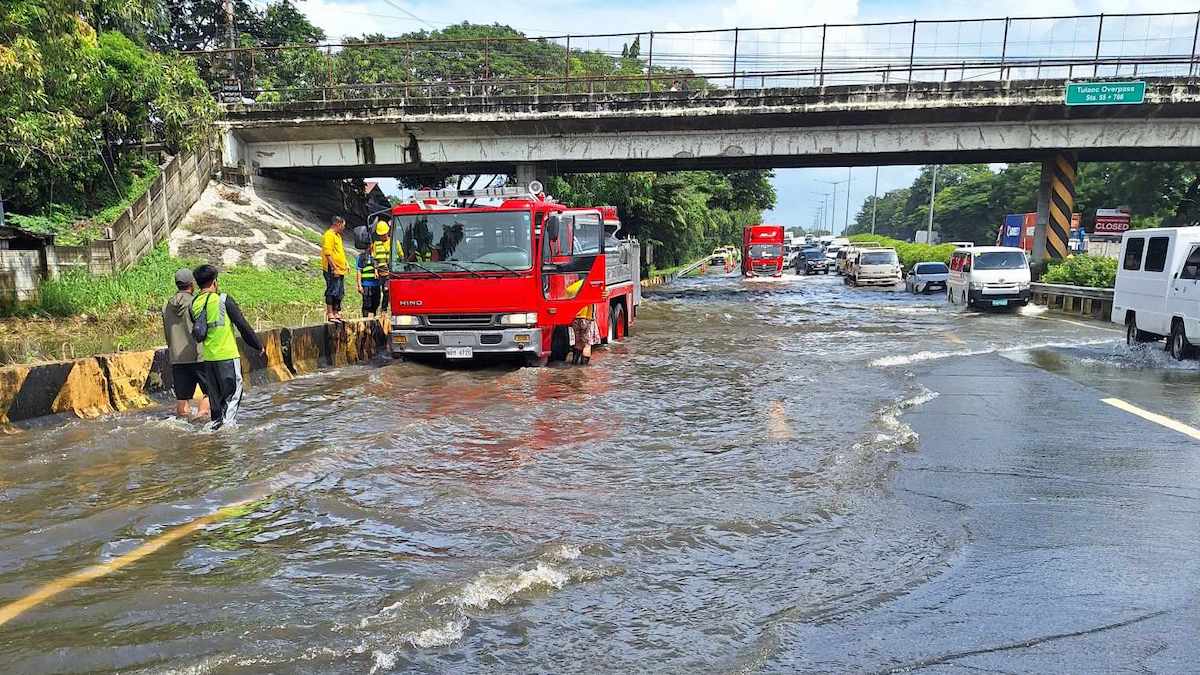
It’s been two days since heavy rainfall triggered flooding and caused severe traffic congestion on the North Luzon Expressway, but while the flood level has slightly decreased, driving conditions on the toll road are still far from normal.
As of the latest advisory today, August 4, at 7:50pm, running speeds remain at 5-10kph in both directions in the San Simon stretch of NLEX. From Petron Plaridel to Tulaoc Bridge on the northbound side, the flood level is 30cm deep in the rightmost lane. It’s even deeper in the southbound direction, with the rightmost lane from Petron Lakshore (Mexico) to San Simon submerged in 38cm deep floodwater.
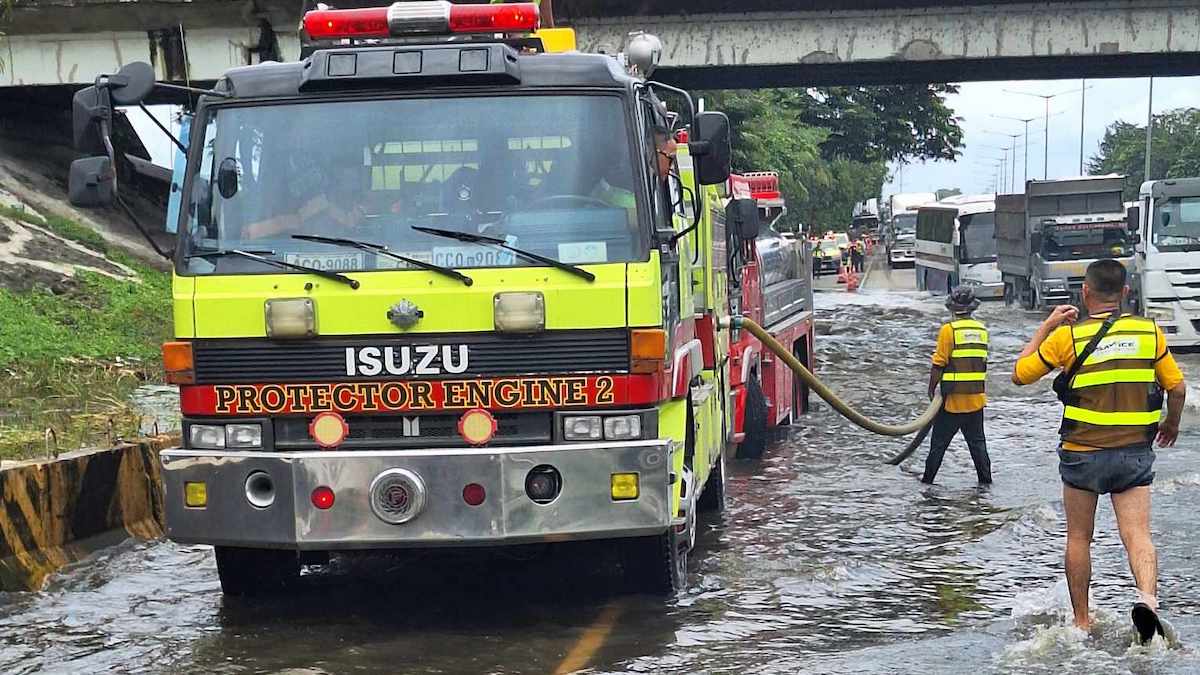
If you must travel on the expressway right now, the NLEX Corporation has issued a safety advisory for motorists:
NLEX flood safety advisory
- Class 1 and Class 2 vehicles: Take the leftmost and middle lanes (lanes 1 and 2)
- Class 3 vehicles: Take the middle and rightmost lanes (lanes 2 and 3)
Drivers are advised to avoid changing lanes.
OTHER STORIES YOU MIGHT HAVE MISSED:
Everything you need to know about the 2024 Toyota Yaris Cross
Vehicle owners won’t be penalized for unclaimed replacement plates, LTO clarifies
Metro Pacific Tollways (MPTC) president and CEO Rogelio Singson explained that the Pampanga River overflow caused the flooding on SLEX: “We want to elevate the Tulaoc, San Simon segment area, but unfortunately, hindi namin maitaas nang husto dahil sa Tulaoc Bridge sa itaas. We need to coordinate with DPWH para maitaas ang din ang tulay.
“Nakipag-ugnayan din tayo sa Pampanga and San Simon LGUs upang maisaayos ang waterways and drainage system sa lugar.
“In the meantime, naglagay na tayo ng sandbag and may waterpump na rin para ilabas yung tubig. Our traffic and engineering teams are on site and are continuously monitoring the situation to ensure motorists’ safety.”
Try to avoid NLEX—and any flooded area, for that matter—but if you’ve had to brave the bad weather and the swampy road conditions, here are five things to check in your vehicle after driving through a flood (full Tip Sheet here):
- Check your brakes.
- Observe your engine’s behavior.
- Check your vital electrical and electronic parts.
- Physically inspect your carpeting.
- Don’t forget to check your spare tire area.