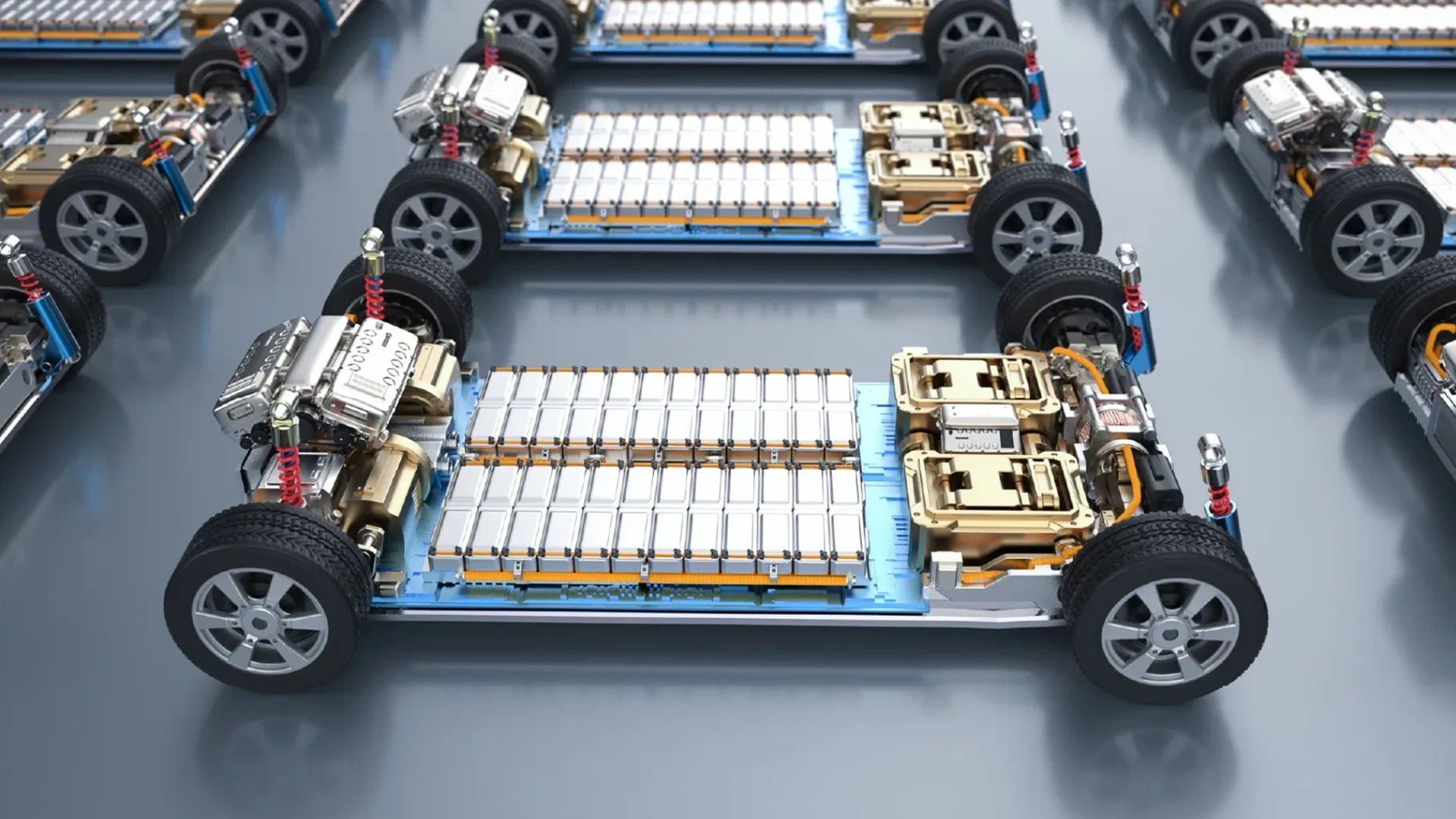
A massive new study has shown that EV batteries don’t degrade as quickly as many people fear.
On average, cars lose 2% of their capacity a year. That means that at 10 years old, they’d still have 82% of their capacity—in other words, a 515km car would become a 422km car. The report has also discovered ways a driver can make the deterioration even less than that.
The data comes from fleet management company Geotab. It used detailed telematic data from 22,700 EVs of 21 different models. Some were vans, and they skewed the data slightly downward—vans on average lose 2.7% a year, largely because they have shorter real range and so have to charge more often, and those charges are more likely to be rapid. Those two things, we learn, are not great.
So here are the top tips. First, avoid frequent DC rapid charging. The report separated those vehicles (cars and vans) for which fast charging was less than one in eight of all charges. They saw degradation of just 1.5% a year. The ones that rapid-charged more than that saw an average annual decline of 2.2% if those rapid charges were less than 100kW. Those that used 100kW+ charging lost 3% a year.
OTHER STORIES YOU MIGHT HAVE MISSED:
Is the hybrid Toyota Land Cruiser 300 on its way to PH?
The fully electric Hyundai Staria is real, and it has 400km of range
Some context. If you do 12,874km a year and you go a real 402km between charges, that’s 32 charges a year. So four journeys of up to 804km, starting full and with a rapid charge en route, puts you at one in eight charges being rapid.
The study shows some interesting data about charging to 100% and discharging to an indicated zero. Most cars have dashboard warnings against doing this, but the data shows it doesn’t matter much.
Well, it doesn’t matter much unless you park for a long time at either of those states. If the vehicle spends 80% at an extreme battery state, it degrades 0.5% faster. So charge up and get driving. Go flat and get charging.
Very hot climates accelerated the degradation rate by 0.4%. So try and park in the shade.
The stats are expressed as degradation per year. But what about mileage? No surprise that when looking at vehicles that go through more charge cycles—that is, drive more miles a year—there’s an effect. The degradation average is 1.5% a year for vehicles that do less than a cycle a week. It’s 2.3% a year for a cycle every one to two days, which is likely to mean a loaded van with a short electric range doing a lot of miles.
Anyway, as a company that advises fleets, Geotab is basically saying don’t worry. The logic is it’s most profitable to work your EVs hard, doing lots of miles and not wasting time slow-charging, so as to maximize the value you get from the asset.
It’s pretty clear that normal private drivers who charge overnight will find their battery deterioration rate very much at the low end of the spectrum. An average mileage car, charged mostly at home, would likely be at a solid 90% capacity after 10 years.
NOTE: This article first appeared on TopGear.com. Minor edits have been made.