
As the biggest automotive manufacturer in the world, Toyota sells everything, everywhere, all at once. Which can be a challenging task. Between chasing new markets and funding fuel cell, lithium and solid state battery research, the brand’s resources are stretched thin. Which is why the Japanese giant fully absorbed Daihatsu back in 2016—to develop cheaper Toyotas for developing markets.
This led to the Daihatsu New Global Architecture, which now serves everything from kei cars to MPVs. And this latest DNGA car, the Yaris Cross, may just be their best yet. Even better, it fuses the low-cost platform with Toyota’s iconic Hybrid Synergy Drive, resulting in the brand’s cheapest—and possibly most economical—hybrid, ever.
ALSO READ:
Review: 2024 Toyota Yaris Cross 1.5 V CVT
Review: 2024 Toyota Corolla Cross 1.8 GR-S HEV CVT
Styling

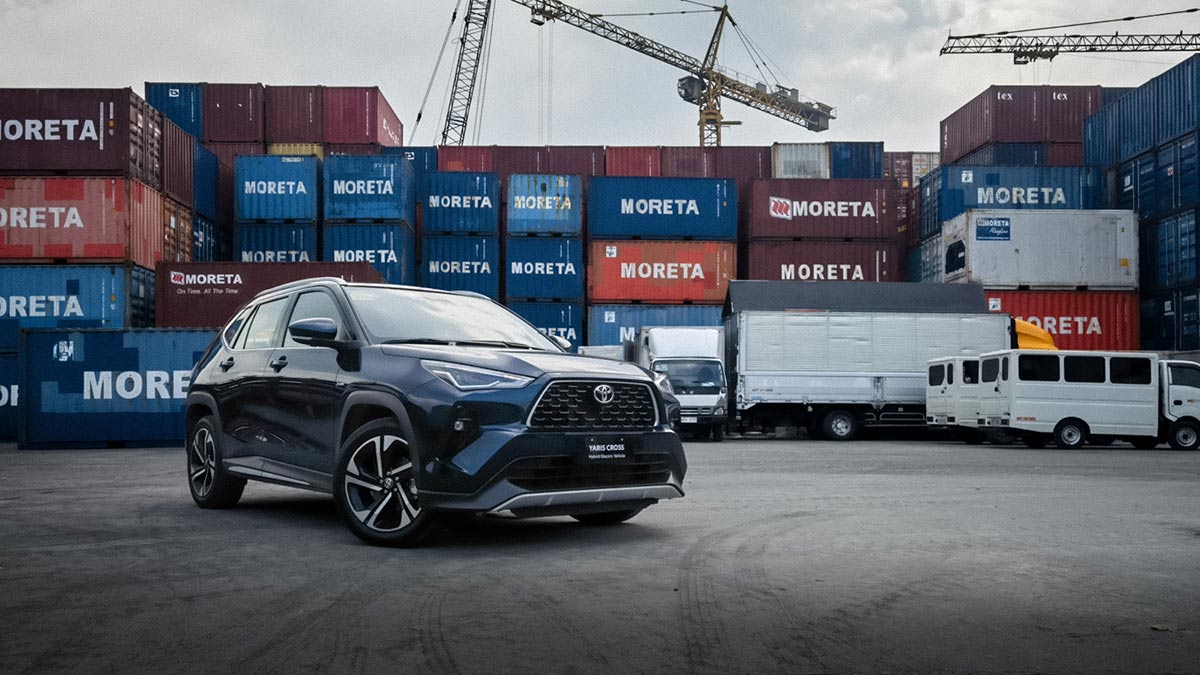
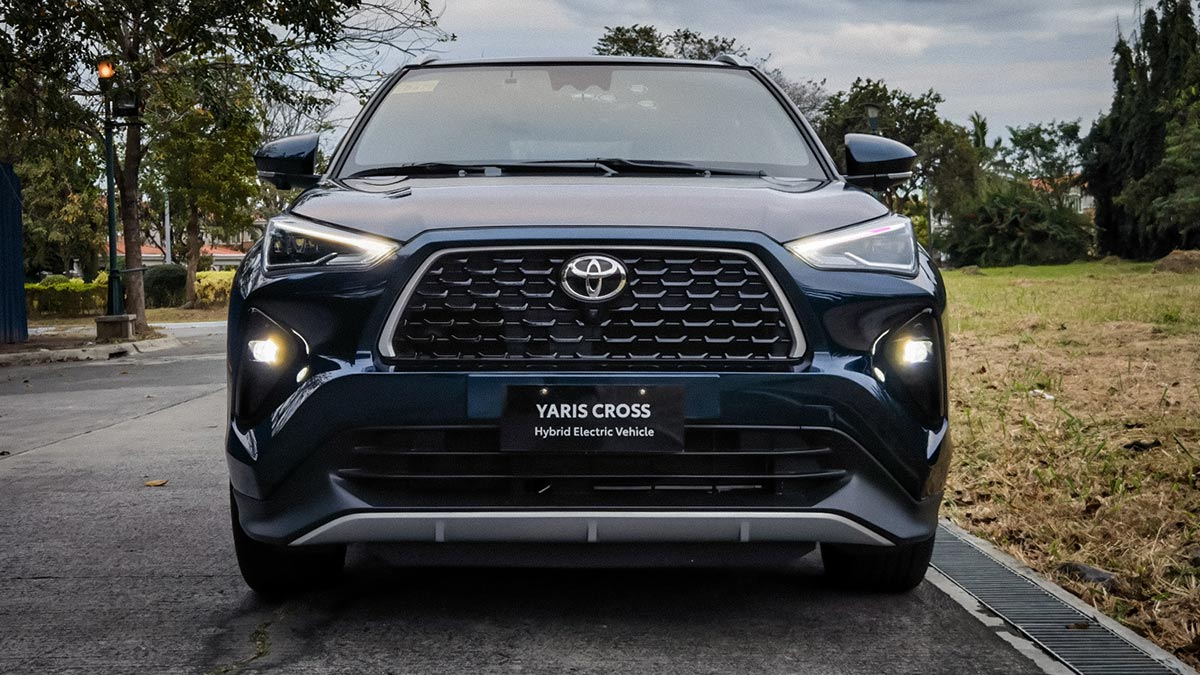
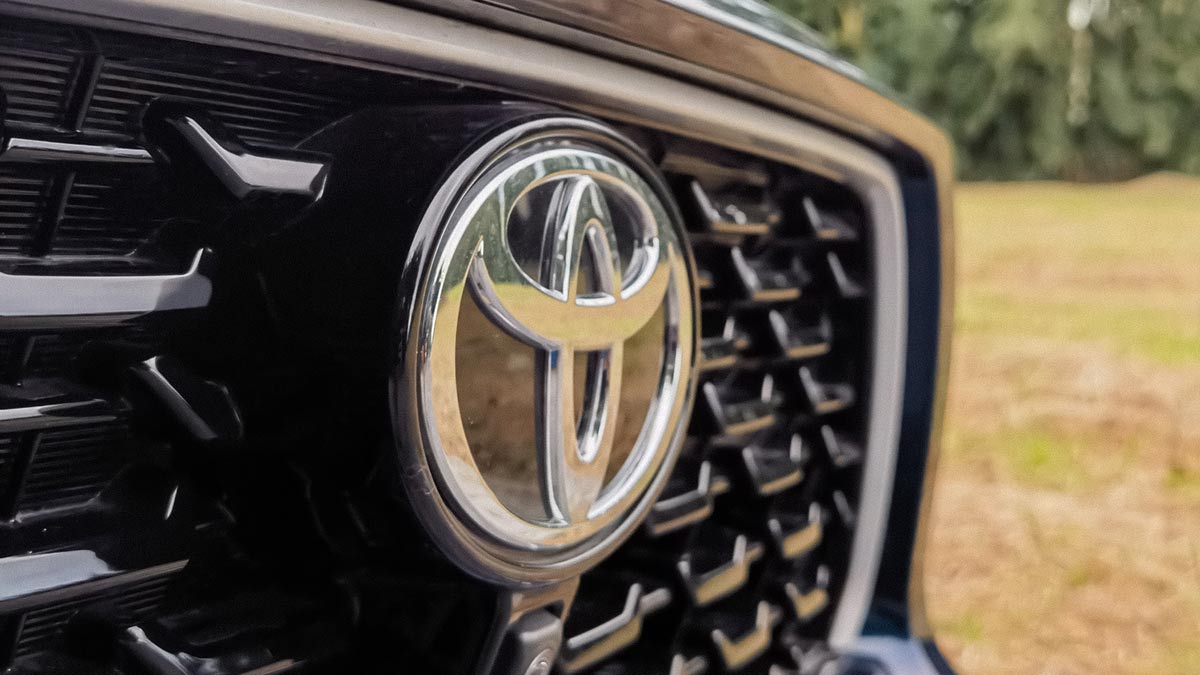
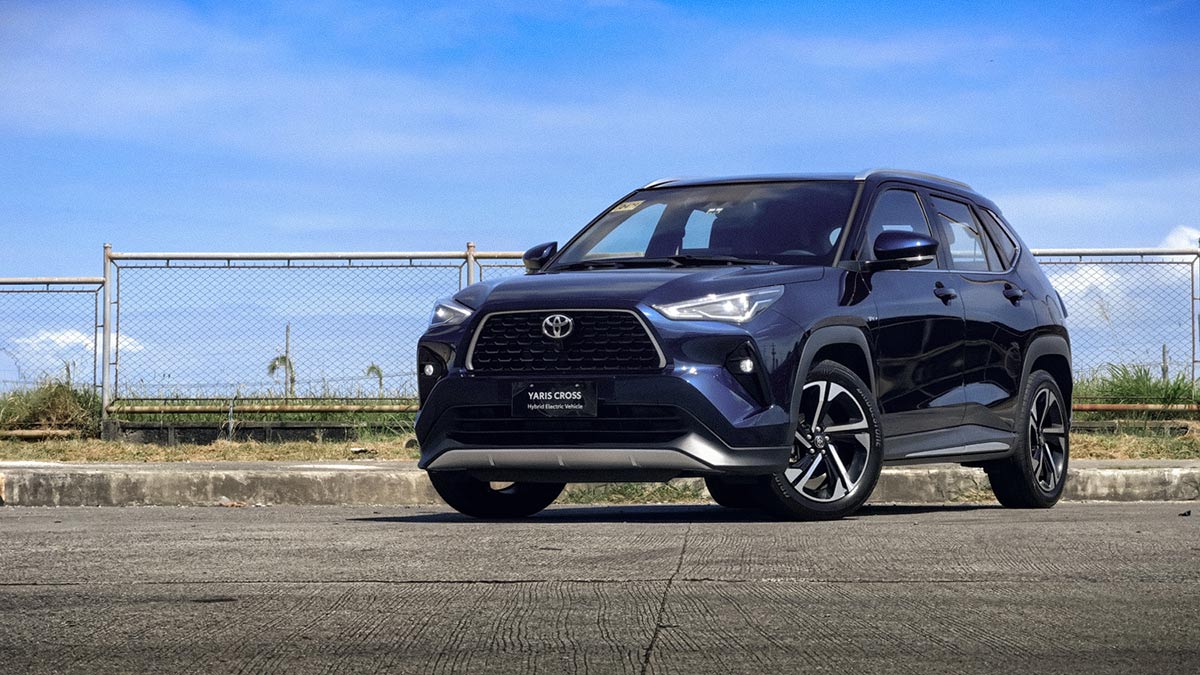
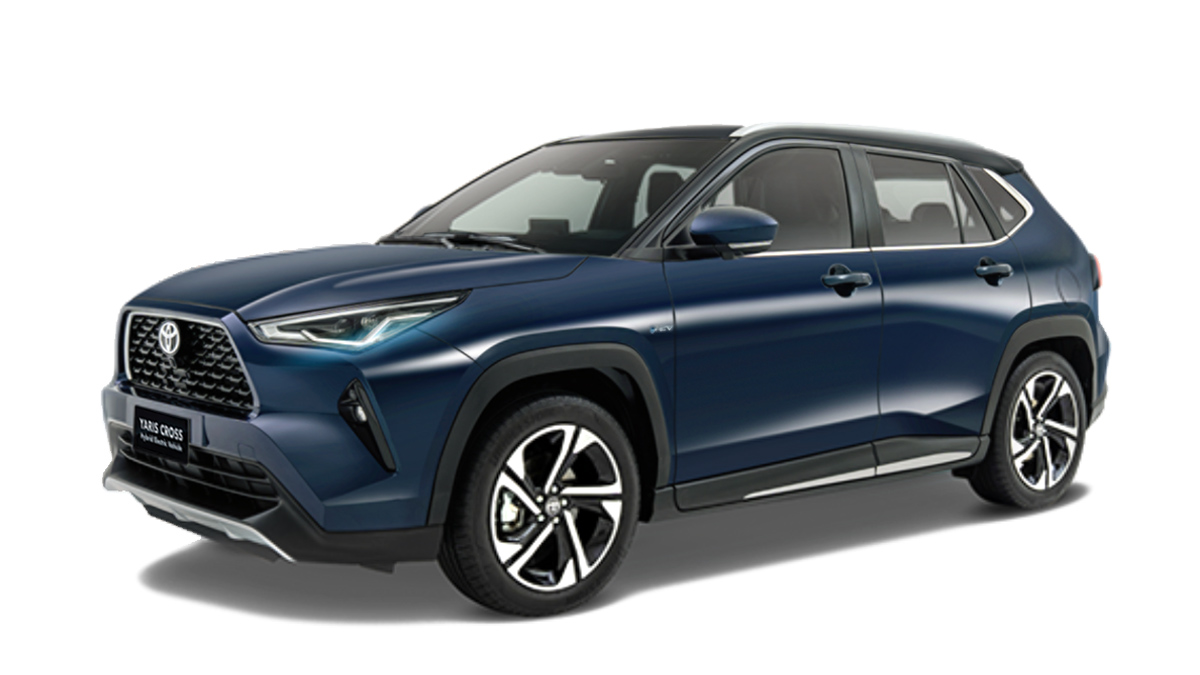
The Yaris Cross certainly doesn’t look cheap. Unlike the wagon-like Corolla Cross, the chunky little Yaris Cross is more of a chibi-sized RAV4. Big 18-inch wheels sit under big square overfenders and muscular rear haunches. Sharp lights frame a lovely scale-like grille up front, and modular rear lights give the small design surprising formality. About the only negatives I can throw at the Cross are that the nose does feel a bit too long from some angles—though not nearly to the same degree as the Hilux—and that the sexy rear pillar kink results in a big fake rear quarter window that unfortunately intersects with the rear seatbelt mount. No worries, though. Add some dark tint and it’ll be completely unnoticeable. Otherwise, the design is a winner, and unlike any other DNGA offering to date.
Interior
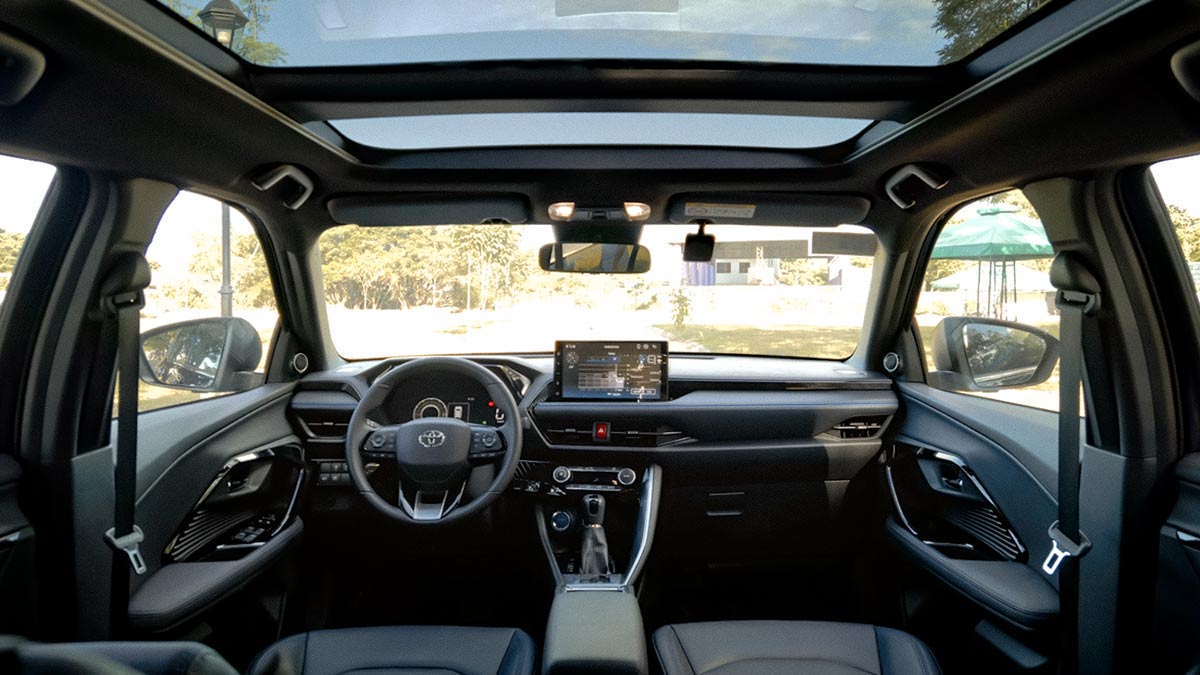
Inside, however, the DNGA design language is pretty strong. There are bits and pieces similar to the Veloz and Raize, but the slashing lines and chunky shapes are covered in much nicer materials. A leatherette strip with a blue fabric insert bisects the dash to hide how tall it is. A big 10.1-inch screen and a conspicuously tall instrument binnacle also help hide the high scuttle. That instrument cluster features a small screen and a segmented LED speedometer that are easy to see from any seating position. Ergonomics are good, with a power driver’s seat and a tilt-and-telescoping steering wheel, though forward visibility is somewhat affected by that tall dash.
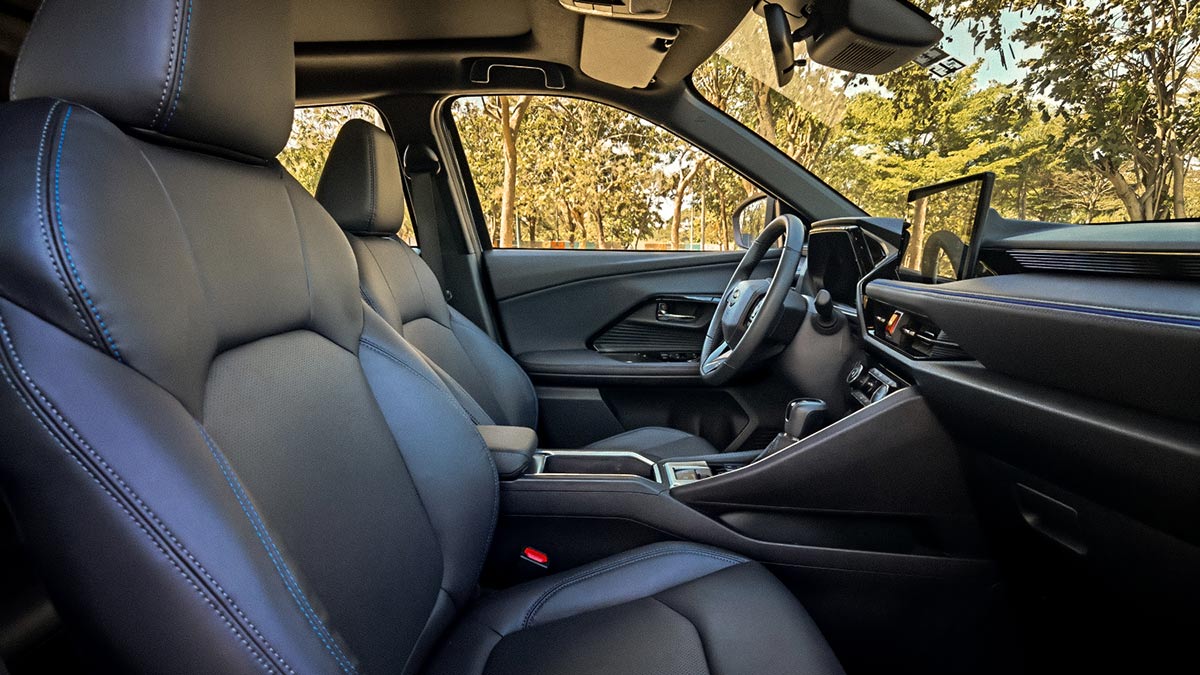
You get good knee room and headroom in all positions, but the odd ‘wing’ on the center console eats into the front passenger footwell. A big, creaky piece of plastic that doesn’t serve any useful function. The narrow console features a wireless phone pad tucked up in front of the shifter—hard to access with the stick in Park—and a tiny center box that’s too small to lay a phone flat in. Even if you have an older phone. Other than the deep cupholders, with flimsy flip-up shelves for smaller drinks, there’s not much storage space here.

Moving back, you find a comfortable rear bench. At least for two. Rear A/C vents poke into the knee space of anyone sitting in the center. But at least the center armrest is nice and big. The trunk is surprisingly deep with the floor in the lower position, though not quite as long as in some competitors. There are small plastic bins at the side, though on the hybrid, one is replaced by a barnacle housing electrical equipment. That said, the automatic tailgate and retractable tonneau cover make this the most convenient cargo bay in the class. We managed to stuff a surprising amount of cargo in there on one of our port runs.
Engine performance

The Cross is powered by a 90hp 1.5-liter Atkinson Cycle gasoline engine mated to a 79hp hybrid assist motor. Combined output peaks at 110hp, as they reach their respective peaks at different road speeds. The planetary drive transmission—not a real CVT, despite the e-CVT name—relies on the electric motor to get going, until the Cross is moving fast enough for the gasoline engine to take over. The lack of slipping clutches or drive belts, or of complex gear-sets with fragile synchros, makes this set-up much more durable than other automatic transmissions.
In terms of performance, the Yaris Cross does 0-100kph in a tested 10.5sec. Decently quick, and a big jump over the 11.3sec of the gasoline variant. Power delivery is also much smoother, especially in stop-and-go traffic, where the gasoline CVT can get a bit grouchy. You get the same Power/Econ Drive button, and yes, you can activate both modes at once, giving you the lower AC use of Econ Mode with the sharper throttle response of power.
Sources suggest the Yaris Cross’s hybrid battery is just 0.76kWh, about half the capacity of the one on the Corolla. The engine churns away rather noisily while charging in traffic, and all-urban economy hovers between 8-12 kilometers per liter of gasoline.

On regular mixed drives with more opportunities to recharge, we got a more impressive 20-26km/L. On extended highway runs, even with SLEX construction traffic, we hit highs of up to 32km/L. Damn impressive. Even with the tiny 36-liter tank—much smaller than on the gasoline car—we managed about 580km before getting the fuel low warning on the dash, with an estimated ten liters left in the reserve.
And this was with the tires deflated to 25psi, which has a massive effect on fuel economy. Yes, I keep telling the team to check those tires before every test drive, yet I held off doing so until the last day, by which point, traffic was so bad that I couldn’t do any more highway runs. My bad. Having too much fun trying to break economy records. At the proper 33psi pressure and with less traffic, hitting 35km/L seems quite possible.
Ride and handling

While most of the fun here is in playing fuel economy games, the Yaris is actually a decent steer. Where the Raize pogos around corners like a spring mattress, the Cross tackles them with the confidence and maturity of a three-fourths size RAV4. Big 215/55 R18 Bridgestone Turanzas prove grippy, secure, and quiet over most road surfaces. The brakes are also surprisingly good. Overall, while it’s not as nimble or eager as some of its sportier competitors, this is a commendable performance.
NVH is good, too, although our sunroof-equipped car did creak around the rear sills when tripoding across steep parking inclines. A common issue with such big glass in such a small car. There were also quite a few miscellaneous squeaks due to the jiggly ride. Which is probably why the previous tester lowered the tires to 25psi. But with the tires underinflated, the car tended to crash over large potholes, which compresses the sidewalls dangerously. At the recommended 33, this uneasy feeling went away, replaced by jiggling over lower-frequency bumps. Ah. Compromise.

Another potential issue for owners is the steering. It’s generally fine while in motion, if a bit quick, but in parking situations, it takes a bit of muscle to make a three point turn.
Also a hindrance in parking is the visibility. While visibility out back is good, visibility forward over that tall dash is an issue. The short windscreen sandwiched between the roof and the dash makes you lean forward or sit higher just to see properly. I’ve often had to turn the 360-degree camera on to look for small animals and children around the front corners. Not a problem you expect on something this small.
Thankfully you have those cameras, as well as front and rear proximity sensors. Among other things.
Extra features

These other things include Level 2 driving assists, including adaptive cruise control and lane keeping. As with other Toyotas, these work up to a complete stop. The assist is a bit weak, however, and the lane detection not as sensitive as in more sophisticated Toyotas. The parking cameras are also rather low-fidelity. There’s an awful lot of rolling shutter and smearing when fast-moving objects cross their field of view. That said, at least there’s a camera button on the steering wheel that allows you to check for lane clearance at highway speeds, a feature missing on the standard gasoline version.

Also up from the gasoline version is a huge dual pane glass roof and Pioneer branding on the otherwise identical six-speaker infotainment system. You do notice the sound is better, but it’s not a huge difference, really. The mid-range variant already has a lot of these toys, including rear A/C, keyless entry, push-button start, wireless and USB-C charging, that 10.1-inch infotainment screen and even the powered leatherette driver’s seat. What you’re really paying for here is that big sunroof, the tiny camera button and hybrid synergy drive. Is that worth an extra 300k to you?
Verdict

That’s the big question. And mind you, the answer is different for everyone. On the one hand, the regular Yaris Cross isn’t exactly a gas guzzler, and can do over 20 km/l on the highway, though in traffic, it’s about 40% worse than the hybrid. Good for a regular 1.5 liter crossovers, all things considered.
On the other hand, you don’t get coding exemptions with the regular car, and that CVT is grouchy in hot traffic. Where the HEV can actually be noisier than the gasoline car as it charges, the e-CVT—not a real CVT, again!—is never anything but perfectly smooth and responsive. And given the pedigree of the HSD system, I wager it will last longer, too. What I can’t predict is how well the rest of the Yaris Cross itself will hold up versus the Corolla Cross.
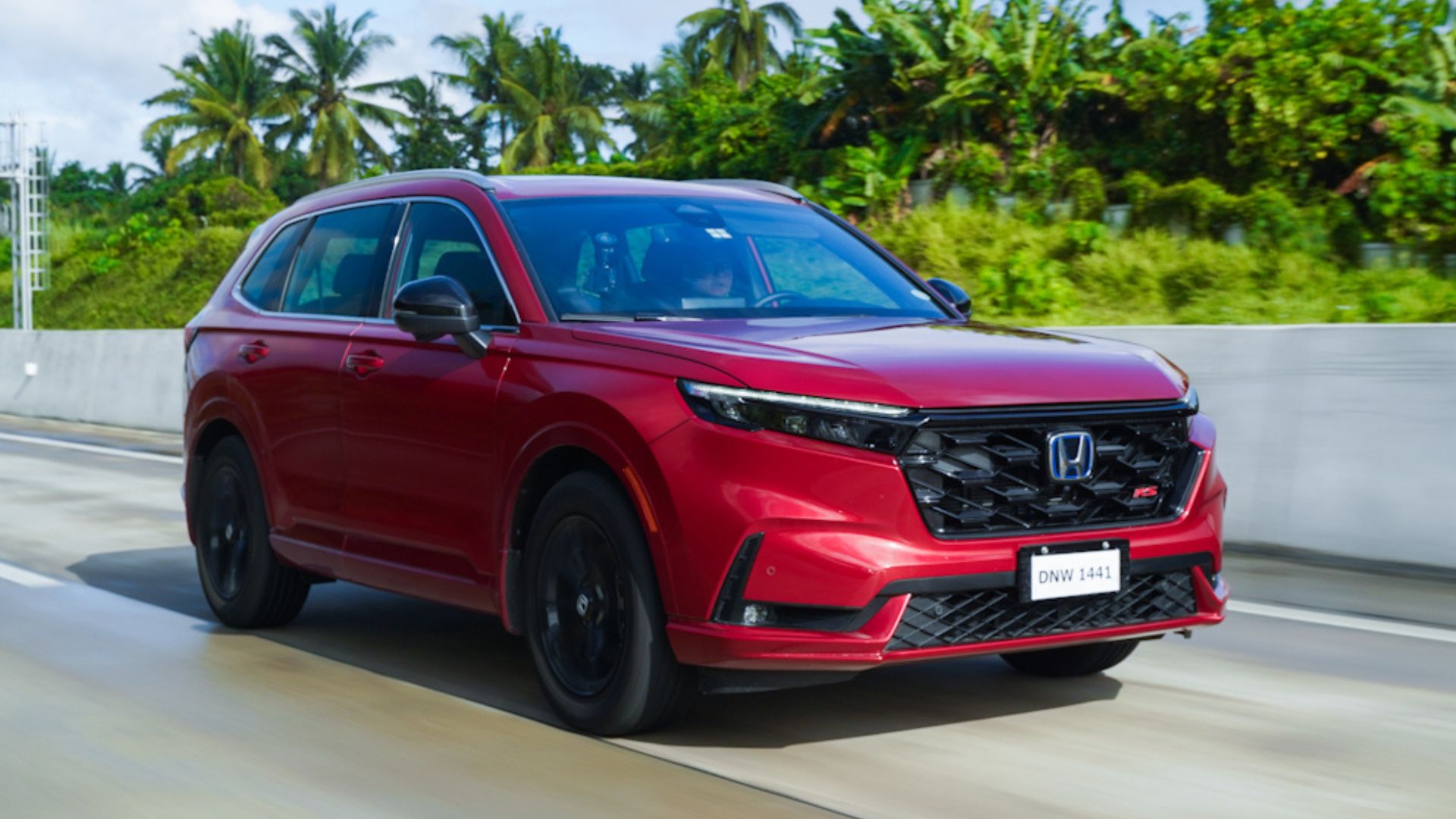
The bigger car’s base hybrid model—if you can still find remaining stock—is just P80,000 more. It’s missing the wireless, the extra cameras, the electronic parking brake, the kick-to-open hatch, and that big moonroof, but you’re getting much more metal for your money. And while the Yaris Cross is the best DNGA car we’ve tested so far, it still has some way to go before it can match the solidity of Big Brother. That said, despite these gripes, that exceptional hybrid system is still second to none, and the Cross’s great looks and features make it an attractive buy versus other high-spec subcompacts.
SPECS: 2024 Toyota Yaris Cross 1.5 S HEV

Price: P1,598,000
Engine: 1.5-liter gasoline I4 + electric motor
Power: 90hp engine, 79hp motor
Torque: 121Nm
Transmission: continuously variable
Layout: FWD
Seating: 5
Score: 8/10
More photos of the 2024 Toyota Yaris Cross 1.5 S HEV: