Much has been said about the current generation Ford Ranger. After all, it’s been a good couple of years since it first landed here. July 2022, to be exact.
Yes, the ‘T6.2’ Ranger is, at the time of writing, about two and a half years old now. While not aging by any means, it’s a reminder that time does go by rather quickly. Ford’s not complaining, though, at it remains its top-selling model in the country.
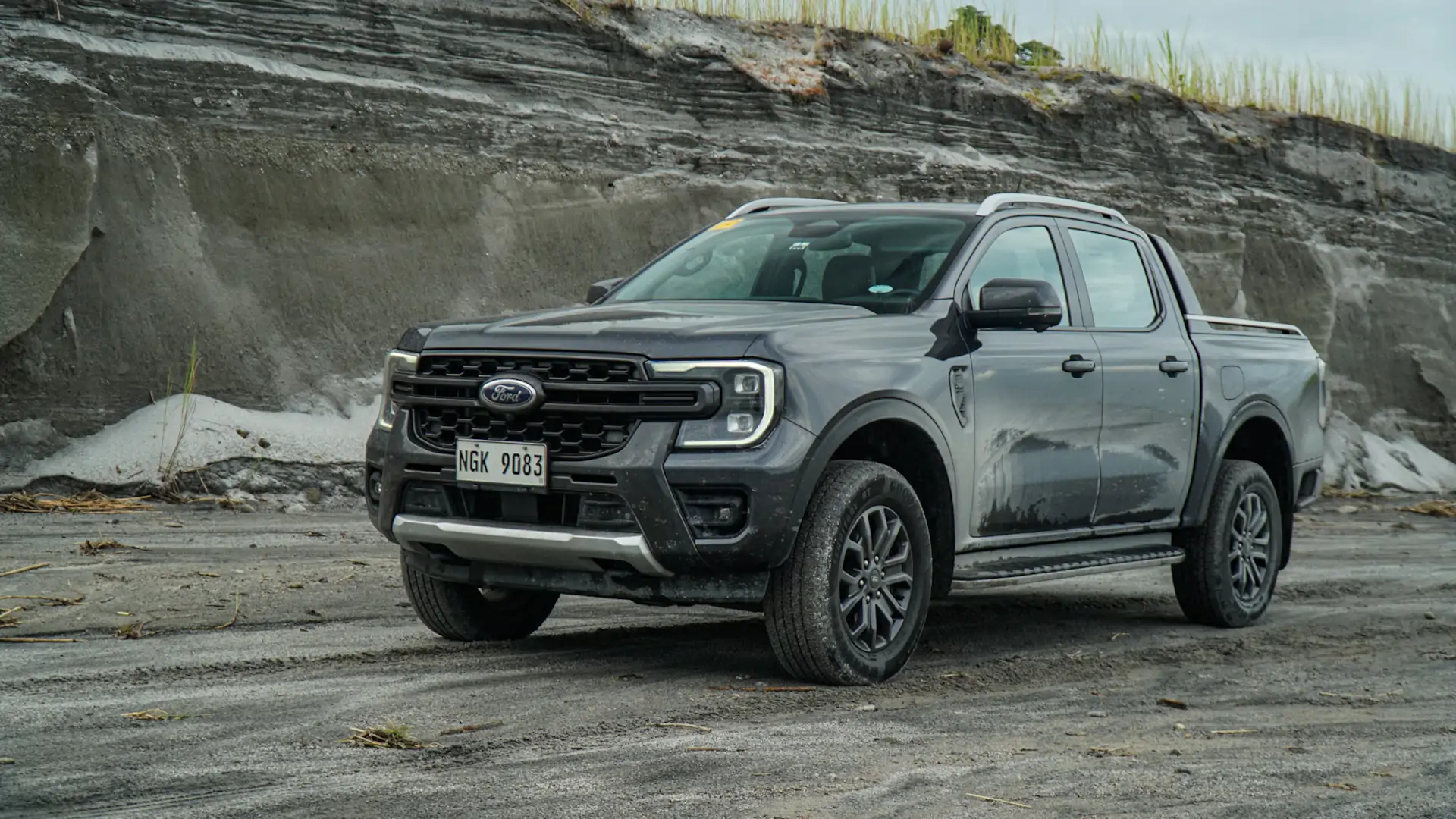
So, why can’t people get enough of it? Well, perhaps it helps that it’s a genuinely good vehicle, lauded and praised when it was first introduced here. But has time eroded some of that luster? To answer that, we booked ourselves a four-wheel drive Wildtrak to see if it still deserves the hype.
Oh, and we took it off-road for good measure. It’s got four-wheel drive so we might as well make the most of it, right?
OTHER STORIES YOU MIGHT HAVE MISSED:
That time Subaru made a Sport Utility…Sedan
Last hurrah? Toyota PH finally brings in the upgraded Supra for P5.369-M
Styling
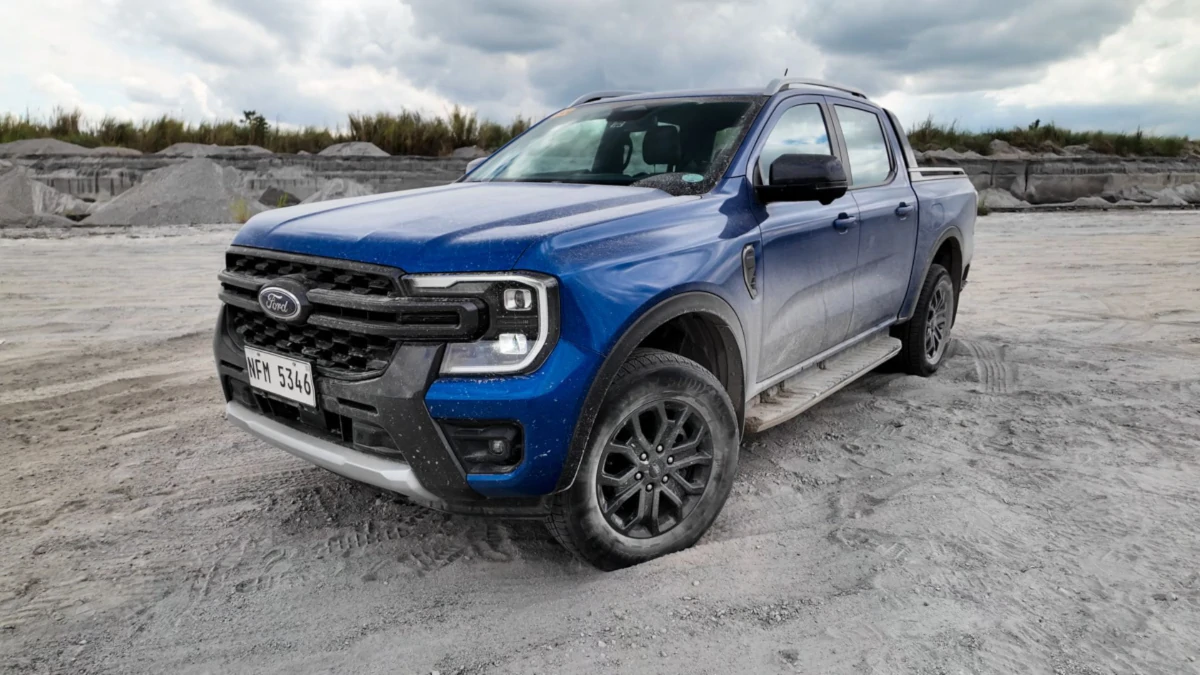
It’s a very familiar sight by now, this Ranger. It’s almost to a point that it practically blends in to the background these days. Ford shifts over 10,000 units of these things every year, so we couldn’t really call it unique these days, can we?
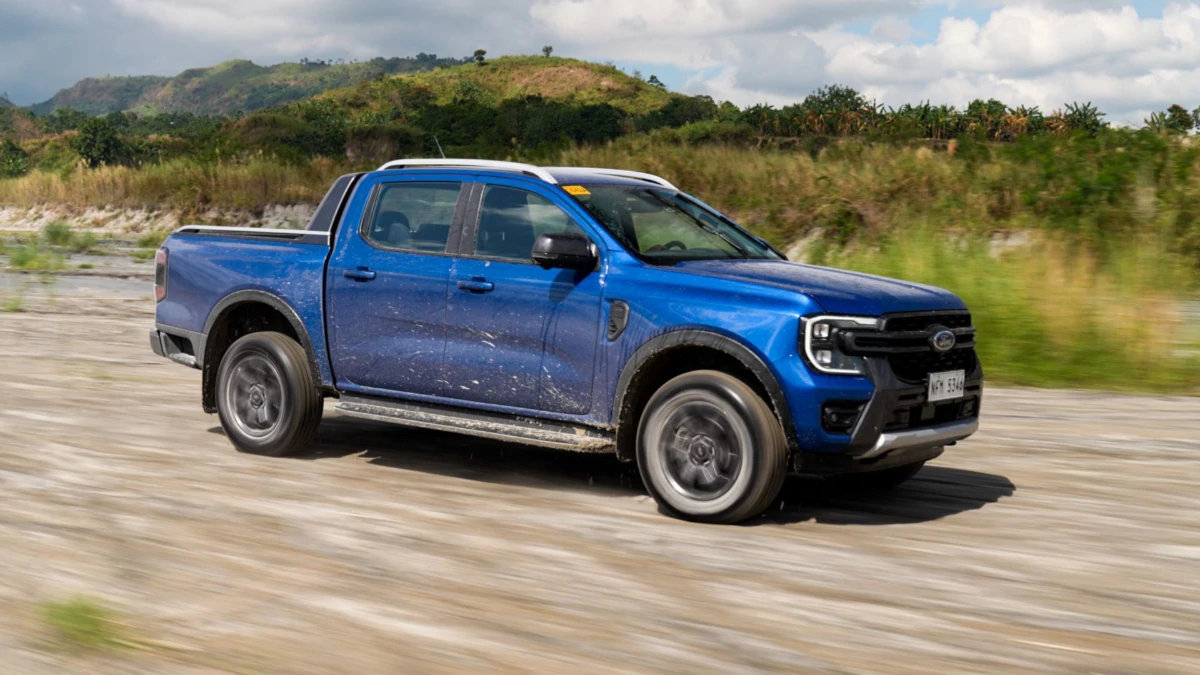
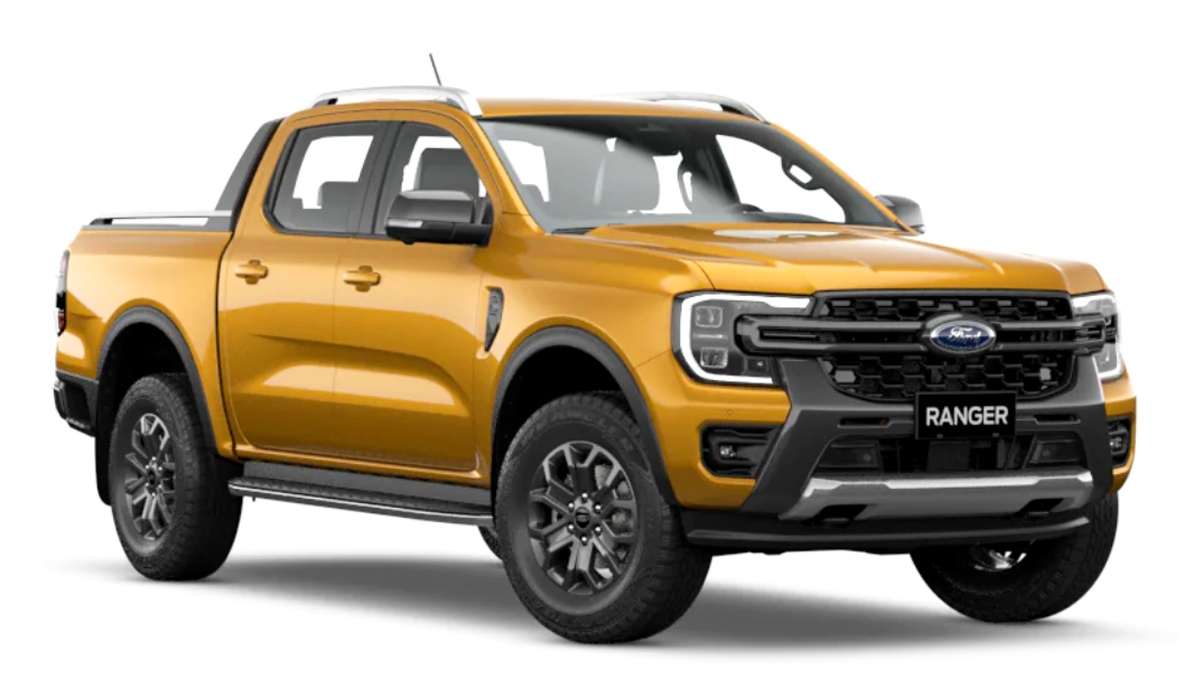
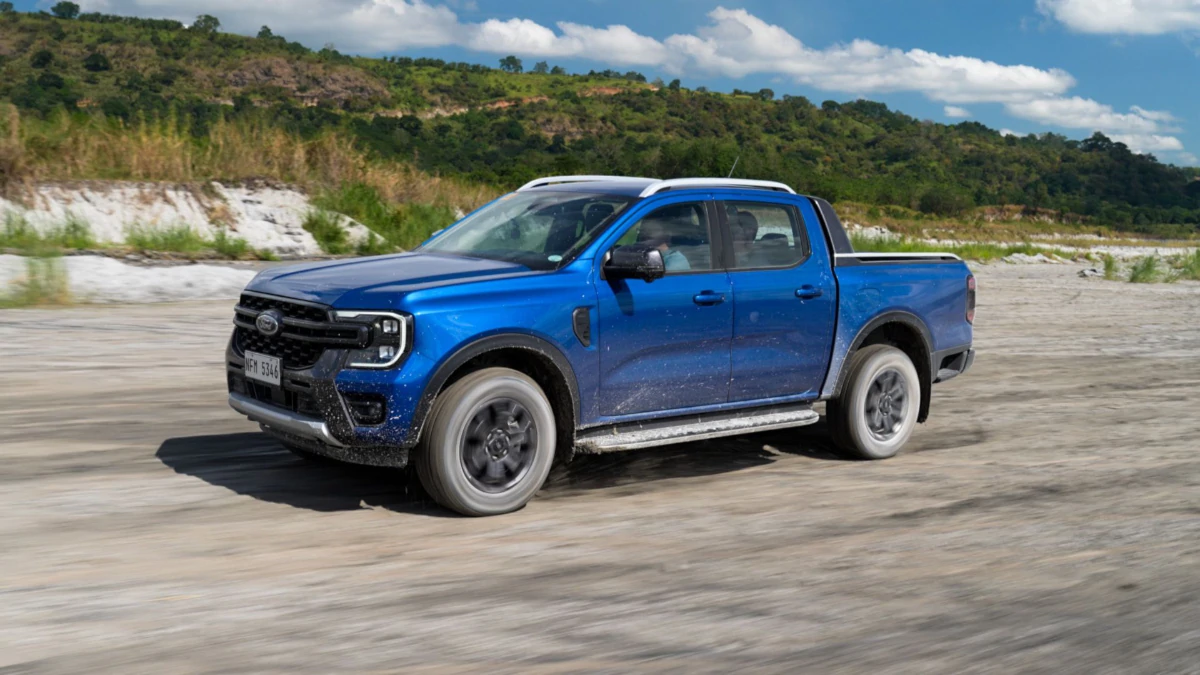
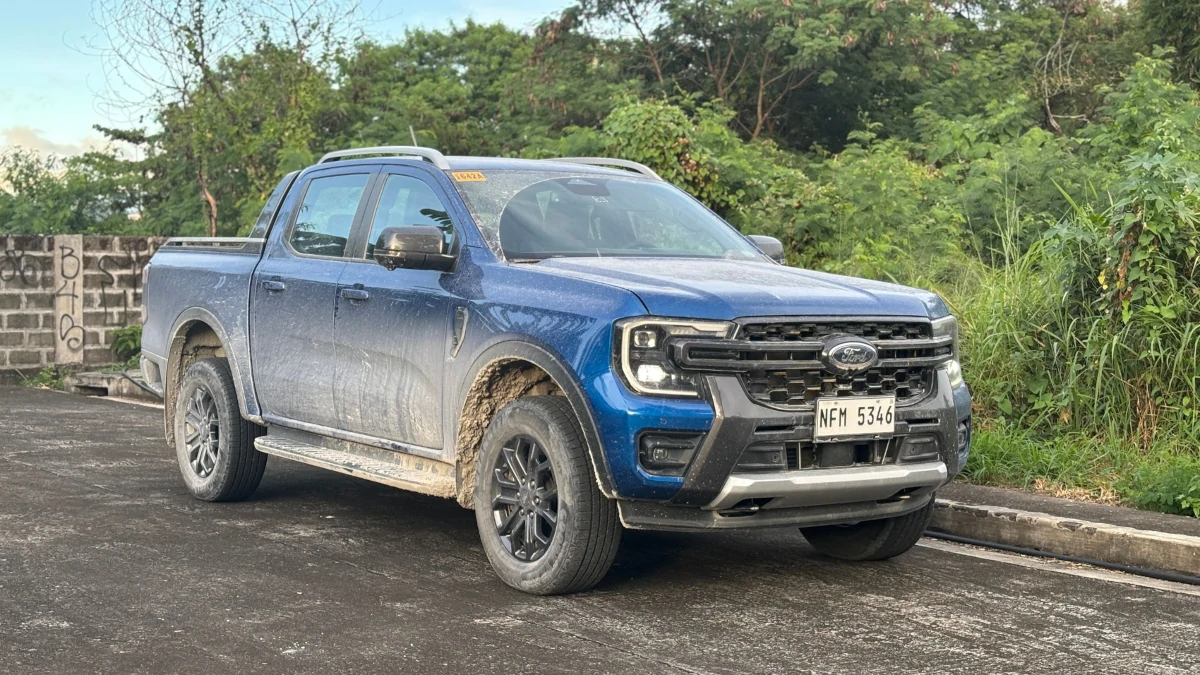
But if you stop and take a look at it, it’s a rather handsome looking pickup. Draped in Blue Lightning instead of the usual Luxe Yellow (that looks more like orange), we’ll admit that we thought we were sent a two-wheel drive XLT instead of a Wildtrak. One quick check of the center console to see if there’s a four-wheel drive dial, we can confirm that we got the right spec.
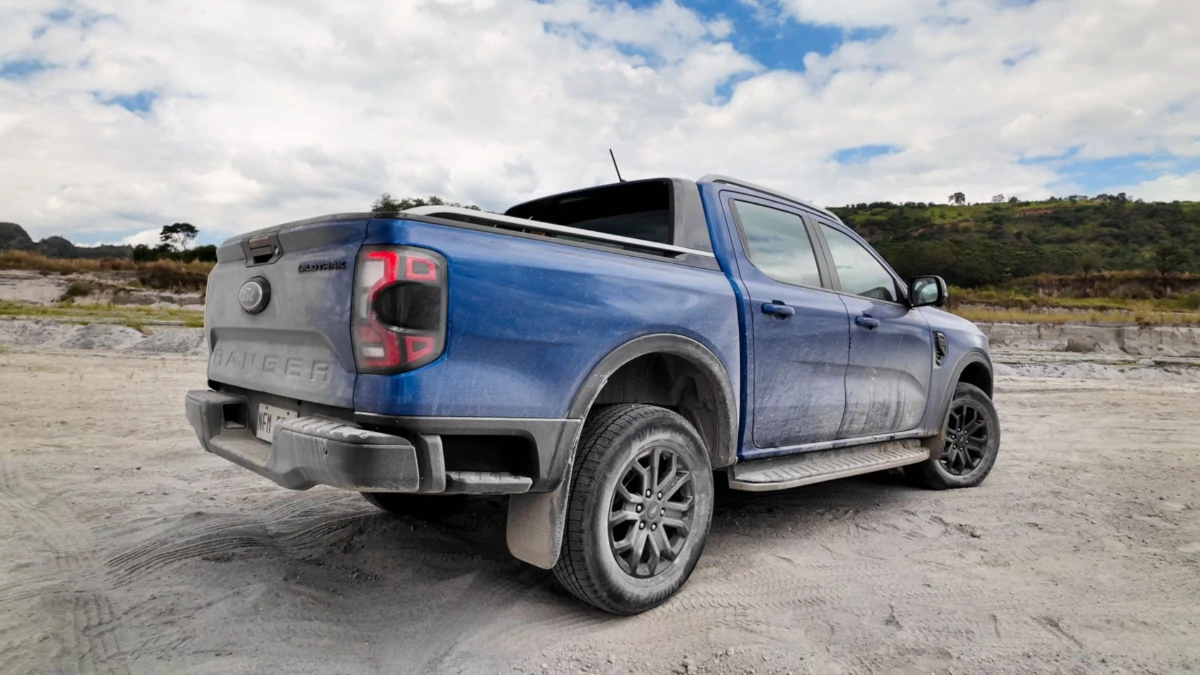
Where were we? Right, the looks. In all fairness, it hasn’t dated considering it arrived during the early part of the decade. The C-shaped headlights still do a good job of emulating larger Ford models from abroad, and the same goes for the rear. There will be those who might argue that the middle part still looks too much like the previous Ranger, but we honestly don’t mind.
Interior
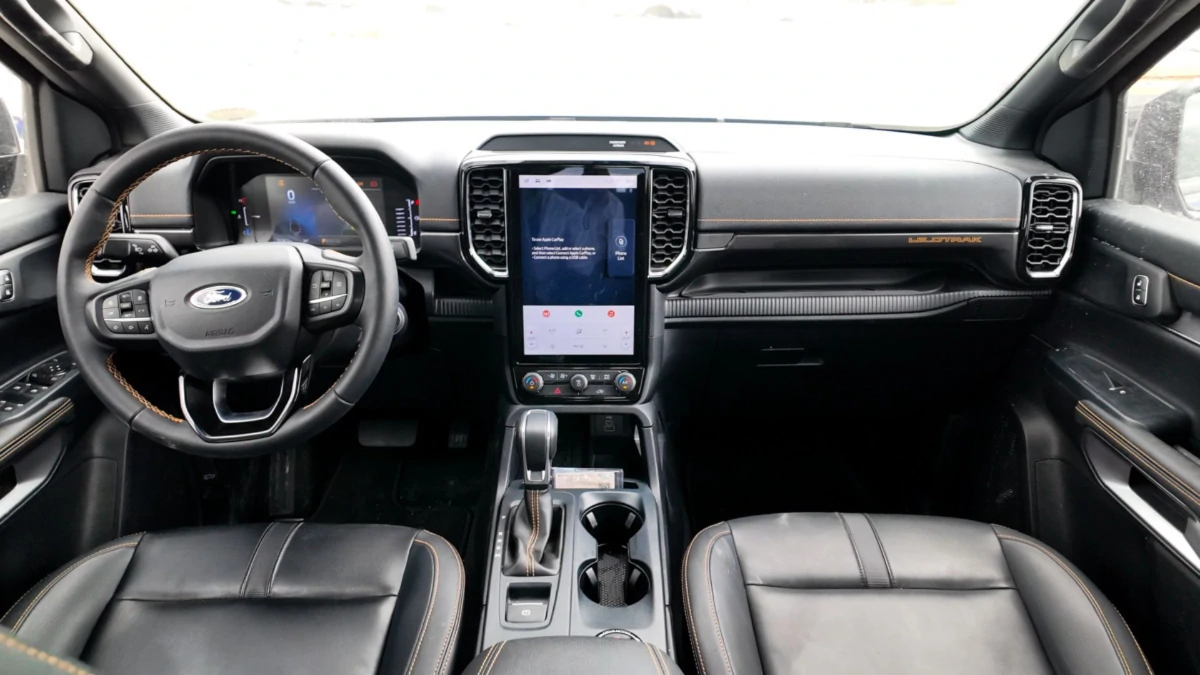
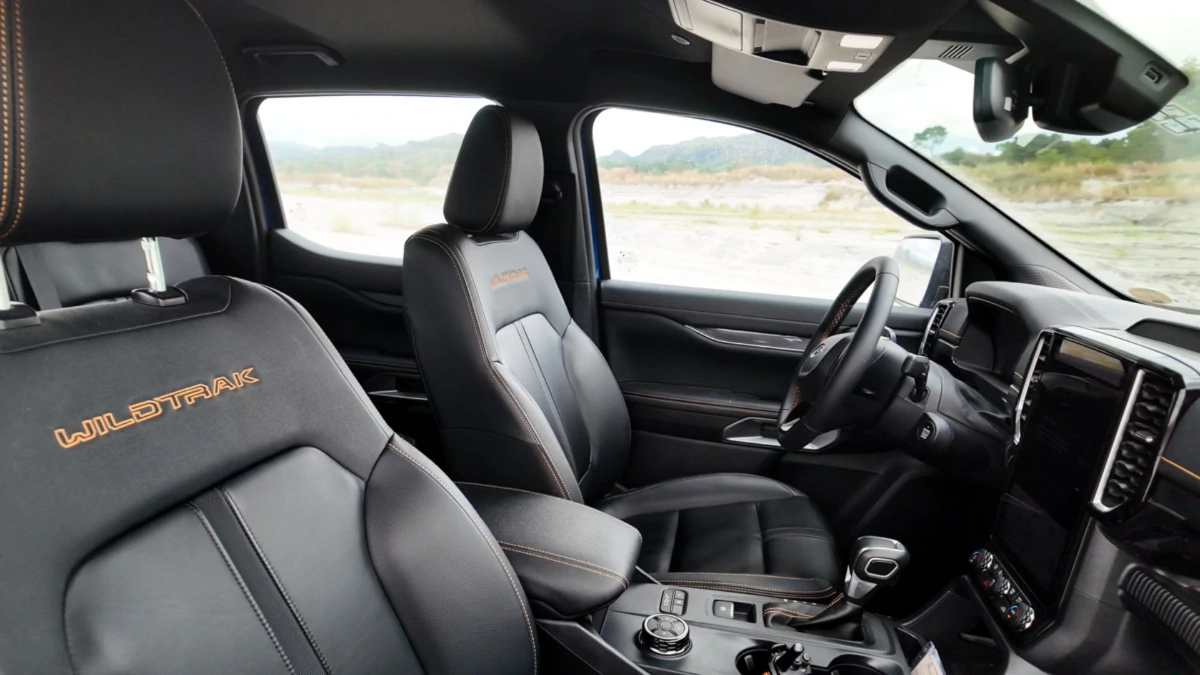
The Ranger is proud to be a pickup and wears it on its sleeve, or in this case, its dashboard. It’s blocky, chunky, and a bit in-your-face with that near vertical fascia and huge screen. Forget any impression that you’ll be greeted by a car-like cabin. The design is a constant reminder that you are, indeed, operating a pickup.
Perhaps it’s the orange highlights, but the Ranger Wildtrak’s interior is a little bit on the loud side. It’s odd given that the Everest, which has exactly the same interior, is more an exercise in subtlety, yes even with its proudly truckish look. Props to Ford for giving each model a totally different vibe despite having the same bits.
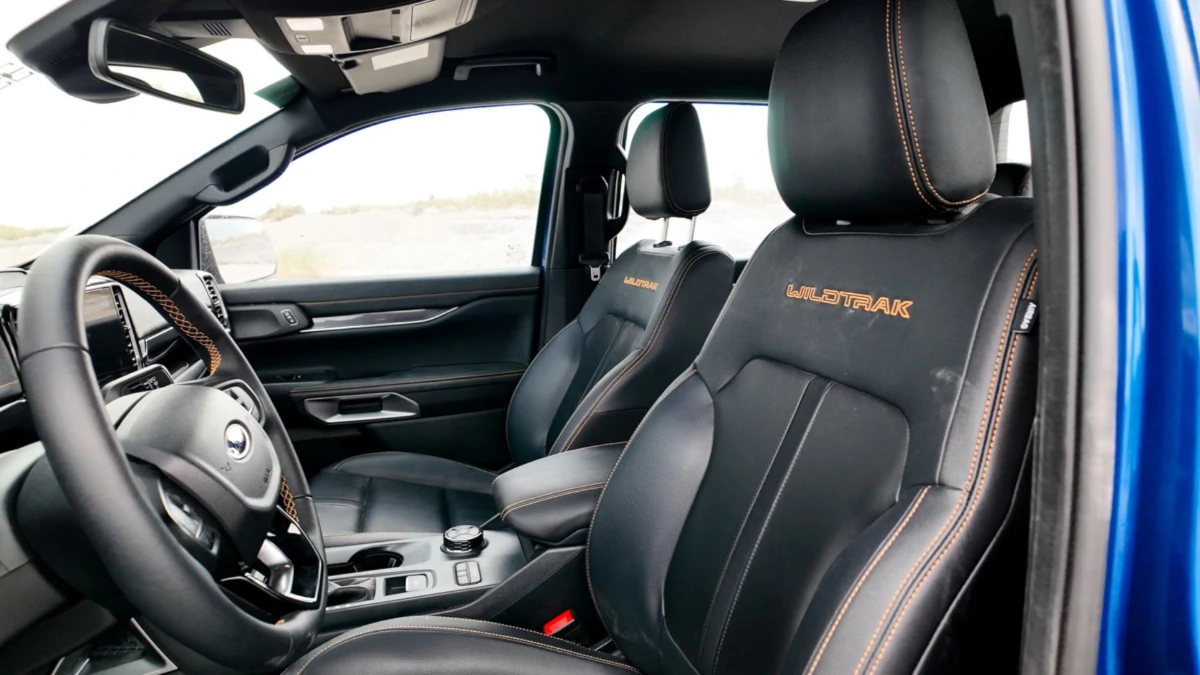
Fit and finish is, for the most part, good. Buttons and dials feel reassuringly sturdy, while the trims generally feel nice to touch. There is, however, one glaring evidence of cost-cutting. We’re rather disappointed by the lack of a seatbelt height adjuster that was standard in the previous generation.
We once lauded the Ranger’s interior to be one of the most spacious in the midsize pickup truck class. It still is, but it’s worth pointing out that the Mitsubishi Triton does have a larger footwell at the front. It’s by no means cramped and it’s still better than most of its Japanese competition, but we have to say that the Triton does have better space efficiency.
Space at the back is good which shouldn’t come as a surprise as the Ranger is the longest vehicle in its segment. As far as pickups go, you have a greater degree of comfort and stretch out room. If you do need more space, perhaps it’s better to go for the Everest.
Engine performance
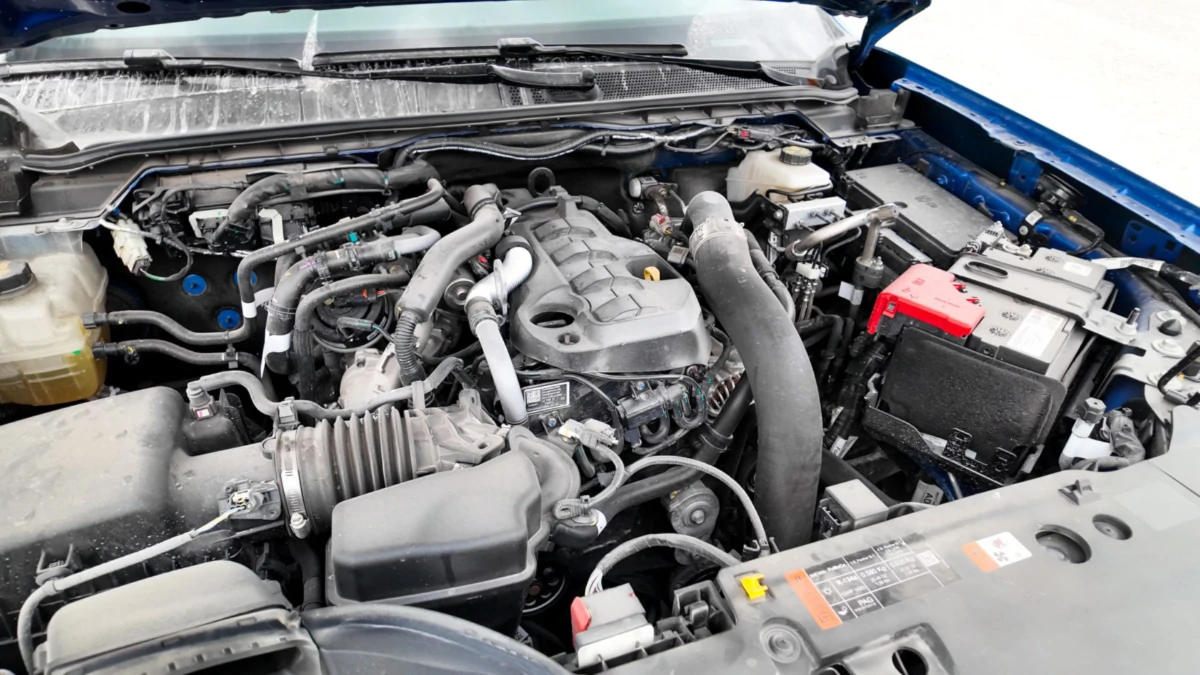
We’re pretty much familiar with how the 2.0-liter bi-turbo diesel runs by now. By pickup standards, it’s relatively quiet and refined with vibrations kept to a minimum. With 210hp and 500Nm under the hood, it’s also the strongest among the non-performance pickup models out there.
Floor it and, to be honest, it doesn’t pin you to your seat. Instead, it builds up speed in a more linear fashion. Considering it weighs nearly 2,400kg, the twin-turbo diesel can hustle with minimal effort.
The ten-speed automatic doesn’t stumble as much as the one fitted to the previous generation, but it can still get caught out from tie to time. It’s most noticeable on the expressway when it has to knock down three gears to help spool up the turbos. It’s not helped by the fact that the manual mode is a toggle switch on the gear knob and not through paddles or the shifter gate. Please, Ford, get rid of it.
As for fuel economy, we can best describe it as ‘not bad.’ We averaged 8.1km/L in the city, 13.4km/L on the highway, and 11km/L in mixed conditions. With figures like that, you’re looking at a range of about 650km to 1,072km.
Ride and handling
In revisiting the Ranger, we were wondering if it was still one of the best driving and riding models in the pickup segment. A road trip to Clark and blasting down lahar beds answered that curiosity.
On paved roads, the Ranger rides well and still remains one of the more comfortable choices for pickups. Yes, it’s still stiff at the back, but if you compare it to its rivals, the Ford is practically a luxury limo. The body doesn’t heave around when driving over uneven slabs of concrete, and the suspension does a fair job of keeping the body level at all times.
Handling, while far from being sporty, is safe and secure. The Ranger can be driven with a degree of enthusiasm without scaring the driver and its occupants. Steering is light, but not totally numb. We do have to say that it tracks straight and true despite lacking in feel around the center.
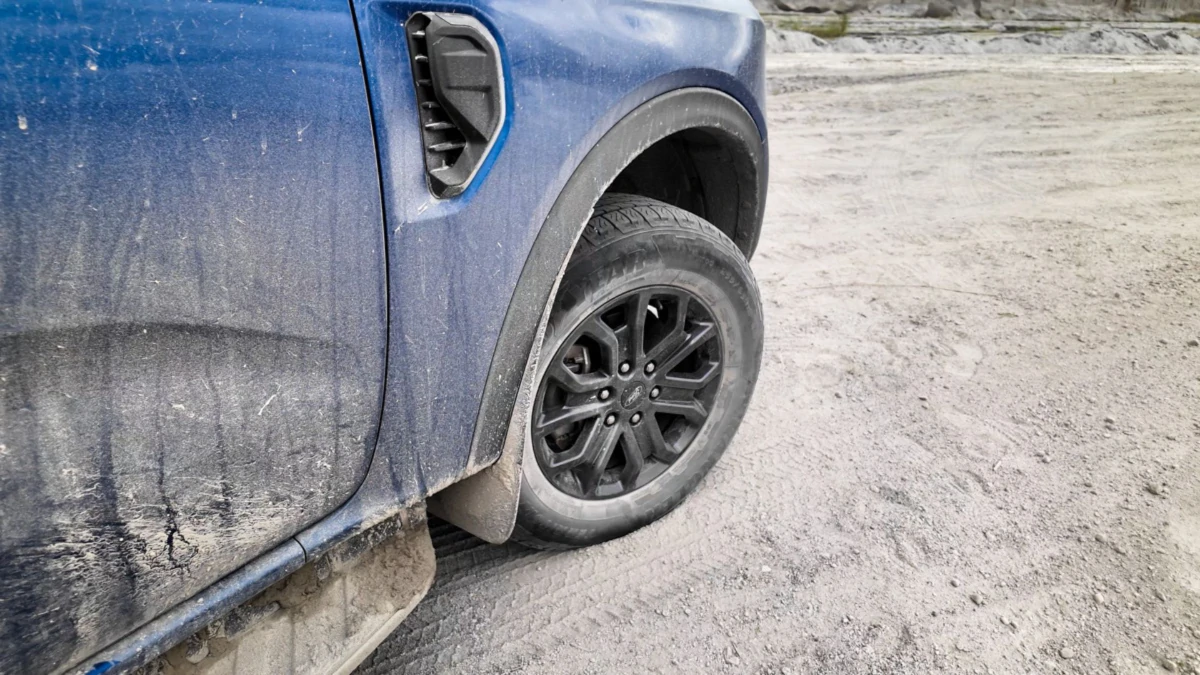
What about off-road, you ask? It’s no Raptor but the Wildtrak also shines when the pavement disappears. The dry lahar beds are meant to shake and rattle any vehicle that passes through it, while the deep cuts on the ground can send shockwaves up one’s spine. Despite that, the Ranger softened the blow and didn’t knock its occupants around. We have to say that, even in WIldtrak trim, the suspension in the Ranger can take a good amount of punishment.
One thing we did notice is that any enthusiastic driving on loose surfaces is immediately dealt with by the stability control. Disabling it won’t make a difference as it’ll still intervene if it senses the need for course correction. Better safe than sorry, but it does limit the fun. Of course, we only recommend turning the driving aids off in off-roading situations as these can impede progress. Just something to take note of.
If there’s one aspect in the Ranger that does need improvement, it’s the brakes. Yes, the feel is good and the pedal action is progressive. However, we did feel the limitations of its brakes due to its weight. We recommend a stronger set of binders for safety’s sake.
Extra features
We’ll start off with the bed because it’s the biggest in its class. It also has a payload of about 1,100kg, so it’ll take a lot of load before the Ranger reaches maximum capacity. There, one will also find 230v sockets which should prove useful at a job site or camping. One lovely is the tailgate assist that makes closing it a one-finger job. We also liked the step integrated on the side of the bed to make loading easier. Oh, and there are additional charging ports and another 230v socket inside, too.
There’s a full suite of advanced driver assist systems on board. It comes with adaptive cruise, autonomous emergency braking, lane keep assist, and so on. As far as we can tell, this is the only vehicle in its class to offer a complete set of advanced driver assists. A barrage of cameras should make maneuvering in tight spaces a lot easier.
For its off-road kit, the Wildtrak comes equipped with Ford’s Terrain Management System. There’s Normal, Sand, Mud/Ruts, and Slippery…in case it snows here. These pre-selected modes mean there’s really no need to fiddle around the four-wheel drive system. It’ll engage four-wheel drive high or low if needed, and even lock the rear differential, depending on the mode selected.
For those who’d still like a bit of a challenge, they can stick to Normal, lock the rear differential (unfortunately buried in the touchscreen menus), and let their driving to the talking.
Verdict
We hate to admit it, but the Ranger is still annoyingly good. Saying that, we’re expecting a flame war from its rivals’ biggest fans. Truth be told, it’s still hard to beat and manages to excel in so many parameters. The Ford has a wide breadth of talent that isn’t often seen in the pickup segment, and one can’t hate on it because of its abilities. The Ranger has earned its praises on merit, not because of its fanbase.
Of course, there will always be questions about long-term reliability. It part of our mentality of being raised on a steady Japanese vehicle diet. Yes, there are those who have been scorned by Ford products in the past, but there are also owners who absolutely swear by them.
At P1,940,000, the four-wheel drive Ranger Wildtrak isn’t even the most expensive among its peers. It’s a surprise given its abilities, tech, and features. Solid value, then.
So there you have it. The Ford Ranger is still a great choice in the pickup class and quite possibly still the one to beat. The thing is, it shouldn’t rest on its laurels as there’s a new wave of pickups right around the corner. When those do come out, we’re ready to pit it against this perennial overdog.
SPECS: 2023 Ford Ranger 2.0L Bi-Turbo Wildtrak 4x4
Price: P1,940,000
Engine: 2.0-liter turbodiesel I4
Power: 210hp
Torque: 500Nm
Transmission: 10-speed automatic
Layout: 4WD
Seating: 5
Score: 9/10