
Whereas a new Chinese electric vehicle seems to be introduced every time we hear about a new corruption scandal (aka too often), the world’s biggest carmaker has been eerily silent for years on when it would release an electric car locally. By not putting out an EV, and by extension not flooding the market with EVs as the Chinese have, Toyota inadvertently put a question mark on whether the world was truly ready for real electrification—you don’t get to number one by misreading the market.
When Toyota Motor Philippines (TMP) finally announced that it was bringing in its full battery electric vehicle, the not-quite-rolls-off-the-tongue bZ4X, it came with an added postscript that amusingly highlighted the Japanese vs. Chinese EV strategy. TMP clarified that the bZ4Xs we would get here are all made in Japan, and not in China, as some people have surmised.
While this kind of clarification can be done on the dealer level, any customer asking about the Toyota EV can easily be assuaged about its origin, publicly stating that this is born in Japan draws a line in the sand. TMP wanted to make it clear that this is a Toyota, and it is made in Toyota’s home country.
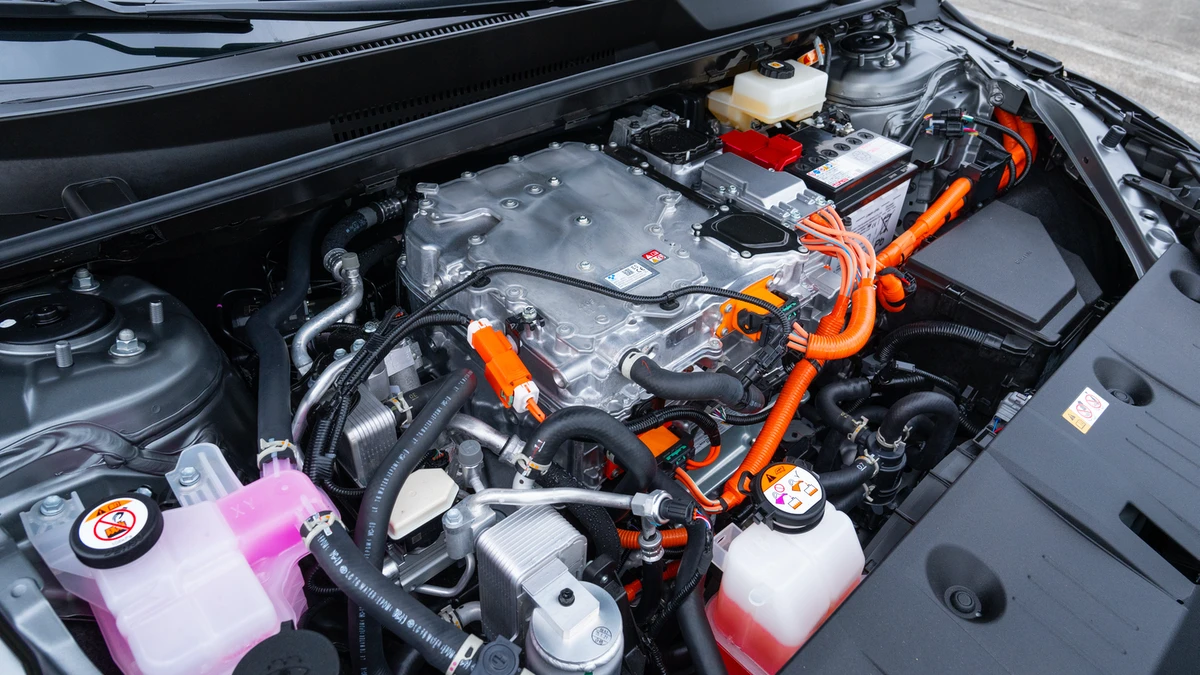
All that being said, I will preempt a bit and say that the wait was worth it. The bZ4X we get is the all-wheel drive spec, with 338hp and 338Nm of torque. Estimated range is 570km, theoretically enough for a drive to Baguio and back. But EV propulsion is fickle. Bury the throttle and that range will drop like a rock. But coast on a downhill road and your range will actually increase.
There’s only one variant, coming in at P2,699,000. Add P15,000 for the Platinum White Pearl Color, and add P20,000 for the Emotional Red and Precious Metal colors. This puts the bZ4X in the Camry’s price range.
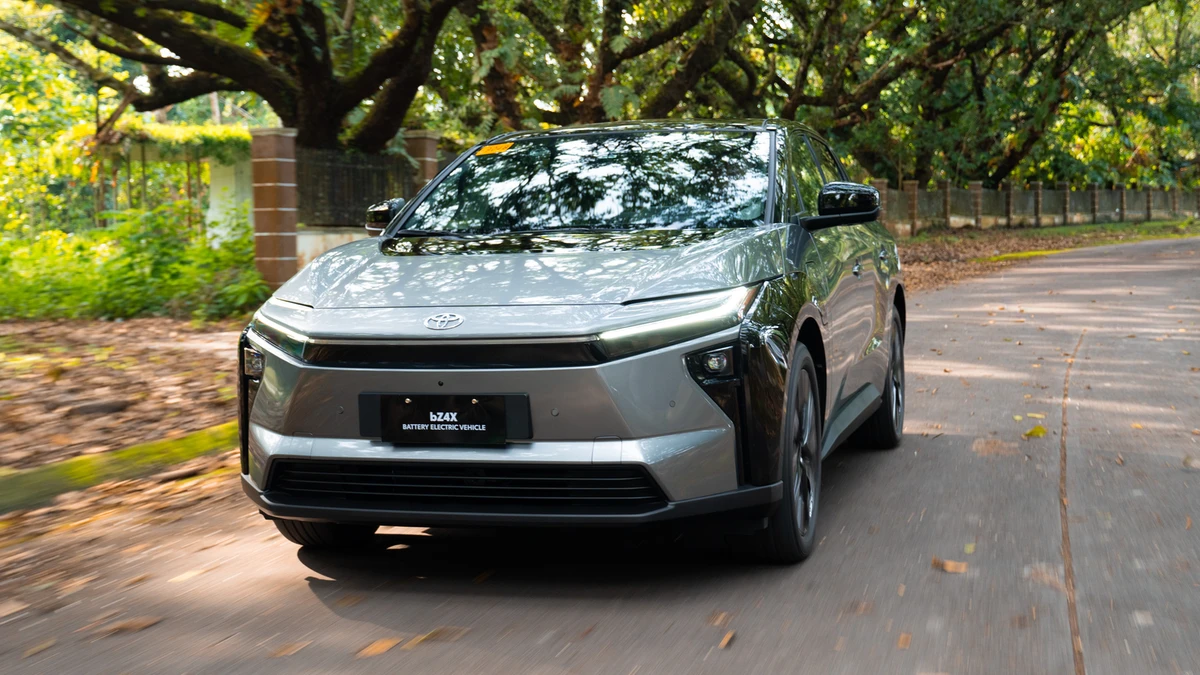
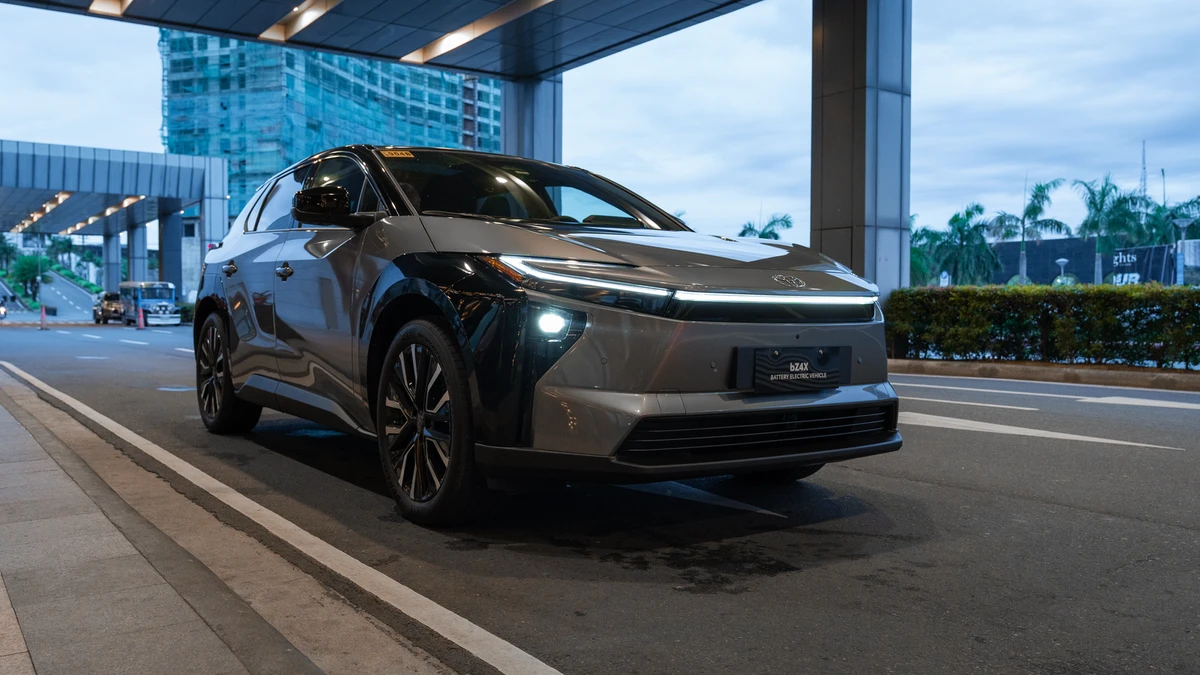
The design is eye-catching. Literally. Several times people have stopped and pointed at our car, and asked what it was. I’ve driven enough cars that have not been formally launched to know that this is not a normal occurrence.
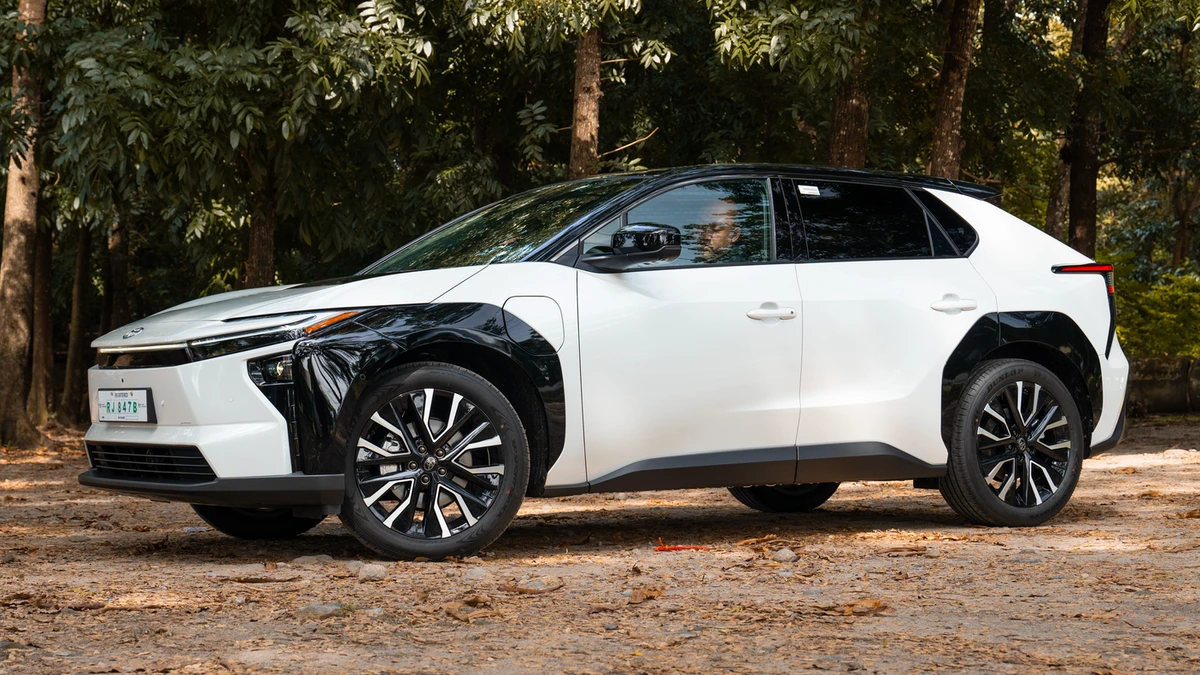
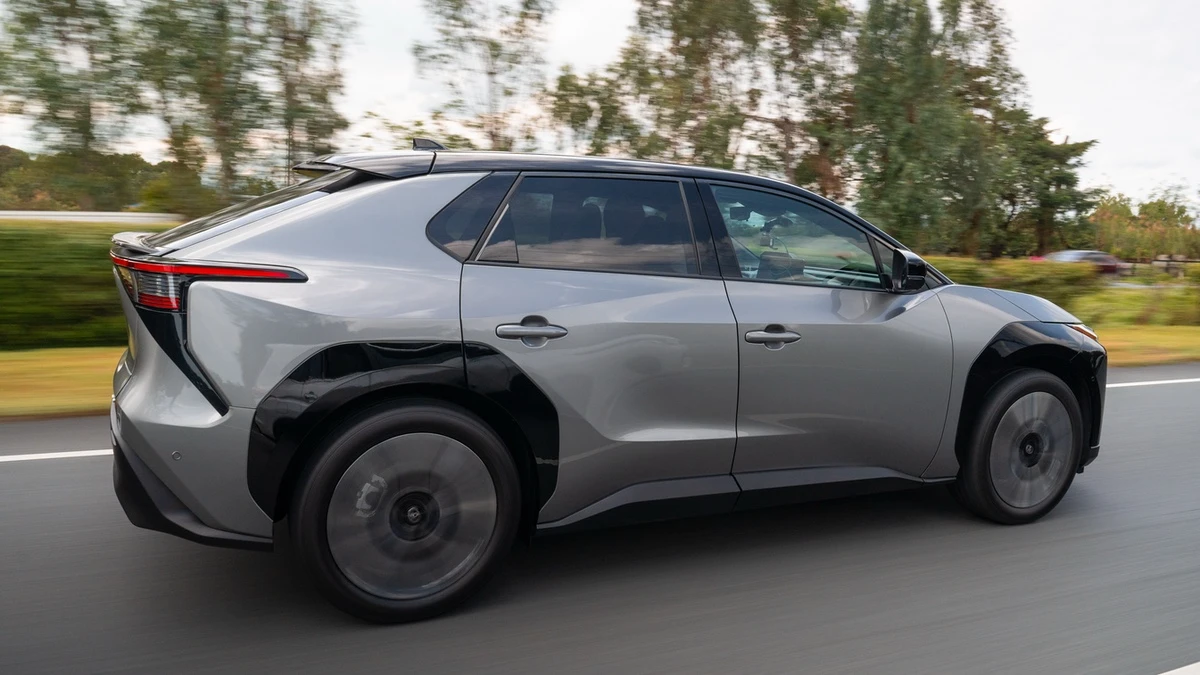
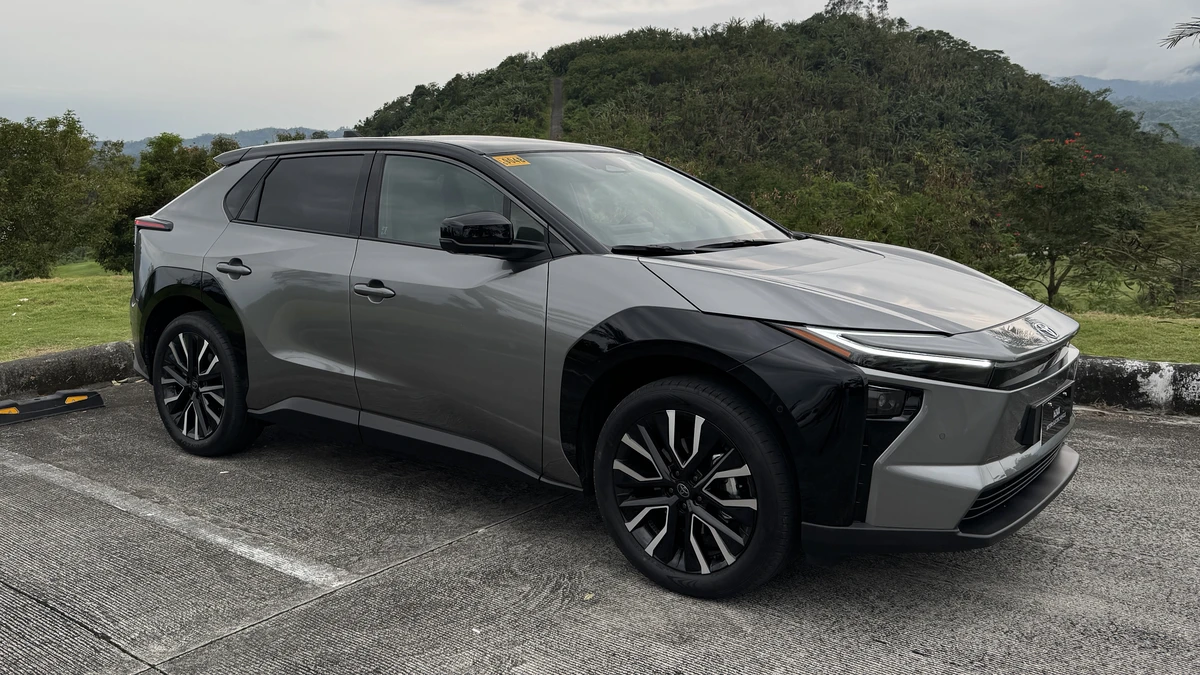
We got the bZ4X at the right time; after its recent update. Toyota’s EV is sharp, angular, and has beautifully balanced proportions. It doesn’t quite slot in with the rest of the Toyota PH stable when it comes to looks, but the updated Camry’s attractive headlight design is there.
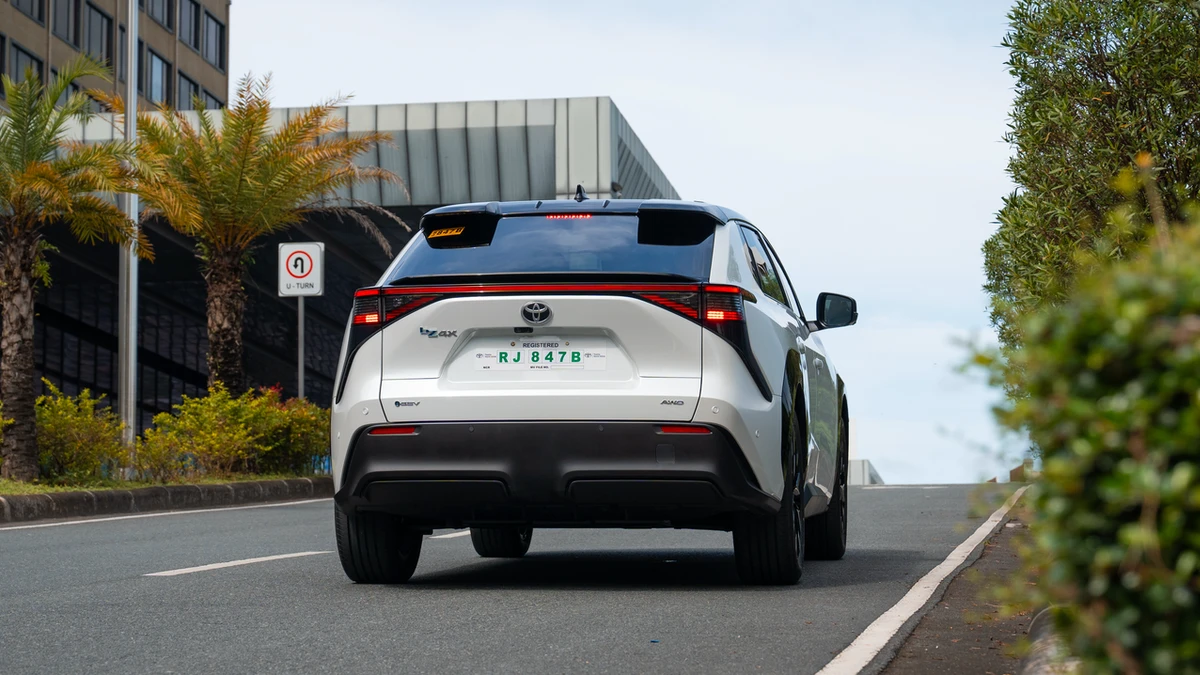
The bZ4X does not have an aesthetic weakness—at least to me. The striking front design is led to the back by a defined feature line across the sleek body. The attractive rear taillights have a little spoiler that give it a nice sporty touch. More interesting are the rear buttresses that, I assume, help with airflow. And even if they don’t, they look hella cool.
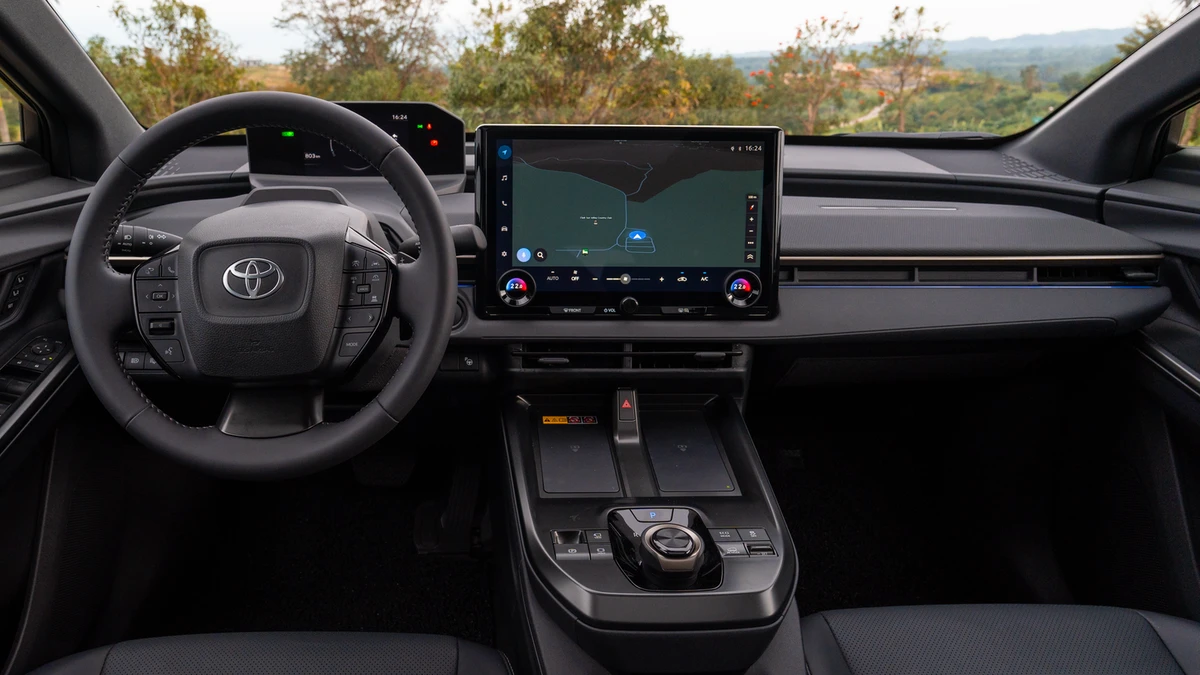
The cabin is on the stark side, which is a relief to me. I believe that a cabin should not distract, and instead welcome its occupants. A massive 14-inch infotainment screen dominates the dashboard. Digital gauges on a 7-inch screen display speed and battery status. The smaller screen is set quite far back, though this shouldn’t be a problem. Dual wireless charging pads can be found under the A/C vents. The unusual shifter is under the charging pods. Changing ‘gears’ has a slight learning curve, but is intuitive after a few tries.
Good news: Physical knobs adjust the climate, with some buttons dedicated to A/C and audio. This should please motorists who are not convinced going all-in on screens is a good idea. Drive mode buttons are under the shift knob, as well as an X-Mode button, a clue pointing at the Subaru involvement in the bZ4X.
While I did say I appreciated the minimalism of the bZ4X cabin the first time I saw it, I was surprised to discover that there is no front glove box. I asked around on why that’s so, but I did not get a clear answer. It’s not that big of a deal, since the center glove box can still conceal your valuables, and there is a cubbyhole under the center console for more storage. But the omission is odd, since we’ve been used to putting things in the front glove box for decades. Even the Lilliputian Toyota IQ had a removable front satchel ahead of the front passenger.
The bZ4X front seat isn’t roomy; I would call it somewhere between snug and just right. The rear seat has a shallow floor, not a surprise given the battery placement. Don’t expect the bZ4X’s cabin to offer Camry-level rear comfort. Of course, the other 90% of Filipinos who don’t have my big body will find this EV’s cabin generous. Oh, and the front seats have cooling and heating functions, with the rear perches only having heating.
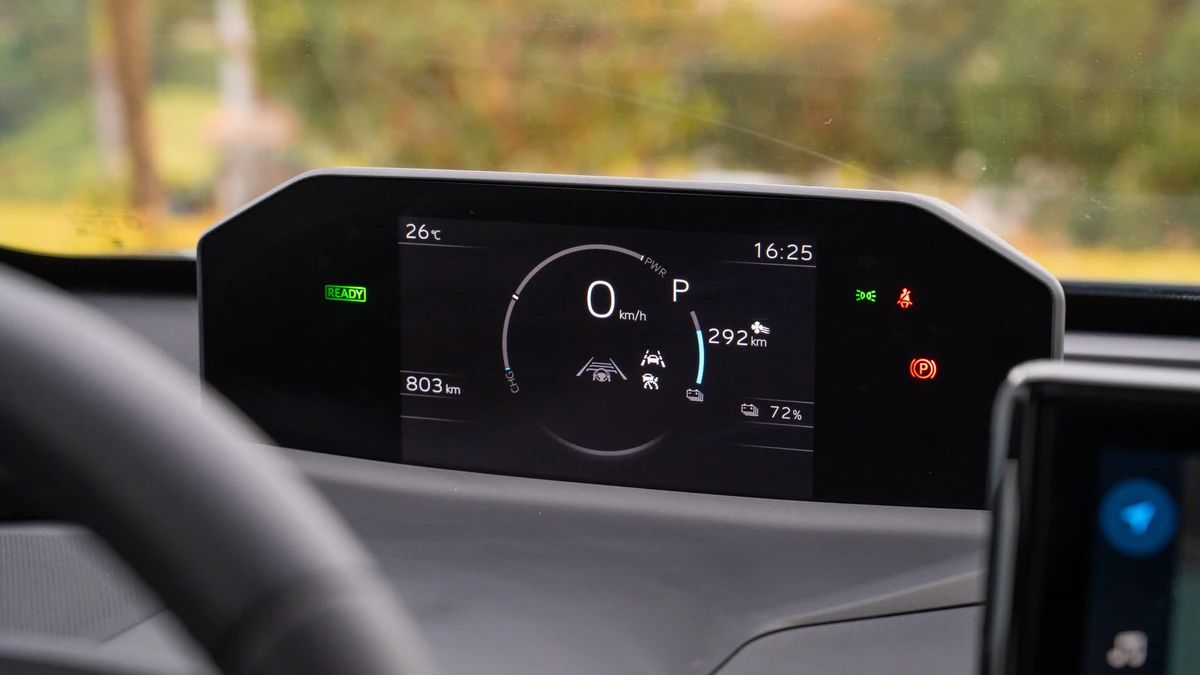
So, how is it to drive? TMP doesn’t list a curb weight on its website, but you feel the heft of the bZ4X. There’s that initial extra effort to overcome inertia. But once you get going, it’s Torque City. 338Nm may not sound like much, especially when compared to the Fortuner’s 550Nm, but the way the electric motor delivers 100% thrust all the time is exhilarating. And a little scary at first.
On NLEX I just zipped by slower cars, and overtook with ease. The bZ4X has a small, delightful steering wheel, and it was a joy to pilot this EV on the road. I didn’t push it hard enough to exhibit body roll, but it felt planted most of the time. More importantly, I felt secure once behind the wheel. And for added peace of mind, this has Toyota Safety Sense and all the radar-assisted features that come with that. The brakes are also good, able to scrub off all that EV speed capably. You do have to adjust your driving style, since the power, weight and brakes are not the same as the ICE cars we all grew up driving.
The challenge with EVs is that once you’re pushed back against your seat by all that torque, they all tend to feel the same. Up to a point this is what I felt with the bZ4X. But modulate the gas pedal and the Toyota EV responds accordingly, allowing for gradual acceleration—even the kind of mid-range acceleration that leaves many typical ICE-cars gasping. The bZ4X can alter its on-road behavior, giving the driver the kind of power band usually reserved for far more powerful cars.
I don’t have a point of comparison, since this is the first Toyota EV I’ve driven. But I can compare it to an early Chinese EV that I drove during the pandemic (the brand no longer exists). That EV was fast, but it couldn’t control the massive torque of its motor. It wiggled a bit and felt uncertain if you pushed it too hard. The bZ4X is a more mature product, and maybe this is why TMP waited.
The bZ4X is a good electric vehicle, but more important, it’s a good Toyota. It comes in at a high price point, far from the more affordable products in the Japanese carmaker’s stable. It’s not quite the EV revolution some were touting years ago. But it’s a start. And if TMP brings in more affordable variants, that would encourage more people to buy. For those wary of wading into the EV life, looking at all the unfamiliar cars, it helps to see a badge you know well.