Oof. How’s your back?
Actually, I’m surprised to say it’s fine. My spine is messed up to the point that I sometimes need prescription pain meds, but I survived our first long drive of the Toyota Tamaraw without a flare-up.
Fittingly, the event was held in Mindoro, which is the only place in the world you can find tamaraws—they’re also called ‘Mindoro dwarf buffalos’ because they’re endemic to the province. This ‘Lakbay Tamaraw’ experience is part of Toyota’s efforts to help protect this critically endangered species, but we’ll talk more about that in another story.
Give us the details on ride quality, then.
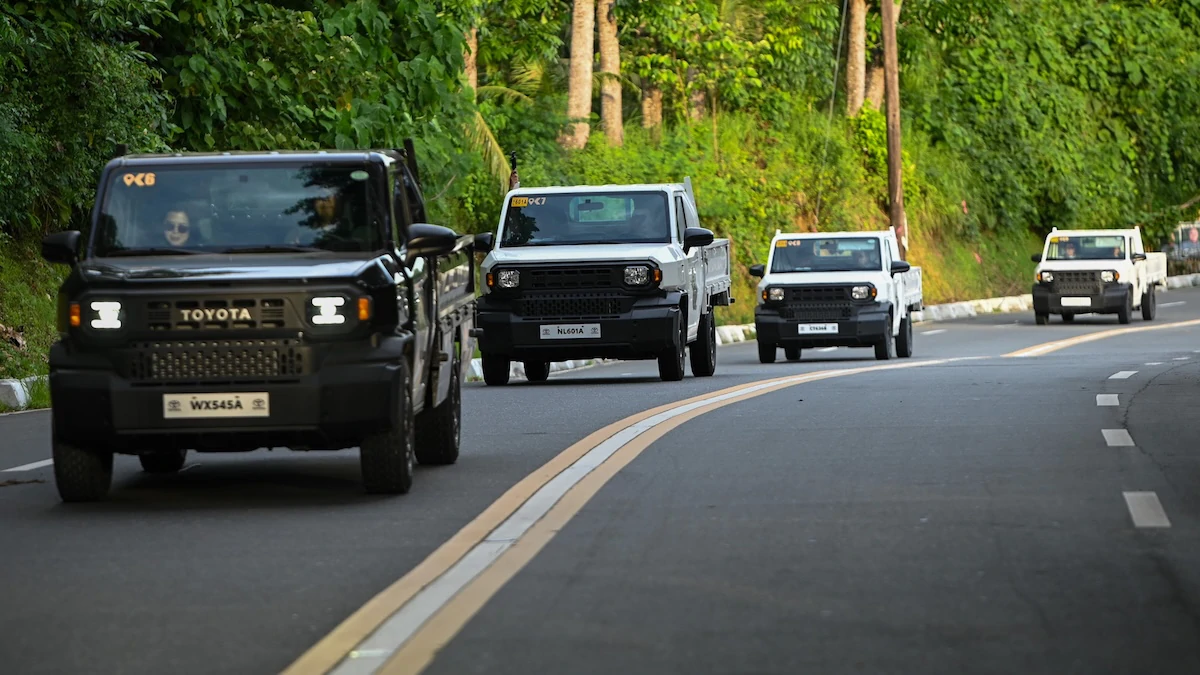
It’s better than I expected and far from the torture I was braced for. The ride doesn’t feel unnecessarily firm, which is something I can’t say about certain pickups and SUVs. You simply get the sense that the firmness is justified by the ability to handle over a ton of payload.
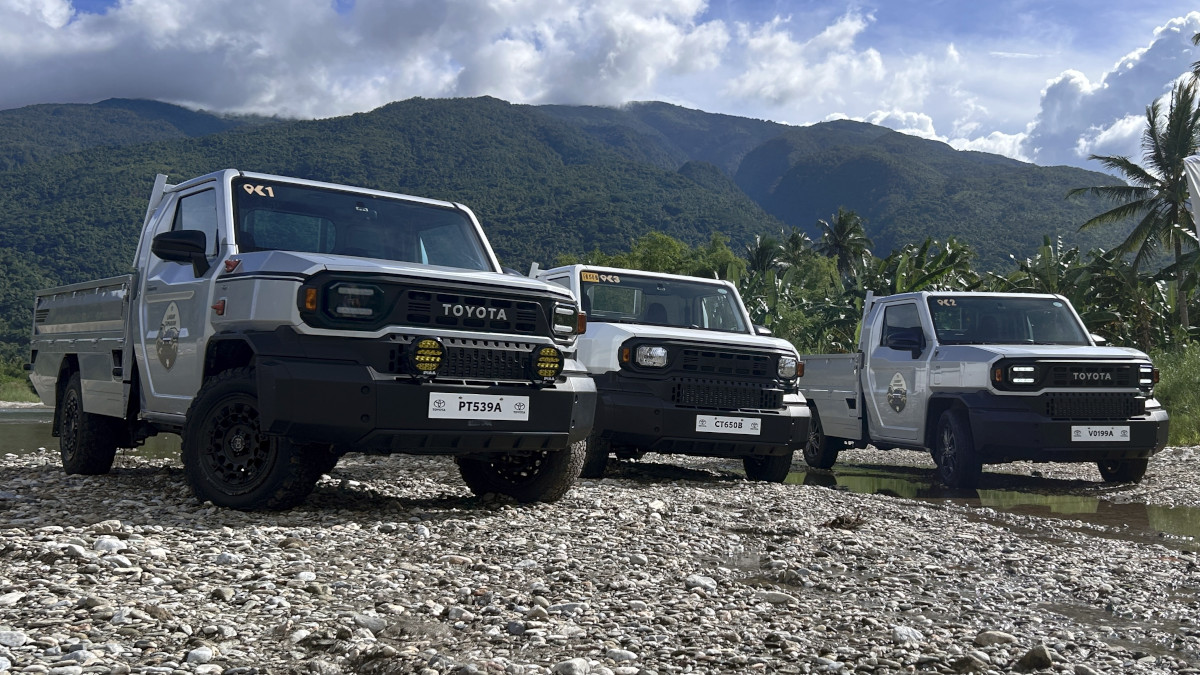
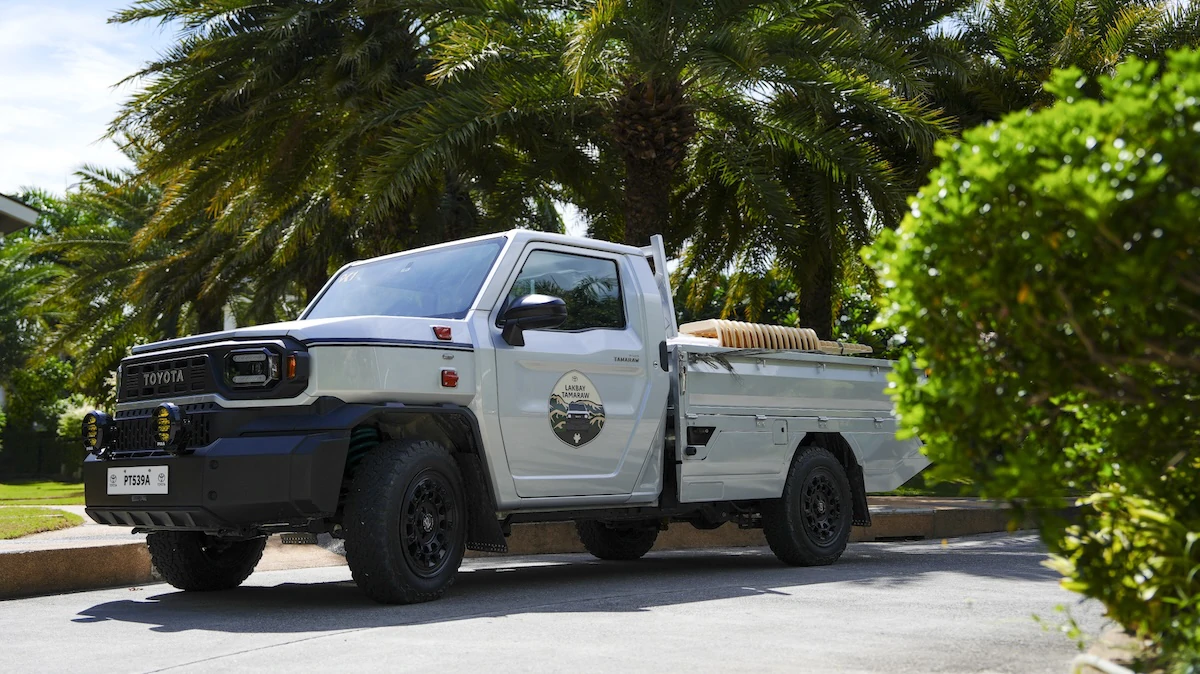
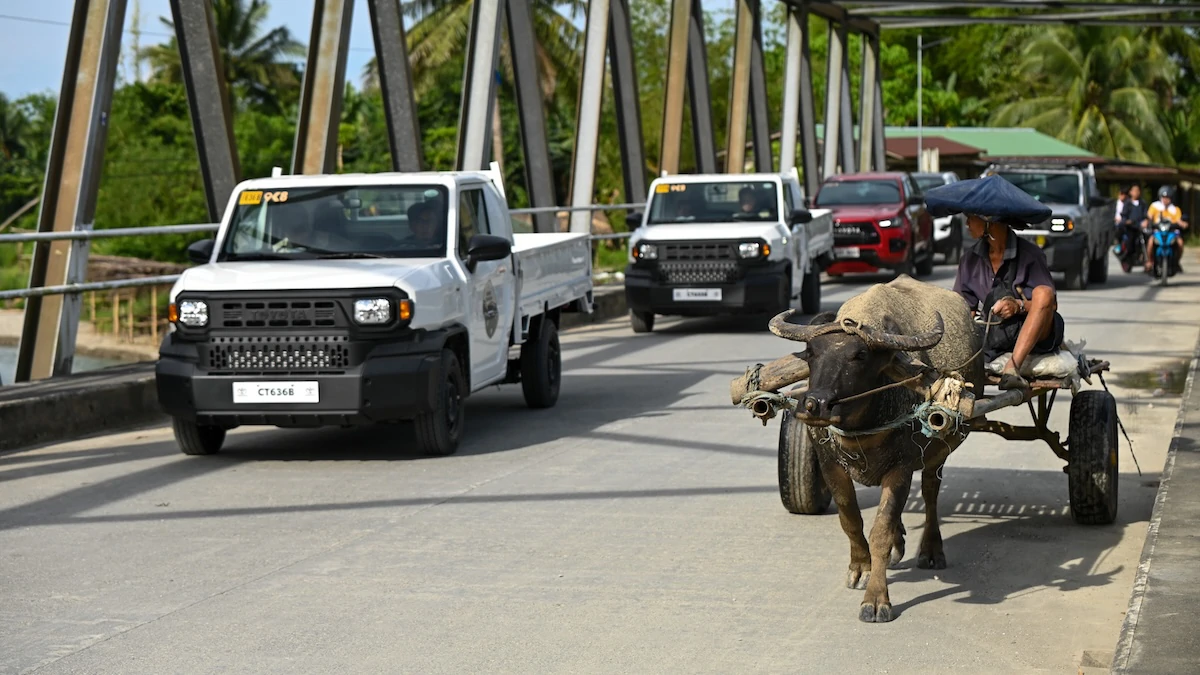
I drove a fully stock long-wheelbase Tamaraw Dropside manual on the first day (white units with halogen headlamps in these photos). It’s definitely not cushy, but it’s not crashy, either. Unladen, the leaf-sprung rear end can get bouncy over ruts taken at speed, and yes, you will feel the initial impact of going over potholes and bumps any faster than a cautious crawl. The suspension, however, cancels out the aftershocks reasonably well, so even with minimal NVH suppression in the cabin, you don’t end up feeling battered and miserable.
It helps a lot, too, that steering and pedal weight are very manageable. You won’t suffer too much in traffic driving this.
OTHER STORIES YOU MIGHT HAVE MISSED:
The Toyota Land Cruiser Commercial is perfect for making off-road deliveries
The Ford Explorer Tremor is a family-friendly Raptor of sorts
Did you ever try it with cargo?
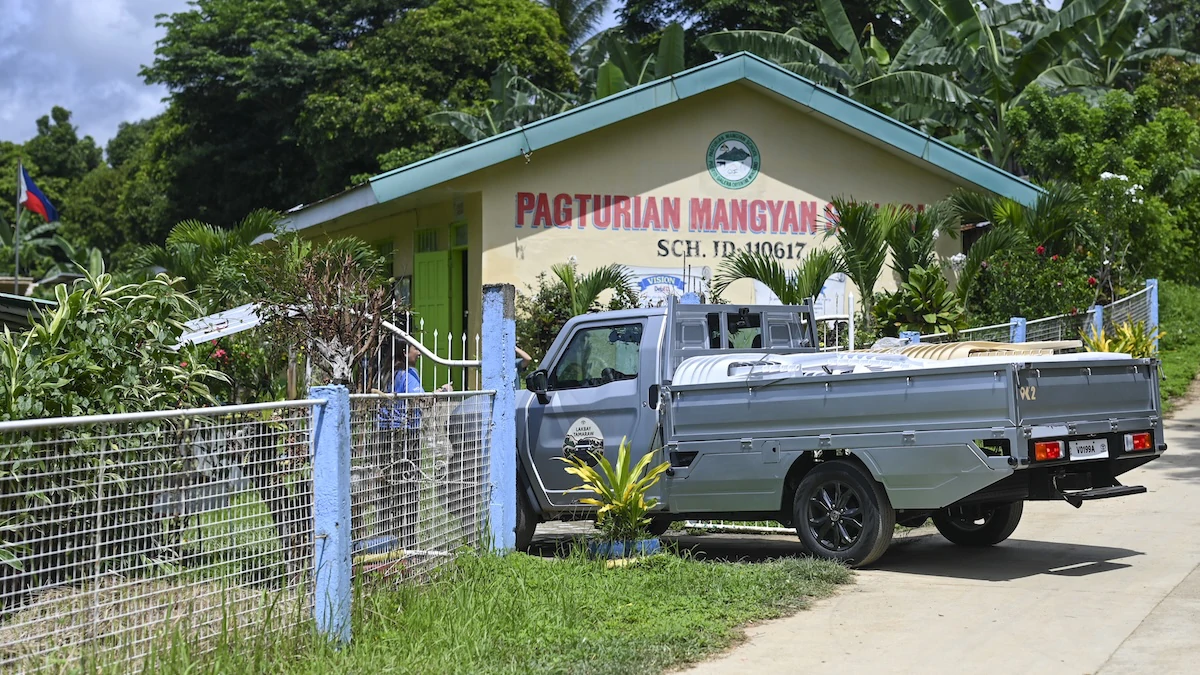
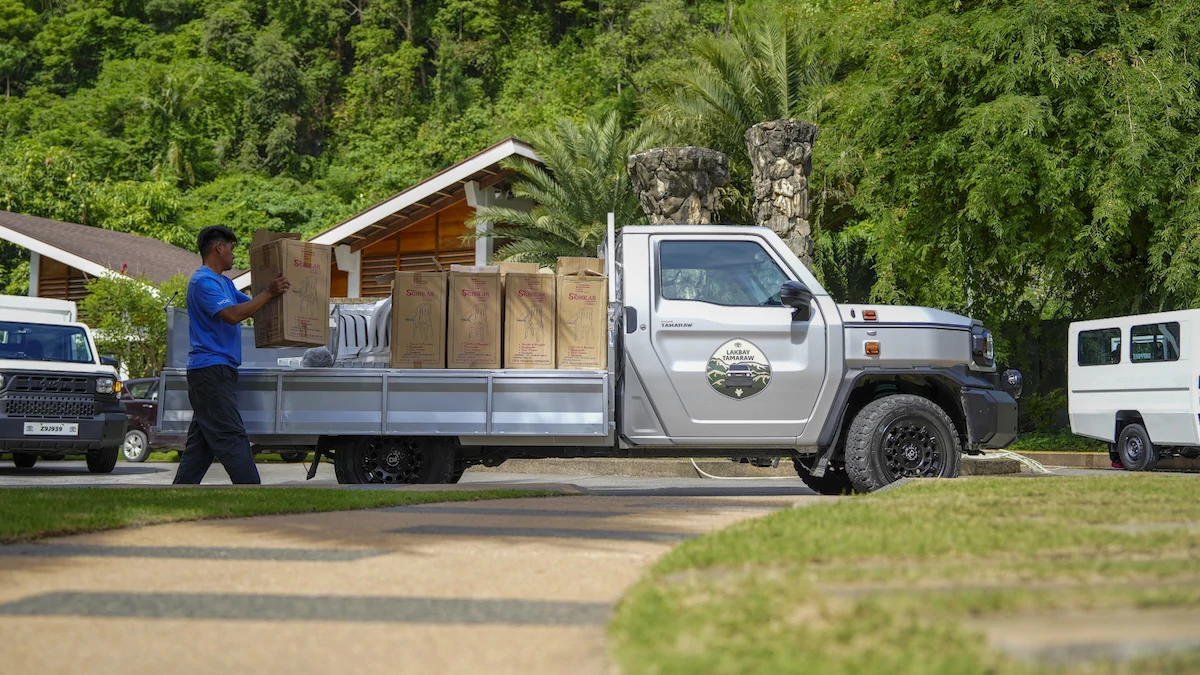
Yes, on the second day, as a passenger in the top-spec GL Dropside—the only Tamaraw you can get as an automatic. As expected, the rear felt more settled and planted, but we were also driving more carefully, because the bed was loaded with chairs and supplies for the students of Pagturian Mangyan School.
What’s the maximum payload?
Among the long-wheelbase variants, the manual Dropside can take the most payload at 1,110kg. The GL Dropside can carry up to 1,025kg, while the Aluminum Cargo and the Utility Van have respective maximum capacities of 1,000kg and 910kg. As for tires, the GL Dropside gets 215/65 rubber on 16-inch alloys. The rest wear steelies shod with 195R14C commercial tires.
Is there enough power to carry that weight?
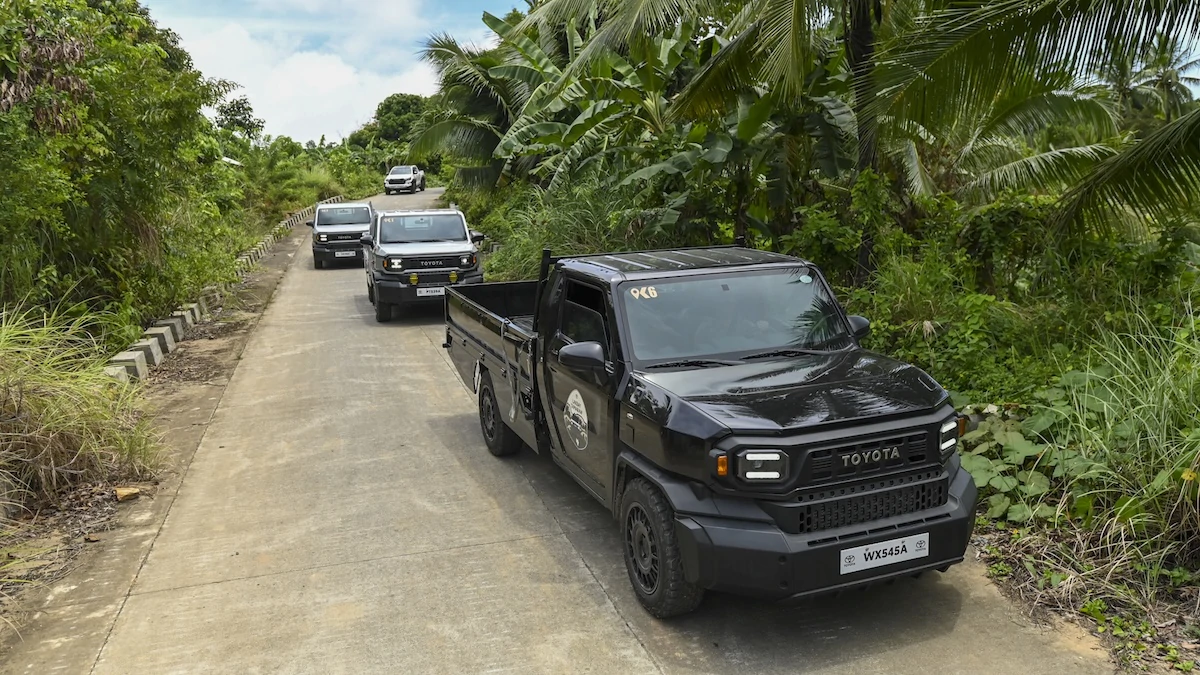
All long-wheelbase Tamaraws are equipped with the 2.4-liter 2GD-FTV turbodiesel engine that’s also found in the lower-spec Hiluxes and Fortuners. Power peaks at 148hp, while torque is 343Nm for manual variants and 400Nm for the GL Dropside automatic.
Our cargo never really troubled the Tamaraw’s payload capacity or engine output, even on the steep stretch leading to the school. The tougher test might be the trek up to Ponderosa Golf Club, which was roughly 3.5km of sustained uphill climbing. Well, the Tamaraw just kept going and going, making such short, easy work of the task that the drive to the climax became, uh, anticlimactic.
How about twisty roads—can the Tamaraw take those on as well?
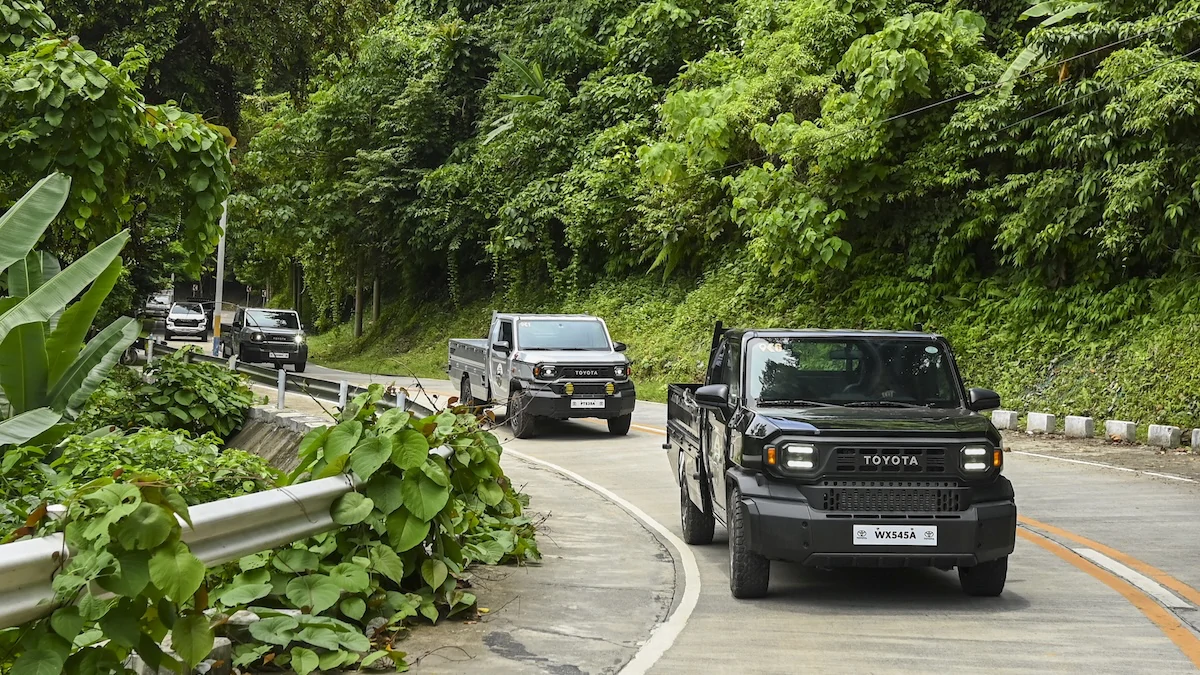
It might be because I haven’t gone on a road trip in a manual car in a long time, but I truly enjoyed driving the Tamaraw on the curvy sections going to Puerto Galera. The steering is accurate, making up for a slight lack of tactility, and you can trust the nose to go where you point the wheel. Thanks to the stiff setup and the relatively low ground clearance, body roll is also kept in check, so the car moves predictably even if you brake, accelerate, or turn in more heavily than you normally would in a utility vehicle. You can easily feel the weight transfer and react accordingly.
This being rear-driven, you can even use some throttle steer through corners—not to the point of breaking traction in the rear, but just enough to push the front end to turn in more easily and take a corner more tightly. I guess the driving experience is engaging because it’s raw. There are no driving aids, so it’s up to you to find the best way to handle the vehicle.
No driving aids at all?
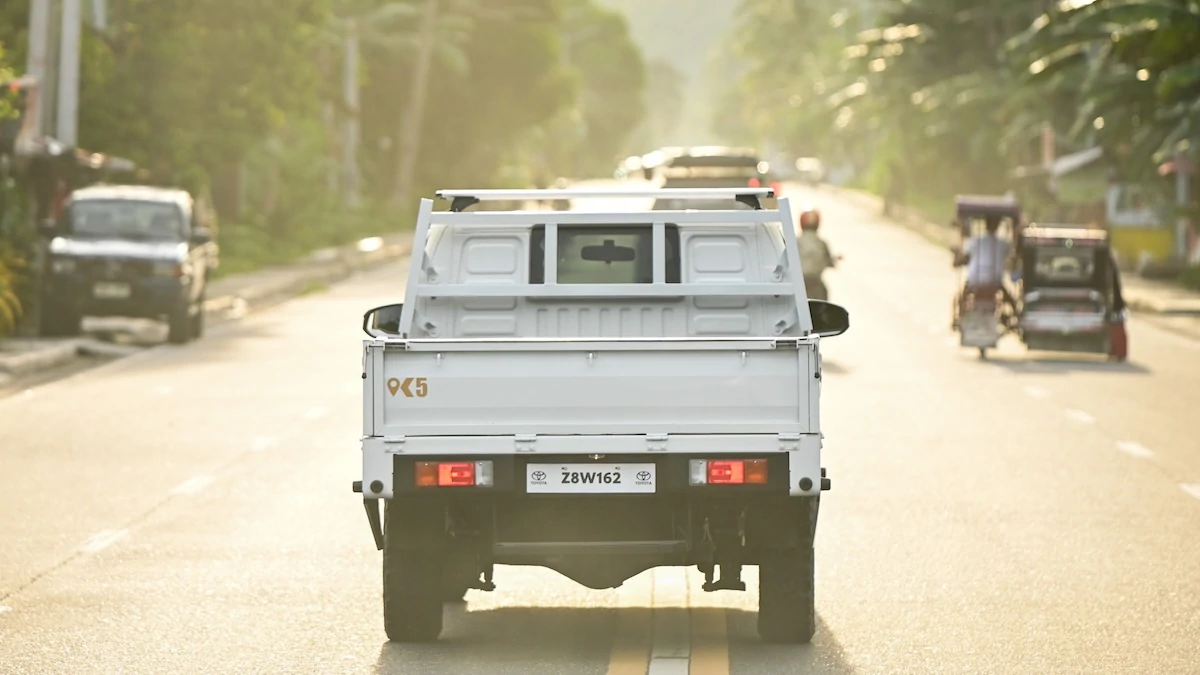
The GL Dropside is equipped with ABS and EBD, but there’s none at all for the lower variants. There’s not even a tachometer across the range. Probably helped cut costs a bit, and product planners may have reasoned that utility vehicle drivers should be proficient enough with a manual to figure out shift points on their own. There’s definitely enough diesel engine drone filtering into the cabin to cue your gear changes.
One other thing the Tamaraw doesn’t have is a fuel-economy meter, so to those asking us about fuel consumption, I don’t have an answer at the moment. This will be one of the first things we’ll test once we’re able to borrow a Tamaraw for an extended period.
How’s the interior?
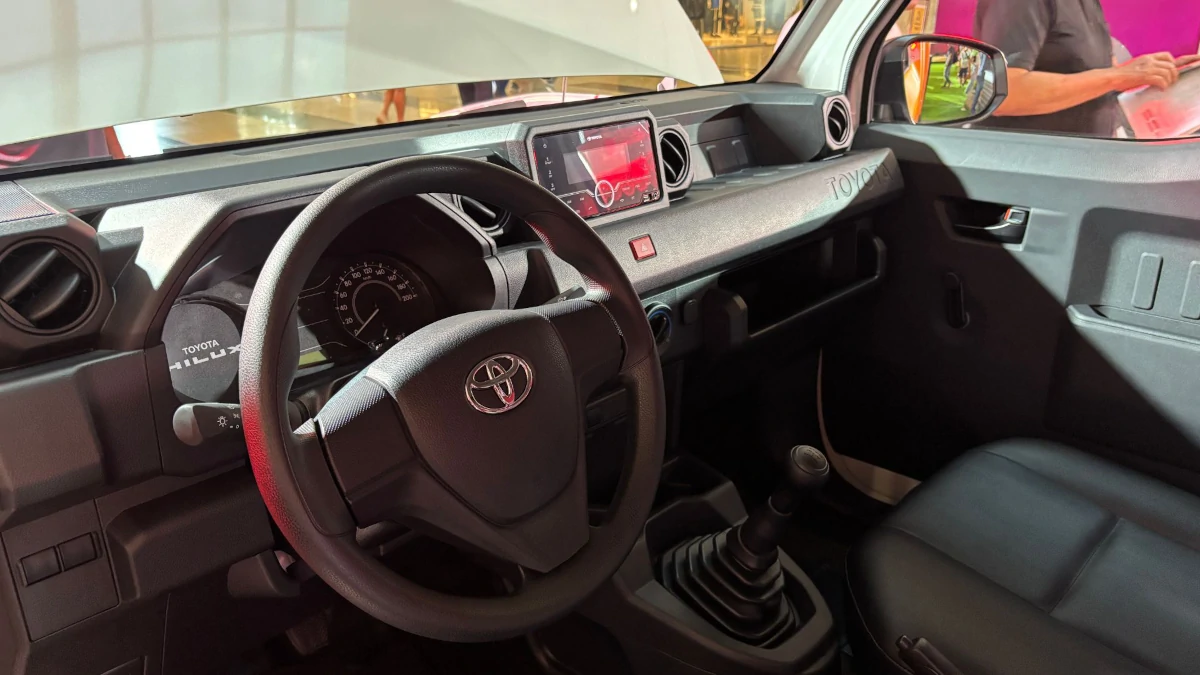
Hospitable enough. All controls are straightforward because you only have the bare essentials. Not even stalks to adjust the side mirrors—instead, you (literally) roll down the windows, then push the mirror this way and that to get the best view of your surroundings (framed by your fingerprints). There’s also no visor or grab handles on the shotgun side, but there are screw holes on the A-pillar if you want to purchase the OE ‘assist grip’ accessory—something my car mate, Julian Panlilio of TheAutoPH, could have used when I had a bit too much fun on the zigzags.
The biggest challenge is cabin space for personal items. Our luggage was in a separate shuttle from Batangas Pier to the hotel in Mindoro, but the backpacks and gear left with us had to be stuffed anywhere there was space in the cabin—passenger footwell, middle of the bench seat, door pockets. In the GL Dropside, the individual driver and passenger seats can be moved forward to fit a medium-size backpack behind each occupant, but because the passenger bench in the regular Dropside is fixed, you can only access the space behind the driver.
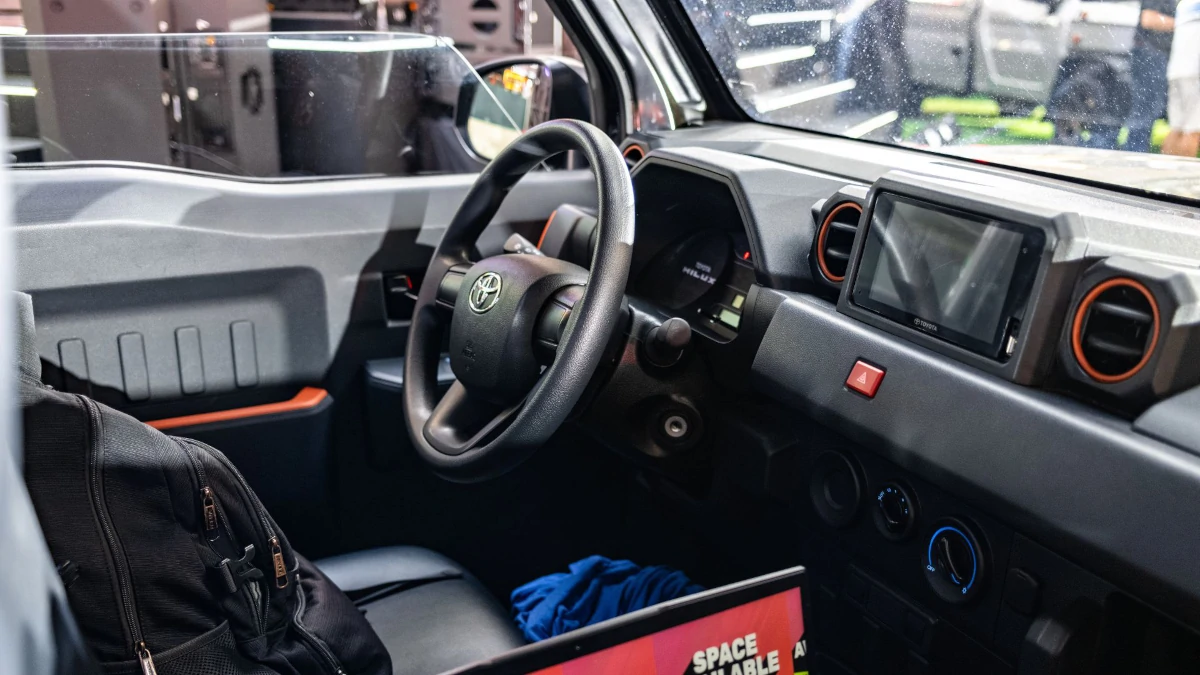
The GL Dropside also boasts a seven-inch head unit with Apple CarPlay and Android Auto, plus driver and passenger airbags. There are power windows and pops of orange trim, too, since this is the ‘lifestyle’ variant for both personal and business use or RV builds.
Is the seat comfy? How easy is it to find a good driving position?
The padding is thin and there’s no bolstering, but it’ll do. I’d pick it over a thick, lumpy, and contour-less seat. Those with back problems can probably relate.
Once we get a test unit again, I’ll have our taller editors sit inside and see if they can work out an adequate driving position. The driver’s seat offers basic four-way adjustment, while the steering wheel can only be tilted up and down. I’m 5’5” and it was easy enough for me to find an acceptable setting, but I’m sure it’s a different story if you’re 5’10” and up.
Is the A/C strong enough?
How strong do you need it to be? With the fan speed on low, the temperature set to midpoint, and two of the four vents closed, it was freezing in the cabin. I write this still recovering from a cold—we were in and out of the car during the drive, and the constant switching between frigid and scorching temperatures did me in.
What about short-wheelbase variants—do we get them locally?
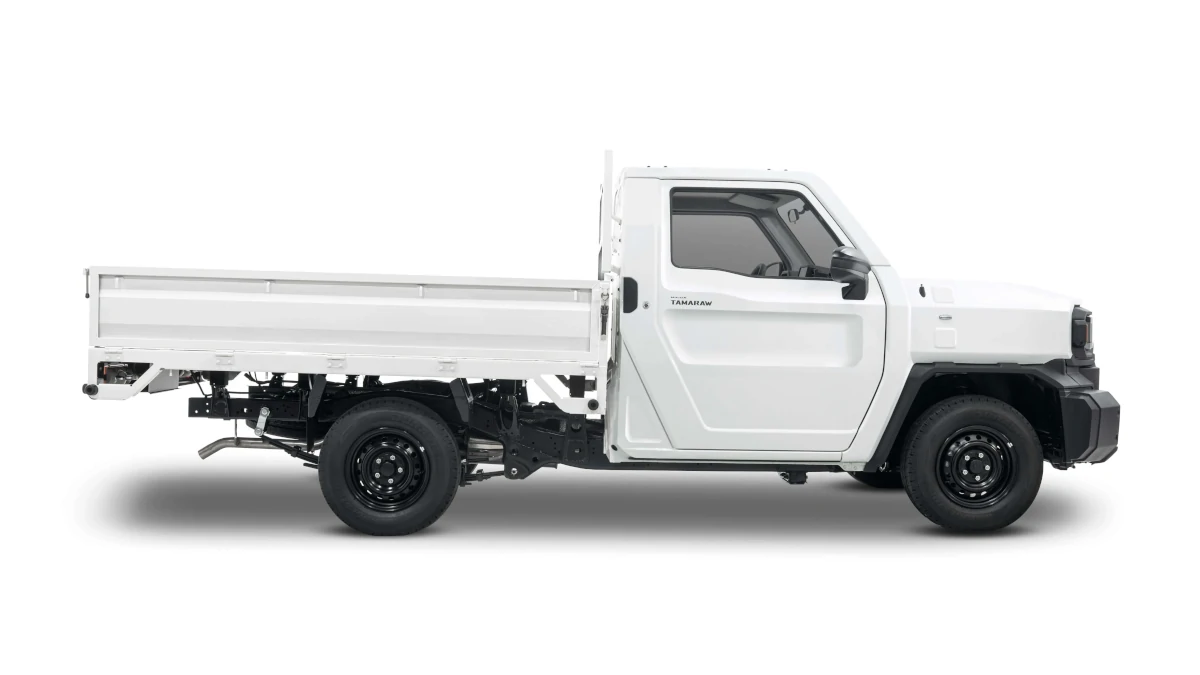
We do now, but all of them are powered by a gasoline engine—the 2.0-liter 1TR-FE that puts out 137hp and 183Nm of torque, delivered to the rear wheels via a five-speed manual gearbox.
You lose 335mm off the total length by opting for the short-wheelbase version. Obviously, payload capacity is lower, too, at 1,025kg for the Dropside, 935kg for the Aluminum Cargo, and 850kg for the Utility Van.
How about a double-cab version?
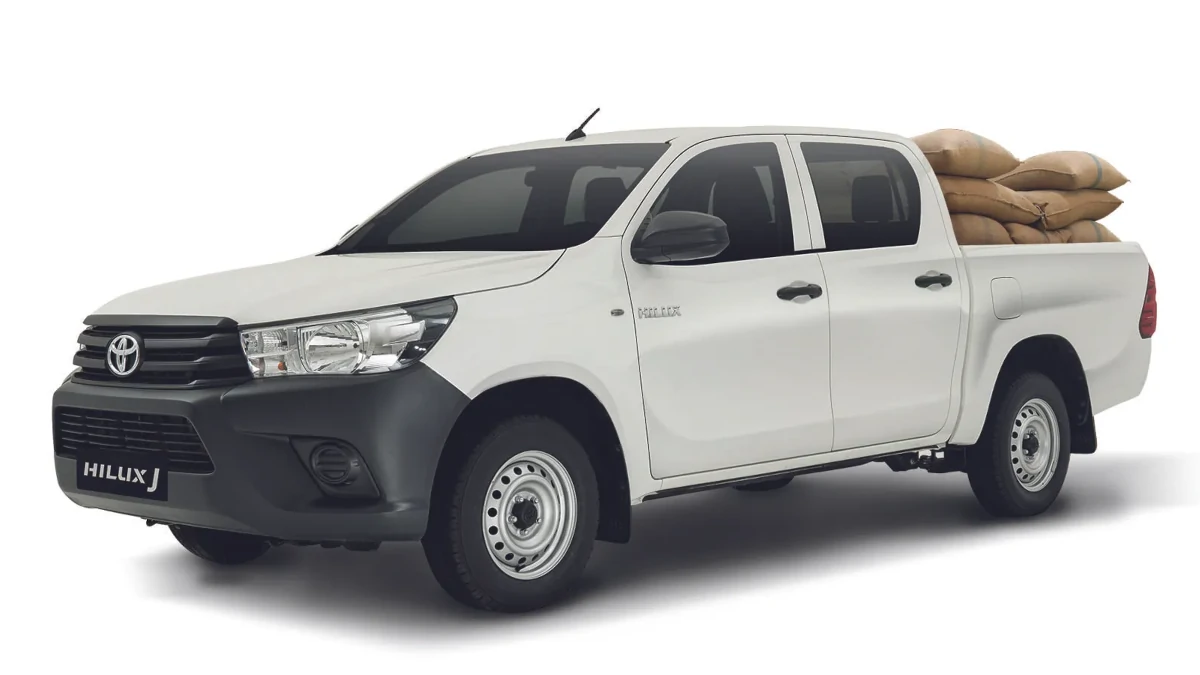
We had a bit of fun before and rendered it as an ‘FX’ wagon, but the Tamaraw doesn’t officially come in double-cab form. If you want four doors and five seats, you’ll have to look elsewhere in the Toyota stable—specifically, the Hilux Fleet, which gets the same 2GD-FTV engine and five-speed stick. It also gives you the option of four-wheel drive, but that drops the max payload from 1,055kg to 910kg.
There are also FX and Cargo body styles of the Hilux Fleet in single-cab form, and a cab-and-chassis variant that you can customize however you want.
Is the ride different from that of the commercial Hilux? What’s stopping me from going for the Hilux instead?
Nothing’s stopping you, because the choice ultimately depends on your needs. For example, versus the Dropside manual, the Hilux Fleet pickup has seating for five, a smaller bed with fixed sides, and a payload capacity that’s lower by at least 55kg. On the plus side, its minimum ground clearance is higher at 190mm for the 4x2 variant, versus 164mm for the Dropside and 176mm for the GL Dropside. If your usage requirements call for that extra height or if four-wheel-drive capability is nonnegotiable to you, the Hilux would be the logical choice. If you need a basic hauler to transport piles of cargo on city and highway routes, the Tamaraw starts to make more sense.
It’s been a long time since I drove the current-gen IMV-based Hilux, so I can’t say how its ride compares to that of the Tamaraw, which uses the newer IMV 0 platform. It’s definitely worth pitting these two against each other in a future cross-segment comparo.
Will Tamaraw prices increase with the upcoming excise taxes on pickups?
In case you need an update, the recently signed Capital Market Efficiency Promotion Act (CMEPA) will re-impose excise taxes on pickup trucks, reversing the exemption granted by TRAIN. Pickups were exempted because of their utilitarian function, particularly for micro and small businesses, but over time, it became apparent that a lot of these supposed workhorses are being used as on-road steeds.
Toyota Motor Philippines says it will have to wait for CMEPA’s implementing rules and regulations to determine whether the Tamaraw will continue to enjoy excise-tax exemption. That said, the carmaker believes the model won’t be affected because it’s classified as a utility vehicle.
SPECS: Toyota Tamaraw Dropside Diesel
Price: P937,000 (MT), P1,075,000 (GL Dropside AT)
Engine: 2.4-liter turbodiesel I4
Power: 148hp @ 3,400rpm
Torque: 343Nm (MT) or 400Nm (AT) @ 1,400-2,800rpm
Transmission: five-speed manual or 6-speed automatic
Layout: RWD
Seating: 2