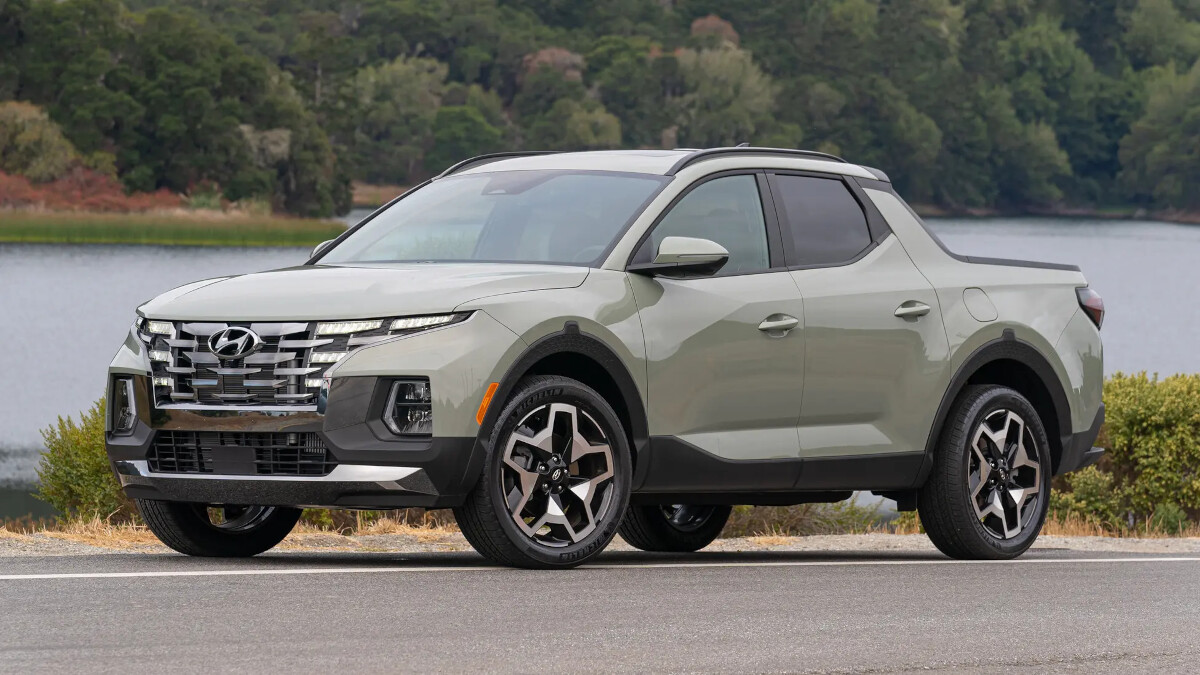
The Hyundai Santa Cruz is a genre-bending little trucklet, combining the efficient and easy-driving attributes of a compact crossover with the usefulness of a pickup. Just because you want a full-size truck doesn’t mean you need a full-size truck, and for a huge number of pickup buyers, the Santa Cruz is a right-sized and way more affordable solution.
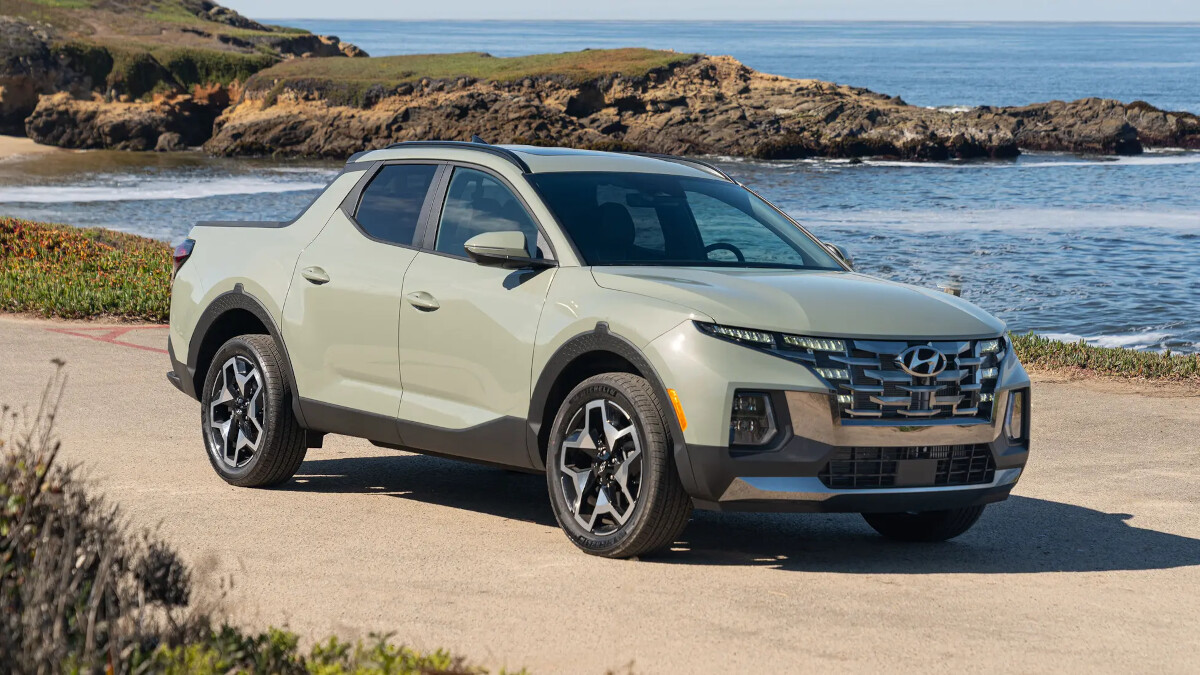
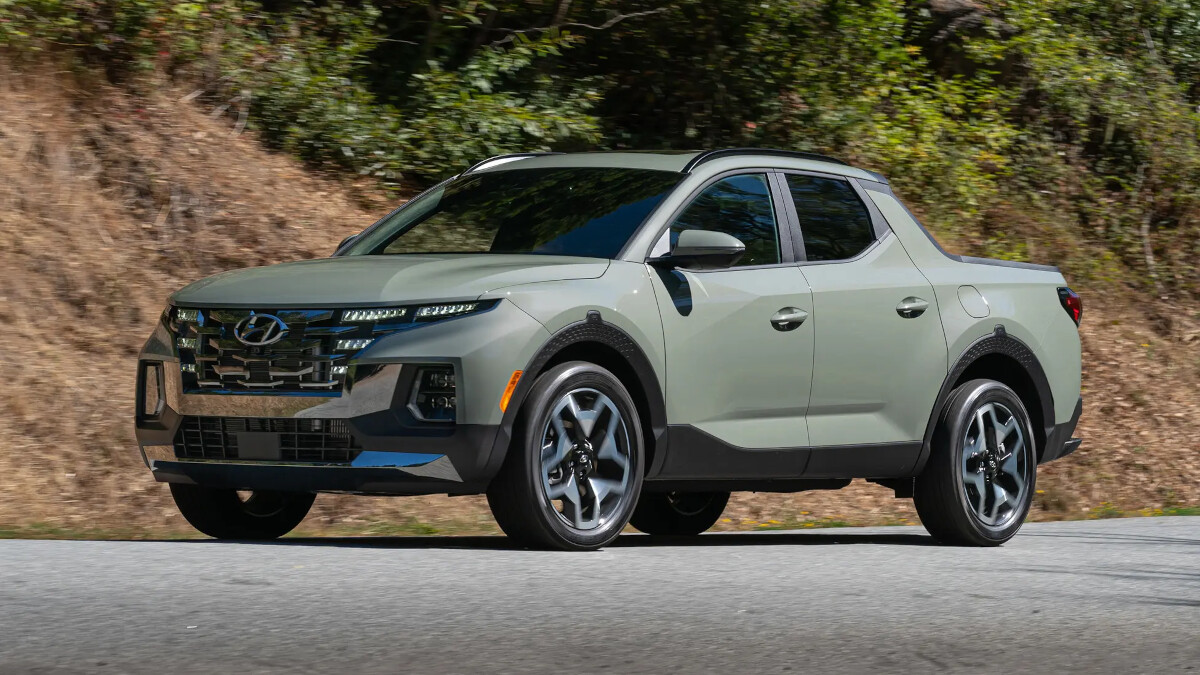
From the B-pillar forward, the Santa Cruz shares the majority of its design with Hyundai’s compact crossover, and the bulk of the interior is shared between these two platform-mates, as well. Love the way the triangle-tastic Tucson looks? Cool, you’ll dig the Santa Cruz. Besides, what other pickup truck has this kind of front-end LED square footage?
The base powertrain is a 2.5-liter naturally aspirated in-line-four with 191hp and 245Nm of torque. This engine is, in a word, anemic. It’s slow and stodgy, and you really have to rev the bejesus out of it—especially when accelerating onto the highway. At least the accompanying eight-speed automatic transmission is buttery smooth.
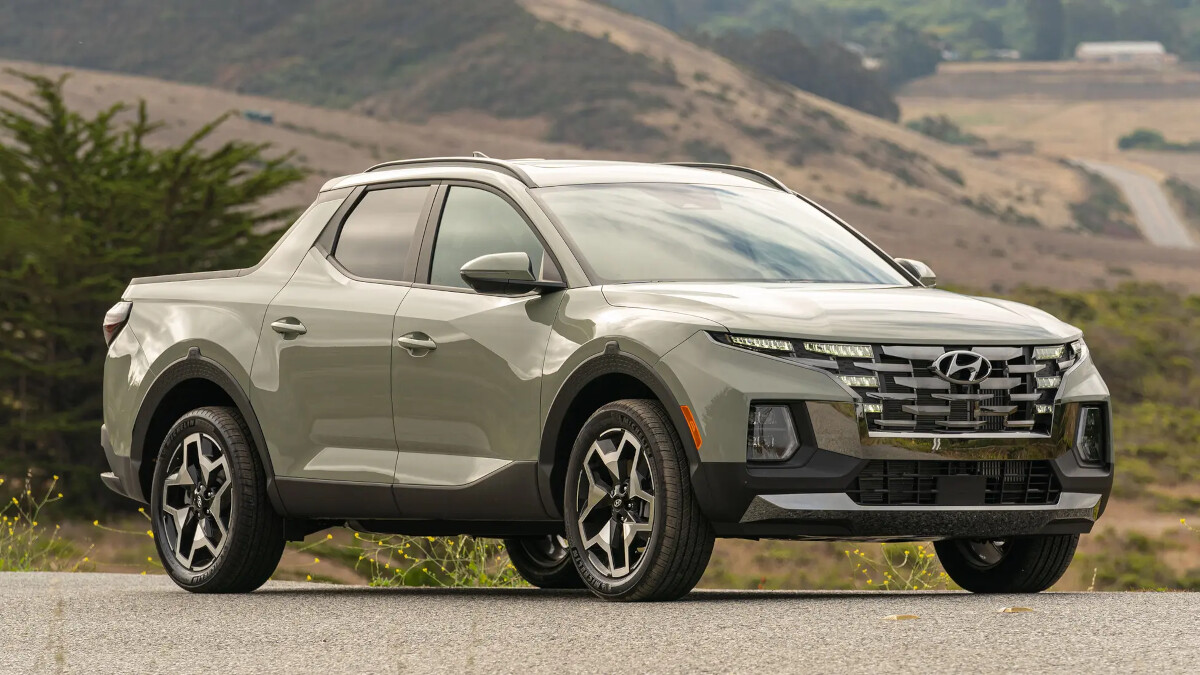
On the other hand, the uplevel 2.5-liter turbo straight-four is much better suited to the Santa Cruz. With 281hp and 421Nm, there’s way more usable power—both off the line and while punching it at speed—and the eight-speed dual-clutch gearbox offers swift, smooth shifts. This setup is really lovely, and will be appreciated should you be hauling a load or utilizing the truck’s 5,000-pound (2,268kg) max tow rating.
ALSO READ:
A Toyota Corolla pickup isn't too far from reality, says report
The Hyundai Santa Cruz compact pickup has been turned into a rally-ready machine
There’s no hybrid, which is weird, since Hyundai offers the Tucson with both regular hybrid and plug-in hybrid options. Could these powertrains fit in the Santa Cruz? Probably. But until Santa Cruzes start flying off of dealer lots like hotcakes, it doesn’t make sense for Hyundai to increase build complexity. Then again, Ford can barely keep up with demand for the hybrid engine in its similarly sized Maverick pickup. Hmm.
Anyway, the Santa Cruz can sort of do tough-guy truck stuff. Just keep in mind this isn’t a traditional truck with body-on-frame construction, so if serious towing and hauling are your priorities, you’ll need something much more robust.
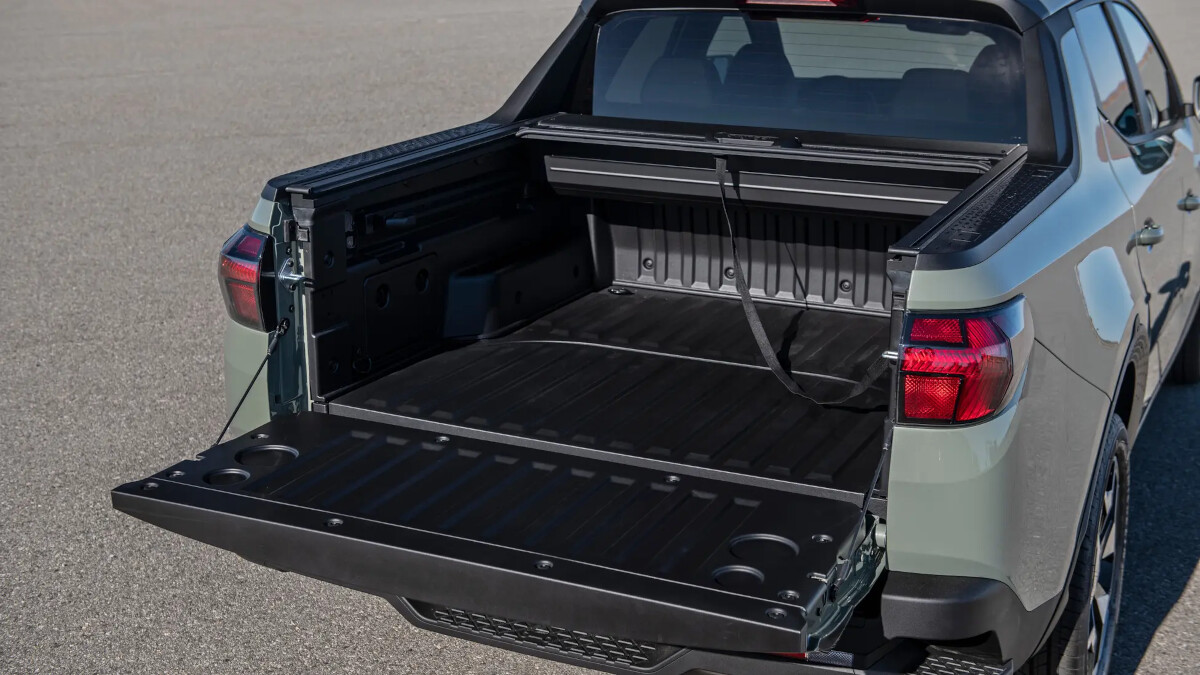
That’s not to say the Santa Cruz can’t handle some big jobs. The truck can transport 640kg of payload in its bed. What’s more, the bed has a sliding tonneau cover, making it easier to cover and carry items without the risk of them getting damaged (or stolen), and you can option all sorts of bed organizers. Versatility for the win.
As for going off-road, all Santa Cruz variants have 218mm of ground clearance, which isn’t bad, but you can’t spec all-terrain tires or any sort of adaptive off-road drive modes. Even the midrange XRT trim, which looks all butch and rugged, is all show and no go. You get side steps, wider wheel arches, and some extra door trim, but that’s it. If you really want to take a Santa Cruz off-roading, you’d better spend some bucks at a proper upfitter first.
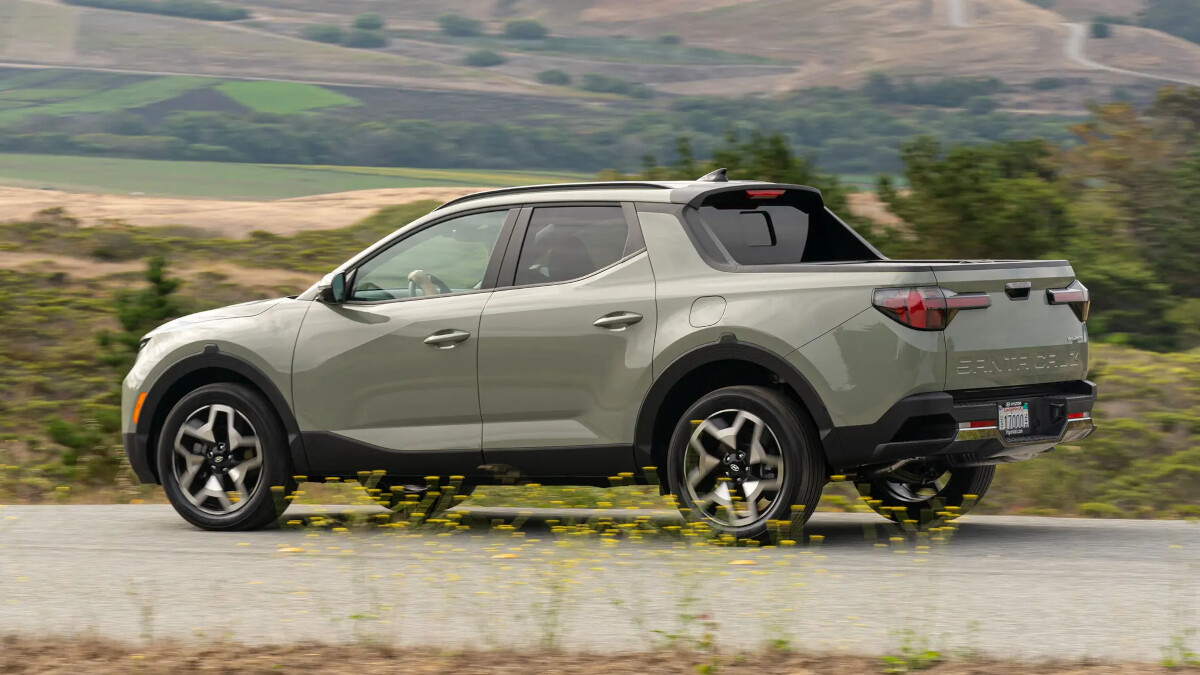
Hyundai Santa Cruz on the road
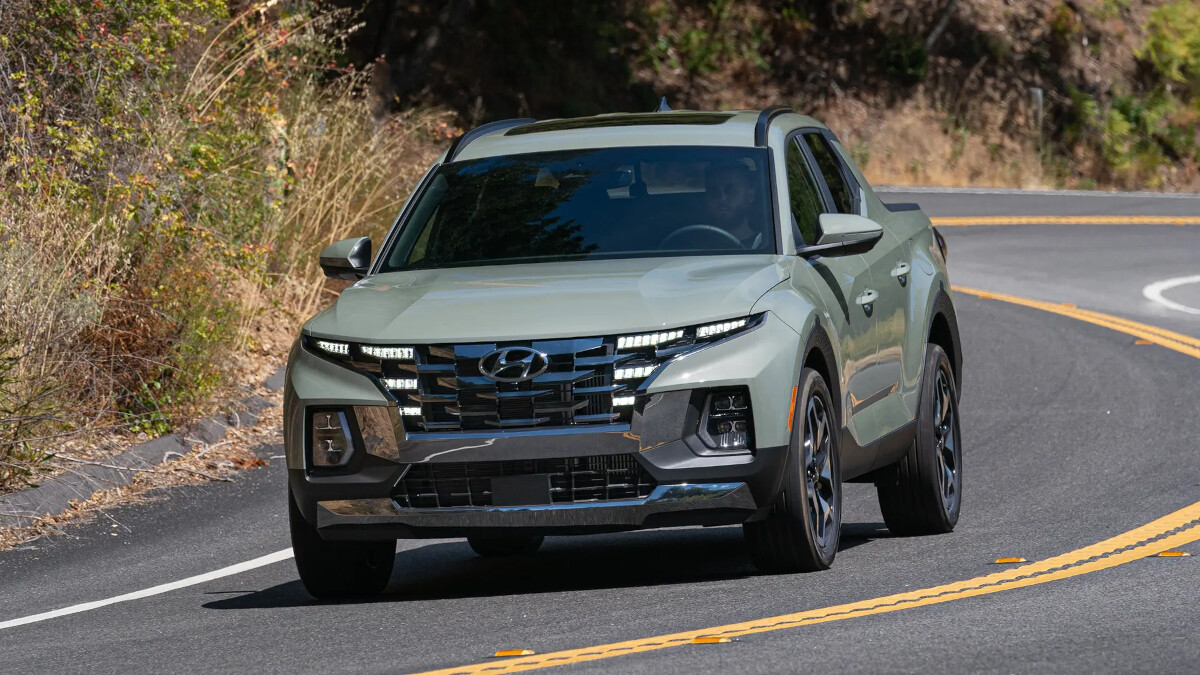
Overall, the Santa Cruz is genuinely great to drive—assuming you get the turbo engine. That 421Nm of torque comes on at 1,700rpm, and that usable low-end power means the dual-clutch doesn’t always need to downshift so you can eke out proper oomph. At higher speeds, the engine never feels strained; there’s no delay when you need a burst of acceleration. The 2.5-liter turbo is the same one Hyundai uses in the punchy Sonata N-Line, and that feisty nature is very much alive in the Santa Cruz. It’s fun.
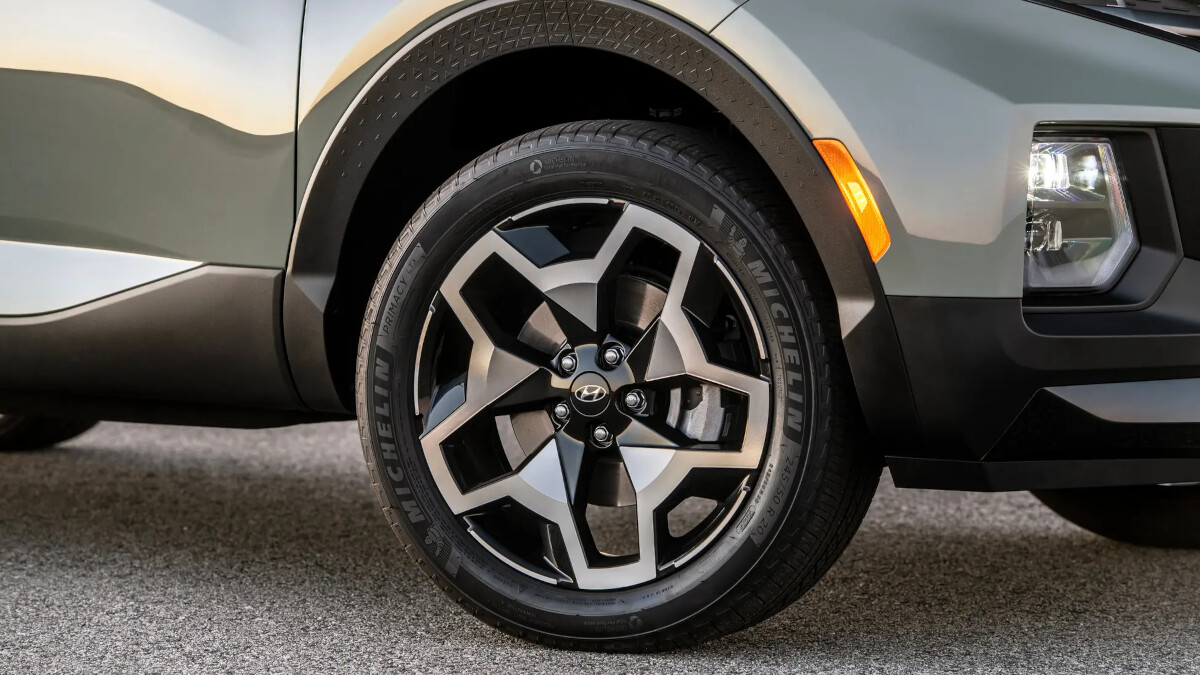
The steering is direct and well weighted, and the ride is somewhat firm on the truck’s optional 20-inch wheels, but not so much that it’s off-putting. The Santa Cruz exhibits remarkable composure through tight corners, not that you’ll ever confuse this truck for a sports car. It’s more fun to drive than the Tucson on which it’s based, and much more engaging than any other truck, no matter the size.
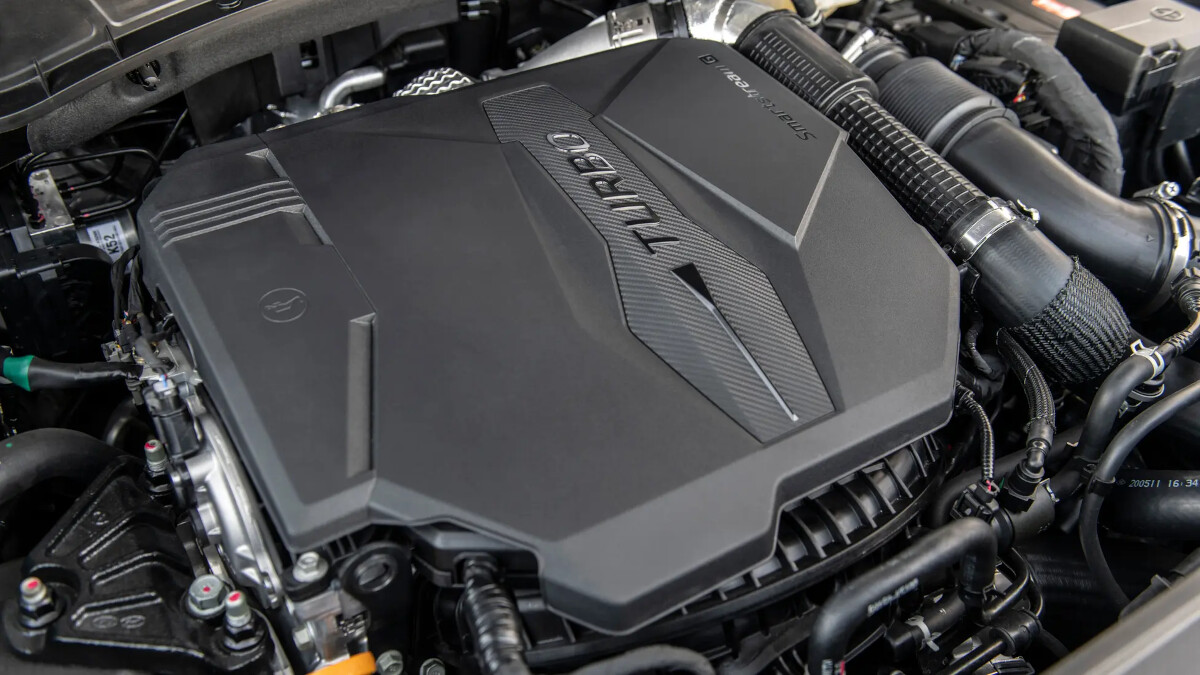
But look, I know the turbo engine won’t be for everyone, especially at its high price. The only problem with the base 2.5-liter engine is that it’s weak and makes for one slow truck. If you’re only running errands around town in your Santa Cruz, I suppose that’ll be fine. But if you’re going to press this truck into long-distance driving or towing/hauling duty—you know, reasons you’d buy a pickup—then the turbo is really a worthwhile upgrade.
Fuel economy is okay. A base-engine Santa Cruz with front-wheel drive returns 9.4km/L in the city, 11.1km/L on the highway, and 9.8km/L combined, while adding all-wheel drive reduces those figures to 8.9km/L in the city, 10.6km/L on the highway, yet still averages out to 9.8km/L combined. Interestingly, the turbo engine is slightly more efficient on the highway, rated at 11.5km/L, while the city and combined figures reduce to 8.1km/L and 9.4km/L, respectively.
OTHER STORIES YOU MIGHT HAVE MISSED:
Ford Ranger plugs into the future with upcoming PHEV version
Toyota Hilux prices up by as much as P135k, gets new 4x2 variant
Here’s the issue: The Ford Maverick is much more economical. A front-wheel-drive turbo variant can hit 12.8km/L, and if you buy the hybrid version, it can achieve 17km/L in the city, 14km/L on the highway, and 15.7km/L combined. That’s a massive advantage. Stinks there’s no Santa Cruz hybrid. Sigh.
There’s tons of driving aids, but sadly, the best stuff is reserved for the Santa Cruz Limited AWD. That’s the only place where you can get radar-based adaptive cruise control or Hyundai’s Highway Driving Assistant, which combines that tech with lane-keeping assist.
The base Santa Cruz isn’t a total stripper model, though. It comes standard with blind-spot monitoring, rear cross-traffic assist, forward-collision assist, lane-keeping assist, and plenty more. There aren’t any truck-specific upgrades like the ones you’ll find on larger pickups, however, like myriad cameras or towing assist tech, and the blind-spot monitoring doesn’t account for the length of a trailer.
Hyundai Santa Cruz on the inside
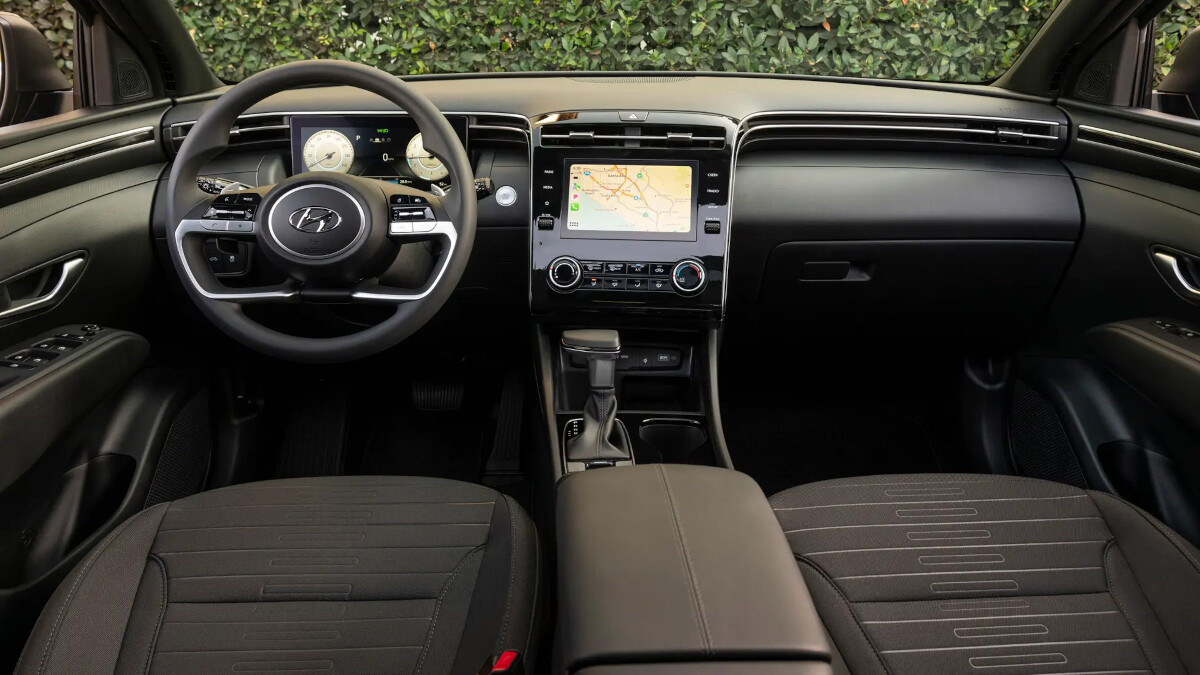
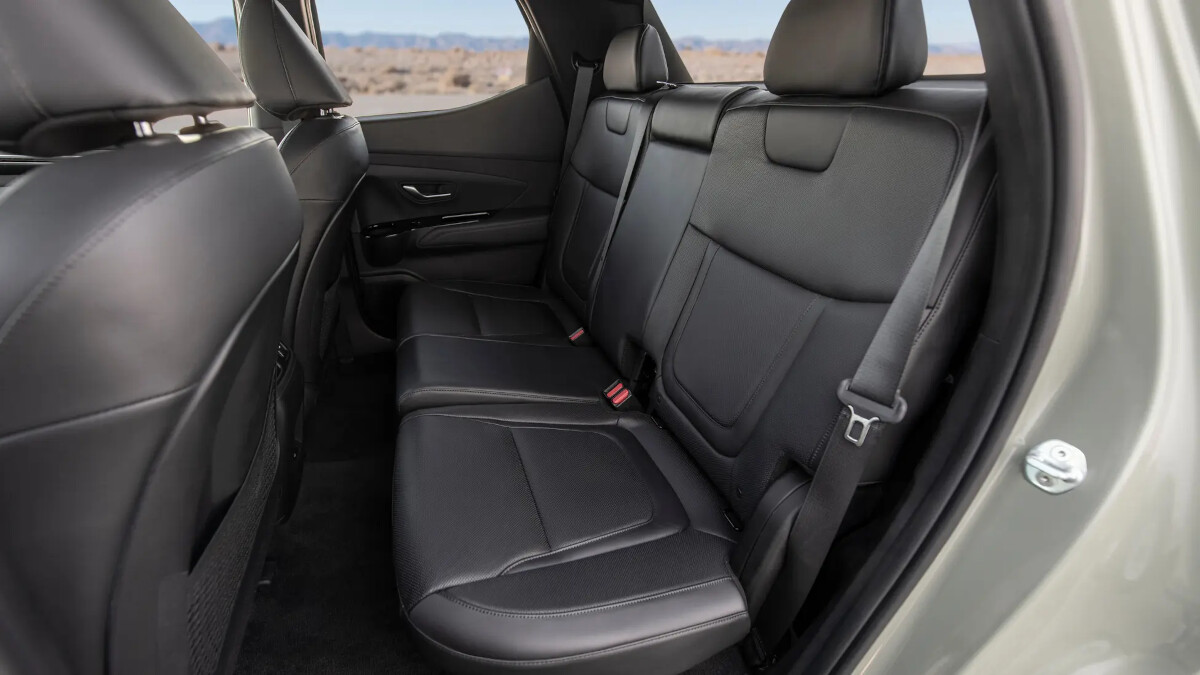
The cabin is snazzy and classy—and, you know, exactly like the Tucson’s. All the surfaces you touch in the Santa Cruz feel good, and you can get all sorts of creature comforts, like heated and cooled front seats, as well as a heated steering wheel. There’s a ton of room up front, and the rear seats have lots of head- and legroom, too—mostly thanks to the Santa Cruz’s squared-off design.
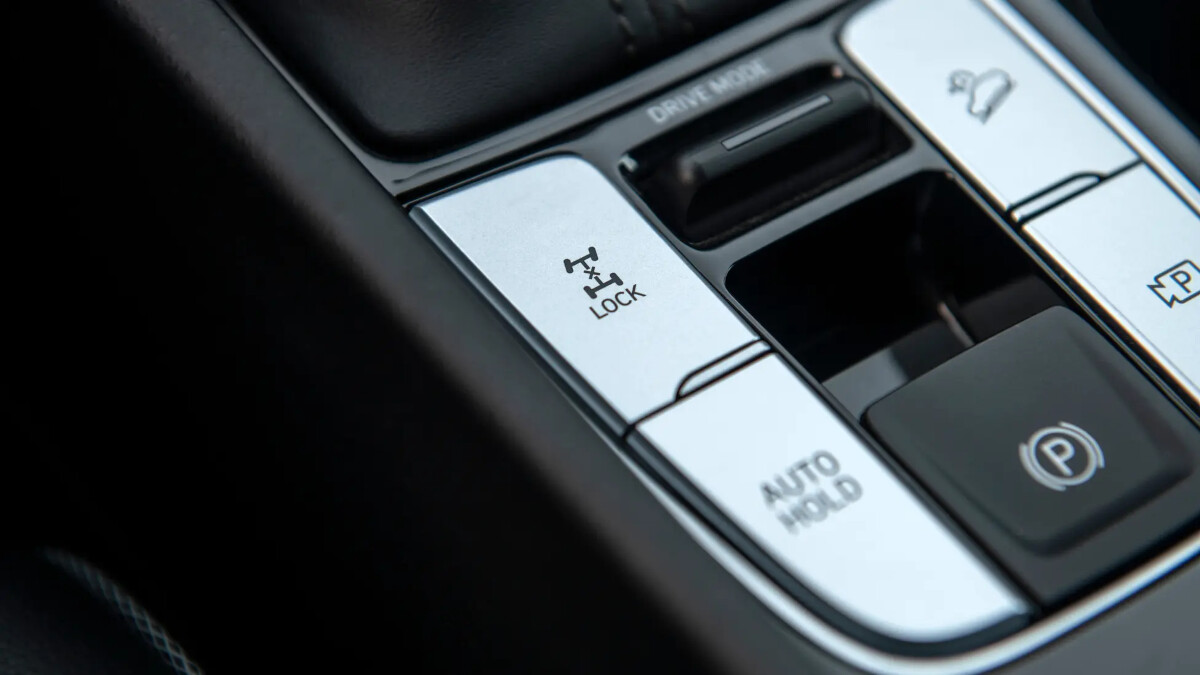
Our one major nitpick with the Santa Cruz is one we have with the Tucson: all that horrible piano-black surfacing. The flush-mounted buttons are going to be all gross with smudges in no time at all, and because Hyundai didn’t want to break up the design with any sort of physical controls, there isn’t a volume knob, which, come on, we thought we agreed to stop doing that.
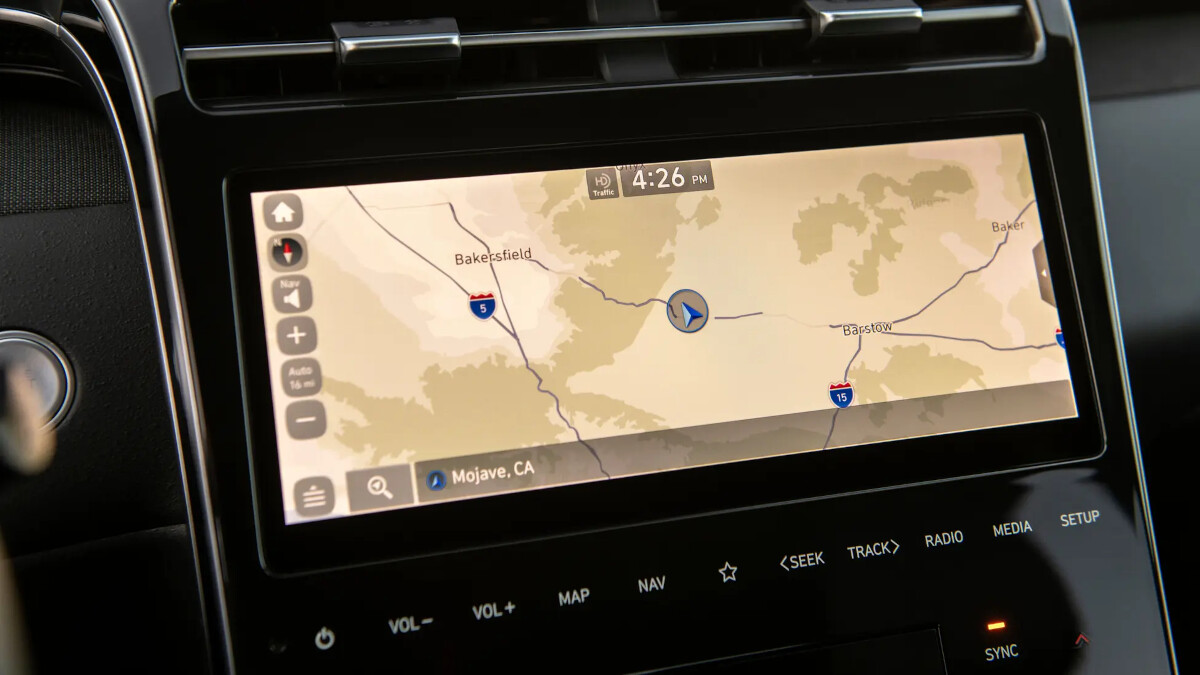
In typical Hyundai fashion, in-car tech is great. The base Santa Cruz only comes with an eight-inch multimedia touchscreen, but higher-end trims have a 10.3-inch display—though you have to connect Apple CarPlay or Android Auto with a USB-A cord. Lame.
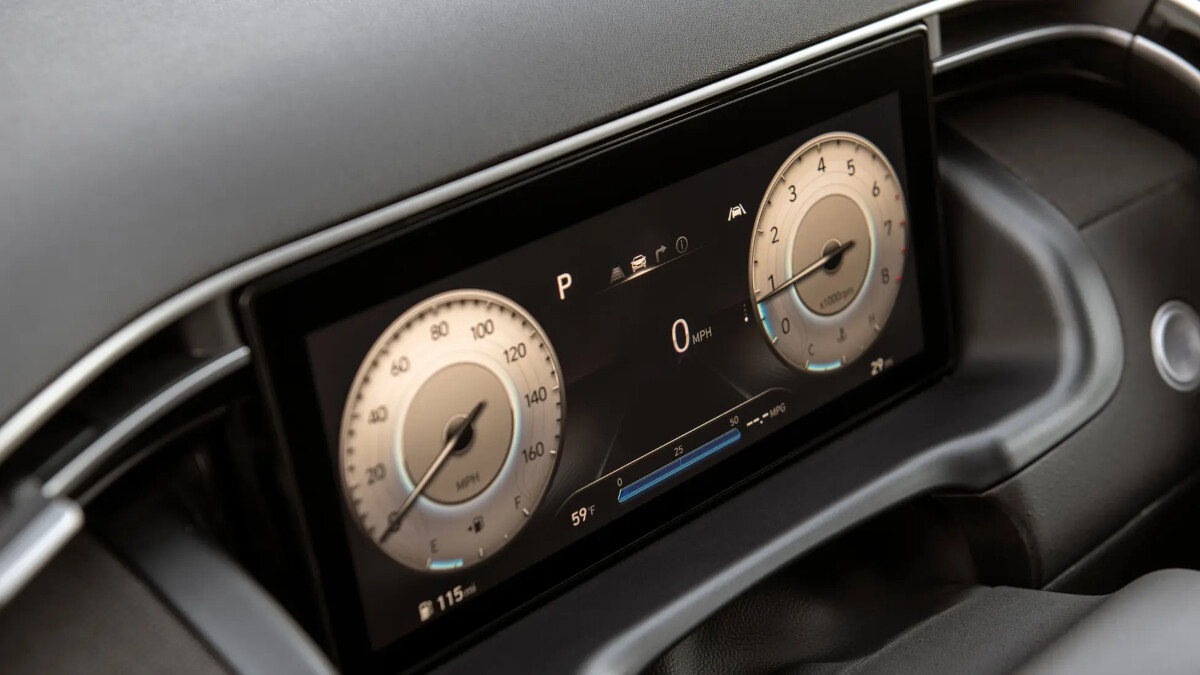
Most Santa Cruz trims get a matching 10.3-inch digital gauge cluster that’s housed low on the dashboard and doesn’t get obscured by the steering wheel. Changing between drive modes will alter the screen’s colors, too, which will surely impress your passengers.
At the back, there’s 765 liters of coverable space inside the truck bed, but obviously, if you roll back the tonneau cover, you can carry all sorts of taller or bulkier items—well, without exceeding the 640kg payload capacity, that is. Another great thing about this truck: The load-in height is pretty low, so you don’t have to be super tall in order to load items into the bed. Little cutout steps in the bumper corners let you hop up to reach in and grab stuff, too.
Final thoughts
You’ll need at least $27,985 (around P1.59 million) to get into a base Santa Cruz. Going for all-wheel drive costs $29,485 (roughly P1.68 million), and if you want the turbo engine (you do), that costs a whole lot more: $39,545 (approximately P2.25 million). The most expensive Santa Cruz Limited comes in at $42,405 (almost P2.42 million). Not horrible, all things considered.
Right now, its only competitor is the Maverick, and the Maverick’s biggest advantage is that it’s a lot less expensive to start, priced below $25,000 (less than P1.42 million). It also offers a super-efficient and super-smooth hybrid engine option, though this can only be paired with front-wheel drive. The Maverick doesn’t have as many fancy flourishes or interior technologies, but fully loaded, it doesn’t even come close to touching $40,000. Just saying.
The Hyundai Santa Cruz is the perfect pickup for people who don’t need the immense capabilities of a lumbering, cumbersome full-size truck. The Santa Cruz is great to drive, wonderfully appointed, plenty functional, and looks great, too.
Plus, it’s priced to compete, undercutting the bottom ends of more traditional midsize trucks. However, the best versions of this truck cost a lot more, so if you can afford to spend big, you’ll get a much nicer pickup—one you’d love to live with over the long haul.
More photos of the Hyundai Santa Cruz 2023:
NOTE: This article first appeared on TopGear.com. Minor edits have been made.