Overview
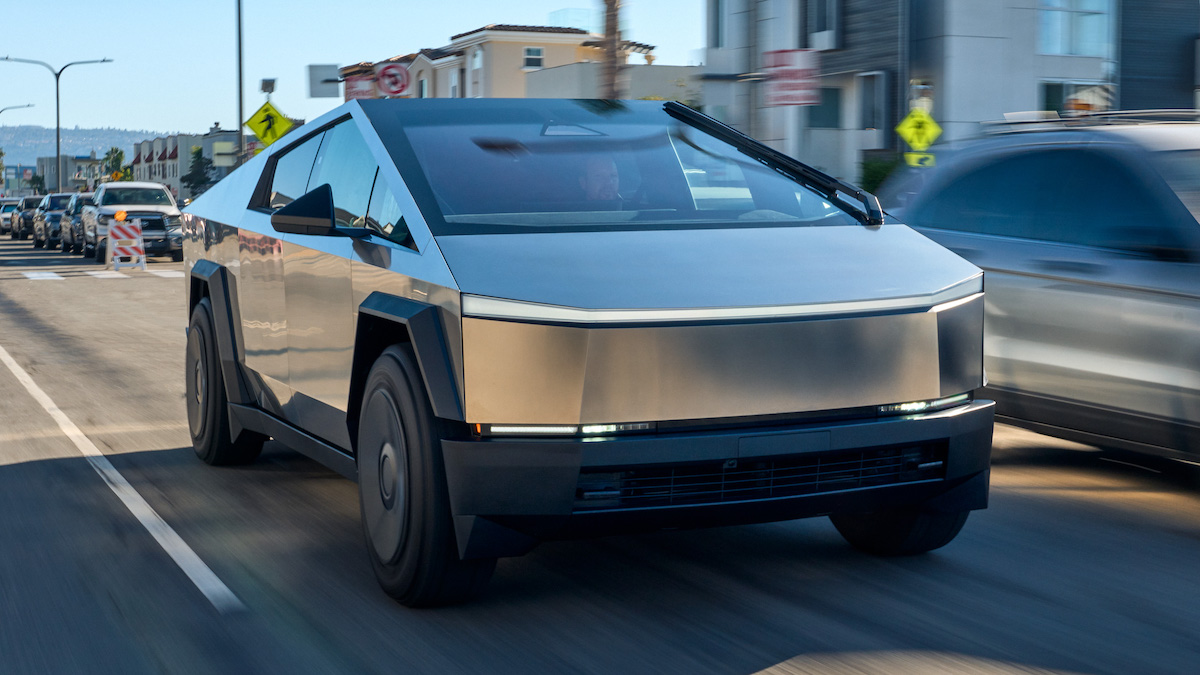
Here it is—the Tesla Cybertruck. Less a vehicle, more an A-list celebrity, hounded by the public and press wherever it goes. Every move recorded, every morsel of information chewed and inflated, every quote twisted and reinterpreted until none of it makes any sense. It’s a self-fueling frenzy because every mention sends clicks rocketing, every picture gets social media fizzing—either with anger or excitement.
From the moment the Cybertruck concept was revealed to several billion gasps in 2019, with Elon Musk’s promises of production kicking off in 2021 and a $40,000 starting price, it’s lurched from one very public problem to another. Design director Franz von Holzhausen smashing the ‘unbreakable’ windows with a metal ball on stage was just a taste of things to come.
There followed multiple delays, leaked engineering reports citing woeful soundproofing and dangerous brakes, Elon’s now-famous email to employees insisting the Cybertruck be “built to sub 10-micron accuracy [because] if Lego and soda cans, which are very low cost, can do this, so can we,” as prototypes with panels gaps like rugby posts were rolling around on public roads. Finally, there was Elon’s admission that “we dug our own grave with the Cybertruck” and they probably won’t hit fully ramped-up production of 200,000+ trucks a year at Giga Texas until 2025.
Is it really real?
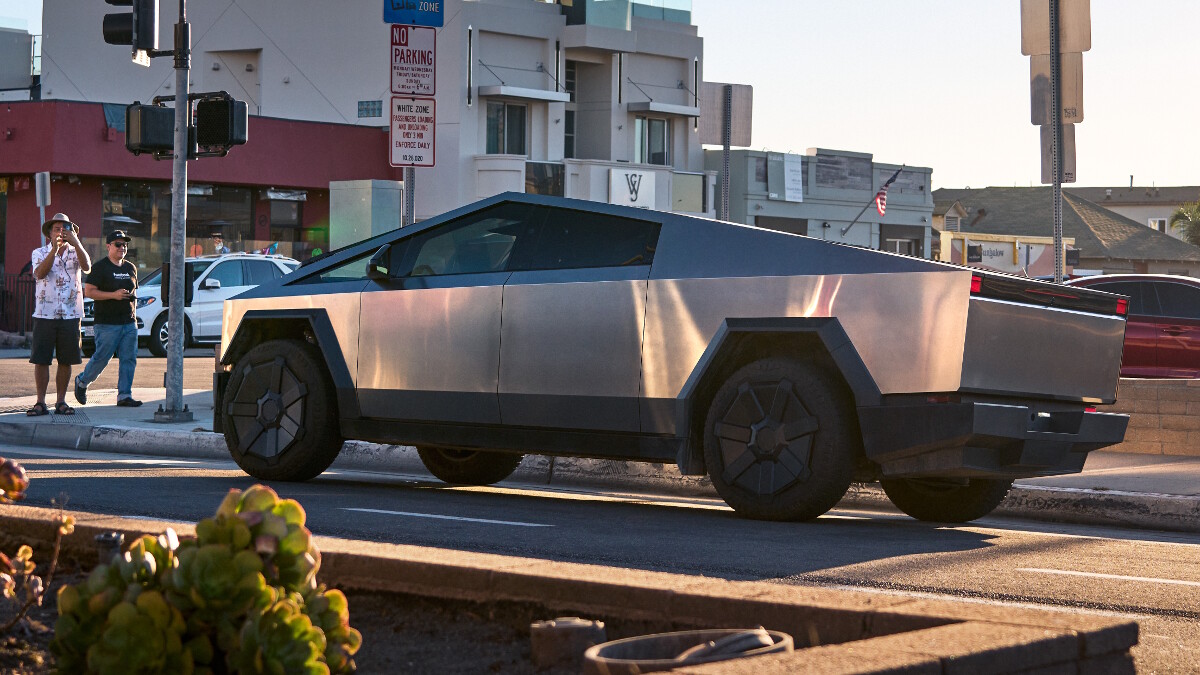
Yes. Stop rolling your eyes at the back. Customer deliveries began at the end of November 2023, and choices include the 845hp ‘Cyberbeast’ tri-motor version we drove, costing $99,990 (around P5.53 million) with a range of 515km, and a $79,990 (roughly P4.43 million) dual-motor AWD version with 600hp, 547km range, and 0-60mph (97kph) in 3.9sec. In 2025, a RWD-only single motor will arrive with 402km range and 0-60mph in 6.5sec. You can have it in any color you like, so long as it’s bare stainless steel, and the entry price is $60,990 (approximately P3.38 million) for that single-motor truck.
The tri-motor features two induction motors on the rear axle, and a permanent magnet motor on the front (the tri-motor Model S Plaid is all permanent magnet). It can crack 0-60mph in 2.6sec, do an 11sec quarter-mile, weighs 3,100kg, and has a 123kWh battery—Tesla’s biggest yet. Claimed range of 515km is roughly in line with the Ford F-150 Lightning, although Tesla will offer an optional plug-and-play 50kWh battery extender—essentially the pack from a standard-range Model 3—that bolts into the bed and takes away a third of your cargo space, but extends the range to 708km (756km for the AWD version).
The powertrain, which runs on an 800V architecture—a Tesla first—will charge at up to 350kW if you can find a V4 Supercharger, and is entirely designed and built in house by Tesla.
Why does it look like that?
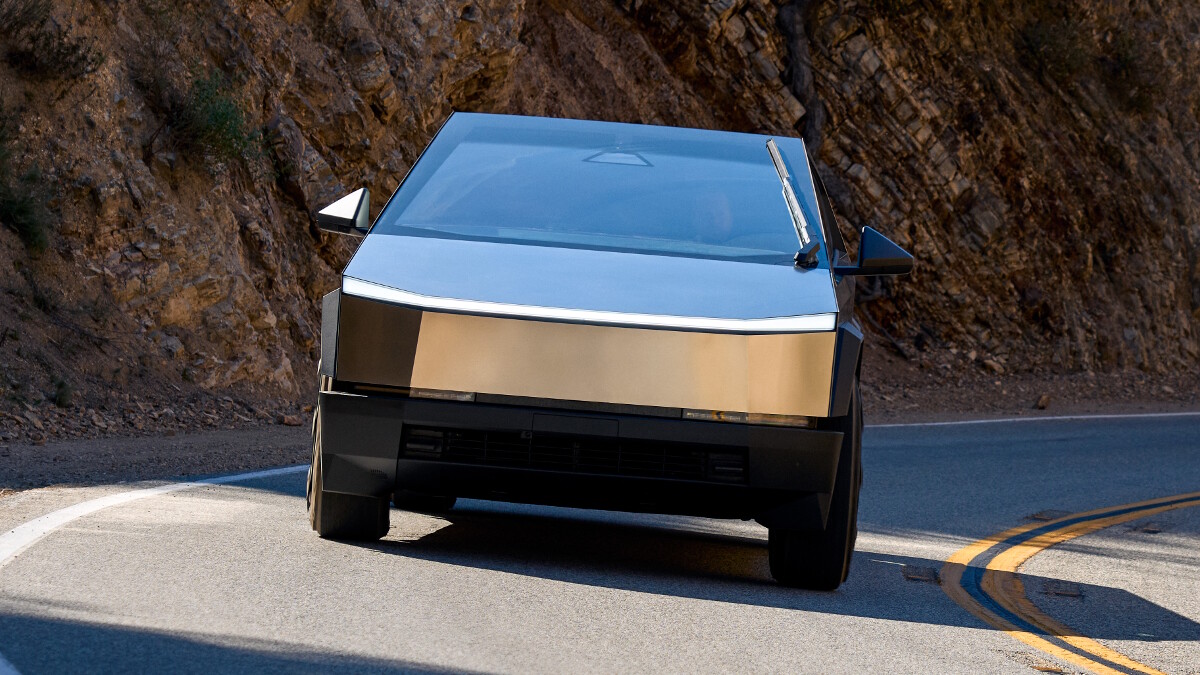
For this we must defer to design boss von Holzhausen: “We started unpacking existing pickup trucks and realized that the market hasn’t changed at all. In the early days, we had a Lotus Esprit in the studio, the submarine car, and then started looking at what else was in this simplistic, angular theme—stuff like the F-117 Nighthawk and the Countach.
“Like Gandini, we wanted to do something dramatic that changed everything. I had this simple idea right in the beginning, this exoskeleton idea, a low-resolution looking type of truck. And out of that side project, we made a full-size clay model to show Elon. And he’s like, ‘That’s what we’re doing.’”
From an engineering perspective, Lars Moravy, VP for vehicle engineering, had a slightly different take: “When it was first introduced, there was a lot of consternation because when you look at the shape, the stainless steel, and Elon threw in that it had to drive like a sports car but have all the utility of a pickup truck... Basically, we were sweating bullets.”
What’s it made from?
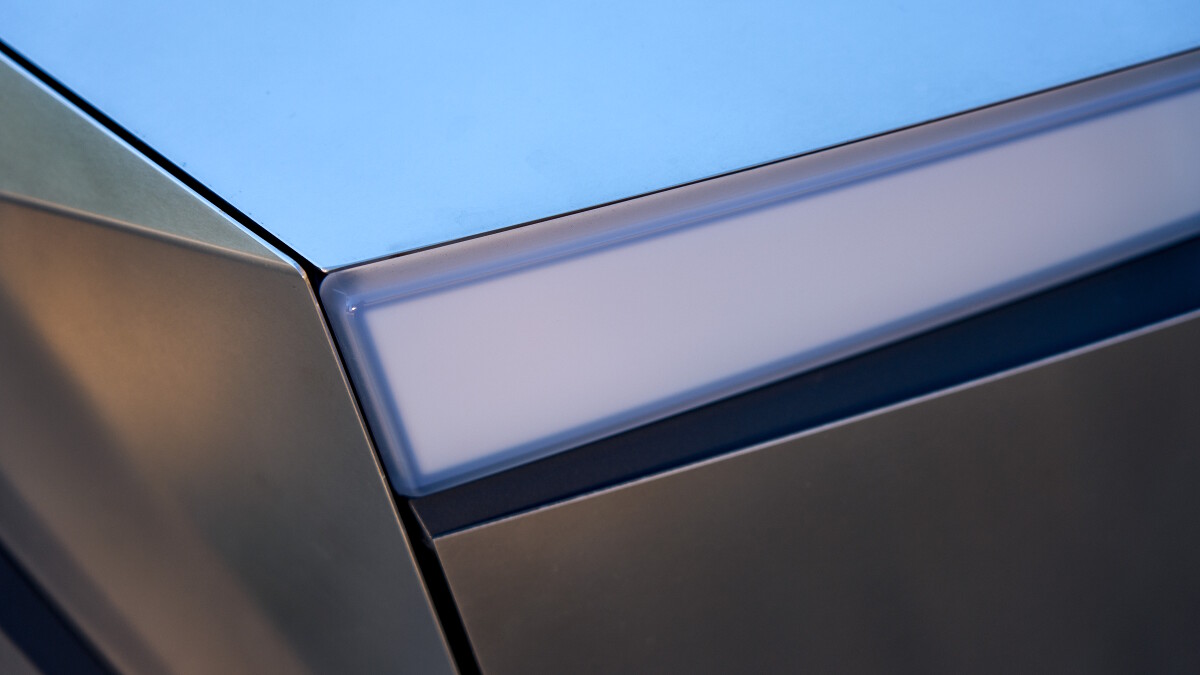
Stainless-steel panels bolted directly onto a steel monocoque forming a literally bulletproof exoskeleton. A truck that wears its toughness on the outside...is the elevator pitch. As ever, getting Elon and Franz’s Delorean-gets-jiggy-with-an-F-150 vision to actually work, was easier said than done.
Turns out it’s really hard to bend stainless steel, and when you do bend it, you get orange peel marks on the crease and here there’s no paint to hide it. There’s no stamping, the steel can only bend in one direction, so Tesla had to invent something new: a process called Airbending, where they float the tool on a sort of high-pressure air hockey table, so it’s not actually touching the surface when bending it.
The steel used is a special grade because stainless is not actually stain-proof—it corrodes over time, so they had to add various elements to the mix to make it resistant, get that full hardness, and have just enough ductility to bend it. The big benefit, though, is supercar-like torsional stiffness of 45kNm/deg. But there’s no “hemming,” where you “wrap the outer around the inner like in a traditional panel,” von Holzhausen explains, which means all the edges are exposed. They’re chamfered, of course, to avoid dicing your fingers, but it takes some getting used to. Put it this way: You wouldn’t want to slip in your garage and meet certain corners on the way down. Only one piece has a strip of rubber to protect you: the bottom edge of the frunk. Because when open, it’s bang-on head height.
The bare metal and flat surfaces look spectacular in soft light, but attract fingerprints like moths to a flame, and in harsh, direct light you notice a rippling effect on the largest flat surfaces. Fear not, Internet, the tolerances and alignment have tightened for production, but there are quirks in the way the panels meet, look, and feel (the way the bottom of the A-pillar buts up against the front quarter panel is particularly challenging). But it is built differently, and should celebrate the fact.
What’s the public reaction like?
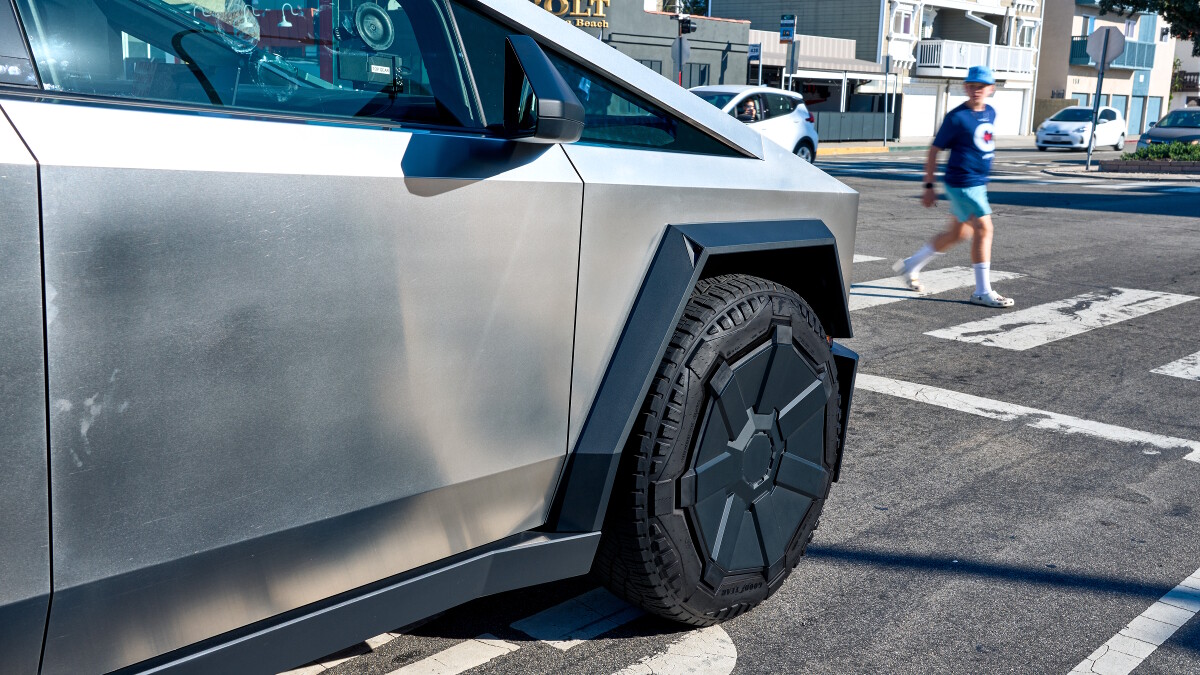
Like Taylor Swift just rolled past on a unicycle wearing Lady Gaga’s meat suit. The constant and intense attention this truck gets is unlike anything we’ve ever experienced. Even before we’ve left Tesla’s Design Center car park, there are employees queuing up for selfies with it, and this is a vehicle they’ve been working on for several years. Whether in dumbstruck disbelief, mild anger, or breathless euphoria, there’s a magnetism to it that’s beyond the human brain’s control. You have to take a look, take a picture, post a video, tell a friend, yell something, or just stand there, slack-jawed and rubbing your eyes.
And yes...we like how the Cybertruck looks. We love how it sticks two fingers up to anything that’s gone before, that it aggravates some people and fills others with a sense of wonder. We marvel how full of risk it is and how downright confusing it is to look at from just about any angle. It’s barmy, not by adding wings and slashes and vents and stripes, but by setting fire to design convention and peeing on the ashes. It’s brutal, not beautiful, but commits 100%. It’s all in. We love that. We assume Toberlone will be filing a lawsuit any day.
Can it do off-road truck things?
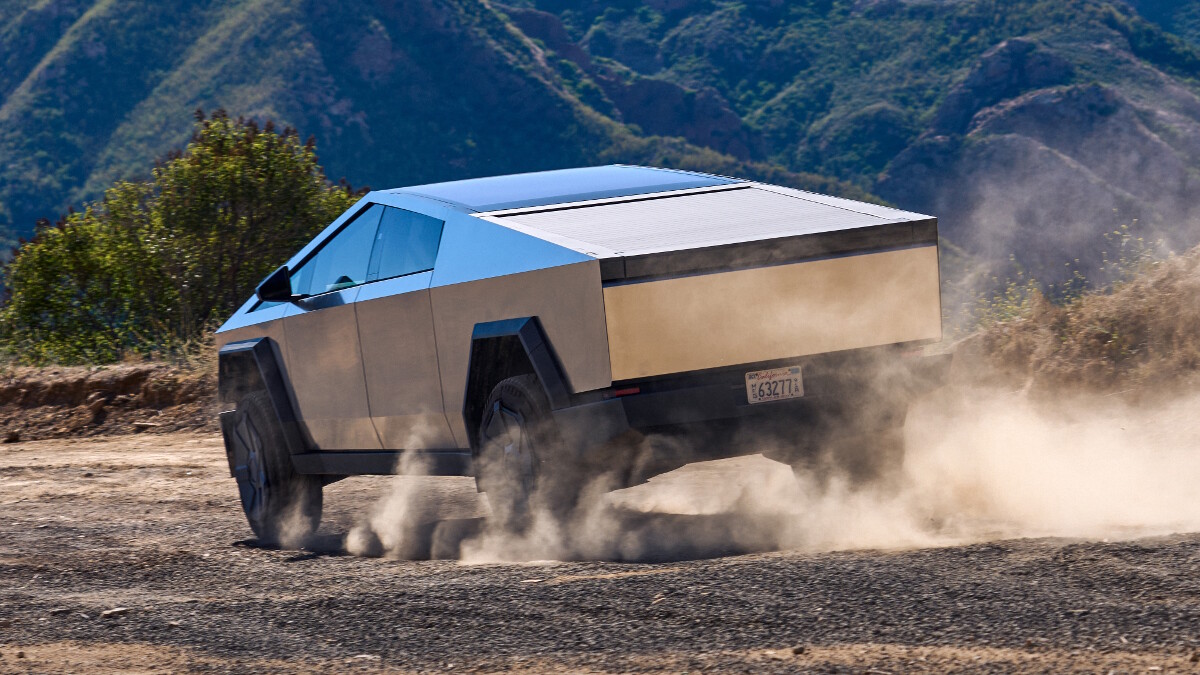
We are yet to test the Cybertruck off-road beyond a dusty lay-by, but the ingredients sound promising. Stuff like air suspension that has a range of 12 inches (for maximum possible ground clearance of 17.4 inches) and all-terrain tires fitted as standard (although you can opt for more efficient and marginally quieter road-biased rubber). There’s an electronic diff so you can lock up the front axle, but with two motors on the rear axle controlling each wheel individually, you don’t need one at the back, which does wonders for true ground clearance.
Beyond the standard ‘Off-road’ mode, there’s a ‘Baja’ setting with a front/rear torque split slider for when only fast and really quite loose will do. The engineers were raving about its jumping ability when they took it for a hoon in Mexico. It can tow up to five tons, which will slice your range at least in half, so the extra battery pack is a must.
Tesla Cybetruck on the road
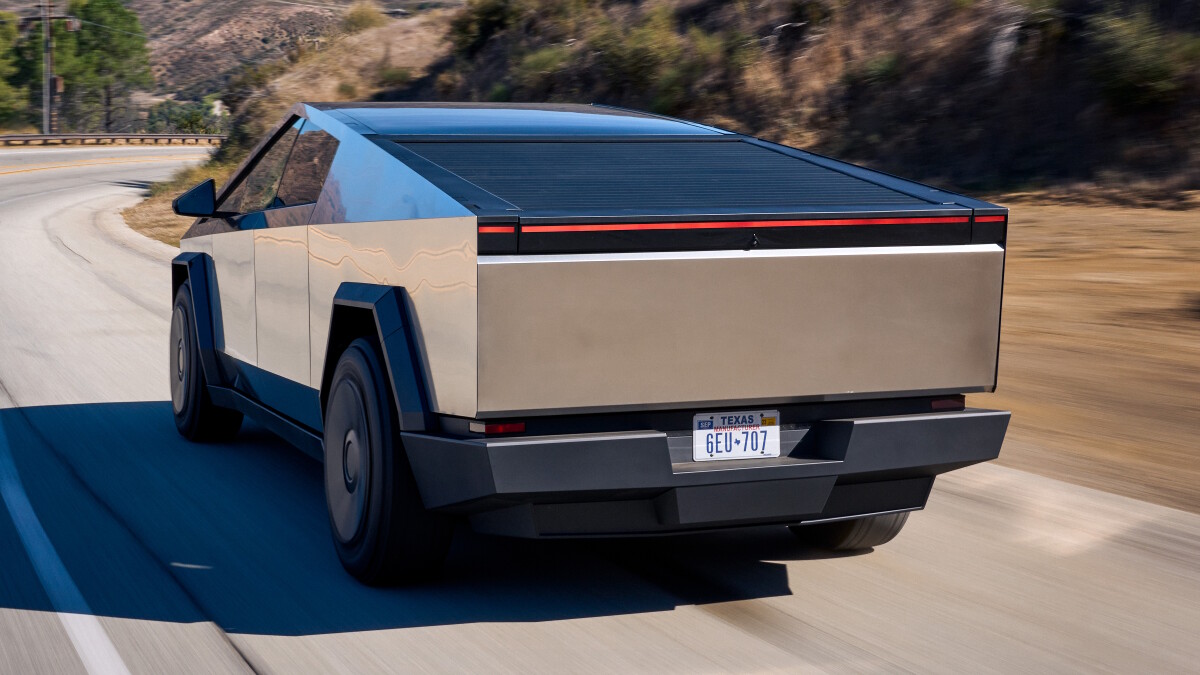
First, you need to understand how enormous it is. At just under 5.7 meters long, it’s shorter than the Ford F-150 lightning (it was scaled down a bit fairly late in the day at Elon’s request, apparently, to save cost and material, and boost performance—the engineers must have loved that), but it has a bigger bed. From where we’re sitting, though, weaving through LA traffic, it doesn’t feel particularly petite. Even in America where everything is supersized, it’s an absolute tank.
But it’s not tricky to drive around town. You glide through urban areas with all that torque masking mass, in a serene bubble...until another Camry driver swerves in front of you to get the perfect angle for their TikTok video, a periodic reminder of just how bonkers the thing you’re driving looks from the outside. There’s a blind spot behind the chunky A-pillar and zero rear visibility with the tonneau cover in place (you get a rearview camera feed at the top of the screen—ironically, it has proper wing mirrors as cameras aren’t yet legal in the US), but we never have any difficulty placing it on the road or parking up.
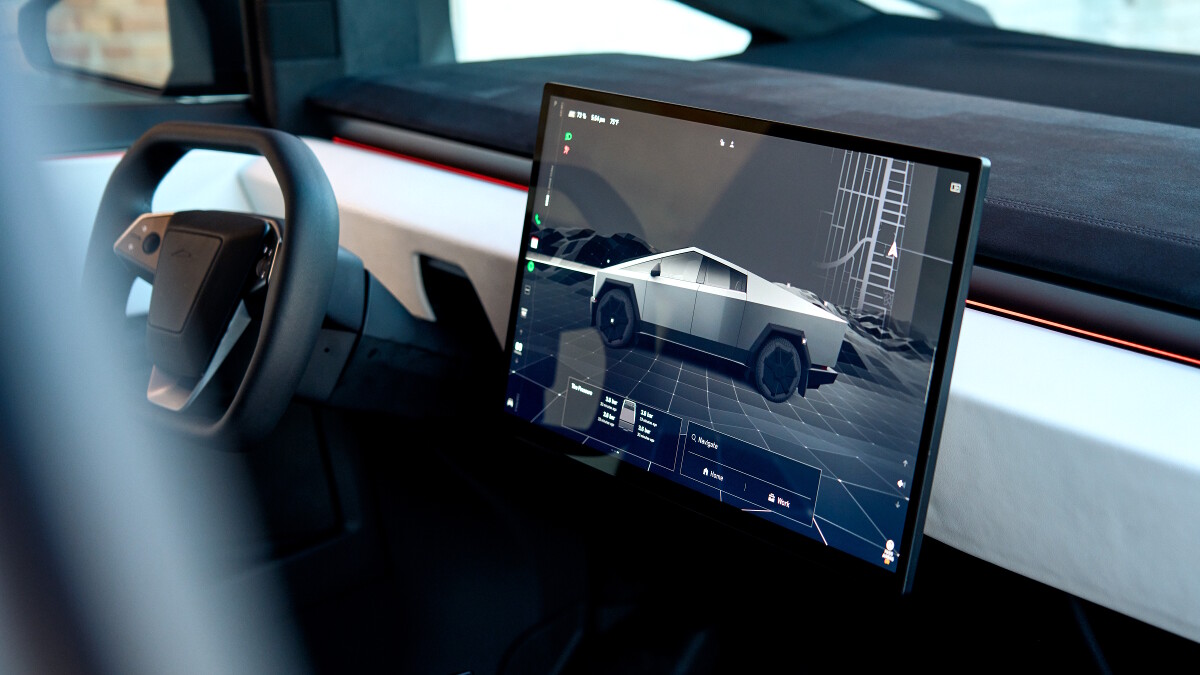
The hardest part, not being a regular Tesla driver, is trying not to crash as we prod wildly at the 18.5-inch central screen, trying to recall where everything is. Yep, the Cybertruck does away with an instrument panel and buttons are NFI—all that stretches beyond the squircle steering wheel is several acres of dashboard and a windshield finishing somewhere past the front axle. The ride on the self-leveling air suspension is cushioning, the wind noise well-suppressed, and the shake, rattle, and roll we’re expecting to feel when we hit a pothole doesn’t materialize. So far, so car-like.
How does it steer?
Forget the wheel that can’t decide whether it’s a circle or a yoke (jobs for the facelift: the former would be infinitely easier to use). The big story is steer-by-wire, meaning there’s no physical connection between the squircle and the front tires...or the rears, for that matter, as there’s also four-wheel steering. So, the turning circle is less than a Model S (feels miraculous, endlessly handy), and the wheel only needs 170 degrees in either direction lock to lock, which is less than a full turn in total. The idea is you never need to take your hands off the wheel, and a constantly variable ratio means you can turn sharply with little effort at low speeds and carve about smoothly when you’re going quicker. Unfortunately, the effect around town is a rack that feels livelier than an ’80s banker on a Friday night.
Twitch your wrists and the nose darts away, and then with the rear tires turning up to 10 degrees in the opposite direction, the sensation is the truck rotating about its center point. We get the thought process: Remove wheel-twirling entirely, make it feel pointy and precise at low speeds, everything that traditional trucks are not, but the caffeine dose needs rethinking. It’s something we learned to put up with, but couldn’t gel with even after a couple of days. Tesla’s response? Over-the-air updates: There’ll be one state of steering tune at launch, but the mapping can be tweaked infinitely in the future, nothing is set in stone. We shall see.
What about when you go a bit faster?
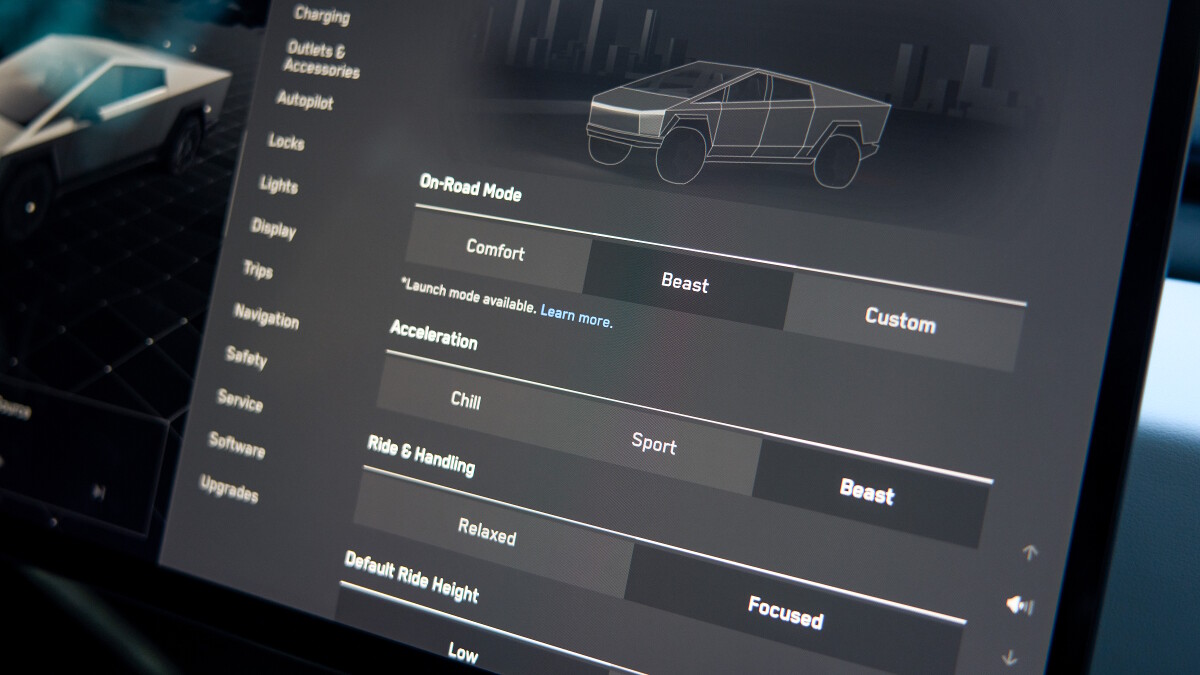
Find a few curves up in the hills, and with some speed under the wheels, the steering ratio knocks back from manic to manageable. Now you start to carve out some proper speed, revel in most un-truck-like stability and significantly less body roll than the Hummer EV and the F-150 Lighting, the other two battery-laden pickups we’ve tried. Look, it’s not a sports car, but it puts traditional trucks in the shade. As ever, the key here is smooth inputs and respecting the laws of physics. Otherwise, understeer awaits—on road at least, the engineers insist that mucho controllable oversteer can be served up when you find a loose service.
We don’t doubt it, because it is obscenely rapid for something this large. A step up from both Hummer and F-150 Lightning, especially when you select ‘Beast’ driving mode, stamp on the brake and the throttle at the same time, feel the front squat and the rear raise, hypnotize yourself with the ‘Cheetah Mode’ graphics on the screen, then release the brake to unleash an avalanche of acceleration. Does a pickup truck need to be this fast? Of course it doesn’t, but drag racing has always been Tesla’s party trick. Why stop now?
Tesla Cybertruck on the inside
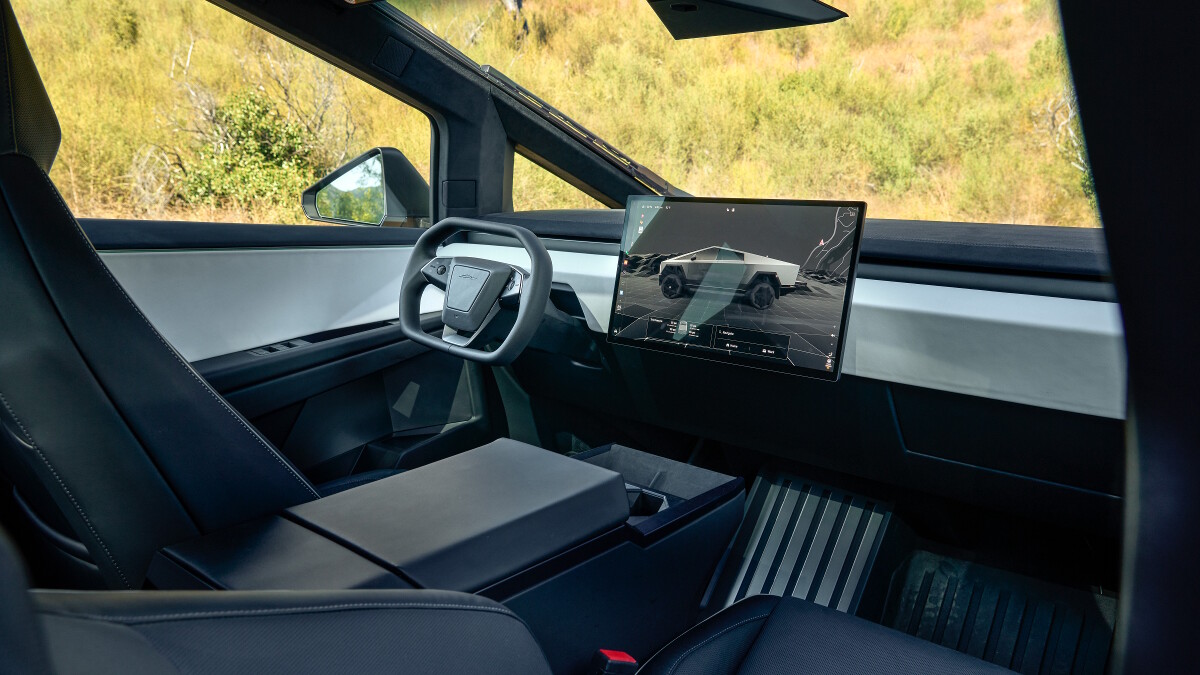
The interior is typical Tesla: Simplistic to the point of barren. A large storage bin under the front armrest, two hexagonal cupholders, a suitcase-sized storage space between the driver’s and passenger’s legs, and a glovebox that glides out and back electrically with enough space for a laptop. In the back is a simple three-seater bench, although the seat squabs can fold up and the rear door opens to 90 degrees, meaning you can post six-feet-long things in there quite easily. Including sleepy humans, we’re told.
How useful is the bed?
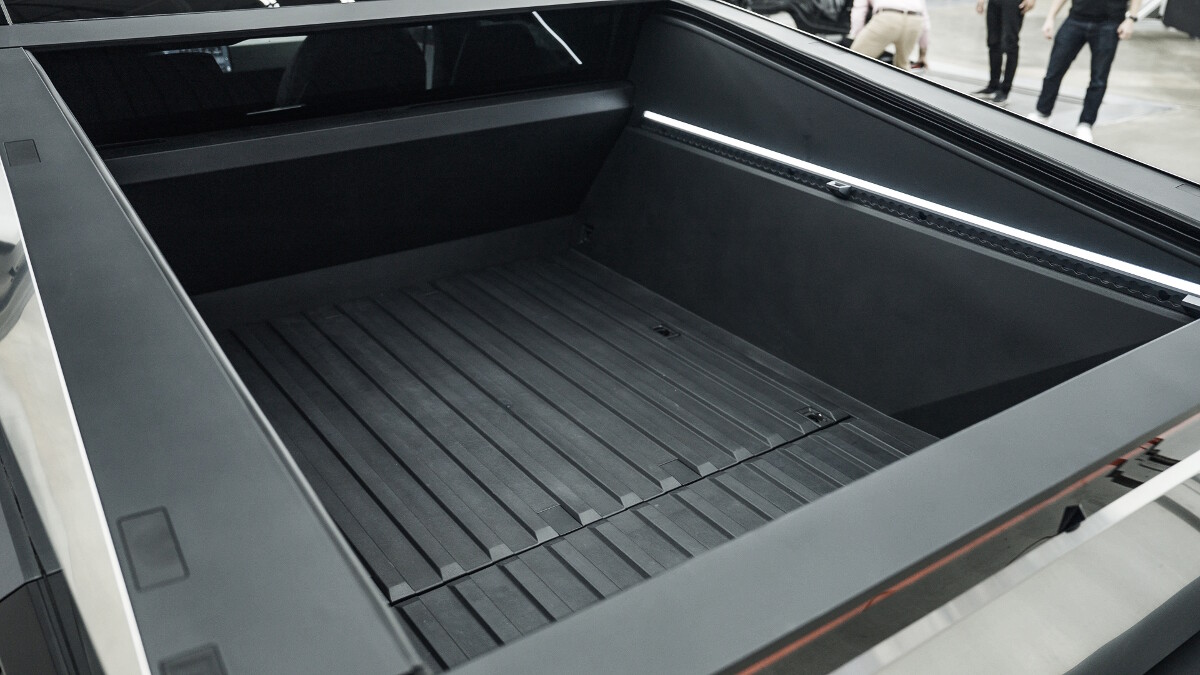
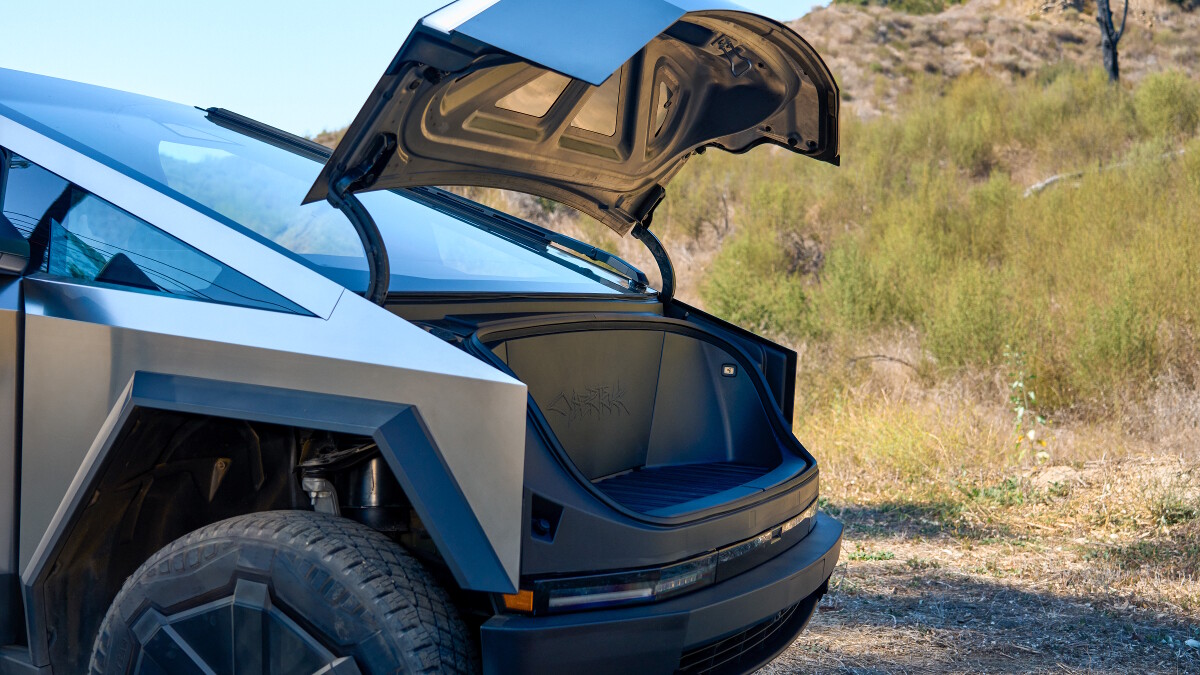
There are three outlet plugs back there (two 110V, one 220V), which are powerful enough to allow welding (is anyone actually taking their Cybertruck to a construction site?) or more likely for plugging in your mini-fridge for a spot of tailgating. It also features bi-directional charging, so you can use your car to power your house in the event of a blackout. Open the electric frunk, called the ‘Powergate,’ and there’s space to tailgate (frailgate?) there, too, or cram a few more big bags in, but the star of the show is the load bay cover. It retracts speedily down the back of the bulkhead when you hit a rubber button and turns the bed into an enormous, lockable trunk. It also improves aero efficiency by 10% when closed, and can support “a 350lb person standing on one leg” says Moravy. This is the type of relevant product information we like.
And the interface?
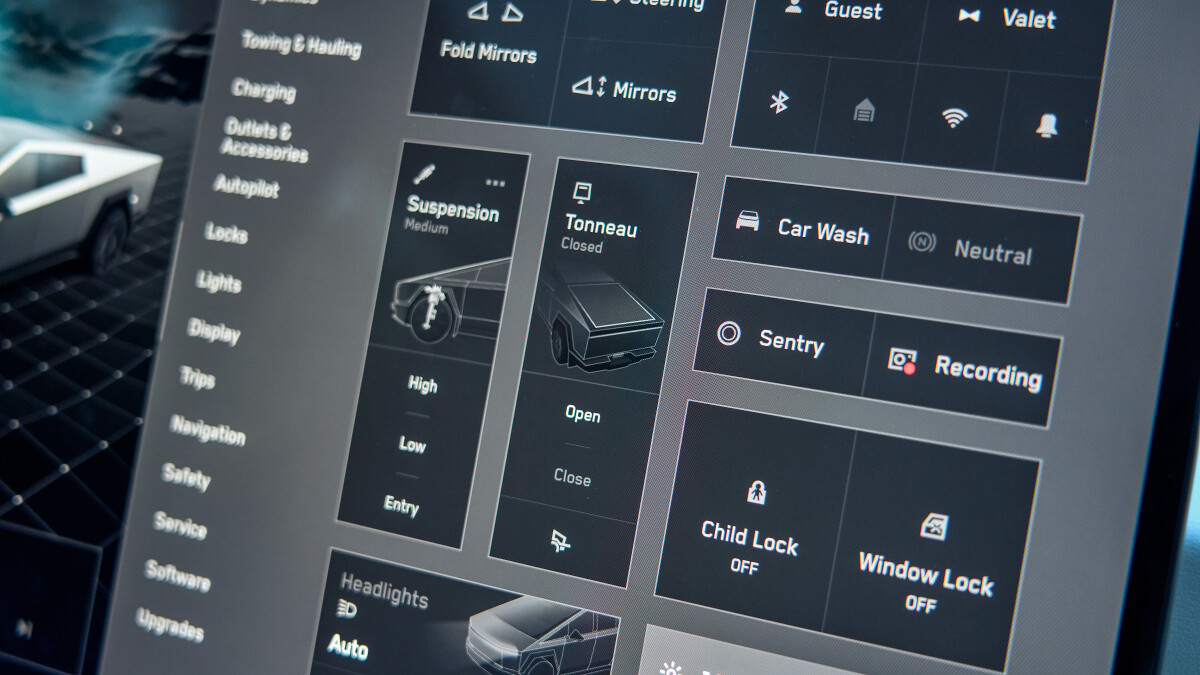
Everything is controlled through the 18.5-inch central screen—no stalks or instrument cluster behind the wheel, just all that dash spearing off into the middle distance. The indicators are two arrows stacked on the left, which is endlessly confusing—at the very least, have one on each side.
The screen greets you with crisply rendered images of your Cybertruck that you can spin and rotate in three dimensions and poke various areas—frunk, bay cover, tailgate—to open them up electrically. Dive into the menus and the major differences are a Beast mode for maximum throttle sharpness and suspension stiffness, although you can change every parameter individually. If you’re heading off the tarmac, you can choose between Off-road or Baja mode, which lets you play with a front/rear torque slider for maximum hooning potential. In the back, passengers get their own 9.4-inch touchscreen.
Fun fact: You won’t find a single Tesla badge on the outside or inside—clearly, Tesla wants Cybertruck to be something all of its own. More fun facts: The single windshield wiper is enormous, almost 1.2 meters long and aero-optimized to reduce wind rustle; the tires are specially made for Cybertruck by Goodyear to accommodate the not-round rubber aero caps; and the headlights are only 20mm tall, hidden in the slot between the frunk and front bumper.
Final thoughts
Were you one of the millions who put a $100 deposit down to buy a Cybertruck all those years ago? If you loved it then, and can absorb the price increases, you’re still going to love it now. Tesla has done the rarest of things—albeit much later than promised—and delivered to production, in effectively unchanged form, the sci-fi fantasy concept truck we first saw back in 2019.
The way it drives, especially at low speeds with its overeager variable ratio steer-by-wire system, isn’t ideal, but it’s remarkably stiff, composed, and rudely rapid when you get a clip on. Crucially, though, beneath the gimmicky stainless-steel exoskeleton, it hits all the metrics that pickup truck owners are after—towing capacity, torque, space, versatility, and toughness. You can lose yourself in the accessories catalog that includes an inflatable tent to attach to the back, a blindingly-bright, roof-mounted lightbar, and an extra 50kWh range-extender battery pack for when 123kWh is simply not enough.
In our two days with the Cybertruck, public feedback ranged from denial to awe. But we were in an affluent beach suburb of LA. It would be a different story in middle-of-nowhere America where pickups are religion, and function always outpoints form.
There are parallels, though, with the way the Countach shook things up and pressed the reset button back in the ’70s. The Cybertruck is born to shock, but arguably goes even further than Gandini’s wedgy masterpiece, because it’s not a supercar—Tesla has chosen the most utilitarian genre vehicle of all for its Countach moment. Say it out loud for full effect: The most exotic-looking production car in the world is a pickup truck.
NOTE: This article first appeared on TopGear.com. Minor edits have been made.