It seems like it’s been forever since we were promised airless tires for our cars. Most notably with the Tweel, Michelin’s next-generation tire design. But despite the numerous press releases, and the launch of a number of airless products for all terrain vehicles, forklifts and lawn equipment, airless tires for cars seem perpetually five years away. Why is that?
First off, airless tires are difficult to design. While the science and operation of pneumatic tires is well understood at this point, with over a hundred thirty years of development behind them, modern airless tires are still at an early stage of development. While you would think that companies could use lessons learned from run-flat tires to develop airless ones, there is a big difference between building a tire that can run without air for a hundred kilometers and building a tire that car run without air for tens of thousands of kilometers.
For a tire that won’t ever hold air, the sidewall is useless. A flexible piece of rubber that is insufficient to hold up the tire, and that starts to overheat without a cushion of air to hold it stiff. Instead, what holds the vehicle up are the spokes. But not in the way that you think.
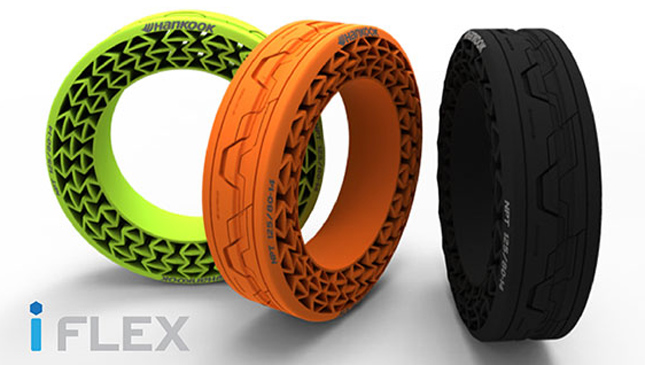
While the lower spokes do deform and absorb some of the weight of the vehicle, the hub of an airless tire is also hanging from the spokes attached to the top of the tire. Carrying the load this way distributes the load more evenly across the entire wheel. This means that the pressure directly underneath the tire is less, giving it a softer footprint. Which makes airless wheels ideal for off-road use.
This load distribution also makes for better shock absorption. Airless tires have the potential to ride more comfortably than a regular pneumatic tire. And better yet, running over hard objects won’t result in bruised sidewalls and potential tire failure – you can’t have a sidewall failure without a sidewall! Running over nails and spikes, on the other hand, results in nearly no damage at all. You can never underinflate an airless tire, and because the load is carried from the top, they will not develop nasty flat spots from being parked for long periods of time.
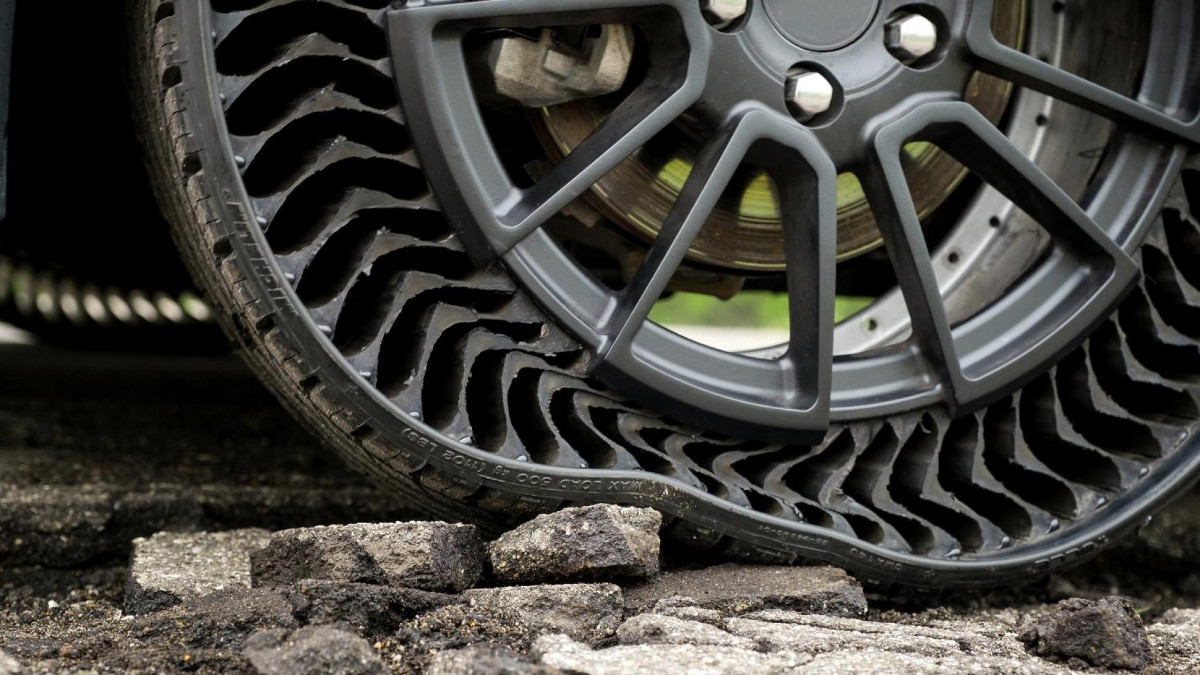
Instead, the failure mode of an airless tire is radically different from that of a regular tire: spoke damage. Thankfully, the spokes are easy to inspect from the outside. According to Michelin, a few cracked spokes are okay. They simply advise that you section the material around the crack to stop it from spreading.
Because airless tires are supported by crosswise spokes rather than lengthwise sidewalls, they are more compliant in the direction of braking and acceleration and stiffer against turning forces. This makes for superior braking and acceleration over rough surfaces, as the tires have more traction, and superior handling, as there is less flex when you turn. Which sounds like a win-win in terms of performance and safety, right?
OTHER STORIES YOU MIGHT HAVE MISSED:
The Subaru Evoltis just got refreshed for the US market
Is it illegal to put a ‘No Parking’ sign in front of your house?
Well, there’s a good reason airless tires haven’t hit the mainstream yet. Well, several:
First: Their ride compliance is set from the factory, and though the ride may get softer as they break in, there is no way to adjust that for lower ground pressure – needed when going off-road – or higher stiffness – for heavy loads or to increase fuel economy. What you buy is what you get, period.
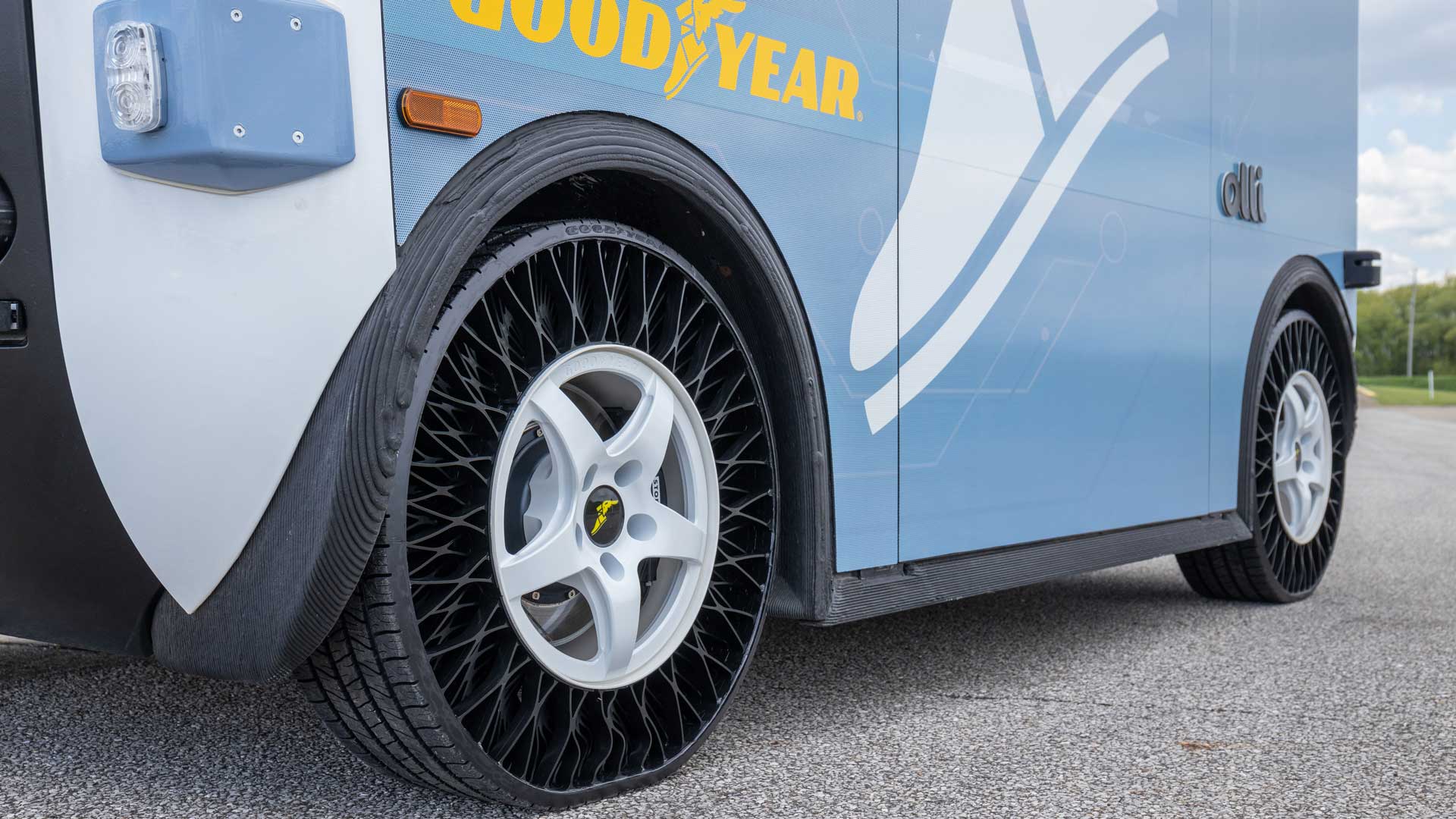
Second: By their very nature, airless tires are heavier and harder to keep balanced at high speeds. Compliance in the spokes causes wobbling and vibration at speed. It remains to be seen if newer models can successfully survive long periods of highway running.
Third: While spoke damage is not a major issue for airless tires, the structural adhesive used to bind the spokes and the hub can come apart. Not a big deal on lawnmower wheels, but a very big issue on passenger cars that travel at much higher speeds!
And finally: The price. Because of their unsuitability for highway use, airless tires like the Tweel are currently only offered for lawnmowers, golf carts and all-terrain vehicles. But at several times the price of regular pneumatic tires. For commercial and industrial customers, time lost re-inflating and repairing flat and damaged pneumatic tires outweighs the cost savings versus airless tires, but they’re a hard sell to regular customers.

When they do finally come to road cars, regular car owners, who likely have an electric air pump in their garage and a roadside assistance card in the glovebox, may balk at spending ten times more on a tire that will never go flat. Even run-flat tires, which only cost 50-100% more, are having a hard time convincing buyers to switch over.
While the standard pneumatic tire may have its drawbacks, the inconvenience of changing a flat tire once ever few years – or sometimes, never – isn’t enough to justify the extra expense of switching to a fancy ultra-expensive new tire several years down the line. Or whenever Michelin, Toyo, or whatever other company willing to take the plunge and go airless, will finally release their road-going airless wonders.