Ever been harassed, catcalled, or groped while riding public transport? There’s a law that protects you from that. While you could air your sentiments on social media, aggrieved passengers can now report incidents of sexual harassment to the “Bawal Bastos” hotline 1342 and hopefully stop the crass culture.
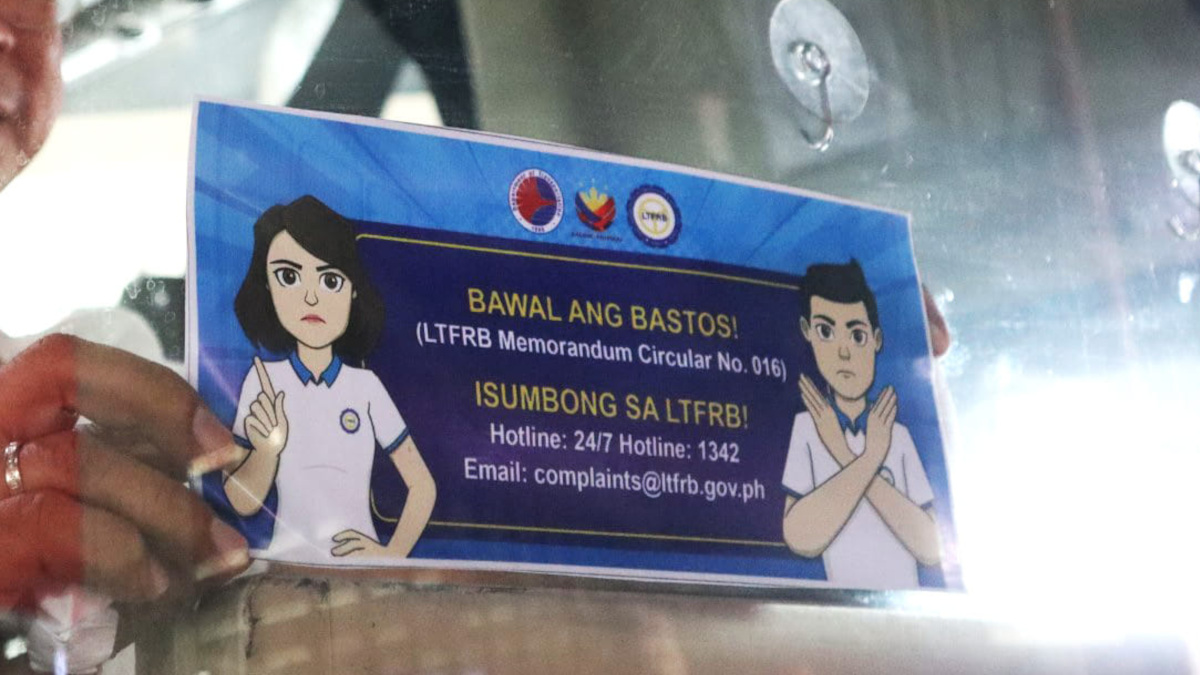
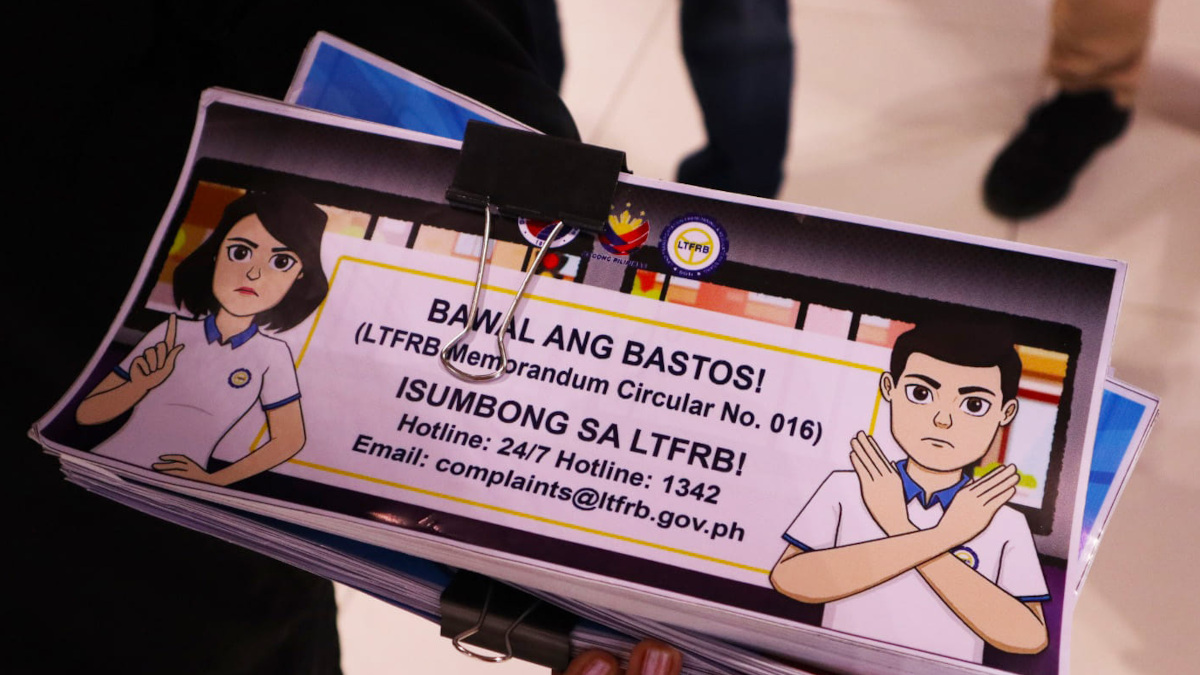
On October 2, 2023, the Land Transportation Franchising and Regulatory Board (LTFRB) started placing stickers publicizing a hotline and channels where commuters can report harassment and discrimination in public utility vehicles (PUVs).
The move is part of the implementation of the ‘Bawal Bastos Law,’ a law passed in 2018 that aims to protect passengers from gender-based sexual harassment in public spaces, including public transportation.
Under LTFRB’s Memorandum Circular 2023-016 or the ‘Implementation of Safe Spaces Act involving Public Land Transportation Services,’ the agency strongly condemns and prohibits any form of gender-based sexual harassment in all forms of public transport, modernized or not.
“Kailangan ’yung ating mga driver, konduktor, or any transport employees ay maging vigilant din sila sa mga sumbong ng mga pasahero at kailangan po silang umaksyon dahil kung hindi meron din silang penalty,” said LTFRB spokesperson Joel Bolano in a report by GMA News.
(The drivers, conductors, and employees should also remain vigilant on passengers’ complaints. If no actions were taken, then they may also be sanctioned.)
OTHER GUIDES YOU MIGHT WANT TO CHECK OUT:
LTO driver’s license application and renewal guide: Requirements and fees in 2023
Can my child ride a motorbike? A full guide to the Children’s Safety on Motorcycles Act
What is the Bawal Bastos Law?
Republic Act No. 11313, also known as the ‘Safe Spaces Act’ or the ‘Bawal Bastos Law’ penalizes those who commit “any unwanted and uninvited sexual actions or remarks against any person” in public transport vehicles, public spaces, and online spaces, among others. The law was signed into law on April 17, 2019, and made public by Senator Risa Hontiveros, who principally authored and sponsored the measure in the Senate.
According to a 2017 study by the Philippine Institute of Development Studies (PIDS), 51% of females and 15% of LGBTQI students have become victims of sexual assault or harassment crimes while on the bus, on the train, at the bus stop or station platform, or on their way to/from the transit stop. Verbal harassment is common, with women being harassed for “dressing in a certain way,” or subjected to obscene language or sexual comments.
Under the Philippines’ Safe Spaces Act, public transport drivers, conductors, operators, and other transport employees could face additional fines and other penalties if it’s proven that they committed gender-based sexual harassment in their service vehicles.
What actions are not allowed?
Under the law, prohibited actions include catcalling, wolf-whistling, unwanted invitations, misogynistic, transphobic, homophobic, and sexist slurs, persistent uninvited comments or gestures on a person’s appearance, sexual comments and suggestions, public masturbation or flashing of private parts, groping, or any advances, whether verbal or physical, that are unwanted and threaten one’s sense of personal space and physical safety.
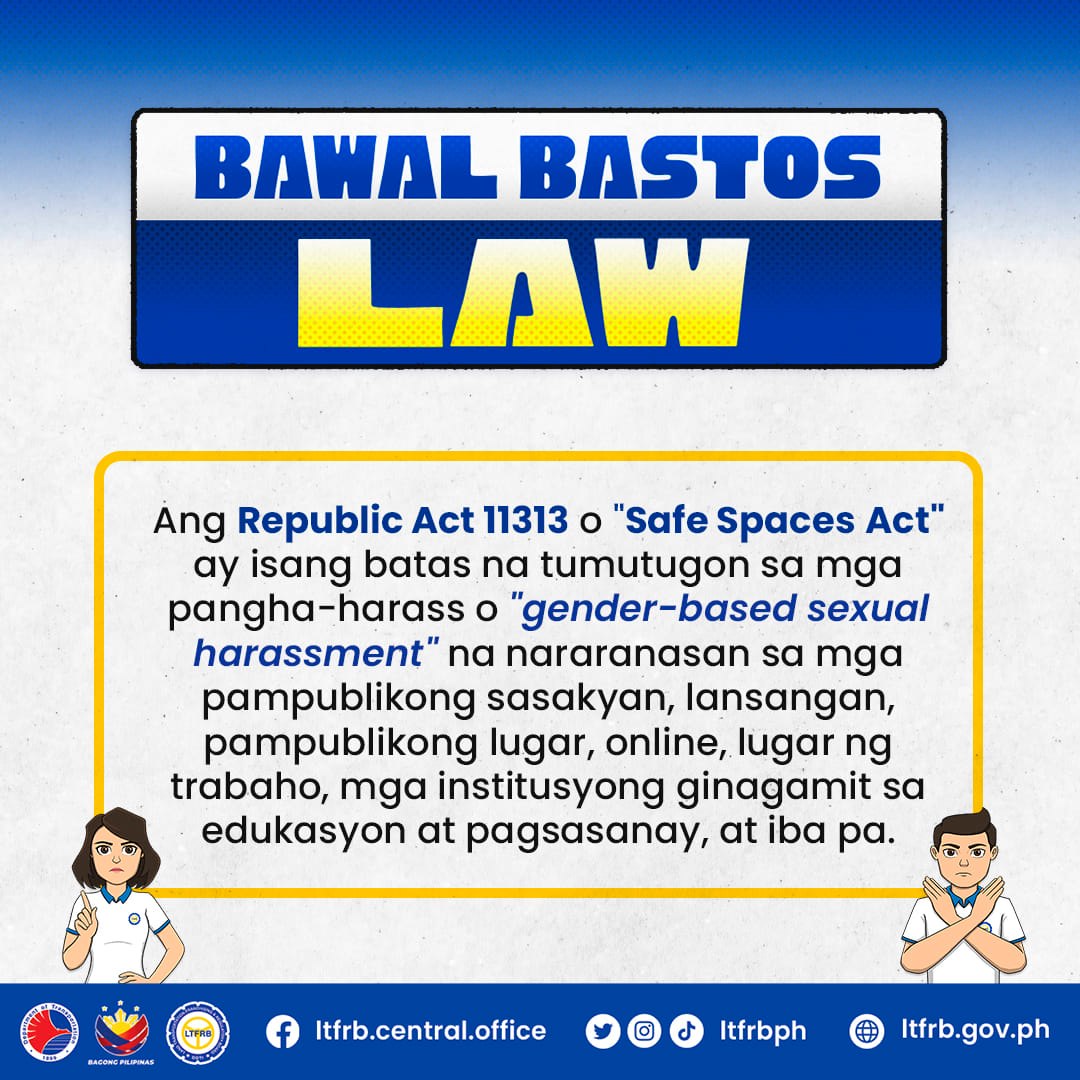
For commuters, such incidents are not allowed in public spaces including, but not limited to streets and alleys, transportation terminals, public utility vehicles, as well as private vehicles covered by app-based transport network services.
The law also penalizes online sexual harassment, including sexual slurs in private messages.
What are the penalties?
The specified acts are punishable by stiff fines, community service of 12 hours inclusive of attendance in a Gender Sensitivity Seminar to be conducted by the Philippine National Police in coordination with the LGU and the Philippine Commission on Women (PCW), and jail time with varying terms for different degrees of offenses.
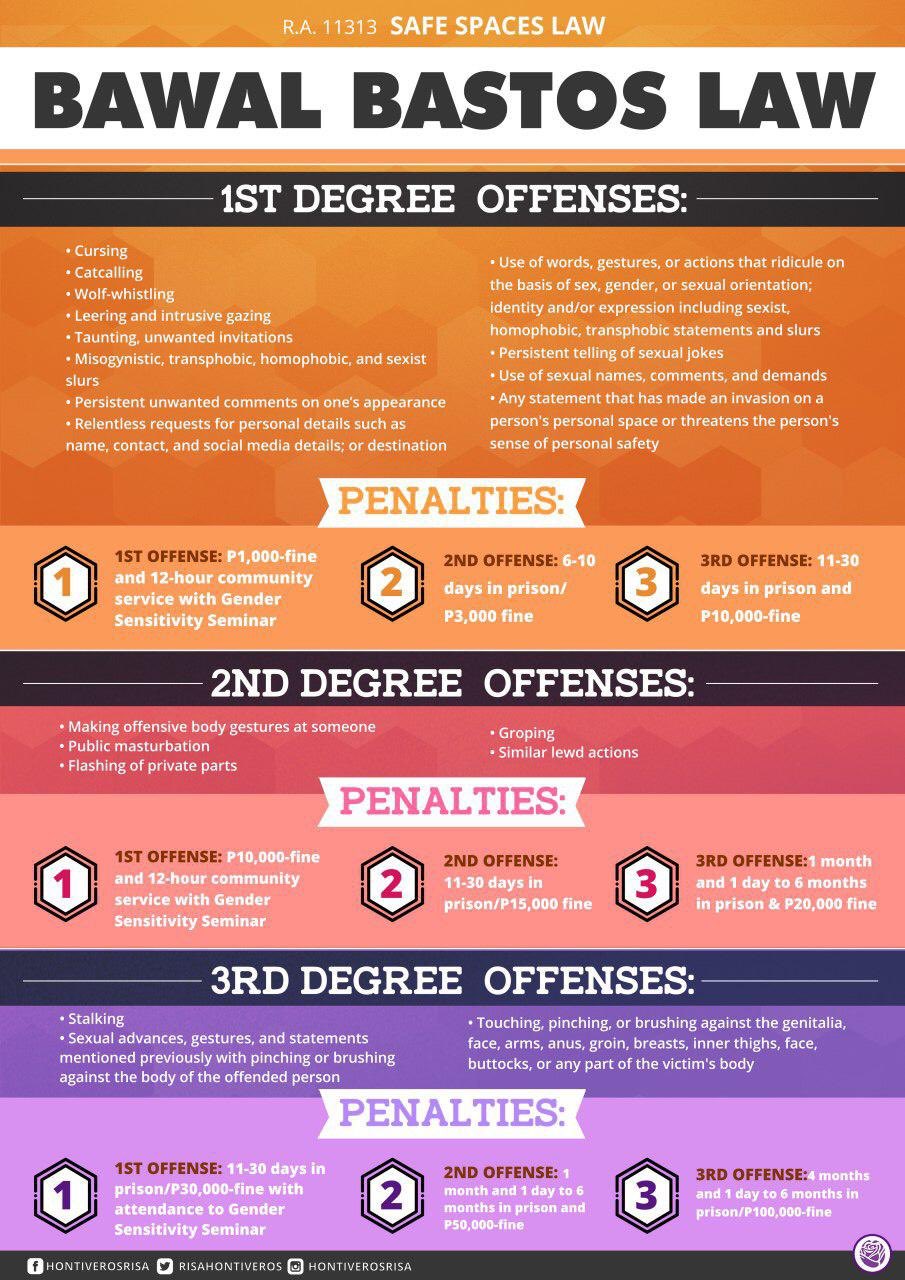
For First Degree offenses such as cursing, wolf-whistling, catcalling, leering and intrusive gazing, taunting, pursing, unwanted invitations, misogynistic, transphobic, homophobic, and sexist slurs, and the like, the penalties are as follows:
- First offense – P1,000 fine or community service of 12 hours inclusive of attendance in a Gender Sensitivity Seminar
- Second offense – P3,000 fine or jail time of six to 10 days
- Third offense – P10,000 fine or jail time of 11 to 30 days
For Second Degree offenses such as making offensive body gestures at someone, exposing private parts for sexual gratification with the effect of demeaning, harassing, threatening, or intimidating the offended party including flashing of private parts, public masturbation, groping, and similar lewd sexual actions, here are the penalties:
- First offense – P10,000 fine and community service of 12 hours inclusive of attendance in a Gender Sensitivity Seminar
- Second offense – P15,000 fine and jail time of 11 to 30 days
- Third offense – P20,000 fine and jail time of one month and one day to six months
For Third Degree offenses such as stalking, sexual advances, or any touching, pinching, or brushing against the genitalia, face, arms, anus, groin, breasts, inner thighs, face, buttocks or any part of the victim’s body, the penalties are as follows:
- First offense – P30,000 fine or jail time of 11 to 30 days and attendance in a Gender Sensitivity Seminar
- Second offense – P50,000 and jail time of one month and one day to six months
- Third offense – P100,000 and jail time of four months and one day to six months
What other penalties could PUV operators face?
Section 6, which details “Gender-Based Sexual Harassment in Public Utility Vehicles”, details additional penalties if the erring party is the driver, operator, or conductor of the PUV. In case the driver or conductor is the offender, the fine for the first offense is P5,000 as well as a six-month franchise suspension.
The LTO could also cancel the license of perpetrators and the LTFRB may suspend or revoke the franchise of transportation operators who commit such acts.
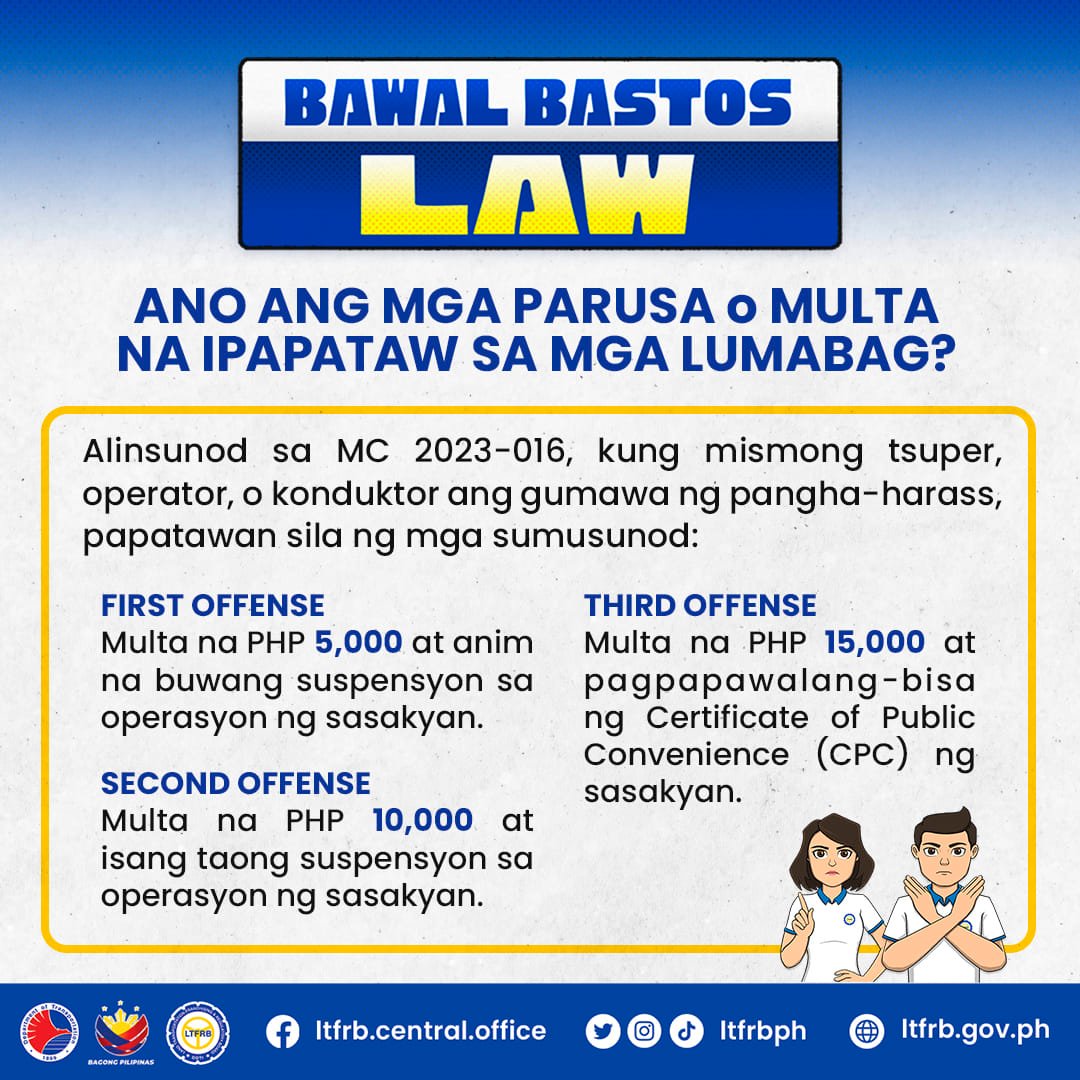
- First offense – P5,000 fine and six-month operation suspension
- Second offense – P10,000 fine and one-year suspension
- Third offense – P15,000 fine and revocation of Certificate of Public Convenience (CPC)
To quote the law verbatim: “Gender-based sexual harassment in public utility vehicles (PUVs) where the perpetrator is the driver of the vehicle shall also constitute a breach of contract of carriage, for the purpose of creating a presumption of negligence on the part of the owner or operator of the vehicle in the selection and supervision of employees and rendering the owner or operator solidarity liable for the offenses of the employee.”
Under the LTFRB circular, PUV operators are also mandated to post signage showing the contact information where harassment incidents can be reported. PUV operators could face punishments should they fail to do anything to prevent sexual harassment or address violations of their employees.
OTHER GUIDES YOU MIGHT HAVE MISSED:
Here’s your essential guide to the LTO’s online Portal
Flying out? Here’s an updated transport guide to and from NAIA
Who is covered by the law?
Under LTFRB’s Memorandum Circular 2023-016, the law covers all PUV operators who were granted certificates of public convenience (CPC), provisional authority, or special permits by the LTFRB including special PUVs such as school services.
PUVs also includes public water transport utilities and air carrier or operator as registered with and/or regulated by the Maritime Industry Authority, the Civil Aviation Authority of the Philippines, or the Civil Aeronautics Board. According to the LTFRB, truck-for-hire services are not included.
Who will be implementing the law?
Those who have the authority to apprehend perpetrators and enforce the law include the Metro Manila Development Authority (MMDA), the local units of the Philippine National Police (PNP) for other provinces, and the Women and Children’s Protection Desk (WCPD) of the PNP provided that they have undergone prior Gender Sensitivity Training (GST).
The PCW, DILG, and Department of Information and Communications Technology (DICT) shall be the national bodies responsible for overseeing the implementation of this Act and formulating policies that will ensure the strict implementation of this Act.
How can commuters report cases of harassment?
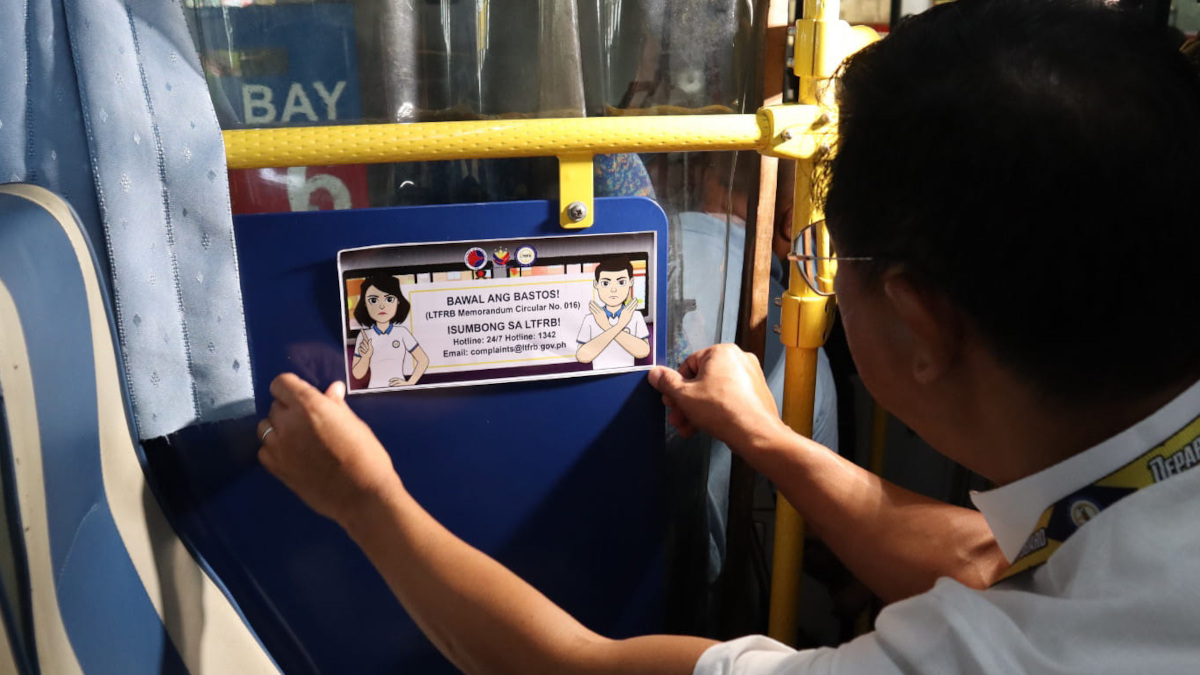
According to the LTFRB, commuters can address their complaints to the hotline 1342 which is available 24 hours a day, seven days a week. Passengers who have experienced inappropriate behavior can also direct their reports by email to complaints@ltfrb.gov.ph.
While the laws and penalties are steps in the right direction, let’s just hope that these will actually be implemented.
It all boils down to respect. Catcalling or unwanted attention is not a compliment—it’s harassment. Drivers and fellow passengers should treat each other with dignity, particularly women and members of the LGBTQ+ community. Regardless of what people are wearing or how they look aboard public transport, it’s the simplest thing just not to harass them.