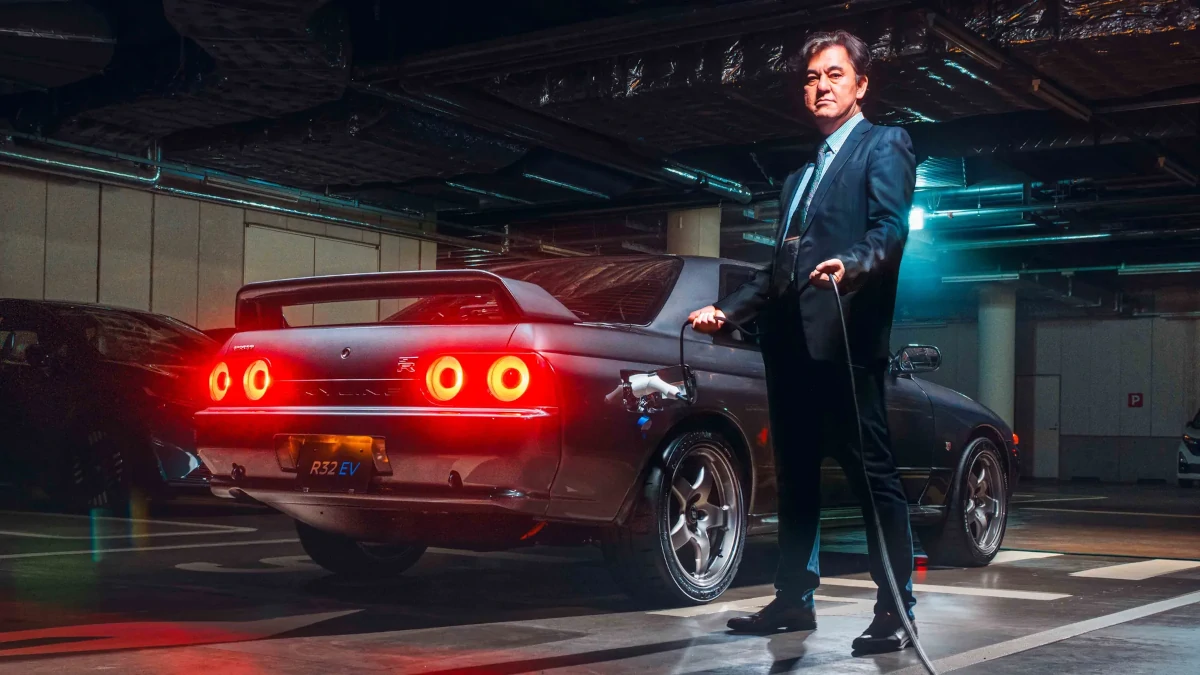


There’s something lurking in the basement of Nissan’s global HQ, and it’s likely to ruffle a few feathers. Like Bowie, this legend is evolving into something otherworldly, transcending time, space, and preconceptions about lightning bolts painted proudly across your face. Deep underground, Godzilla has had a heart transplant and is waiting for the doctor’s all clear before being let loose on the streets of Tokyo.
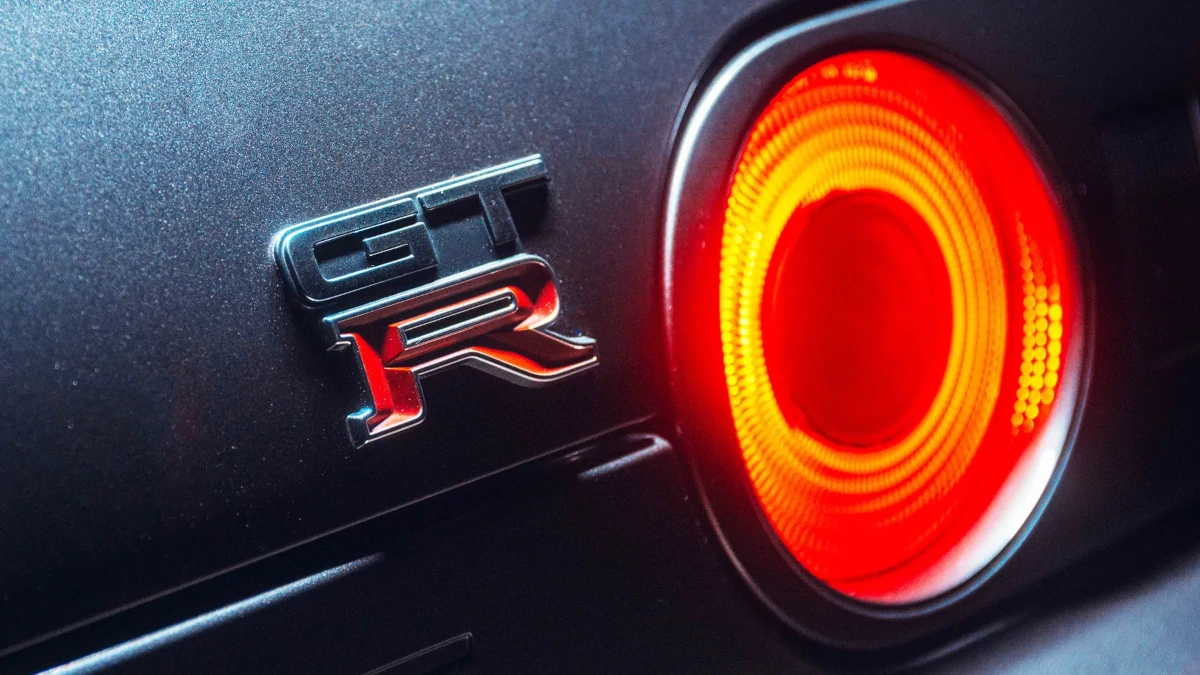
This is the passion project of Mr. Ryozo Hiraku, an engineer at Nissan and a GT-R owner. He and his small team have designed and built this electric Skyline entirely in their spare time and with a very limited budget. Luckily, Nissan just so happened to have a mint-condition R32 lying around, finished in the ineffably cool gunmetal gray.
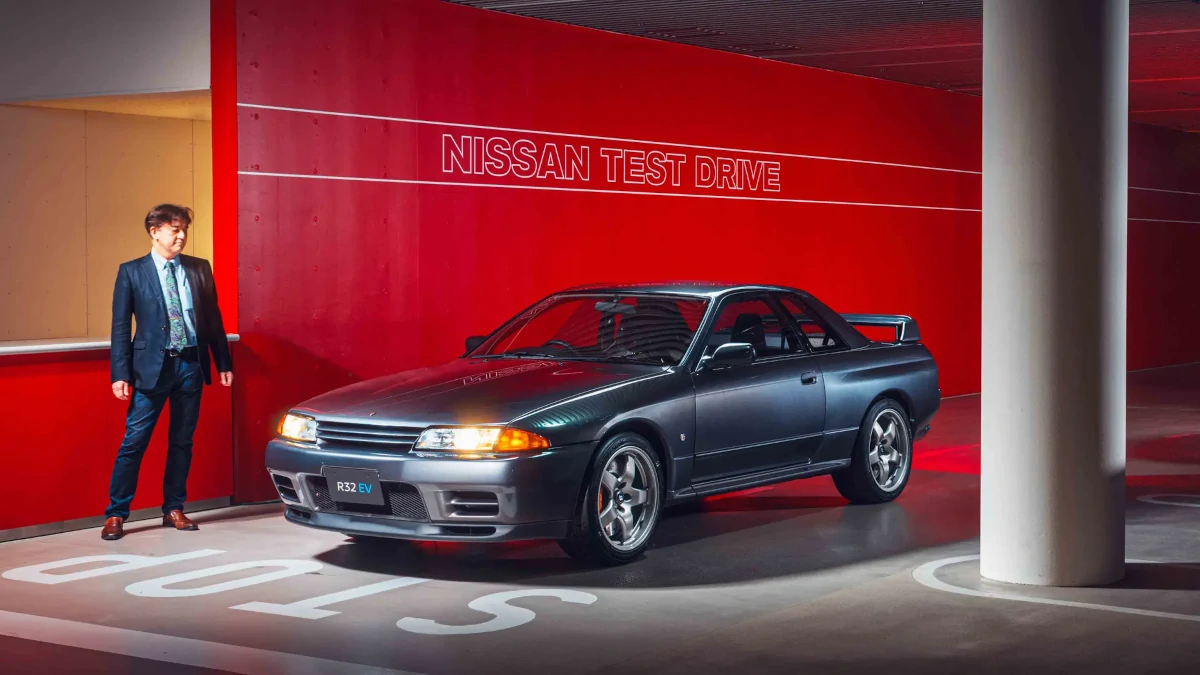
The rest of the conversion is all parts bin donations, too—there’s a 92kWh battery from the Leaf Nismo RC and two of Nissan’s e-Powertrain electric motors. Lifting the hood to find a squiggle of wires, inverters, and a distinct lack of anything turbo-shaped immediately conjures comparisons to Doc’s DeLorean.
OTHER STORIES YOU MIGHT HAVE MISSED:
The Xiaomi SU7 Ultra has set the production EV lap record on Nürburgring
The Toyota Land Cruiser Hybrid is the most powerful LC to date
In period, the R32 had a claimed output of 276hp under the gentlemen’s agreement, although we now know that was probably underselling the car’s true power output and potential. How does this R32 EV stack up? The combined front and rear drive motors make 429hp, then 340Nm of torque each. That’s enough to give the car a similar power-to-weight ratio, considering the disadvantage of having a small polar bear’s worth of batteries on the back seats—367kg to be precise.
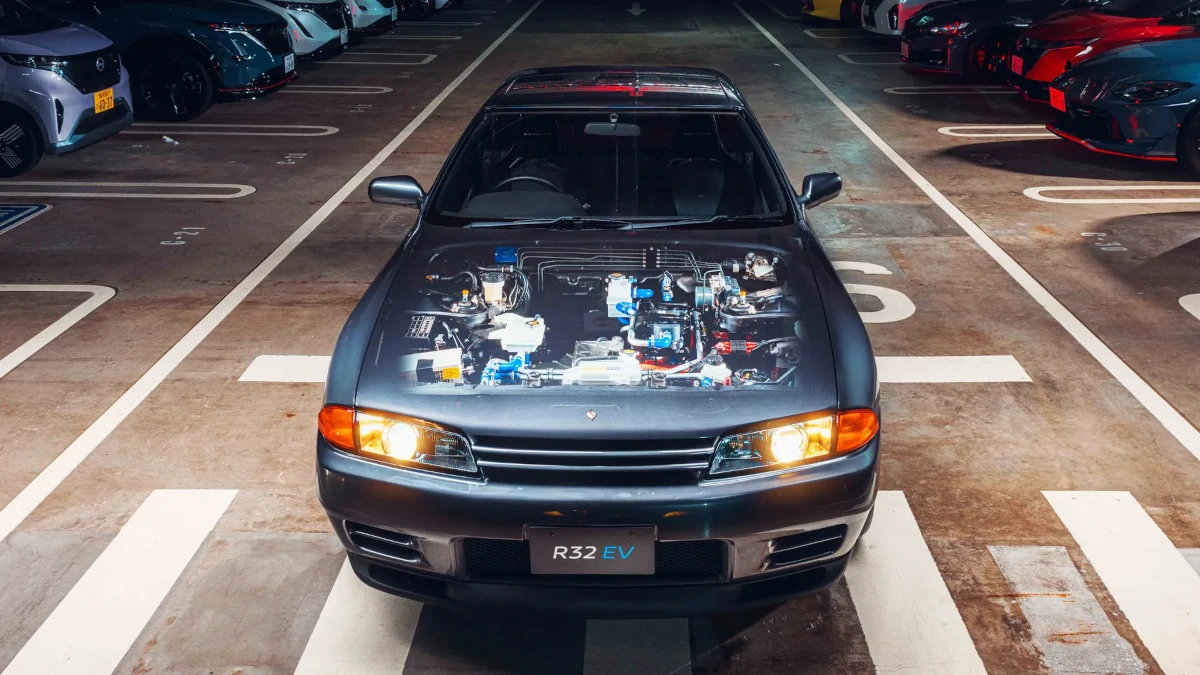
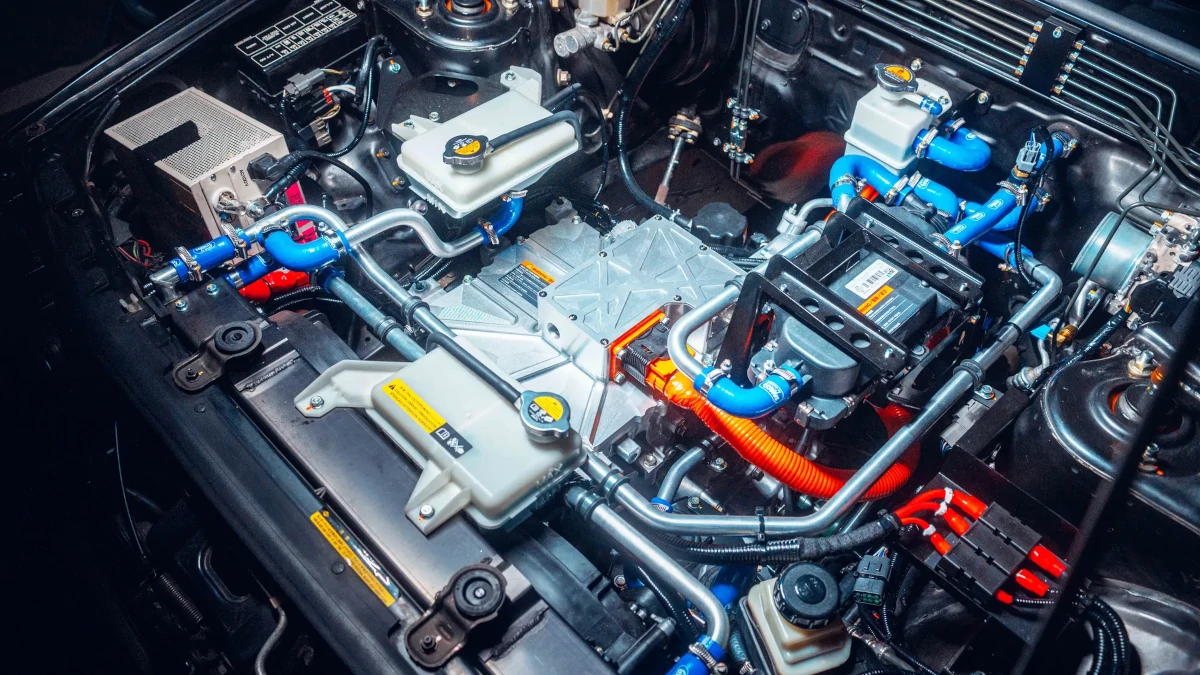
We’ve yet to drive it, but you know the drill: Not only is power and torque immense, but the electric motors slap it on immediately. Even the most efficient e-assisted turbo can’t compete with that. It’s important to note that the goal here wasn’t to create a 1,000hp electric straight-line monster, but to equal the baseline performance of the original car...accounting for the extra weight.
In an ideal world, we’d all be swimming in eco-friendly, carbon-neutral synthetic fuels to keep the combustion-engined party going until our sun fizzles out. Realistically, though, the future is more uncertain than that, and electric has a central role to play in a renewable future—for mass-produced cars, at least.
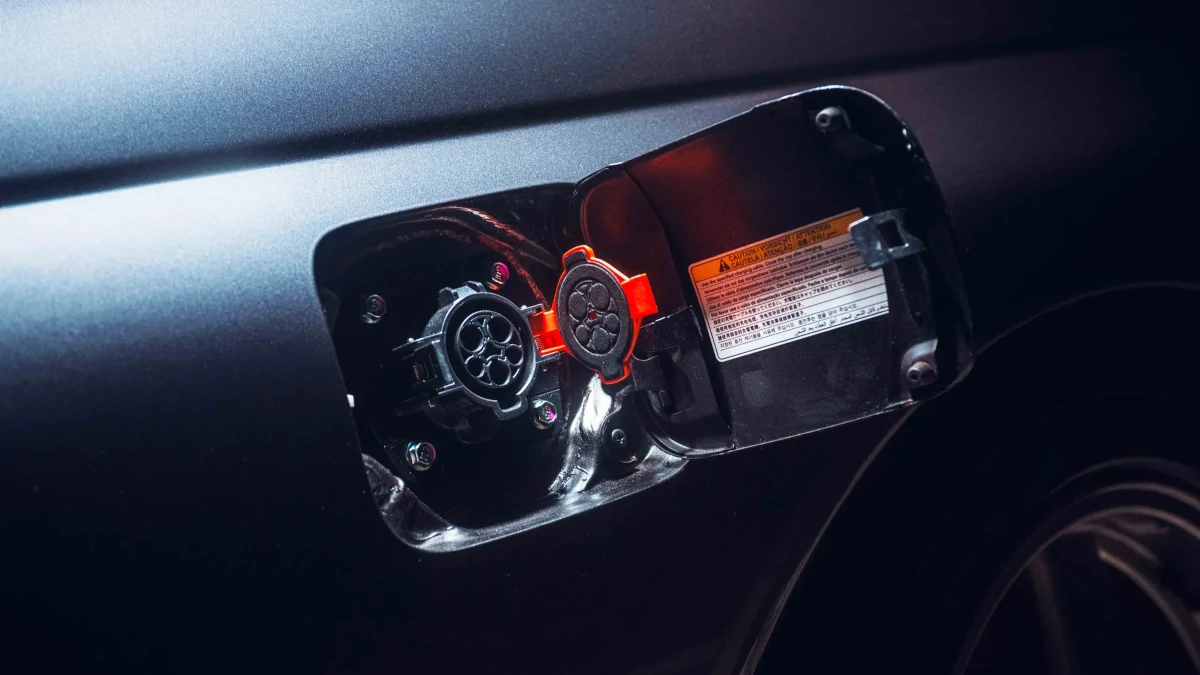
What Hiraku-san is trying to do is safeguard against the loss of engaging driving machines, here essentially distilling the handling and spirit of the original GT-R and storing it in a battery cell for future generations to enjoy. He’s not trying to create a new R32—more to recreate it in digital form. He calls it a “digital remaster.”
Basically, you lose the dirty, noisy, polluting dinosaur-juice-drinking lump that is the RB26 engine and replace it with nice, clean electricity, while—and this is crucial—retaining the excitement and experience of the original car. Many, including myself, would argue that you can’t have one without the other, because the analog sensory overload is what makes pushing these cars hard so appealing. The team has tried to address this, kind of, with a speaker mounted behind the driver’s seat pumping synthesized rev-matched engine noise into the cabin. There’s even talk of adding vibrations into the touchpoints, too.
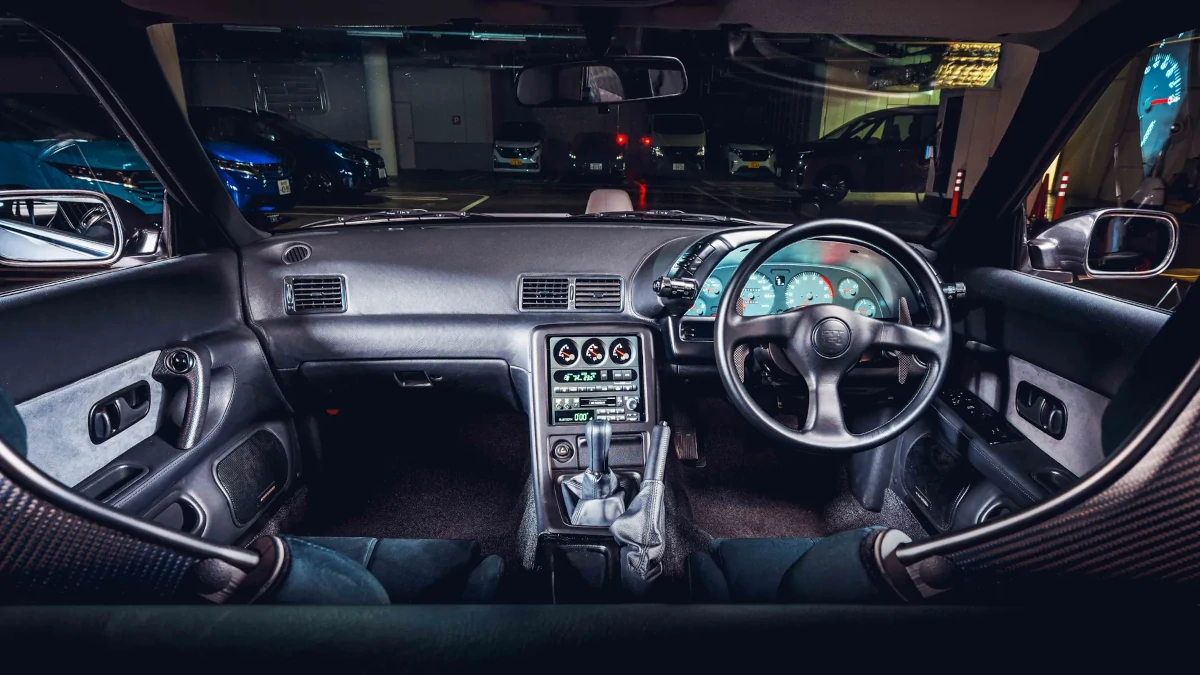
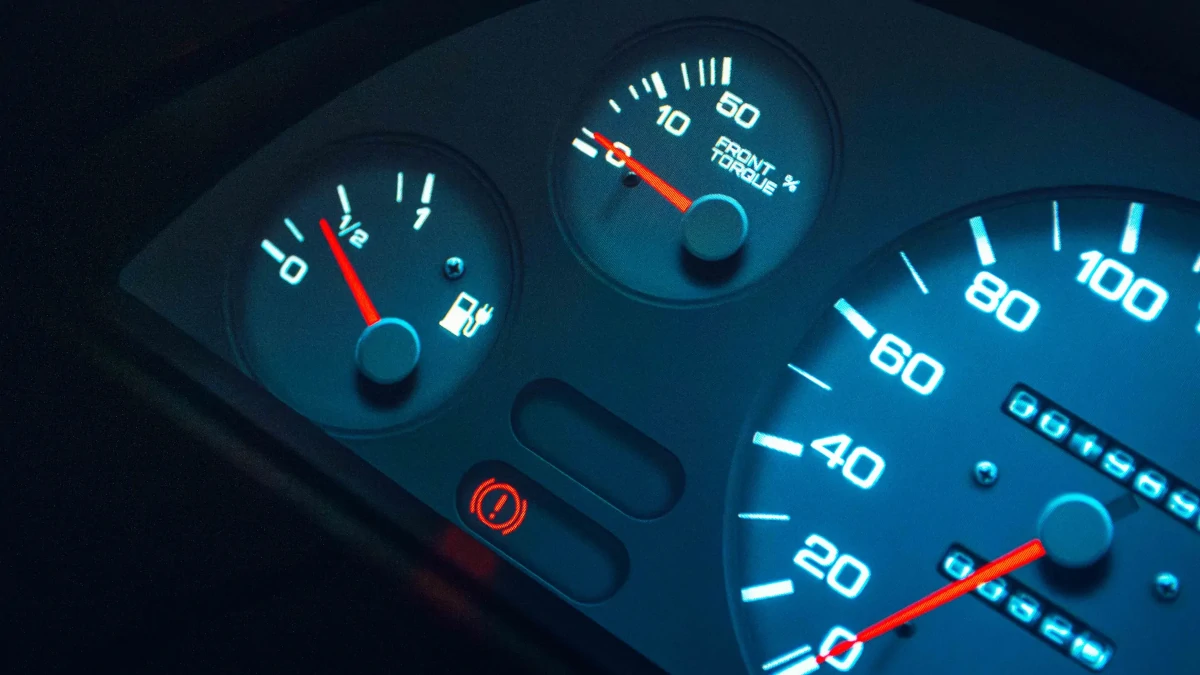
Then there’s that hefty stack of cells in the backseat—how do you make them less noticeable while chucking the car around a twisty road? The chassis is all standard R32 fare, but the stock double-wishbone setup has been tuned to cope with the extra weight, with upgraded Öhlins shocks from the Nismo parts bin. Brakes are Nismo’s off-the-shelf R35 six-pot conversion kit, which is handy because this weighs roughly the same as an R35.
There are quite a few tasty new parts that have been produced especially for this project, too, which have gotten the GT-R fans salivating. The carbon-fiber full bucket seats made by Recaro, the digital readouts on the dash and the center console, and best of all, the 18-inch wheels, direct copies upscaled from the OG 16-inch R32 items. Hiraku-san even had some period-correct RE-71RS Potenzas recreated in 18-inch form. Well-played.
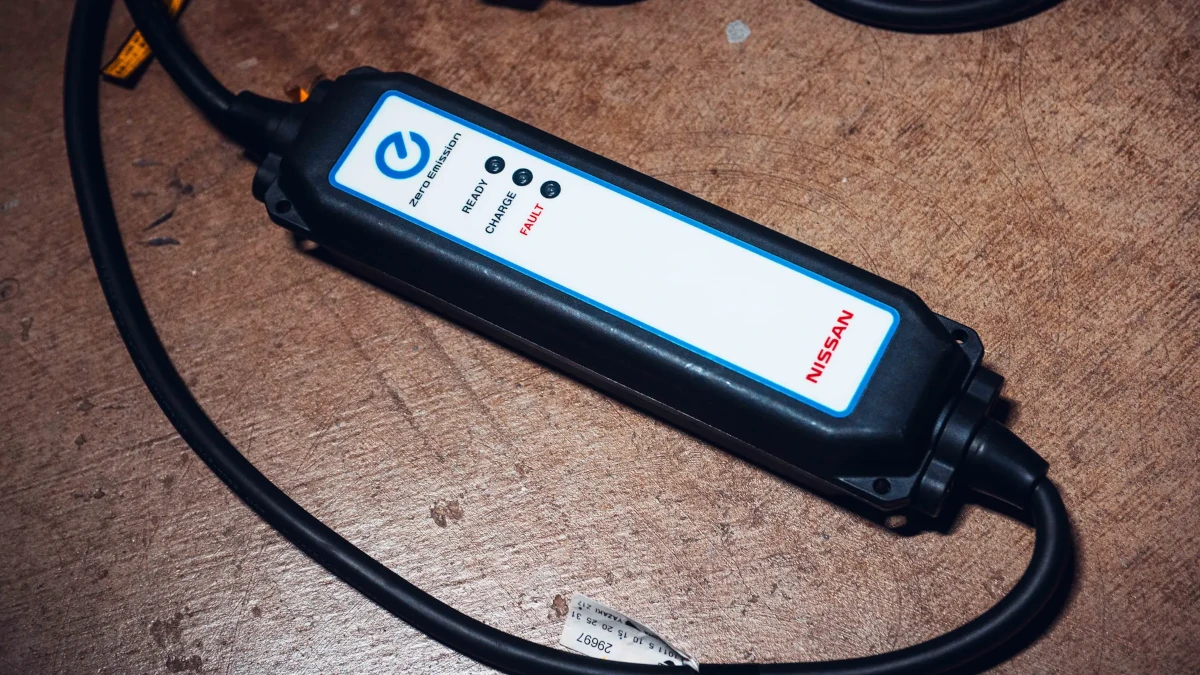
While the car is basically finished in physical form, it had its shakedown last year on Nissan’s test track, and the team is a long way from having it drive and handle like the original. The Recaros, dials, and reupholstered interior are classy additions, though, making this the best-looking test mule ever made. A Bowie-esque lightning bolt livery might be a bit much, but I’d be lying if I said I didn’t want to see it.
Will Hiraku-san and his team succeed in bottling the essence of Godzilla? Will this study result in a small, fun-to-drive EV sports car that handles like a ’90s GT-R? Will the next-gen R36 GT-R go electric and have some of this DNA programmed into its bones? Your guess is as good as mine, but whatever happens, it’s a positive step in connecting the GT-R’s glorious past to its electrifying future.
NOTE: This article first appeared on TopGear.com. Minor edits have been made.