
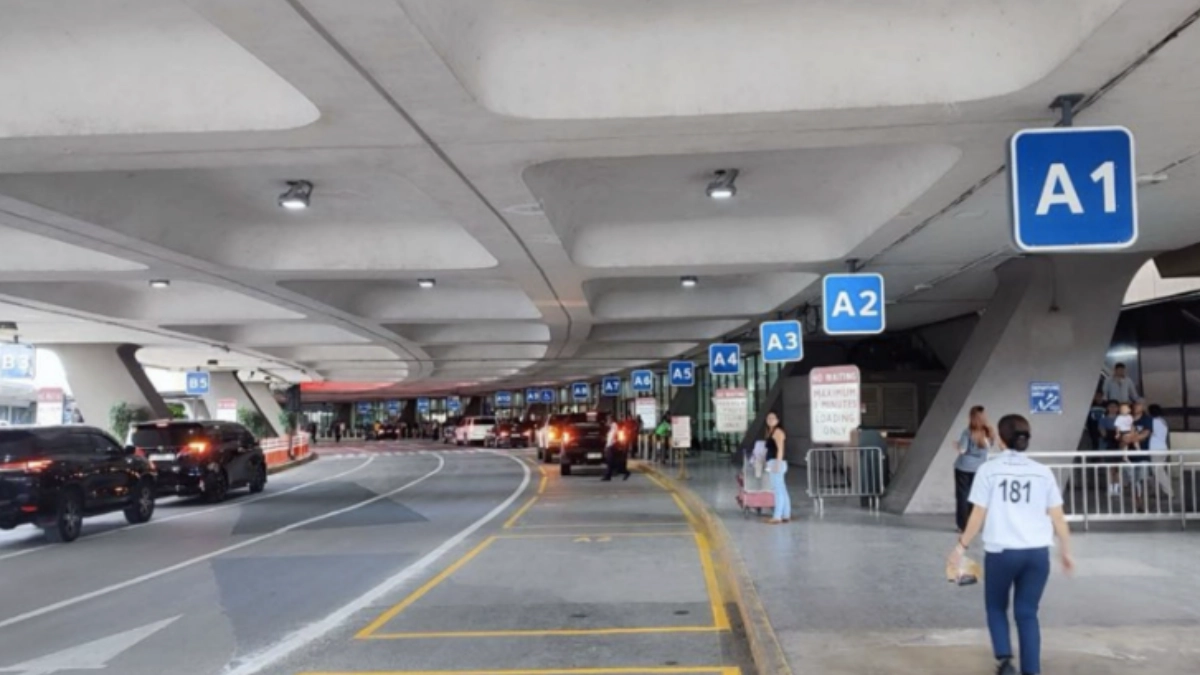
Discussions regarding general road safety and the integrity of bollards have been circulating online after the tragic incident involving an SUV crashing into the walkway at Ninoy Aquino International Airport (NAIA) Terminal 1.
A black Ford Everest accelerated from a parking spot after dropping off passengers, crashed into the bollards, and plowed into a group of people. The incident resulted in at least two fatalities, including a child, with others injured. Photos shared online showed that one post was ripped off completely after the vehicle crashed into it, triggering concerns over its effectiveness.
Concerned netizens, including architects, engineers, and city planners, took to social media to stress that while the driver was at fault, ensuring well-built infrastructure could prevent similar accidents from happening in the future. Here’s what they have to say about the bollards that will be facing a probe.
What are bollards, and what purpose do they serve?
“Bollards are not placed for aesthetic purposes only,” says the architectural community page Arkitekto Tayo PH. These sturdy, short, vertical posts are designed to control traffic, protect pedestrians and buildings, and create a protective perimeter.
Sharing a collage of crashed cars with the text “bollards showing their purpose,” the page explains that the barriers play a crucial role in enhancing safety, controlling traffic, and keeping people and infrastructure safe.
“Bollards can be used to direct traffic, restrict vehicle access to certain areas, and demarcate pedestrian zones. They protect buildings and pedestrians from vehicle-based attacks by acting as a physical barrier. Bollards enhance pedestrian safety by separating pedestrian areas from vehicular traffic,” according to the page.
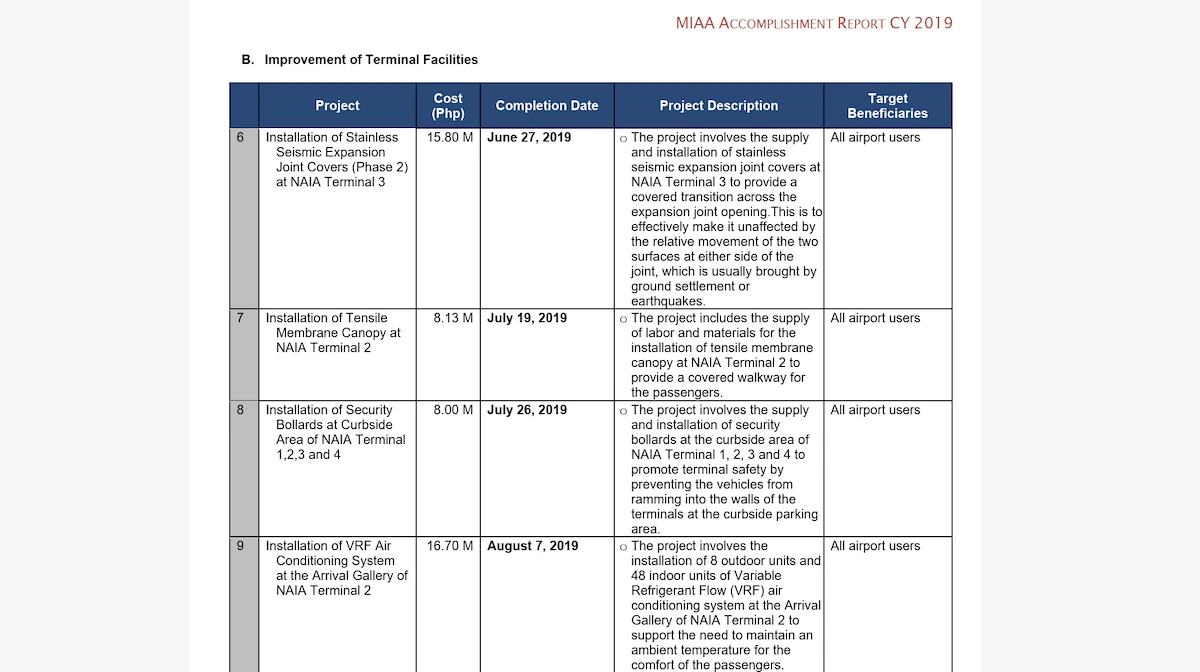
According to the Manila International Airport Authority’s (MIAA) 2019 accomplishment report, the P8 million security bollard installation at NAIA Terminals 1 to 4 was intended “to promote terminal safety by preventing vehicles from ramming into the walls of the terminals at the curbside parking area.”
Where are bollards typically used?
The Arkitekto TAYO PH page says bollards are “commonly used in urban areas, airports, and other public spaces to prevent vehicle intrusion and enhance security.”
Industry experts also note that bollards are installed near important sites such as government and high-security buildings, fuel stations, industrial and warehouse sites, car dealerships and parking lots to prevent unauthorized access.
These can also typically be found along pedestrian zones and sidewalks, particularly in urban areas with heavy foot traffic, to protect pedestrians. Bollards can be found in crosswalks, plazas, and storefronts to help increase visibility and safety for pedestrians.
There are various types of bollards, including permanent, removable, and retractable bollards. Permanent bollards, like those used in airport terminals, need to be made of sturdy materials to resist vehicle impact. As per the construction website The Constructor, fixed bollards are typically made from heavy-duty durable materials like steel, stainless steel, concrete, plastic (polyurethane or PVC), and cast iron. Some parks and forests abroad also use wooden bollards to match the environment. Meanwhile, removable bollards and plastic barriers that are meant to be moved such as those used in roadway construction zones by the Department of Public Works and Highways (DPWH) can be made of lighter materials. Temporary bollards are typically made from PVC orange pipe with a concrete pedestal and come in fluorescent red or orange and reflectorized paint. While resilient to impact, these types of bollards are not meant to damage vehicles when hit at low speed, according to DPWH specifications. In a widely shared Facebook post, RJ Flores Architectural Design said that the bollards in the departure terminal of NAIA 1 were potentially “substandard” in design or installation, citing their failure to withstand vehicular impact. “For public spaces like terminals, crash-rated or anti-ram bollards should be used—typically made of heavy-duty steel with a diameter of 6 to 8 inches, embedded 3 to 5 feet deep in reinforced concrete, and spaced 3 to 5 feet apart. These are often rated under ASTM F2656 standards (e.g., M30 to M50), capable of stopping a vehicle traveling at high speeds,” according to the page. ASTM ratings refer to a system of the American Society for Testing and Materials (ASTM) which measures a vehicle penetration through security barriers. Crash rated bollards are "designed to protect high-target buildings from concerted vehicular attack." According to the firm, decorative or improperly specified bollards may fail under pressure and defeat their purpose, adding the importance of “using standard, impact-resistant specifications.” Netizens and experts alike noted that the safety bollards at NAIA Terminal 1 appeared to have poor or shallow anchoring if it couldn’t prevent the vehicle when it suddenly accelerated. Safety bollards are just one of the many infrastructure projects that could save lives if built with quality materials and standards. As taxpayers, we need to demand better service and ensure that infrastructure projects serve their intended purpose and benefit the people. This means holding agencies and contractors accountable when structures fail. In a viral post that resonated with many netizens, Engineer Clark Ferrer, who runs the “Mr. Contractor” Facebook page, reminded fellow contractors in the industry that they are “building lives,” not just metal and concrete. He called on construction workers to “build with conscience” and “integrity” or “don’t build at all”. He said that the fatalities happened not just because of a reckless driver, but because the “safety bollard meant to protect gave way.” “I am a contractor. And I cannot — will not — accept this kind of death. We don’t just pour concrete and erect steel. We are building lives. We are safeguarding futures. To those who continue to look the other way… to those who profit from substandard work — I beg you: STOP,” he wrote. “Corruption kills. And if you’re a contractor, a supplier, an engineer, or a government official — And you continue to be part of this broken system — Then you are part of the killing,” said Ferrer. “The Filipino people are not trash. They should not be cheated. They should not be betrayed. They deserve better.” We couldn’t agree more. What’s your take on this issue? Let us know in the comments section.How deep should bollards be installed?

Why do we need to enforce safety standards in construction?