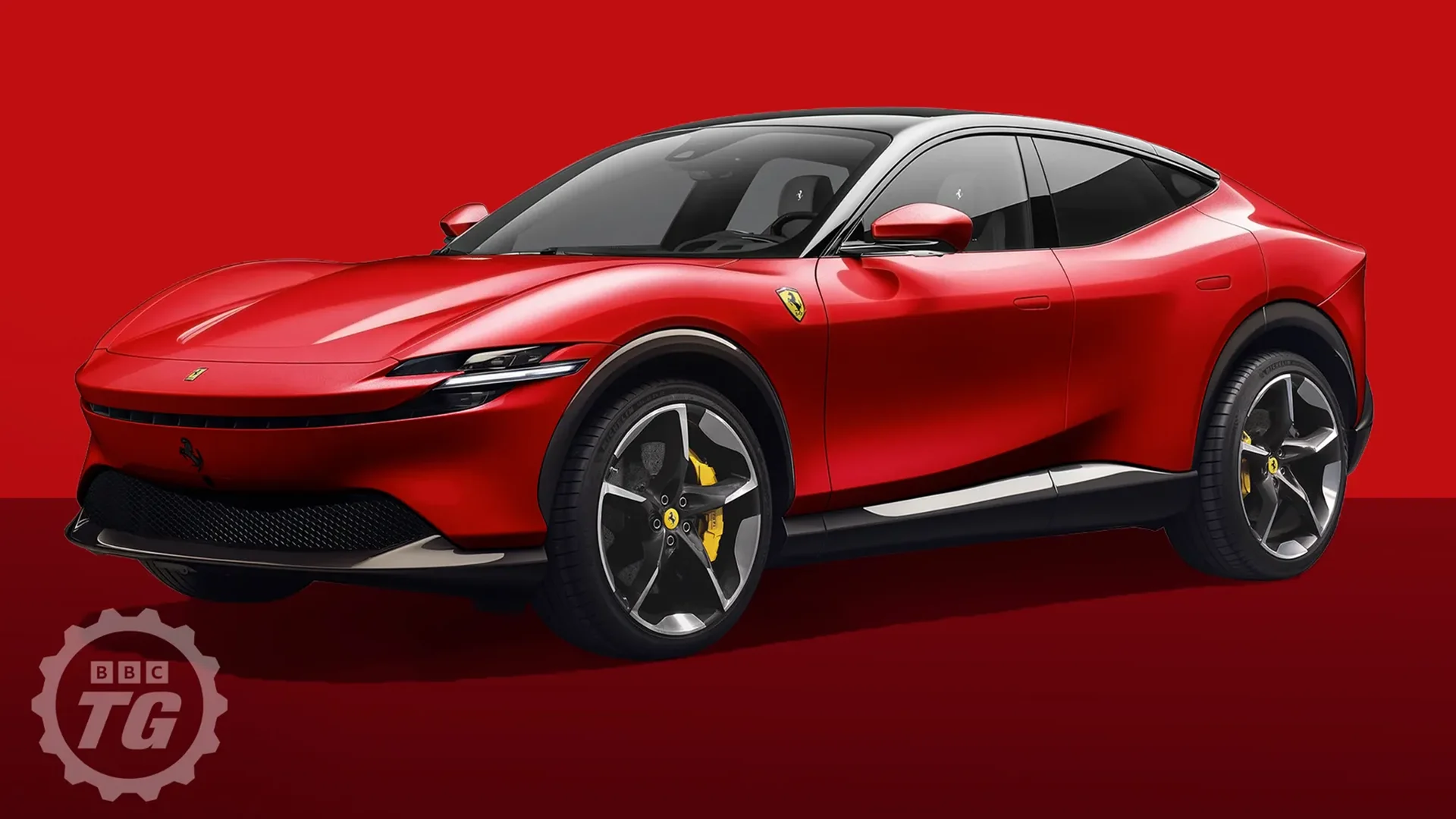
We’re 45 seconds in, and Ferrari CEO Benedetto Vigna has just asked me what I like most about the new Luce. The boss fixes me with a titanium-plated glare, then smiles. And here I was thinking I was the one asking the questions…
Be in no doubt, this car represents an unknown for the world’s most celebrated luxury car brand. Ferrari is 80 years old in 2027, and as well as giving us some of the greatest cars of all time, that has also allowed the company to build a relationship with its clients that’s the envy of the business. They’re part of the family, and while the hunger for Ferrari’s top cars is insatiable, it’s an appetite that’s ingeniously managed.

But Ferrari’s investors are unsure about the diversion into electric, and demand for high-end EVs remains, shall we say, unproven. If anyone can move the needle, surely it’s these guys, right? We had the engineering debrief last October, and the internet is enjoying its usual measured response to anything new following this week’s interior reveal. That’s been led, as you’ll know by now, by Sir Jony Ive, Apple’s former chief design officer, and Marc Newson, his partner in the LoveFrom design collective. They’re pretty choosy about who they work with, but the list includes Airbnb, Apple, Moncler, and most intriguingly, Sam Altman’s Open AI. And, for the past five years, Ferrari.
OTHER STORIES YOU MIGHT HAVE MISSED:
Singer’s latest creation is this beautifully reimagined Porsche 911 Cabriolet
The Renntech Sledgehammer is a wild widebody Mercedes-Benz SEC packing a screaming V12
They’re arguably the most influential product designers of the past 50 years, but Ferrari’s design office, guided by the visionary Flavio Manzoni, is doing great—and challenging—work by itself. So why did the company feel the need to seek external assistance for the design of its first fully electric car?
“You look around to see who has done a good job in terms of the user interface,” Vigna says. “I also worked with them at Apple. If you want to break the idea that electric means digital and too many screens, something that’s too difficult for the user, then work with the people who have the experience. This combination of analogue and digital is fundamental to the cars that we aim to do. John [Elkann] actually asked me about LoveFrom when we were talking about the Ferrari CEO position. We are talking about a new kind of car, a new kind of technology, so I think it’s good to work with them.”
Vigna was himself a leading player in the tech world when Ferrari came calling in 2021, and spent time in California early in his career. He helped develop a three-dimensional motion sensor first used in airbags, later adapted for use in the Nintendo Wii and the iPhone’s screen rotation function. This is a ferociously intelligent, highly pragmatic man with deep roots in engineering.
I tell him I tried the Waymo self-driving taxi the previous day. “You did? I like to have a person driving, I don’t trust chips,” he says crisply. I can’t tell if he’s joking or not. We’re on safer ground discussing the Luce, and the methodologies that guided its development. One wonders how smooth the process was.
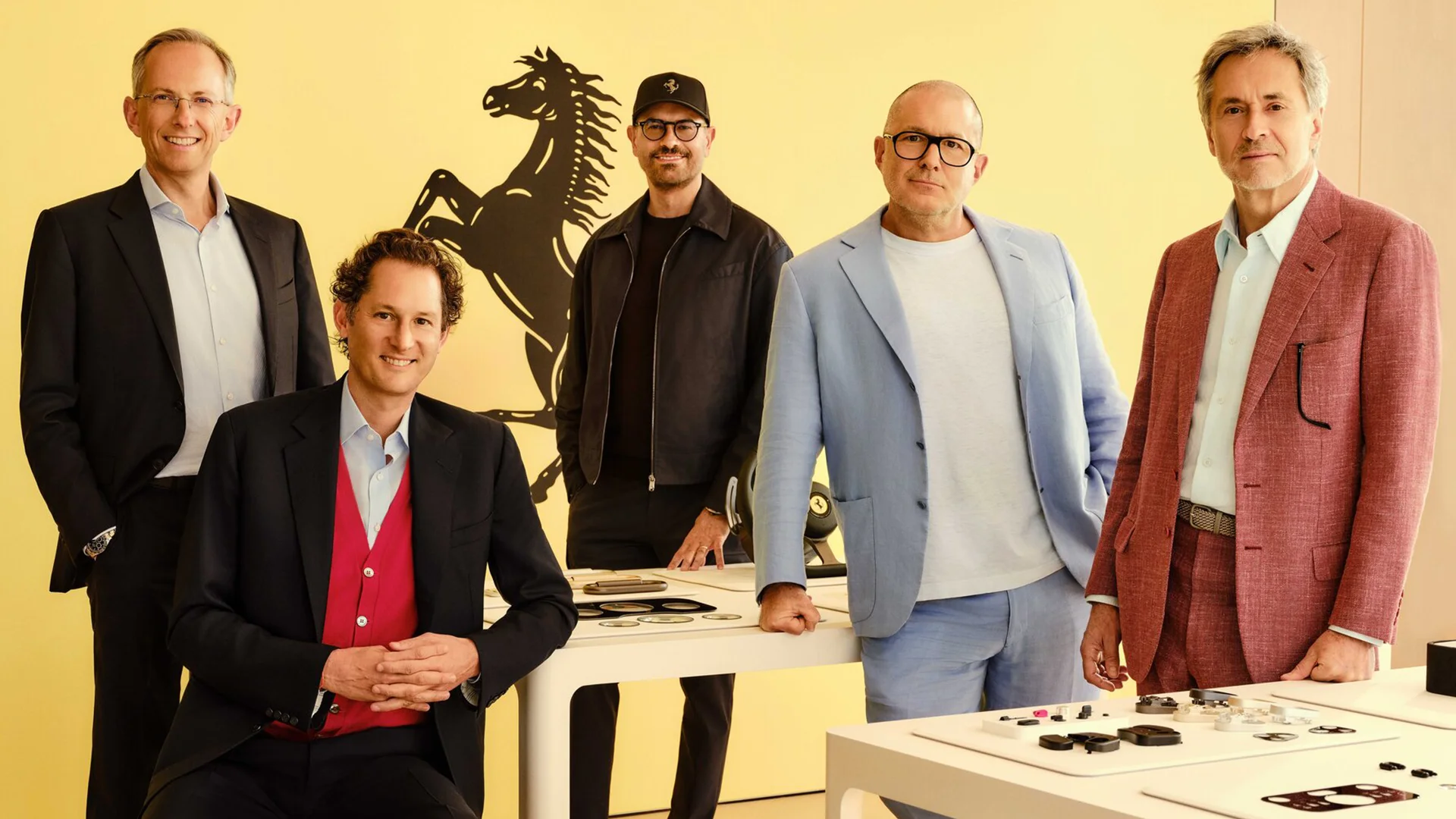
Left to right: Benedetto Vigna, John Elkann, Flavio Manzoni, Sir Jony Ive, Marc Newson
“We had meetings in which we explained the constraints, with a mechanical engineer, an aerodynamicist,” he replies. “There were some basic building blocks that had to be put in place, things we had to explain, the homologation criteria, for example. Then they came to us with ideas, and we were able to say, ‘this is OK, this is not OK.' There has been a bi-directional flow of information, with a continuous interaction between Maranello and the team in San Francisco.”
It’s no secret that Italian companies do things differently from American, British, or Japanese ones. That’s a form of diversity right there, for which we should all be grateful. But it does bring challenges. “There are cultural differences,” Vigna confirms. “The beauty of working in hi-tech is that you deal with many cultures, and in a previous life I had 21 design centers around the world—in Turkey, Israel, the Czech Republic, India, Japan, Taiwan, and China. You have all that culture, and each is talking in its own way.
“So I was able to act as an intermediary between here and Italy. It’s not just the language that is different. The time management is different. For me, it was no problem, but for an Italian who has never dealt with people in California, it could be interesting, let’s say.
“I had to have a call early on to help them to integrate, but after that initial phase things went smoothly. I’ll give you an example: I might say ‘yes’ because I understood you, not ‘yes’ because I agree with you. We learned a lot about the materials used, but on a personal level we now have different people in the company that understand the culture. And that’s a big asset.”
Vigna is also open enough to admit that the collaboration with LoveFrom has helped deepen his understanding of the importance of design, both in the Ferrari context and in general. Ive and Newson had their team produce a stunning four-volume brand book on Ferrari, documenting the company’s history and major touchpoints. During a visit to LoveFrom’s San Francisco HQ, TopGear.com had a look; the effort expended is extraordinary, as you might expect, and goes way beyond the customary mood boards.
“Personally, I wasn’t so immersed in design,” Vigna admits. “Do you know what design is if you’re in the technology world? It’s engineering. If you’re talking about a design center, it means how to design a chip. You might not like this, but to me, design was synonymous with styling. I got this completely wrong. Working on this collaboration, I got to appreciate the value of industrial design. Look, I’m a physicist. What I’ve learned is that design has the same depth to it as any other discipline.”
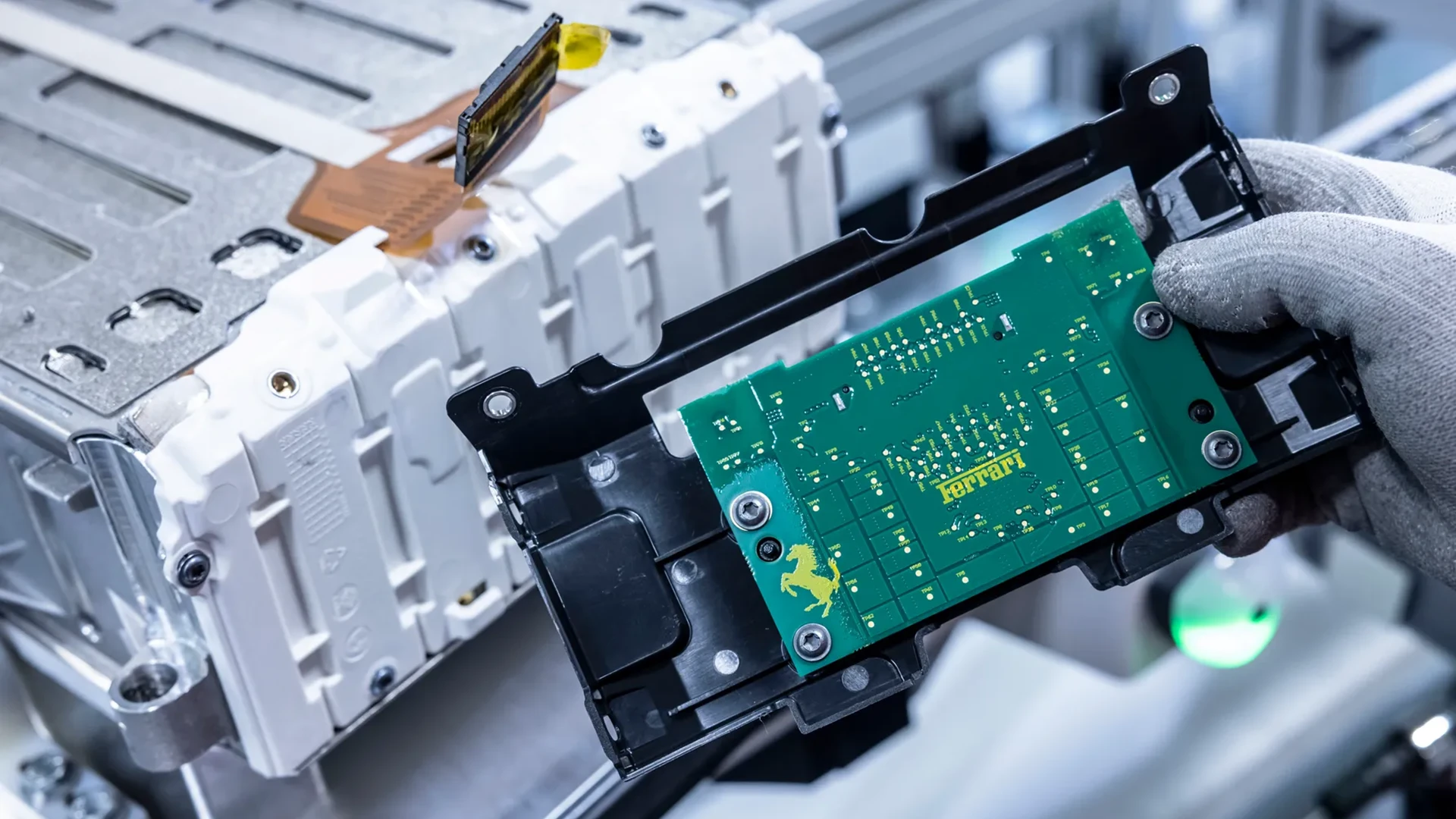
As to the uncertainty around electrification, if Vigna is the captain of a ship, the course ahead is plotted, and it’s one he intends to stick to. We talk about psychologist Daniel Kahneman’s work in the field of behavioural economics (his book Thinking, Fast and Slow is worth a read), before he invokes another famous figure.
“Isaac Newton said that he could calculate the motion of heavenly bodies, but not the madness of people,” Vigna says. “We focus on what is under our control, and what we commit to. We believe that doing an electric car is important because we are a leading luxury company, and if we want to continue to be a leader, we need to show that we are not afraid to embrace change.
“We are here to lead awareness and to deliver unique emotion to our clients. I also talk to them, and you can see the pressure that is coming from their sons and daughters. We need to worry about the next generation, and act rather than just use words. Innovation and sustainability—what I call ‘innovability’—is key. Also, if the client is happy, the investor is happy.”
NOTE: This article first appeared on TopGear.com. Minor edits have been made.