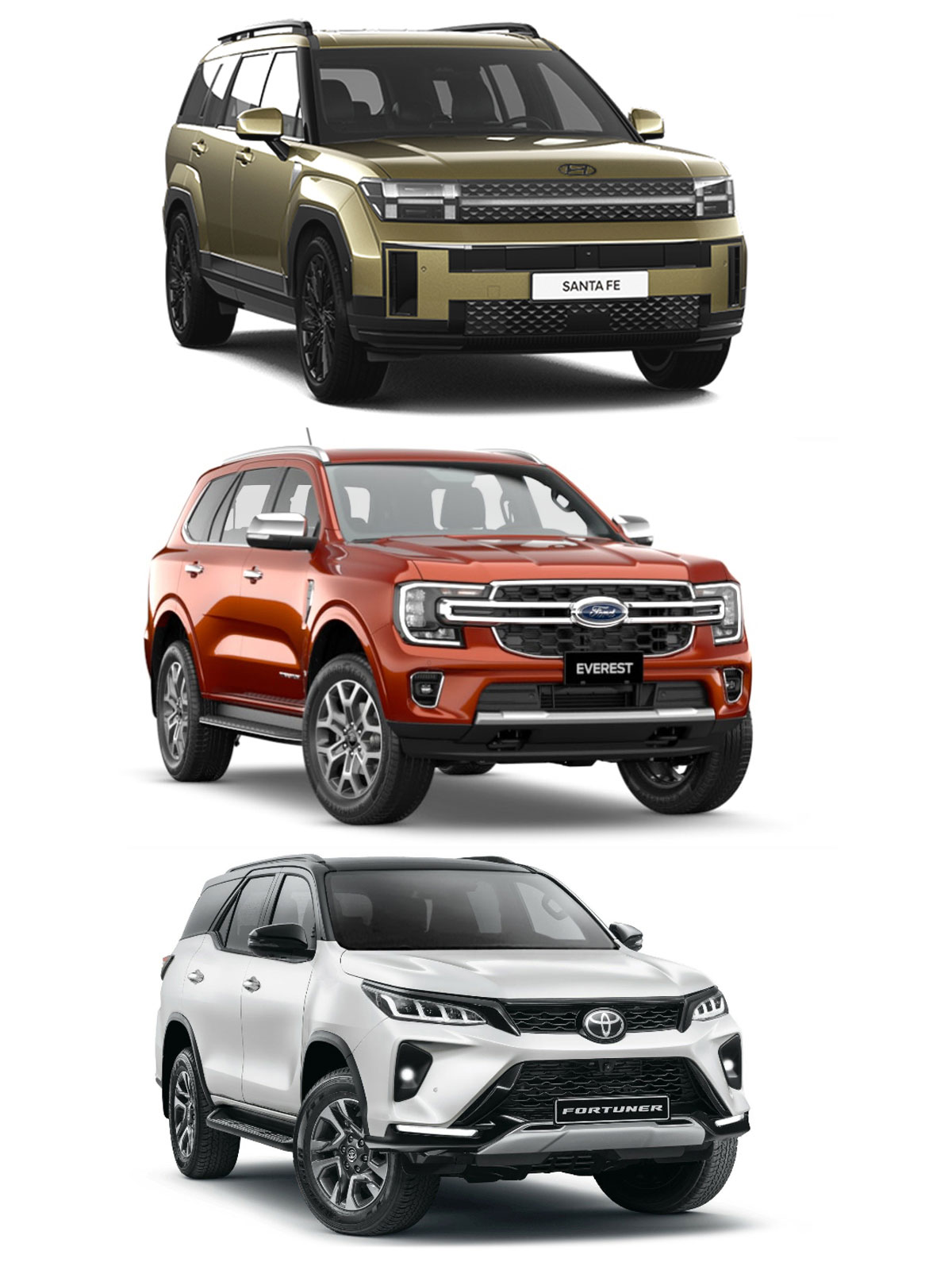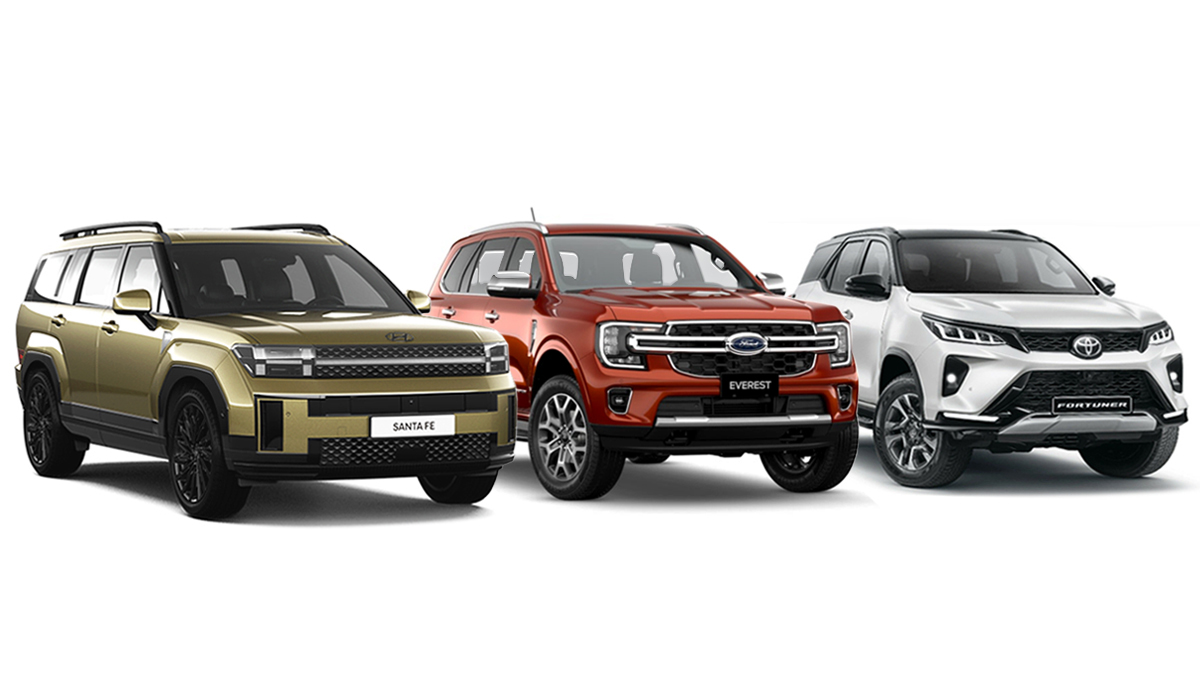
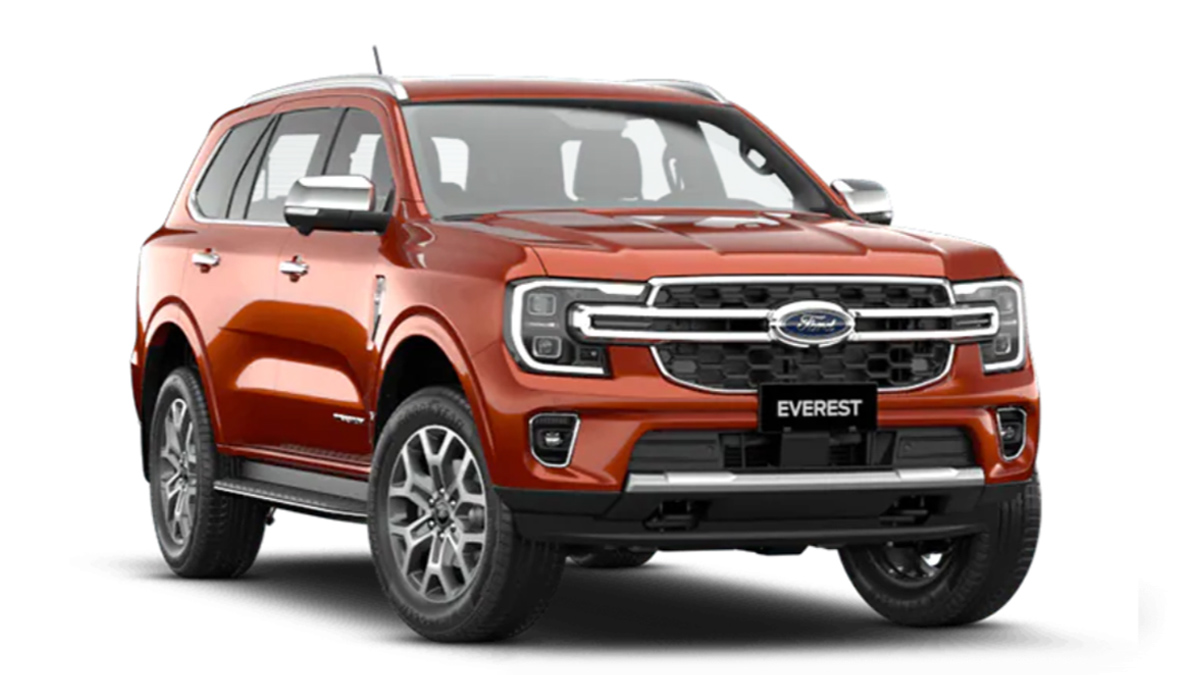
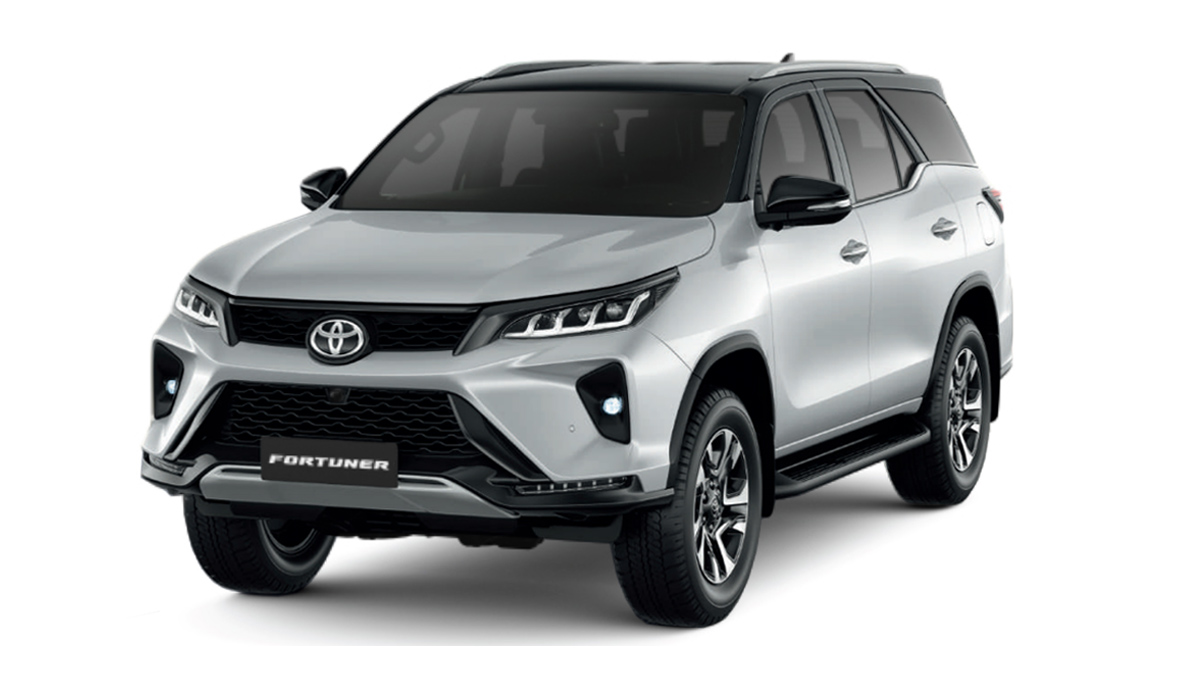
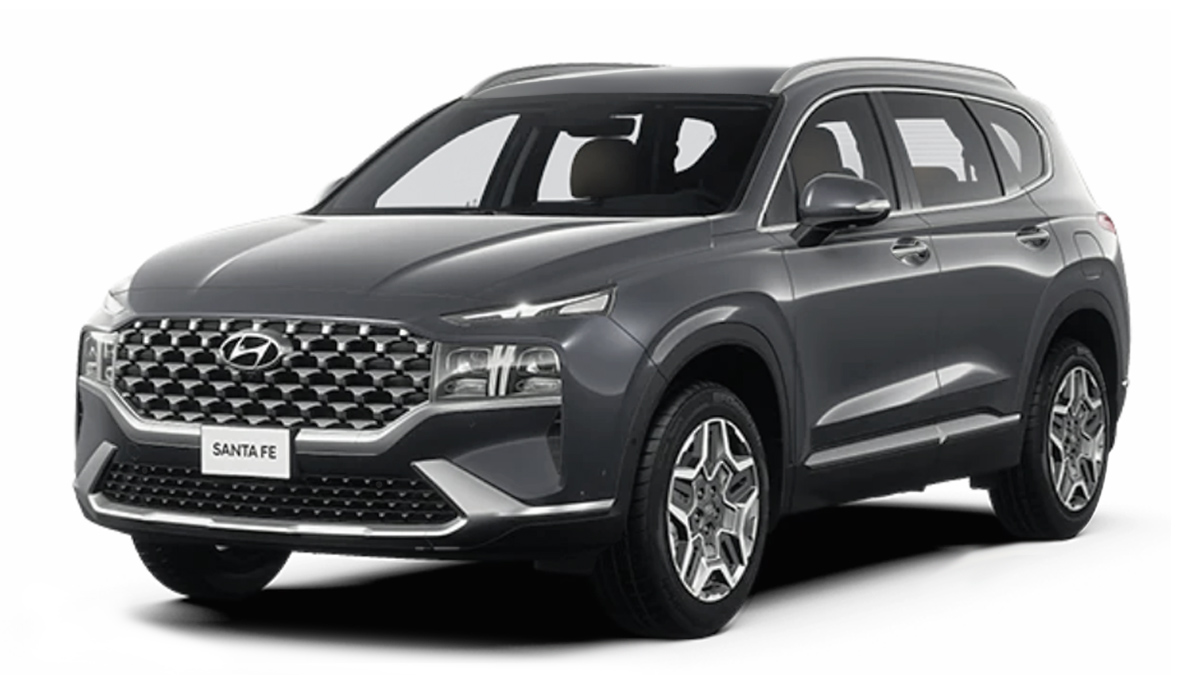
Hyundai Motor Philippines recently gave the media a preview of its upcoming 2024 Santa Fe. Yes, it’s the all-new model that features a larger boxy body. We’ll be pitting the all-new Santa Fe against two, popular midsize SUVs: the Ford Everest and Toyota Fortuner.
While not exactly an apples-to-apple comparison, expect some buyers to cross-shop the Hyundai SUV with the truck-based Ford and Toyota SUVs. For this comparo, we’ll be using the overseas Hyundai Santa Fe Calligraphy, the Ford Everest Titanium+, and the Toyota Fortuner LTD.
OTHER STORIES YOU MIGHT HAVE MISSED:
QC is using plant boxes to build protected bike lanes, and it’s such a brilliant idea
Review: 2024 Hyundai Custin Premium
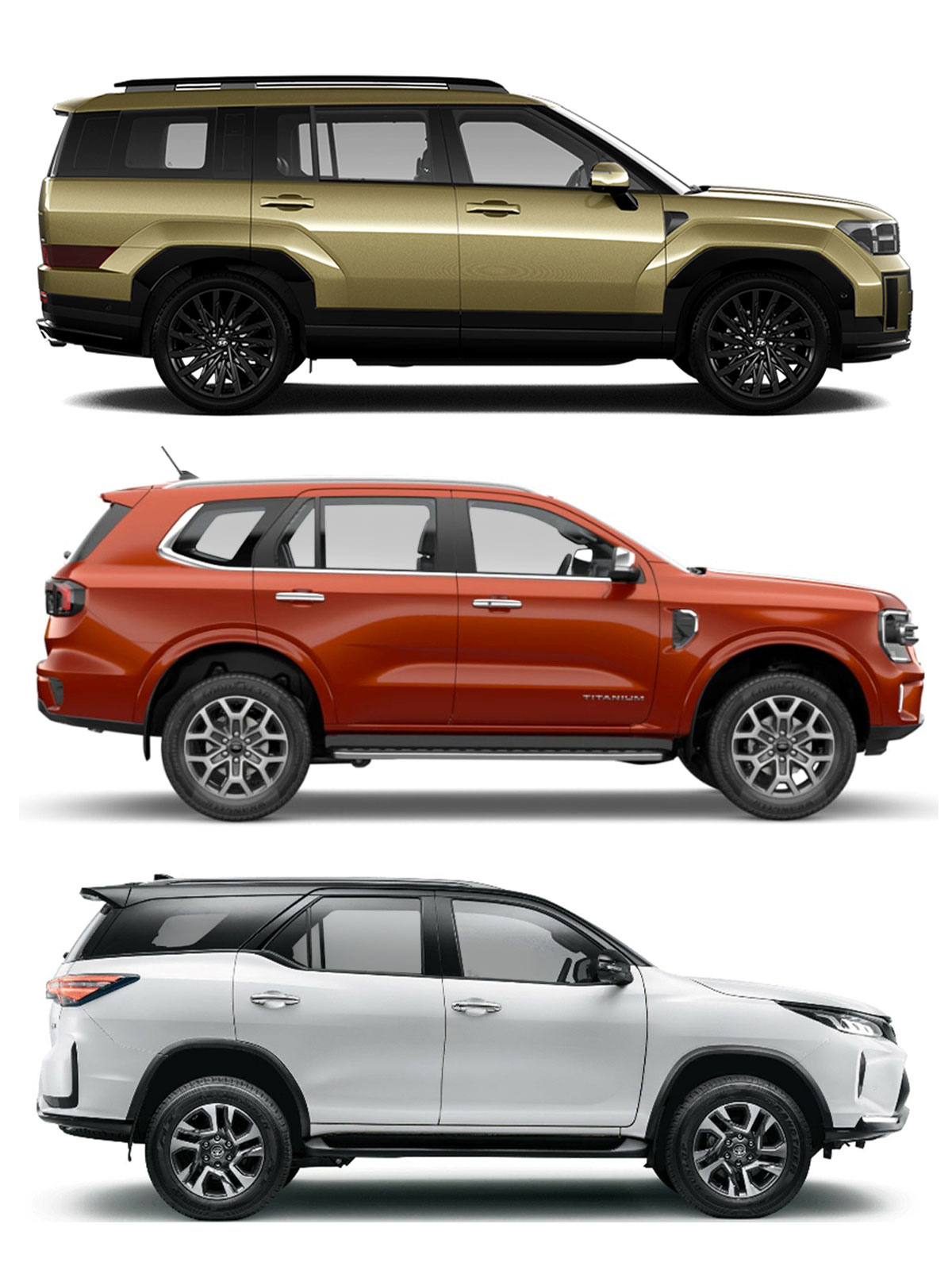
The all-new Santa Fe measures 4,830mm long, 1,900mm wide, and 1,780mm tall, this makes it 74mm shorter, 23mm narrower, and 62mm lower than the Everest. When compared to the Fortuner, the Korean SUV is 35mm longer, 45mm wider, and 55mm lower. Note that that for the height figures, the Santa Fe includes its raised roof rails, the Everest includes its antenna base, and the Fortuner includes its shark fin antenna.
The Hyundai SUV rides on a 2,815mm wheelbase, this makes it 85mm shorter than the Ford SUV, and 70mm longer than the Toyota SUV. The all-new Santa Fe is equipped with 29.7-inch diameter 245/45 R21 rollers—this is smaller than both the Everest’s 31-inch diameter 255/55 R20 rubber, and the Fortuner’s 30.5-inch diameter 265/60 R18 tires. For those curious, we can’t say much about the new Santa Fe’s ground clearance, as Hyundai does not include this measurement in the new SUV’s spec sheet.
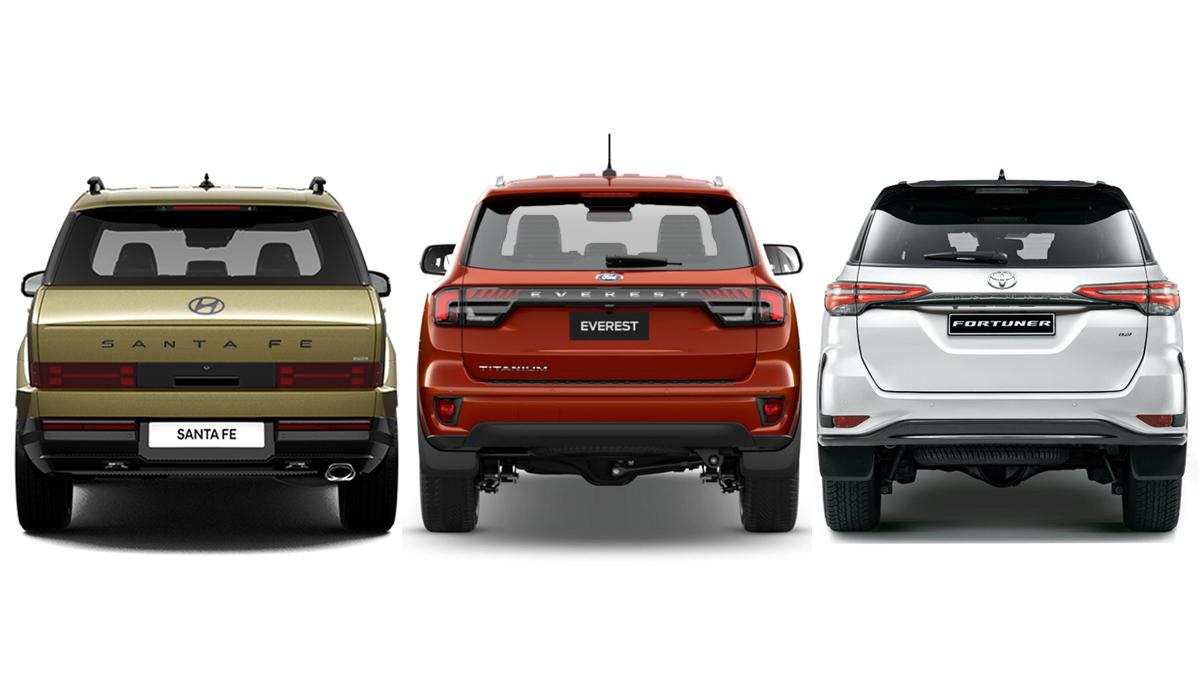
Here's a brief overview of the three SUVs in this comparo. The all-new Santa Fe continues to use a unibody construction, while the Everest and Fortuner have a more traditional body-on-frame construction. The Hyundai SUV has four-wheel independent suspension, while the Ford and Toyota SUVs use an independent front suspension and rear rigid axle setup. There’s still no official word about the Philippine-spec Santa Fe’s powertrain choices, but we do know that in other markets it comes equipped with a range of gasoline engines that also include hybrid and plug-in hybrid options.
The new Hyundai SUV is offered elsewhere with both front-wheel drive and all-wheel drive variants. The Philippine-spec Everest and Fortuner on the other hand are only offered with diesel engines. The Ford and Toyota SUVs are both available with rear-wheel drive and four-wheel drive.
What do you think of Hyundai’s all-new Santa Fe? Would you choose the Korean carmaker’s new boxy SUV over similar-sized traditional body-on-frame diesel SUVs? Let us know what you think in the comments.