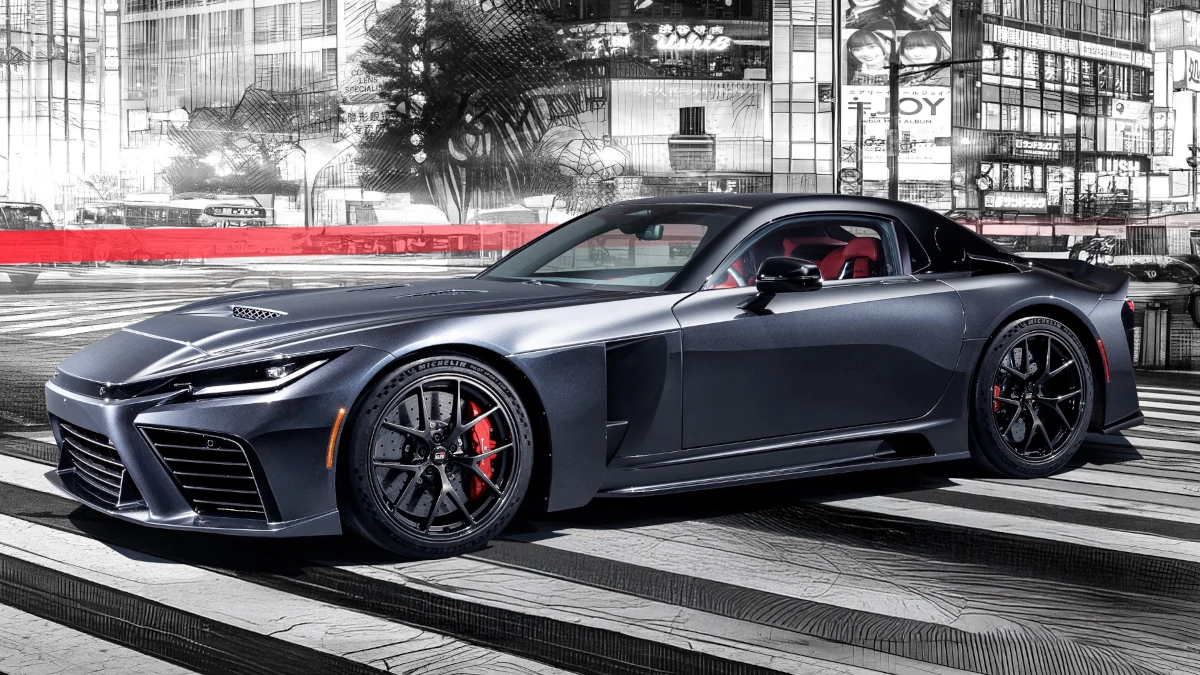
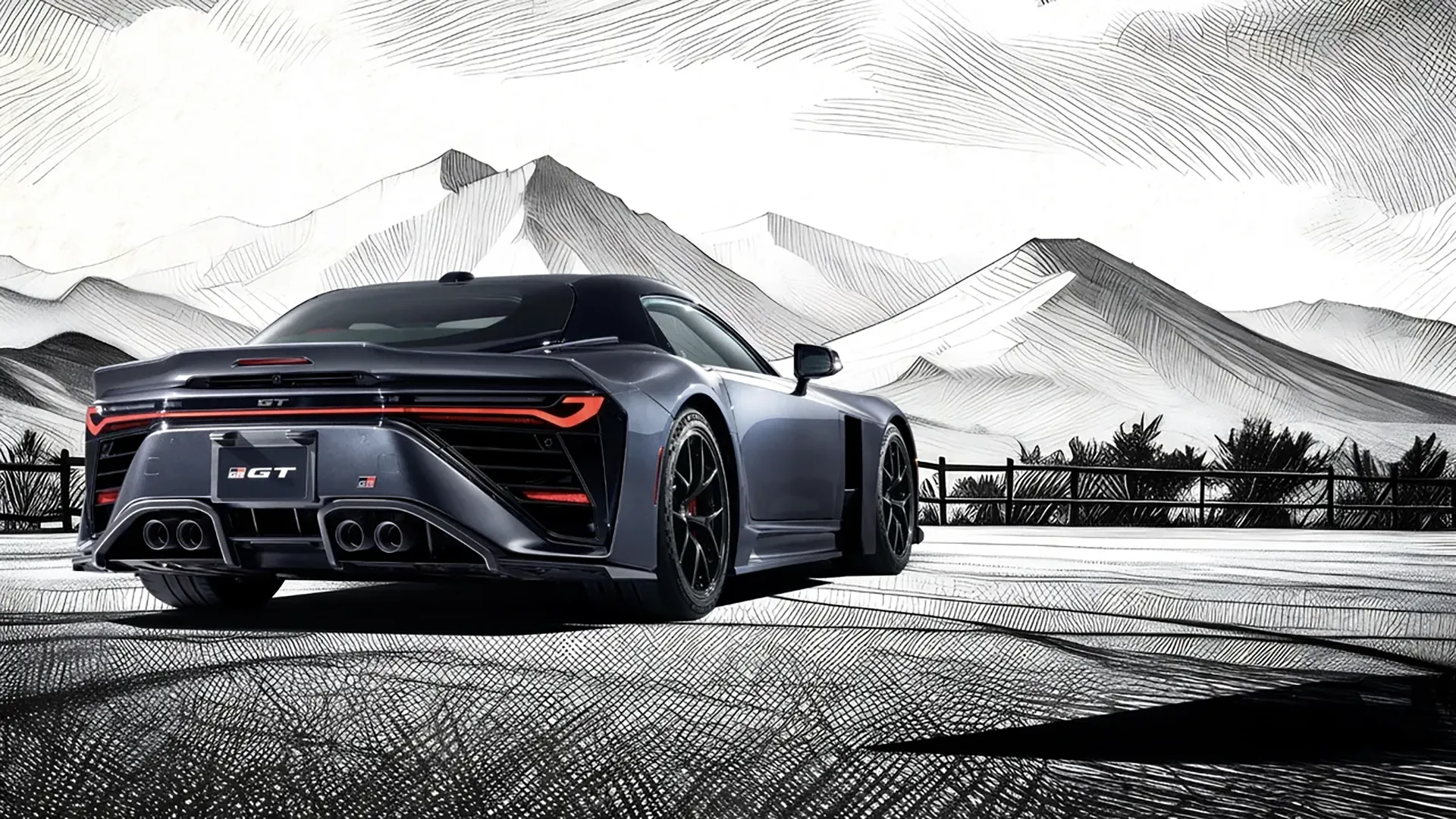
The world appears to love the new Toyota GR GT. I love it, too—a front-engine, rear-drive, twin-turbocharged V8-powered supercar that channels the Lexus LFA and calls to mind the fabulous Mercedes-AMG SLS Black Series. As I write this, the Top Gear video presented by my magnificently hirsute colleague Tom Ford has been viewed over 3.5 million times and shows no sign of slowing down. Left-field, motorsport-infused, and with all the JDM cool that is so popular right now, the GR GT has hit the desirability jackpot.
To me, everything about this car feels about right. Which sounds like damning with faint praise, but really isn’t. What I mean is that every detail—from the GT3 racing plans to the front-mid engine and transaxle layout, to the 641hp output—feels perfectly judged and really enticing. So, I was surprised to find a few people messaging me soon after its reveal that it might be ‘a bit slow.’ These people—all potential customers—were fully on board with the concept and aesthetic, but felt that ‘just’ 650hp was a bit meek.
And they’re right. On paper. In a world where the range-topping Porsche Taycan has 1,020hp, the new Corvette ZR1 has 1,064hp, and AMG’s top-line sports coupe, the GT 63 S E Performance, has 805hp and 1,418Nm, it does feel a bit like Toyota is launching the GR GT into 2014. The world has moved on. I drove a standard production pickup with 1,025hp a few weeks ago, for God’s sake.
OTHER STORIES YOU MIGHT HAVE MISSED
Toyota has put its TGR Philippine Cup on hold amid fuel crisis
BIMS 2026: The facelifted Lexus IS makes its ASEAN debut
Perhaps it’s moved on too far? Firstly, let me assure you that it will feel properly rapid on road and track. However, those messages did make me wonder if it was time to look to Toyota’s home country for inspiration and revisit the tactic of the Japan Automobile Manufacturers Association (JAMA) in 1989, when it tabled and approved the ‘Gentlemen’s Agreement’ to limit the power of all production cars to 276hp. From Skylines to Supras, STIs to Evos, JDM cars would all adhere to this agreement (which wasn’t actually legally binding) to prevent a full-scale horsepower war.
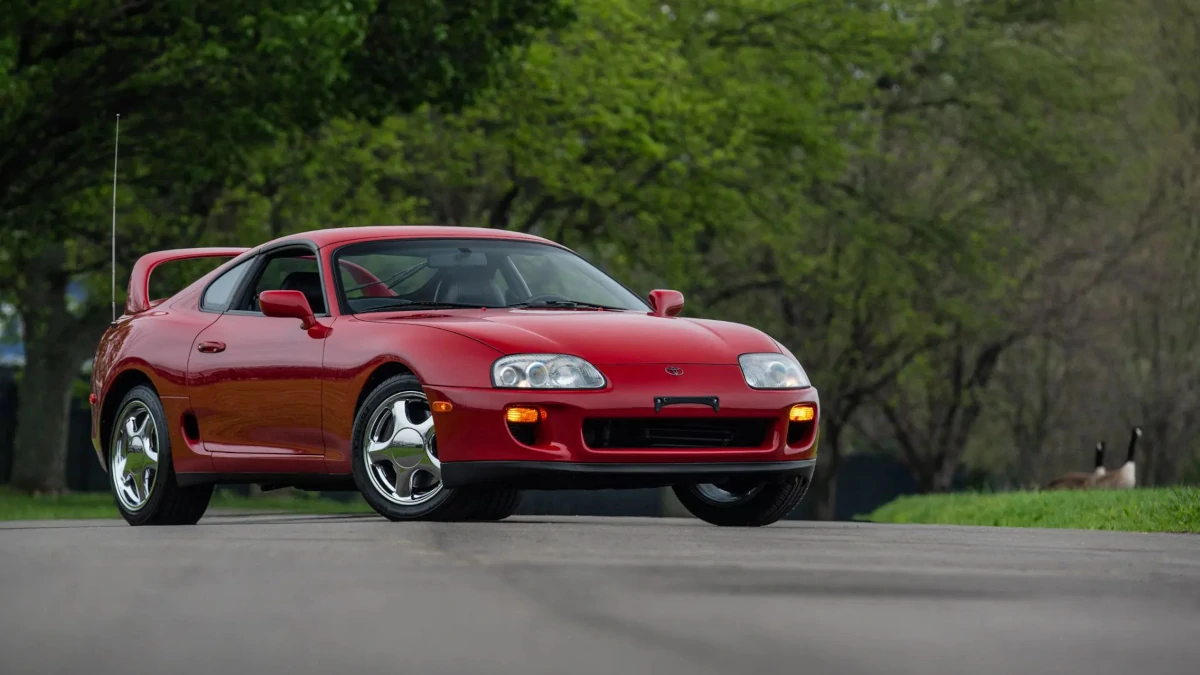
This was back when we didn’t have such sophisticated braking, traction control, and stability systems, you might argue. That’s true. On the flipside, cars were lighter and didn’t carry the potential momentum to wipe out a small town when out of control. Plus, performance cars mostly had manual gearboxes, so they were much trickier to extract the maximum from. Yet the Japanese manufacturers saw the potential dangers just around the corner...
I’m not suggesting that the government exerts more control and we’re all confined to life at 30kph (although they’re trying to do that, anyway). Nor am I pining for a 911 Turbo or a Lamborghini Revuelto with 276hp. But, you remember I said the GR GT seemed ‘about right’ with 641hp? Maybe that’s it. That’s the level.
It might just be time for a new ‘agreement’ before legislators step in and do something much more Draconian. China has already proposed a new ruling that would mean no car in its default mode can beat a 0-100kph sprint of 5sec. Reasonable? Certainly. But wouldn’t the industry rather self-regulate than allow the creeping influence of politicians to set the agenda?
NOTE: This article first appeared on TopGear.com. Minor edits have been made.