We all know that walking can be one of the best ways to get around cities. It’s a free, sustainable, and environment-friendly means of transportation. While most of us don’t mind walking around in other countries, not many people enjoy walking around most areas of Metro Manila because of how grueling our streets are for pedestrians.
In our predominantly car-centric cities, pedestrian infrastructure seems to be an afterthought. For one, sidewalks are very narrow. In other areas, sidewalks don’t even exist. Those who choose to walk have to deal with the heat, lack of shade, obstructions on the road, and pollution from car fumes. There are also concerns about safety and lack of security along sidewalks and alleys that aren’t well-lit at night. Plus, why would you walk somewhere if there are no points of interest along a route? In general, walking anywhere around Metro Manila feels like a punishing chore.
OTHER STORIES YOU MIGHT HAVE MISSED:
Motorists from Los Baños, other southern towns: Beware of heavy traffic in Bucal today
SUV driver who tried to run over EDSA Busway enforcer had a fake ‘7’ plate
Is it possible to create a walkable city in Metro Manila?
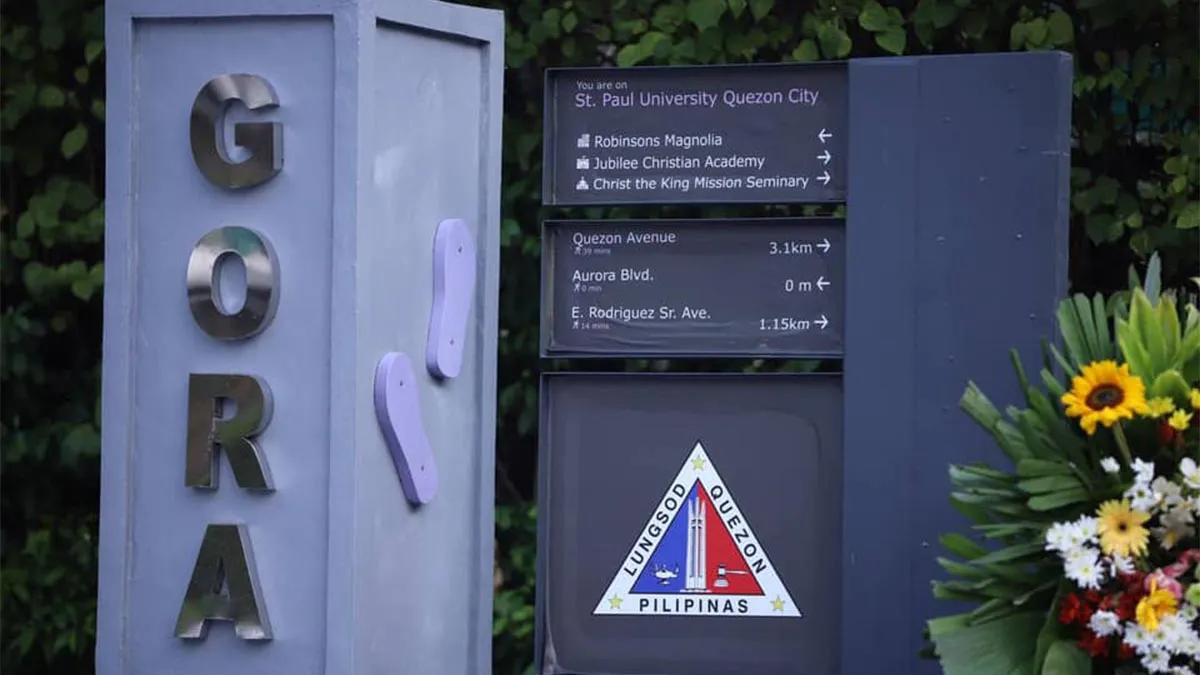
In case you didn’t know, there’s an existing Green, Open, Renewable, Access (GORA) Lane that aims to make streets safer and more walkable. The 5.39km-long GORA Lane, launched in May 2021 as part of the Quezon City Pedestrian Corridor Network, hopes to encourage its constituents to walk.
If you regularly drive a motorized vehicle, you’ve probably never heard of this. However, pedestrians and cyclists who rely on alternate routes can benefit from such projects.
I only learned about this after joining a New Manila Walking Tour organized by Jing Ordoña of Manilakad that had us strolling over 10km through city sidewalks, including sections of the little-known GORA Lane.
Ordoña, a Department of Tourism-accredited tour guide and travel columnist who conducts walking tours in Intramuros, Binondo, Quiapo, and other areas said he was inspired to come up with a tour in New Manila to specifically make use of the lane because as he puts it “hardly anyone walks there.”
“Ironically, the Quezon City government launched the GORA Lane to encourage its constituents to walk but it looks like there are more cars than people walking. New Manila is home to many religious orders including a basilica and a cathedral,” said Ordoña.“Many famous personalities including President Quezon and other politicians lived there. Even movie stars used to live there. The original mansions built in the 1930s are still there with some townhouses creeping in slowly.”
Here’s what you need to know about this pedestrian corridor.
What is the GORA Lane?
The GORA Lane is a 5.39km pedestrian corridor development project in Quezon City that aims to promote walking and biking by improving the users’ street experience. The term is taken from the popular Filipino slang phrase, usually used as an expression to invite people to go somewhere (‘Let’s go’ or ‘Gora!’).
The lane passes through Doña Hemady Avenue, Scout Tobias Street, and Mother Ignacia Avenue in Quezon City. It aims to strategically connect neighborhoods and amenities to make it easily accessible for residents and visitors. Based on initial plans, it was expected to provide residents with access to the city’s three major roads, namely Aurora Boulevard, Quezon Avenue, and EDSA.
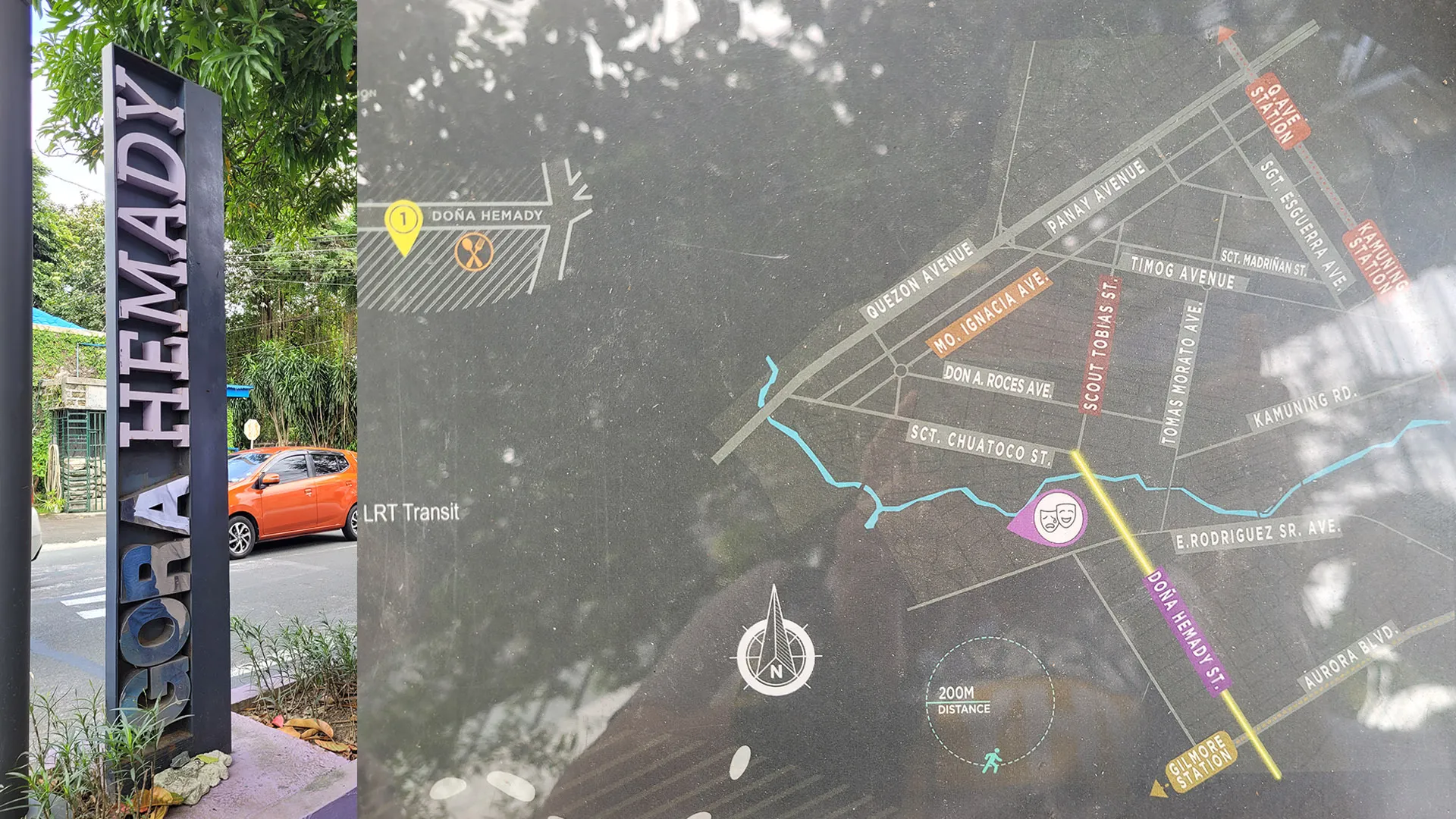
The idea is to give people options to walk to public transit without relying solely on cars. The corridor connects to major transportation lines from LRT-2’s Gilmore station and MRT-3’s GMA Kamuning and Quezon Avenue stations.
While the lane was designed mainly for pedestrian access, it’s also ideal for cycling. While biking, I’ve used sidestreets of the route as a shortcut from E. Rodriguez going to Greenhills (through Gilmore) when biking because the traffic volume is not as high as major roads.
ALSO READ:
The definitive guide to ride-hailing options in the Philippines
Explainer: What’s in a street name? This is how our roads get renamed in the Philippines
Why was it built?
The GORA Lane aims to provide alternative routes and highlight the importance of having an active mode of transportation that includes walking. The pedestrian corridor is one of the projects under the ‘Green, Green, Green’ program funded by the Department of Budget and Management which pushes for better open spaces as a parallel effort to the massive national ‘Build, Build, Build’ program.
According to a video presentation posted by the Quezon City Government, the GORA Lane “aims to initiate a paradigm shift in the people’s view on the use of streets and public transport by establishing a network of sustainable, walkable, safe, accessible and beautiful streets in Quezon City.”

Quezon City mayor Joy Belmonte previously said that she expects the redeveloped pedestrian corridors to help boost economic activities in the city by connecting key commercial areas. Having walkable streets will hopefully attract foot traffic, which will benefit local shops, cafes, and services in the area.
“Our residents deserve more open space than ever and our recovery will come to life on these streets,” Belmonte said during its initial launch in 2021 amid the pandemic. “We hope our citizens will find this lane not only beautiful but also useful to them, and that they will favor walking to their last-mile destinations, if possible, than riding their vehicles.”
What makes this lane pedestrian-friendly?
To encourage foot traffic and community engagement, the lane was designed with wider and greener sidewalks with better lighting, wayfinding signage, and points of interest through public art.
If you’ve ever wondered about those bronze statues along the road, those are part of the initiative and meant to depict the daily lives of Quezon City residents. The idea was to provide a space to let residents ‘go to places’ by increasing mobility and access through walking and cycling.
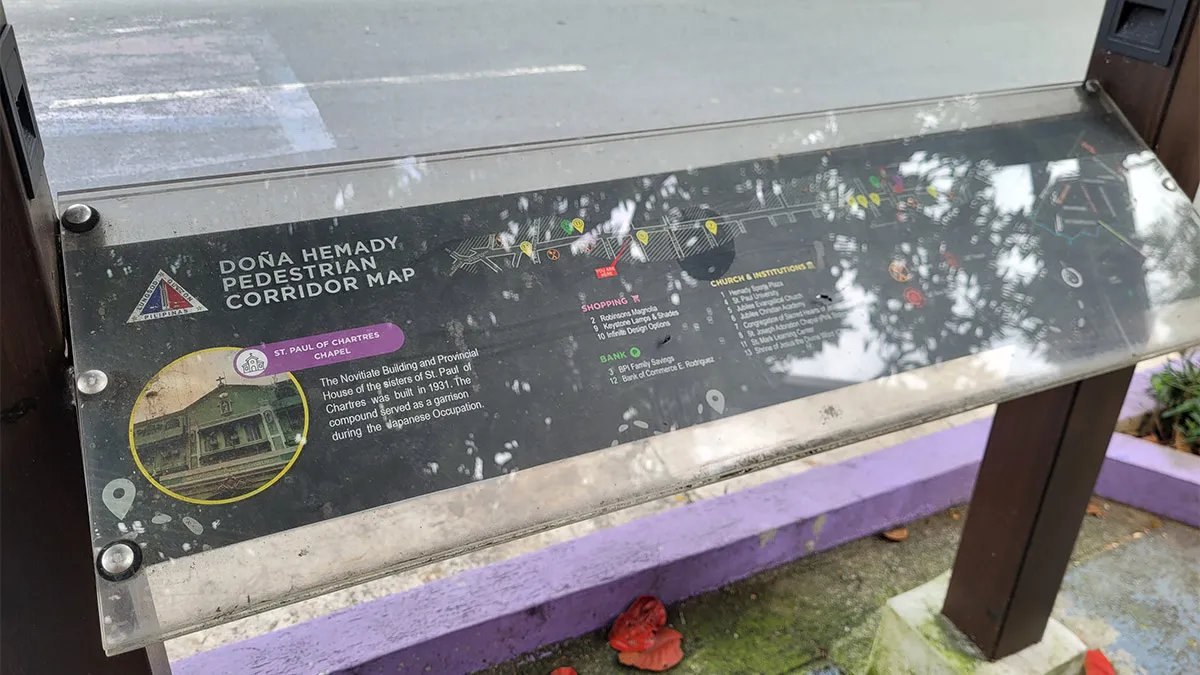
While walking around sections of the GORA Lane starting at Hemady, we spotted a few areas with signage and maps indicating where we were, nearby points of interest, and some historical trivia on landmarks. The maps also listed a few nearby dining establishments.
Since this street still has trees to counter the heat, it made walking around more pleasant. The sidewalks around the prime residential area with gated mansions and upscale townhouses were generally clean and litter-free.
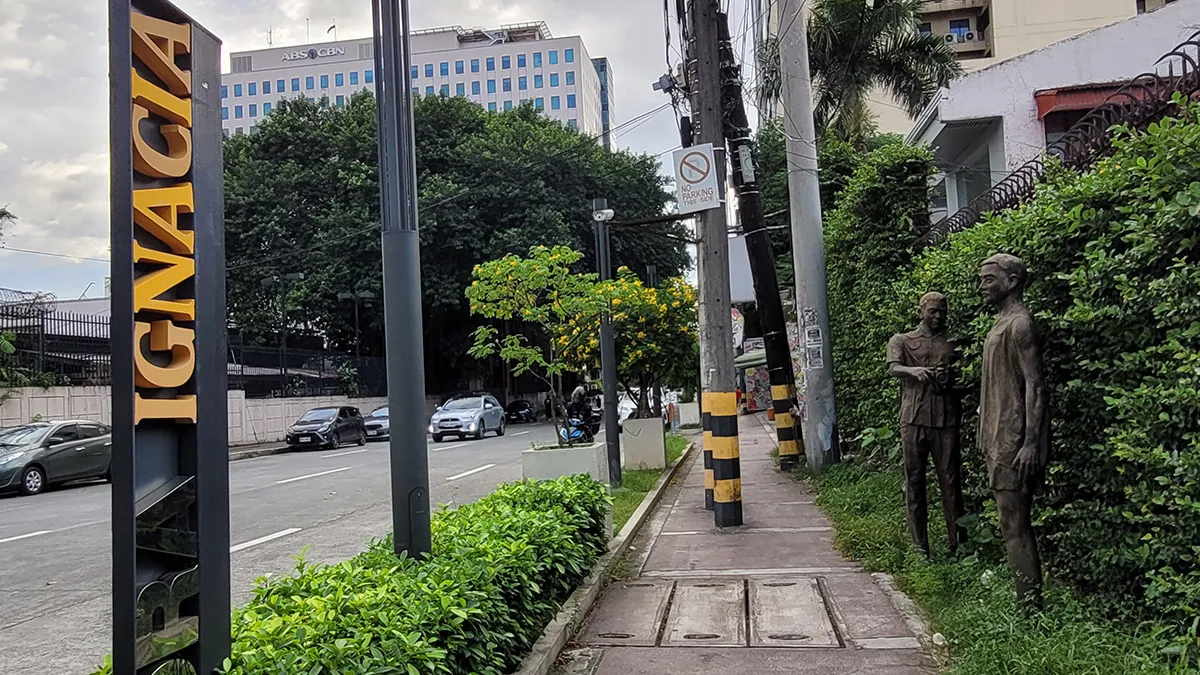
However, while checking out some areas of the pedestrian corridor near commercial establishments along Mother Ignacia, it was noticeable that the maps and markers were faded and easy to miss, and some parts of the sidewalks had been taken over by parked vehicles and other obstructions. Some of the artistic painted crosswalks have also faded over time.
What makes a city walkable?
One only has to experience walking in cities outside the country to know what makes a city truly walkable.
If you’ve ever walked in Osaka or Tokyo in Japan, you’ll know how easy it is to get around, with various neighborhoods and destinations well-connected to an extensive public transit network, making it easy to walk everywhere. Clean surroundings, benches along sidewalks, public drinking fountains, pocket parks, and vibrant urban spots make walking a great experience.
Likewise, the streets in Amsterdam in the Netherlands were redesigned to prioritize pedestrians and cyclists to meet the strong bicycle culture. The Dutch government created bike lanes, redesigned junctions, made it difficult for cars to park along streets, and designated car-free zones. Their public transport is amazing and you can cross through a network of parks for shortcuts. Walking along the scenic and clean canals, also utilized for transport and tourism, enhances the walking experience.
While Metro Manila’s streets still feel miles away from the vibrant sidewalks and walkable lanes in other countries, this ‘first-of-its-kind’ GORA Lane in Quezon City is hopefully a step in the right direction.
As a side note, walking made me appreciate points of interest you don’t often notice when from inside a car. During our Halloween walking tour, we passed by historic mansions used as movie filming locations, an art deco heritage house turned into an art/creative events space, local coffee shops, bakeries, some notable churches, and surprisingly, a Buddhist Center complete with a Tibetan shrine. For walking tours, contact Jing Ordoña of Manilakad Walking Tours on Facebook.
Any initiative that reduces car dependency in favor of active transport and includes green spaces to improve air quality in cities should be supported if we want to make our cities more livable. In the future, it would be great to see more pedestrian corridors with green spaces, pocket parks and benches for pedestrians to rest while walking all over major cities nationwide.