It’s a brand new year full of new possibilities. While the second half of 2023 just seemed to whiz by, January is usually the time to take stock of all the road trips taken last year and plan for the new one. Going on road trips around the country can be a great way to kickstart the year or offer an escape from the daily grind of workweek traffic and have something to look forward to during upcoming long weekends and holidays. But first, make sure your vehicle is registered and roadworthy.
Whether you’re driving on four wheels or two, the open road beckons with promises of adventure, discovery, and the freedom to go wherever you want. But in case you need some ideas for your road trip bucket list beyond the North Loop, Philippine Loop, and speed runs to usual favorites, here are a few suggestions of worthy reference points, road markers, and extreme points around the country that you might want to include in your itineraries.
ALSO READ:
Motorcycle-friendly stays: Factors to consider when picking accommodations on the PH Loop
Explainer: What’s in a street name? This is how our roads get renamed in the Philippines
Highest points of the Philippine Highway System
We’ve all heard of Khardung La, the highest motorable pass in the world at 17,582 feet (5,359 m) above sea level. If this is on your bucket list, how about aiming for some local destinations and driving to the two highest motorable points in the Philippine Highway System instead?
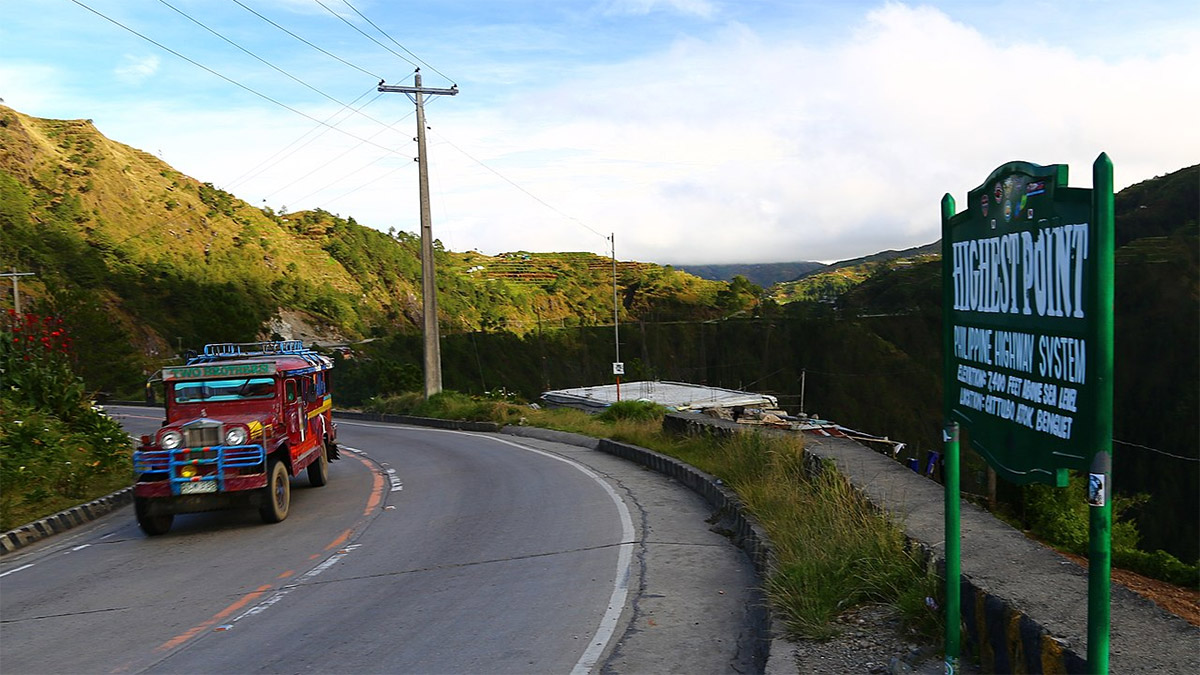
Photo cropped to to 1,200x675px. Licensed under the Creative Commons Attribution 2.0 Generic license.
There’s always the Original Highest Point in the Philippine Highway System located in Cattubo, Atok, Benguet. This popular point along the road, standing 7,400 feet (2,300 m) above sea level, is a stopover for any motorist, whether on 4-wheels or 2-wheels, heading up from Baguio to Sagada was officially recognized as the highest altitude highway in the Philippines until 2019.
However, the Department of Public Works and Highways (DPWH) confirmed that the highest elevation in the Highway System of the Philippines is now located in the Municipality of Tinoc, Ifugao. The New Highest Point can be found along the Kiangan-Tinoc-Buguias Road with an elevation of 7,968.07 feet (2,428.66 m) above sea level, which is higher by 568.07 feet (173.14 m) compared to the one in Atok. Both are these points are worthy of stopovers on the way to other destinations in the mountainous Cordillera Region.
Longest and tallest bridges in the country
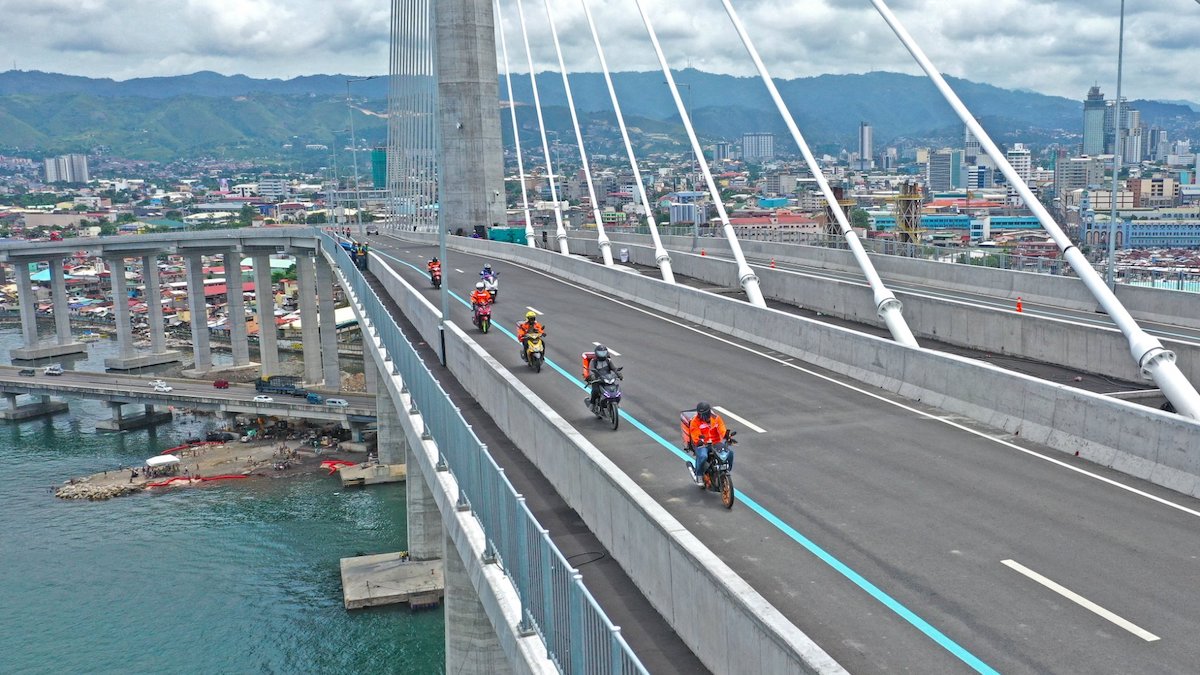
For riders, there’s always something thrilling about being able to cross over long bridges connecting different islands or land masses. The Cebu-Cordova Link Expressway (also known as CCLEX), the first expressway in the central Philippines, is currently the country’s longest bridge at 8.9 kilometers (5.5 miles) long. The bridge connects Cebu, the country’s second-largest city, to Cordova town on the neighboring Mactan Island, home of the Mactan International Airport. The toll bridge is also the longest sea-crossing bridge in the Philippines. Upon its launch in April 2022, the CCLEX surpasses the San Juanico Brdige and the 5-kilometer (3.1 miles) Cabdaba Viaduct of the North Luzon Expressway which connects the provinces of Pampanga and Bulacan.
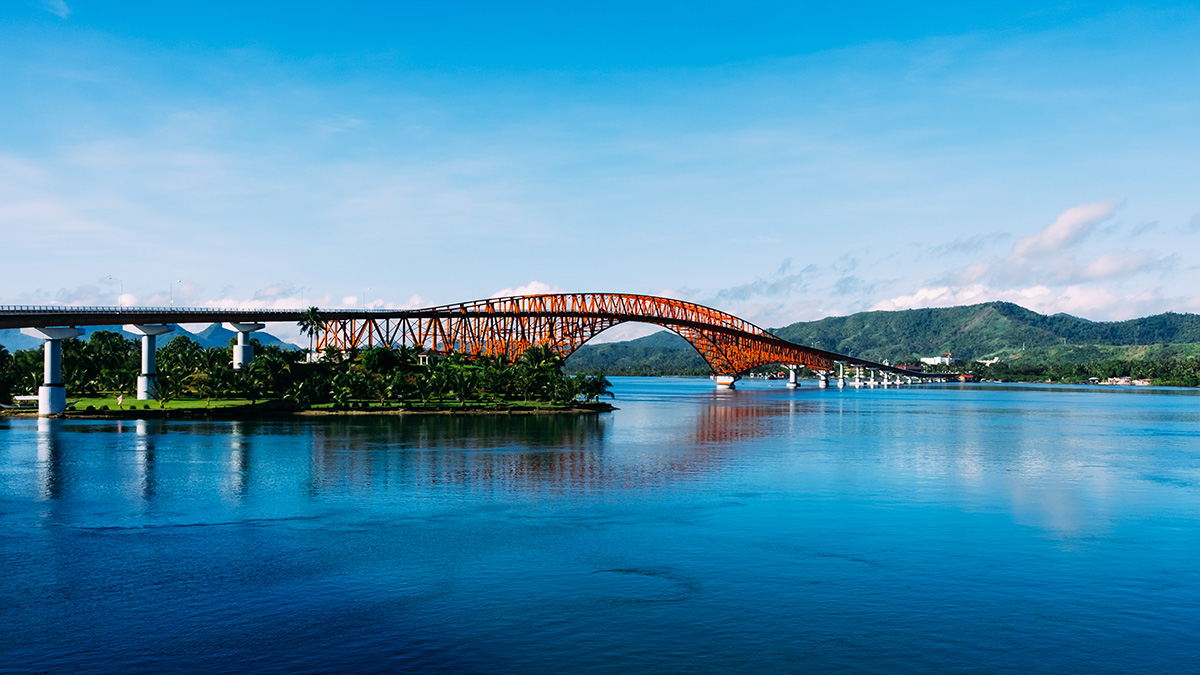
Previously considered the longest bridge in the country, the San Juanico Bridge between the island provinces of Samar and Leyte in Eastern Visayas, has a total length of 2.16 kilometers (1.34 miles). The extreme bridge spans the San Juanico Strait, the narrowest strait in the country connecting Tacloban City on the Leyte side and the town of Santa Rita on the Samar side. The bridge forms a vital part of the Pan-Philippine Highway (commonly known as the Maharlika Highway or Asian Highway 26), a network of roads, bridges, and sea routes that connect the islands of Luzon, Samar, Leyte, and Mindanao in the country.
With a length of 350 meters (1,150 feet) and a height of 292 feet (89 meters above ground, the Agas-Agas Bridge in the town of Sogod, Southern Leyte is one of the tallest bridges in the Philippines. It’s located in the mountainous Agas-Agas section of the Pan-Philippine Highway and was constructed back in 2006 to cut down driving time for motorists.
Meanwhile, up north, there’s the scenic Patapat Viaduct in Ilocos Norte, another worthy bridge-like structure that’s a favorite stopover for road-trippers and motorcyclists because of its rewarding vantage point of the coastal highway before reaching the coastal resort town of Pagudpud on the northernmost tip of Luzon Island. This concrete coastal bridge is 1.3 km long and elevated 31 meters above sea level. It connects the Maharlika Highway from the Ilocos Region to Cagayan Valley.
ALSO READ:
Motorcycle safety tips for aspiring riders in the Philippines
Coffee run: Pugpog Biker’s Highlands Cafe offers a refreshing rest stop in Bulacan
Notable road tunnels
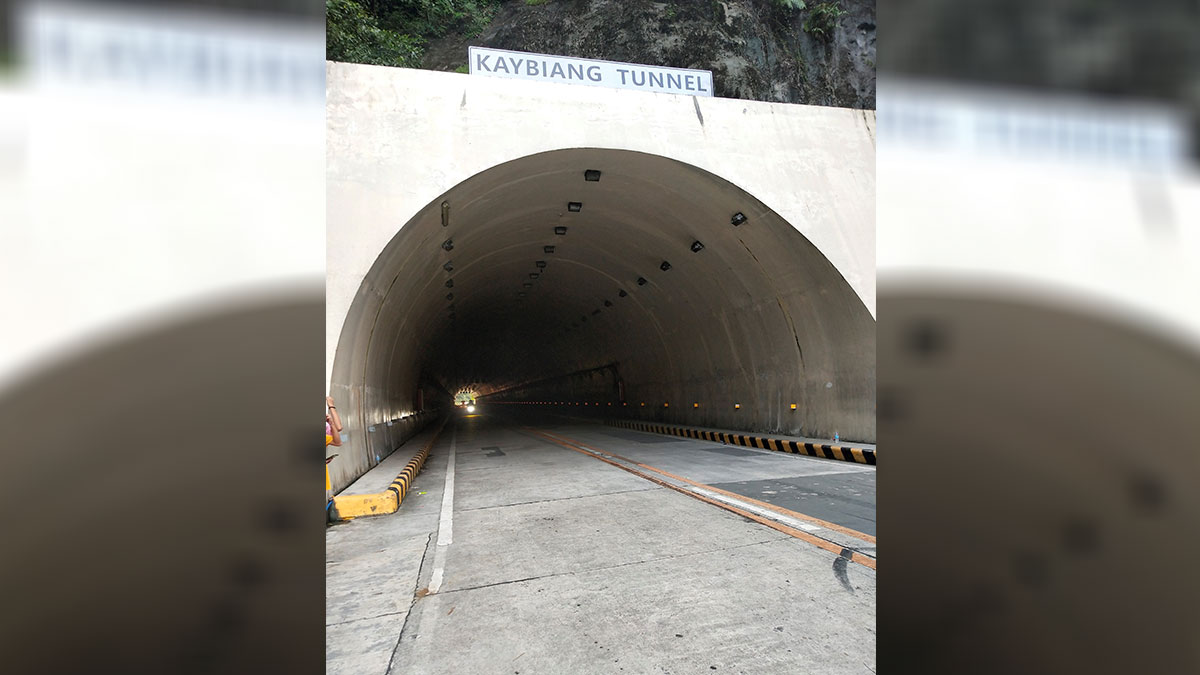
Aside from bridges, road tunnels also offer an interesting landmark that you’ll normally pass while driving anyway. Currently the longest road tunnel in the Philippines, the Kaybiang Tunnel in Cavite is popular among motorists as it leads to a scenic view of Nasugbu, Batangas. The tunnel was built in 2012 and opened in July 2013 to provide a quicker route for travelers heading to Tagaytay and Batangas. At 300 meters long, the Kaybiang Tunnel bores through Mt. Palay-Palay and connects Ternate, Cavite to Nasugbu, Batangas. Right after exiting the tunnel at the Nasugbu side, travelers have a seaside view of the islands of Limbones, Carabao, and El Fraile.
For road-trippers riding up north, the Tangadan Tunnel along the Abra-Ilocos Sur (specifically in San Quintin on the border of Ilocos Sur and the Cordillera Administrative Region) is another popular landmark. The short, 40-meter tunnel that cuts through the hills bordering Abra and Ilocos Sur was built in 1934 as a way to divert the old road which was steep and difficult to negotiate.
Other interesting road tunnels that motorcycles and cars can drive through include the Bontoc Tunnel in Mountain Province, the Half Tunnel Halsema Highway along Atok in Benguet, and the 60-meter-long Malabang Tunnel in Lanao del Sur, to name a few.
Kilometer Zero Markers
Kilometer Zero is a marker that stands as a distance reference. In Metro Manila, you can find it located directly across the Rizal Monument in Luneta Park, where Philippine independence was proclaimed in 1946. This significant marker serves as the nation’s starting point when measuring the distance going to the different provinces and cities in Luzon Island and the rest of the Philippines via the Pan-Philippine Highway for the islands of Samar, Leyte, and Mindanao.
In case you didn’t know, most of the roads in the Philippines have a marker that has a label of the distance from their local Kilometer Zero as well as a label of the distance to the next municipality, city, or province. Individual cities often have the Kilometer Zero in the City Capitol or Central Post Office. Leyte and Mindanao also have their own kilometer zero markers in front of the Leyte Provincial Capitol in Tacloban and Marawi, respectively.
Geodetic Center of the Philippines
Looking for a ride destination for Love Month? Marinduque has been dubbed the ‘Heart of the Philippines’ because of the island’s shape and geographical location. In case you want to step foot in the exact center of the country, a trip to Marinduque should be on your list.
The Luzon Datum of 1911 in Marinduque is a stone marker that serves as the primary geodetic reference or central reference point for all maps and surveys made in the Philippines.
This historically significant marker is located on the highest hill in Balanacan, the northwest point of Marinduque Island. A new road near a set of 468 concrete steps leading up to the marker makes this spot more easily accessible to those with private vehicles.
Extreme tips or points
Geographically, there are extreme points in the country that lie farther north, south, east, or west than any other location. This includes:
- Northernmost point: Mavulis (Y’Ami) Island, Itbayat, Batanes
- Southernmost point: Frances Reef, Sitangkai, Tawi-Tawi
- Southernmost island: Saluag Island, Sibutu, Tawi-Tawi
- Easternmost point: Pusan Point, Caraga, Davao Oriental
- Westernmost point: Balabac Great Reef
However, most of these are located on islands and are difficult to get to with your own transport. Of the points above, Pusan Point in Davao Oriental is one you can drive to. This spot on the easternmost part of the archipelago is said to be where the first light hits the Philippines. It’s said that the sun rises 4 minutes earlier at this point, making it a great place to watch the sunrise. You can drop by this point if you’re on your way to Aliwagwag Falls from Mati or vice versa.
For road trippers on cars and motorcycles, an easier benchmark would be to aim for the extreme cities or points at the different tips of the country. The Northernmost city is Laoag in Ilocos Norte, while the Southernmost city is General Santos in South Cotabato. The Easternmost city is Bislig in Surigao del Sur, while the Westernmost city is Puerto Princesa in Palawan.
On Luzon Island, the Northernmost point is Maira-ira in Pagudpud, Ilocos Norte, while the Southernmost point can be found in Bon-Ot Big, Matnog, Sorsogon.
On the island of Mindanao, the Northernmost point is in Punta Bilar, Surigao City, Surigao del Norte, while the Southernmost point is Tinaca Point, Jose Abad Santos, Davao Occidental.
Hopefully, these suggestions will give riders to go beyond the usual routes and discover more of the country’s beauty on two wheels for themselves. Let’s ride!