‘O the joy of my 250kW electric drive modules,’ Walt Whitman might’ve said upon seeing the new electric Dodge Charger. ‘It is uncaged! It darts like lightning! It is not enough to have this certain 0-100kph time,’ he likely might’ve added, ‘I will have thousands of launch control sprints and all time.’
Okay, fine, we’re putting words into the mouth of America’s most revered blue-collar poet here, but one suspects Whitman would’ve written an entirely new ‘Song of Joys’ for this, the very first fully-electric Dodge Charger.
For it be fast. And, very well, it contradicts itself, for it is large and contains multitudes. Four versions of the new Charger have been revealed: a pair of electric muscle cars heading up the pack, and a pair of combustion-engined variants with a 3.0-liter twin-turbo straight-six. Of the latter gasoline-fed cars, we know only that they’ll produce 420hp and 550hp.
OTHER STORIES YOU MIGHT HAVE MISSED:
2024 Toyota Hilux G now gets the Conquest look, starts at P1,384,000
The Hyundai Staria Hybrid is posting some bold fuel economy claims
Of the former? There are no bounds. In range-topping, electric Daytona Scat Pack trim, the Charger packs a whopping 670hp (500kW) and 849Nm of torque, accelerates from 0-60mph (0-97kph) in 3.3sec, and runs that most American of benchmarks—the quarter mile—in 11.5sec. Heck, Whitman would probably be singing soprano at the 12sec mark.
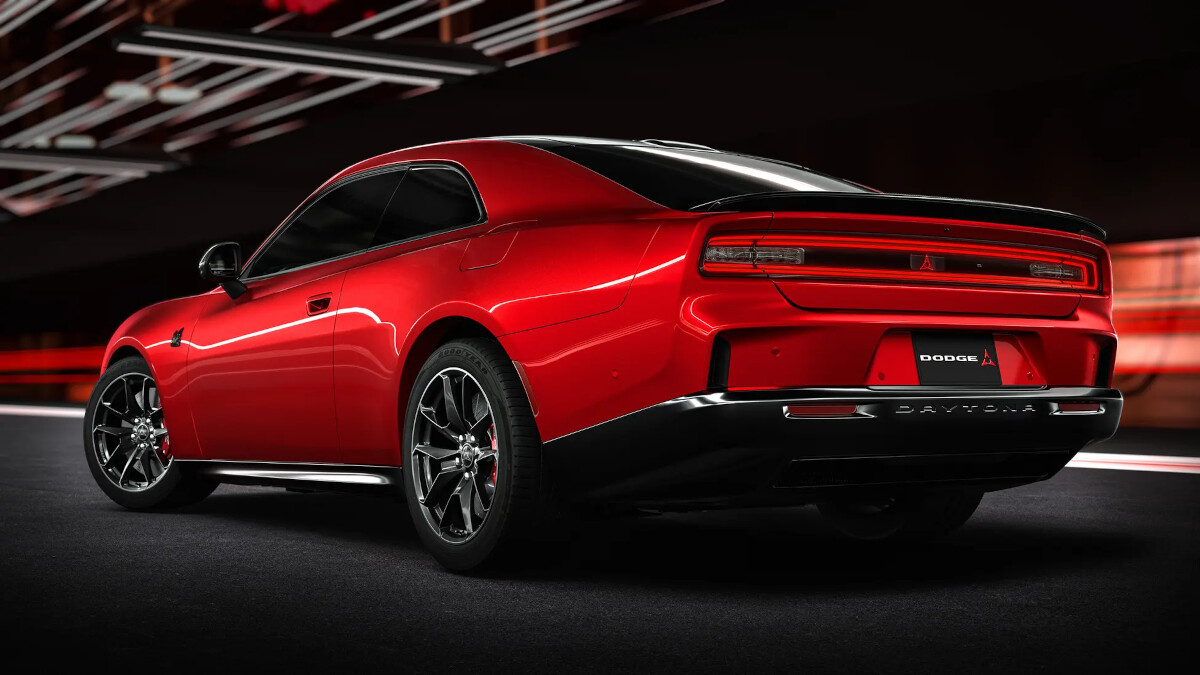
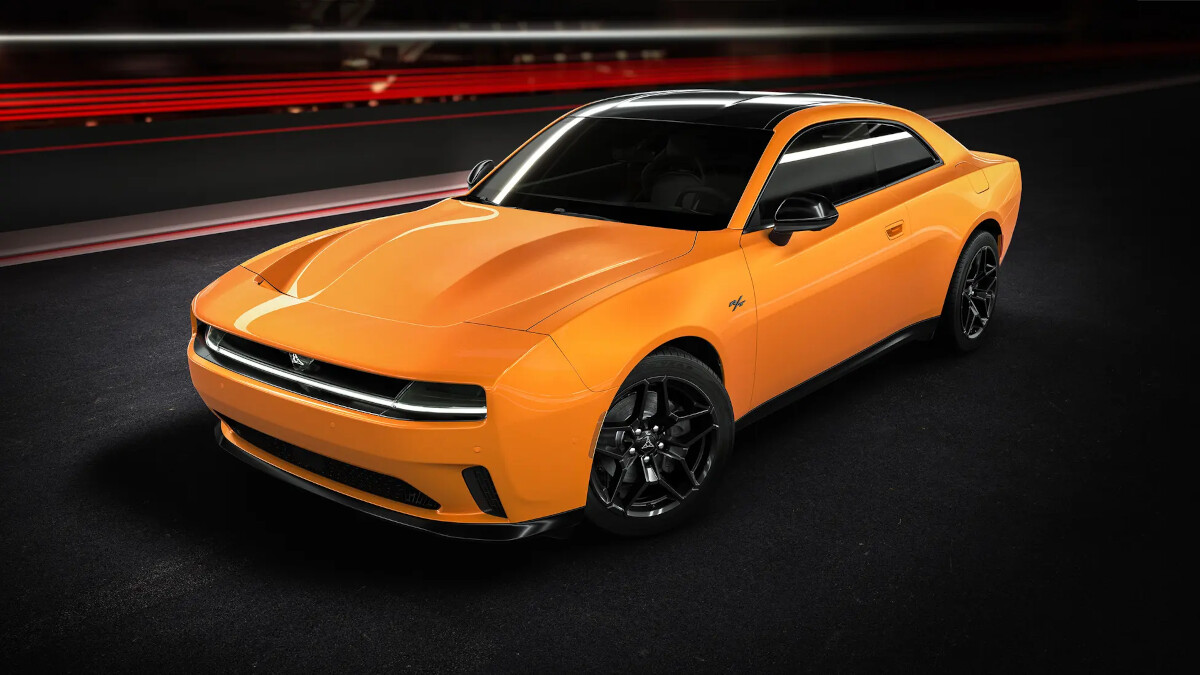
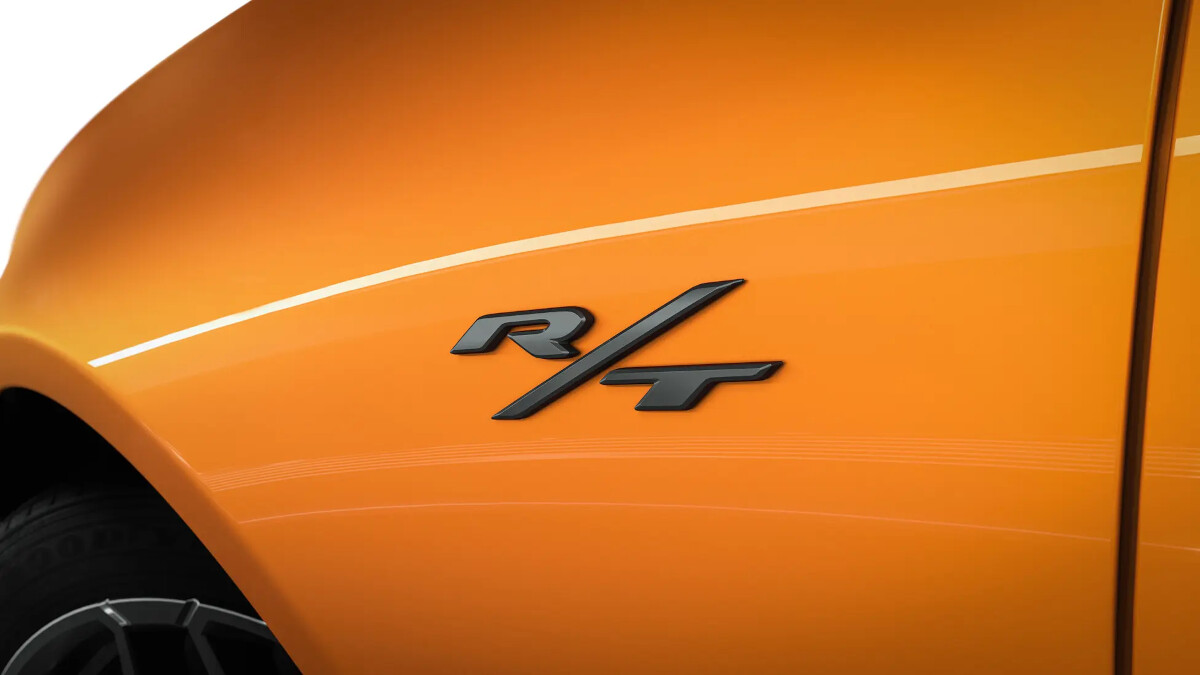
The second electric Charger wears an R/T badge. It’s a little less thrusting with peak output of 496hp (370kW) and547Nm, and offers up a 0-97kph time of 4.7sec. The cars top out at 216kph (SP) and 220kph (R/T). So they’re very much able to... push with resistless way and speed off in the distance.
The new e-Chargers—surely the perfect name for an electric muscle car, although Dodge refers to them as the Charger Daytona—are the first to use Stellantis’ STLA Large platform, an EV chassis with “the potential to carry extreme power.” Both Charger Daytonas feature all-wheel drive as standard, using a pair of 250kW electric drive modules—one on the front axle, one on the back.
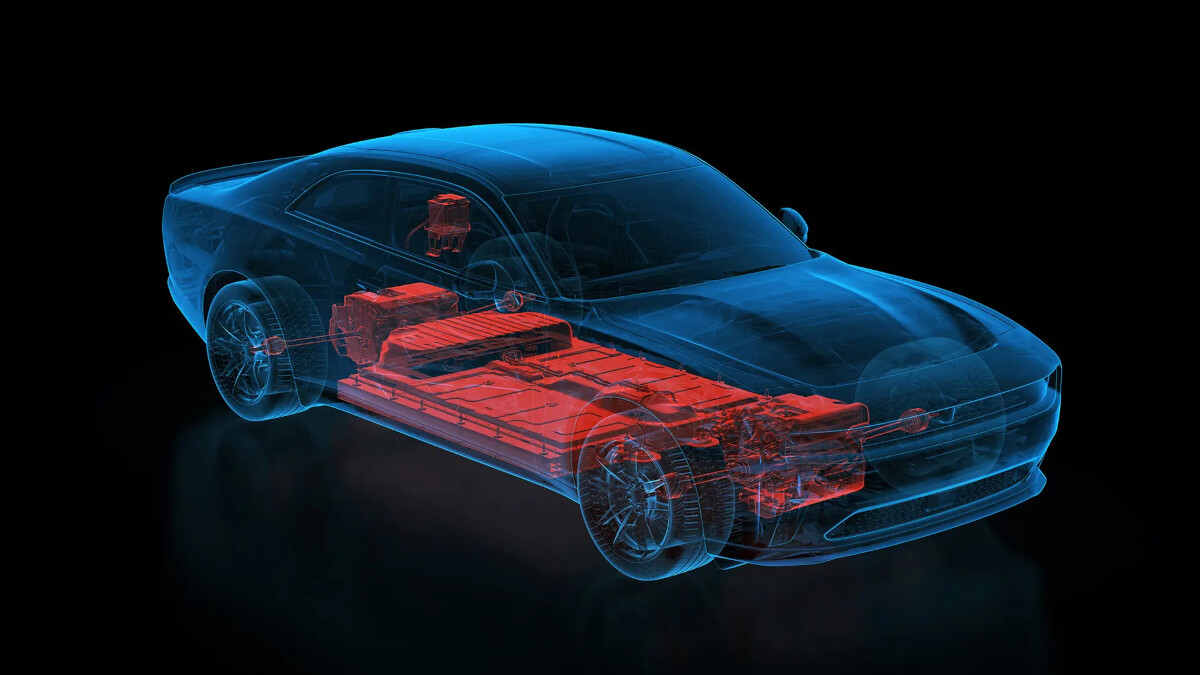
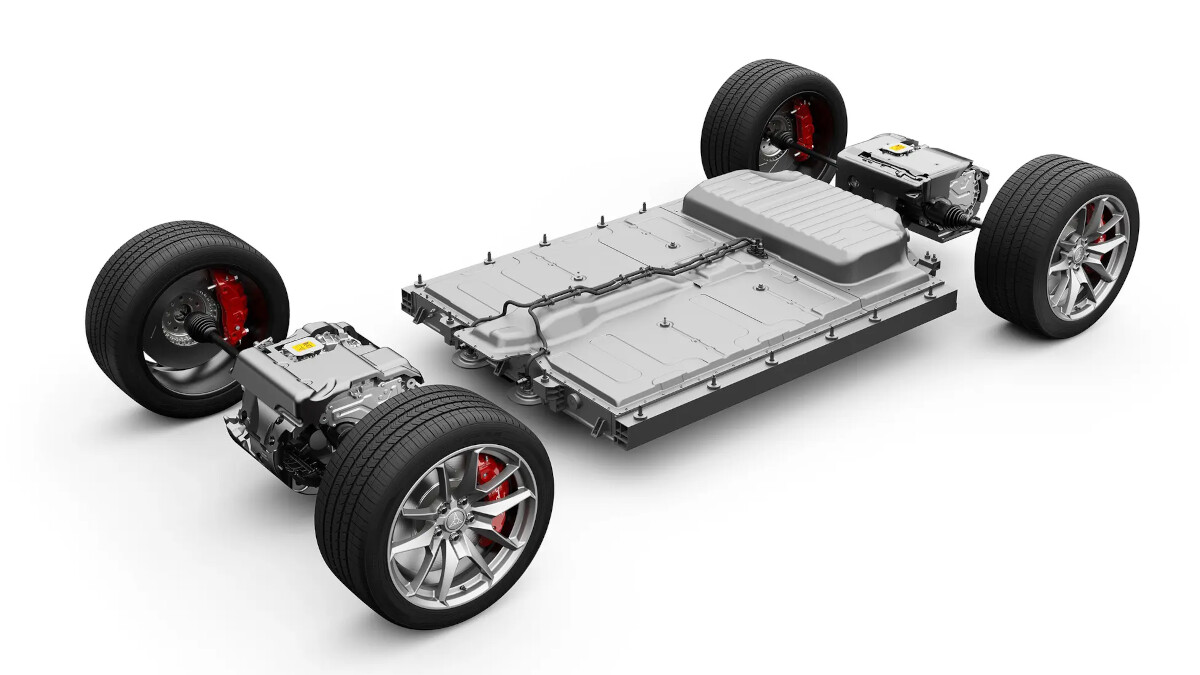
Each drive module features the inverter, the gearbox, and the motor for more efficient packaging: The front drive module is able to disconnect itself where necessary to boost range and efficiency, while the rear module includes a mechanical limited-slip diff for better hoo-raas off the line.
And Dodge promises us this new e-Charger will be able to speak with a full and sonorous voice out of a broad chest. Though its terminology is rather more prosaic. A pair of passive radiators apparently create a unique exhaust profile with “Hellcat levels of sound intensity that shatters the preconception of a typical quiet BEV and instead delivers a sound worthy of the Brotherhood of Muscle.” So, it be loud.
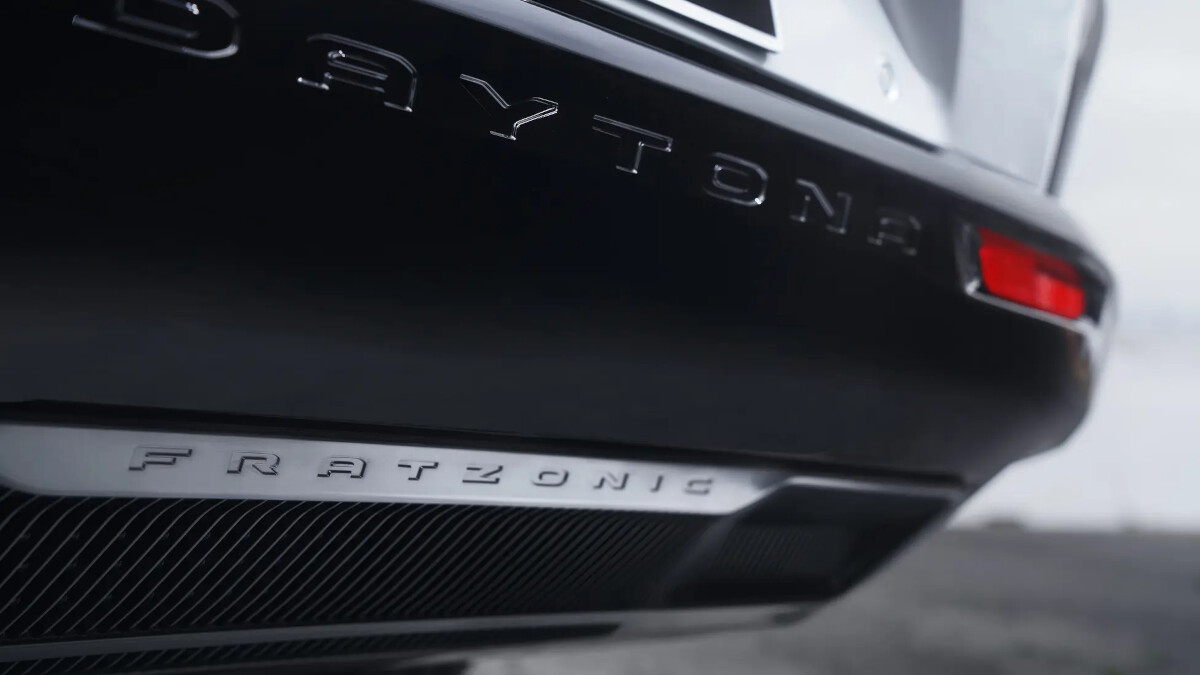
There’s a fat battery pack on board, too—a 100.5kWh unit able to offer a peak discharge rate of 550kW. Dodge is quoting 510km of EPA range for the R/T, and just 418km for the Scat Pack. On a 350kW fast charger, both cars will be able to go from 20% to 80% in 27 minutes. Keep running those quarter-mile times and this will become an important metric.
Want more metrics? Both cars weigh in at 2.6 tons (told you it was large), are slightly longer than a BMW 5-Series, and come packed with a customizable regenerative braking system on board, offering between 0.1g to 0.3g in regen. Indeed, the brakes themselves are fairly massive—16-inch vented Brembos that are 30% bigger than the last SRT’s setup.
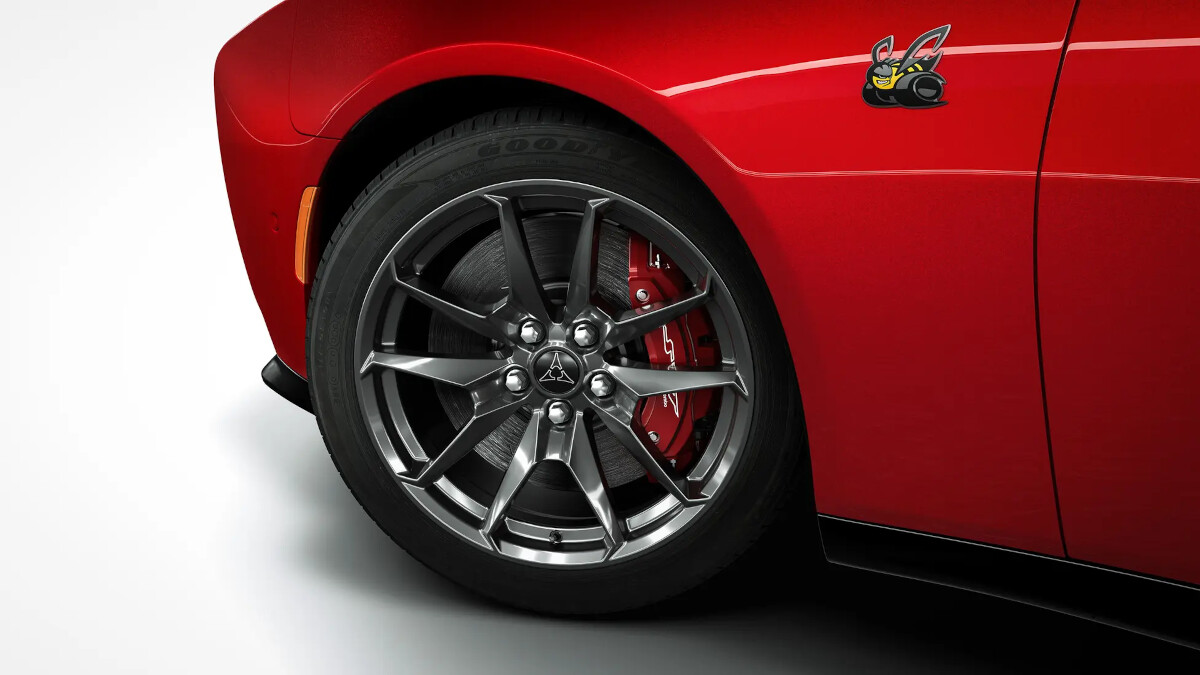
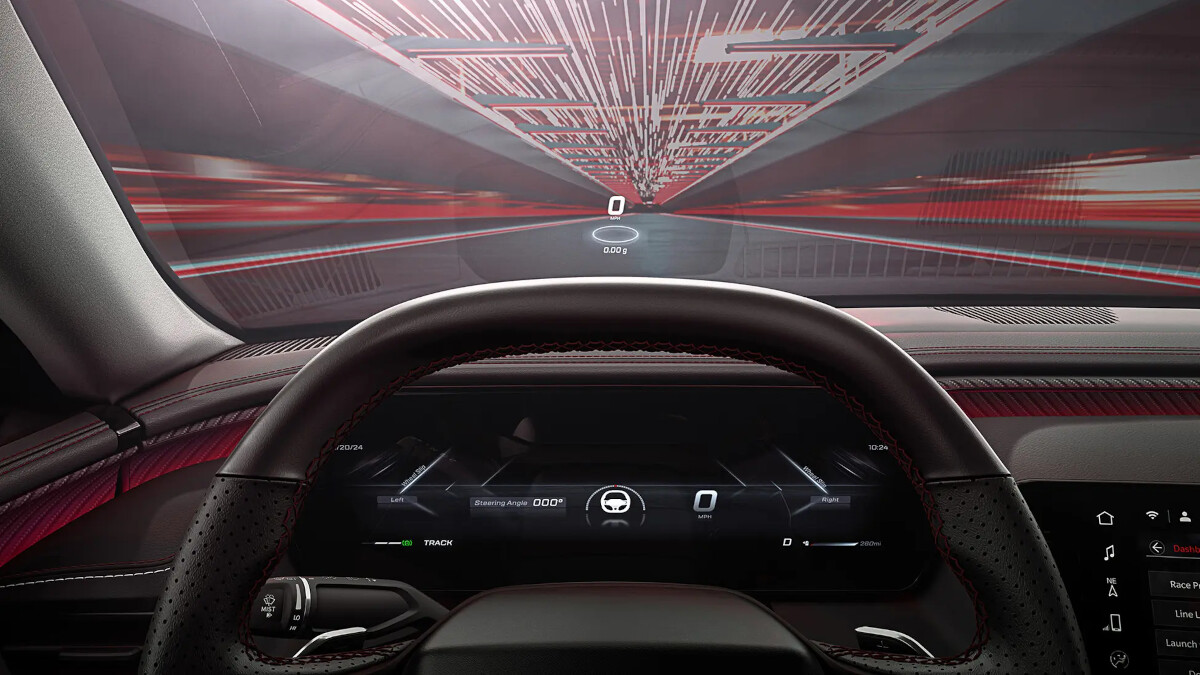
All Chargers sit on multilink front and fully-independent rear suspension, with the R/T and Scat Pack cars featuring monotube dampers. There’s a ‘track pack’ available for the Scat Pack (are you keeping up here?) that gets fancy dual-valve adaptive dampers. Many modes are available across both cars, including Donut, Drift’, Line Lock, Launch Control, and Race Prep. Fairly self-explanatory. “Near perfect” weight distribution, too.
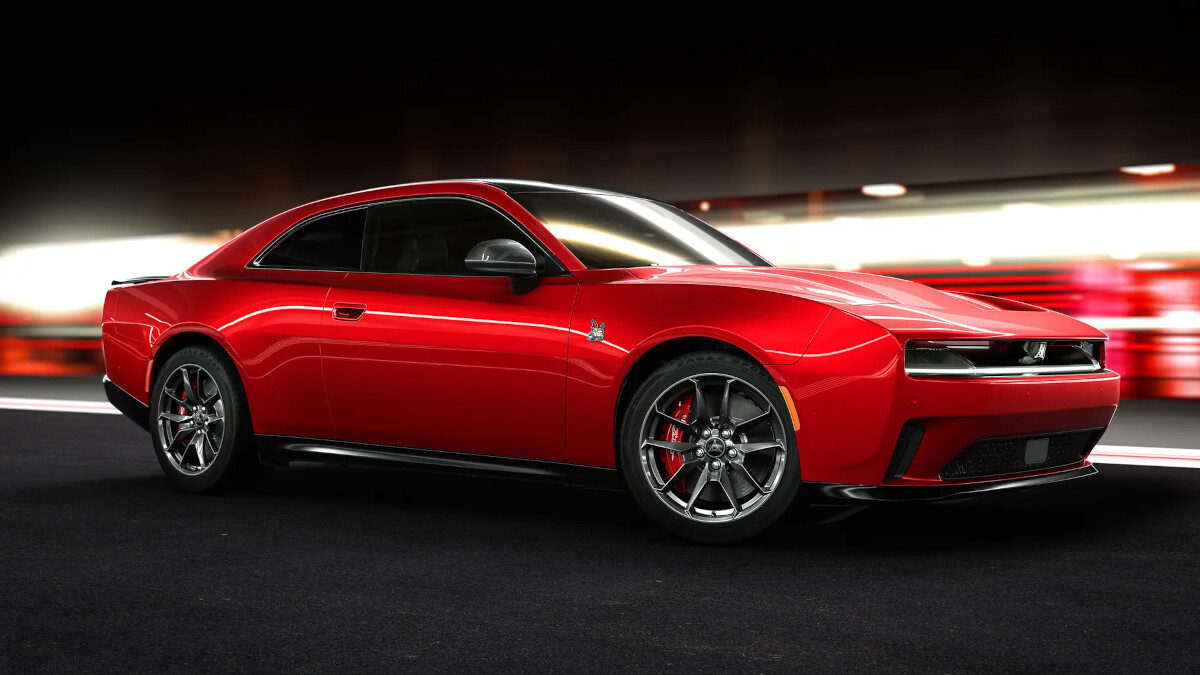
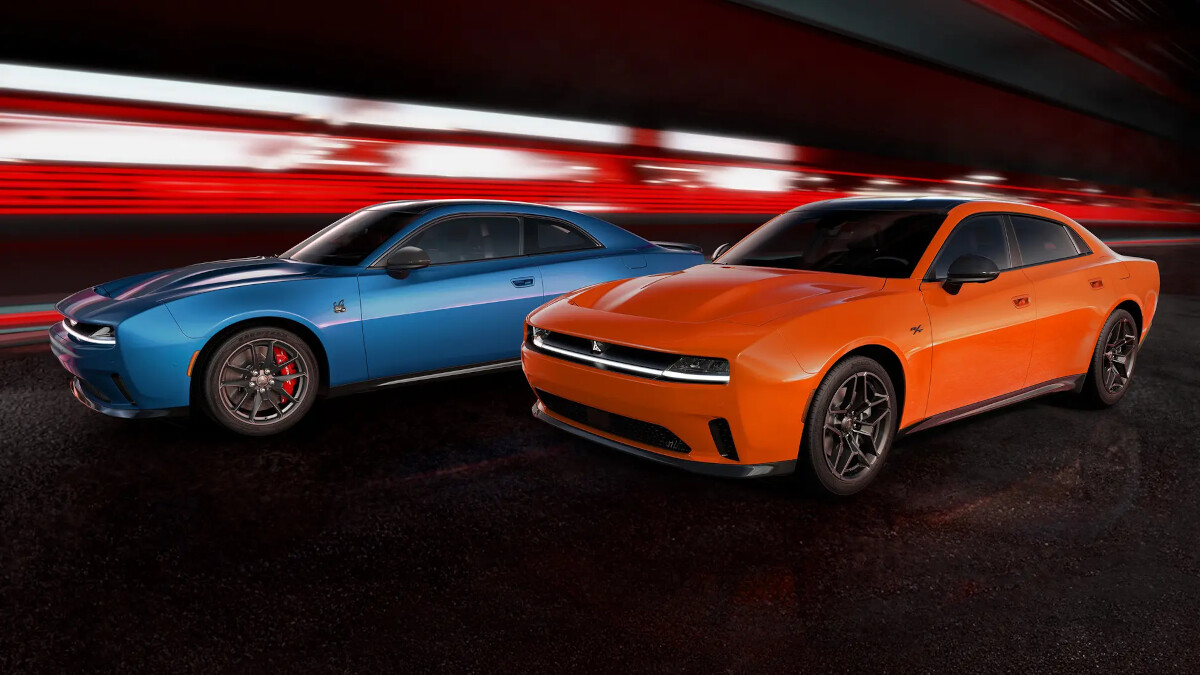
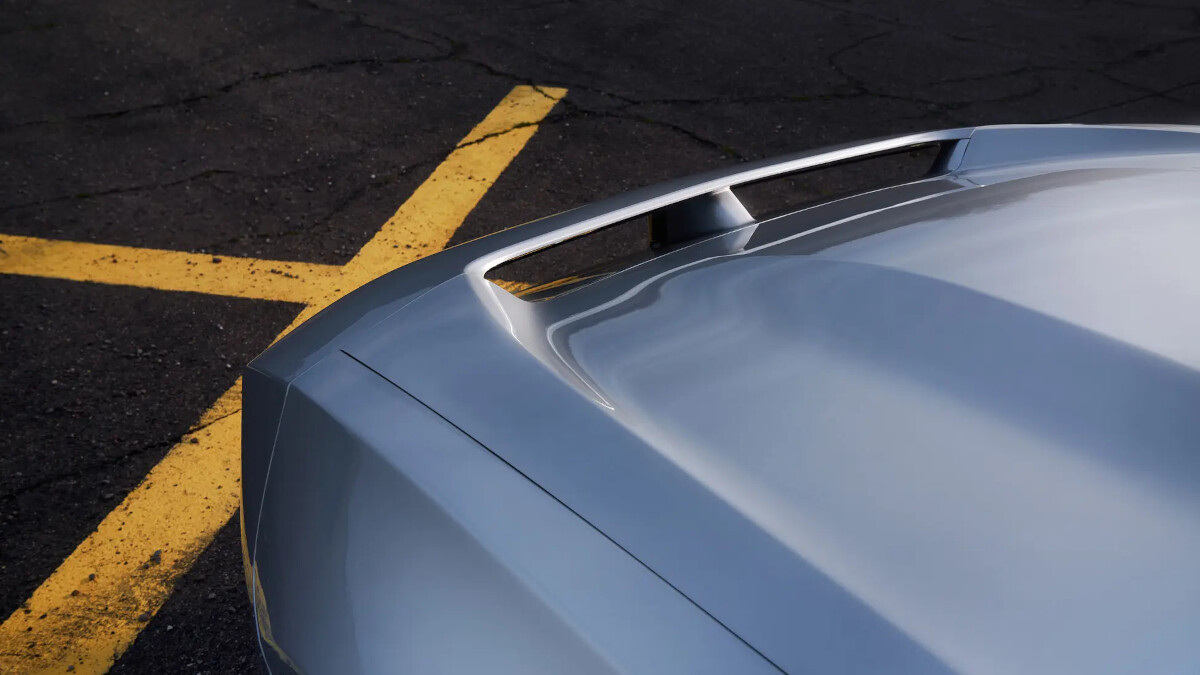
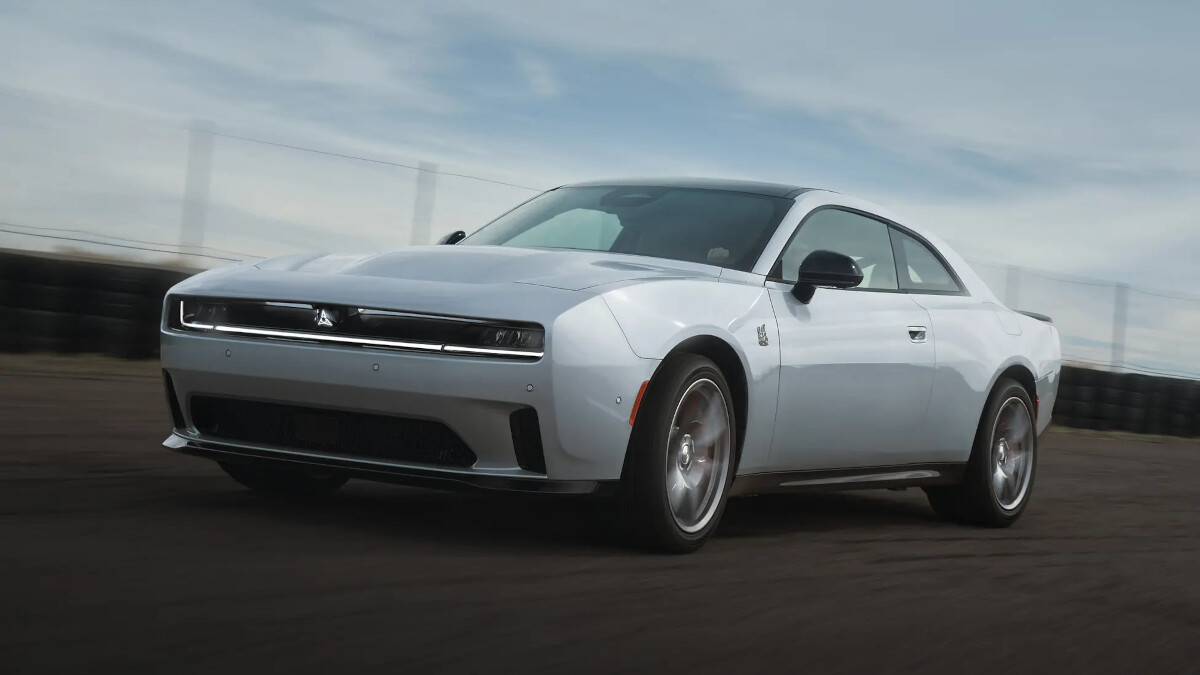
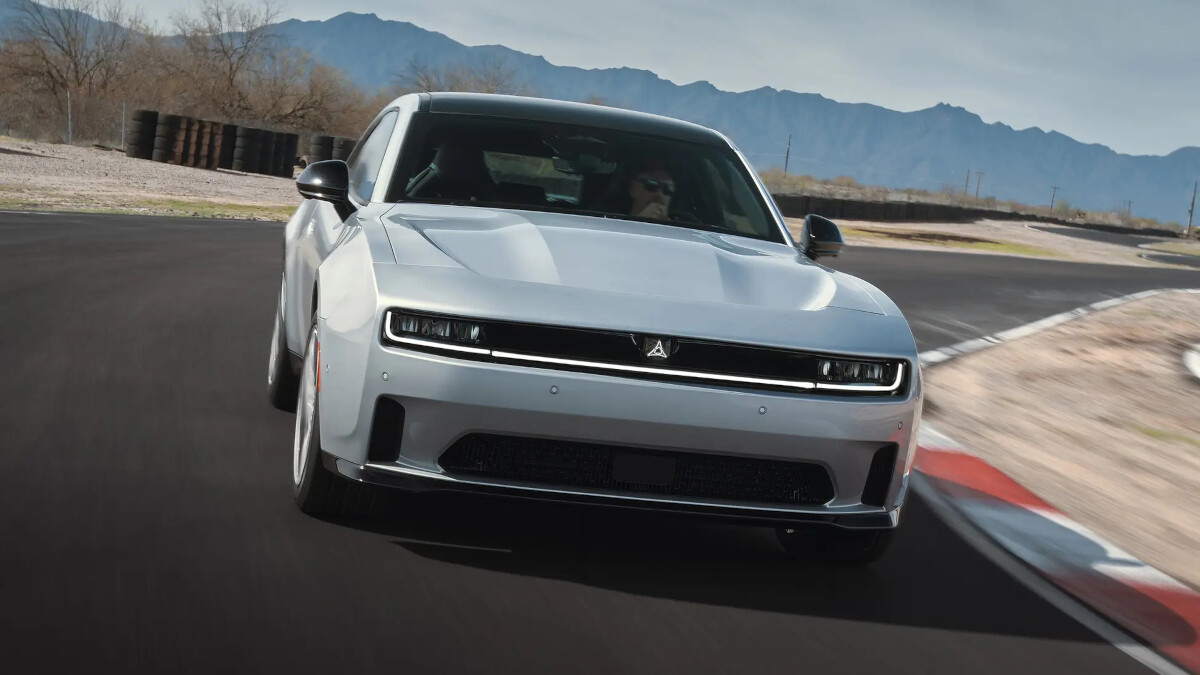
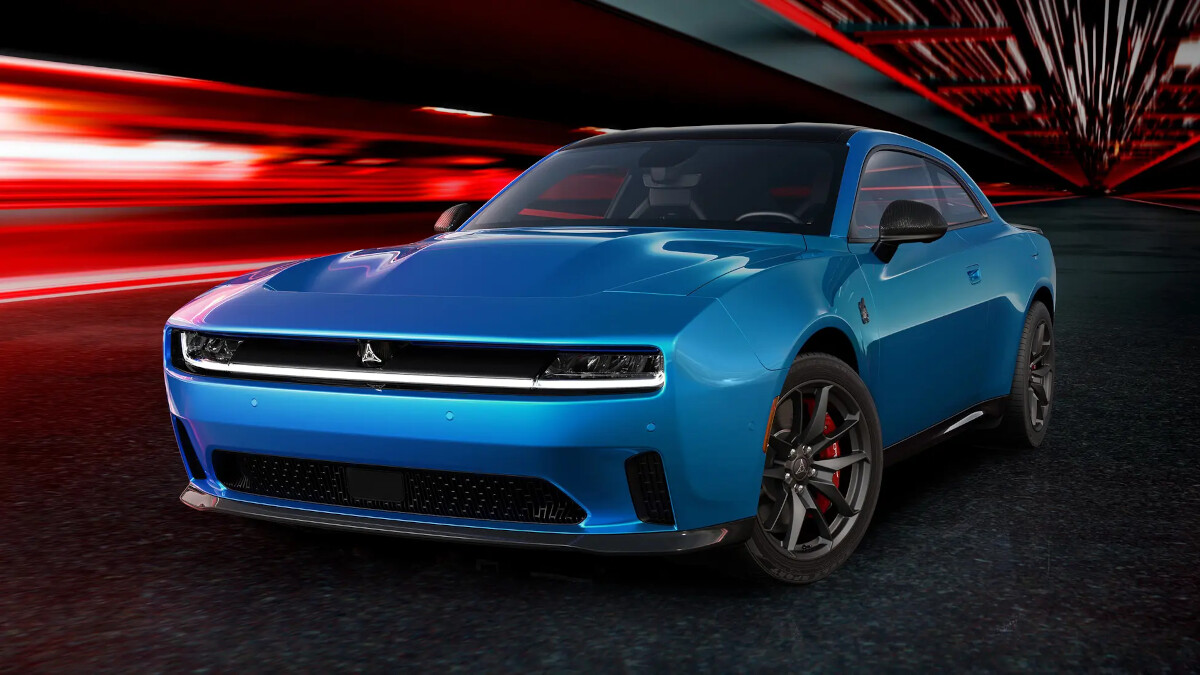
Which of course leads us on to the new Charger’s body, and it appears Dodge has mined the spirit of its earlier muscle cars deeper than ever. It acknowledges as such, saying only how it “avoids excess” and takes its cues “from the clean, timeless lines of its predecessors.”
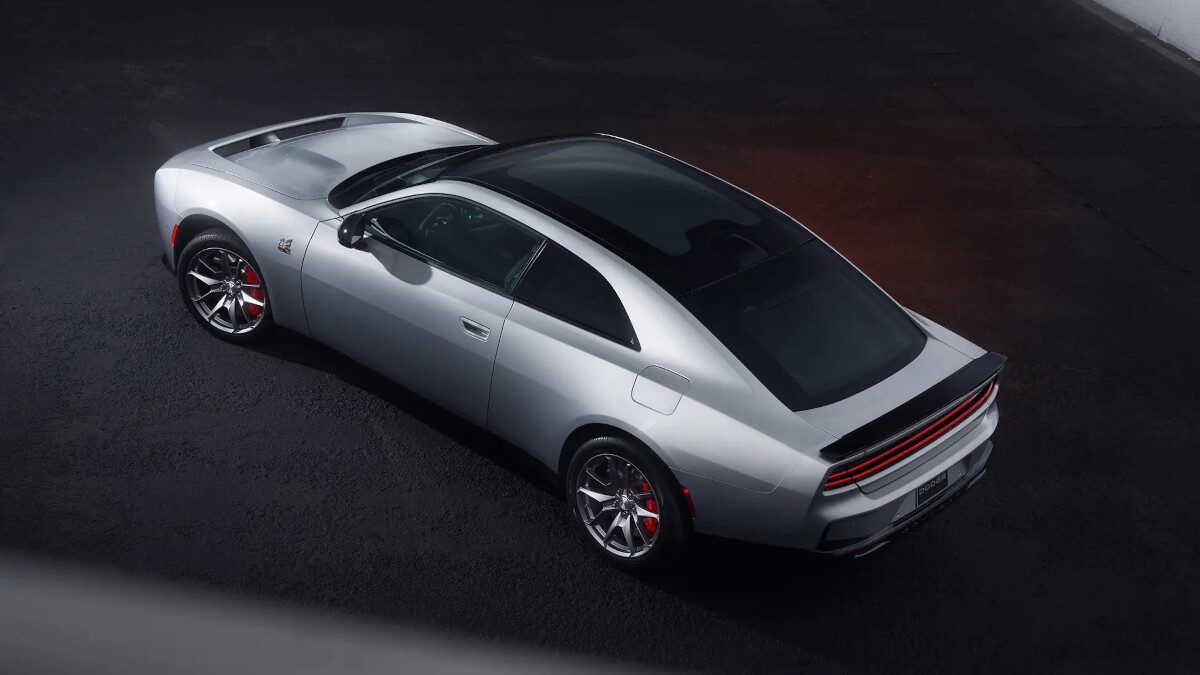
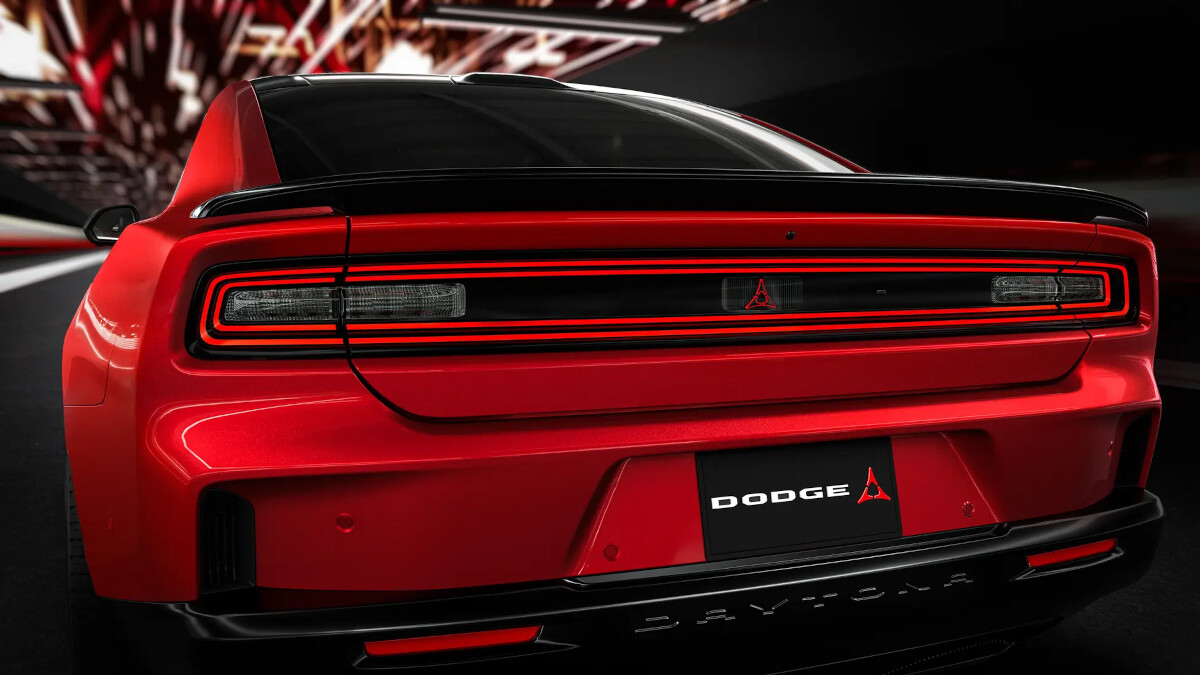
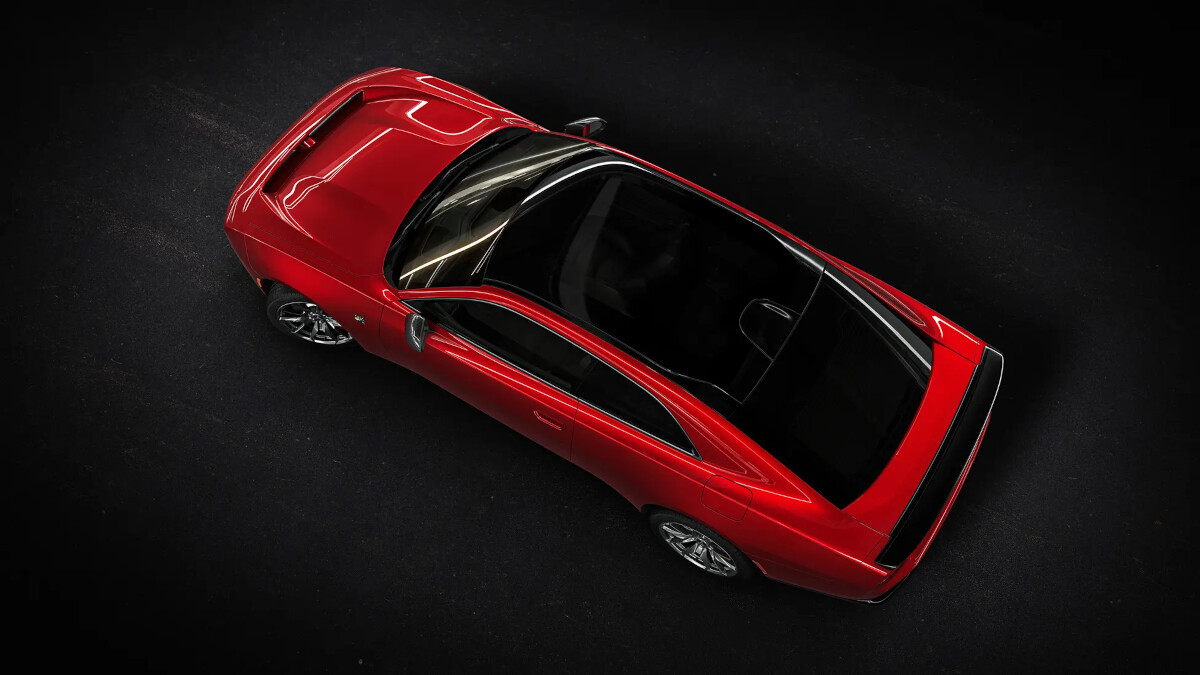
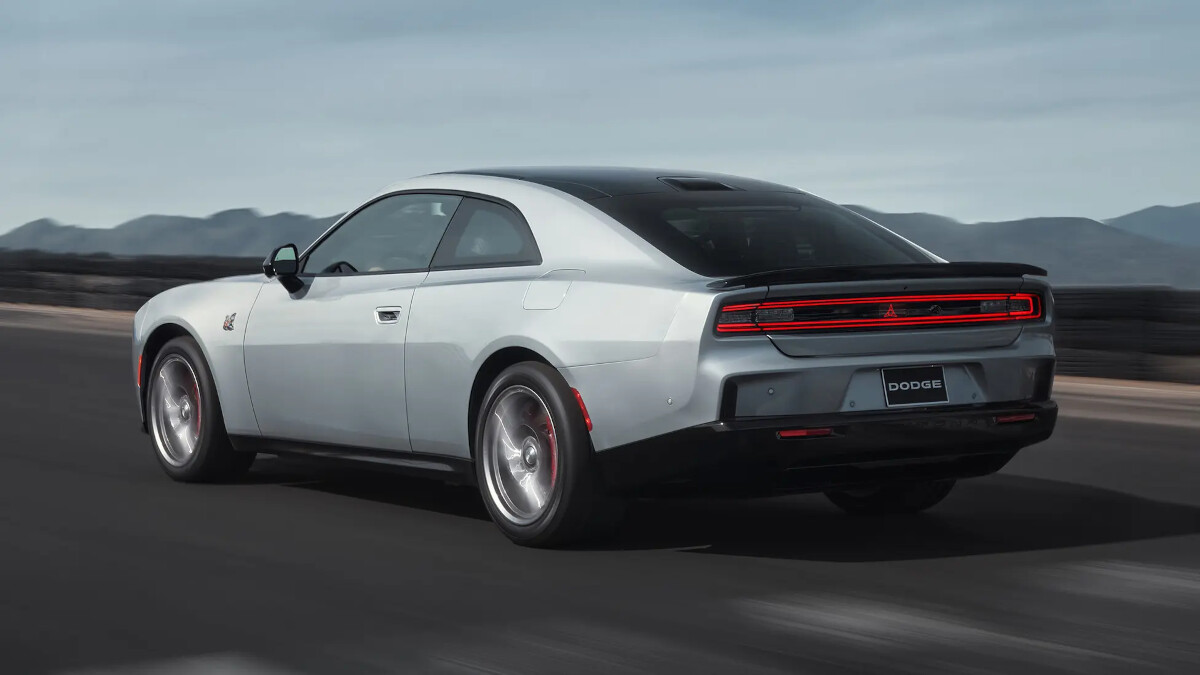
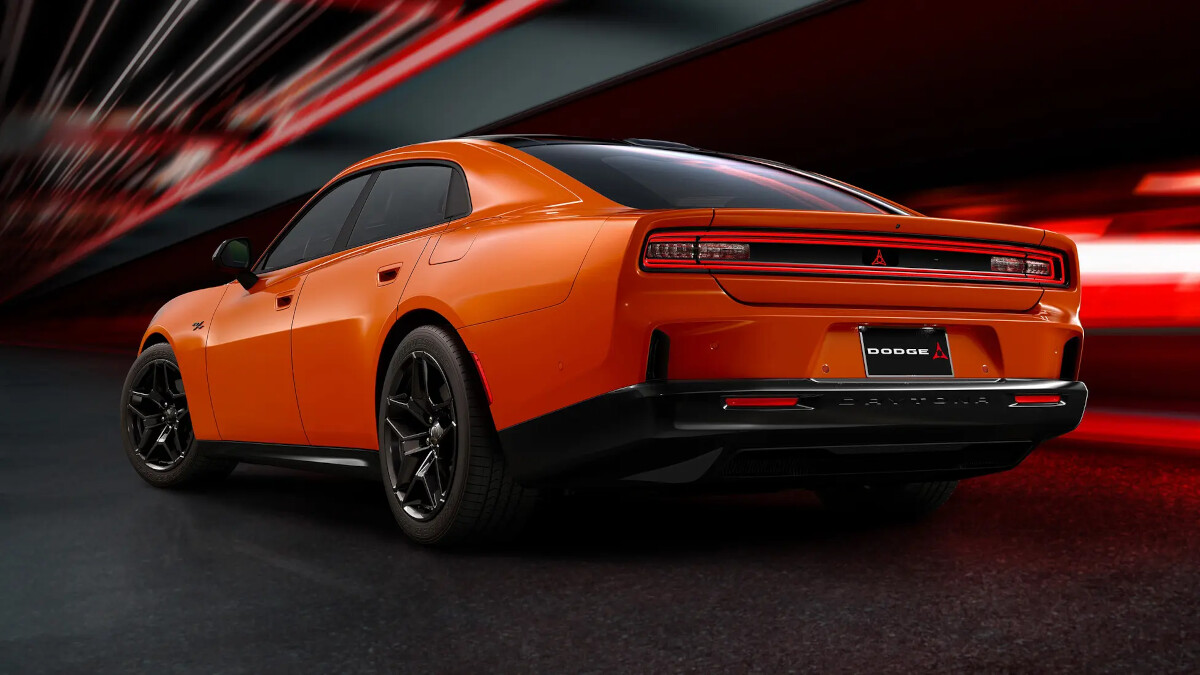
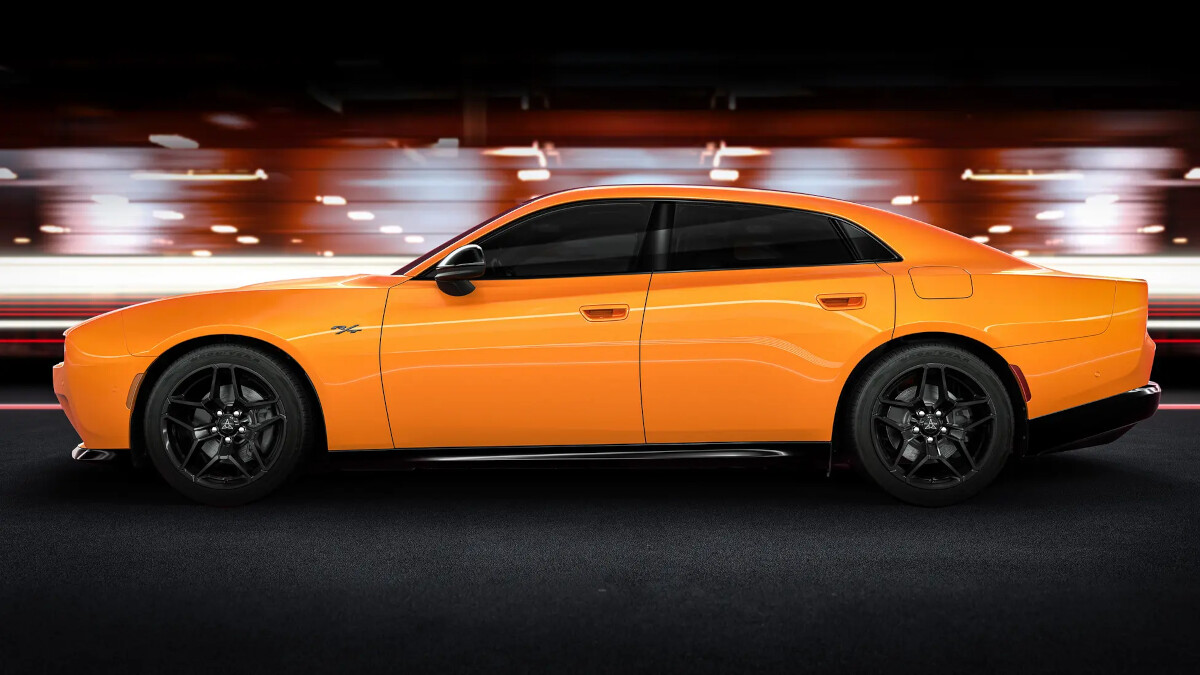
That ridged hood slopes down into a straight-edged front grille and ‘R-Wing’ front setup, which Dodge says is a call back to the original Charger design and a way of allowing better airflow. It’s a suitably menacing frame for a wide, fairly simple silhouette that tails back into that now-familiar rear setup complete with ‘ring of fire’ LED rear taillamps. You can spec a full-length glass roof if you so wish.
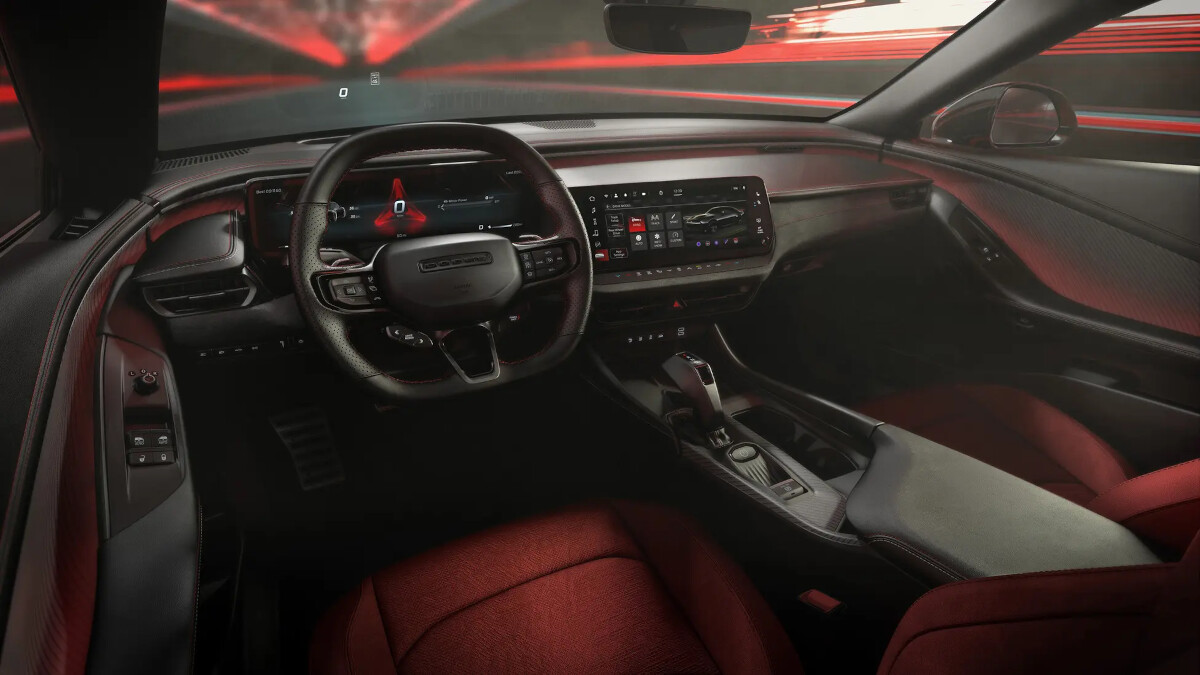
There’ll be two- and four-door versions of the new Charger available, each with the same wheelbase. Speaking of wheels, there are many options available, ranged from 18 to 20 inches. And while the outside pays its dues to the original, the inside is all 2024: a 12.3-inch central touchscreen and either a 10.25-inch or an optional 16-inch cluster screen ahead of the driver. Naturally, there is much driver assistance embedded within the new Charger’s lines.
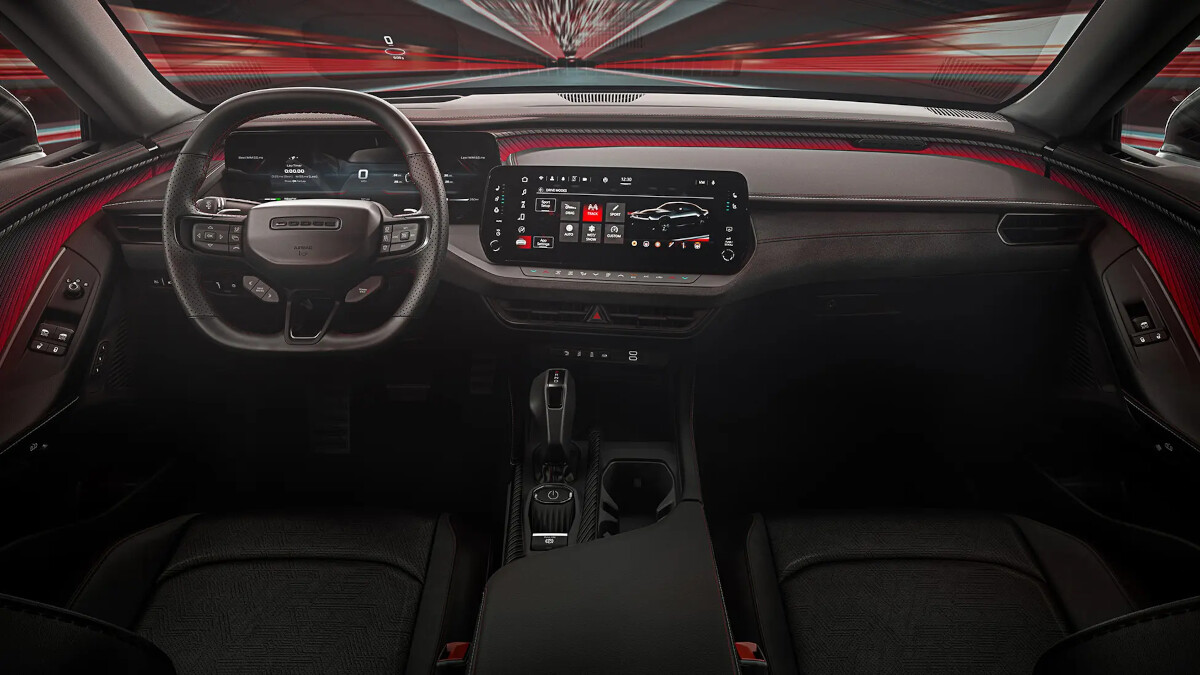
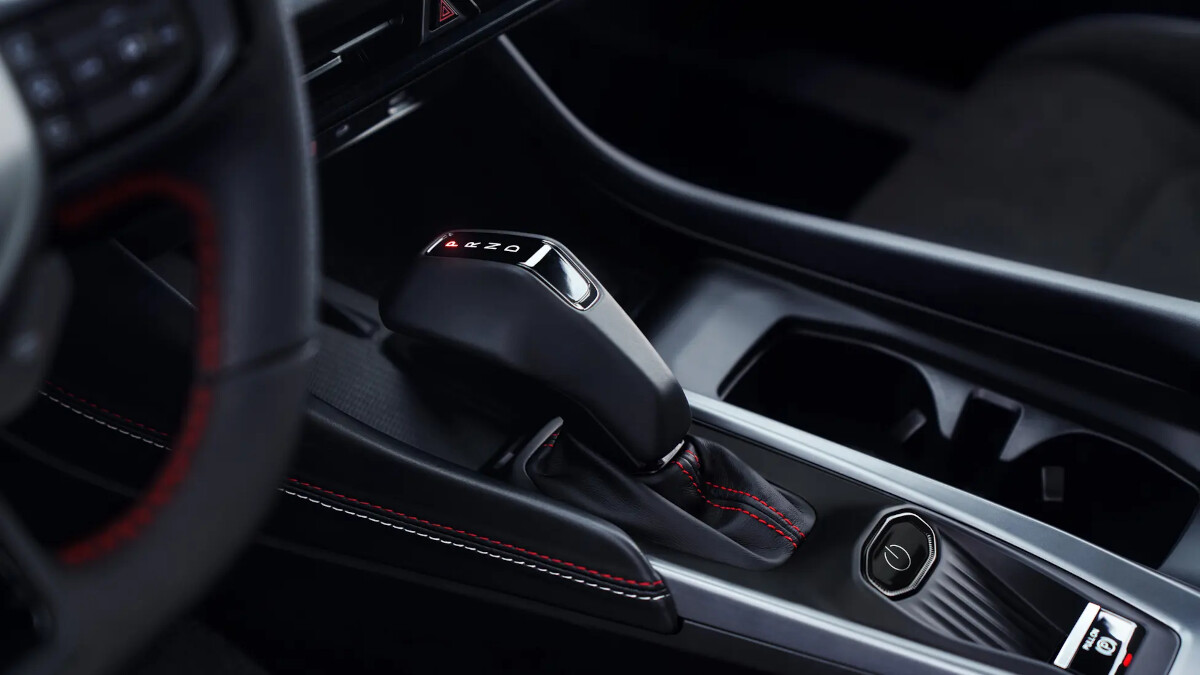
Speaking of which, Dodge says the interior ‘linework’ and ‘texture’ both hark back to the 1968 Charger’s instrument panel, which is fine, but that Charger never had 64-color ambient lighting or a heated steering wheel. Or a wireless phone charger and an optional head-up display. Which the new car has. These are good things to have.
“The next-generation of Dodge muscle has arrived,” said Dodge brand chief executive officer Tim Kuniskis. The powerful play goes on, then, and it’s time for the e-Charger to contribute its verse. Loudly. And very quickly.
More photos of the electric Dodge Charger Daytona 2024:
NOTE: This article first appeared on TopGear.com. Minor edits have been made.