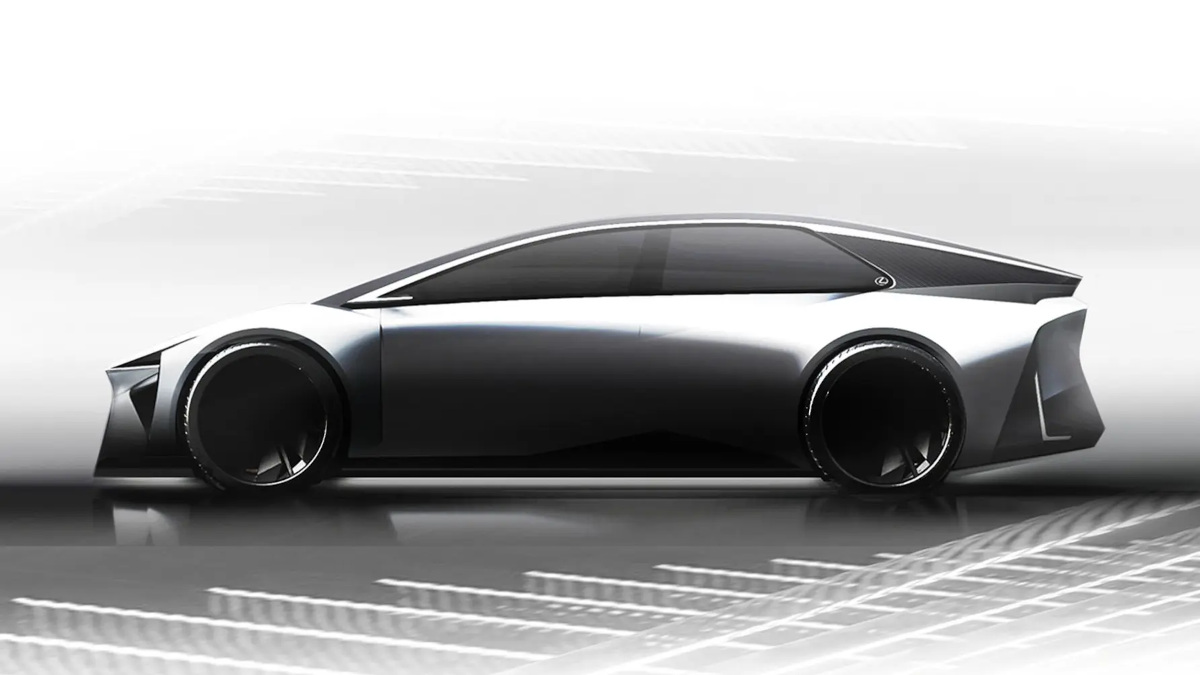
Toyota has made a breakthrough in its development of solid-state batteries. The Japanese carmaker reckons it won’t need to compromise on shorter battery life—a typical trade-off—when it puts its new solid-state batteries into mass production in 2027.
As the manufacturer says: “Solid-state batteries have long been regarded as a potential game-changer for battery electric vehicles (BEVs).” Currently, a liquid electrolyte carries the electrons from the cathode to the anode and vice versa. While Toyota doesn’t specify the material it uses, generally “solid-state” means the electrolyte is gel-like.
OTHER STORIES YOU MIGHT HAVE MISSED:
Two-week dry run of Katipunan Avenue northbound zipper lane begins on September 21
Toyota Hilux prices up by as much as P135k, gets new 4x2 variant
Typically, a gel-based electrolyte is considered safer (more stable). Not only that; the gel enables ions to move more quickly. A solid electrolyte also has a better tolerance for higher voltages and temperatures. That’s great news for rapid charging, which Toyota calculates will be less than 10 minutes for a 10-80% state of charge (SoC) using these new solid-state batteries.
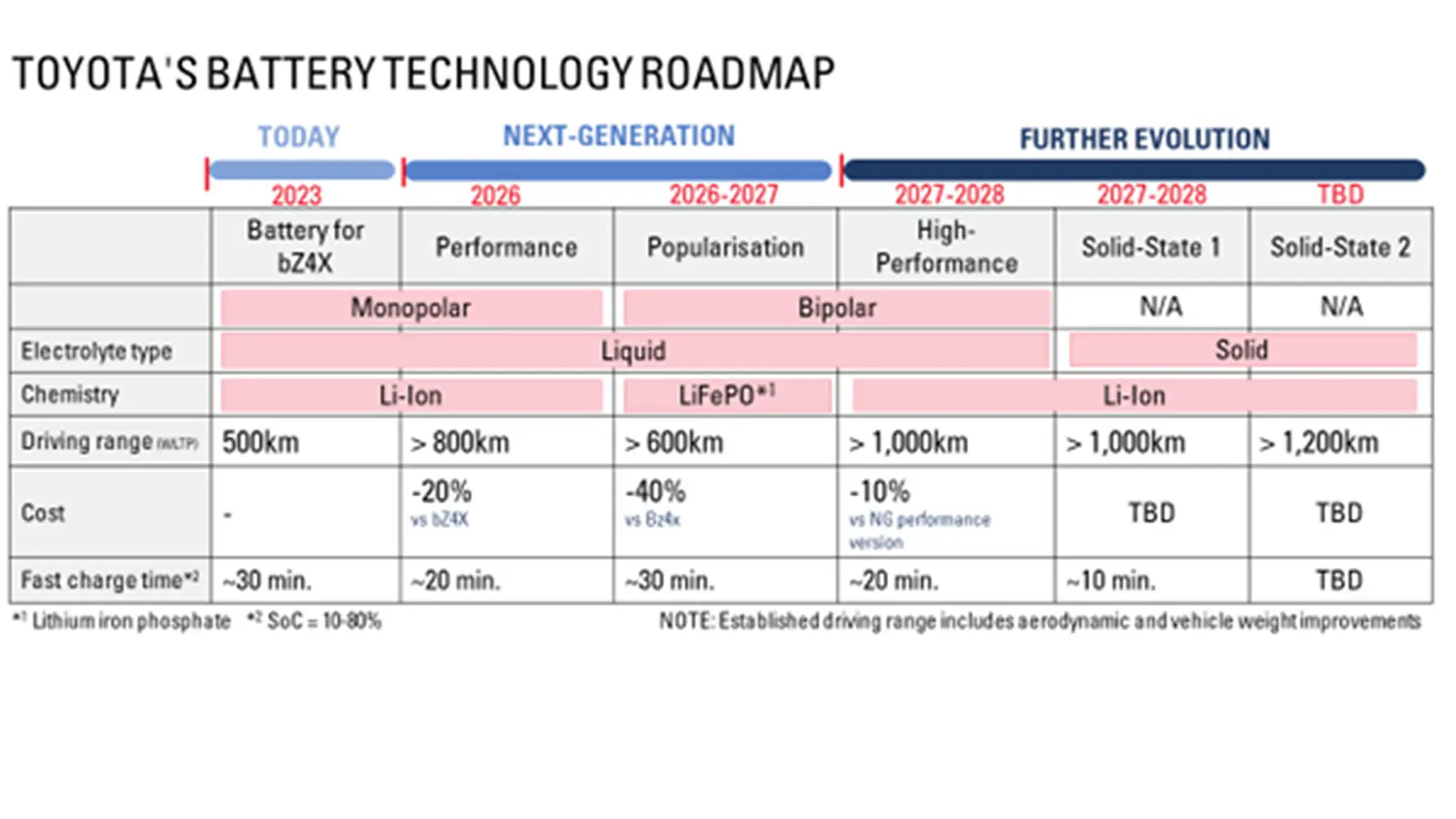
Other advantages include a 20% increase in driving range (roughly 1,000km) and better durability. Originally planning on sticking them in hybrids first—where the fuel engine could act as a safety net in the event the battery fails—Toyota says it’s confident enough to focus on getting these new solid-state cells into BEVs from the get-go.
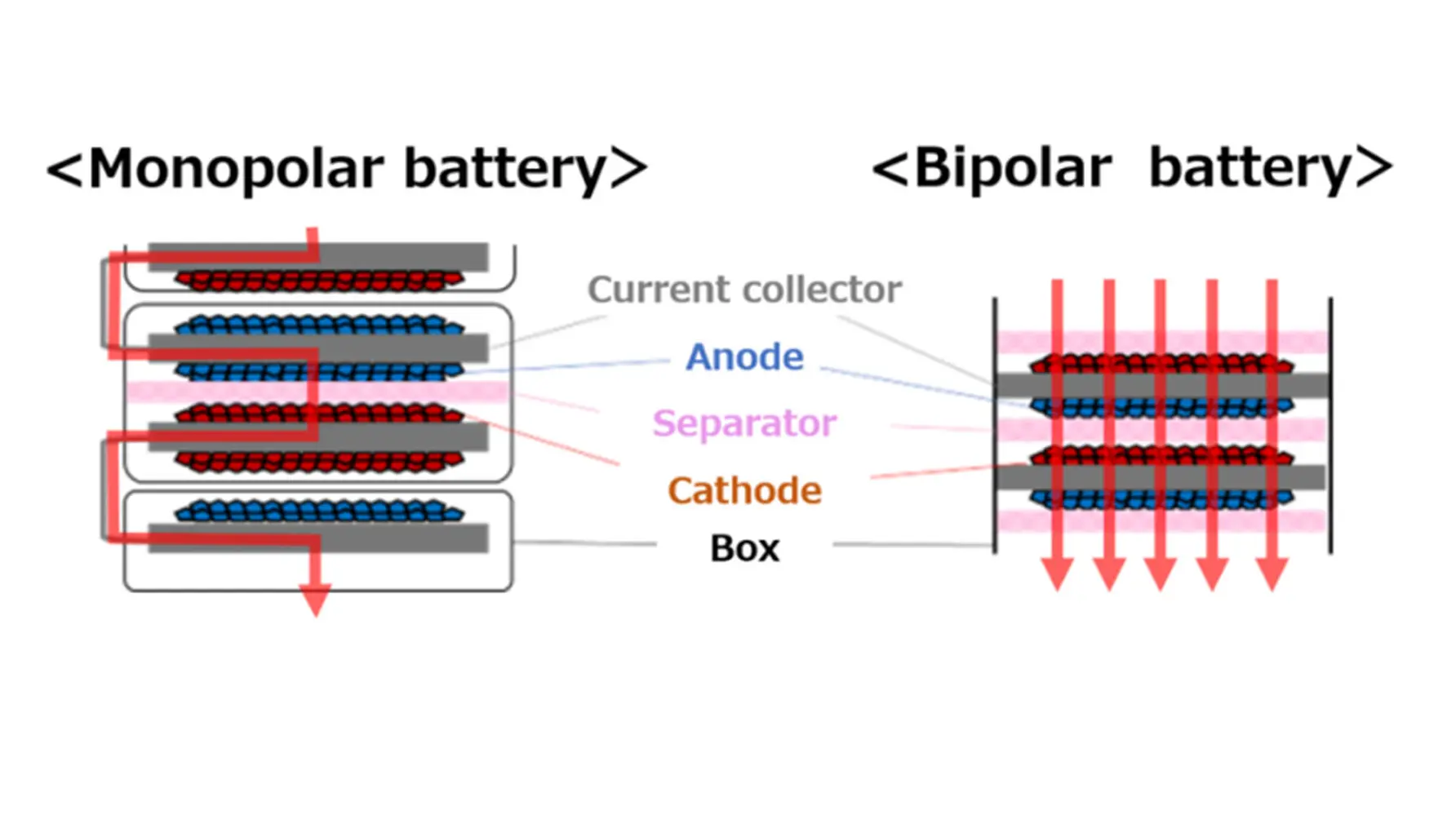
The brand’s not only made in-roads with solid-state technology. It also outlined a new range of advanced liquid-electrolyte batteries. With these, it’s been able to improve performance, range, and fast charging—as well as lower weight and improve aerodynamics. Named Performance, Popularization, and High-performance, all Toyota's new batteries use different chemistries, but the latter two use a new bipolar battery structure (see pictured) to move the needle on all the relevant metrics.
To give context, it reckons the lithium-ion-based Performance battery will reduce production costs of the all-electric bZ4x SUV by 20%, increase range to 800km (up from 510), and reduce the rapid charging time to less than 20 minutes.
Takero Kato, president of the new production facility, said: “We will need various options for batteries, just as we have different types of engines. It is important to offer battery solutions compatible with a variety of models and customer needs.”
Toyota says the next-generation models will account for 1.7 million of the 3.5 million BEVs the brand expects to sell globally by 2030.
NOTE: This article first appeared on TopGear.com. Minor edits have been made.