
In March of this year, the conflict in the Middle East between Iran and the US-Israel coalition resulted in the fourth oil shock in modern history. Pump prices for diesel tripled up to P155 per liter, resulting in a surge of demand for electrified vehicles like hybrids and battery electric vehicles. This is very similar to the first oil shock the world experienced in 1973, when a similar conflict in the Middle East forced carmakers at the time to come up with smaller, more fuel-efficient vehicles.
In an instant, compact cars became the trend, even in the premium space. BMW was so successful with its 3-Series that its rival, Mercedes-Benz, (best known for its flagship W116 450SEL sedan) knew it was clearly missing out on a great opportunity. The big question loomed: Could Mercedes-Benz, known at the time for luxury and engineering excellence, build a compact car that was worthy of the Mercedes name?
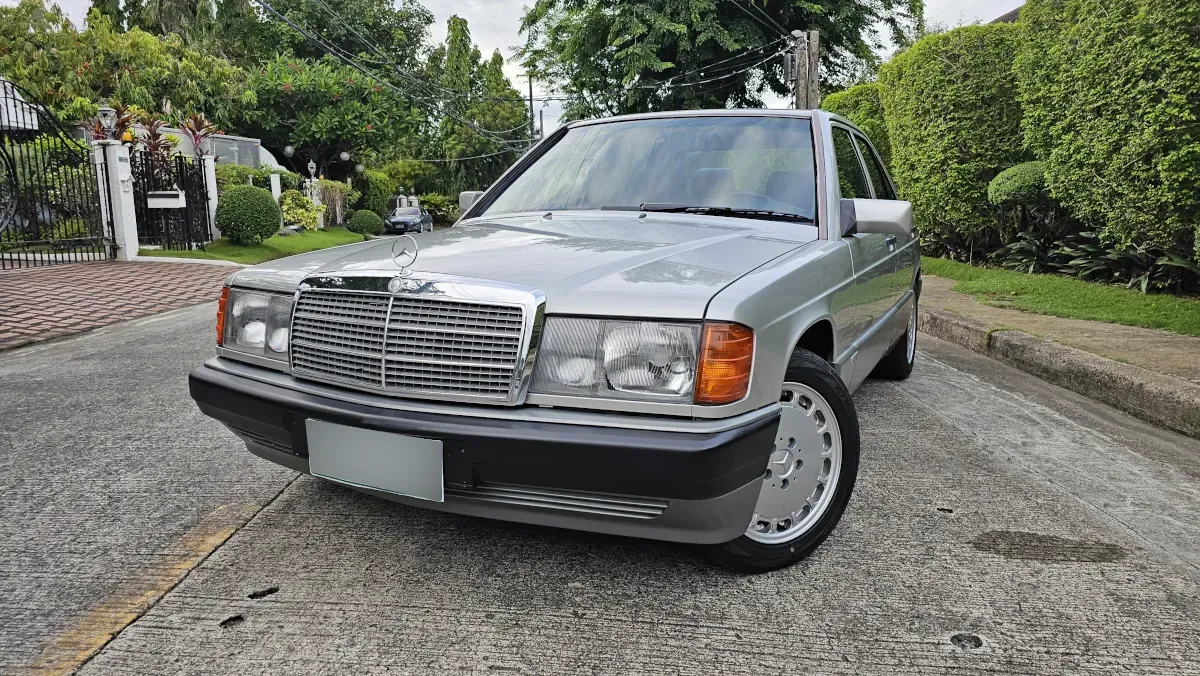
The challenge of building a small sedan that had the comfort, long-distance touring ability, and solid build quality of the S-Class was given to Prof. Werner Breitschwerdt, then head of Mercedes-Benz R&D. As for designing the car, that task was given to legendary Mercedes-Benz designer Bruno Sacco. Sacco always believed in vertical integration, meaning all cars from a brand must have some sort of family resemblance. No surprise, then, that the resulting W201 has many similarities with the W124 and W126 models.
OTHER STORIES YOU MIGHT HAVE MISSED:
The fully electric Mercedes-AMG CLA 45 makes 671hp and four-pot noises
Say hello to the all-new, fully electric Mercedes-AMG GT 4-door Coupe
The resulting Mercedes-Benz W201 was first shown to the public at the Paris Motor Show in October 1982, followed up by a media event in Andalusia, Spain, in December 1982. Interestingly, the model name ‘190’ came about because the naming convention based on engine displacement (260E, 500SL, etc.) no longer worked; the marketing team just agreed that ‘190’ sounded good!
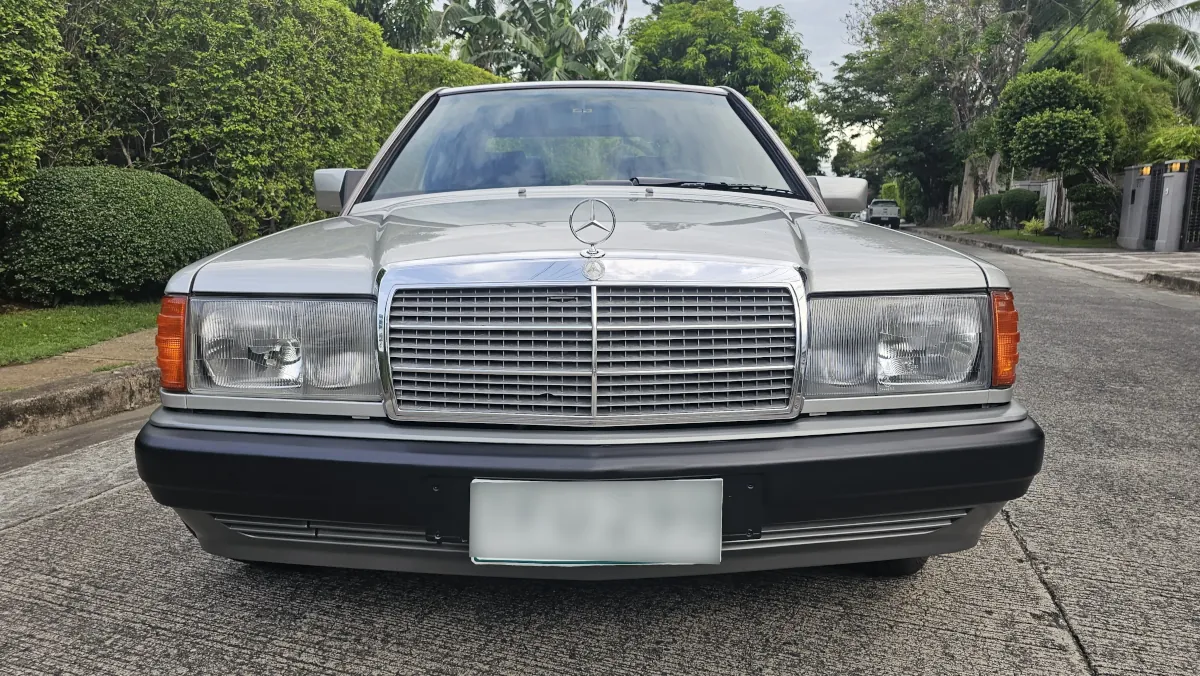
The company spent $800 million (a huge amount in the ’70s) to develop the 190 and the result was a car that was, in their terms, “massively over-engineered” to ensure that this sedan looked, felt, and drove like a true Mercedes-Benz.
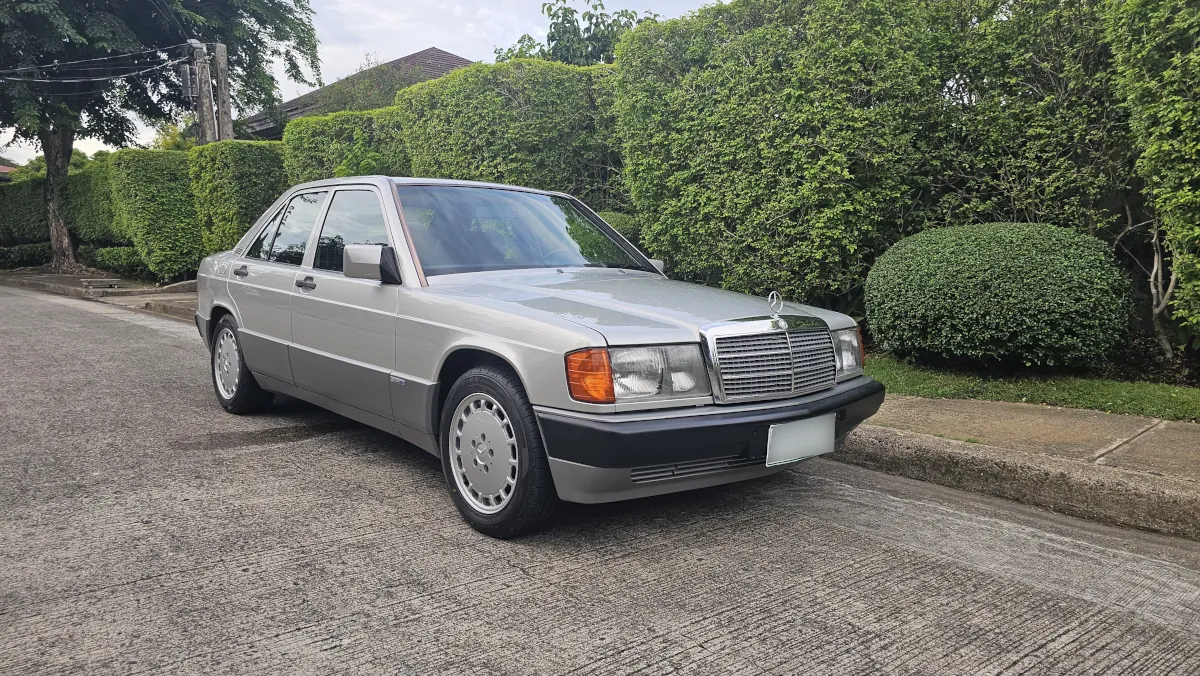
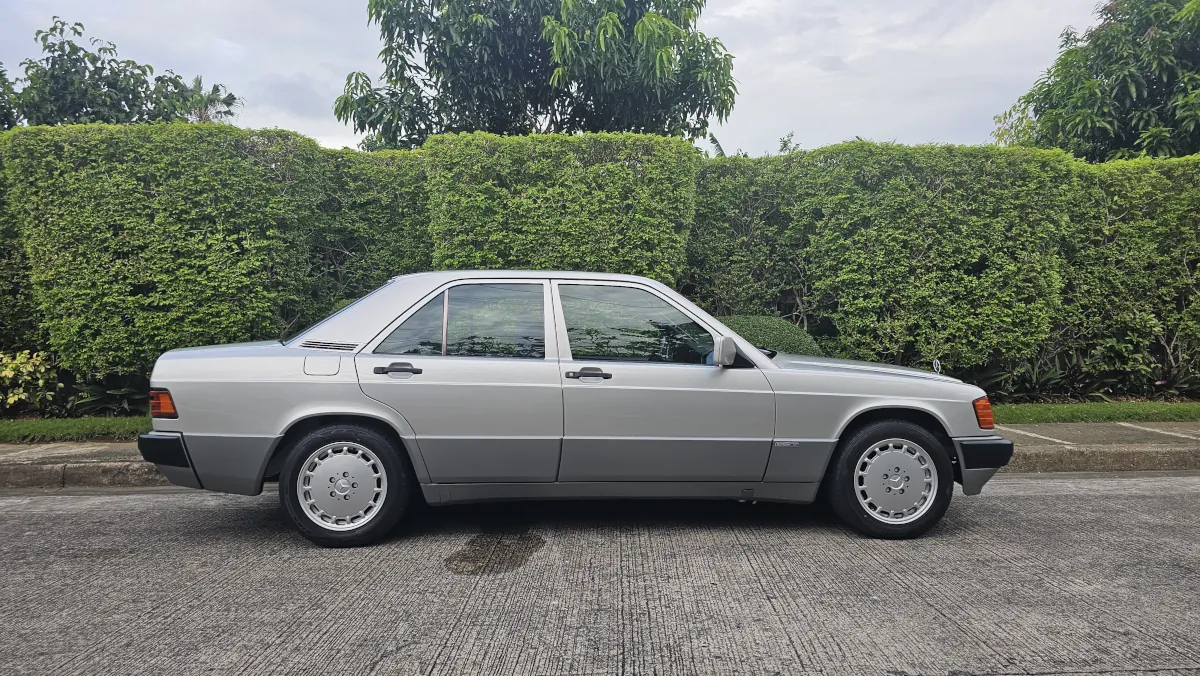
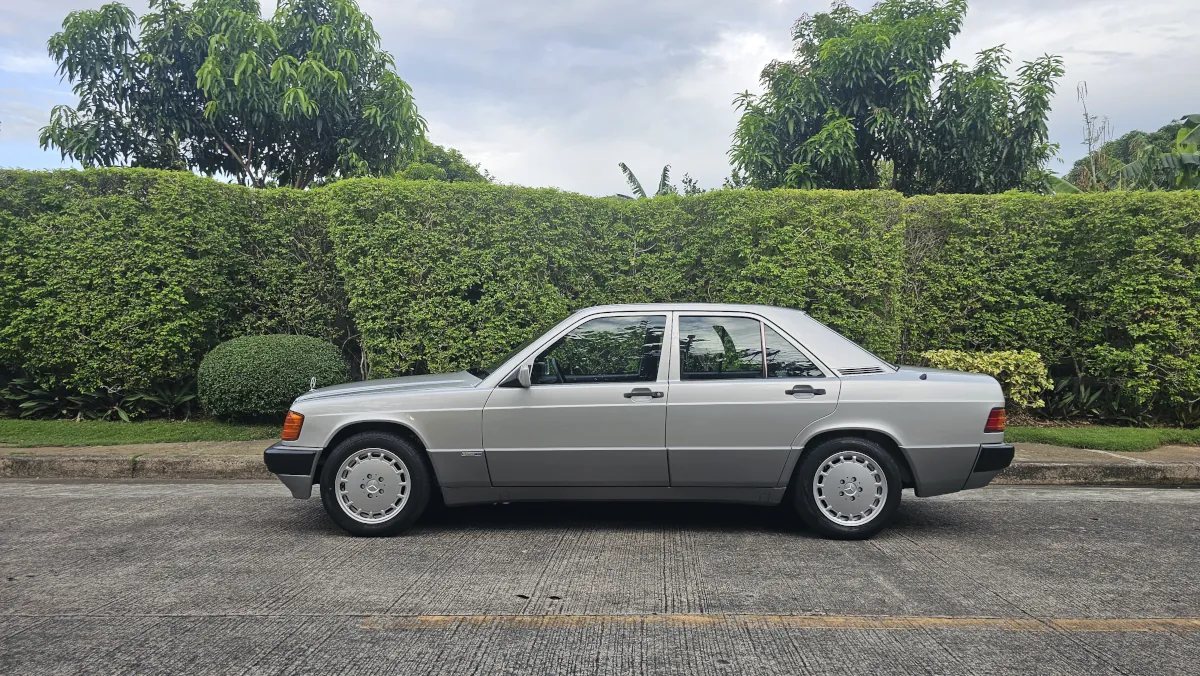
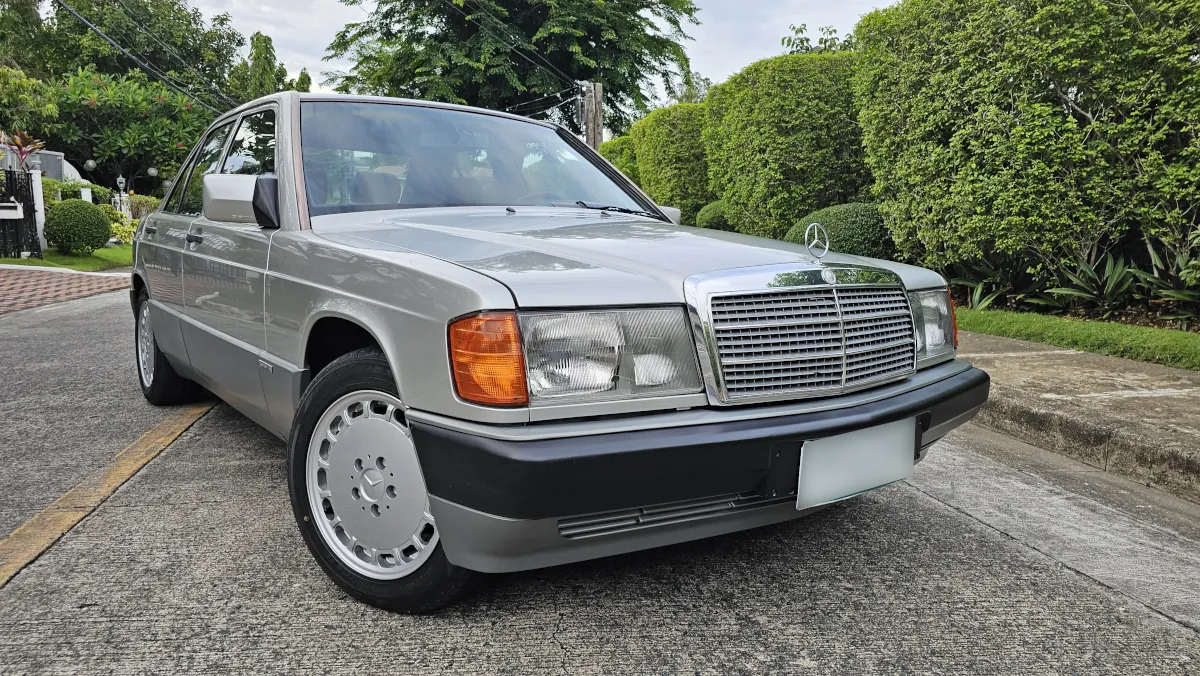
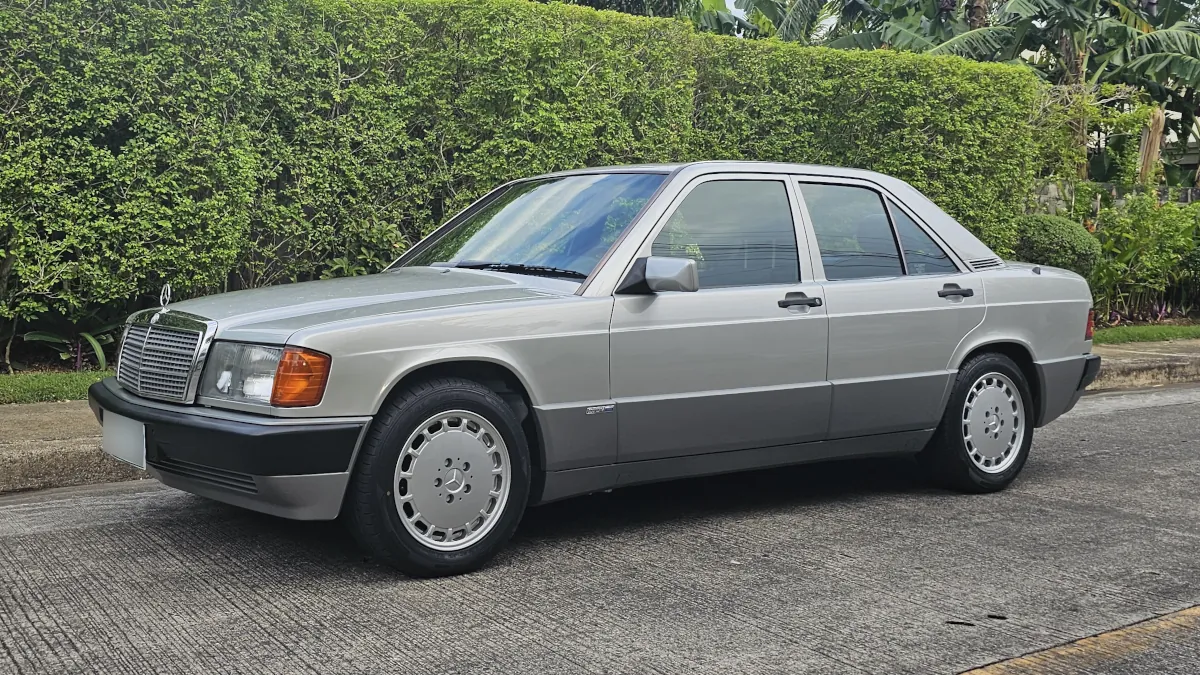
Measuring just 4.5 meters long, it was the most compact Mercedes at the time—hence the “Baby Benz” nickname. From the front, it has the clean, angular look typical of German cars. The fascia is down-to-earth and more businesslike, and is dominated by the large front grille and upright Mercedes-Benz star. The angular profile continues to the pinched rear end, ribbed taillights, and flat surfaces. Put together, these perpetuate a now-familiar Mercedes-Benz look.
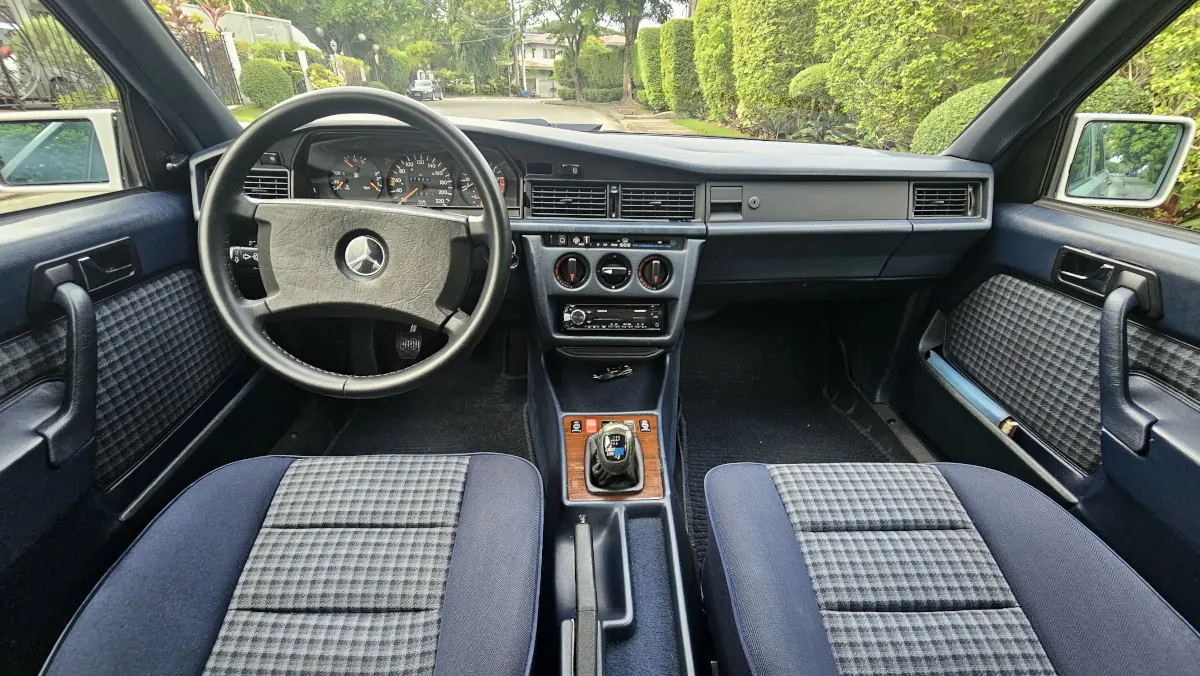
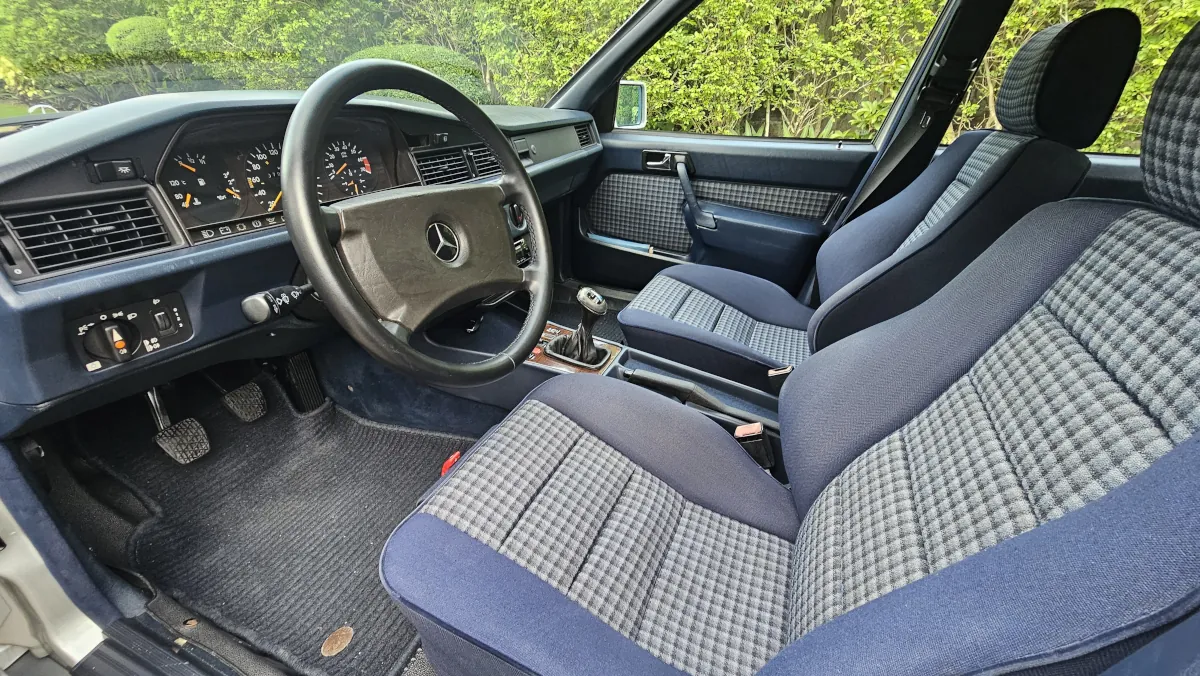
Pull on the door handle of the 190, and you’re taken back to the days when cars were so well-built that closing the doors produced a very solid ‘thud.’ It’s a reassuring sound that makes you feel safe and secure in the vehicle. The seats in this car are heavily bolstered and provide a relaxed seating position, while visibility is excellent thanks to the large upright windshield and thin pillars.
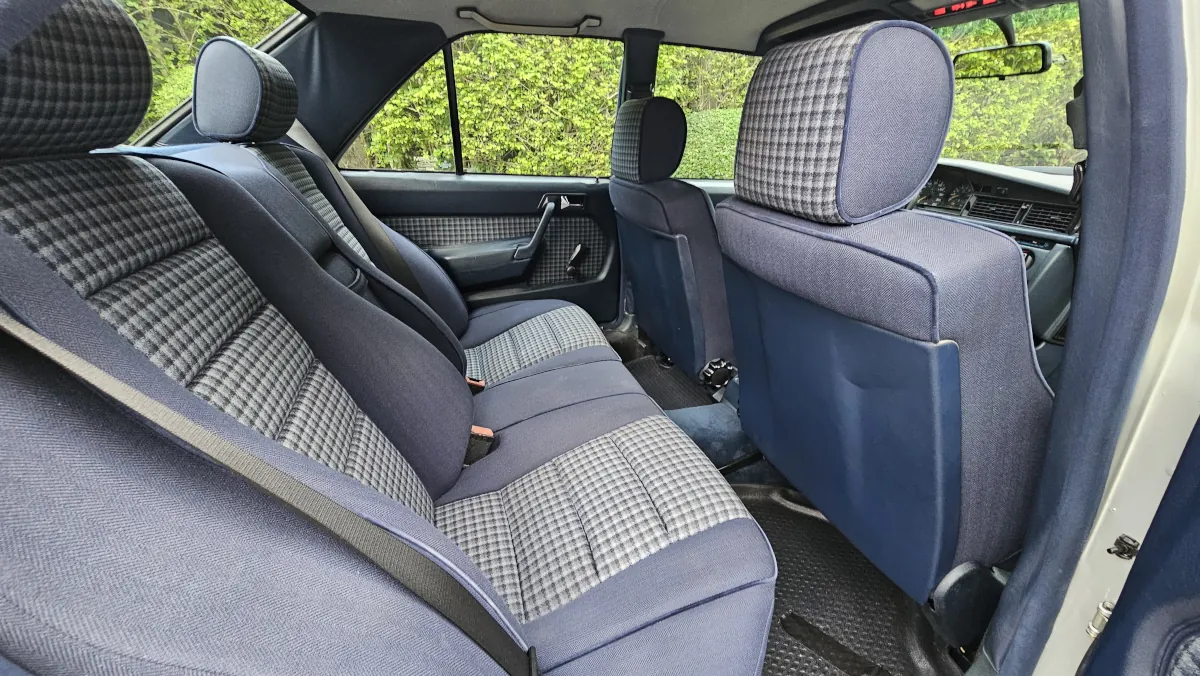
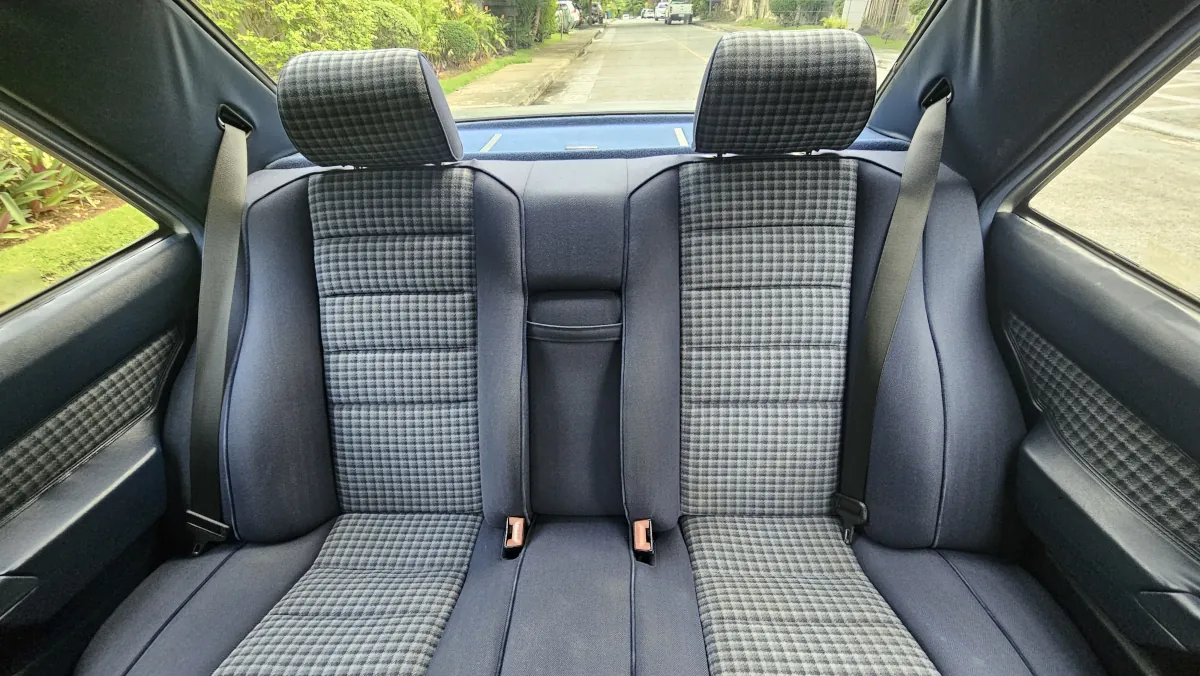
The dashboard is no-nonsense and straightforward, populated by easy-to-read analog gauges along with rotary knobs for climate control. No buttons on the steering wheel—just the large horn pad. Everything is very simple, but it works. Sometimes, I feel that it would be nice to return to these simpler days. The rear seats are designed to accommodate two passengers, although people over 5’9” may not feel as comfortable (but somehow, it still works).
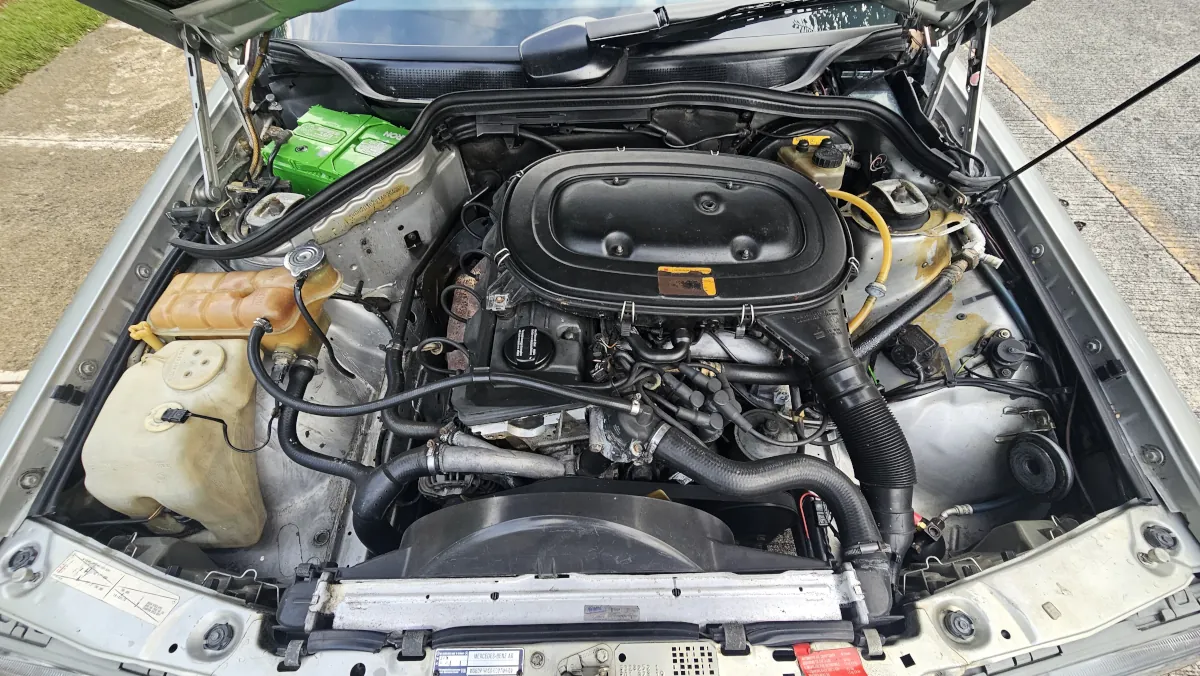
The Mercedes-Benz 190 was available with both petrol and diesel engines, with power ranging from 71hp from the four-cylinder diesel 190D up to 166hp from the 2.6-liter six-cylinder petrol engine. There were also a series of 2.3 and 2.5-liter engines that were fitted with 16-valve headers designed by Cosworth—these are highly coveted by collectors today. Power from these engines were sent through a four-speed manual transmission, with a five-speed manual and four-speed automatic also available as options.
One of Mercedes-Benz’s hallmarks was ride quality, and the 190 was no different. Up front, MacPherson struts were supported by a lower control arm with coil springs, tube shocks, and a stabilizer bar. The real innovation came from the five-link rear suspension which allowed optimal wheel control during cornering for improved handling. This five-link rear suspension was so innovative that updated versions of it would still be used in the next generation C-Class and E-Class models.
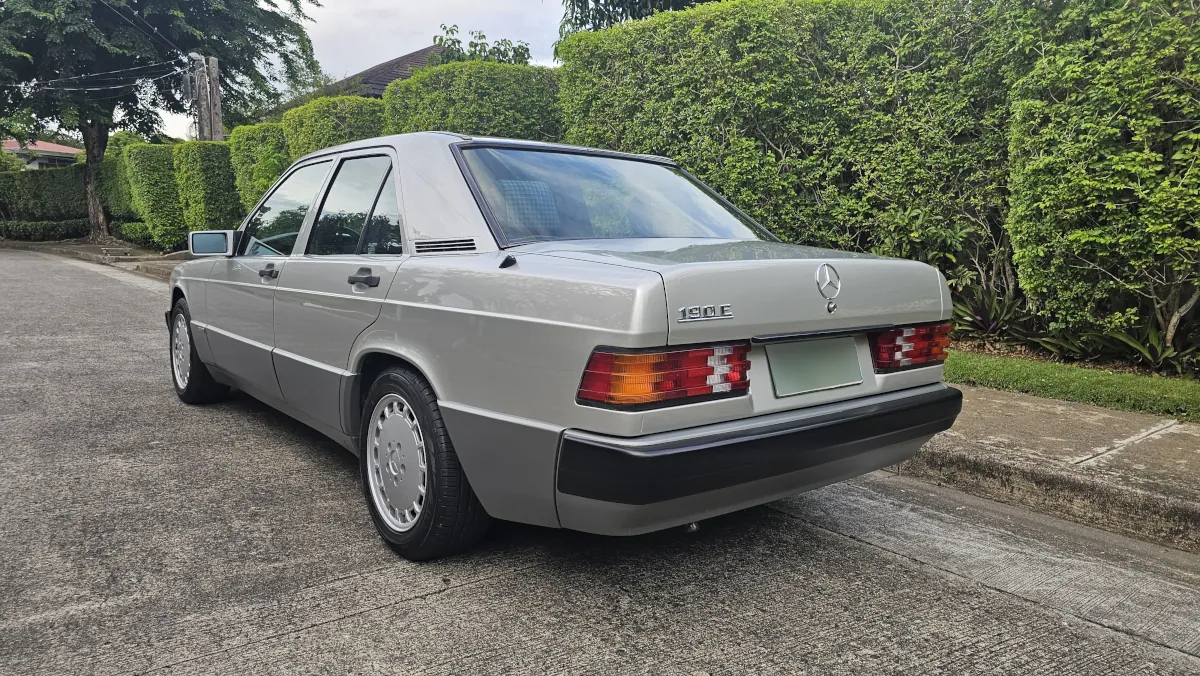
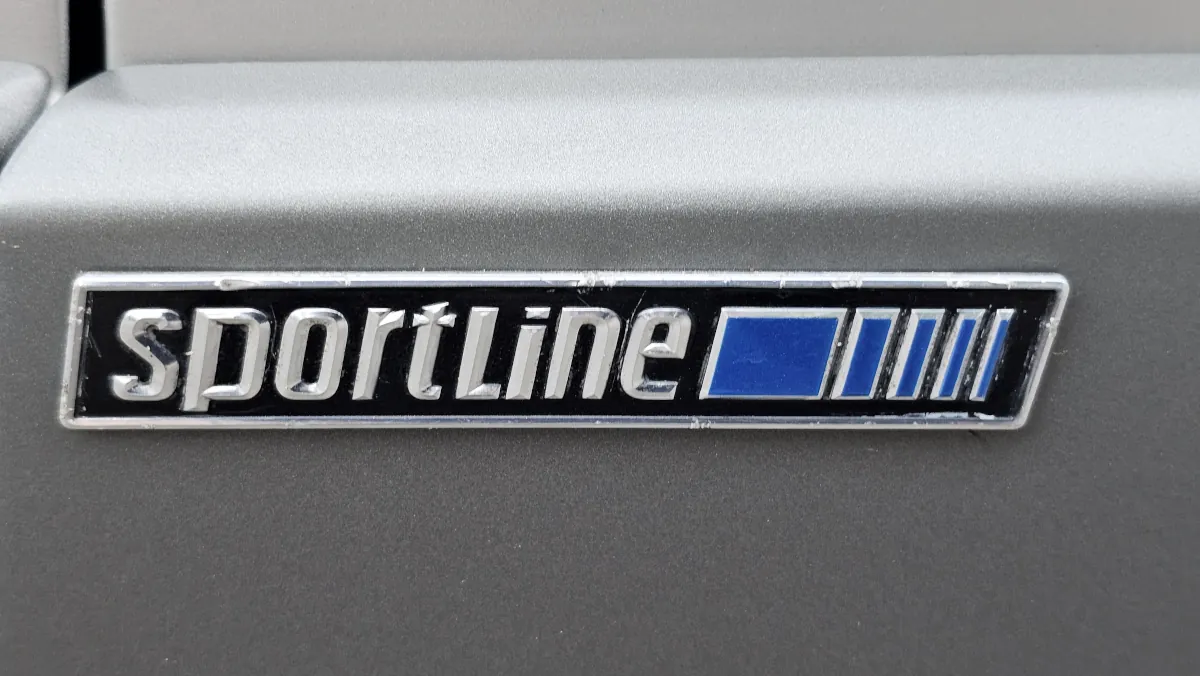
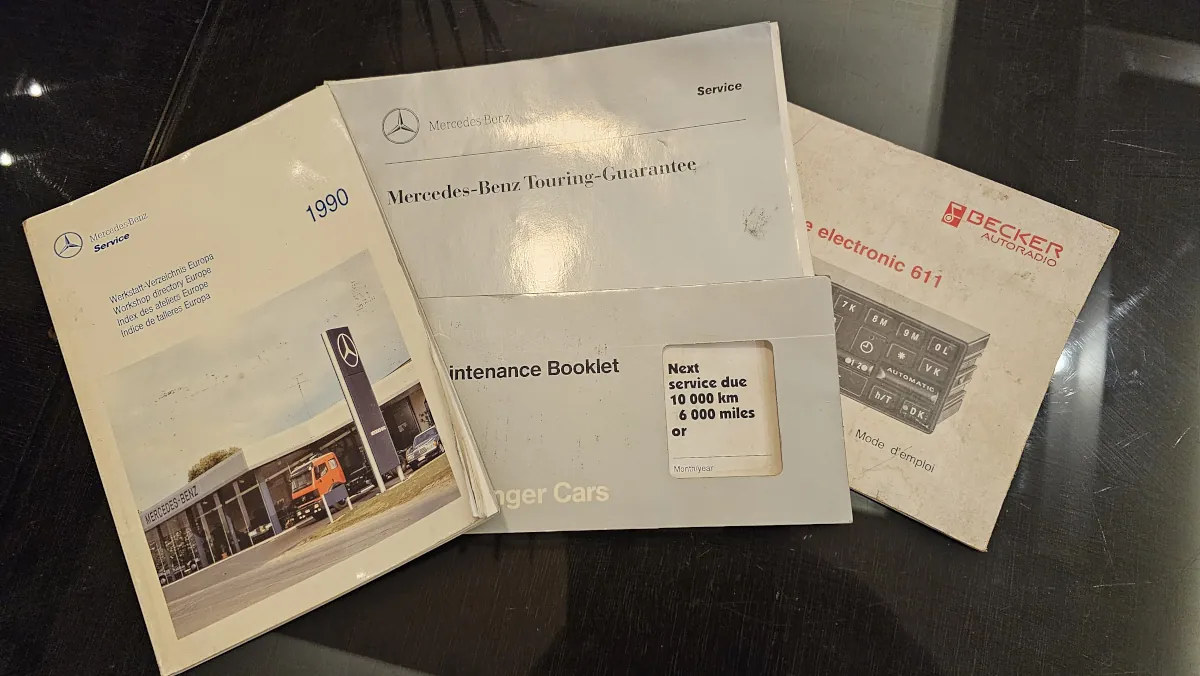
The 1990 model we have here today was ordered from a dealer in Germany, equipped with a 136hp 2.3-liter M102 engine and a five-speed manual transmission. It was finished in Astral Silver Metallic with a blue checkered fabric interior (known as Karo-Stoff). The option list for the vehicle was pretty extensive for its time, and the owner of this car also added the new for 1990 Sportline package—an option meant to further enhance the sporty nature of the Mercedes 190 series.
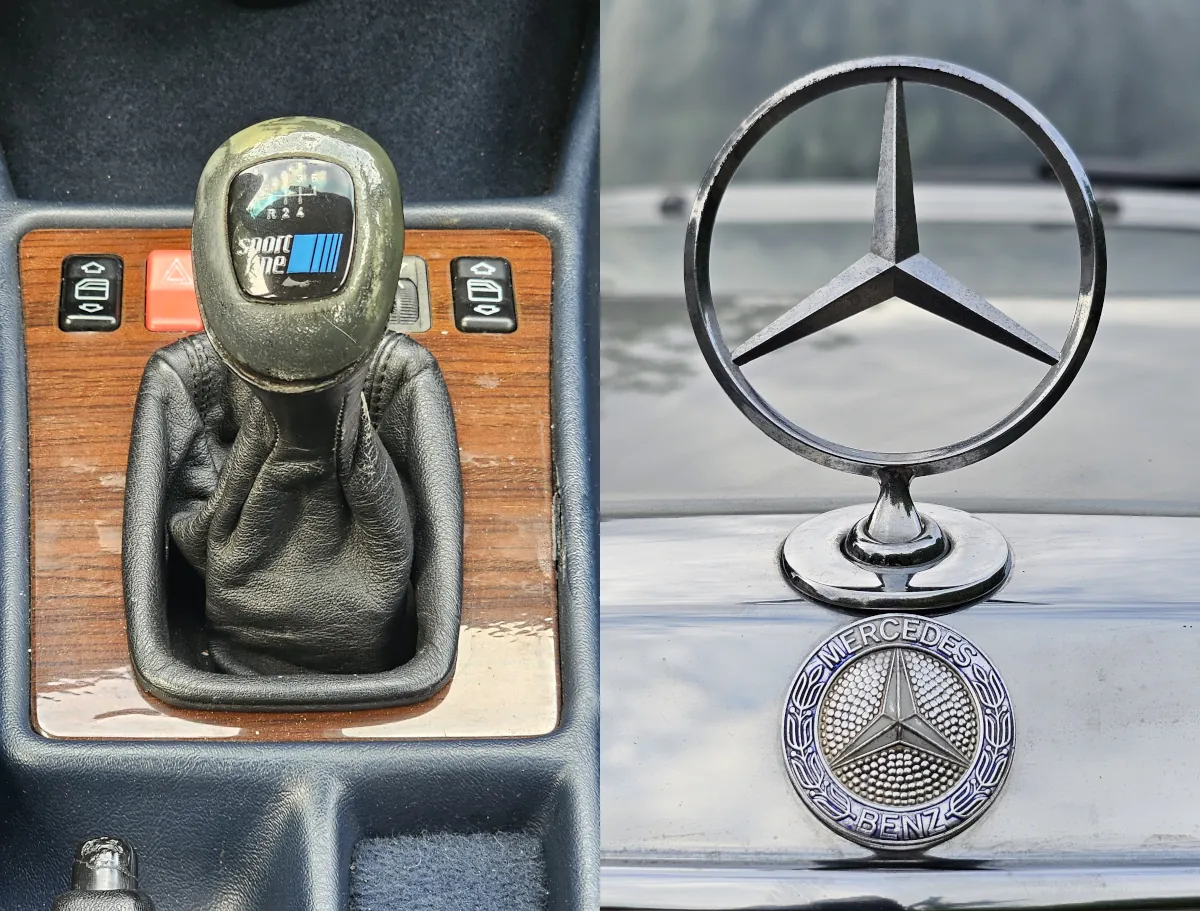
Ticking this option gave you a firmer suspension that was lowered by 21mm, wider 15-inch wheels with 205mm tires, and a sporty four-seat interior. These seats are heavily bolstered and also features rear restraints borrowed from the 190E 16-valve models. The Sportline package also came with a smaller diameter steering wheel, a Sportline gearshift knob, and unique (but discreet) exterior badging.
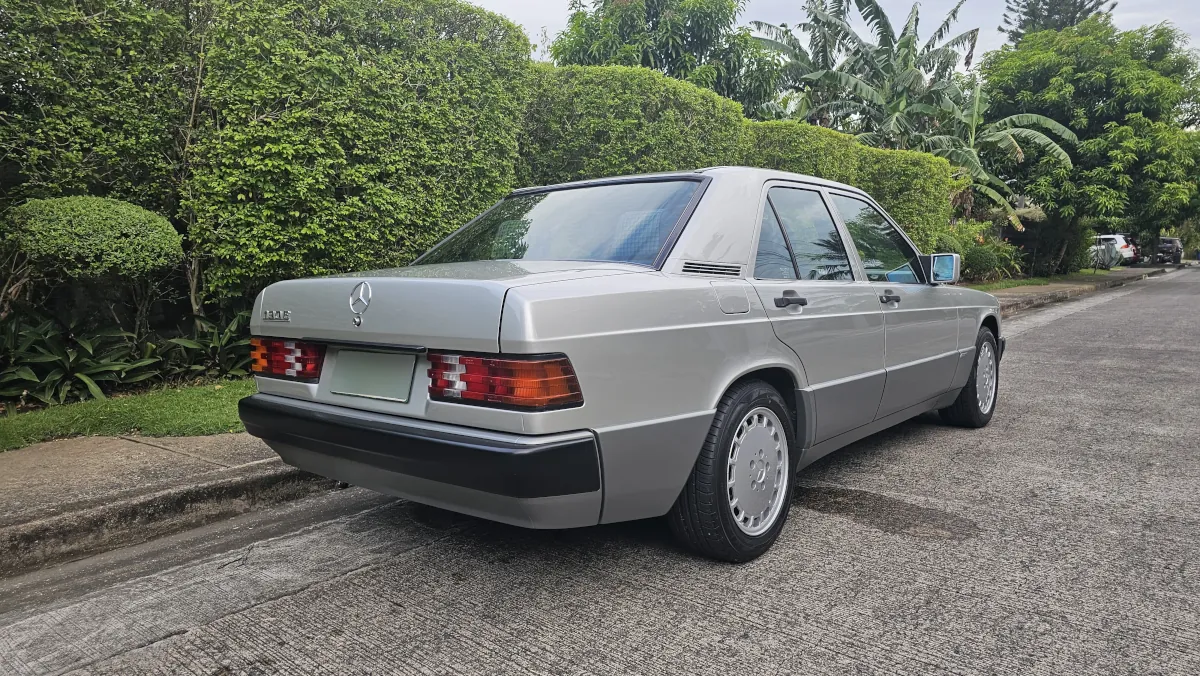
Driving the original Baby Benz reminds you of how good the outward visibility is. You don’t even need a rear view camera because you can see everything so easily. The 136hp from the 2.3-liter engine is not going to win you any races, but does the job well for this vehicle. The clutch is light and engages smoothly, but shifting the five-speed manual gearbox has longer throws and does require some attention, especially shifting from second to third gear. The steering is well-weighted and actually gives you decent feedback, unlike the vague steering in older generations of Mercedes-Benzes. Still, it is way off the sharpness of an E30 BMW of the same era.
Despite the Sportline package, the ride quality is excellent—even by today’s standards. It goes over Manila’s bumps with a rock-solid feeling of assurance. Even more impressive is how well-built the interior is; despite being 36 years old, there were little to no squeaks or rattles. This car is a true testament to the build quality of Benzes of that era. Overall, I get the impression that the Mercedes 190E was a solid car that offered so much more compared to its competitors at the time, and that is what probably made it a big hit.
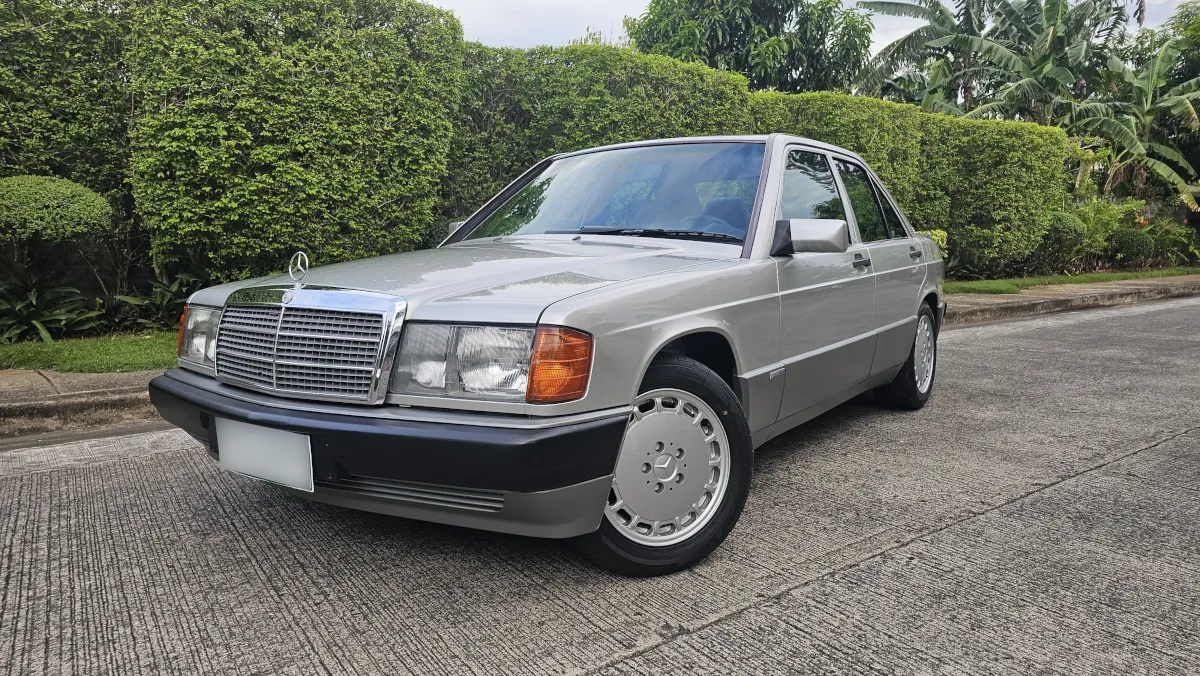
The Mercedes-Benz 190 is one of the most succesful and well-known Mercedes models of all time, with over 1.8 million cars built. Prior to launch, Mercedes predicted that 30% of 190s built would go to first time Mercedes buyers. In reality, it was closer to 50%, bringing close to 1 million new customers into the brand. Eventually, many of these first-time Mercedes owners would upgrade to other models within the brand.
Today’s fifth-generation W206 C-Class traces its roots back to the W201 190E. It’s a small car, but it represented everything that a Mercedes Benz-should be. It has stood the test of time with numerous examples still running today—much like the well preserved example we have here.
SPECS: 1990 Mercedes-Benz 190E 2.3 Sportline
Engine: 2,299cc four-cylinder SOHC with Bosch KE3-Jetronic mechanical fuel injection
Transmission: Five-speed manual transmission
Power: 136hp at 5,200 rpm
Torque: 205Nm at 3,500 rpm
Drivetrain: Front-engine, rear-wheel drive
Front suspension: MacPherson strut with lower control arms, coil springs, gas shocks, and stabilizer bar
Rear suspension: Five-link design, coil springs, gas shocks and stabilizer bar
Seating: 4
More photos of the 1990 Mercedes-Benz 190E 2.3 Sportline: