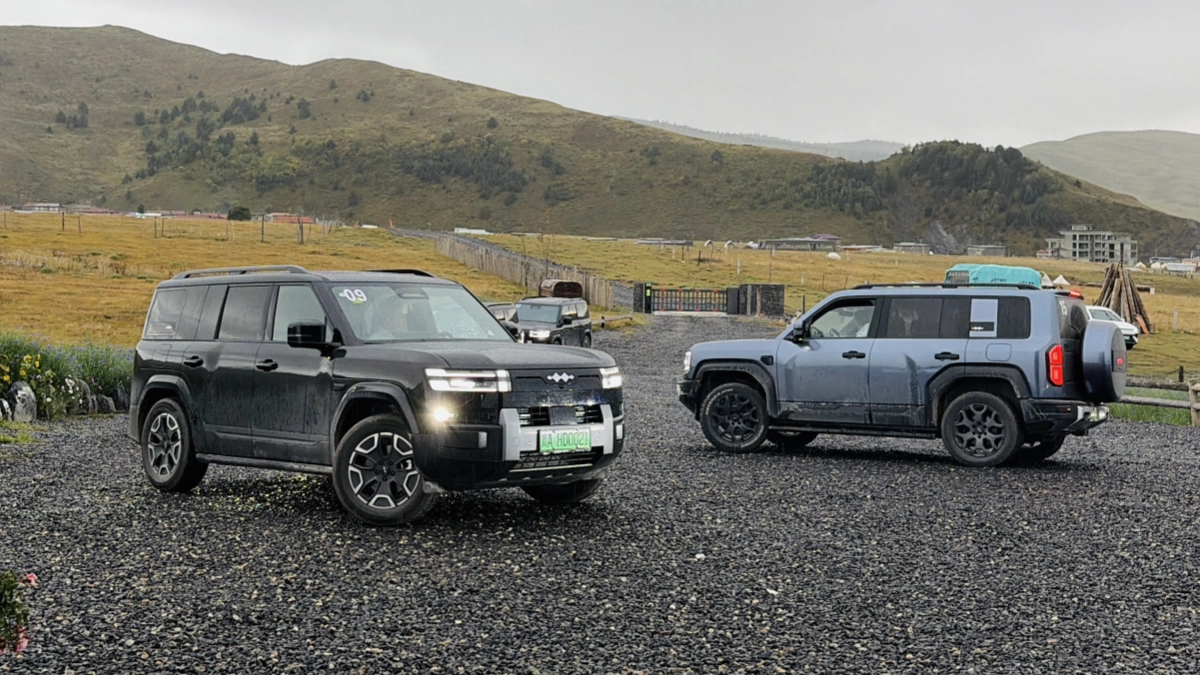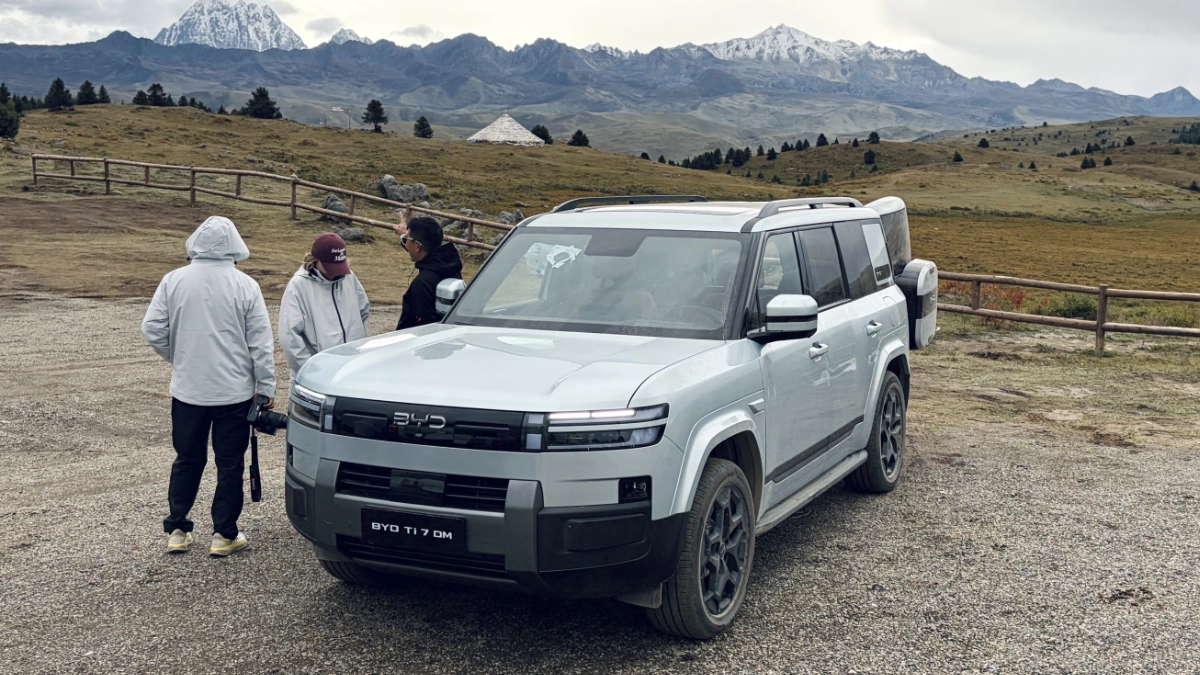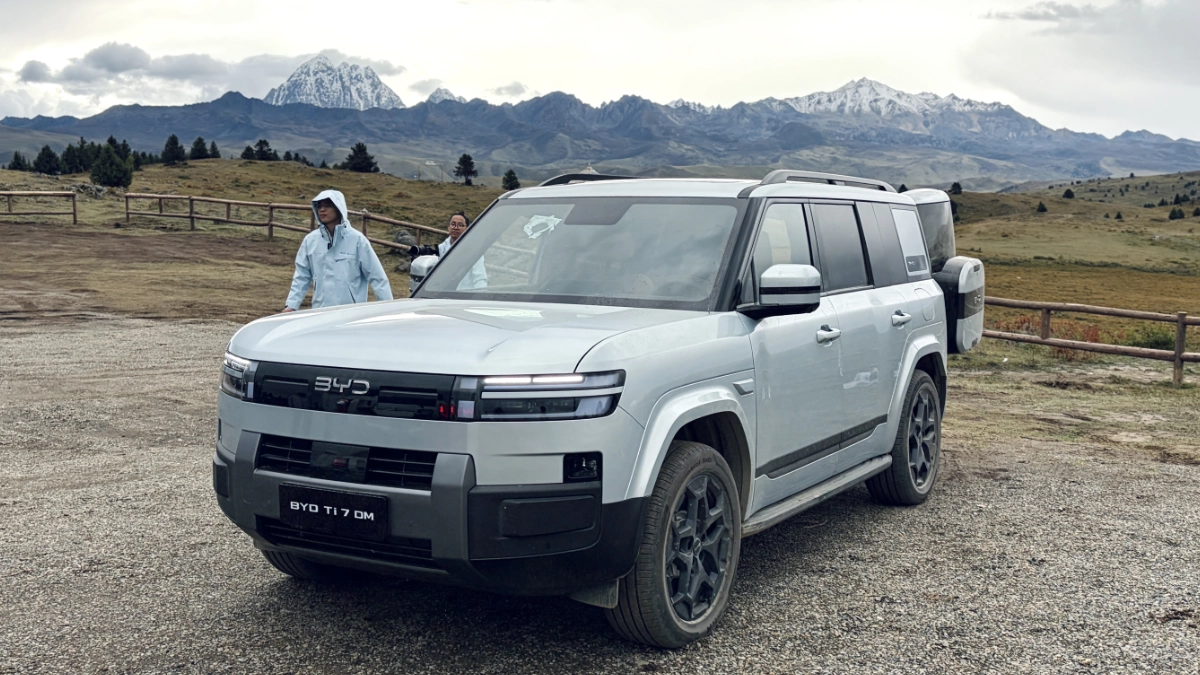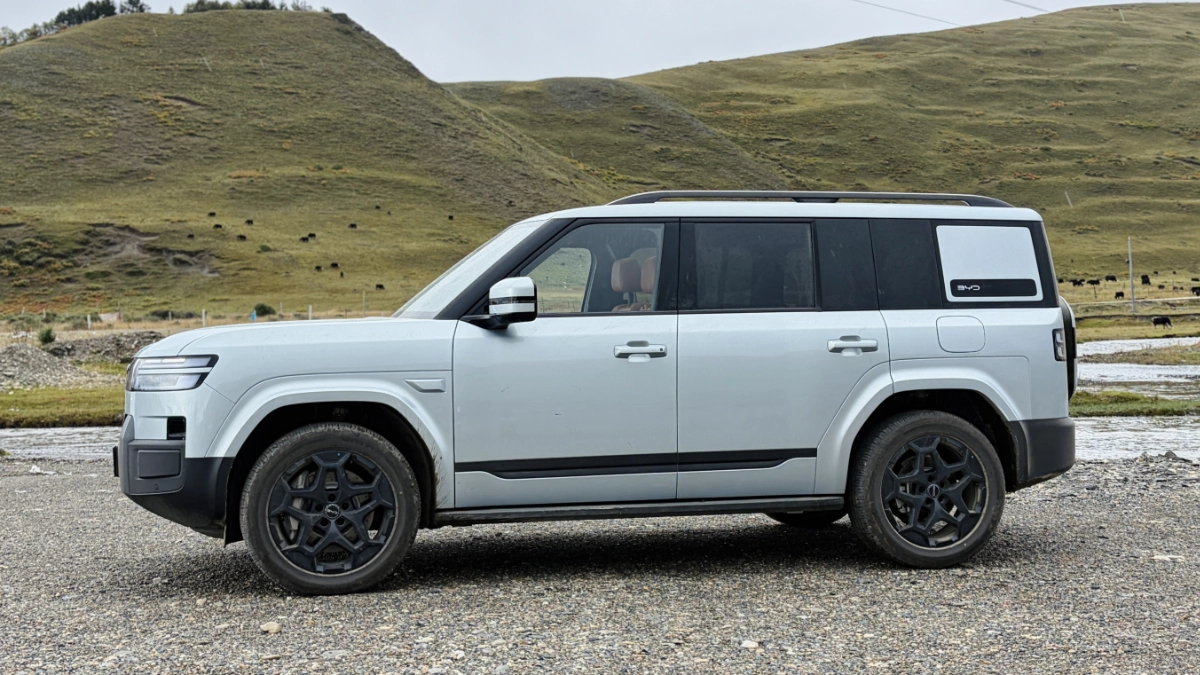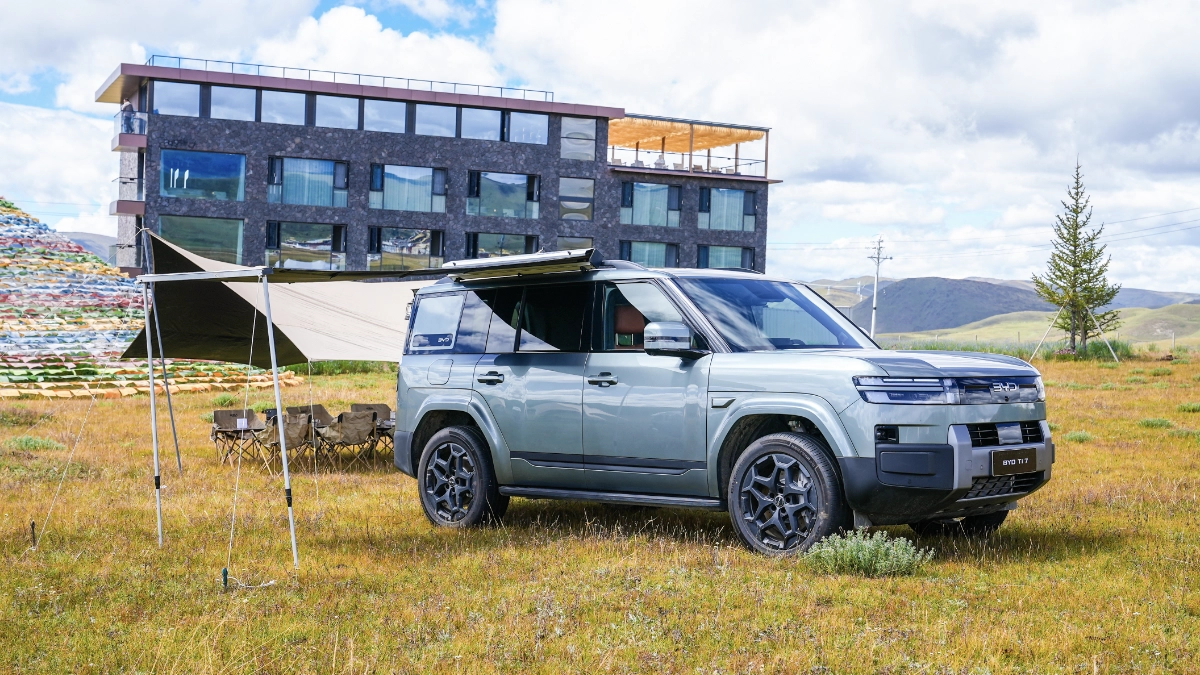
Is that... a Denza?
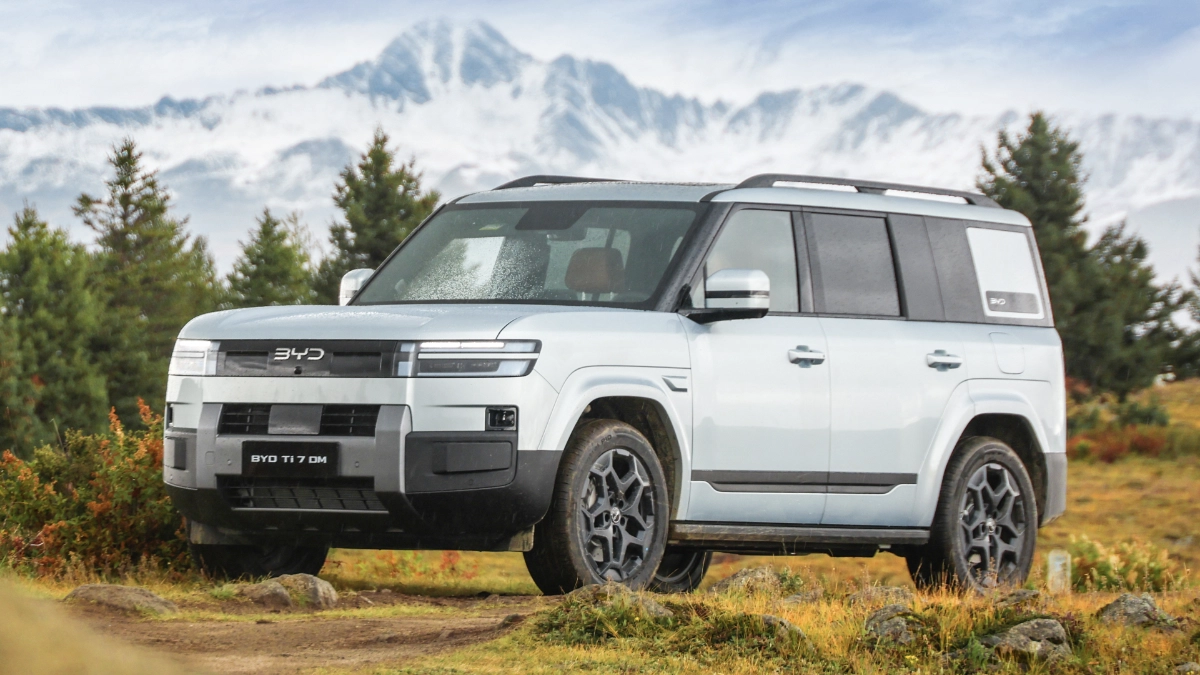
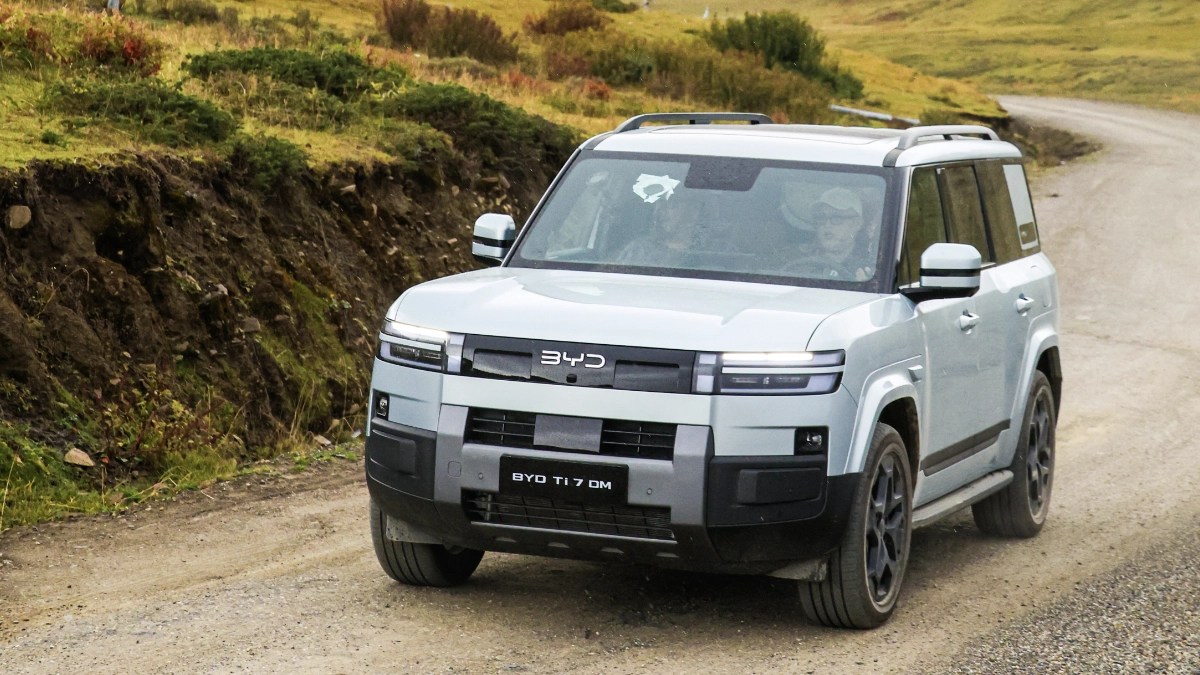
No, but we see the resemblance. This is the BYD Ti 7, and it’s sold in China under Fangchengbao, the same sub-brand that houses the Denza B5 and B8 in that market. The Ti 7 is set to arrive in the Philippines, and while it shares similar appearances with the B5 and B8, it will be considerably more affordable. That’s good news for us consumers.
Talk us through the design real quick
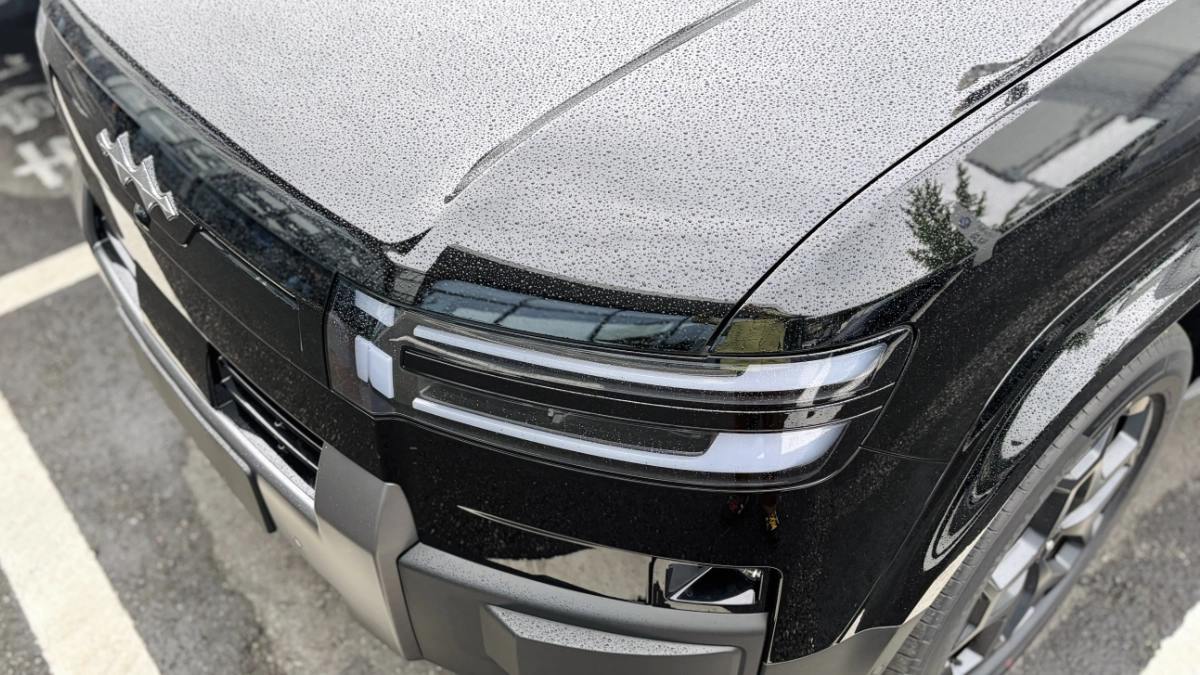
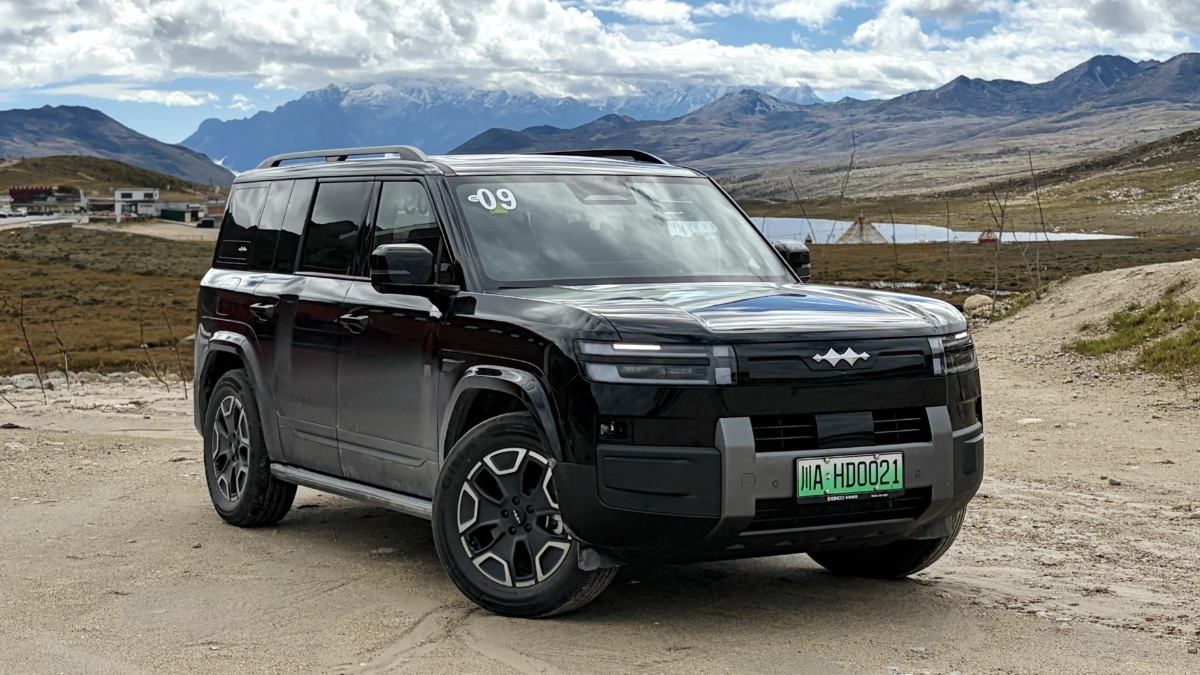
As mentioned, the Ti 7 shares the boxy, rugged design language found in the more premium B5 and B8. It’s a departure from the sleek designs we’ve seen from its future staplemates like the Sealion 6, Sealion 7, and Tang.
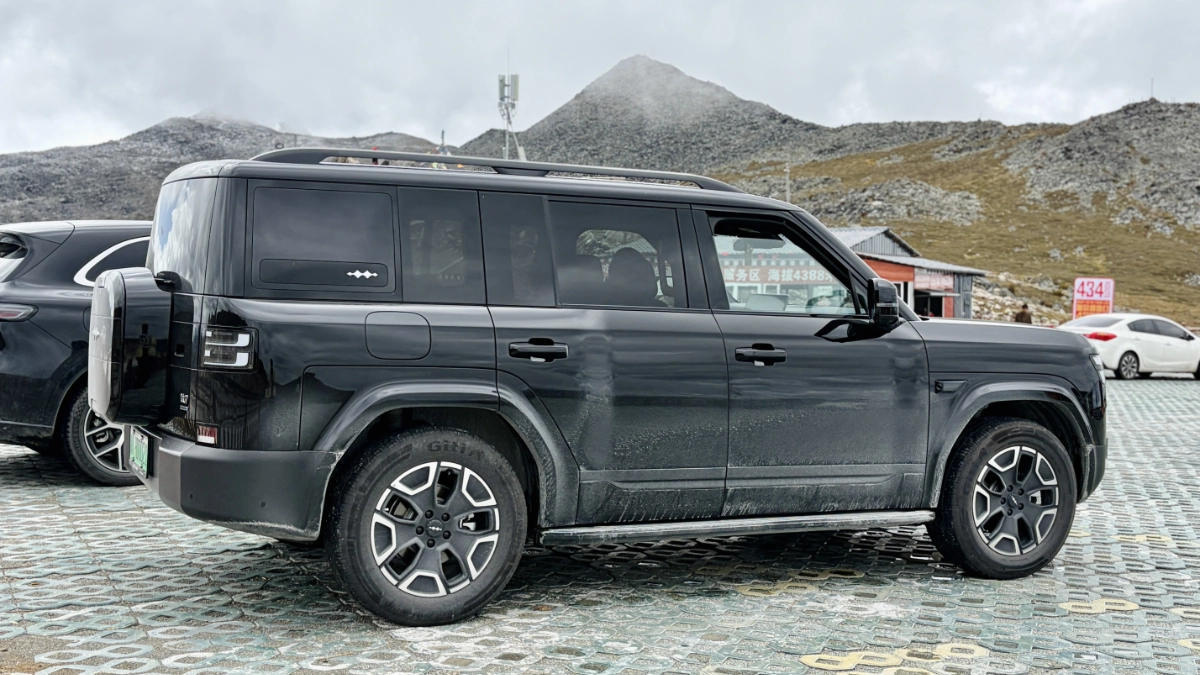
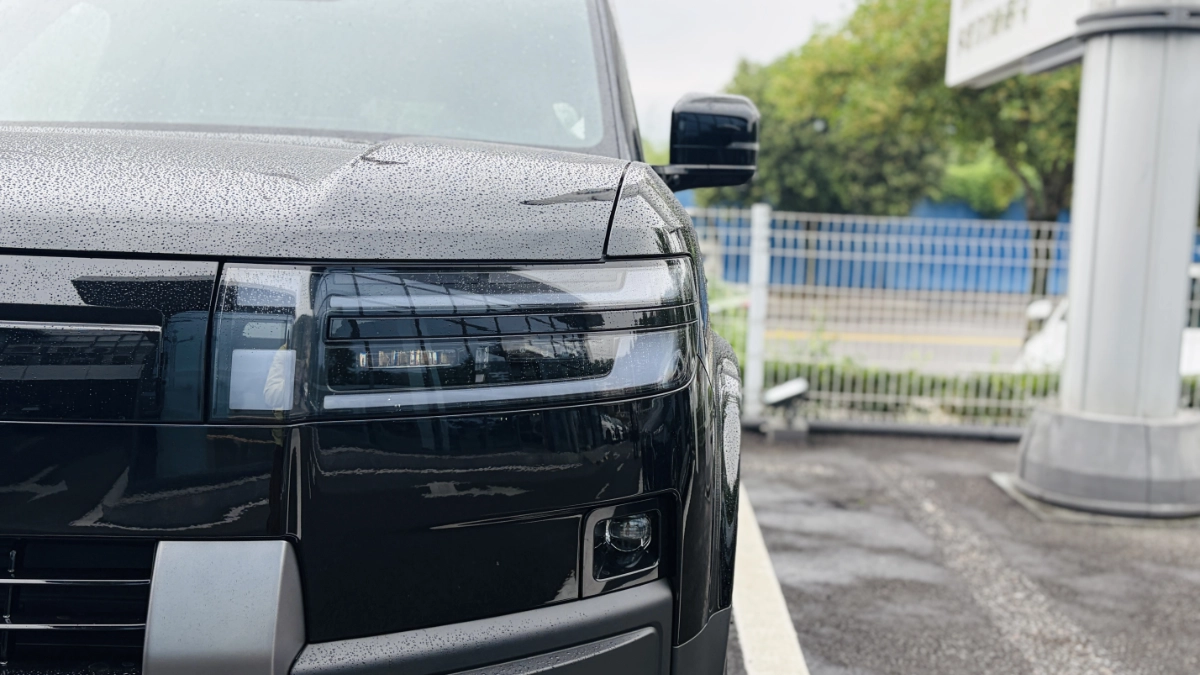
The front fascia features stacked horizontal headlights, an H-like pattern on the front bumper, and black accents on the grille. The overfenders widen the SUV’s stance, while the black trim on the cargo door between the small taillights crosses over the external storage box, creating a more planted, angular look.
ALSO READ:
Review: 2027 Toyota Urban Cruiser GLX BEV 2WD
Review: 2027 Kia Sportage Turbo Hybrid SX
So, it’s an off-road SUV, right?
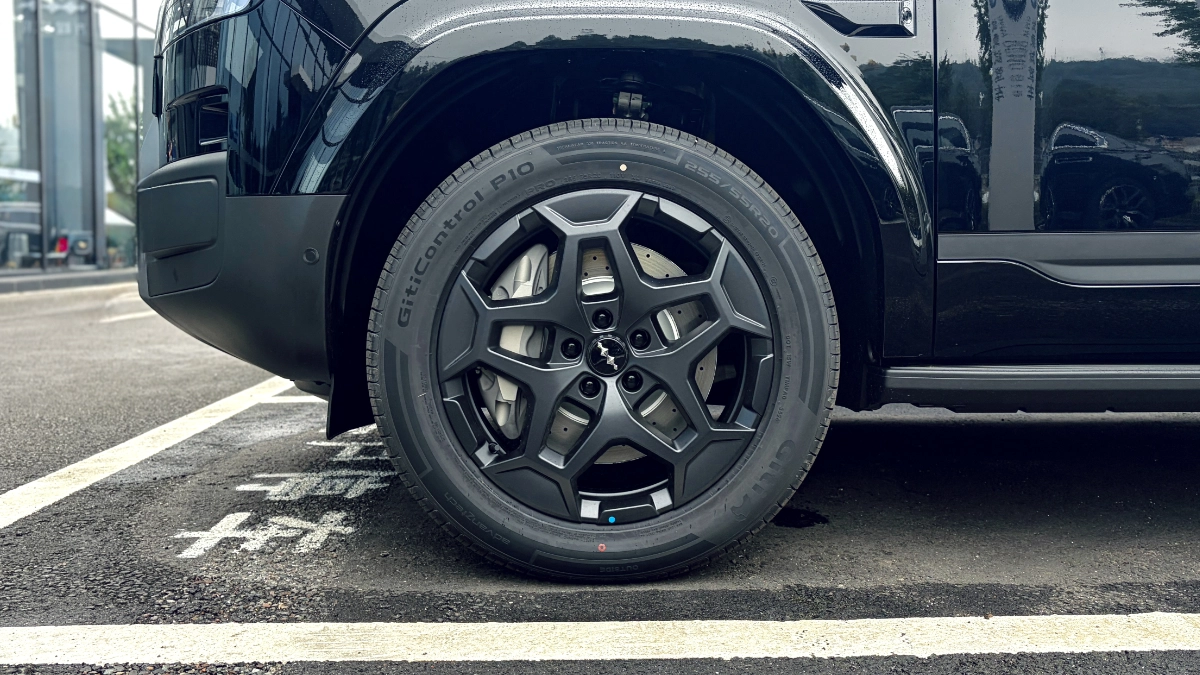
Not quite. BYD says that the Ti 7 is more of a city SUV rather than a pure off-roader. Despite its rugged appearance, it doesn’t use a body-on-frame architecture like the B5 and B8, and instead has a unibody construction. That said, the one we drove in China came equipped with AWD and was more than eager to take on the dirt.
What was it like to drive?
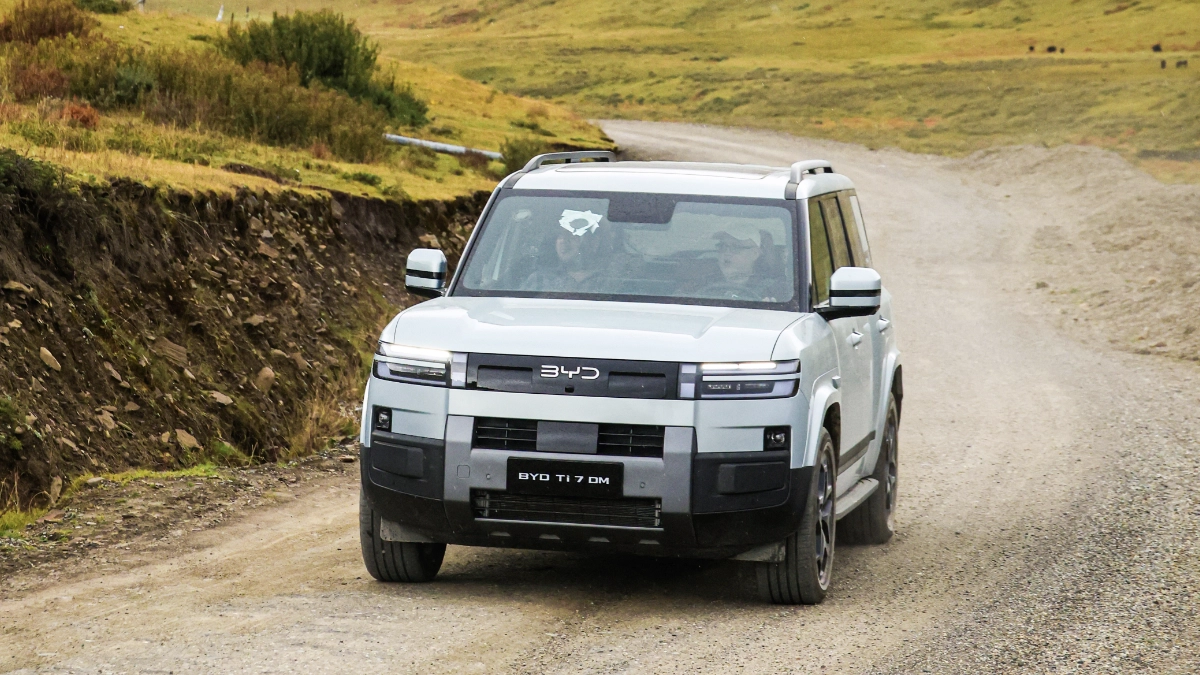
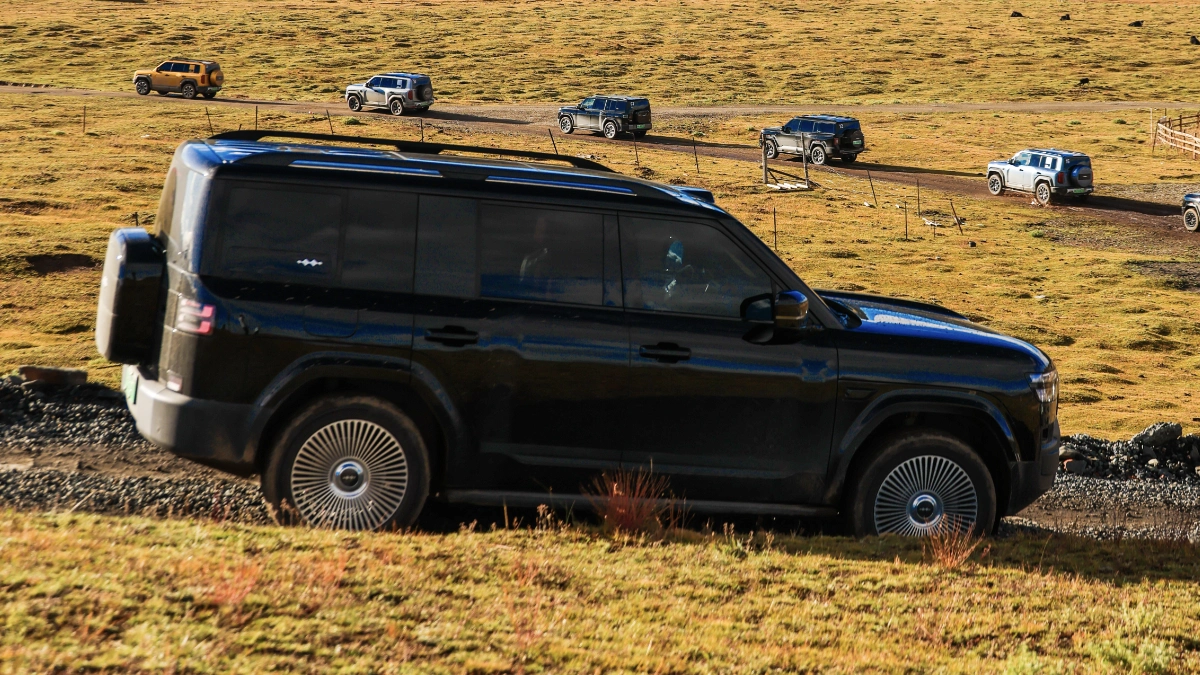
To answer this, let’s first set the scene for where we tested it. I got to drive the Ti 7 on fast sections of gravel road—no regular asphalt, no technical off-road terrain, just rally-esque pathways within the Tagong Grasslands of Sichuan province. While I didn’t get to test its capabilities (or “lack” thereof) in rock crawling, I felt at home flooring it through the dirt track. Dare I say, it gave the much more expensive B8—which we tested on the same route—a run for its money.
Yes, the B8 could probably smoke the Ti 7 anywhere else, but what made the latter surprisingly good on the test track was its suspension. The Ti 7 features BYD’s DiSus-C suspension system, which uses intelligent damping control. The system continuously adjusts damping forces while driving using electronically controlled dampers with solenoid valves. The result is less body roll during corners, less brake dive in hard deceleration, and improved shock absorption on dirt roads. Though less advanced than the B8’s DiSus-P system, it felt more consistent in absorbing bumps and ruts on the track.
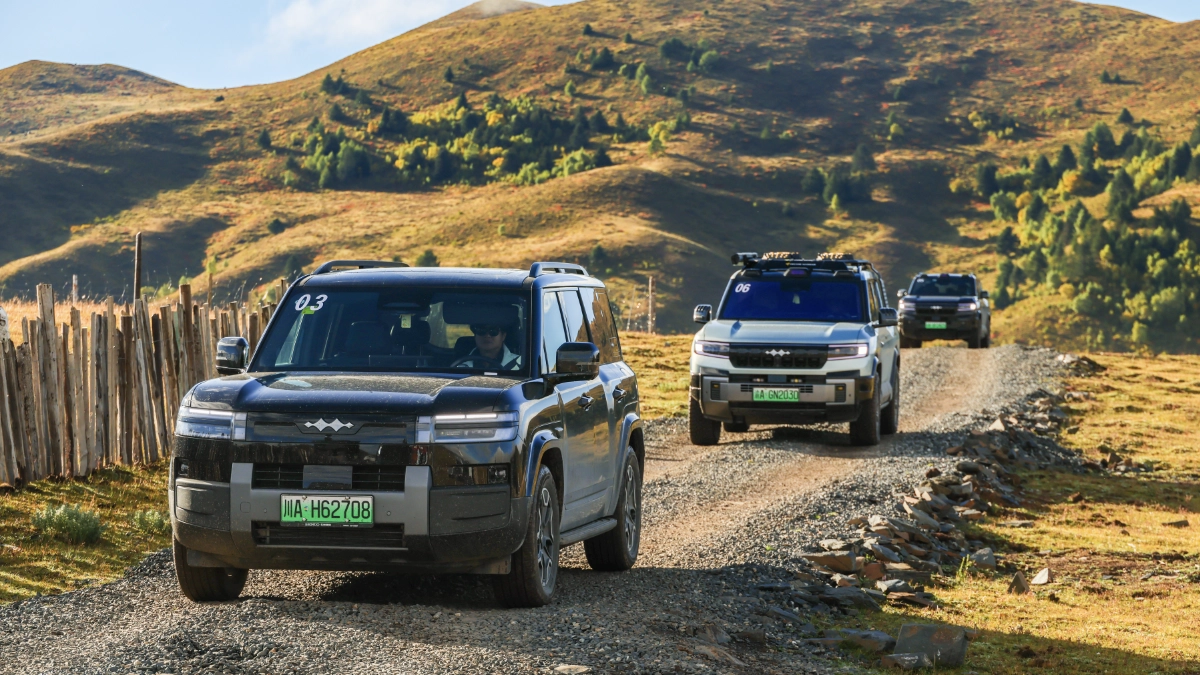
On top of that, it also has a DM-p plug-in hybrid platform (dual-mode powerful) with a 1.5-liter turbocharged gasoline engine paired with two electric motors. The system produces a combined 483hp and 620Nm of torque, and as expected from an electrified SUV with this much power, the acceleration is almost instant. And for those curious about how far a full battery and tank of gas gets you, BYD lists this SUV with 735km of combined range.
So, you didn’t get to try it on the road at all?
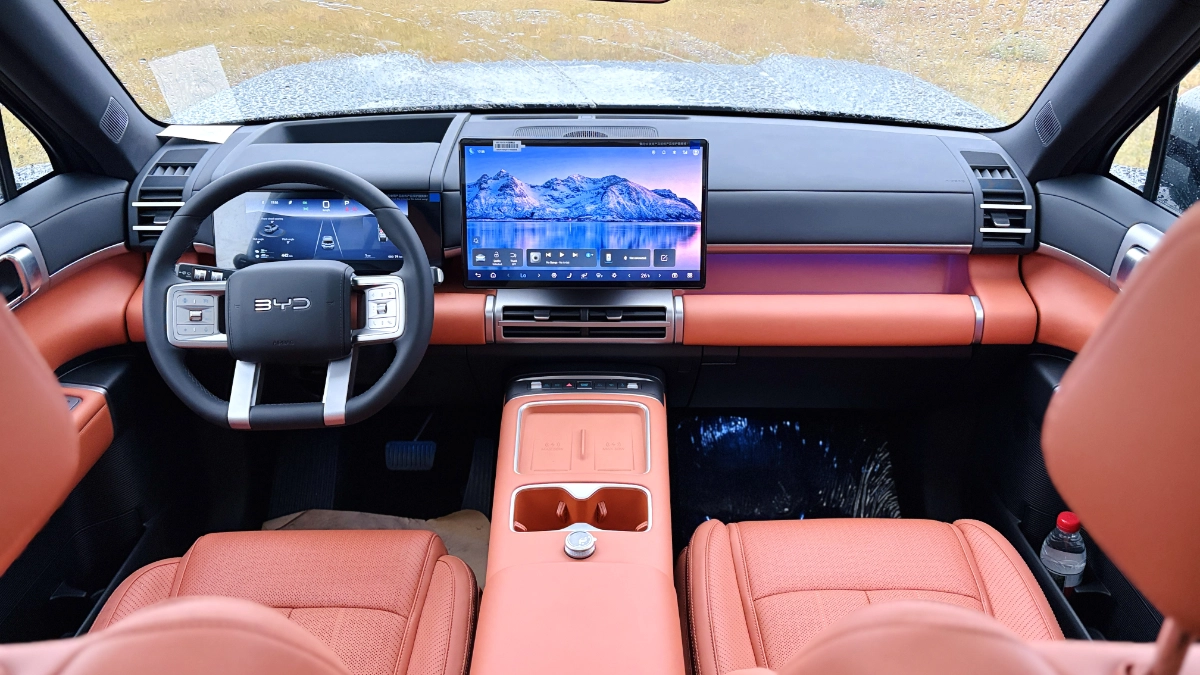
I did, but only as a passenger. I spent around 350km riding shotgun from Qing Cheng to Tagong. Compared with the B5, which I rode the day before, the Ti 7 was more comfortable on asphalt. However, I’d still have to give overall on-road comfort to the B8 if we’re comparing all three.
There’s a large 15.6-inch touchscreen with Apple CarPlay and Android Auto. There aren’t as many physical switches and buttons in the center console compared to the B5 and B8 (aw), with two 50W wireless charging pads taking their place instead (yay). The seats are relatively comfortable and upholstered in leather, while the places you would normally rest your arms on a long ride are nicely padded.
The variant we rode in had a five-seat configuration, but BYD told us that other markets have a seven-seater, with those being the potential entry of the model in the Philippine market.
Overall thoughts thus far?
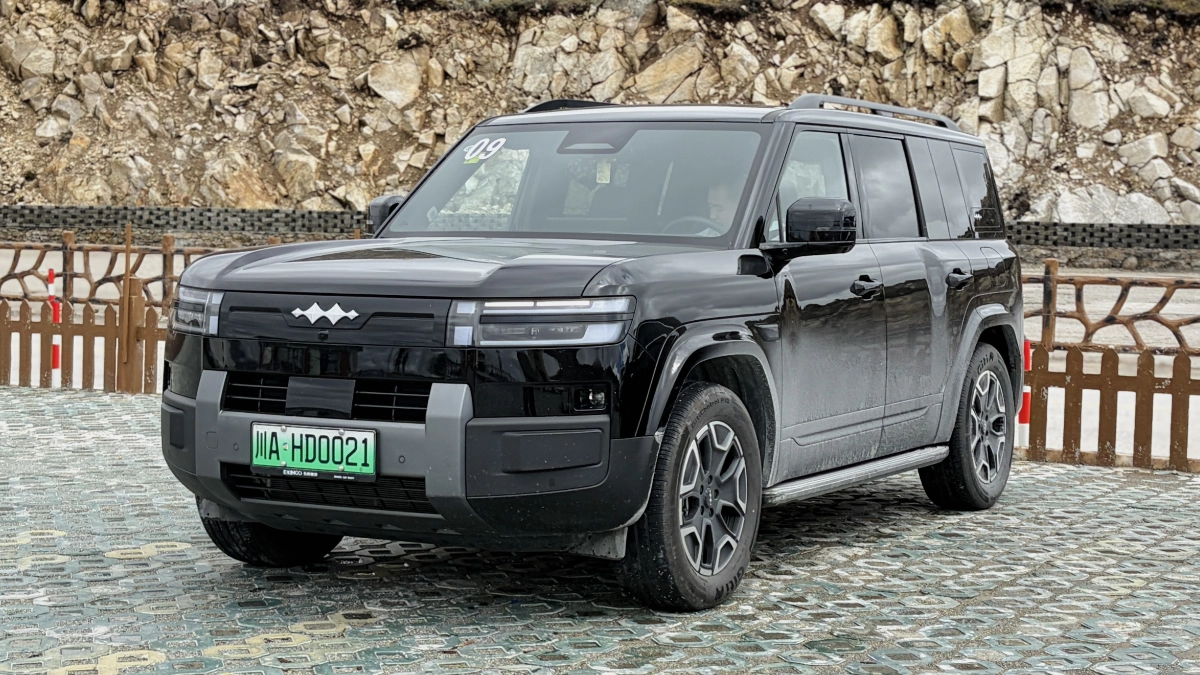
The Ti 7 is an interesting future contender in our country’s electrified SUV segment. It’s a family-focused vehicle that prioritizes comfort over off-road ruggedness, but also has the macho boxy design that a lot of Filipino motorists like. If you ask me, whether or not this will be a hit will depend on the pricing.
The top-of-the-line AWD variant costs CNY219,800 (P2,046,996) in China. As expected, there will be a markup when it reaches our shores. But if BYD can keep the price below P2.4 million, I’d say it’s worth looking into. And of course, let’s not forget about the 2WD variant that received homologation from the Department of Energy. If they can price that one under P2 million, the Jetour T1 may have something to worry about.
More photos of the BYD Ti 7: