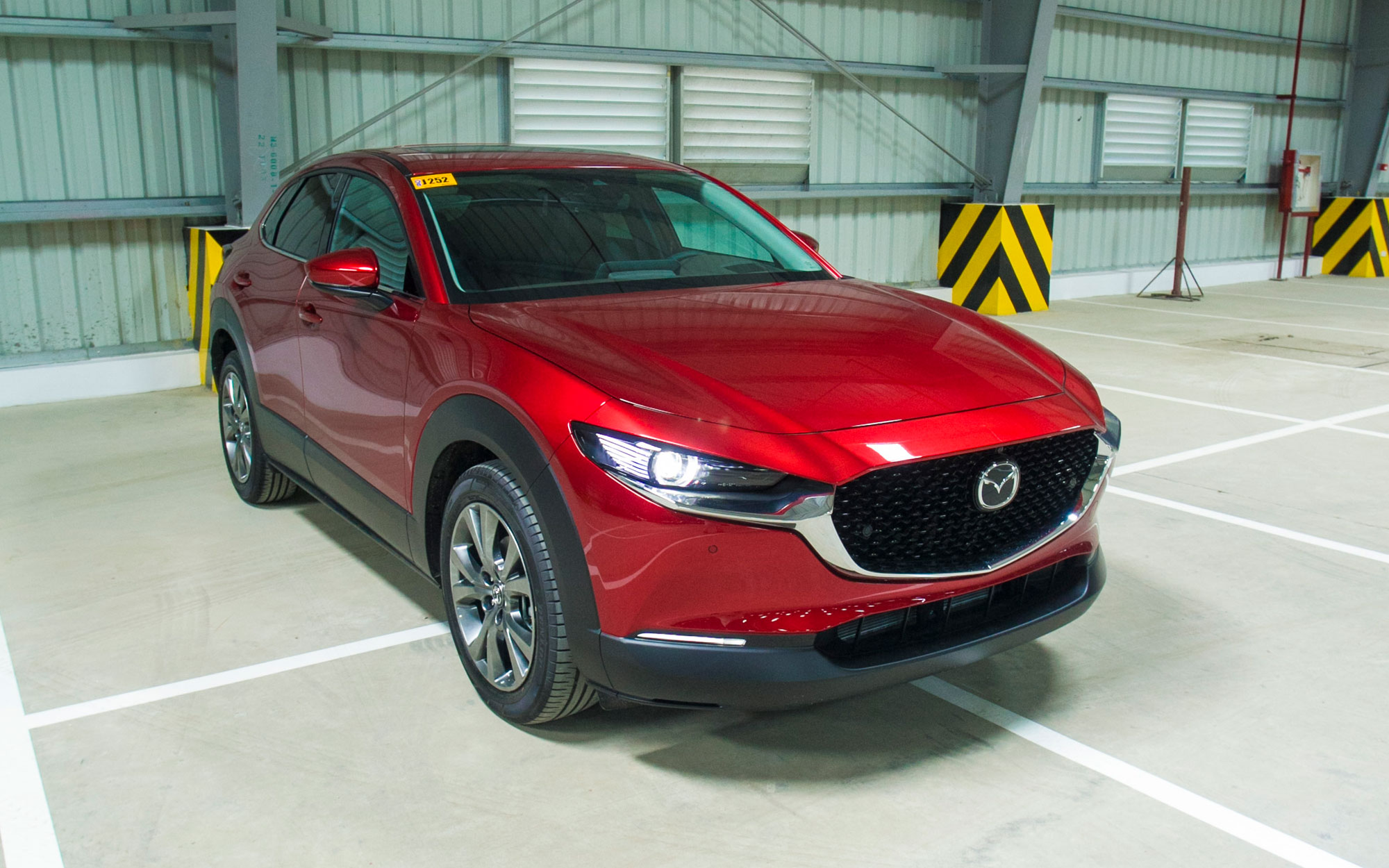
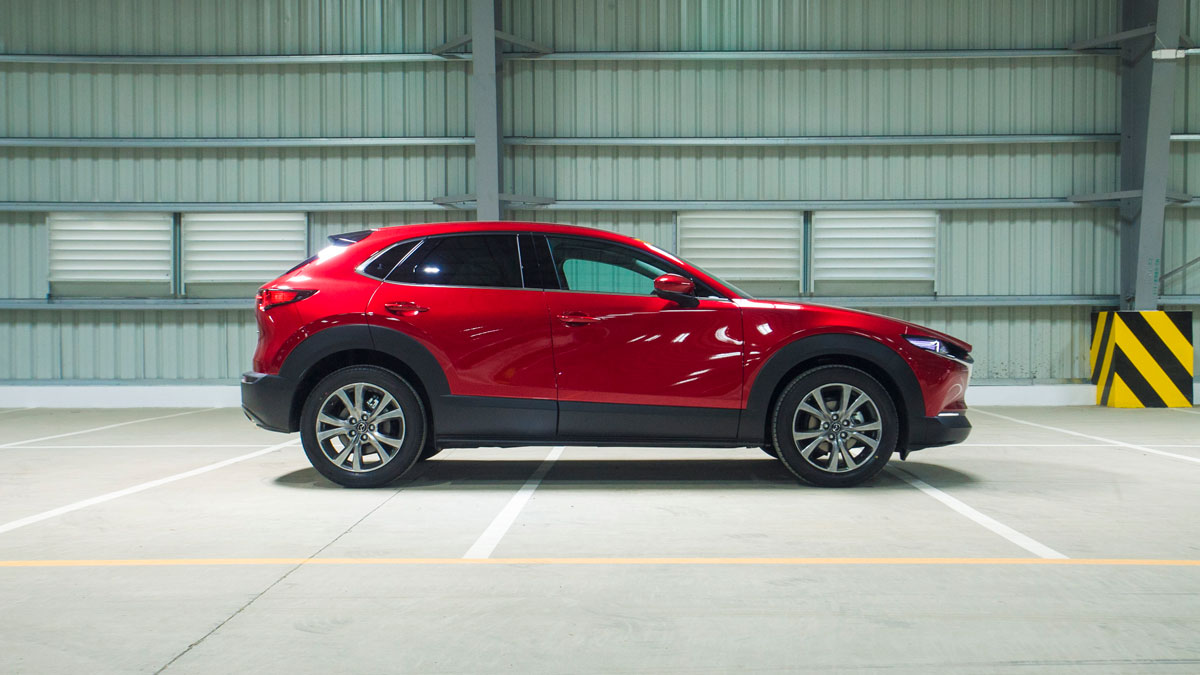
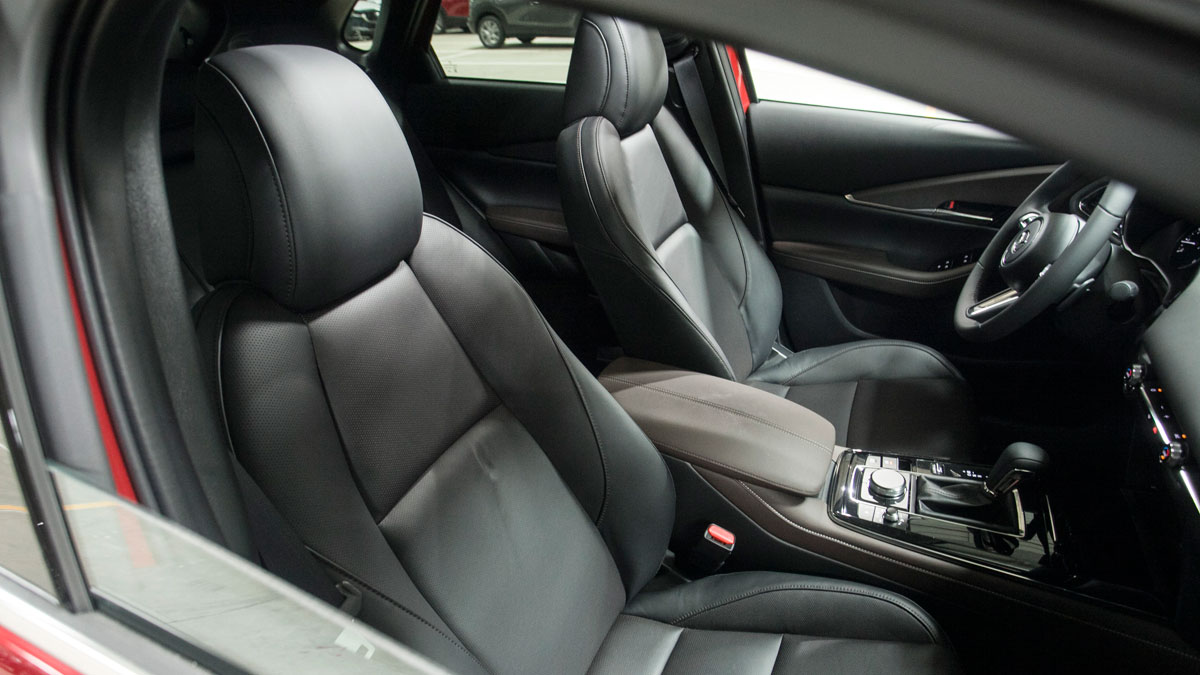
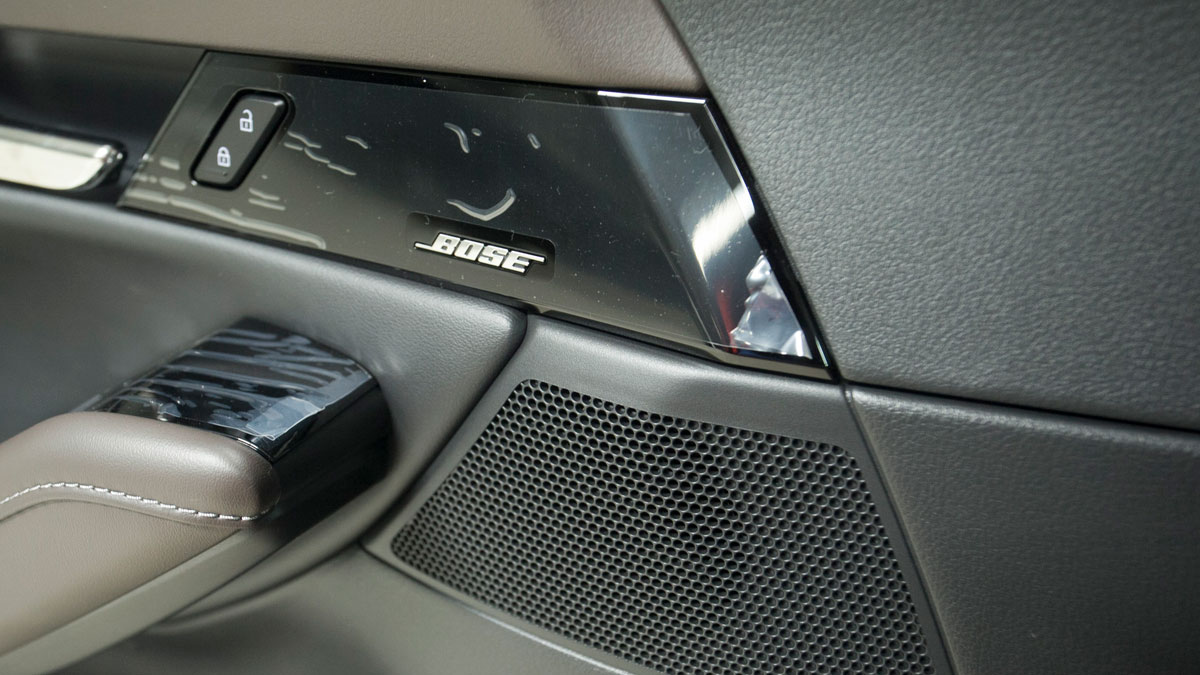
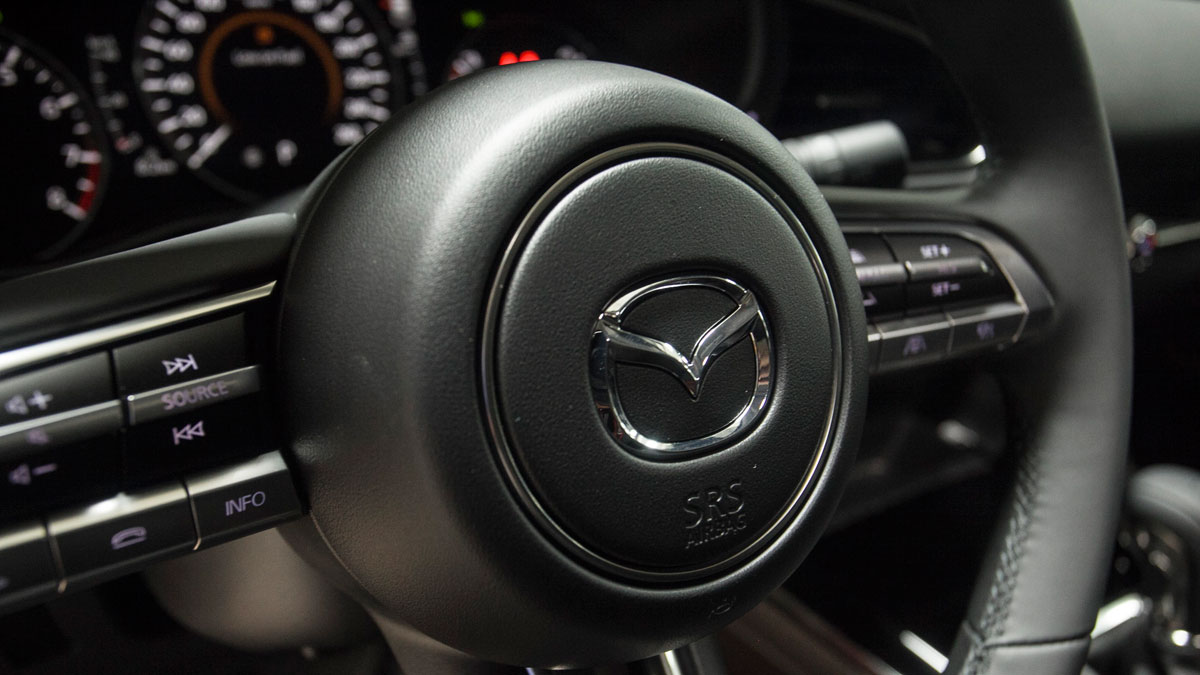
Slip in to the driver’s seat and the dark leather bolsters support you in all the places you want to be supported. Adjust the telescopic steering wheel and lean back into a comfortable position, and you can almost pretend that you’re in a sports car. The padded center console props up your elbow into the perfect position for long relaxed drives, or to flick the gearshift in ‘manual’ mode.
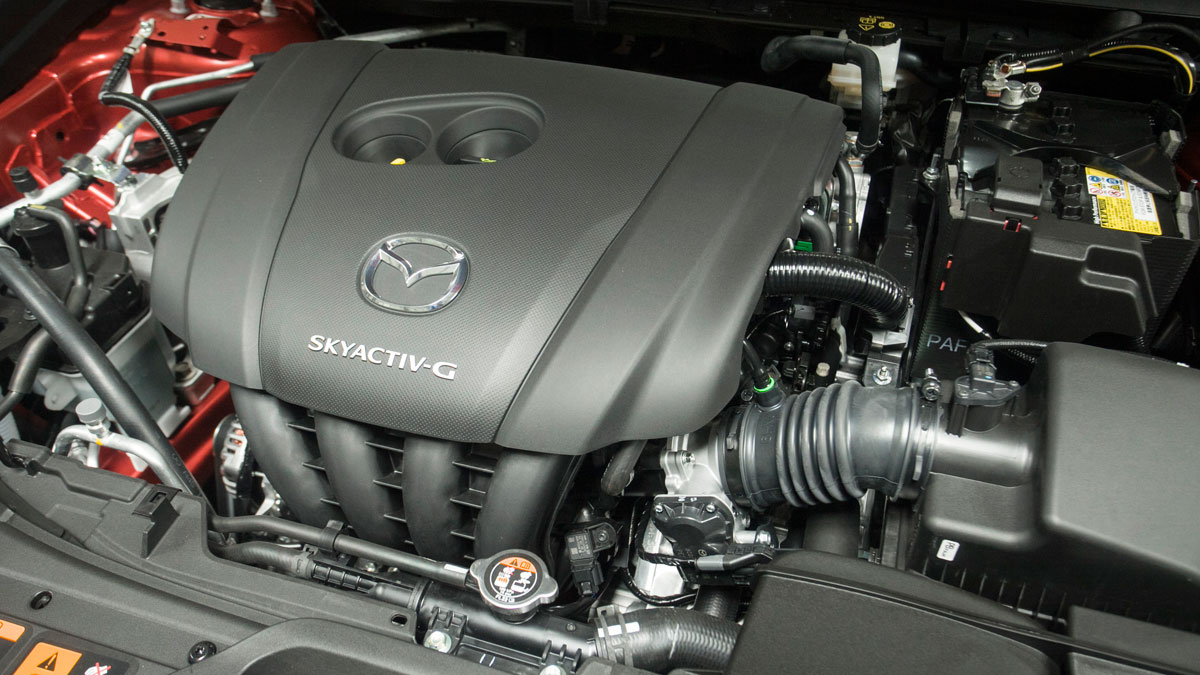
Okay, it’s not quite a substitute for an actual manual transmission, but slim paddles behind the steering wheel (available on all but the entry-level Pro variant) do the job nearly as well. Mazda has always been great at programming automatic transmissions, and here, the six-speed auto does not disappoint. It’s docile in Normal mode or when tootling along, but responsive to manual shifts and prods of the ever-reliable ‘overtake button’ underneath the floor-hinged gas pedal. While Mazda’s auto still holds higher revs than most on downshifts, it seems programmed for smoother clutch lockups than before. And throttle tip-in and response is second to none. Few engines love to rev as much as Mazda’s high-compression Skyactiv engines.
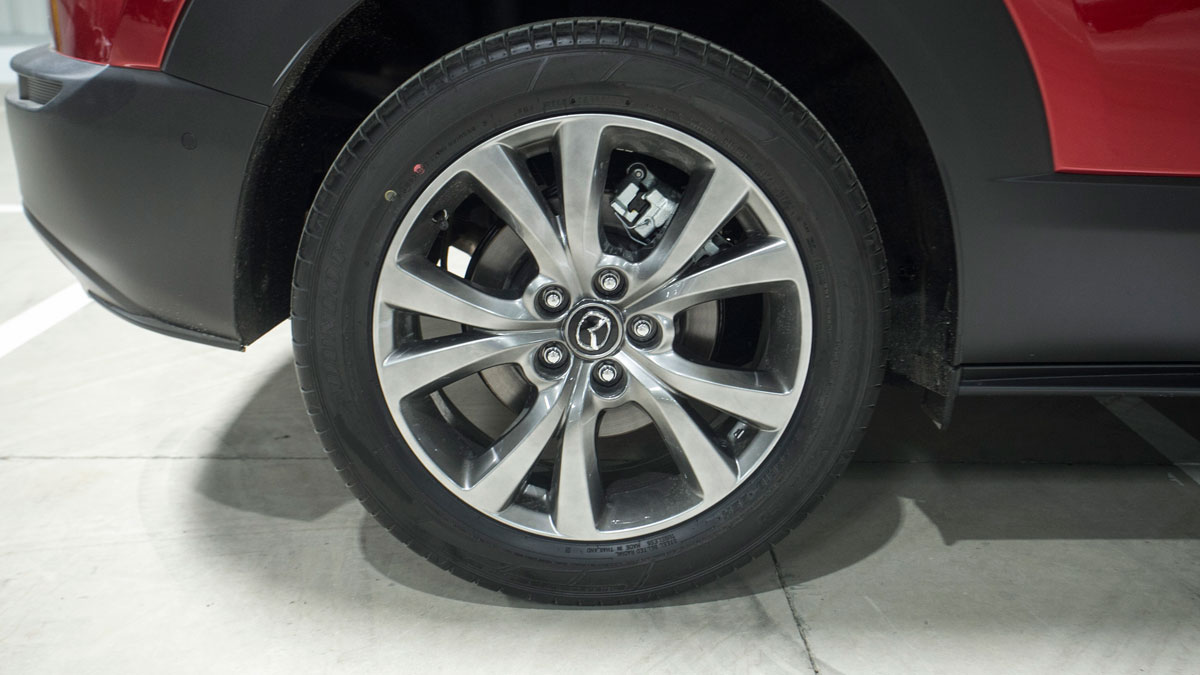
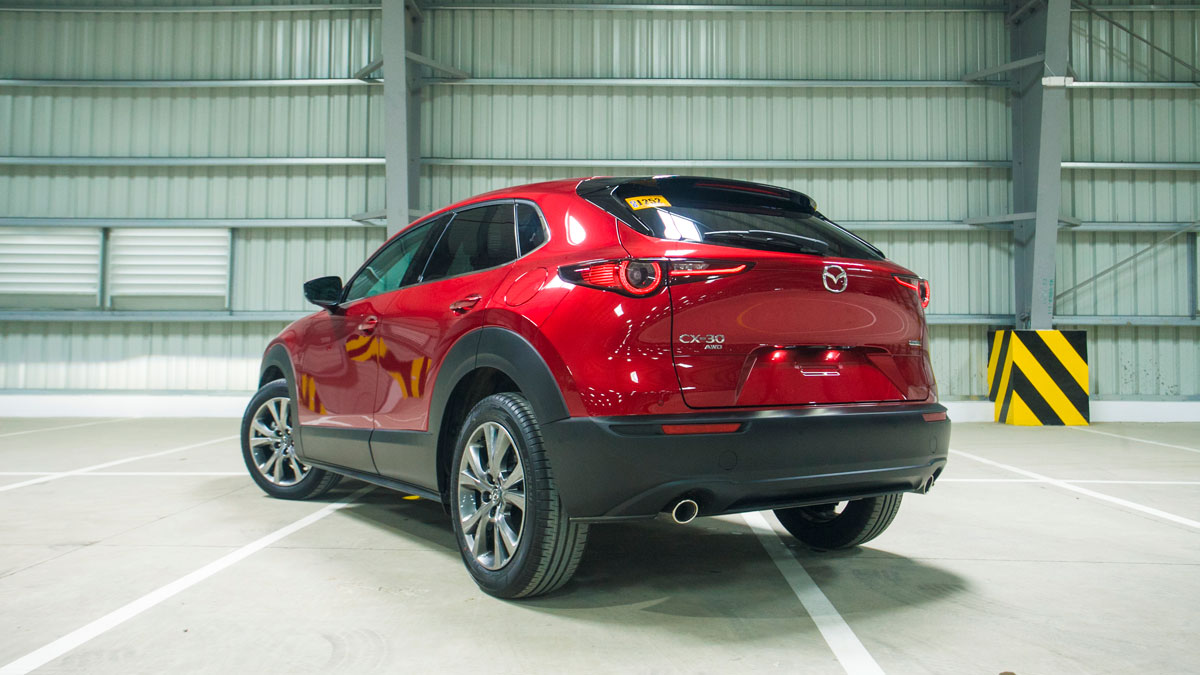
You’ll appreciate the extra gusto of this 153hp, 200Nm 2.0-liter engine over the 148hp variant in the CX-3. The AWD Sport variant, however, is noticeably affected by its 1,479kg curb weight. And the steering feels more deliberate thanks to that weight and the wide (but sticky!) 215/55 R18 Dunlop Sport Maxx tires. It’s quite grippy and sharp, but you never forget that extra weight. The 2WD Pro, on the other hand, is just 50kg more than the equivalent Mazda 3, and with the smaller footprint of the 215/65 R16 BluEarth-GT tires, has a more delicate touch at the wheel. It’s reminiscent of the first-generation CX-5 FWD Pro released back in 2012. Invigoratingly playful without feeling harsh.
But Mazda has learned a few things since then. The CX-30 incorporates sound insulation and refinement to rival the new CX-5. A revised suspension geometry and new spherical-cored bushings give linear suspension response, allowing the CX-30 to squat rather than dive under heavy braking. The rear torsion beam suspension flares out into stamped end-pieces, unlike the straight channel beams on most cars. This wider cross-section better locates the rear wheels to minimize compliance steer, which causes the rear wheels to toe (or point) sideways under heavy cornering loads, causing unwanted oversteer or understeer.
Granted, a multilink rear suspension is theoretically superior, but off the top of my head, I can’t name a single competitor that drives as well as the CX-30, anyway. And that torsion beam features far fewer moving parts than a multilink. Which makes the car quieter and more refined. Something you’ll appreciate after several years, when the bushings and end links on more sophisticated sports suspensions usually start squeaking and creaking.