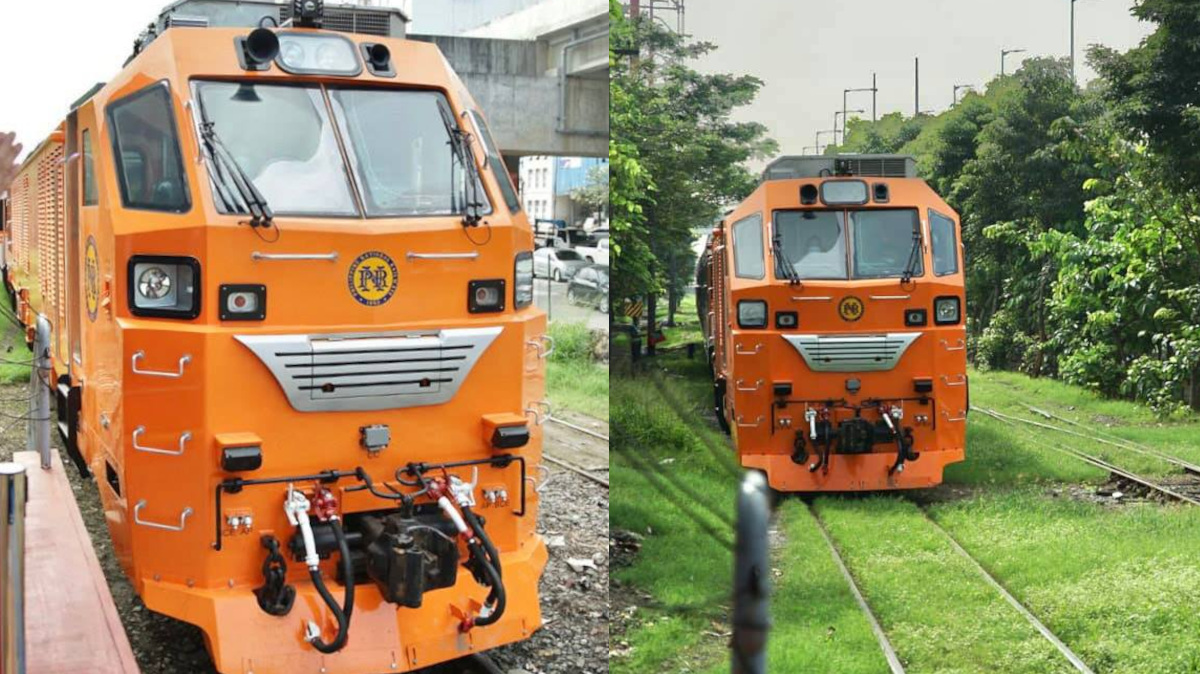
Looking for a new way to travel around the Bicol region this year? The old train route connecting Naga City in Camarines Sur to Legazpi City in Albay officially resumed operations last December 27, 2023, giving Bicolanos more affordable transportation options.
After a six-year hiatus, the Philippine National Railways (PNR) revived the 101-kilometer Naga-Legazpi-Naga route right before the New Year, with the promise to offer safe, comfortable, and budget-friendly rides to the commuting public.
The new route comes a few months after the Naga City to Ligao route was relaunched. The train currently has two daily trips from Naga City in Camarines Sur to Legazpi City in Albay and back in the mornings and afternoons, with 15 stations in between the two localities. Travel time is over 3 hours one-way, while the fare ranges from P15 to P155 depending on the stop.
Here’s all you need to know about the Naga-Legazpi-Naga commuter train line.
ALSO READ:
Guide: How to avoid getting scammed by airport taxis
Transport guide: One Ayala’s routes, schedules, fares, and more
What types of trains does the PNR use?
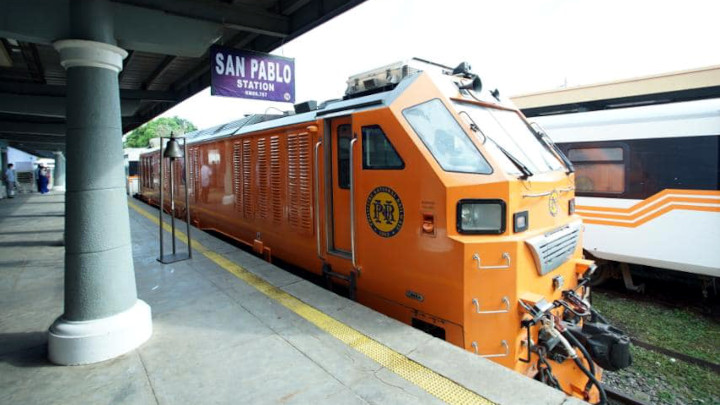
The Naga-Legazpi route was suspended back in April 2017 due to a lack of locomotive engines and train coaches. According to the Department of Transportation (DOTr), PNR is now making use of modern and upgraded Diesel Multiple Unit (DMU) rail cars and Diesel Hydraulic Locomotive (DHL) from Indonesia along different lines.
As of August 2023, the DHL 9002 and the three-car PC 8302 were being used for the Naga-Ligao, while DHL 9003 and PC 8303 were being used as the Bicol Commuter Train for the Naga-Sipocot line.
The PNR 9000 class locomotives DHL trains, which are painted orange, feature the Philippine National Railways logo at the side of cab doors and front cabs and the Department of Transportation in the middle.

Meanwhile, the PNR 8300 class, also referred to as INKA coaches sport a livery of white as the body color, with black in its windows and orange stripes. All the coaches are air-conditioned and have modern interiors.
What’s the Bicol PNR schedule?
Effective December 27, 2023, there will be two trips from Naga City, Camarines Sur to Legazpi City in Albay per day, and two daily trips as well from Legazpi to Naga. Each train can accommodate about 250 passengers.
Naga-Legazpi
- Departure: 5:38am / Arrival: 8:42pm
- Departure: 5:30pm / Arrival: 8:34pm
Legazpi-Naga
- Departure: 5:45am / Arrival: 8:49am
- Departure: 5:47pm / Arrival: 8:51pm
Train schedules may change without prior notice due to various factors. From Monday to Sunday, the PNR releases the schedule of trains on their official social media accounts:
- Facebook: https://www.facebook.com/officialpnrpage
- Twitter / X: https://twitter.com/PNR_GovPH
PNR announces the morning schedule at 10pm the previous day and announces the afternoon and evening schedules at 11am on the day itself. Passengers are advised to check the schedules daily in case of any changes/delays to the regular departures.
Where are the PNR train stations and stopovers located?
Three new stations were introduced along the train route, namely Travesia, Daraga, and Legazpi. The PNR also makes stops at existing PNR stations located in Naga, Pili, Iriga, Polangui, and Ligao, along with eight other flag stops at Baao, Lourdes, Bato, Matacon, Oas, Bagtang, Washington Drive, and Capantawan. Here are all the stops in order:
- Naga City
- Pili
- Baao
- Iriga
- Lourdes
- Bato
- Matacon
- Polangui
- Oas
- Ligao
- Travesia
- Daraga
- Bagtang
- Washington Drive
- Capantawan
- Legazpi
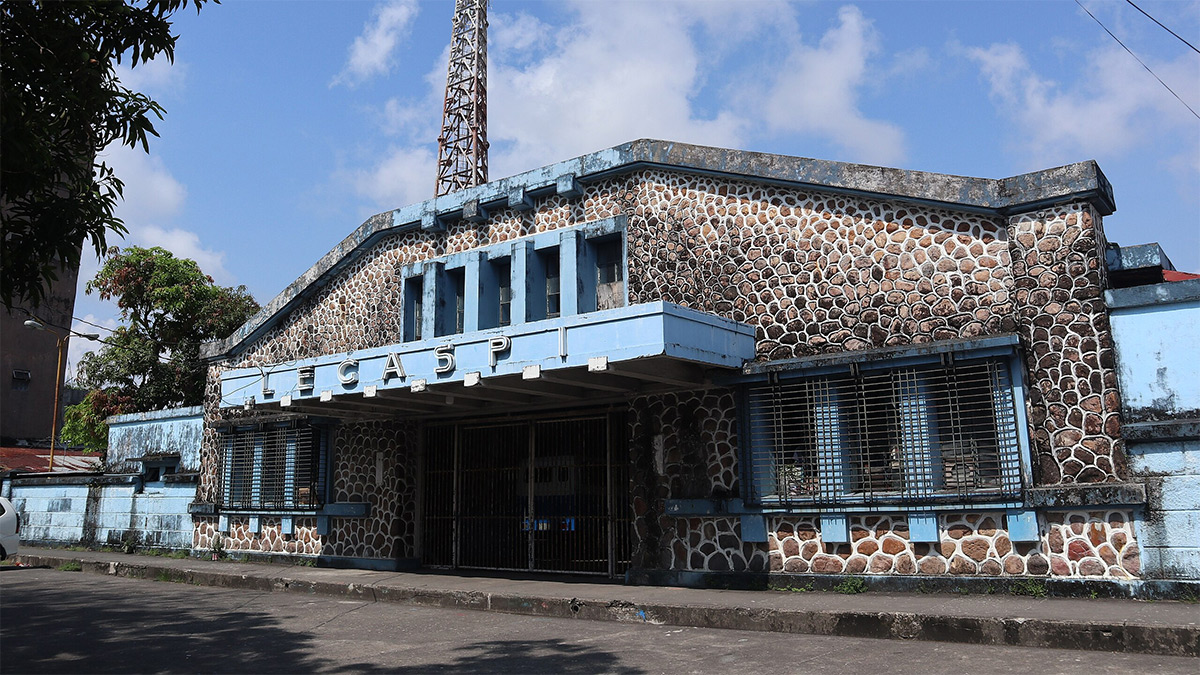
Fun fact: Did you know that a National Artist designed the PNR Legazpi Station? The pebbled art deco train station of Legazpi City, Albay was designed by Pablo Sebero Antonio Sr. (1901-1975), regarded as the Father of Philippine Modern Architecture and the 1976 National Artist Awardee for Architecture.
The Legazpi Station is currently the southernmost major terminus of PNR. It is also the only major train station building in the Philippines made of volcanic rocks and river stones. The Manila-Legaspi route was officially inaugurated by Pres. Manuel L. Quezon on May 8, 1938, so the station has been standing for 85 years.
How long is the travel time from Naga?
On average, a one-way trip from Naga to Legazpi and vice versa will take about three hours and four minutes. Meanwhile, traveling from Naga to Sipocot on the other end of the line takes 45 minutes.
How much do rides cost?
The minimum fare is P15 for the shortest leg, while it costs P155 per person for end-to-end travel from Naga to Legazpi. Below is the regular fare from Naga to Legazpi from Naga only. The full list of the fares coming from different stations can be viewed here.
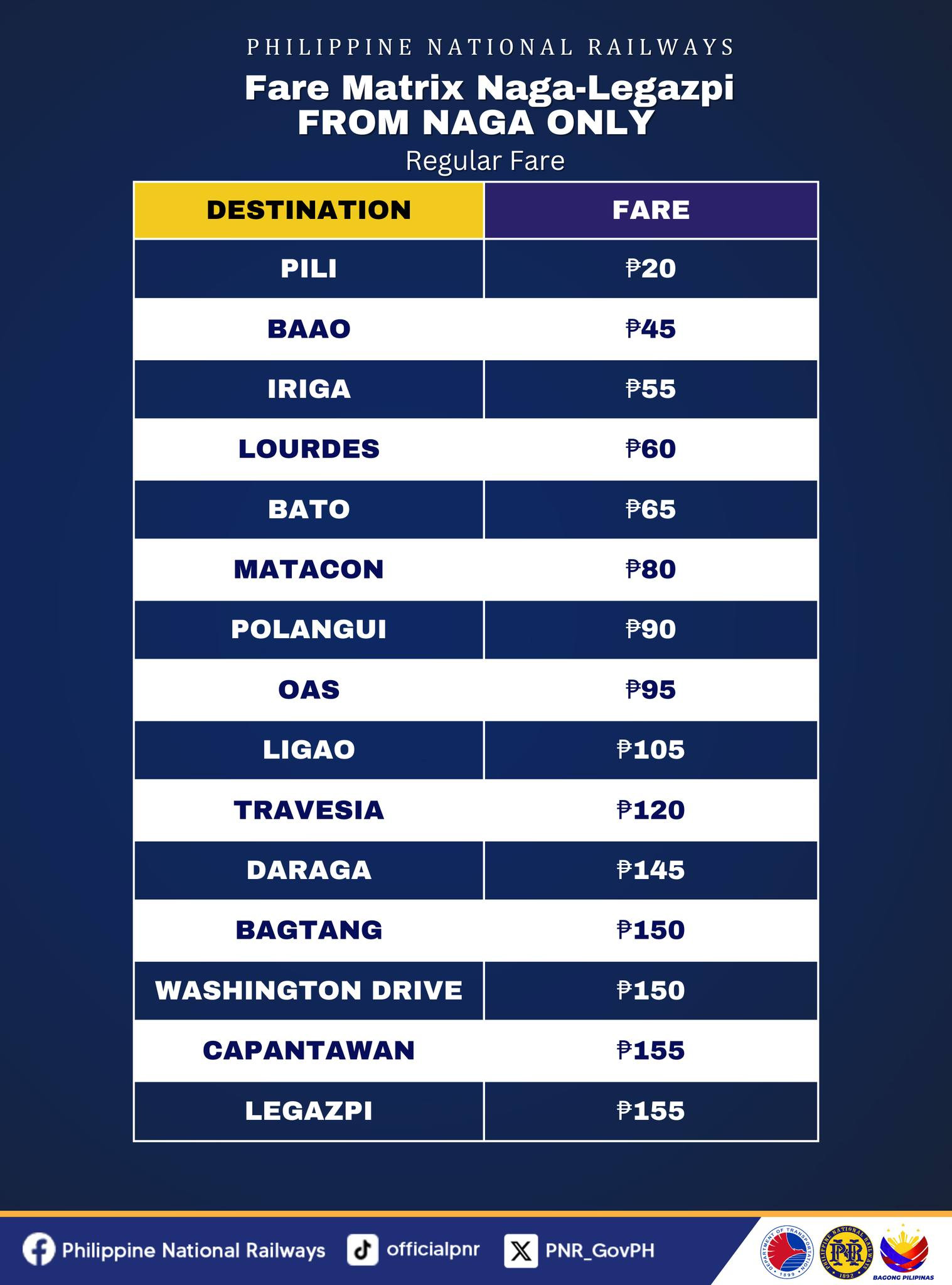
PNR honors the 20% discount for senior citizens, students, and persons with disabilities, as long as they present a valid ID.
How to ride the PNR Train
Passenger Journey Guide/Procedure:
- Step 1: Buy a ticket from Ticket Booth (5sec)
- Step 2: Show the ticket to the gate inspector/conductor (5sec)
- Step 3: Board the train (1min)
- Step 4: Travel to your destination (travel time varies)
- Step 5: Exit train (1min)
- Step 6: Show the ticket to the inspector at the station or destination (5sec)
Passengers are advised to keep their tickets inside the train before leaving the station of destination for inspection. Passengers found without tickets or short-ticketed will be charged the full amount of fare for the route.
Are there any priority coaches on the PNR train?
The first coach of the PNR is reserved for the elderly, PWDs, pregnant women, and passengers with children. The second coach is only for female passengers.
What’s the view like from the train?
PNR shared a video clip of the view of Mayon Volcano from the train on the Official PNR Facebook Page. The stunning view of the volcano view can be seen from Kidaco Bridge in Daraga, Albay.
Are bicycles allowed on PNR or is bike parking provided in train stations?
While the official guidelines (see prohibitions below) state that bicycles are not allowed inside the PNR Train and stations, this refers to full-sized bicycles. According to newer regulations, folding bikes are allowed inside trains, but passengers will be charged a fare equivalent to one person.
Back in 2020, the Department of Transportation (DOTr), through its Rail Sector, started installing bicycle racks at stations of the LRT-1, LRT-2, MRT-3, and PNR transit lines “to further encourage the use of bicycles, and to help commuters easily transfer from one transportation mode to another.” Bike parking is free but cyclists have to provide their own padlock. Claiming of bikes should be done within operating hours.
The DOTr previously announced that: “Cyclists are also allowed to bring their folded bicycles inside the train car with a fare from origin to destination equivalent to one person.”
Hopefully, PNR will consider allowing full-sized bicycles on certain train coaches in the future, to encourage active mobility and lessen cars on the road. This could also be a big boost to tourism, especially for Naga-based cyclists who want to explore more of the Bicol region.
What is prohibited inside PNR trains and stations?
- Eating, drinking, smoking
- Being drunk or under the influence of drugs
- Guns, or any kind of weapons
- Balloons, balls, or any kind of firecrackers
- Paint, thinner, varnish & similar chemicals
- Bottled wine, fish sauce or patis, & similar articles unless properly packed or wrapped.
- Smelly food like fresh meat, fish, bagoong, & daing unless properly packed or wrapped.
- Bicycles, skateboards, and other similar objects that may harm or hamper passengers.
- Playing the radio or musical instruments that might otherwise produce noise.
- Live animals
- Big luggage exceeding 12″x18″x18″ in volume.
PNR officials are asking all passengers to maintain cleanliness inside the train and stations to ensure that everyone has a pleasant ride along the Naga - Legazpi - Naga route. Would you be willing to give train travel a try next time? Hopefully, the resumption on this route will eventually pave the way for revival of the South long-haul Bicol Express route, which still currently remains suspended.