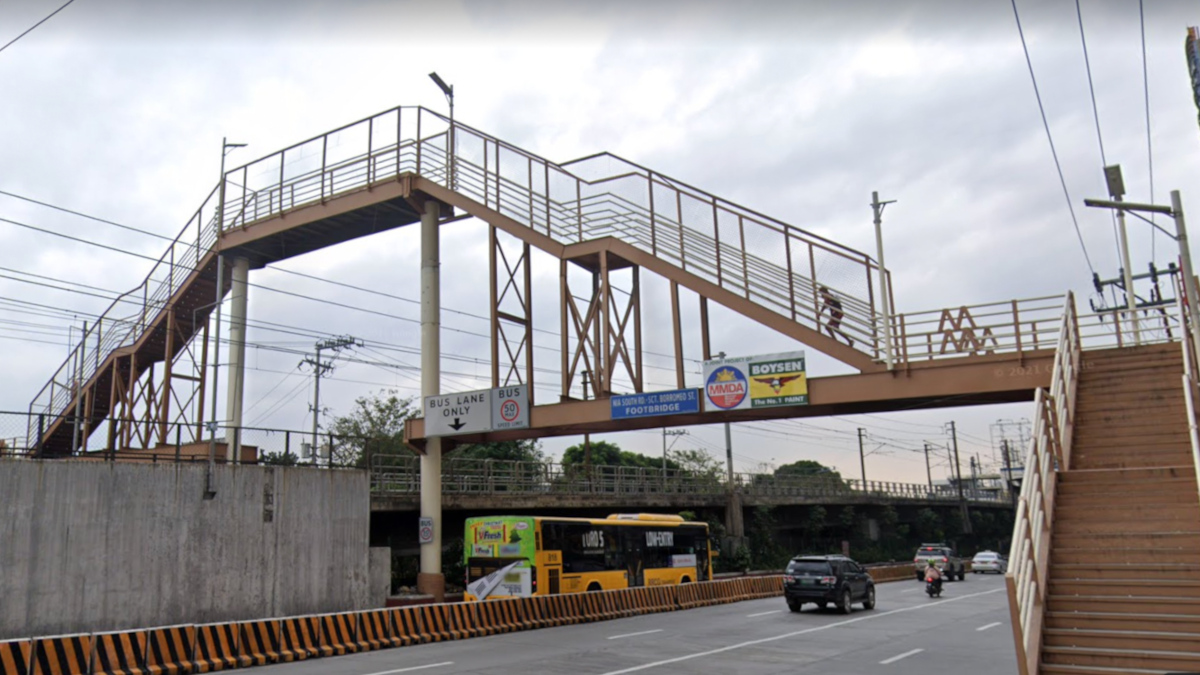
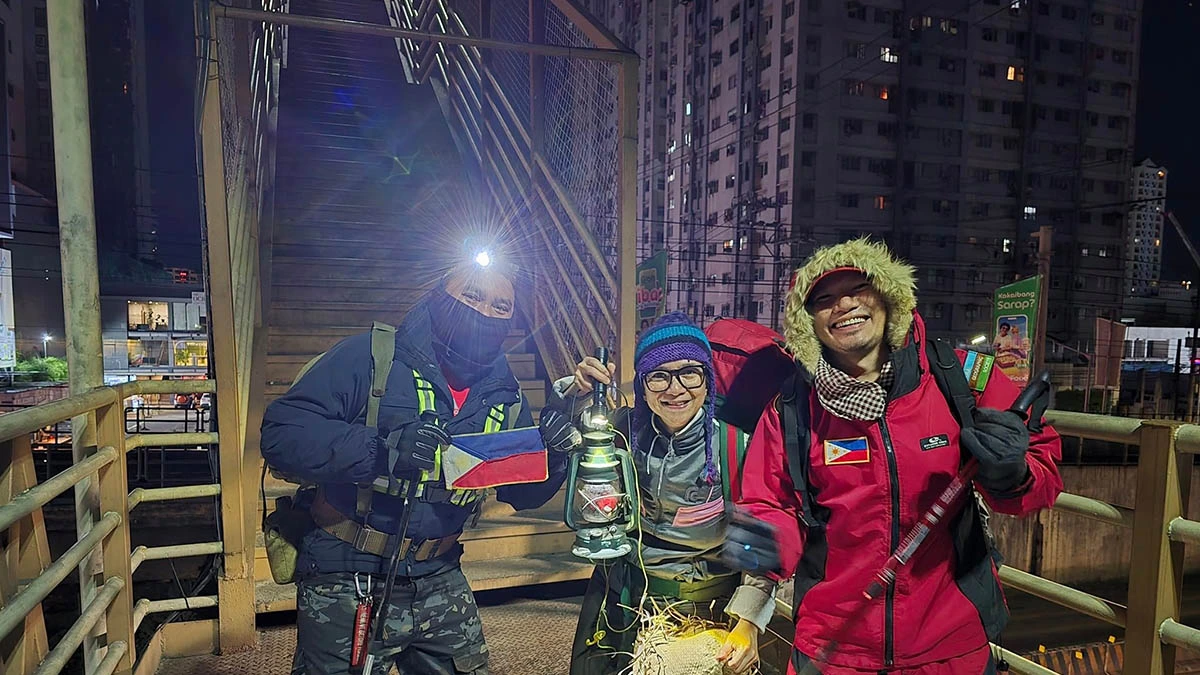
If you’ve been on social media lately, you’ve undoubtedly seen photos of hikers in full gear climbing ‘Mt. Kamuning.’ On Facebook, Albert Labrador shared pictures of their group posing at the ‘summit’ of the 30-foot-high footbridge in Kamuning near the GMA Network Center in Quezon City, which was picked up by various media outlets.
While the climb was part of their hiking group’s annual April Fool’s gag to make a statement about how high and steep the footbridge is, sadly the joke’s on Filipino pedestrians who regularly have to endure such walkways.
This got us thinking of other ill-designed pedestrian footbridges and underpasses in the metro that seem to punish pedestrians rather than make their lives easier.
How walkable are these, really?
There’s no denying that most of our pedestrian underpasses and footbridges were built mainly to improve traffic flow and get pedestrians out of the way of cars instead of making it easier for people to cross streets.
In a recent survey of 53 cities worldwide, Metro Manila was ranked “least walkable.” In the walkability study cited by columnist Robert Siy in Manila Times conducted by Australian insurance firm Compare-The-Market, 53 global locations were compared, and sadly, Metro Manila was in last place.
Rather than forcing pedestrians to take long detours (especially if the road width or intersection is small), the ideal solution (and the one adopted in many other countries) is to create at-grade pedestrian crossings.
According to the Global Designing Cities Initiative: “Elevated crossings unnecessarily increase walking distances and times, take up valuable sidewalk space, and cost up to 20 times the price of at-grade signalized crossings.”
They state: “Unless connections are required across limited access highways, heavy rail lines, or natural features, pedestrian crossings should be provided at the same level as the street.”
Unfortunately, many footbridges along main roads (particularly EDSA) had to be built around the existing infrastructure such as the MRT trains. However, the passages were not designed for seniors, PWDs, parents with strollers, pregnant women, those carrying heavy bags, or cyclists with bikes.
Given our car-centric culture, it may take time to see more inclusive infrastructure prioritizing all types of pedestrians. In the meantime, here are some noteworthy footbridges and underpasses around Metro Manila that deserve public attention (for better or worse).
Over the years, we've heard of cases of footbridges that involve lung-busting flights of stairs and those constructed around existing power/electric lines. Recently, a Final Destination-esque escalator in a train station made the news. While there are too many in the “worst” category to list down, we’ll stick with the ones that have made social media buzz in recent history.
EDSA-Kamuning Footbridge
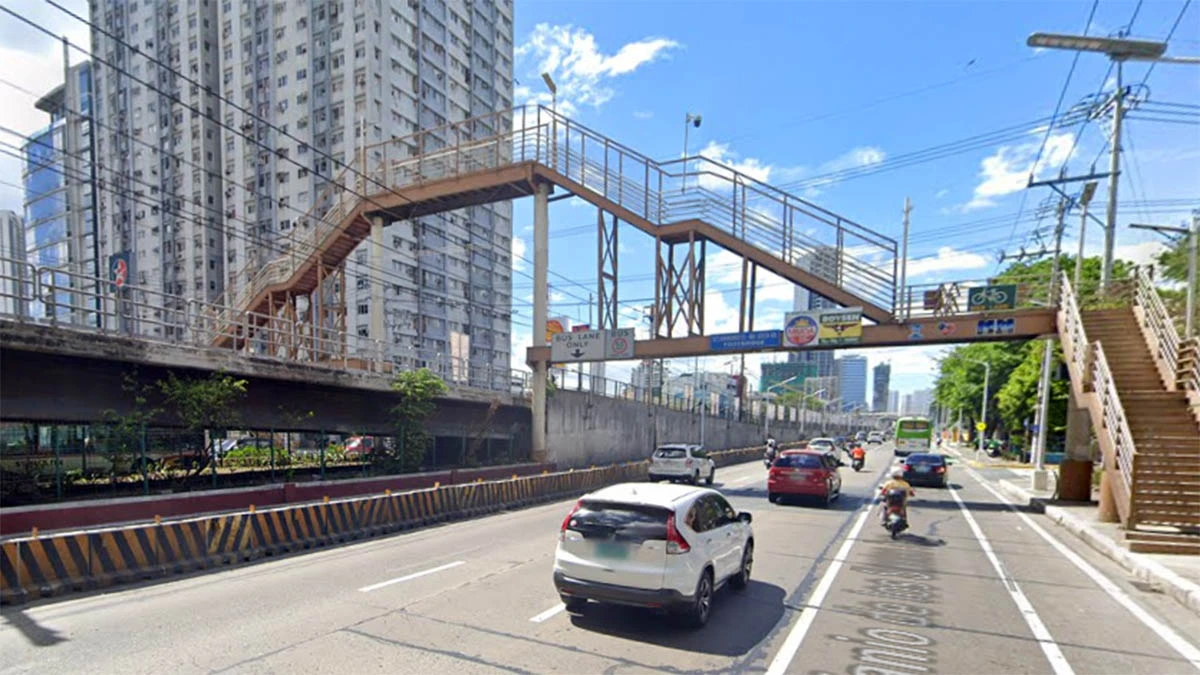
Number one on the list is the infamous EDSA-Kamuning Footbridge. Often referred to as “Mt. Kamuning” or “Stairway to Heaven,” this controversial pedestrian footbridge can be found along EDSA near the GMA Network Center in Quezon City.
The 30-foot high footbridge, equivalent to being on the third floor of a building, towers above the power lines and tracks of the Metro Rail Transit Line 3 (MRT3). As a foreign diplomat put it: “There is no better way to make it clear to pedestrians that they don’t matter.”
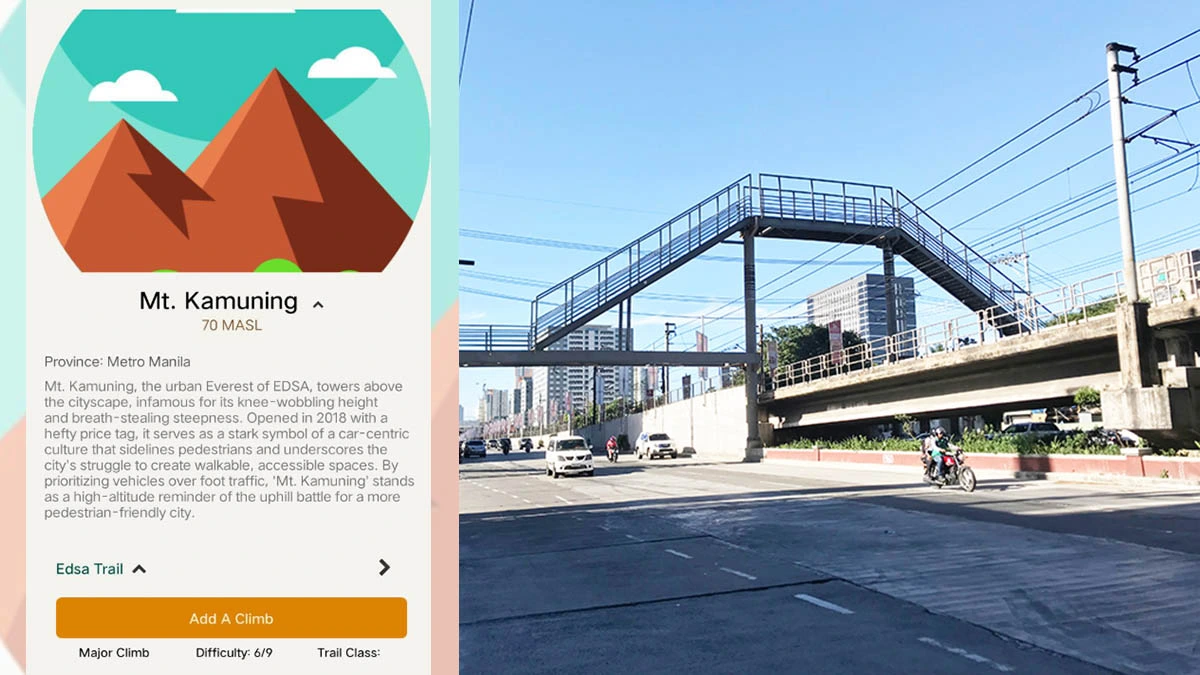
While it reportedly cost P10 million to build, this footbridge has been criticized for its dizzying heights and not being pedestrian-friendly, especially for seniors, pregnant women, and persons with disabilities. It’s so notorious that PinasPeaks, a local hiking app that lists Philippine mountains, jokingly lists it, describing it as “the urban Everest of EDSA” and a “stark symbol of [a] car-centric culture that sidelines pedestrians.”
According to the app: “By prioritizing vehicles over foot traffic, ‘Mt. Kamuning’ stands as a high-altitude reminder of the uphill battle for a more pedestrian-friendly city.” We couldn’t agree more.
ICYDK, years ago, environmental planner and landscape architect Paulo Alcazaren shared his “unsolicited” proposal redesigning this controversial footbridge. With a few tweaks, it’s possible to provide shade to pedestrians and cut the steepness of the stairs by making them parallel to the road.
Shaw Boulevard MRT Station
If you’re training for a major climb and want an urban cardio workout, another footbridge that’s made it to the PinasPeaks app is “Mt. Shaw,” the Metro Rail Transit (MRT) Station on Shaw Boulevard. The infamously long and steep staircase that goes several floors is also (jokingly) listed in the app since passing here adds to the daily woes of office workers and commuters.
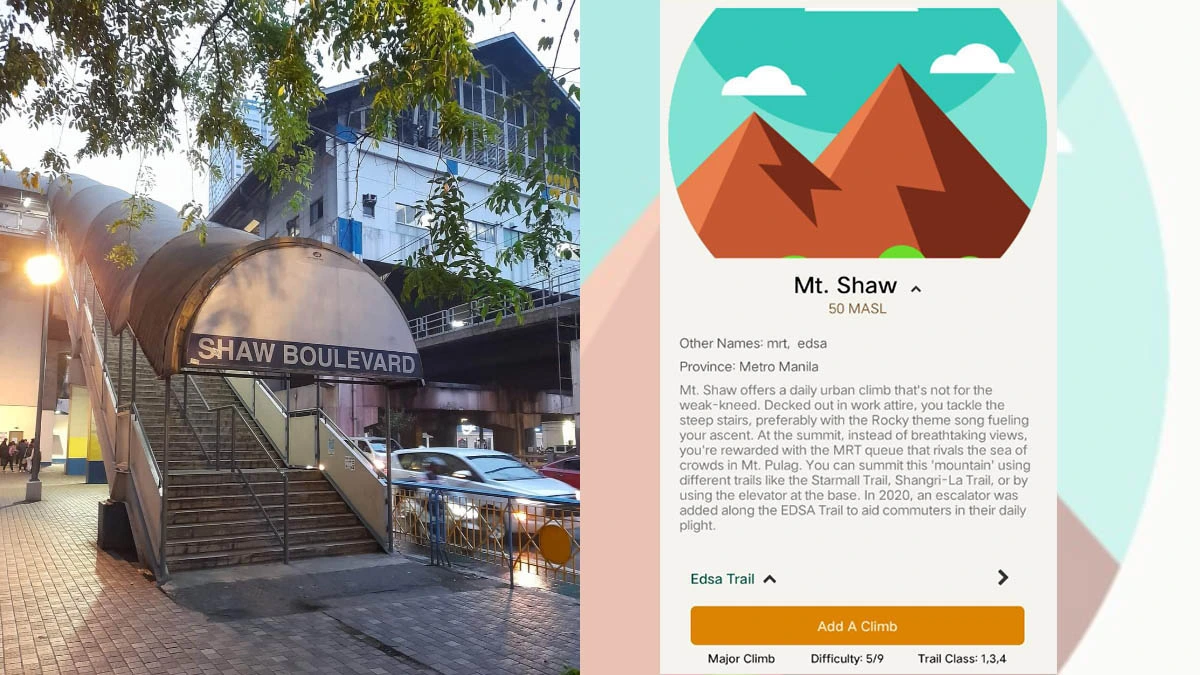
PinasPeaks wrote: “Mt. Shaw offers a daily urban climb that’s not for the weak-kneed. Decked out in work attire, you tackle the steep stairs, preferably with the Rocky theme song fueling your ascent. At the summit, instead of breathtaking views, you’re rewarded with the MRT queue that rivals the sea of crowds in Mt. Pulag.”
“Mt. Shaw” can be accessed via different “trails” including the “Starmall Trail” and “Shangri-La Trail.” While an elevator was installed at the base and an escalator was added in 2020 along the EDSA side to aid commuters, whether or not these operate correctly is another story.
EDSA Busway Philam Station
Last year, the EDSA Busway Philam Station went viral on social media for the wrong reasons. The controversial ramp, which was supposedly built to enable easier PWD access to the EDSA
EDSA Bus Carousel in Quezon City, drew flak as the ramp was deemed too steep and slippery for any wheelchair users to use. Many photos shared online compared the ramp to a slide while others dubbed it the ‘PWD Roller Coaster” on social media.
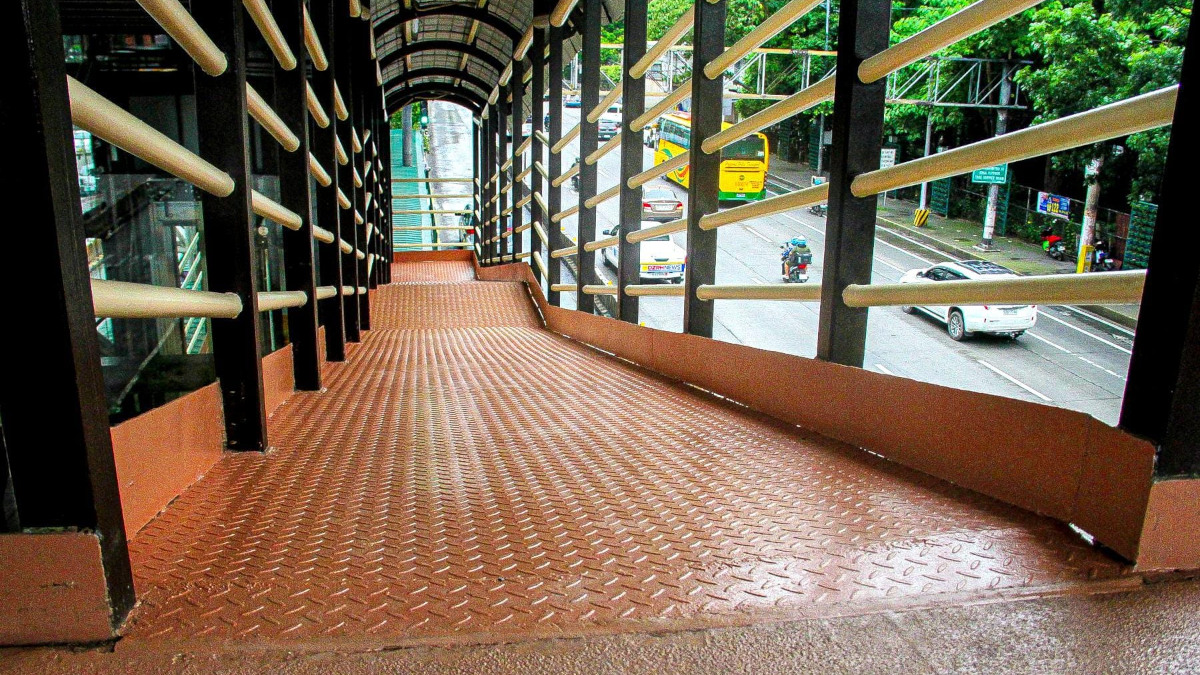
After the ramp was found to be 10 degrees steeper than the standard, the MMDA released a statement saying that limited space and height restrictions from the MRT were followed which was why the elevator wasn’t level with the footbridge. The last we heard was the ramp was “temporarily shut down” less than a week after it was opened to the public for “improvements.” We’re not sure how the ramp was remedied or if it’s been reopened.
To be fair, we do appreciate the other inclusive features of this footbridge, including the elevators.
SM North EDSA Busway concourse
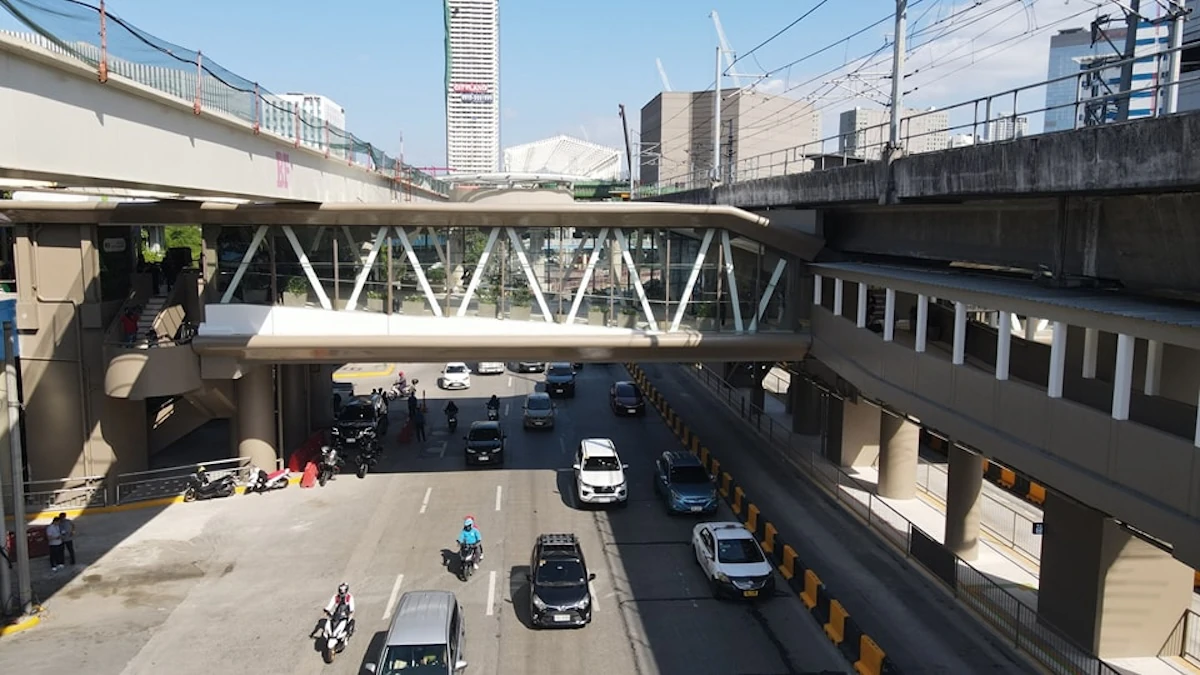
While much improvement is needed to make Metro Manila more walkable, there have also been welcome initiatives that deserve praise, such as the newly opened SM North EDSA busway concourse which connects the busway to the mall. This comprises a dedicated bus station and passage that lets pedestrians access the mall, SM CyberWest, and the SM North EDSA Public Transport Terminal
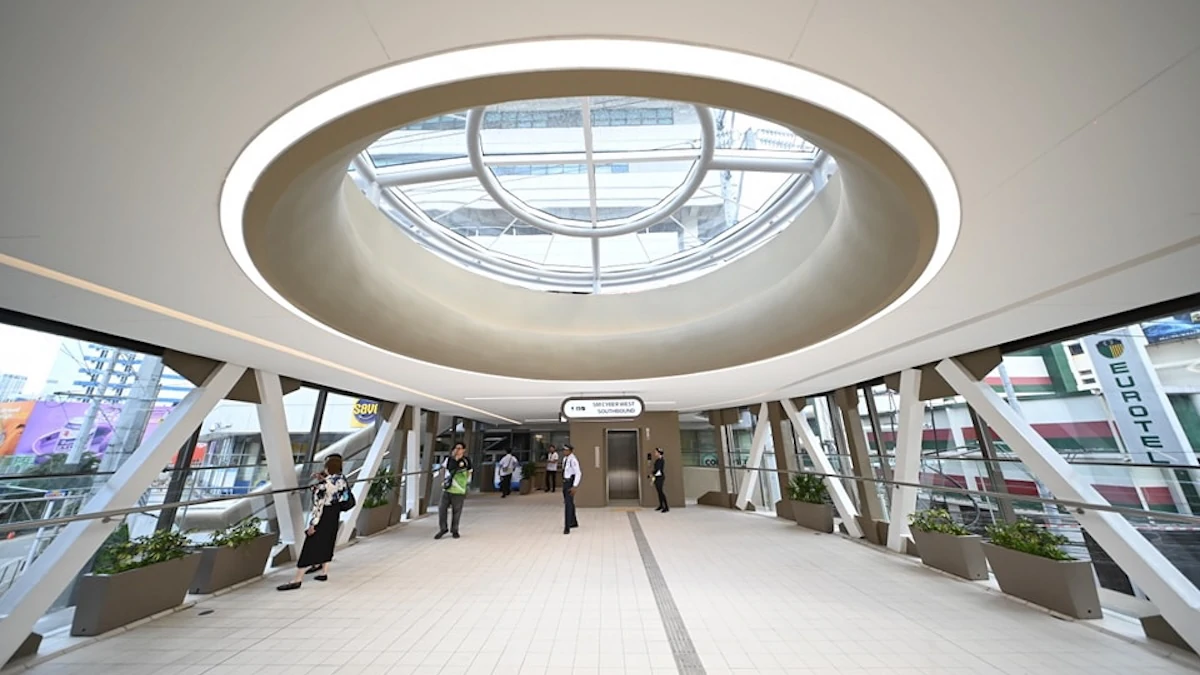
Aside from providing a sheltered, well-lit path, and well-designed path, the concourse is equipped with stairs, escalators, and elevators to accommodate all passengers, including those with limited mobility. Pedestrians can also find a map to guide passengers on where to go. We hope designs like these that can accommodate all passengers become the standard, rather than the exception.
QC Circle / Elliptical Underpass
If you’ve ever had to go to Quezon Memorial Circle by foot or bike, you’ll have noticed the improvements on the Elliptical Underpass connecting Quezon Memorial Circle and Quezon City Hall. In 2023, the Quezon City government unveiled vibrant mural paintings of endangered Philippine flora and fauna including the Philippine eagle, tamaraw, and tarsier decorating the pedestrian walkway.
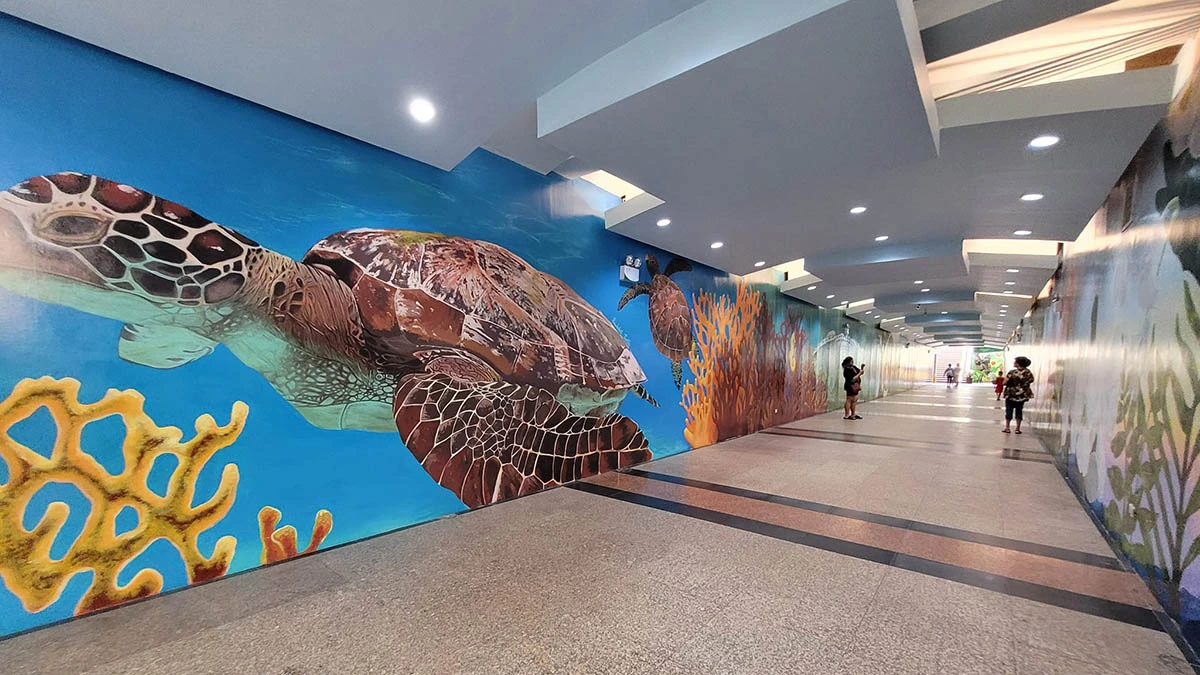
Dubbed QC Underparadisoo (Underparadise), this pedestrian walkway was revamped to offer a more pleasant, clean and well-lit walkway and a security guard on duty for the safety of pedestrians and parkgoers.
The giant artwork, which adds a tropical vibe to the passage, was collectively illustrated by muralist A.G. Sano, the Art Atak team, Cosmic Clint, and RKTRS Art Collective under the Sentro Artista Hub.
There are elevators on both ends of the walkway for PWD use, while cyclists can make use of the bike ramps that have been put in place at the stairs to wheel their bikes more easily up and down the stairs.
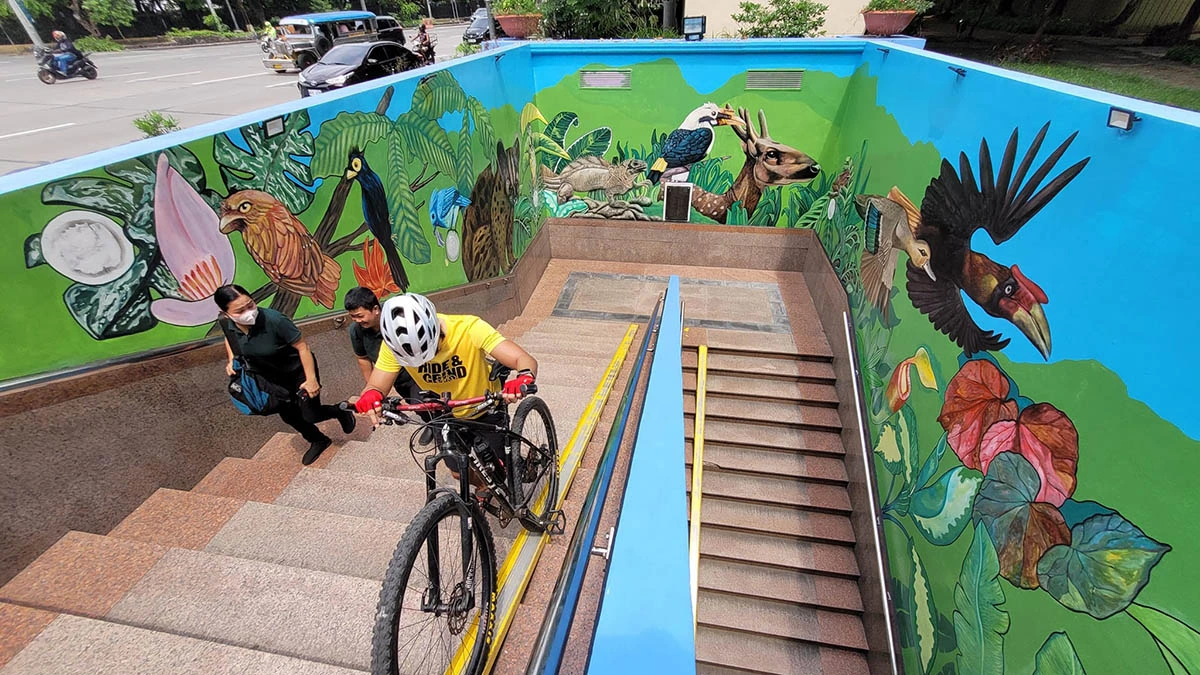
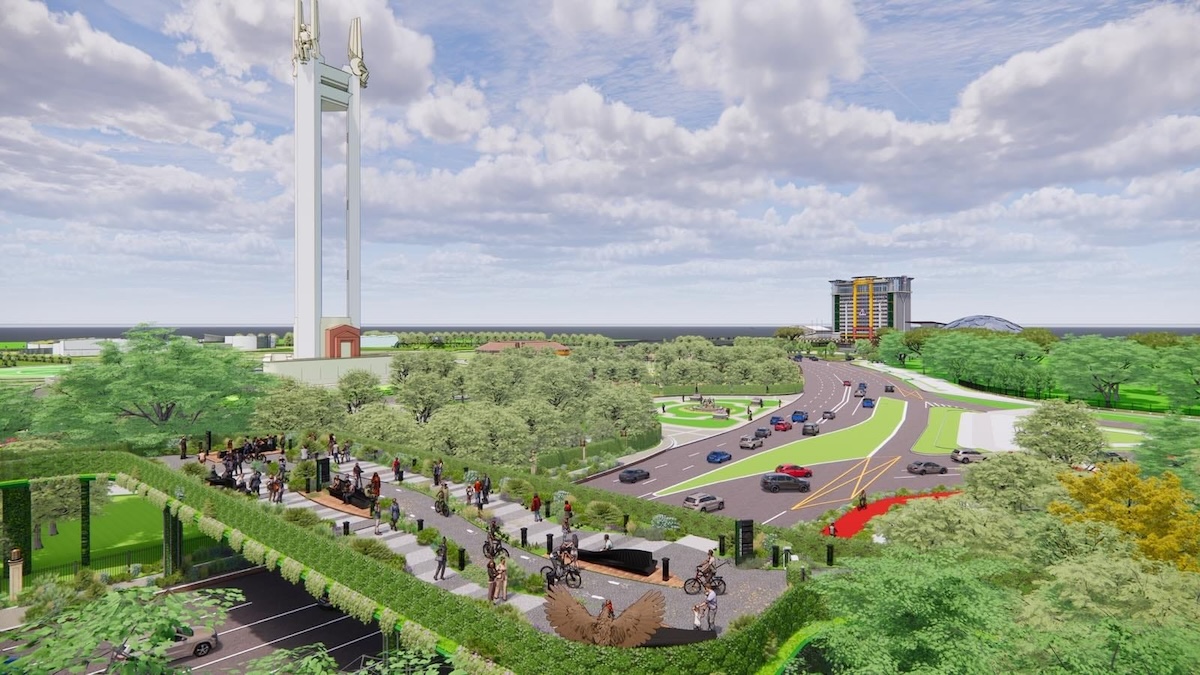
While this underpass is much appreciated, pedestrians point out that QC Circle would benefit from multiple crossings to enter different sides of the large park. Another footbridge in this area that we’re looking forward to is the Elevated Landscape Promenade that will connect QC Memorial Circle to the Ninoy Aquino Parks and Wildlife. While construction seems almost complete, this footbridge has yet to be fully opened to the public as of this writing.
Makati Underpasses
According to the Make it Makati FB page, Makati is home to Southeast Asia’s longest pedestrian underpass network. The 2-kilometer network of pedestrian underpasses aim to help pedestrians navigate the busy Makati Central Business District and provide safe crossings. Several underpasses here bear murals, art installations and vibrant designs, with many featuring murals and sketches by Filipino artists commissioned by The Makati Commercial Estate Association.
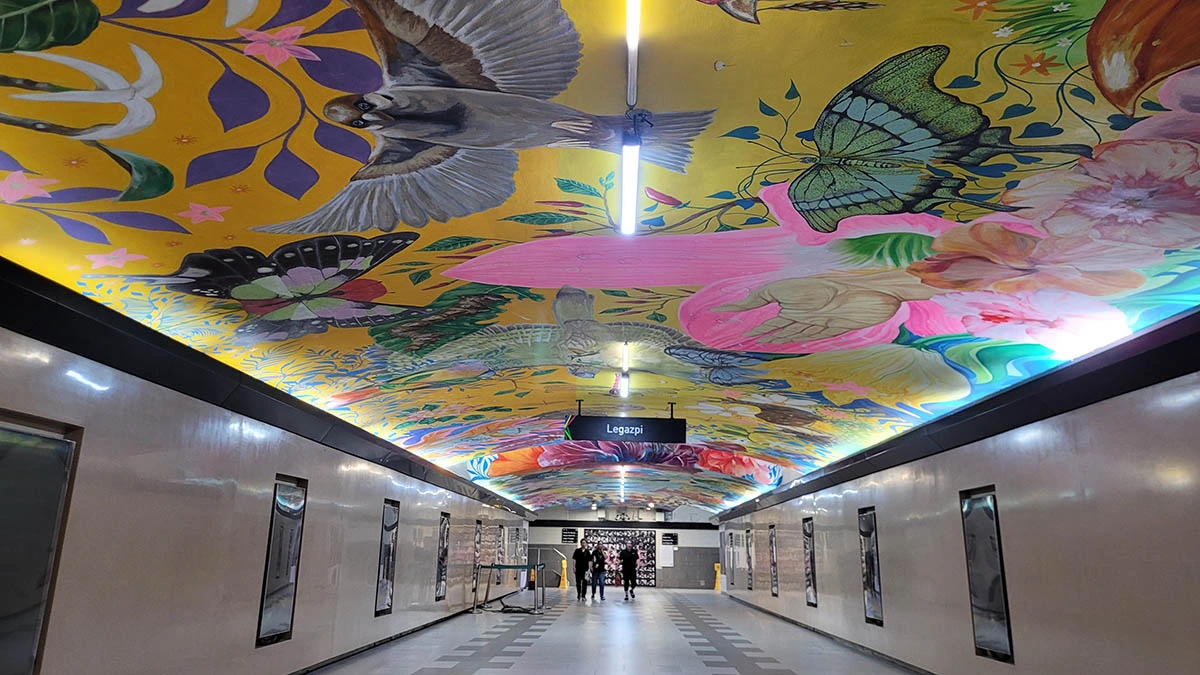
While crossing to the Ayala Triangle Gardens recently I also noticed photography exhibits displayed. Most have escalators going up some stairs going down, some of which have been fitted with bike ramps. The network of underpasses include:
- Apartment Ridge Underpass
- Legazpi Underpass
- Makati Ave. Underpass
- Paseo De Roxas Underpass
- Paseo-Villar Underpass
- Salcedo Underpass
- Sedeño Underpass
- V.A. Rufino Underpass
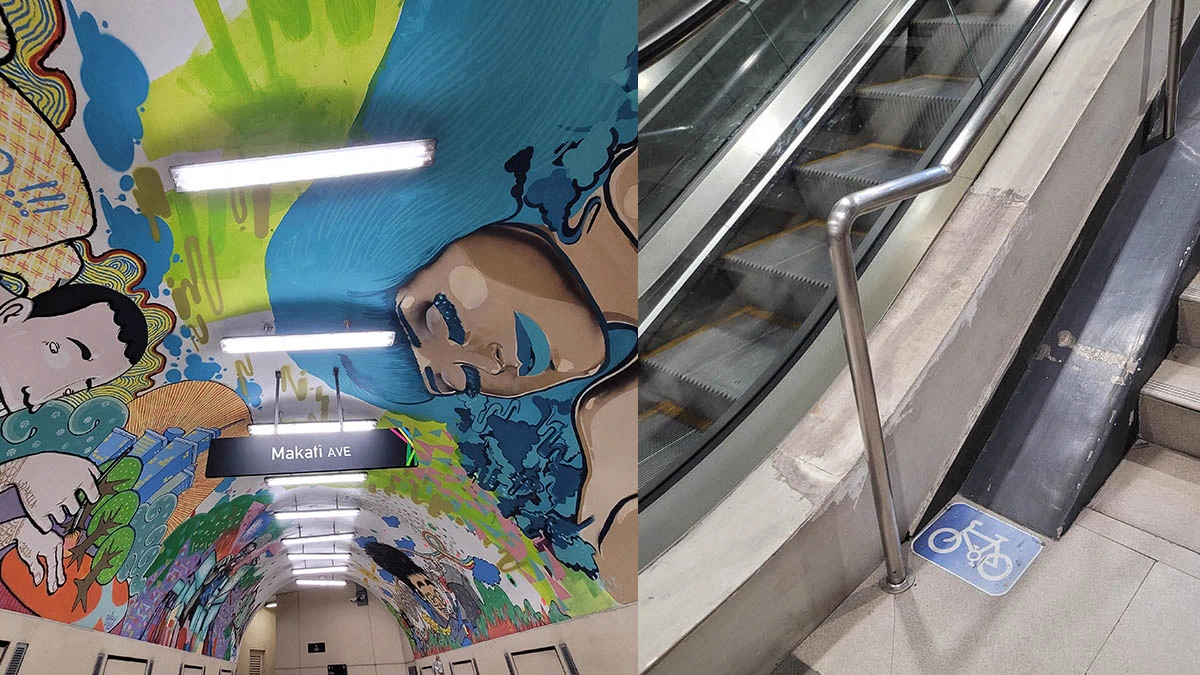
While the artwork is visually appealing, it’s important to note that these underpasses are not continuous, but rather a network of disconnected underpasses. And while Makatizens are familiar with these, they can be somewhat confusing for those unfamiliar with the area to navigate, with multiple crossings often needed to get from Point A to Point B.
Lagusnilad Underpass (Manila City Hall Underpass)
Originally constructed in the 1960s, the Lagusnilad pedestrian Underpass runs across Taft Avenue, connecting the Manila City Hall, the Intramuros area, Bonifacio Shrine, and the National Museum of the Philippines.
Previously known for being dark, crowded, swarming with illegal vendors, and a hotspot for petty crimes, it was only in 2020 that this underpass was dramatically transformed, making it one of the best-improved pedestrian walkways. It’s been refurbished with safety features like non-slip tiles, 24-hour lighting, and CCTV security systems, and now has security guards.
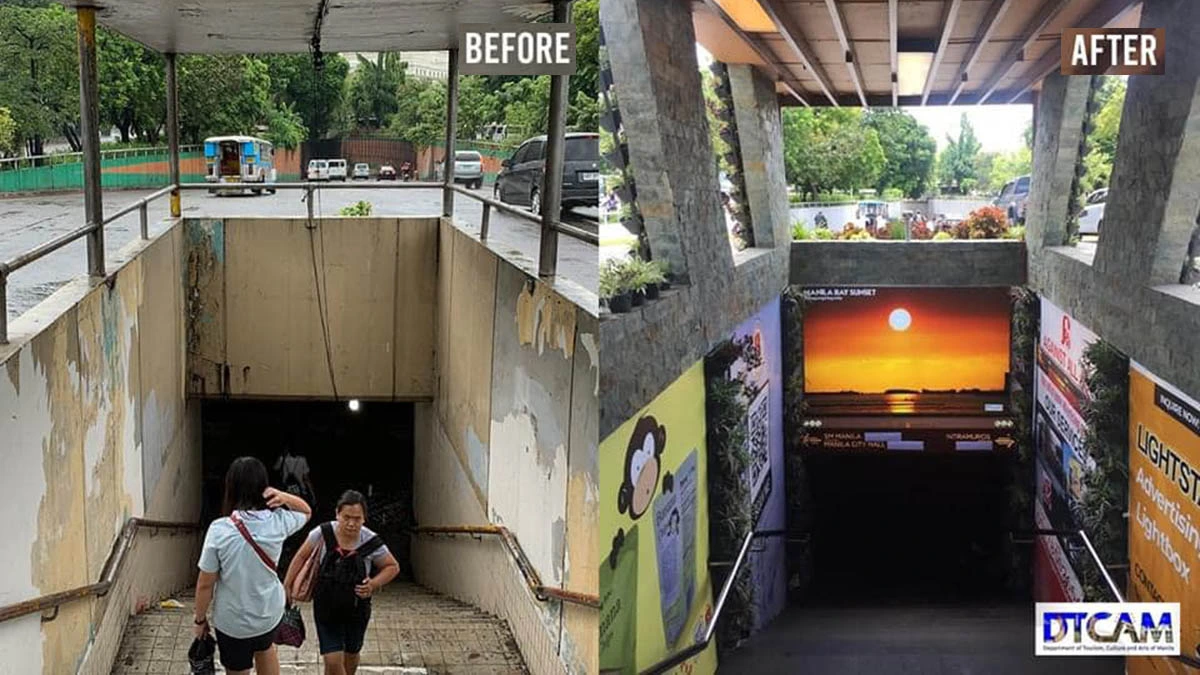
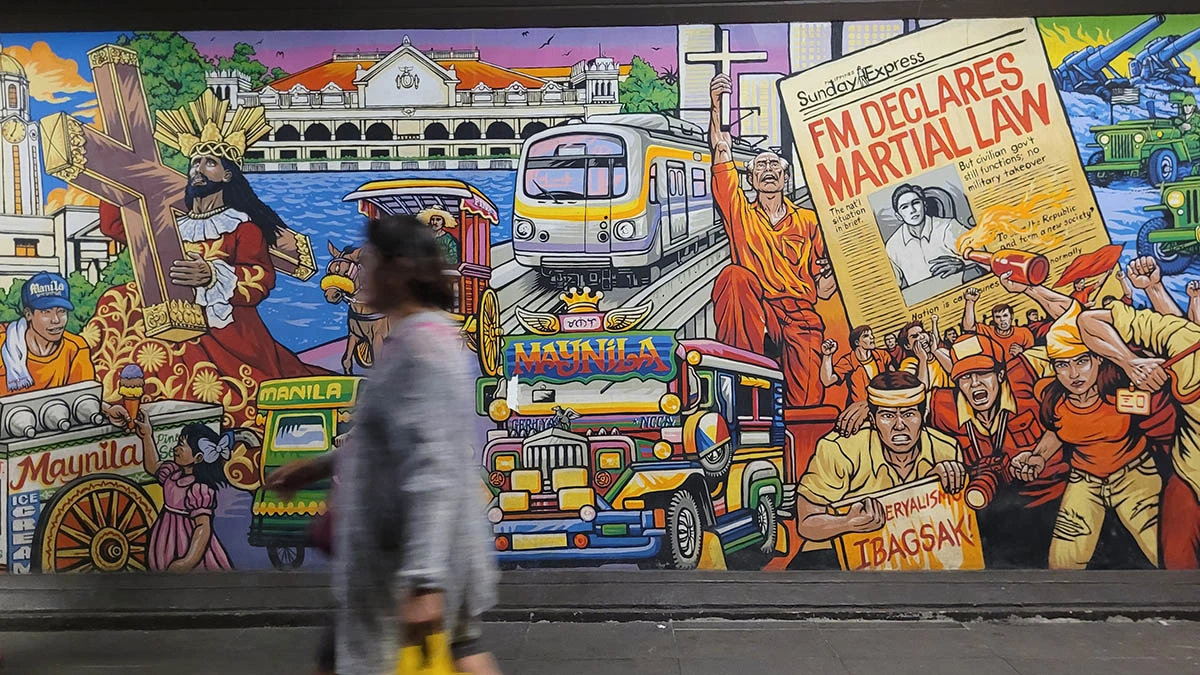
Pedestrians can admire artistic murals and bas-reliefs celebrating the history of Manila by the artist group Ang Gerilya. The renovated underpass now has a vibrant, 82-foot-long mural titled “Masigasig na Maynila,” (2020) which shows Manila’s history, and a bas-relief sculpture titled “Pwersa ng Masa” (2022) dedicated to the working class and frontliners during the COVID-19 pandemic. Some photos of Manila’s tourist attractions are also displayed here.
Most of the vendors were removed, but the underpass retained the thrift bookstore “Books from Underground” giving them a better space and shelves beside the murals. Sadly, this underpass is still prone to floods during the rainy season, which affected the bookstore in 2024.
In the past, the Lagusnilad Underpass was also notorious for not allowing bikers to cross. Those with folding bikes were sometimes allowed to carry their bikes through depending on the mood of the security guard on duty. During a recent ride to Intramuros in March 2025, we were able to wheel two full-sized bikes through here without incident in the presence of security guards and didn’t see the signs stating bikes were not allowed which were prominently displayed in the past, so we’re hoping the rules have changed. Fingers crossed.
While there are no ramps, escalators, or elevators in this underpass, it’s much safer for bikers to cross here by carrying or wheeling their bikes rather than dodge traffic with speeding vehicles. Now, if only the nearby Lawton Underpass could undergo a similar rehabilitation.
What are other footbridges and pedestrian underpasses in Metro Manila deserve public attention? Let us know in the comments.