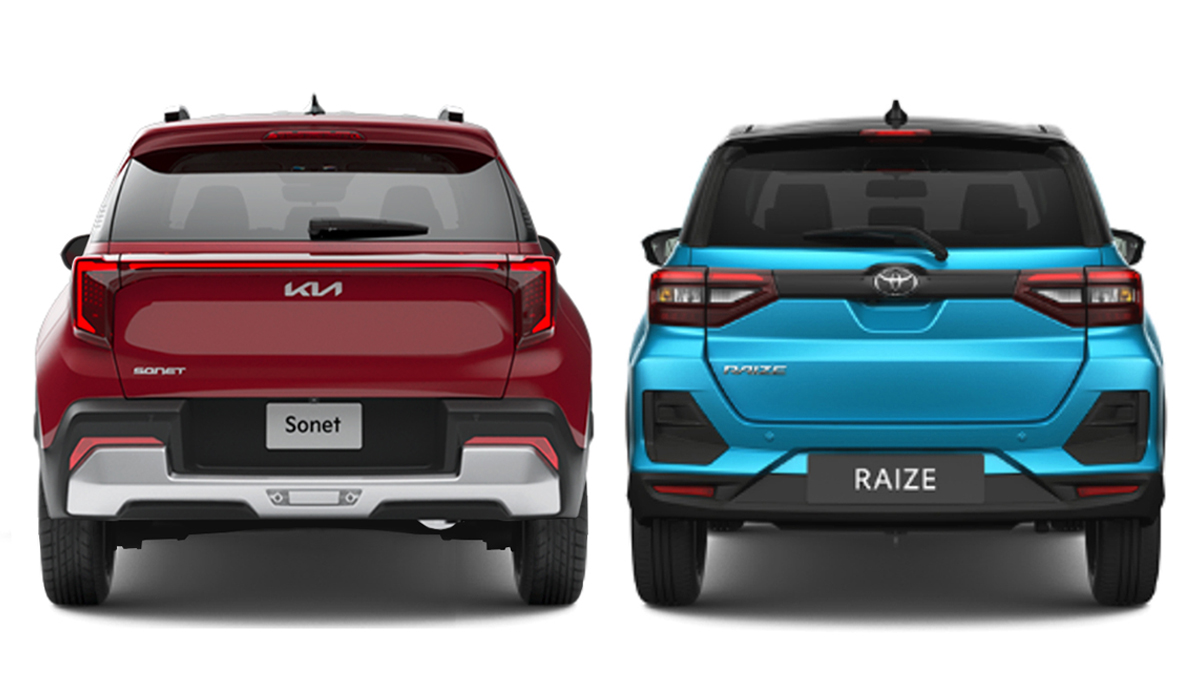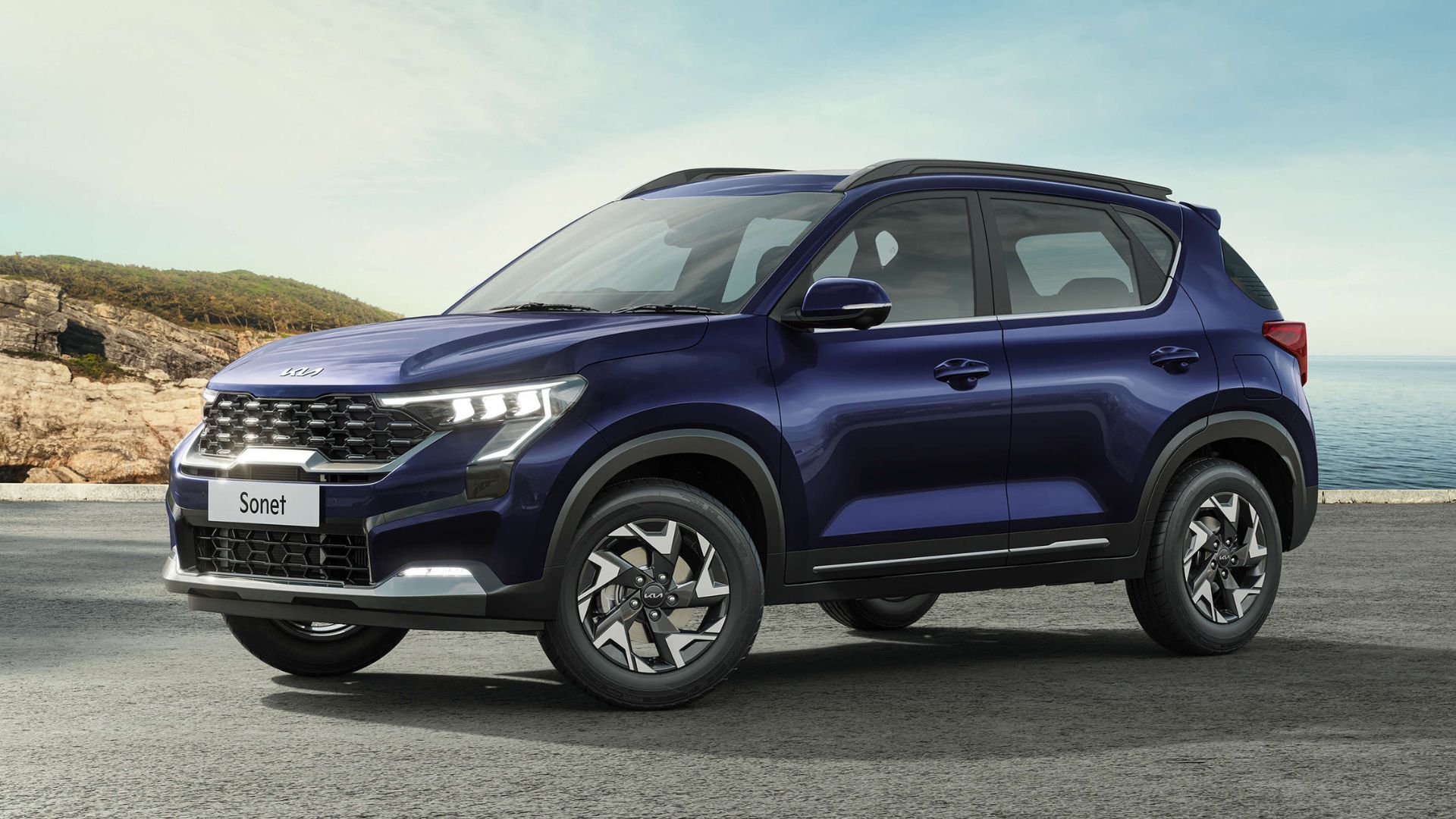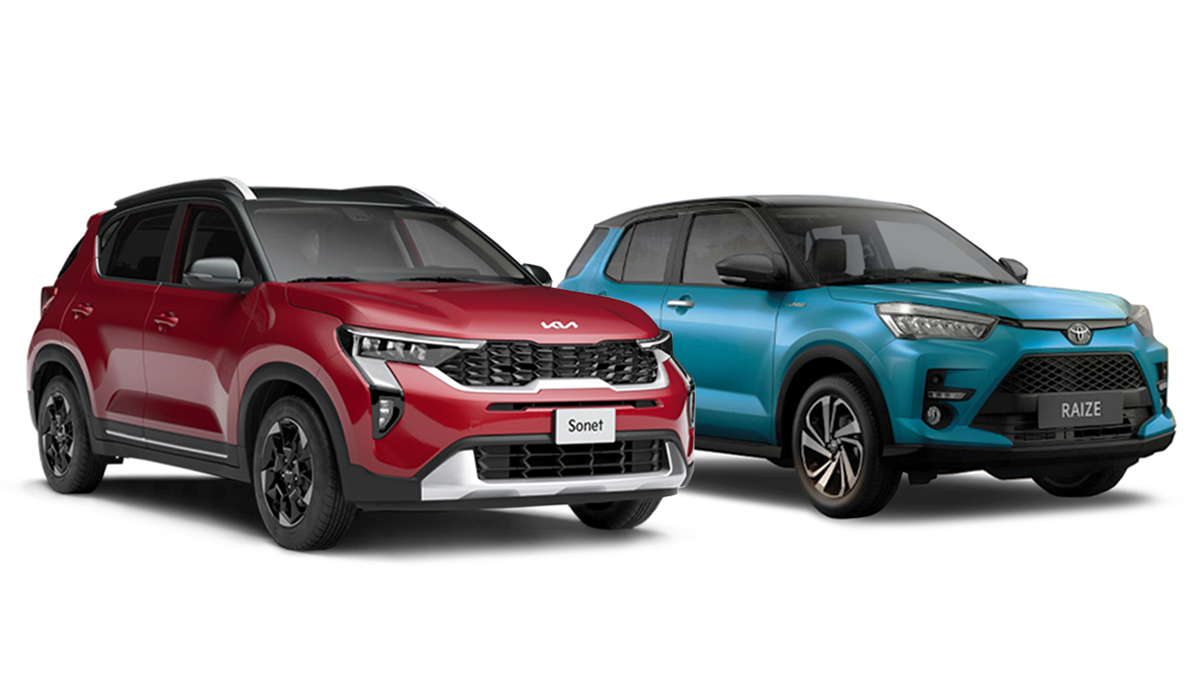


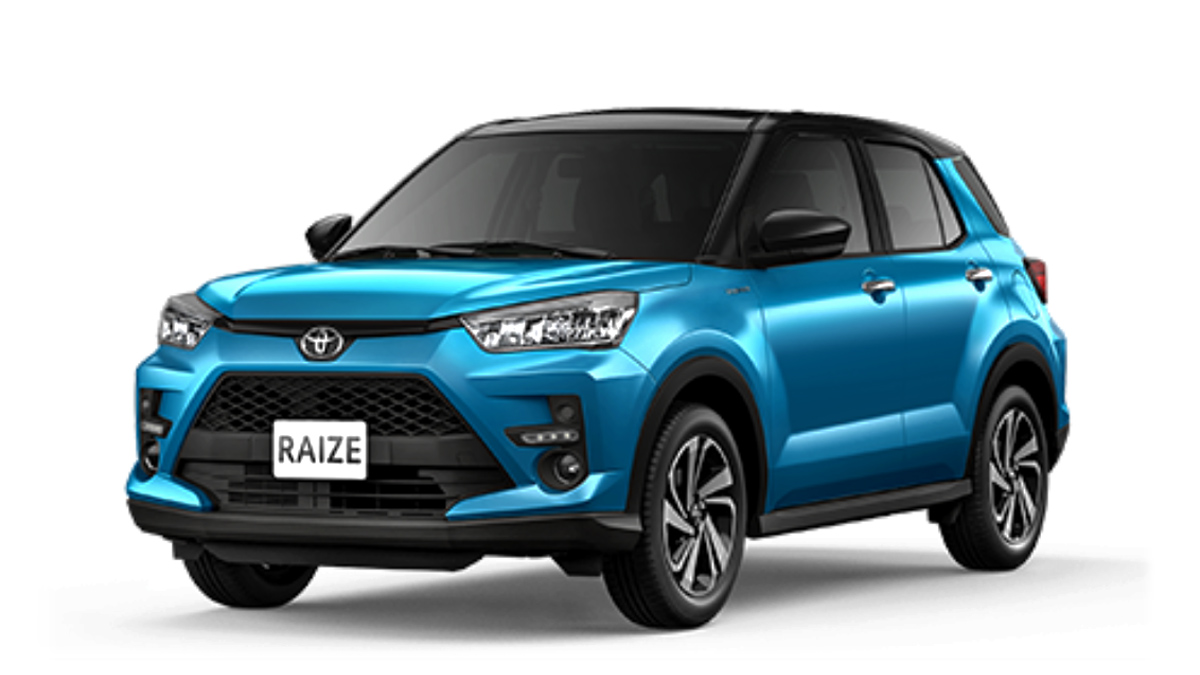
Kia Philippines is set to finally launch the 2024 Sonet, its entry-level subcompact crossover. Unlike the older Stonic (a.k.a. the KX1) that had a low, car-like profile, the Korean carmaker’s new little sports utility has a more traditional SUV shape with a taller roofline. For this size comparison, we’ll be pitting the new Sonet against the segment-favorite Toyota Raize. Let’s see how Kia’s new baby SUV stacks up against the established Toyota. We’ll be using the high-trim two-tone variants of the Sonet and Raize for this compare.
ALSO READ:
Review: 2022 Toyota Raize 1.0 Turbo CVT
Review: 2021 Kia Stonic EX AT
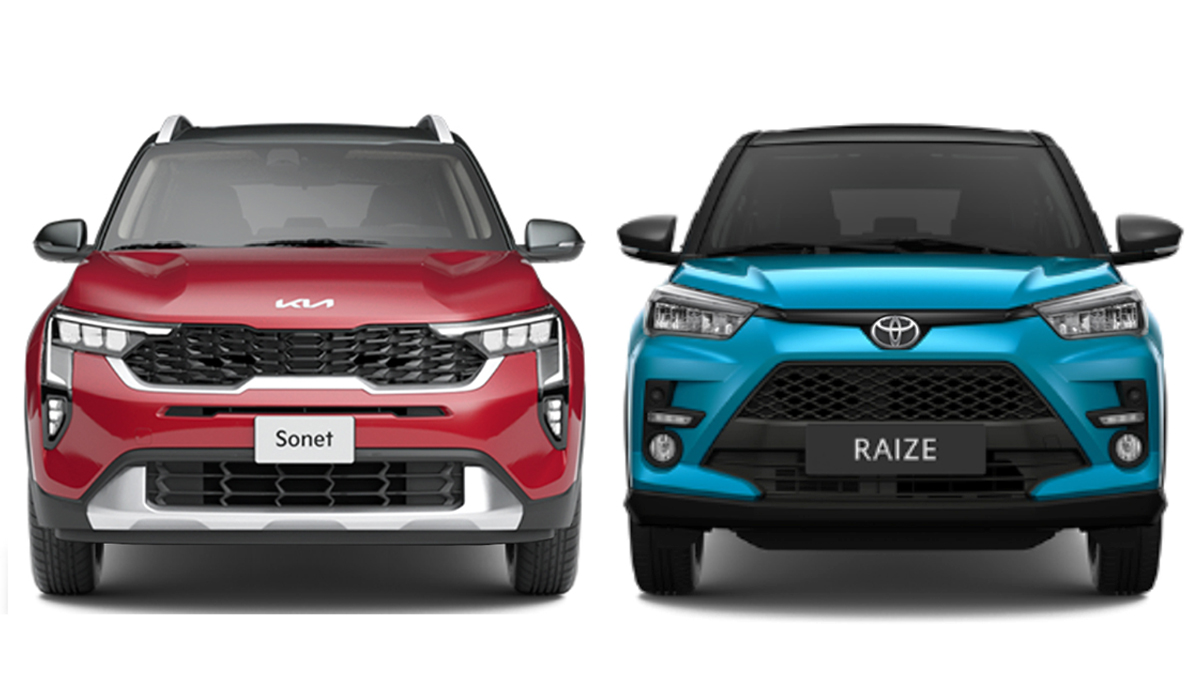
Kia hasn’t released the full specs of the new Sonet yet as of this writing, so we’ll be using figures from a similar overseas model. The 2024 model measures 4,110mm long, 1,790mm wide, and 1,642mm tall, making it 80mm longer, 80mm wider, and 37mm taller than the Raize. Without the roof rails, the Kia would only be 5mm taller than the little Toyota.
The Sonet rides on a 2,500mm wheelbase—25mm less between the axles than in the Raize. The small Kia’s ground clearance is around 205mm, which gives it a 5mm advantage over its Toyota rival.
The new Sonet comes standard with 24.9-inch diameter 205/55 R16 low-profile rollers, smaller than the 26.7-inch diameter 205/60 R17 tires of the Raize. The Sonet’s overall height and ground clearance figures above are shared with the Indian market Sonet which has taller 26.2-inch diameter 215/60R16 tires. Note that the actual height-related numbers of the Sonet with smaller tires could be a tad lower.

Here’s a little overview of the two front-wheel drive subcompact SUVs in this comparo. The Sonet made its debut in August 2020, the latest version you see here is the 2024 refresh which adopts styling details seen on other new Kia models. Several engines are offered in the Korean carmaker’s little SUV, but it’s the naturally aspirated 113hp 1.5-liter gasoline mill we’re getting.
The Raize on the other hand had its global reveal way back in November 2019, and it was launched in the Philippine market later on in February 2022. Lower and mid variants are equipped with a naturally aspirated 87hp 1.2-liter non-turbo petrol engine, while the top variant packs a 97hp 1.0-liter turbo powerplant.
The high-trim variants of both subcompact sports utility vehicles are only offered with continuously variable gearboxes. As expected, both pint-size crossover SUVs have unibody construction, transversely mounted engines, and feature MacPherson strut suspension up front and a torsion beam setup at the back.
Kia’s latest entry-level subcompact SUV is more of a direct rival to Toyota’s popular Raize. Which of these entry-level sports utility vehicles would you rather have? Tell us in the comments.