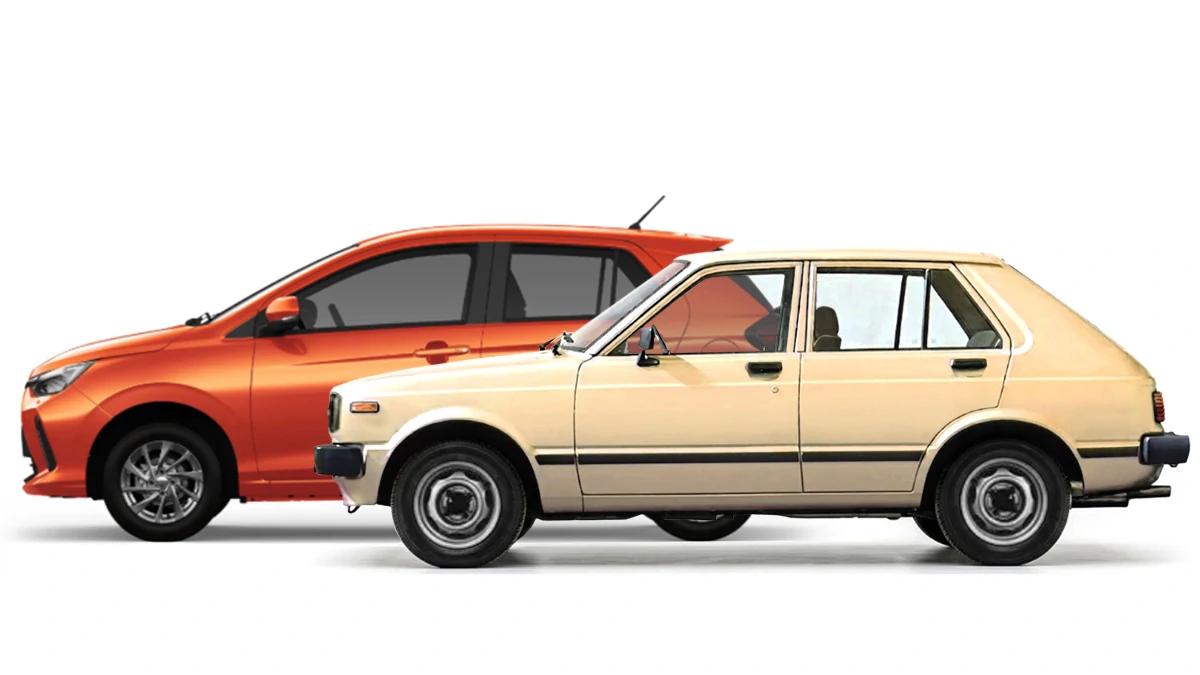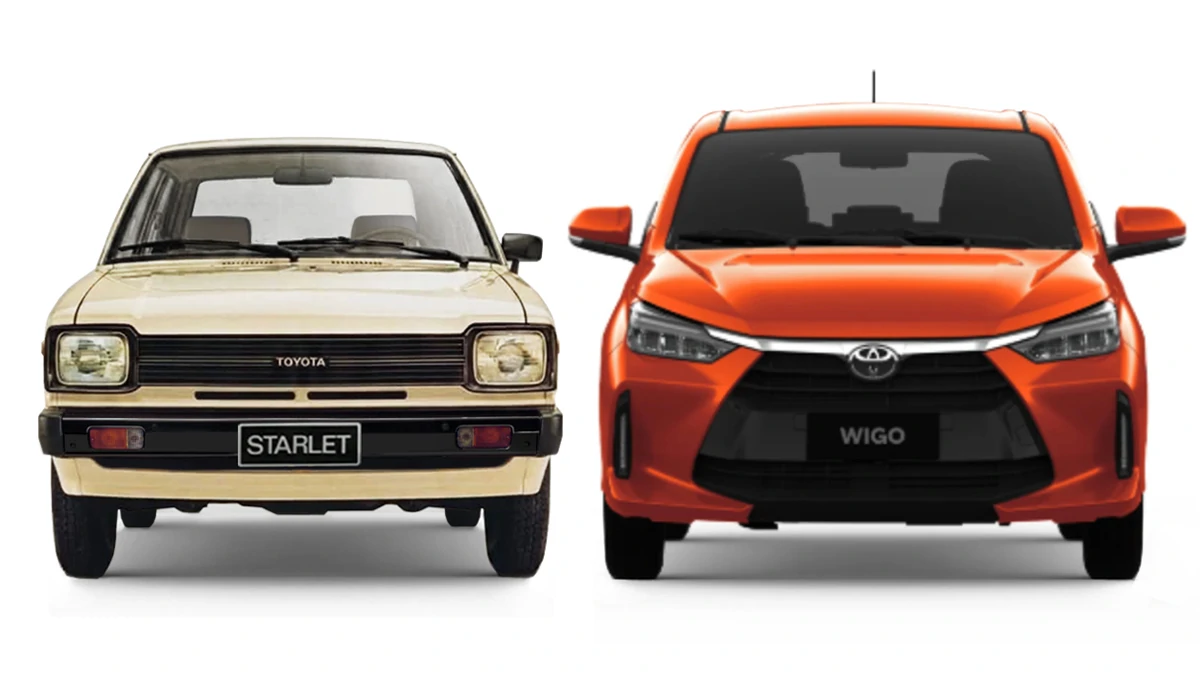
The early ’80s Toyota Starlet has become somewhat of an icon thanks to its small size, light weight, and rear-wheel-drive architecture. The P60-series model has been transformed into anything from a rally car to a drift car—or at least a car that aspires to be one. For this size comparo, we’ll be pitting the 1981 Starlet against the carmaker’s current entry-level offering in the local market: the Toyota Wigo.
The 1981 Starlet measures 3,755mm long, 1,530mm wide, and 1,380mm tall, making it 5mm shorter, 135mm narrower, and 135mm lower than the Wigo. The classic Toyota hatchback rides on a 2,300mm wheelbase, which is 225mm shorter between the axles than its modern counterpart. Here’s a bit of trivia: The current Wigo’s 2525mm wheelbase matches that of the T130 Corona sold alongside the Starlet 45 years ago.
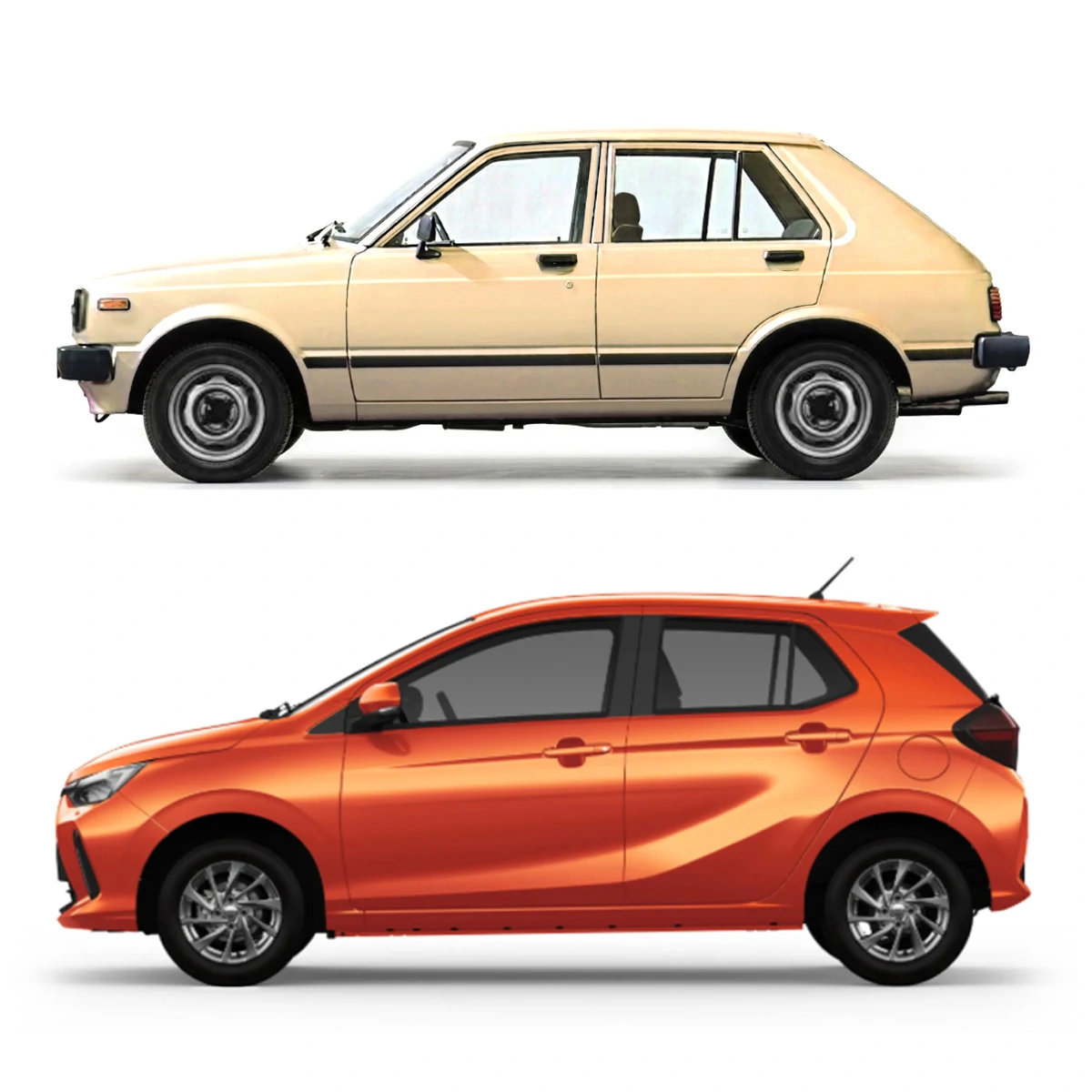
The classic Toyota rides on skinny 22.3-inch-diameter 145 SR 13 rubber. This is 0.7 inches shorter than the modern Toyota’s 23-inch-diameter 175/65 R14 tires. Thanks to the 1981 Starlet’s lower overall height and beltline, its smaller-diameter tires still look proportional. The classic hatchback wins with its 165mm ground clearance—5mm greater than that of its modern counterpart. Note that we used the near-identical international Starlet 1.2 figures to fill in the blanks.
OTHER STORIES YOU MIGHT HAVE MISSED:
There’s now a free tool to track fuel prices around Metro Manila
Should Toyota retain a non-hybrid Corolla Altis variant in the local market?
The Starlet KP60 was pretty advanced for its day. Despite having a traditional rear-wheel-drive layout, it received a coil-sprung rear suspension and rack-and-pinion steering ahead of its larger Corolla sibling. In the Philippine market, it was equipped with a 1.2-liter 3K overhead valve in-line-four engine that put out 55hp and 83Nm of torque. It was usually equipped with a four-speed manual.
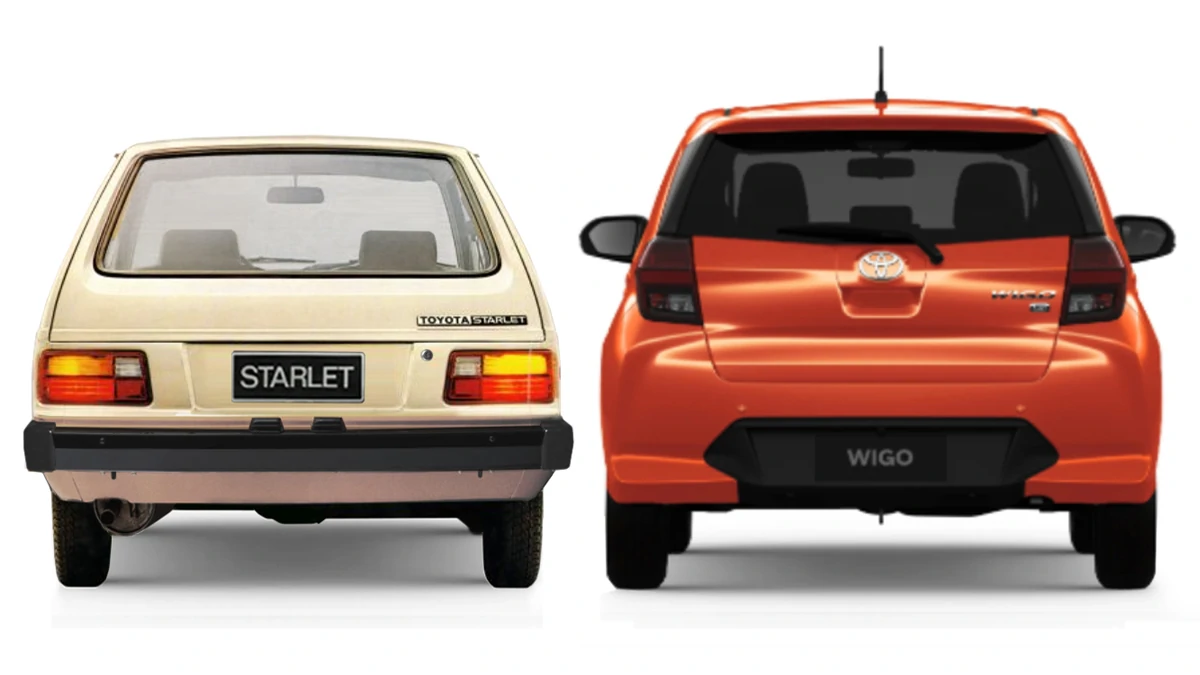
The B-segment Yaris is the Starlet’s successor. As with most cars, after each succeeding iteration grows bigger and more upmarket, it leaves room for a new entry-level model. For our region, that new small car is the Wigo aka the Agya, which is now in its second generation. Unlike with the Starlet, Daihatsu took the lead in developing the Wigo. The lone engine option for the local market is a 1.0-liter DOHC VVT-i in-line-three engine that produces 66hp and 89Nm of torque. It comes with either a continuously variable transmission or a five-speed manual.
This is an example of two entry-level hatchbacks from two very different eras, separated by over 40 years of engineering advancement. While the contemporary hatch might not have the same “cool factor” as the classic model, it’s at least roomier and safer.
Do you consider the current Wigo as the spiritual successor to the stock 1981 Starlet? Let us know in the comments.