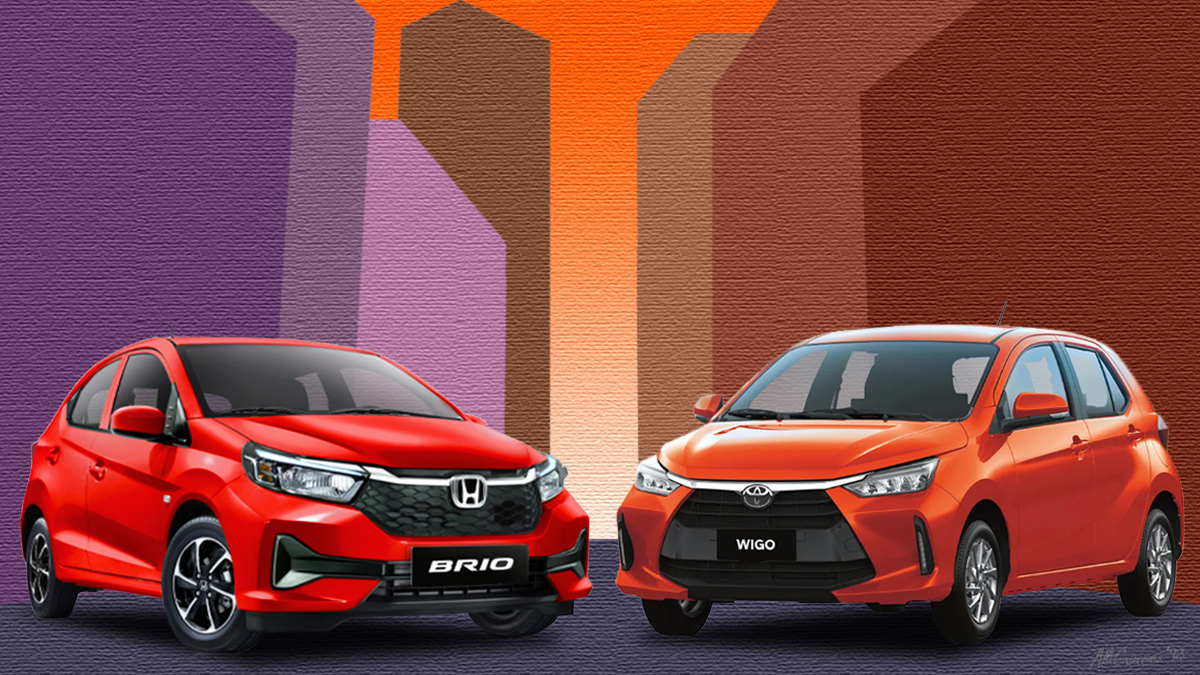

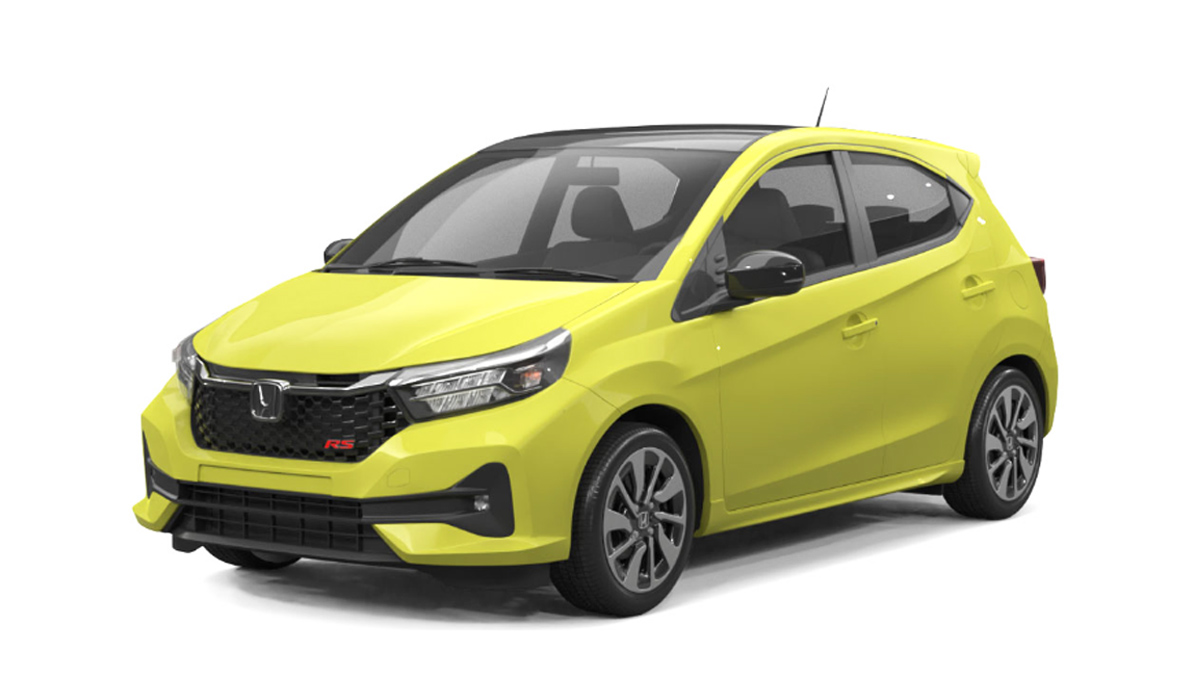
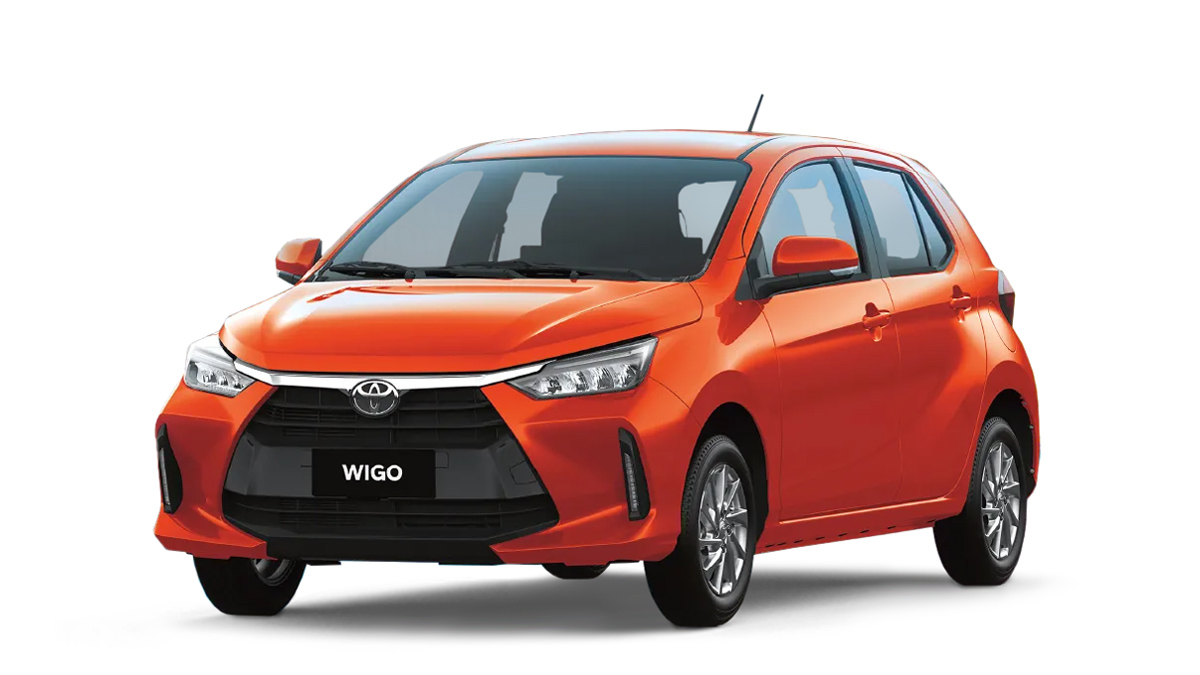
On July 13, 2023, Honda Cars Philippines unveiled the refreshed version of its little Brio hatchback. The following day, Toyota Motor Philippines launched its all-new Wigo. For this spec-sheet brawl, we’ll be pitting the two newest city cars to hit the market. It looks like the small-hatchback wars are once again heating up.
ALSO READ:
Specs, prices, features: Everything you need to know about the 2024 Honda Brio
Here’s a full guide on the 2024 Toyota Wigo

The new 2024 Brio is a refresh of the second-generation incarnation of the Japanese carmaker’s city car which made its ASEAN debut in late 2018 and reached our shores in April 2019. Toyota’s 2024 Wigo on the other hand is an all-new model that adopts the A-segment version of the Daihatsu New Global Architecture (DNGA) platform.
While both are A-segment city cars, things are not quite the same under their short hoods. Like before the refreshed Brio sticks with its familiar 1.2-liter SOHC i-VTEC in-line-four engine which puts out 89hp and 110Nm of torque. The all-new Wigo retains the previous gen’s 1.0-liter DOHC VVT in-line-three mill which produces 66hp and 89Nm of torque.
While the power of Toyota’s city car is down compared to Honda’s city car, it’s a lighter car. Note that the curb weight of the all-new Wigo isn’t published in the local spec sheet, but a quick peak at its Indonesian twin tells us that it’s well under 900kg. For comparison, the Brio 1.2 V CVT has a curb weight of 969kg. An area where the two carmakers agree on, though, is the use of a continuously variable transmission—this one’s also new for the Wigo.

In terms of overall size, the refreshed Brio is longer, wider, and lower than the all-new Wigo, but interestingly, Toyota’s new city car has a significantly longer wheelbase than its Honda rival. When it comes to standard wheels, both have 14-inch alloys on 175/65 R14 rubber. The refreshed Brio’s wheels have a dual-tone finish while the all-new Wigo gets more conventional monotone wheels.
The 2024 Brio 1.2 V CVT stickers in at P827,000, while the 2024 Wigo 1.0 G CVT carries a P729,000 price tag. The price gap between the two city cars is P98,000. The Brio has a bigger and more powerful engine, while the Wigo comes standard with extra safety features like electronic stability control and hill-start assist.
Still unsure which of these city cars you’d choose? Take a look at the specs we prepared below for a detailed side-by-side comparison. Are you with Team Brio or Team Wigo? Let us know which of these two A-segment hatchbacks you’d rather own.
Specs: 2024 Toyota Wigo 1.0 G CVT vs. 2024 Honda Brio 1.2 V CVT
Honda Brio 1.2 V CVT |
Toyota Wigo 1.0 G CVT |
|
| Price (Philippine Peso) | 827,000 | 729,000 |
| Drive | FWD | FWD |
| Seating capacity | 5 | 5 |
| Engine Type | 1.2-liter inline-4 gasoline | 1.0-liter inline-3 gasoline |
| Power | 89 | 66 |
| Torque | 110 | 89 |
| Fuel tank capacity (liters) | 35 | 36 |
| Transmission | continuously variable transmission | continuously variable transmission |
| Brakes (Front/Rear) | disc/ drum | disc/ drum |
| Wheels | 14-inch alloy | 14-inch alloy |
| Tires | 175/65R14 | 175/65R14 |
| Front suspension | Independent MacPherson strut | Independent MacPherson strut |
| Rear suspension | Torsion beam | Torsion beam |
| Seat material | Fabric | Fabric |
| Infotainment system | 7-inch touchscreen | 8-inch touchscreen |
| Connectivity | Apple Carplay + Android Auto | Apple Carplay + Android Auto |
| Airbags | 2 | 2 |
| ABS w/ electronic brakeforce distribution | Yes | Yes |
| Electronic Stability Control | No | Yes |
| Hill-start Assist | No | Yes |
| Rear Camera | No | Yes |
| Parking Sensors | Rear | Rear |
| Headlights | Reflector Halogen w/ LED DRLs | LED |
| Dimensions (mm) | 3,798 x 1,682 x 1,487 | 3,760 x 1,665 x 1,515 |
| Wheelbase (mm) | 2,405 | 2,525 |