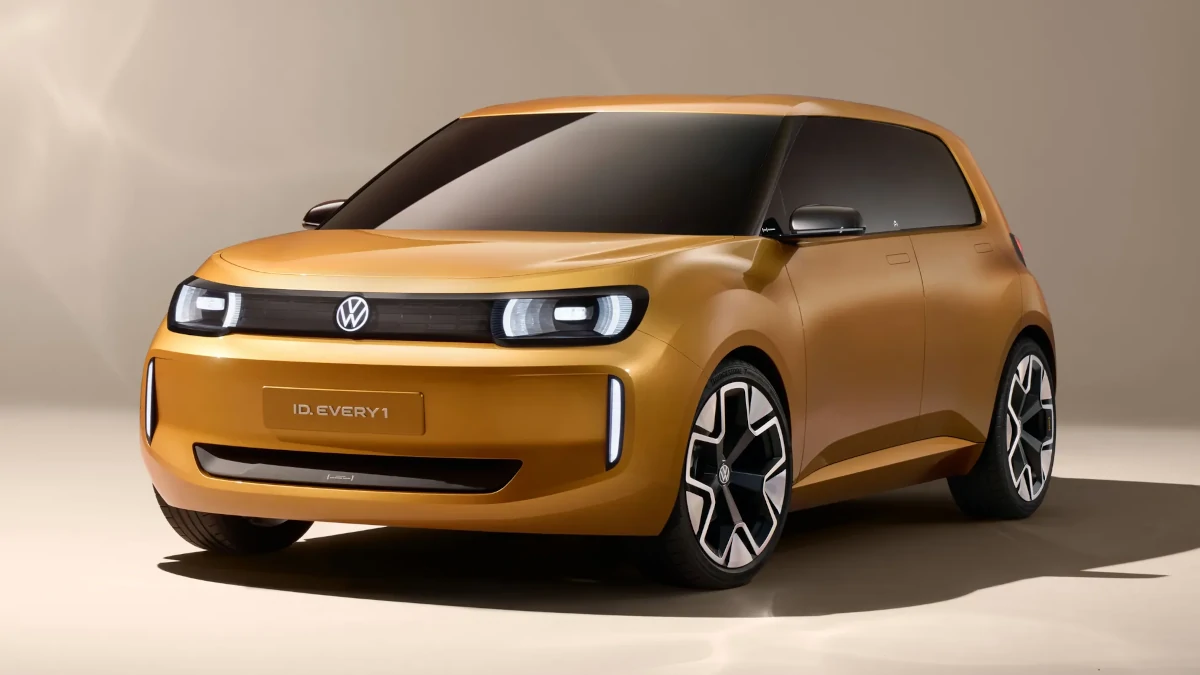

Something big is happening with Volkswagen. Something small. Small car, small price. But an actual Volkswagen. Just as the Up! was a timeless, well-made small gasoline car and in everyone’s eyes a real Volkswagen, the ID.1 will be the same idea—IDea if you must. But electric.
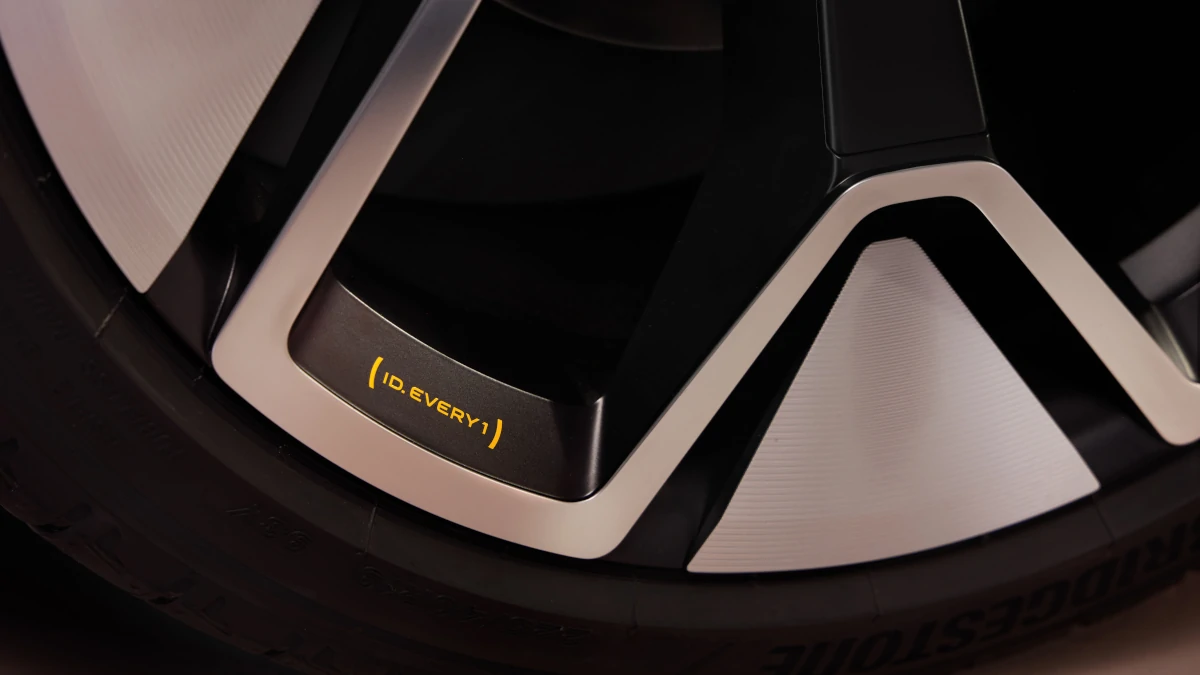
This by the way is a concept, called the Volkswagen ID.Every1 because bad puns aren't just a Top Gear thing, evidently. The real thing is out in 2027. By then, it might actually be given punctuation-rich ID.Up! badges, because the Up! is the car it seeks to emulate. Before that, in 2026, we’ll get the production version of the ID.2all concept shown last year, and that one might be badged ID.Polo because, well, you know why.
And that, of course, will also spawn the GTI version we got so frothed up about when they showed its concept.
OTHER STORIES YOU MIGHT HAVE MISSED:
First impressions: The new Tesla Model Y is full of surprises
Variants, prices, specs: Everything you need to know about the 2025 BYD Shark 6 DMO
The reason we are getting equally frothed up about the Every1 isn’t performance but style and price. VW claims it will cost less than €20,000 (P1.86 million before taxes) in Germany. For that, you’ll get a real Volkswagen, built in Europe, with 95hp and a range of ‘at least’ 250km from its 38kWh LFP battery.
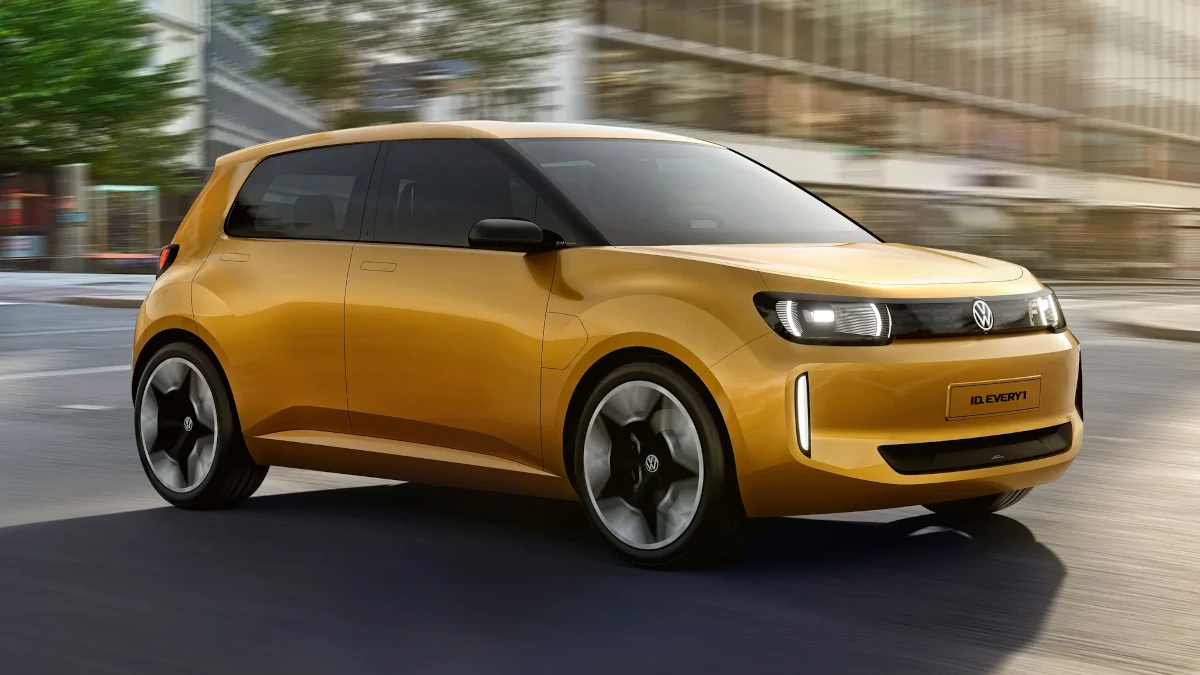
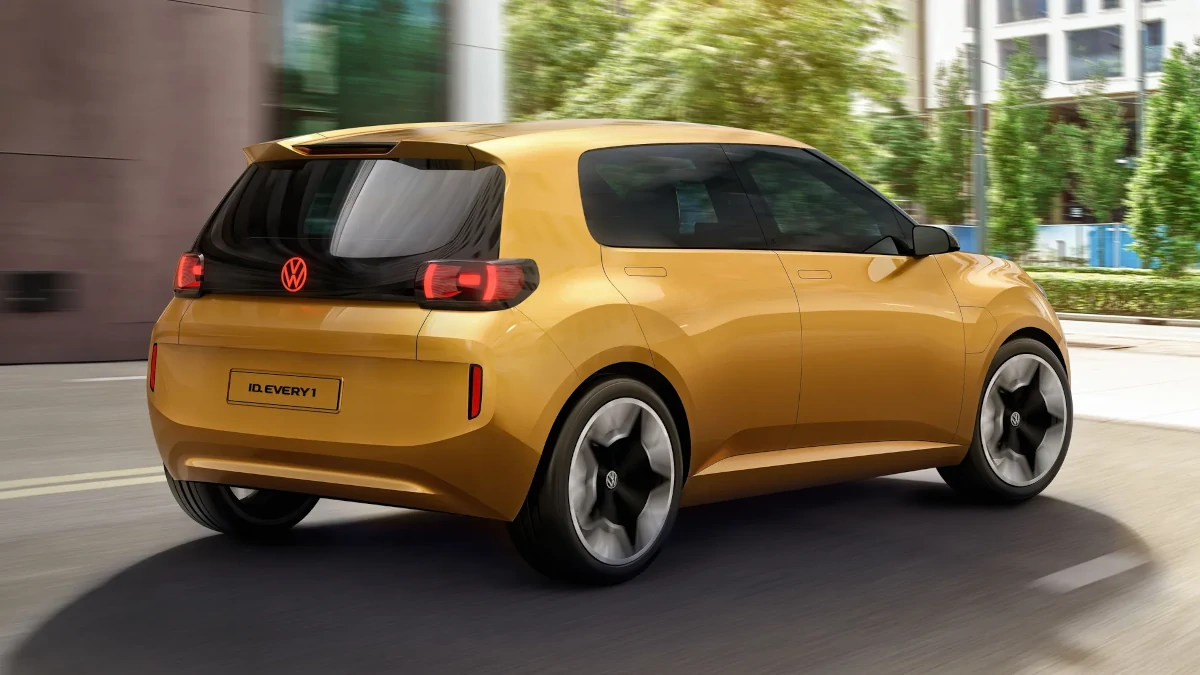
And it’ll look like this, VW design boss Andy Mindt is adamant. There are bits of this that are concepty, but the shape and proportions and purity—well, once you’ve added windhield wipers and normal door handles—will stay.
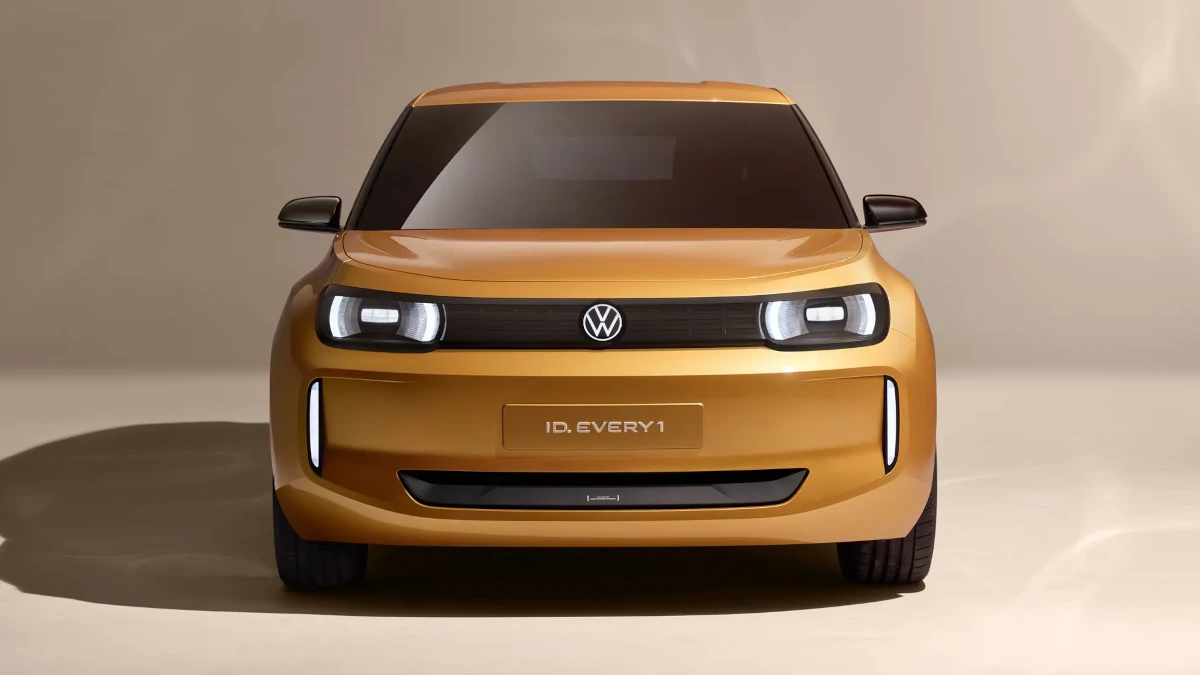
“Everything we show now is the exterior,” Mindt told us. He mentions the Up! often when talking about this car. I’m happy because I think the Up! is a superb piece of design. Nearly 15 years after launch and now out of production, it still looks fresh and relevant. And the ID.Every1 shares that clever quality of looking like a real VW, but simpler and less formal and more cheerful than a Polo—or, indeed the ID.2all.
The ID.Every1 is “a completely friendly car. The face is really human with human eyes.” Mindt points out how the eyes and the headlamps have deep-lit borders so the bulb always looks like it’s in the center of the lamp whatever your viewing angle. “Like the Mona Lisa, it’s always watching you. It’s a bit spooky.”
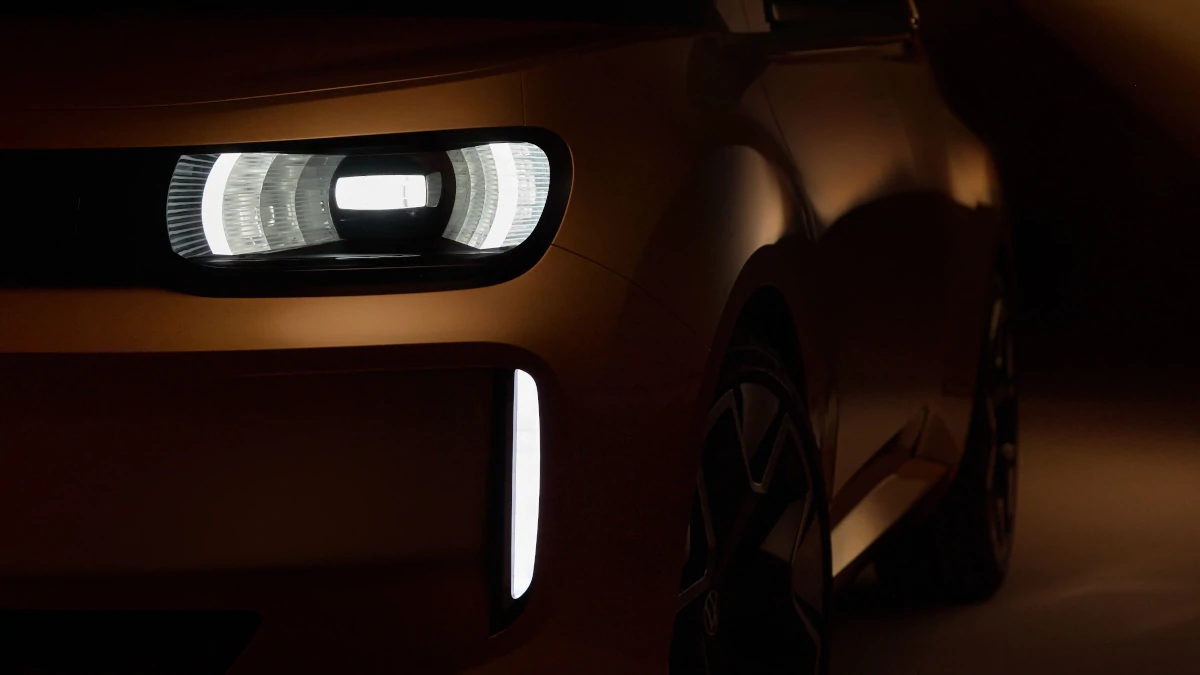
Between the lamps is a flat panel. Mindt didn’t want an expressionless body-colour strip. “This is friendly, not super-cool, not about killing zombies.” But that’s about the only black part, because simplicity informs the whole design, saving money with it.
“Look at all the details, there’s no decoration on it, no additional parts," he said. "It’s all gone. No light bar. No cladding on the doors or sills. There’s no matt black. And this saves money, which we put into other things like bigger wheels. It’s a self-confident car, so you never feel under-dressed.”
The body has a terrific stance, approachable yet solid and monolithic. The wheelarches are immaculately surfaced, and Mindt points out they’re deep above the wheels—visually pulling the wheels out of the body—yet lower down the doors are less waisted because that helps cut drag. Mindt namechecks the 911 and Defender in arguing that well-executed un-decorated shapes don’t have to be cheap-looking.
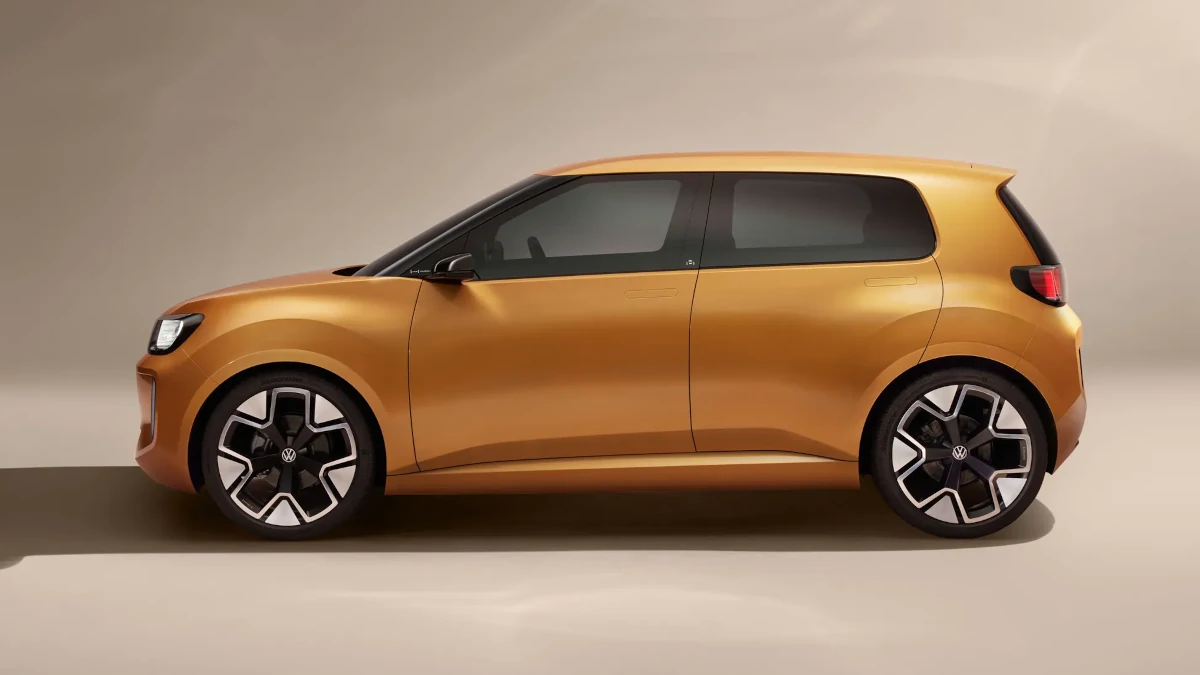
It’s a simple two-box outline, with a surprisingly long, flat hood. Mindt says this makes the car look chunky and safe—reassuring for parents who buy baby cars for their neophyte driver kids. Black-painting the A-posts does the job of visually lengthening the cabin and emphasizing forward motion.
The upright screen avoids having a big, glassy oven in front of the car, too, he points out, with the air of a man who was somewhere else—anywhere else—when the shovel-nose ID.3 was designed. But then, the first ID cars were shaped to announce their new-age drive. The new ID cars—Mindt’s ones—are shaped to announce that they’re Volkswagens.
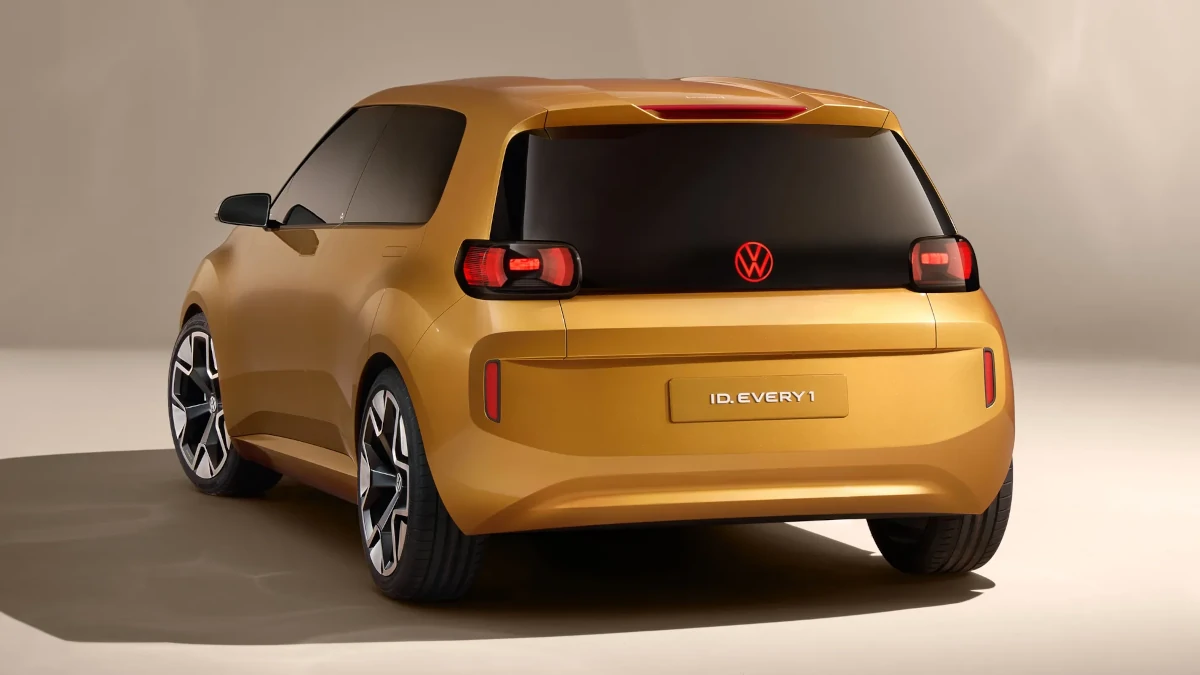
The rear end shows more clever simplicity. The roof has a central channel. Headroom isn’t a problem because this is a strict four-seater, and the channel gives the roof extra stiffness, avoiding the cost of the usual extra support structure. And it cuts drag. The single tailgate panel is simplified because it doesn’t carry covers for the opening button or the number-plate light, as they’re tucked under the bottom edge and the plate is mounted on the bumper. The back lights match the front, and that design theme pops up all over the cabin, too.
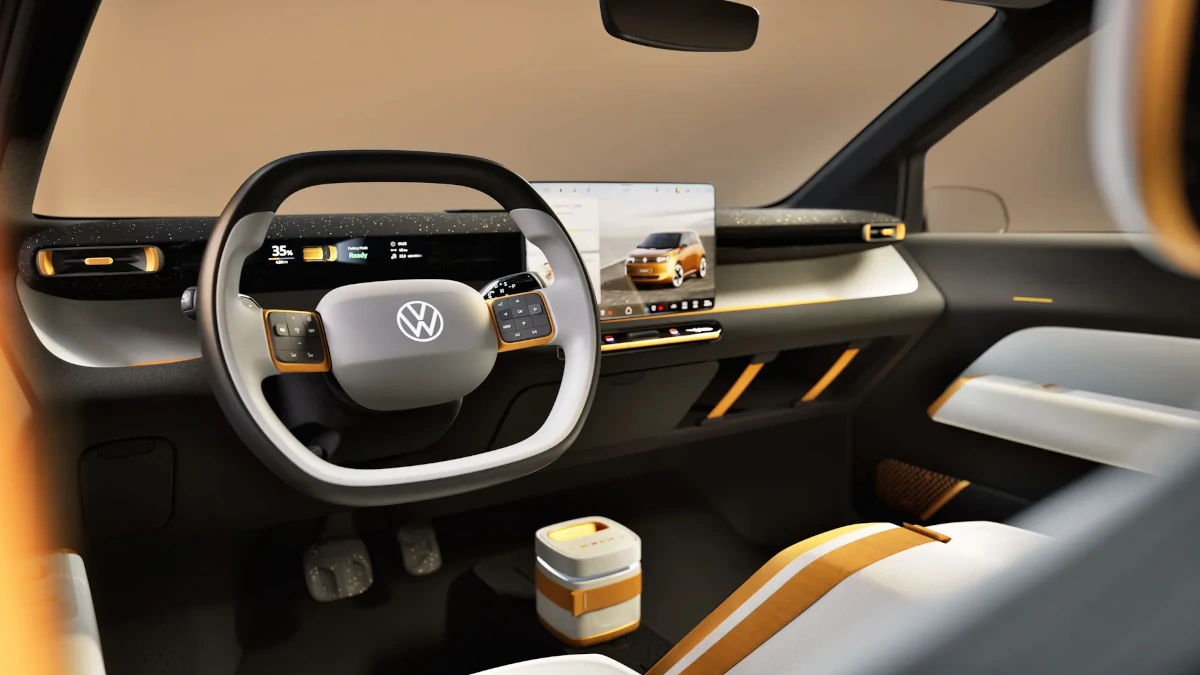
Inside, it’s simple but not bare. Production cars tend to migrate away from their concept precursors more in the cabins than outside, so let’s not assume WYSIWYG. But we learn from Mindt that the plan is for an undressed cabin in the base versions. You’ll be able to deck that out more lavishly by buying a higher trim version or adding accessory parts.
Below the central screen are a physical volume knob and temperature buttons. Yup, VW is rowing back on its widely lambasted all-screen interface: “Let’s say our usability concept so far was heavily criticized by customers.” The screen will have some permanent icons and a flat menu structure. Besides, cars this size are given out as carpool and rental units to drivers who won’t know them. No one wants to land on holiday and spend two hours jabbing at a screen before they manage to leave the airport carpark.
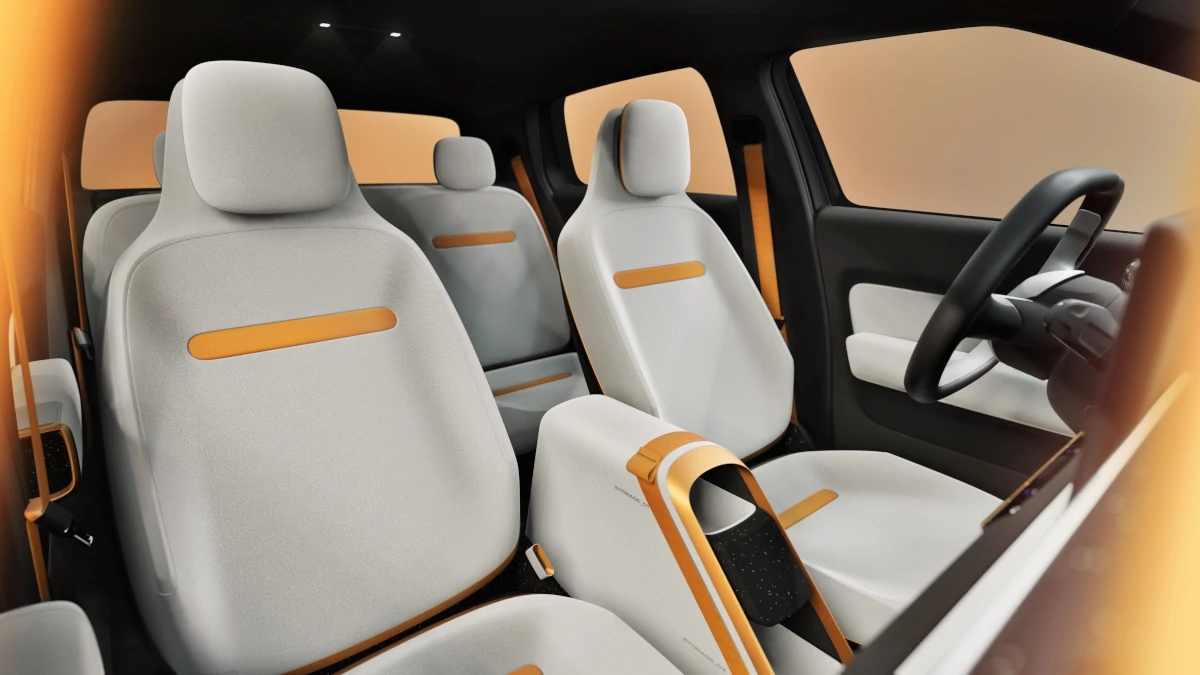
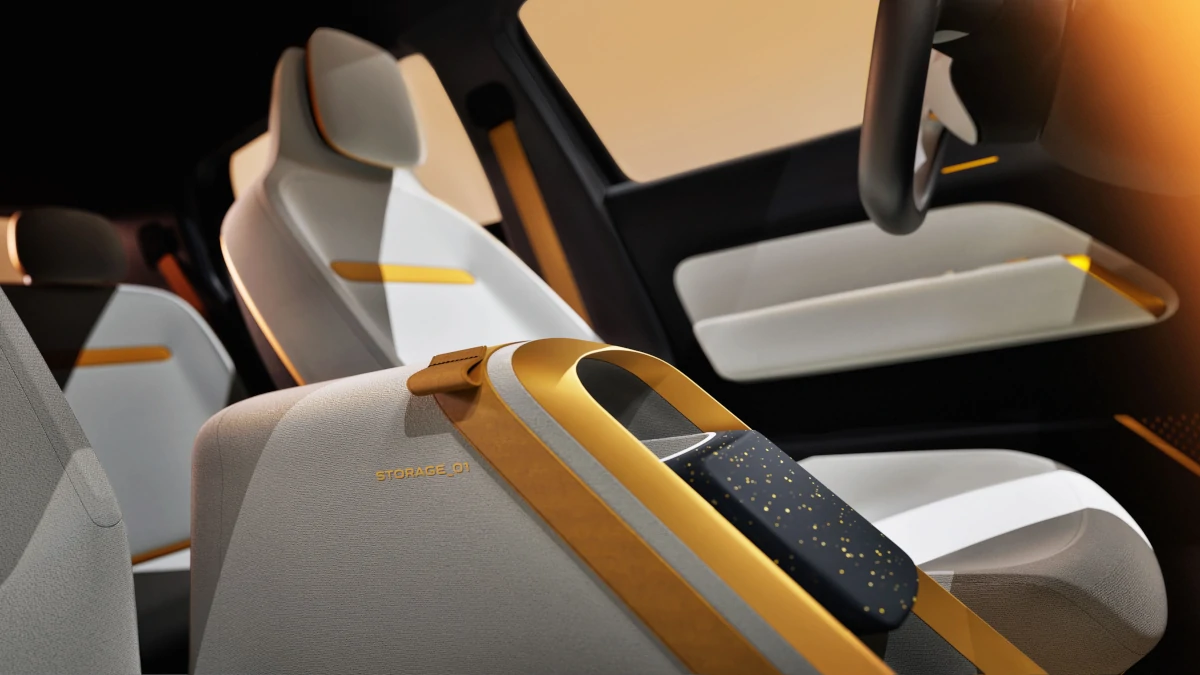
Different cabin layouts will be aimed at three different groups. The young on their first car, the old on their last, and shared users like healthcare workers or delivery drivers. For the young and the old, they’ll likely be one-car households and need to do decent journeys. It’s patronizing to assume baby cars are just city cars or second cars. Hence the target of 250km range, and quick charging to boot.
The ID.Up and ID.Polo and a crossover will use a new front-drive platform. That frees up space in the back for a deep cargo area, and a lockable bay under the backseat cushion for charge cables and, say, a laptop.
These cars share some mechanical and electrical parts with the bigger rear-motor Volkswagen EVs, but the motor is all-new, and so is the LFP battery, a cost-saving but robust chemistry and in a compact lightweight cell-to-pack construction. The rear suspension is a torsion beam, not the more expensive multilink of the bigger cars.
Low manufacturing costs really matter to VW. It has peered over a financial cliff-edge lately. Silke Bagschik, who has been head of sales and marketing for the ID line since the start, said they wanted to do a baby EV, but didn’t know if they could match Chinese-car prices.
So they got 600 engineers into a room to scratch their heads for cost savings, and only gave this car the go-ahead when they’d found enough. Shifting to front-wheel drive is one, because it bundles all the electronics, high-voltage wiring, and charge port at one end of the car.
Plus, they’ve now learned from the early software headaches and crashes. Part of the early problem was that VW used multiple suppliers for different aspects of the car, just as it always did with combustion-engined cars. Those digital interfaces were Babel. Now VW has built far more of the code: “It won’t look much different, but we have a better handle on the complexity.” She wouldn’t say if it uses input from VW’s recent software deal with Rivian.
She admitted Europe isn’t yet able to cost-match the Chinese. “We need lower energy prices and raw materials,” she said, and spoke of a level playing field—likely code for tariffs.
But she sees the monthly cost, with lease payments and fuel, of the little ID as matching a small gasoline car. She’s not a fan, by the way, of an ICE ban: “There’s no need. People get hooked on EVs once they try them. No one wants to take anything if it’s mandatory.”
We'd be Up! for this one.
NOTE: This article first appeared on TopGear.com. Minor edits have been made.