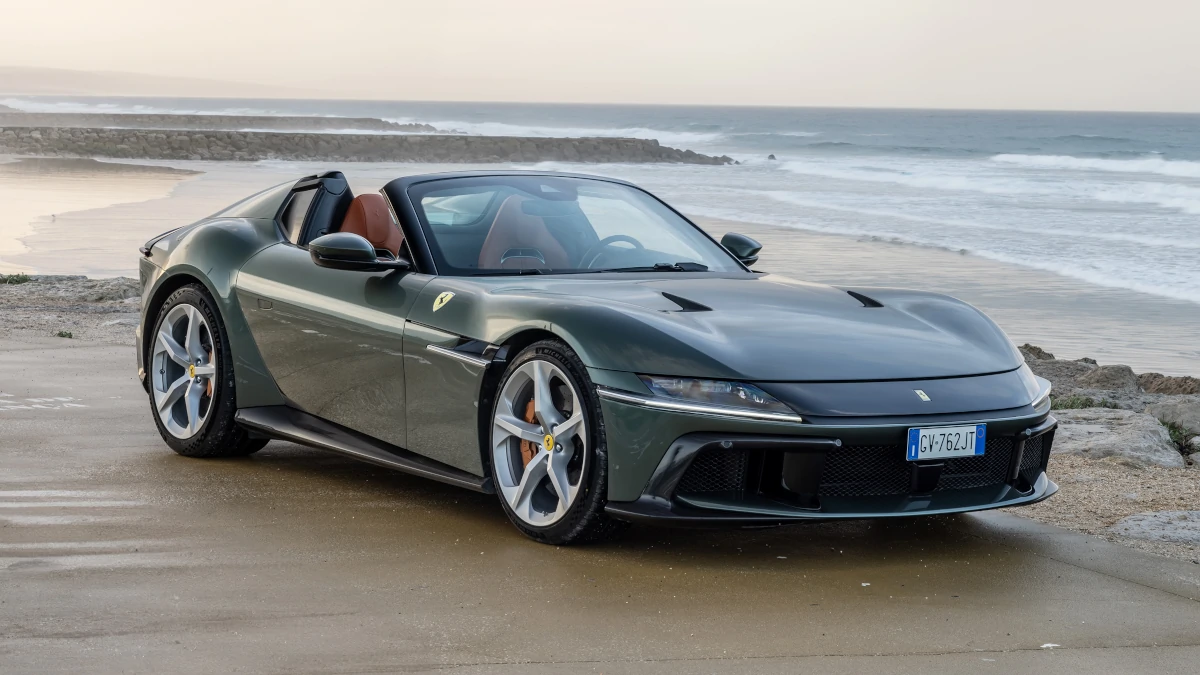
In the past, Ferrari made you wait to get a suntan in one of its front-engined V12 super-GTs. Cars like the 550, the 575, and the 599 only got afterthought open-top variants right at the end of their lives—with some fairly horrendous roof arrangements hastily patted down over the cabin.
For the F12, you needed your name double-underlined in Ferrari’s little black book to be invited to buy the stunning TRS version, or the F60 America. And though the 812 GTS got a folding hardtop and wasn’t limited to 0.5 units, it came along in late 2019, 2.5 years after the Superfast was unveiled.
But that car’s popularity has shunted an al fresco 12Cilindri up the to-do list.
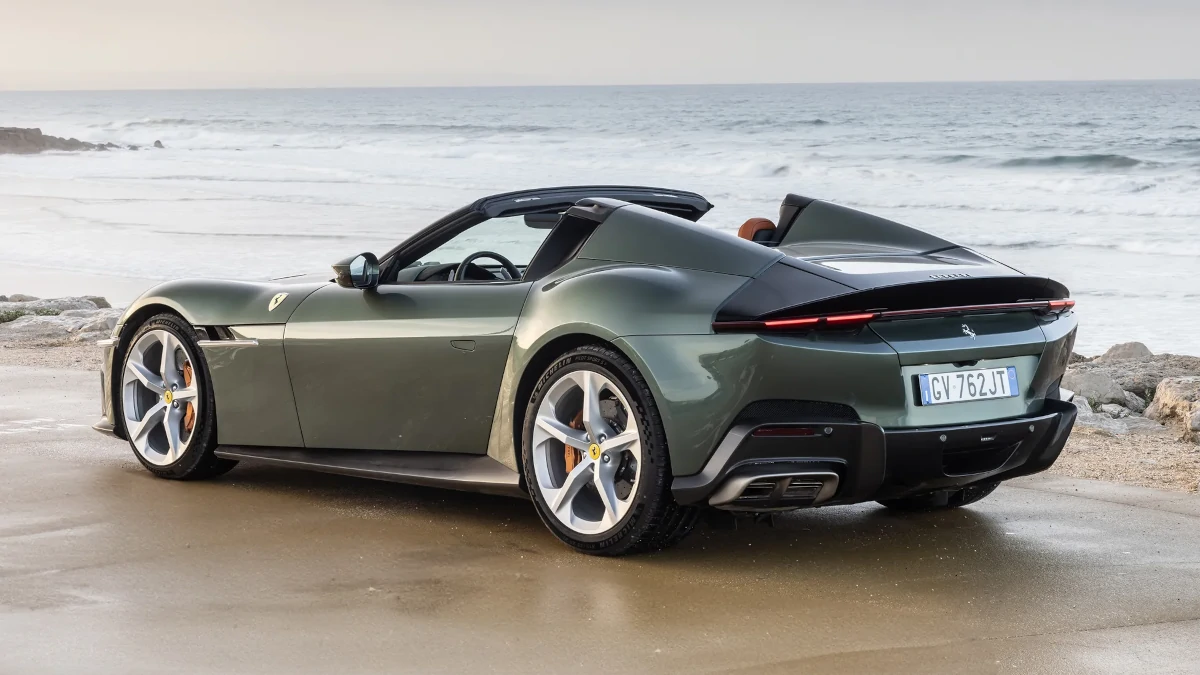
So why is this called the Ferrari 12Cilindri Spider, not GTS? Well, we’re going down the ‘why are Ferrari names illogical?’ rabbit hole. Ferrari explained at the car’s reveal that while ‘GTS’ used to be Ferrari-speak for ‘targa’ and Spiders had soft tops, that isn’t really the case any more because the company mixes and matches disappearing roofs across the range. The 296 and the SF90 get RHTs—retractable hard tops. So did the Portofino. But the Roma Spider is canvas-roofed, and limited-run cars like the SP2 and the SP3 have a manual roof. Or no roof at all. The 12Cilindri gets a hardtop because Ferrari considers it a ‘more comfortable’ solution that’s appropriate for a GT.
OTHER STORIES YOU MIGHT HAVE MISSED:
Ferrari 12Cilindri unleashes its 12-cylinder fury in PH; prices start at around P43-M
Angie Mead King’s new Ferrari Purosangue is a thing of beauty
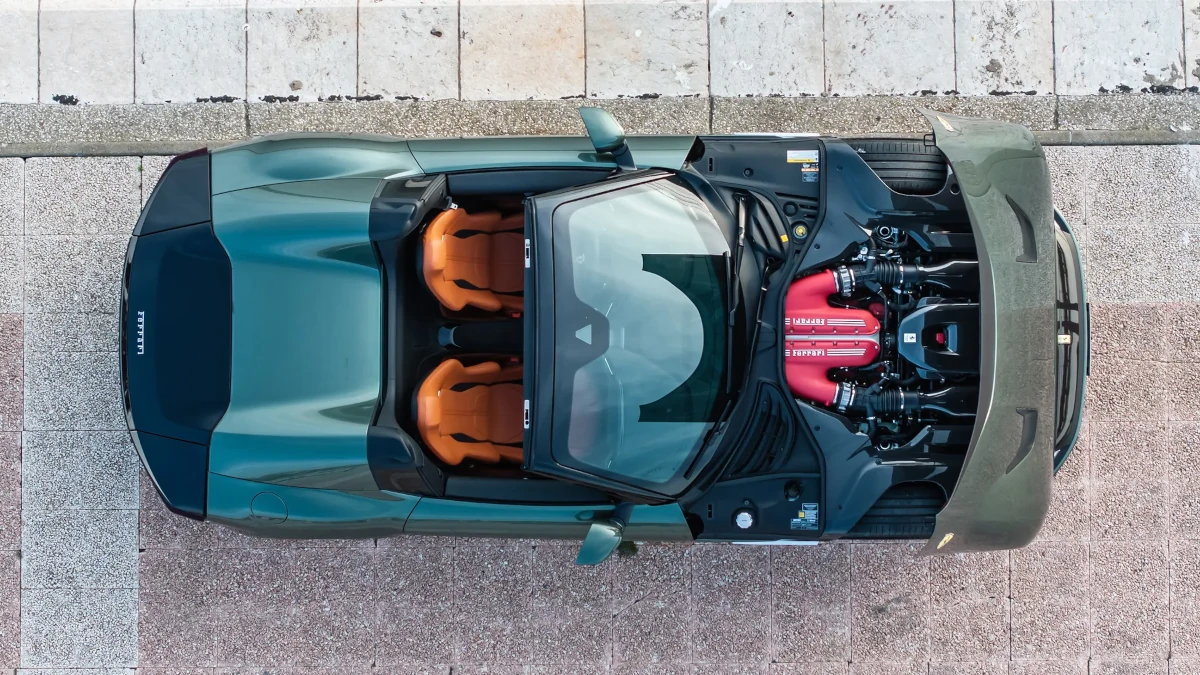
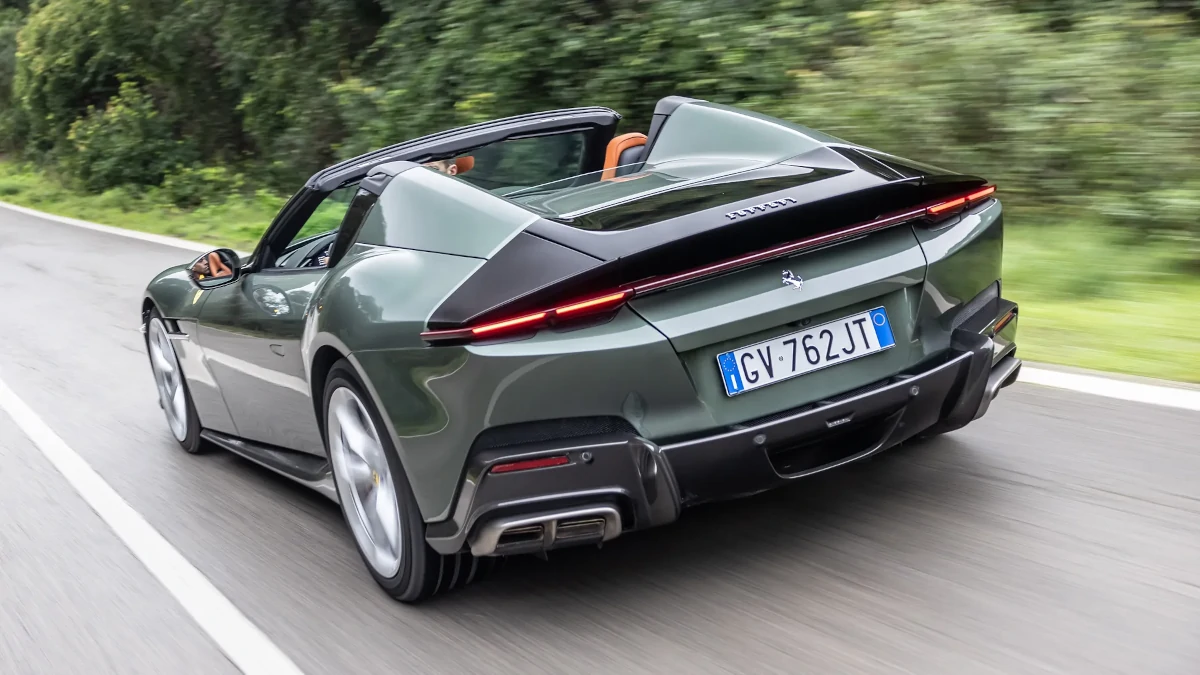
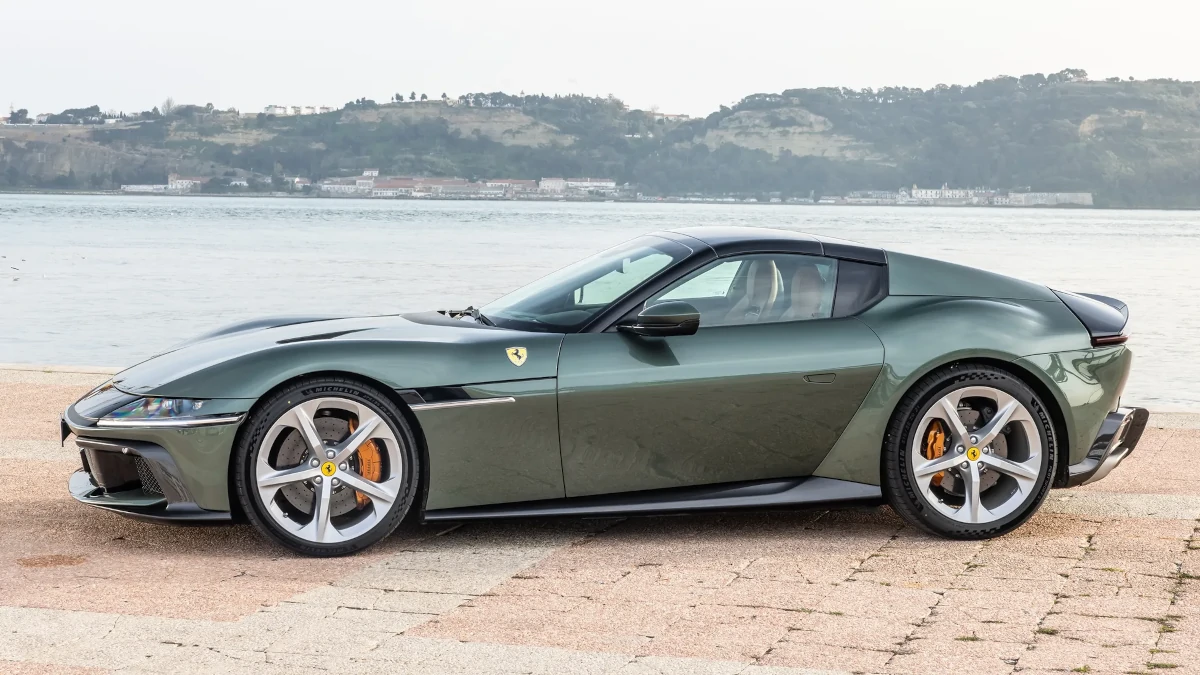
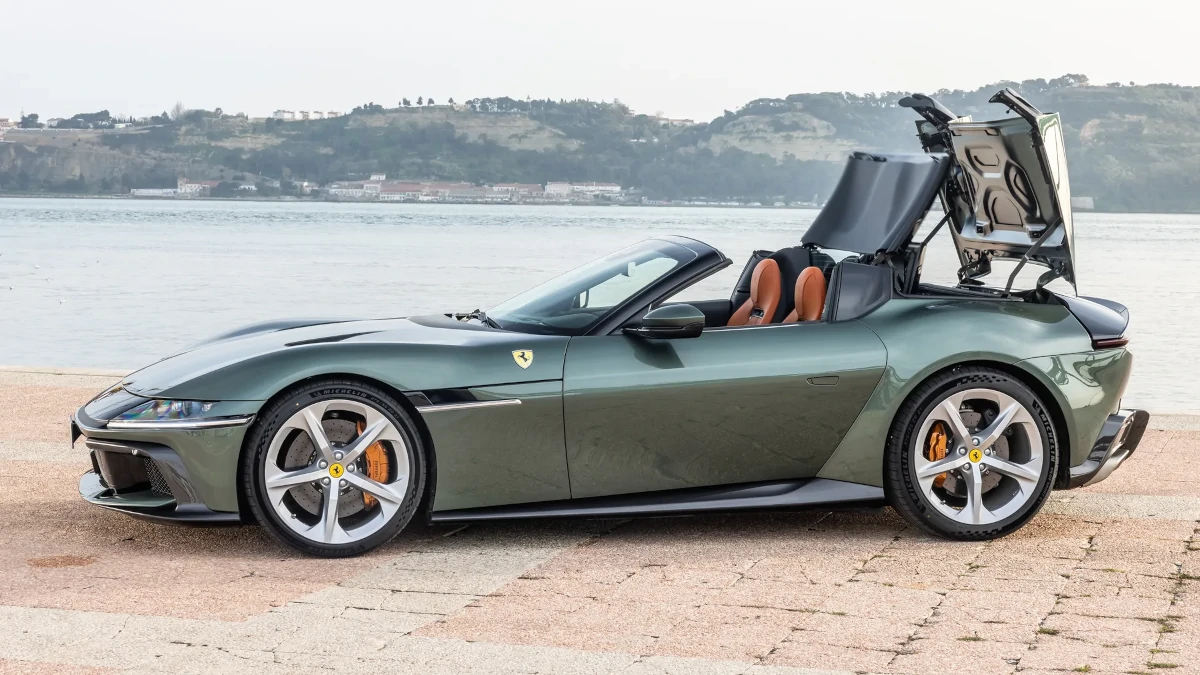
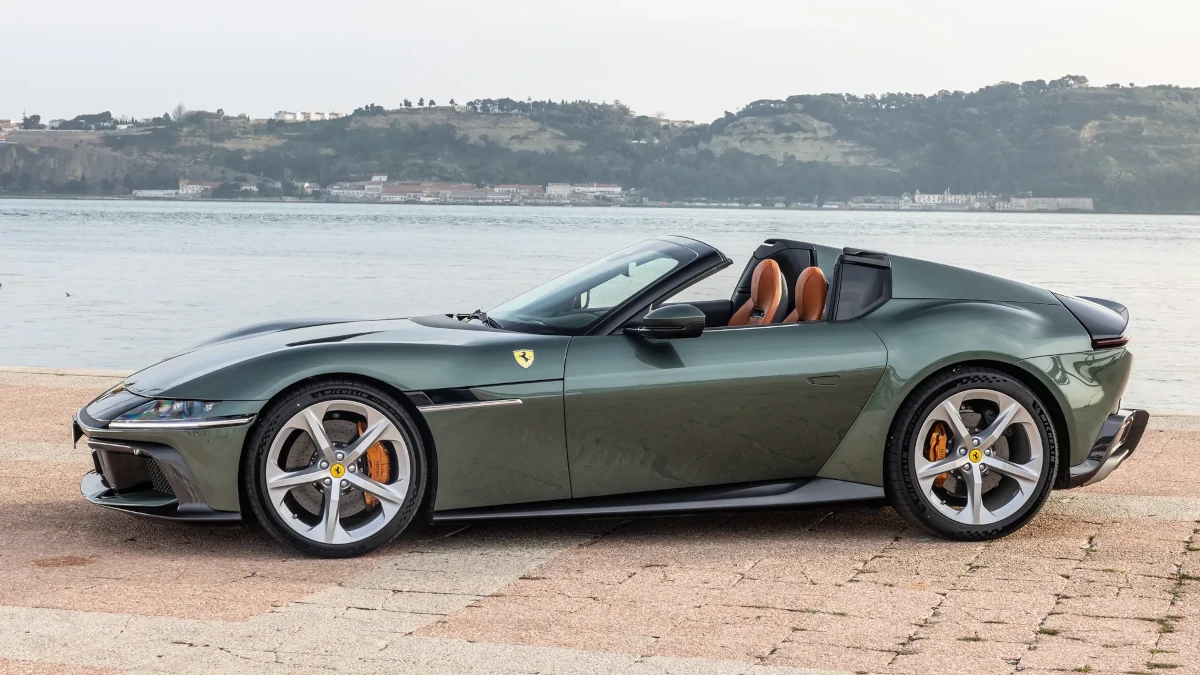
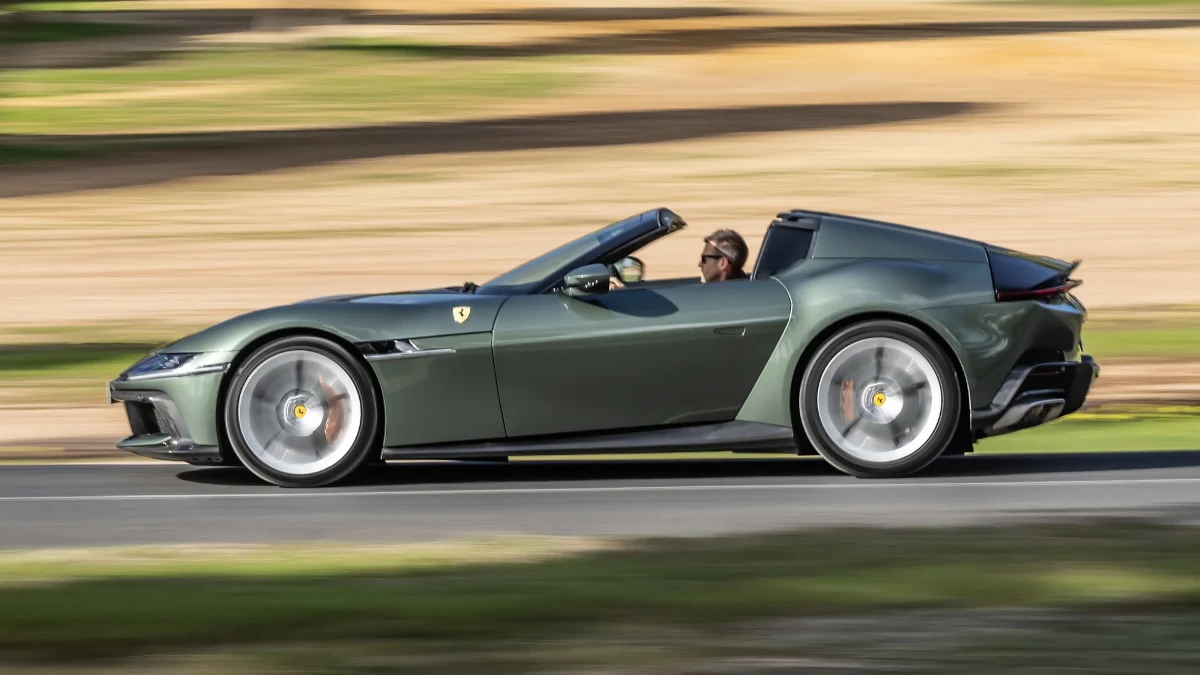
The roof here is dramatically different to the one found on the 812 GTS. Four hydraulic cylinders and an electric motor work together to silently stow the two-piece top in a dedicated burrow under the twin-peak buttresses. The entire operation takes 14sec and can be completed at speeds of up to 45kph. Meanwhile, the rear window can be operated independently to allow more exhaust noise into the cabin on rainy days.
What is innovative are the tiny elephant ears in the pillars just behind the cabin. Those small plastic lobes control the air rushing down the car’s flanks and stop it from crashing noisily in the air spilling into the rear deck, which would create buffeting. The 12Cilindri team has the F1 wind tunnel to thank for that. Underneath the tonneau assembly, there’s a new aluminum alloy roll bar for extra strength should the worst happen.
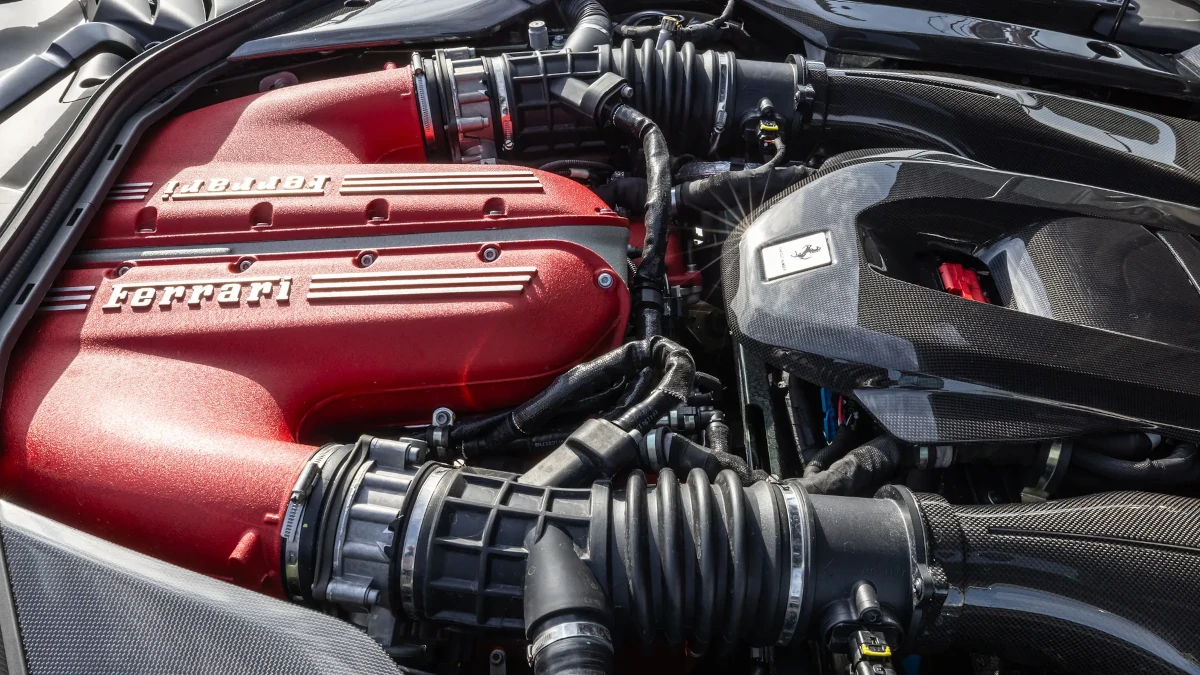
Under the ‘cofango’ clamshell hood (dramatically hinged at the front) lies the 6.5-liter naturally aspirated V12, nestled behind the front wheels. It develops 819hp and revs to 9,500rpm, but you can call up the vast majority of its 677Nm of torque from a dawdling 2,500rpm. All as per the coupe, of course.
In the Spider, it has to haul along an extra 60kg of roof gubbins and sill strengthening, but you’ll need a police laser speed gun to spot the deficit. The Spider claims 0-100kph in 2.95sec (the coupe’s official time is 2.9sec dead), 0-200kph in 8.2sec, and a top speed of 340kph, roof up or down.
It doesn’t feel like it has lost anything dynamically from the fixed-roof car, and indeed, there’s a 15% rigidity uplift from the 812 GTS. The same razor-sharp turn-in, uncanny agility, and searing pace as the regular 12Cilindri are all present and correct.
V12 Ferraris are top-dollar machinery and this is no different: The Spider commands a £30,000 premium over the coupe for a price of over £366,500 (P26.9 million before taxes), and that’s obviously before you’re introduced to the avalanche of options. Stitching. Paint. Carbon. Side shields. It’s easy to splurge thousands on all of them. There will be 12Cilindri Spiders with astronomical sticker prices.
The closest competitor is Aston Martin’s upcoming Vanquish Volante, which chooses a soft-top roof. It has an even brawnier V12, albeit assisted by twin turbochargers. There’s also the Bentley Continental GTC, which no longer offers 12 cylinders but is the best it’s ever been to drive thanks to electric hybrid boost. Certainly a heavier, more luxury-focused experience than the Ferrari, that one.
On the road
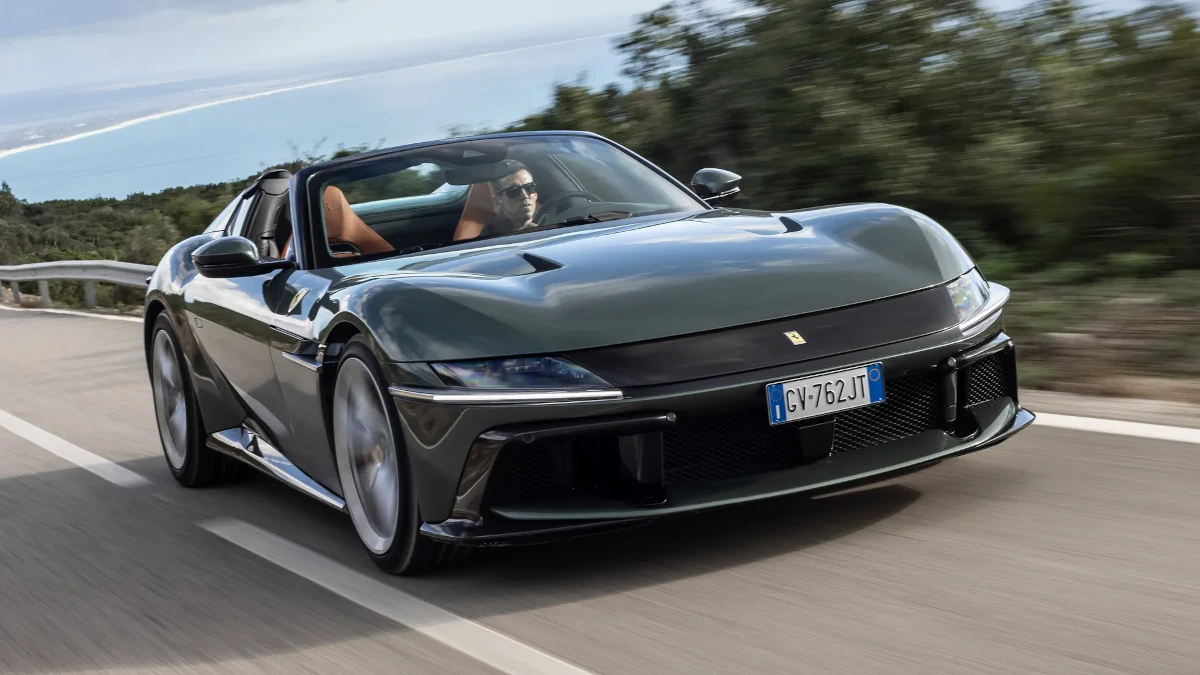
The Spider is a fine convertible, let’s establish that right away. The aerodynamic measures crafted to prevent the headwind from flapping your ears like a hummingbird’s wings have worked exactingly. You can readily sustain a 130kph cruise top-down without going deaf or communicating with your passenger using hand signals. Roof up? You’d never tell it wasn’t a fixed-head coupe.
Losing the roof doesn’t completely solve the mystery of the 12Cilindri’s slightly lacking noise. The V12 isn’t the presence here that it has been in the immediate predecessors. But the good news is you’re exposed to the music that hasn’t been muffled by ever-more stringent exhaust emission filters a little earlier.
In the coupe, you really need to be in the upper reaches of the rev range—above 7,000 or ideally 8,000rpm—before the soundtrack gets fruity. In the Spider, pleasing things start happening at about 5,000-6,000rpm.
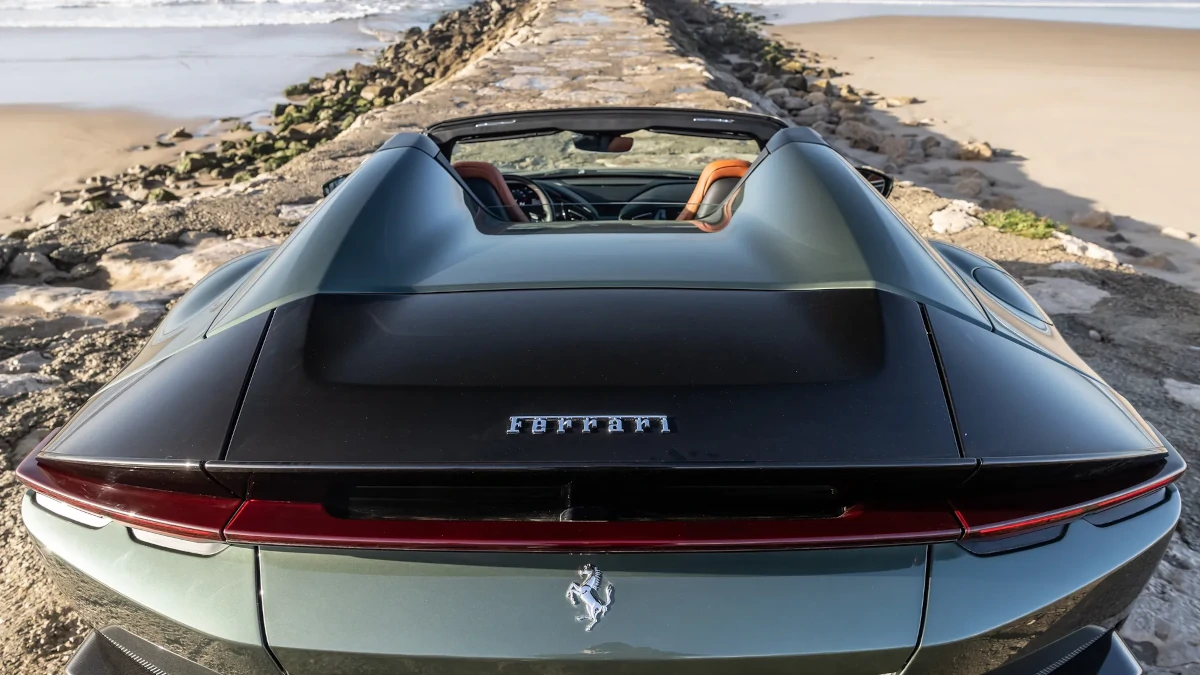
Roof up, there’s very little clue you’re even in a convertible. It’s extremely refined and feels perfectly rigid—a boon of a folding hardtop locking the structure in place. In fact, the Spider has an advantage over the coupe—the more conventional rear window shape and size makes for superior rearward visibility compared to the delta-wing pillars of the coupe.
Handling doesn’t feel compromised, although we’ve only tested the Spider on Portuguese roads so far. Hardly the gnarliest workout for the chassis, then, but it’s highly unlikely it’ll disintegrate like wet tissue paper when exposed to the rough asphalt. Larger castings throughout the aluminum chassis increase rigidity, while Ferrari’s recycled aluminum gearbox subframe saves 146kg of CO2 per car during production. Nice to know, but what’s chiefly satisfying from the driver’s seat is no meaningful loss in rigidity or performance.
When you see a 12Cilindri in the metal, it’s a long, low imposing clownshoe. You’d be forgiven for thinking that this Daytona-nosed canal boat would be ponderous in corners. But like the coupe, it’s freakishly agile. The Spider uses the same suspension hardware as the coupe with revised tuning, and the third generation of Ferrari’s once-spikey rear-wheel steering system. The darting turn-in takes some acclimatization, but once you’re dialed, in it’s incredible how much confidence the car gives you. Despite its value, power, and dimensions.
Plus, thanks to Ferrari’s never-bettered manettino mode switch, you can change the 12Cilindri’s character corner-by-corner, leaving things docile in Wet or Sport mode, or enjoying the sharper responses of Race and the guardian angel ‘side-slip control’ with the traction control dialed back. No other big super-GT meshes such awesome performance with a lack of intimidation factor quite so wholesomely.
While it remains a deeply indulgent experience, there’s no doubt that what Ferrari identifies as a slightly more GT-ish role for the car (now that the SF90 is the company’s out-and-out performance flagship) means the 12Cilindri isn’t as absorbing to drive as the 812 was. It doesn’t feel like it needs active aero flaps that raise at 60kph and close at 300kph to keep it on the road (they add 50kg of downforce at 250kph).
The twin-clutch gearbox remains the best in the business for sheer responsiveness, traction is plentiful despite the quantity of poke the rear tires are having to juggle, and feel from the brake-by-wire pedal is frankly perfect—you never need to second-guess stopping distances. But somewhere—likely in that triple-filtered exhaust—some of the trademark F12 and 812 lunacy has been lost.
On the inside
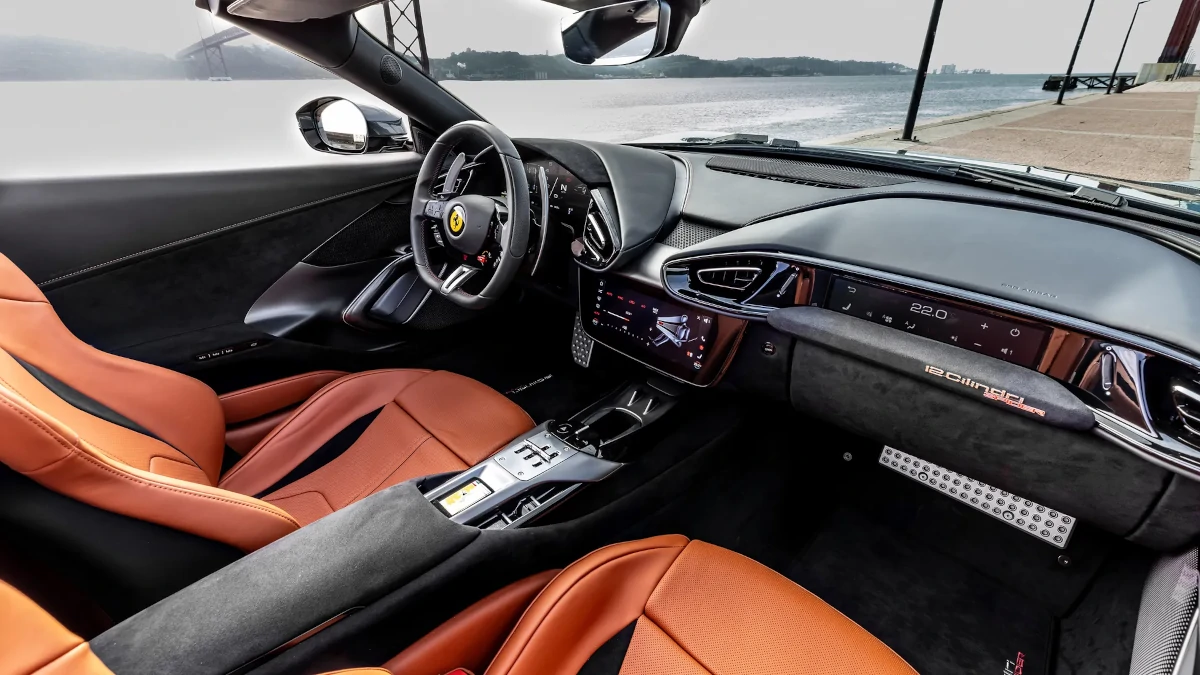
We’ll focus here on how well the 12Cilindri’s cabin works in a Spider. Because there are one or two problems here.
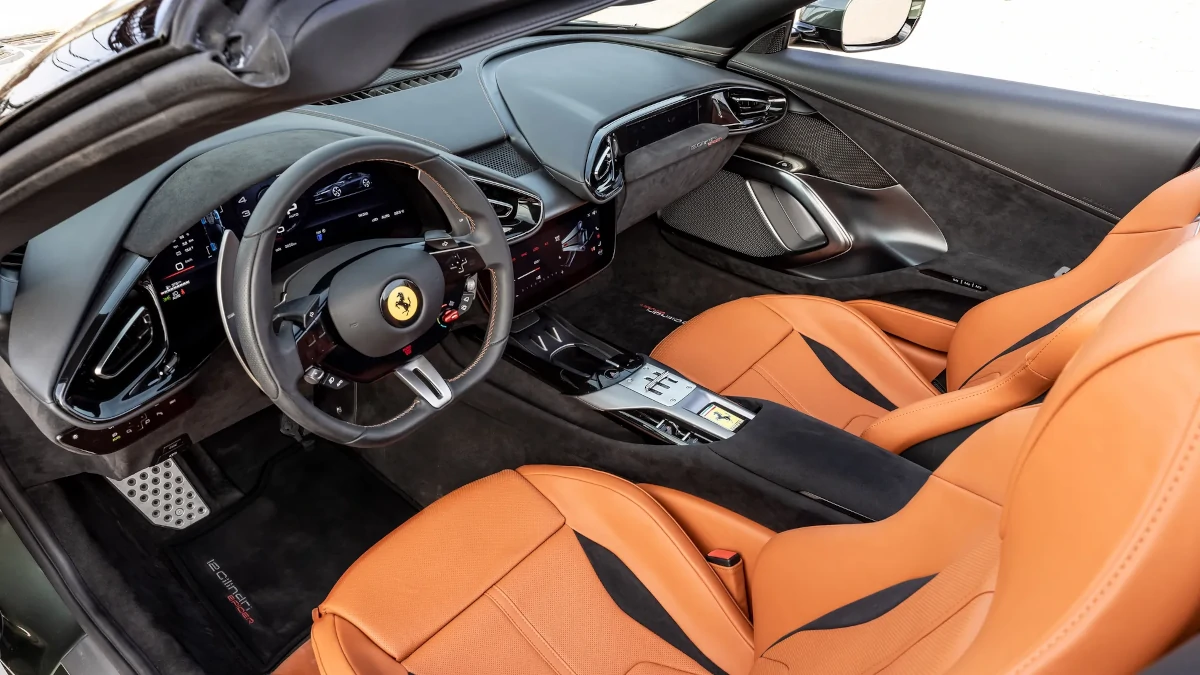
Ferrari knows that its haptic touch-sensitive steering wheel concept is flawed. Why else would it have set the ‘buttons’ up to default to being ‘off’ after 10sec, requiring the driver to wake them up with a press of the centre of the trackpad? It’s not a major inconvenience and does stop accidental swiping of the controls, but it’s still fiddlier than it ought to be.
The issue in the Spider is that when the sun is bright and behind you, shining directly into the cabin, it’s tricky to even see if the buttons are illuminated or not, and what exactly you’re pressing. And this issue repeats itself throughout the glossy, screen-dependent cabin. It can be tough to see what’s on the busy instrument screen. Accurately hitting the nose-lift tile or working the climate control in the low-set central display is a pain. And the passenger’s screen, showing revs, speed, or basic entertainment functions, is pretty much rendered obsolete.
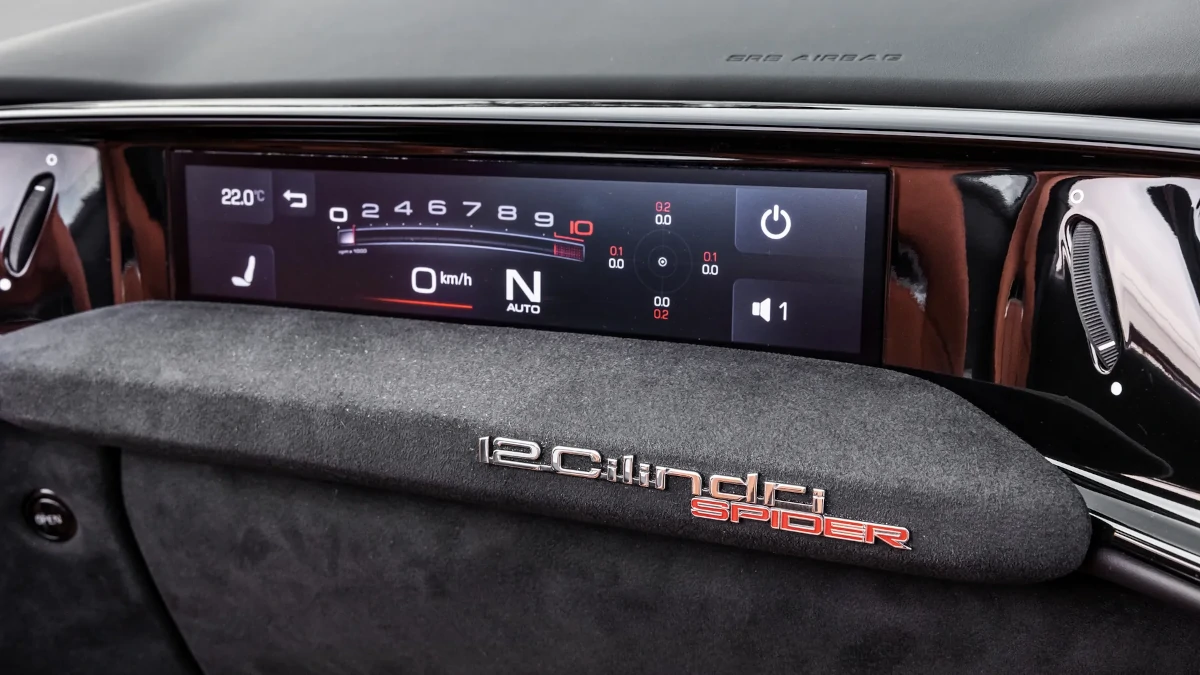
Convertibles and ordeal-by-touchscreen is by no means an issue unique to Ferrari: See the current Mercedes-AMG SL’s tiltable display or the hopelessly reflective old Lamborghini Huracan Spyder’s center console screen for details. Hopefully, this is the nadir of Ferrari’s button-free interior concept, and the next generation of Prancing Horses will enjoy a bit more common sense over style.
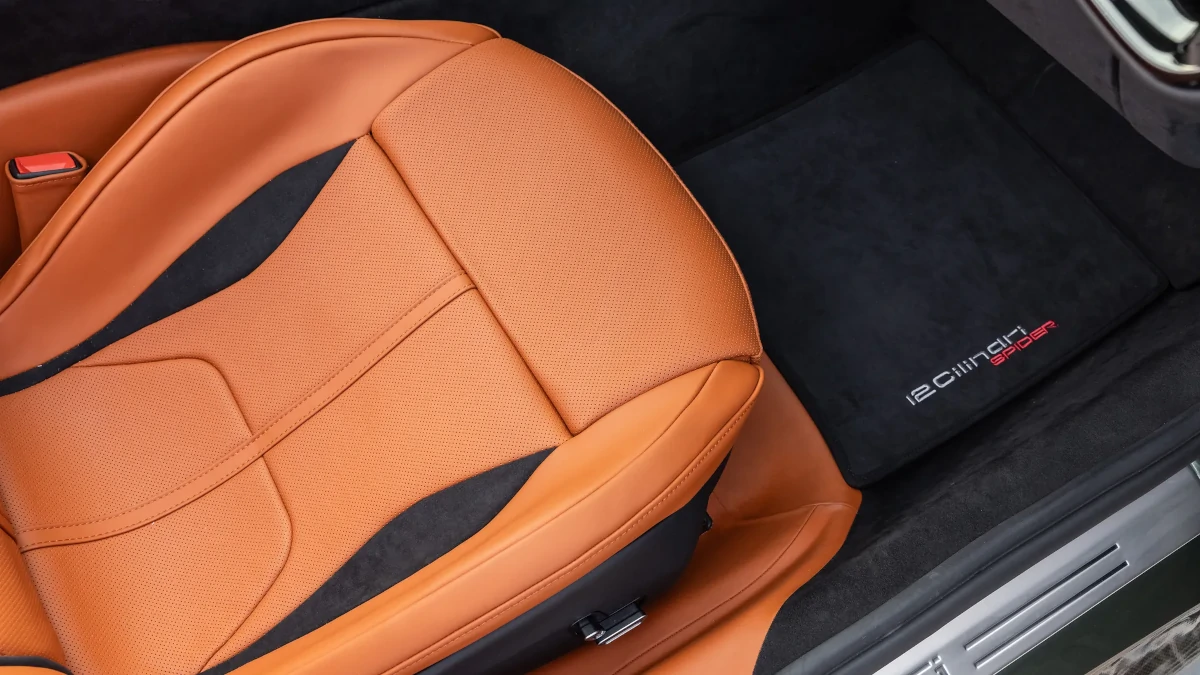
Otherwise, we don’t have many complaints here. Material quality is extremely high (don’t feel you have to lather everything in carbon—the metal finishes are beautifully tactile). Fit and finish is notably improved on the F12’s from a decade ago. If you find the standard seats a little flat in the base and want something more supportive, as we did, there are ‘racing’ carbon buckets waiting in Ferrari’s tailor-made program.
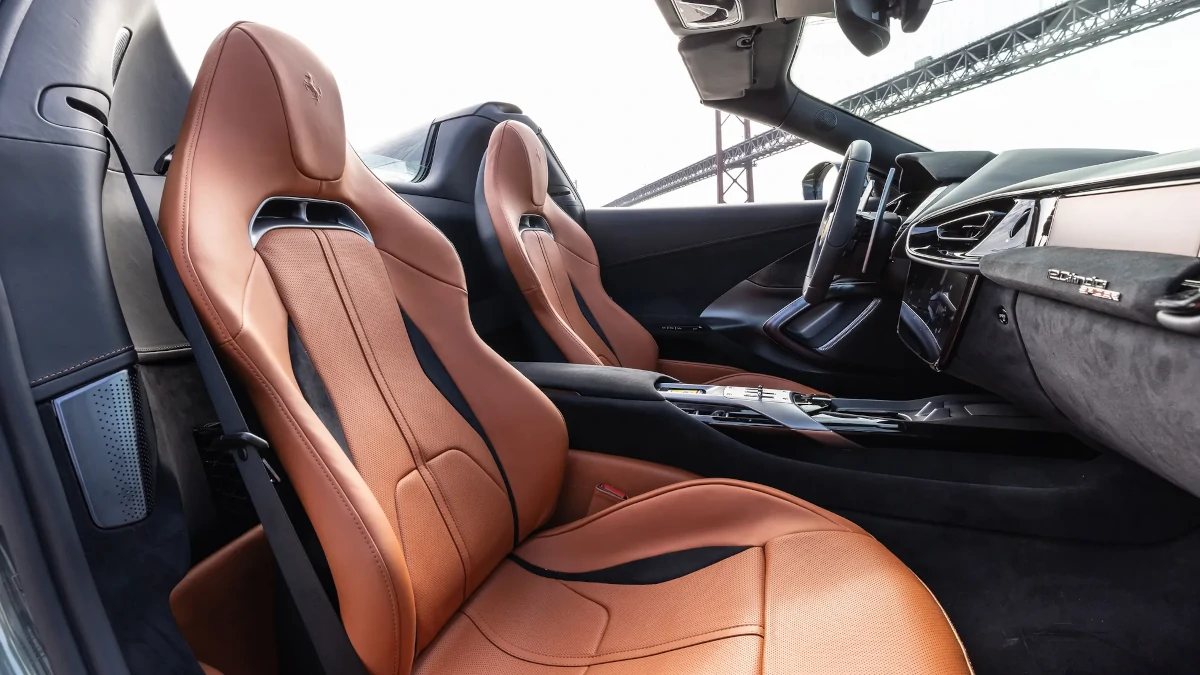
There’s plenty of adjustment in the driving position, and once you get to grips with the button placement, you’ll see the genius in Ferrari’s steering wheel lower half—having the main beam and the wipers at your fingertips rather than stalks arguing with the paddleshifters works superbly.
In the cargo area, there’s 200 liters of storage—enough for a suitcase or a couple of overnight bags, but perhaps not the proper grand-tourer luggage swallower you might hope. Suppose that’s the Purosangue’s job now. Even with a hybrid battery eating up space, a Conti GT musters another 60 liters of storage. How much luggage you can squeeze behind the seats will depend largely on how tall you are and where you position the seat.
Final thoughts
It’s not a given that taking a can opener to a Ferrari roof makes for a better experience. The SF90XX Spider is unforgivably wobbly for a track-inspired special edition. Driving the screenless SP2 Monza is like being slapped in the face. By a jet engine.
The 12Cilindri is, however, a very successful conversion. You get a car that doesn’t lose its handling edge, uncorks more of the main event’s trademark noise, and looks a little more conventional from the rear, which might appease the sizable portion of onlookers who seem affronted by the 12Cilindri’s radical restyle.
There’s no doubt that losing the roof also exposes inherent flaws in the ultra-minimalist interior design, which customers are going to find irritating. Just two or three buttons would make a world of difference to the state of user-unfriendliness present inside.
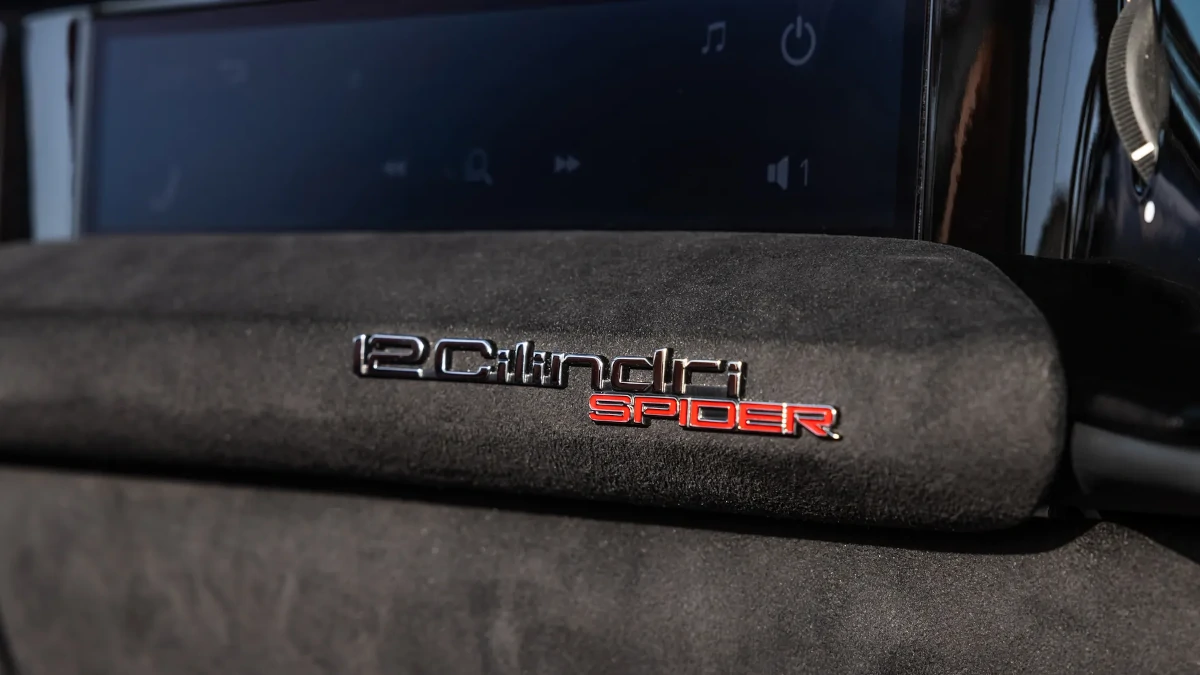
And you can’t escape the character shift: This is a less savage animal than an 812. Some will revel in that slightly more relaxed attitude, which promises to make this a genuine daily driver. There will of course be others who think the likes of Aston Martin, Bentley, and Maserati have the whole gentlemanly GT thing covered, and a Ferrari V12 ought to be just that bit more heart-in-mouth to hang onto.
Our lasting memory of the car is simply being glad and grateful that Ferrari’s engineers have kept an 800hp V12 alive and breathing atmospheric pressure for another generation. And since you’re that much more aware of it here than the coupe, the Spider is probably the ultimate way to get your V12 kicks.
But unlike the F12 or the 812, you can see where the gap has been left for a more hardcore version this time. Roll on the ‘GTO, ’ huh?
More photos of the Ferrari 12Clindri Spider
NOTE: This article first appeared on TopGear.com. Minor edits have been made.