
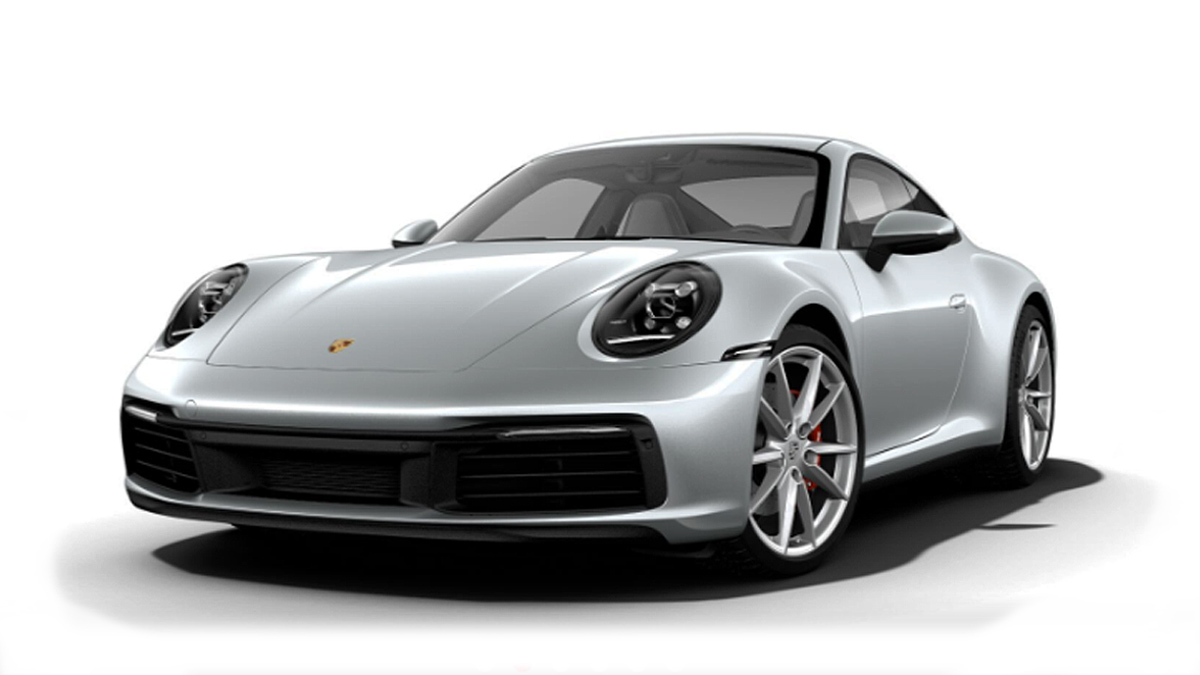
Remind me what we’re looking at here?
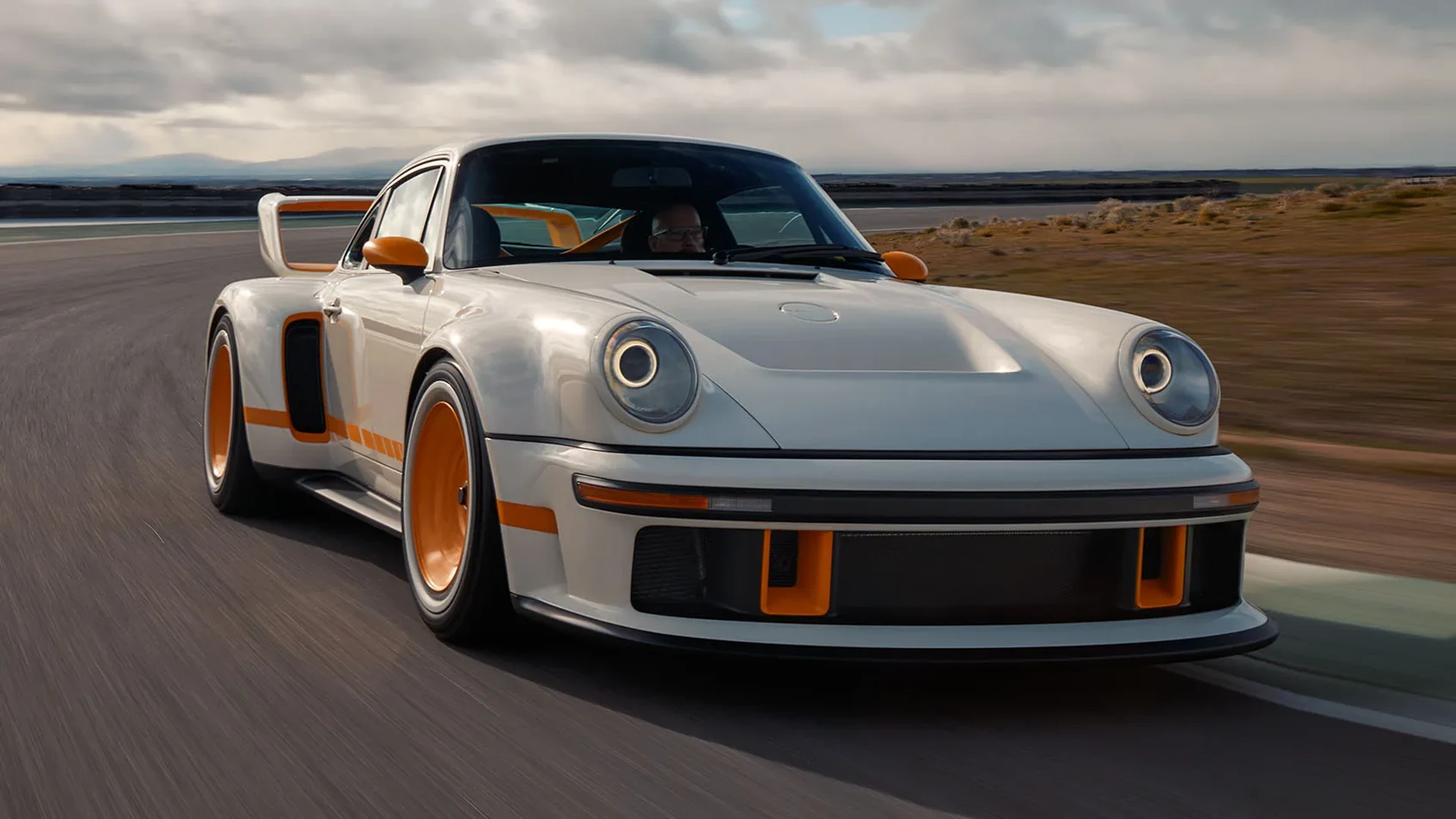
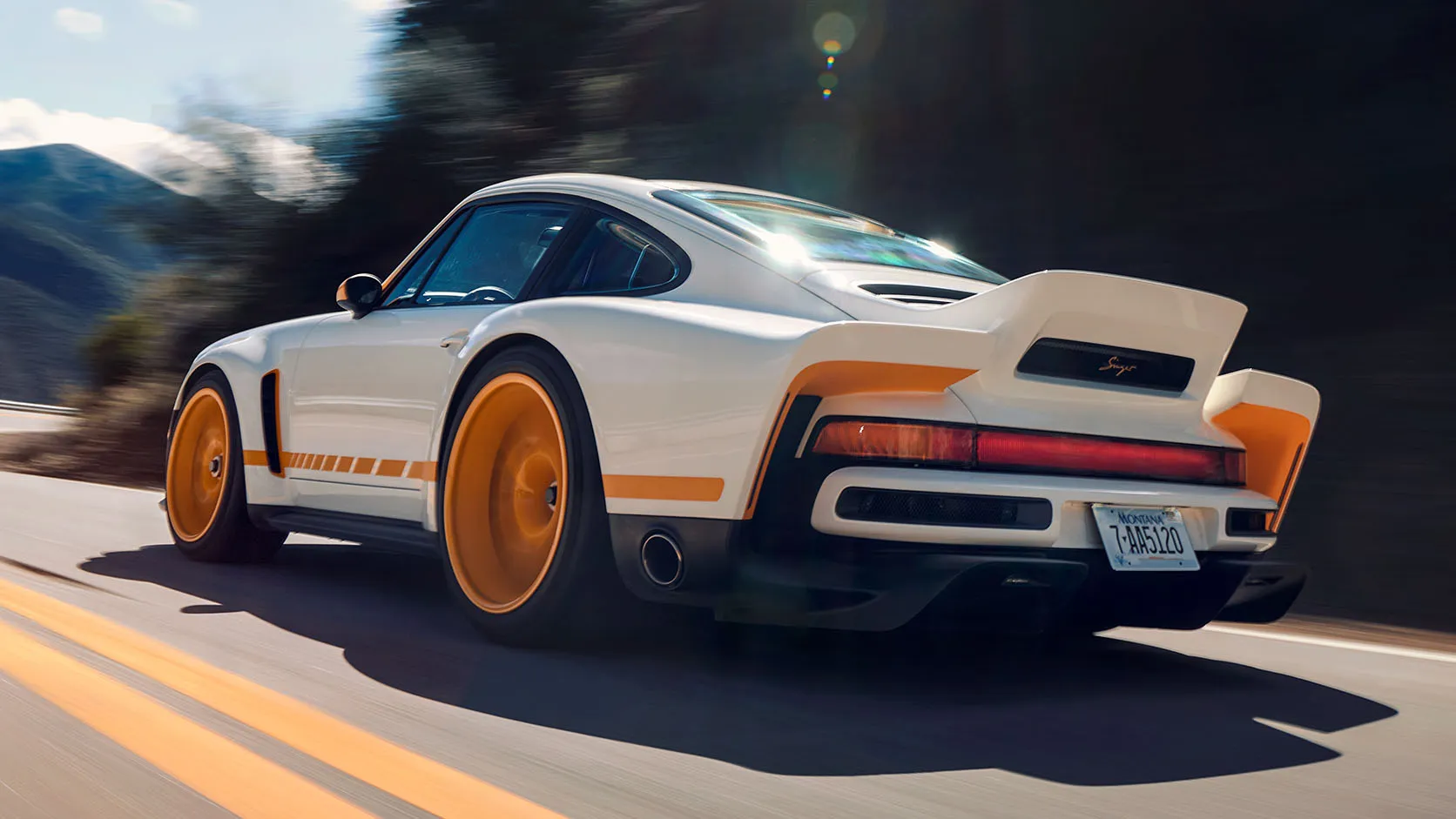
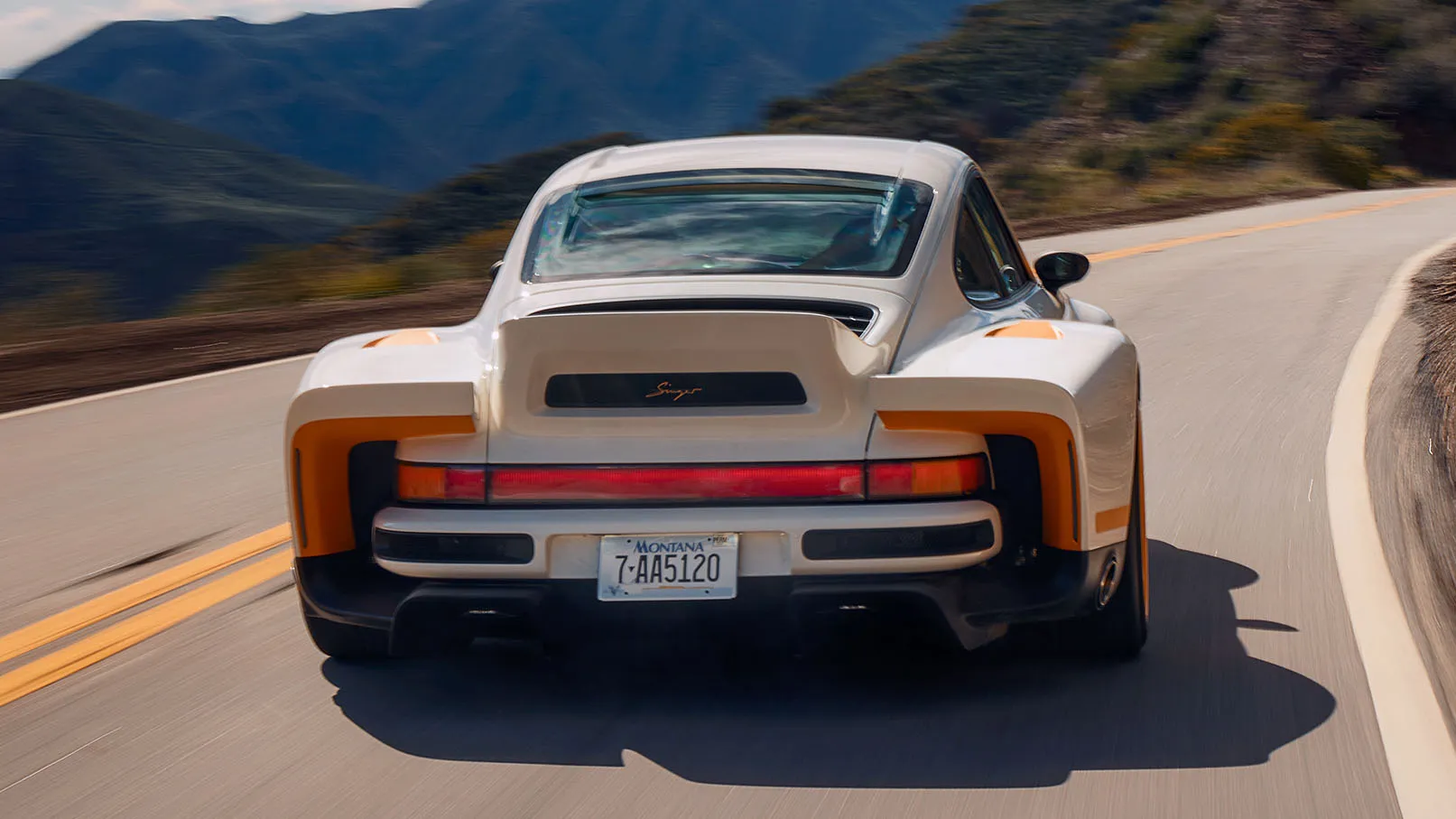
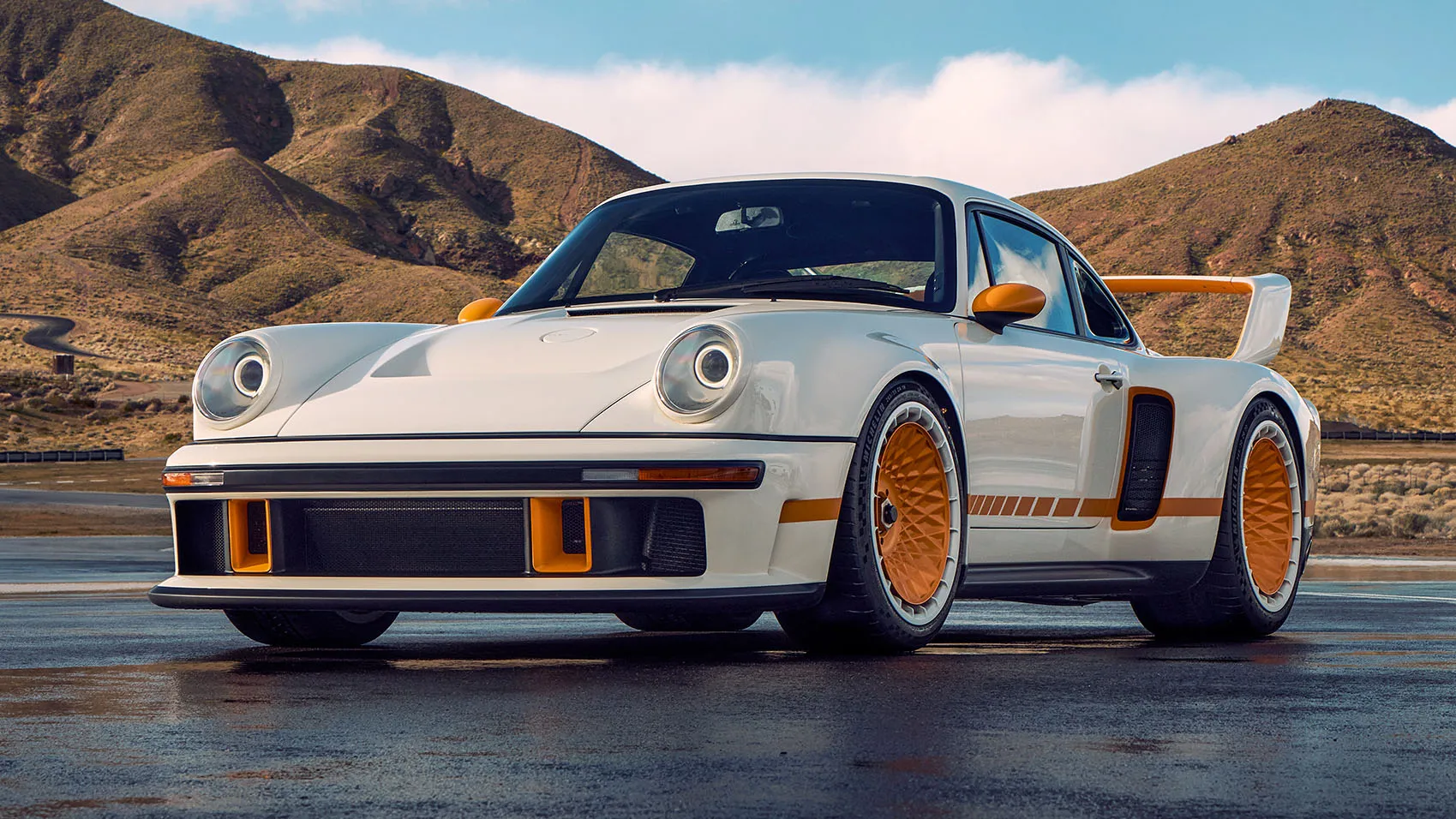
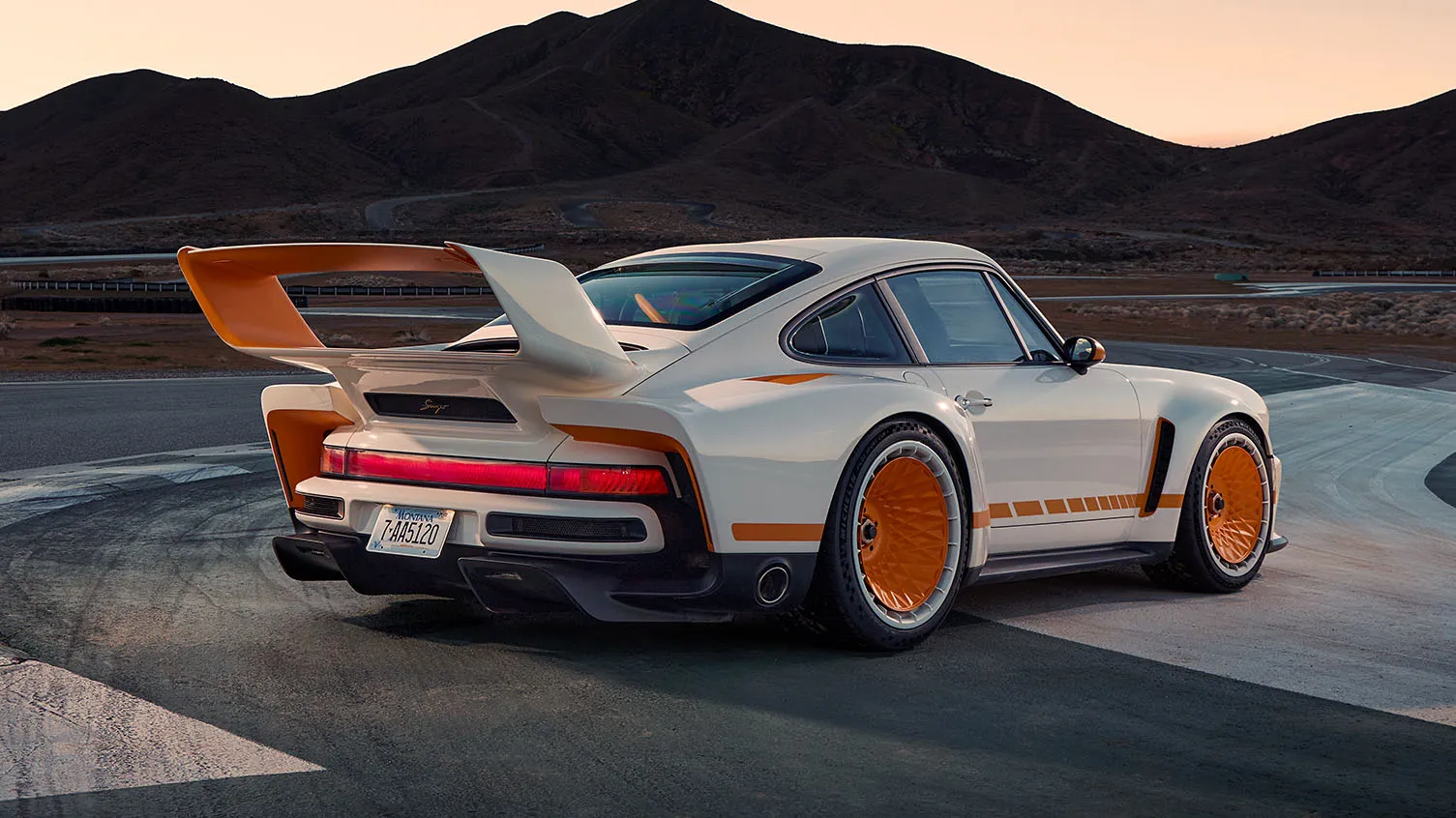
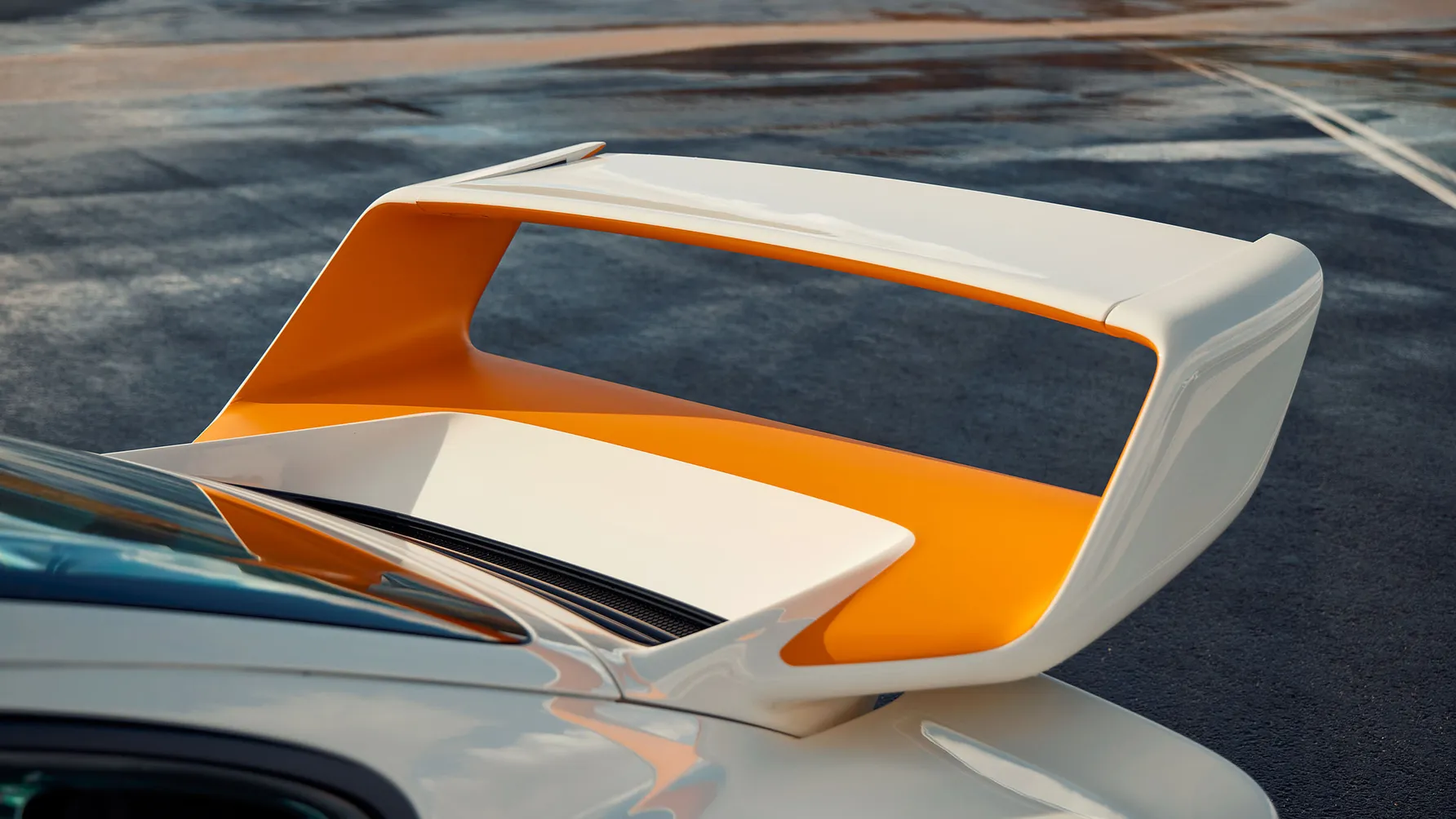
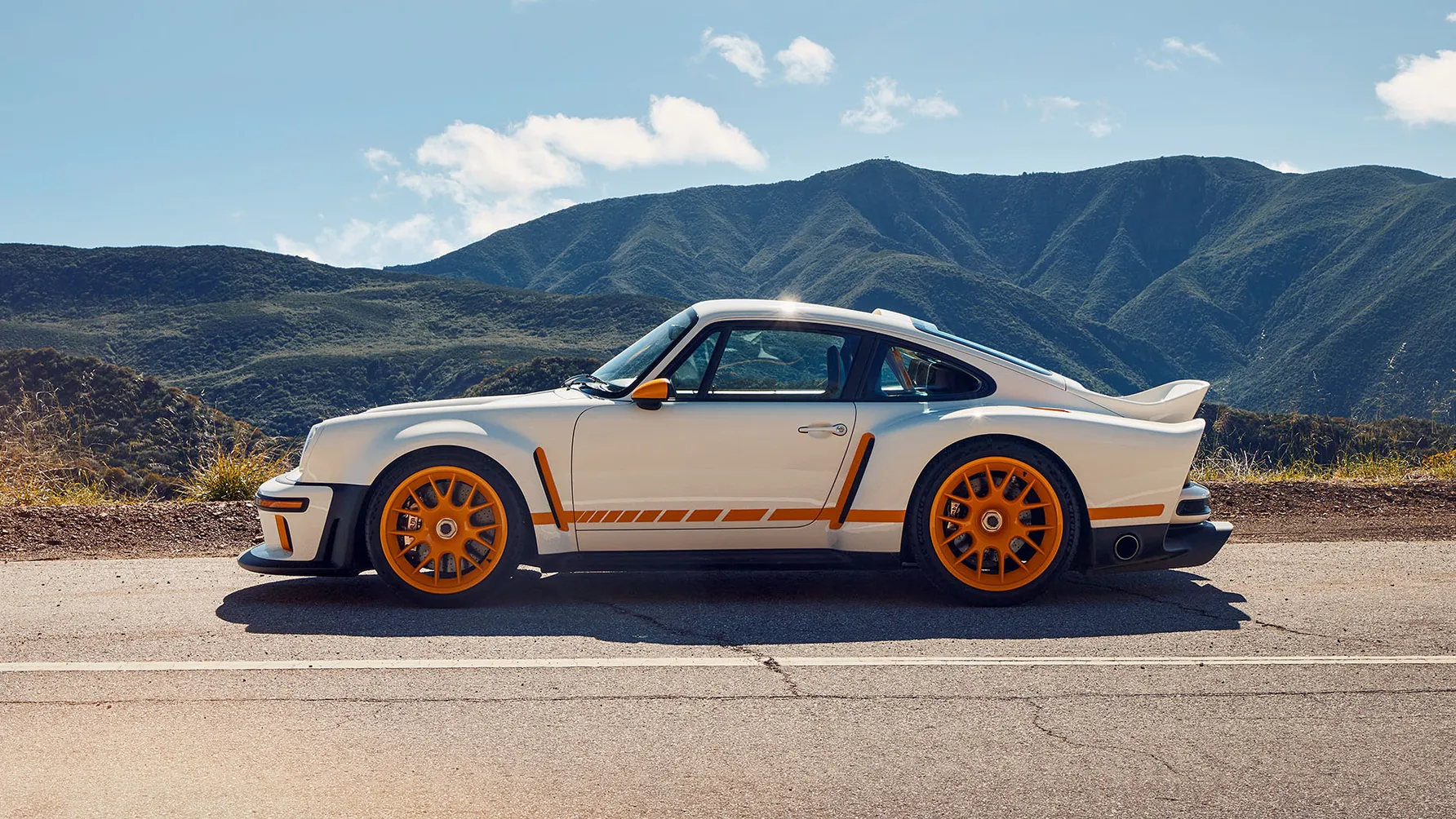
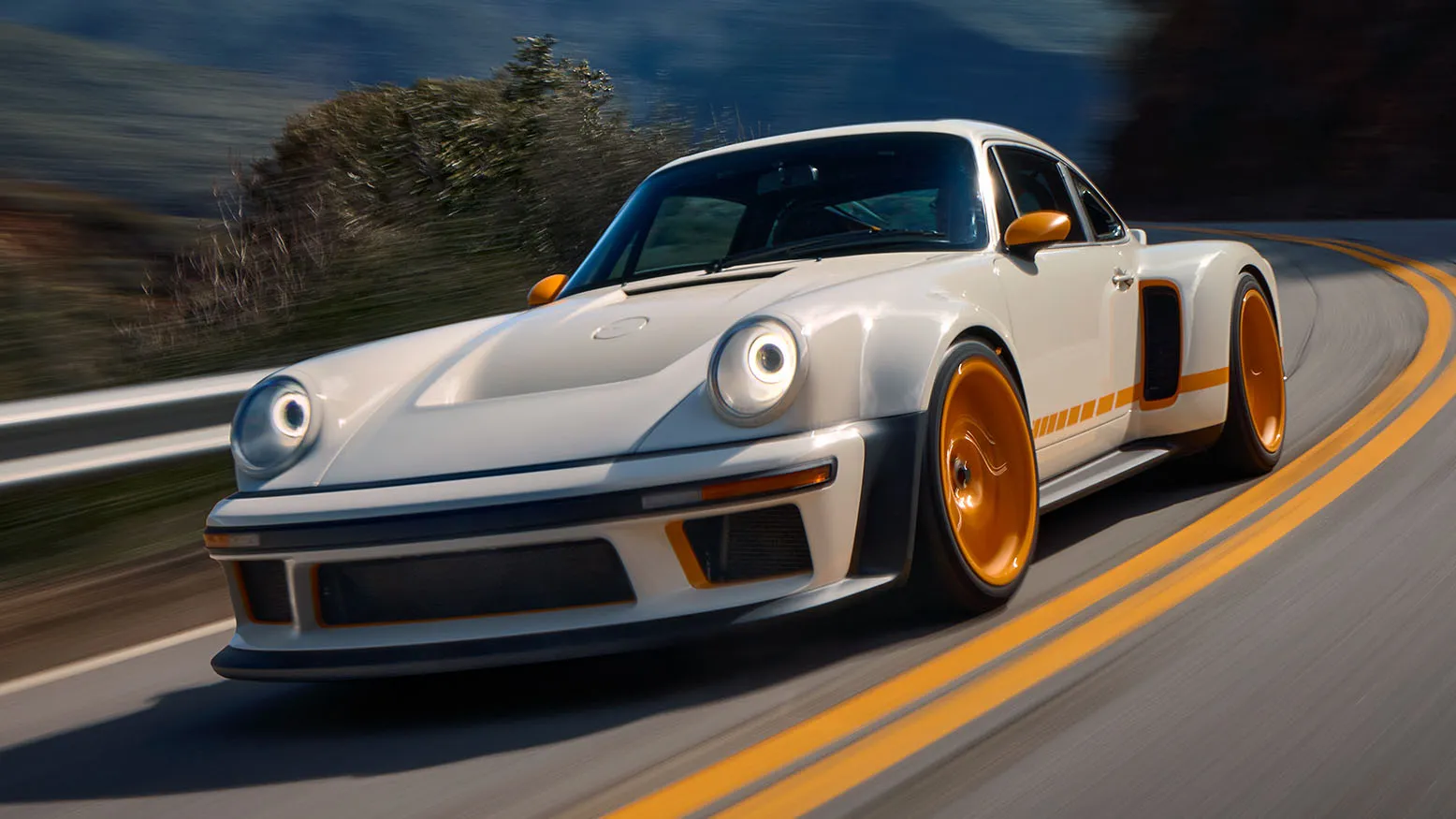
A controversial rear wing with a Porsche 911 bolted to it. This is the Singer DLS Turbo, arguably the wildest thing anyone has ever done with an old 911: a 710hp twin-turbo flat-six levered into the back of a 35-year-old 964 and allowed to send all its power to the rear wheels alone through a manual gearbox. Back in time, turbo’d Porsches with half this horsepower were nicknamed ‘widowmakers’…
Yeah, but it’s that rear wing that dominates conversation, so can we start there?
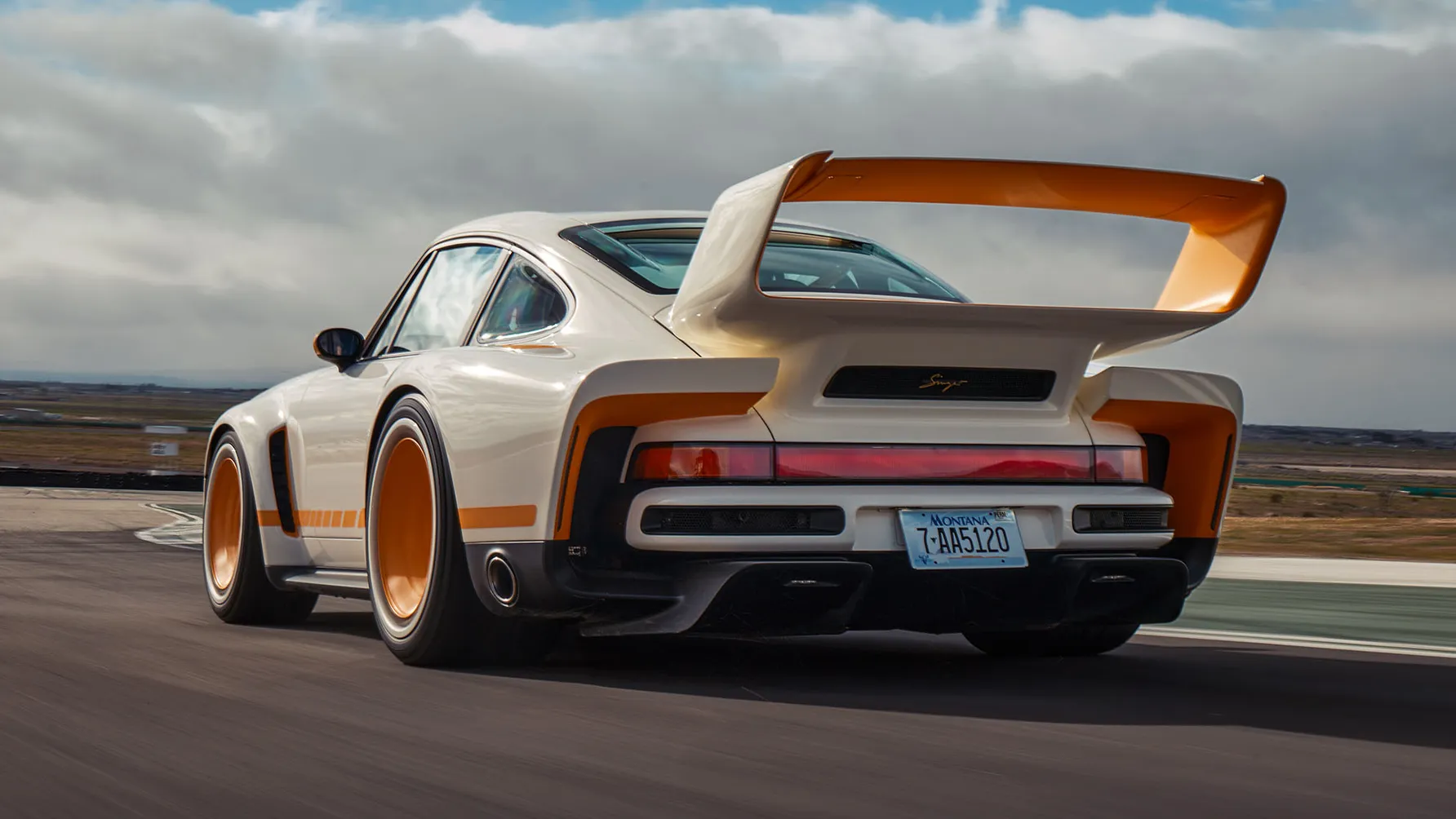
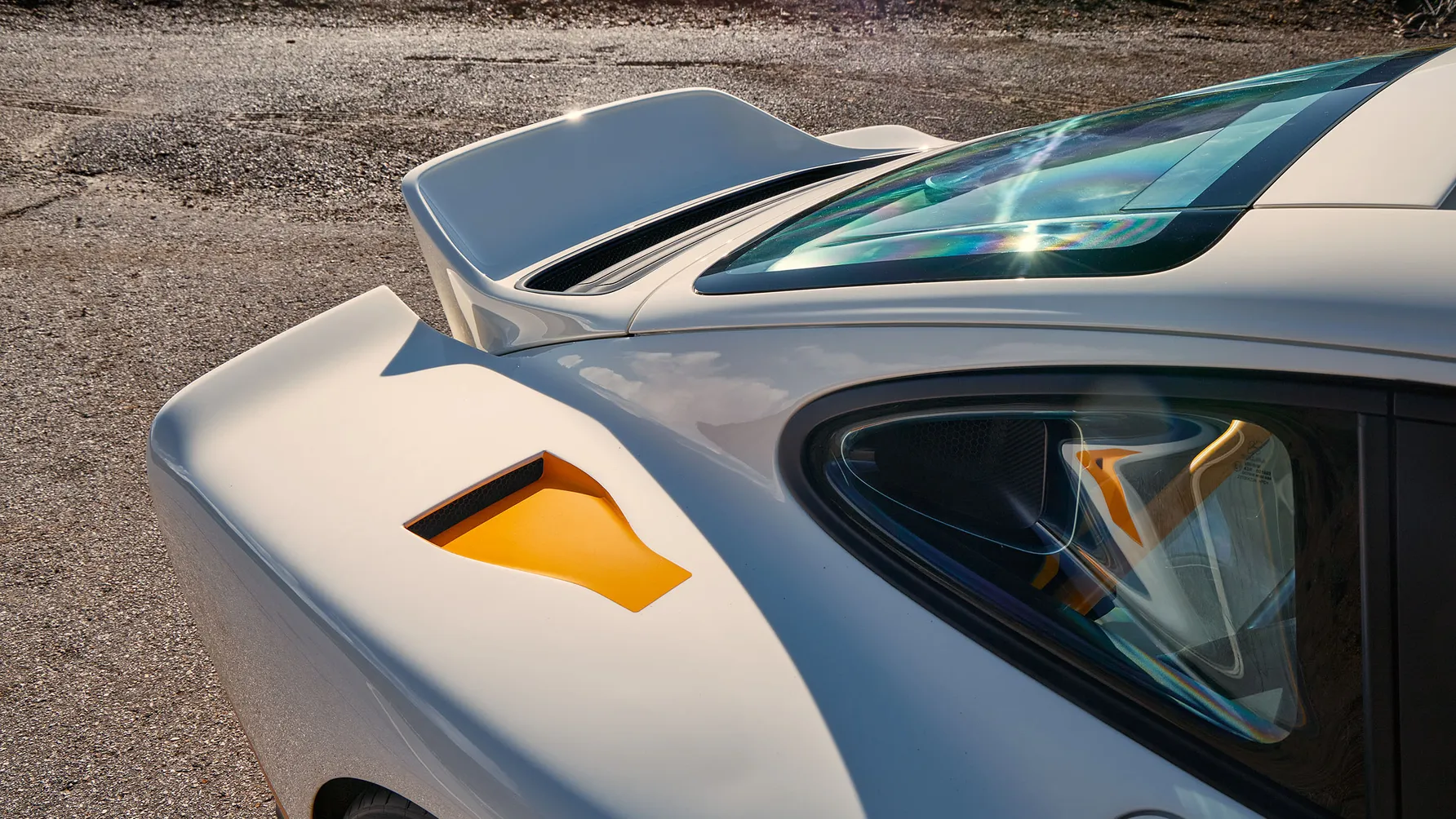
It’s a proper opinion divider. Some adore it, others are convinced this is the moment Singer jumped the shark. Were it any other restomod company trying to pull this off, I’d be inclined to agree, but Singer is a master of the tasteful modification and restoration process, the gold standard to which all others must hold themselves, and has an uncanny ability to tread a fine line between sculpture and disaster.
OTHER STORIES YOU MIGHT HAVE MISSED:
Honda’s electric masterplan is in tatters—is the industry about to lose a household name?
Who’s laughing now? BMW has turned the M3 Touring 24H from April Fools’ joke to real race car
It’s not just skill with a pen that does this, but picking out stories from Porsche’s past, giving them new life, and treating them faithfully. In this case, it’s the 934/5 racer, a car that won six of its eight Group 4 events in 1977. Yes, it was a pure racing car, and this one never will, but honoring Porsche’s heritage is at the core of Singer’s offering.
There’s also a question of viewpoint. I drove the DLS Turbo in California. Out there, among chrome-wheeled Escalades and towering F-150s, it slots into the auto landscape perfectly reasonably. In other places, it will look jarring.
But you won’t be able to drive it on the road with that wing, will you?
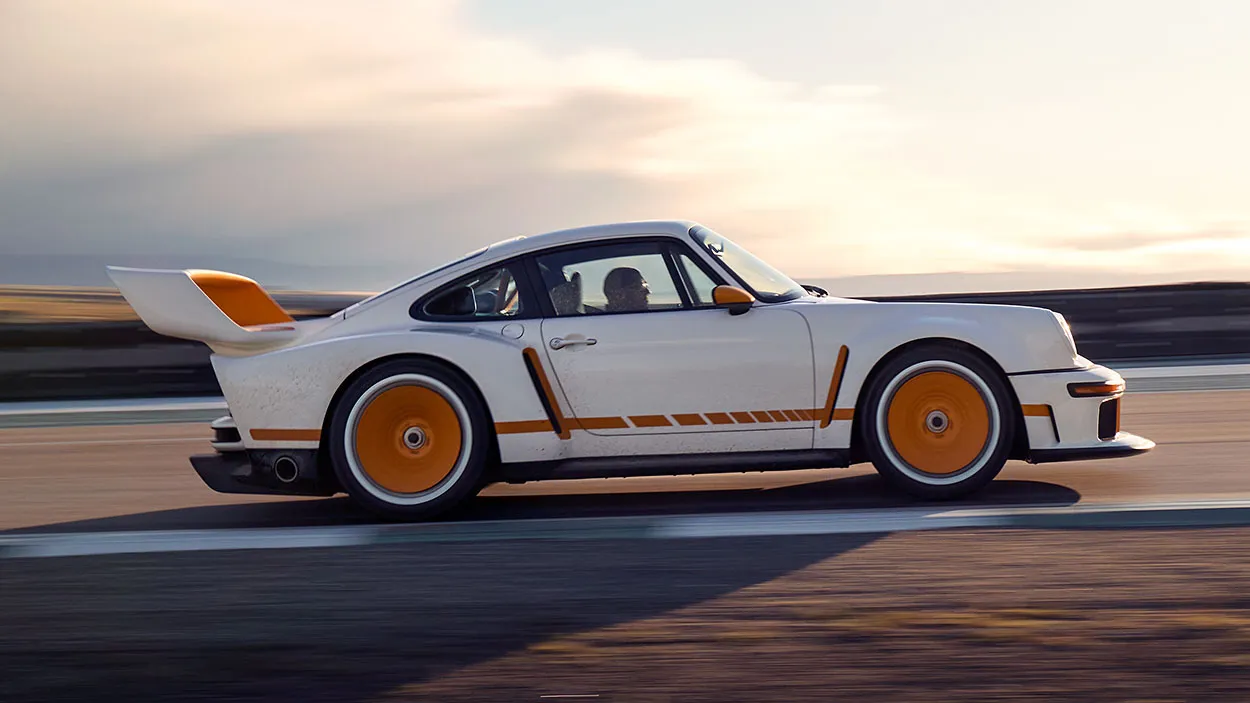
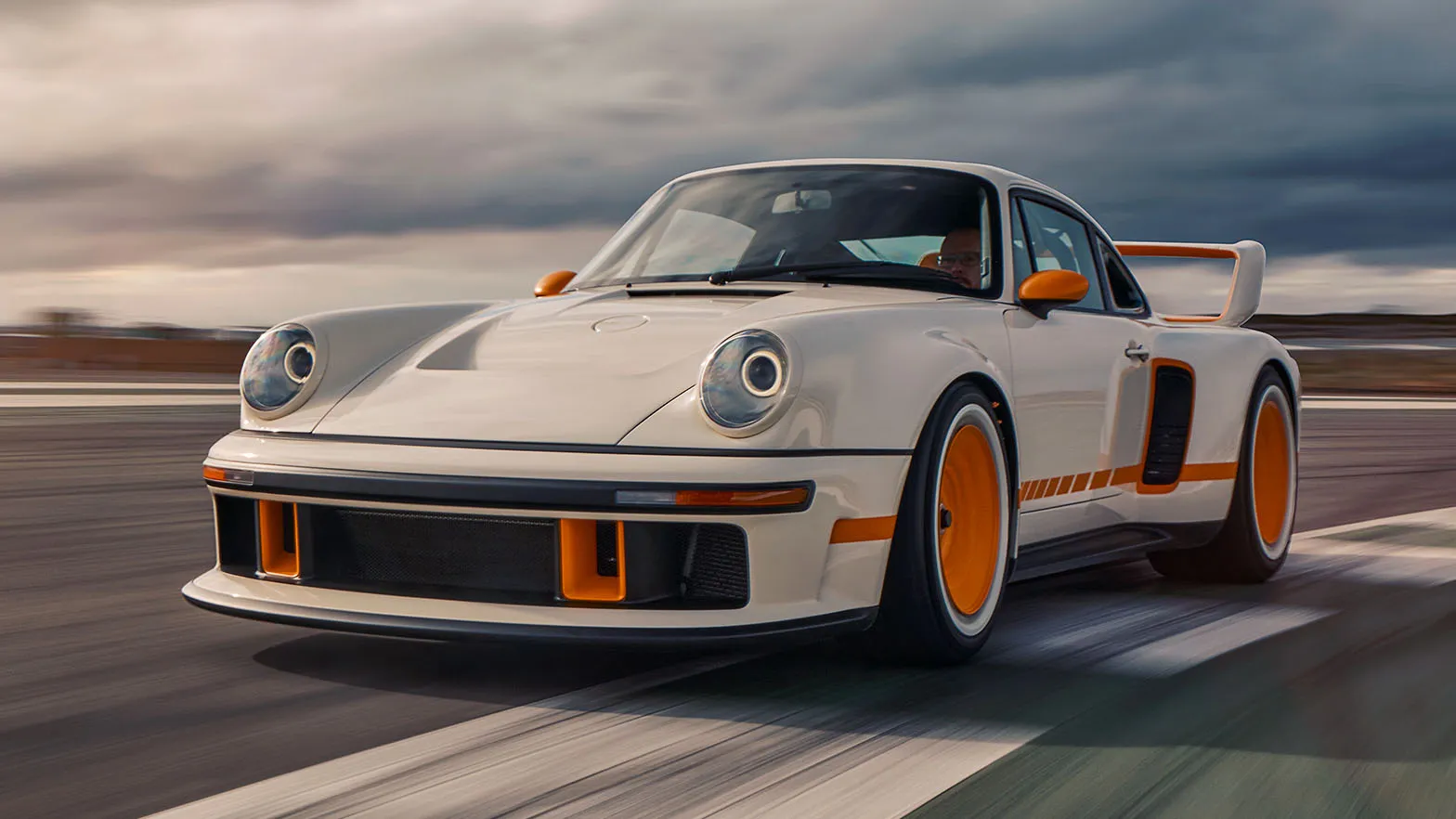
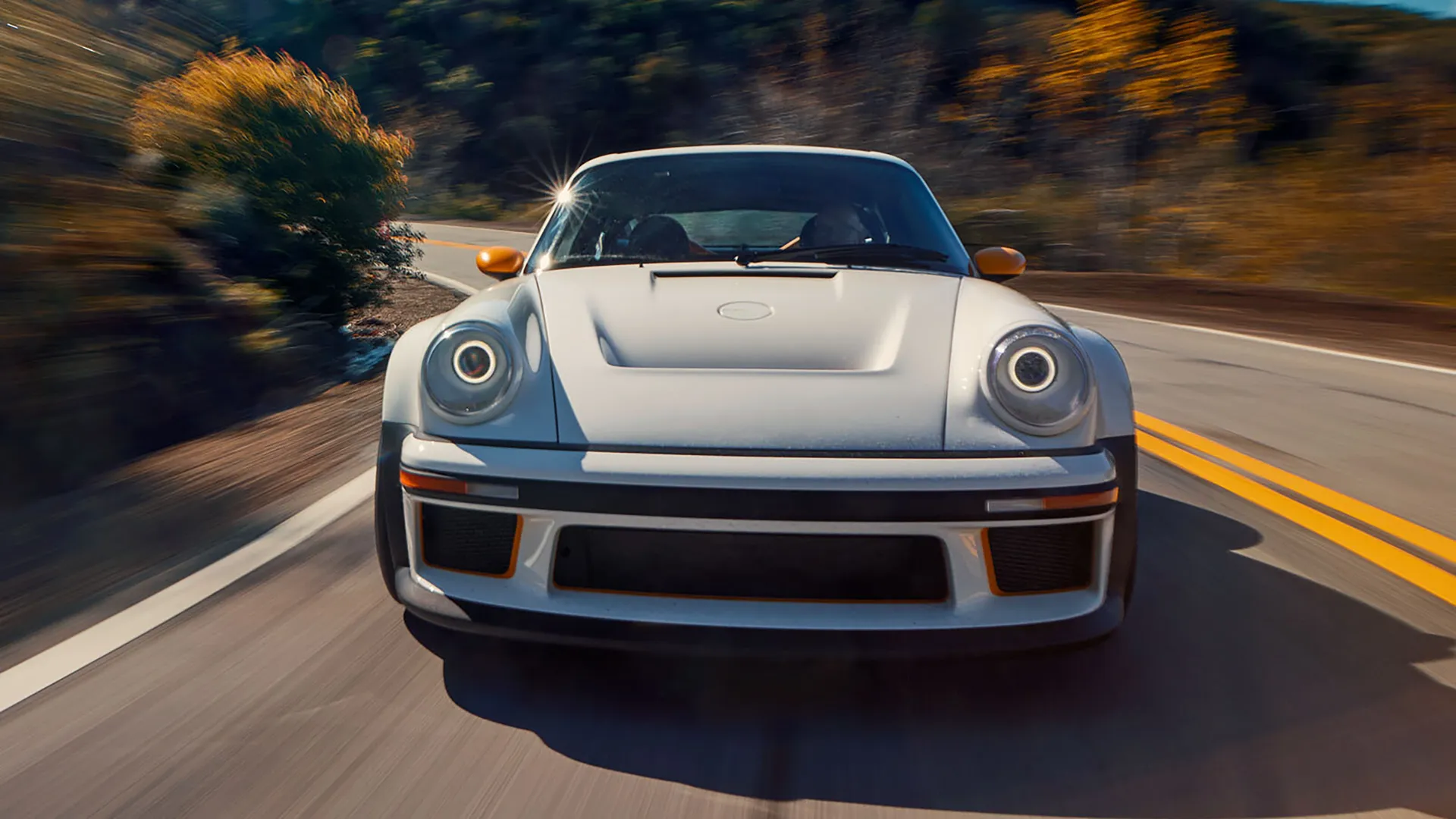
Good knowledge. The ‘Loop’ rear wing isn’t road-legal in many countries, including most of Europe, as it projects back farther than the rear bumper. But you don’t have to have it. Singer gives you the option of a ducktail instead. Choose that, and you also get a marginally less beefy front bumper to correct the visual balance.
But you might want both?
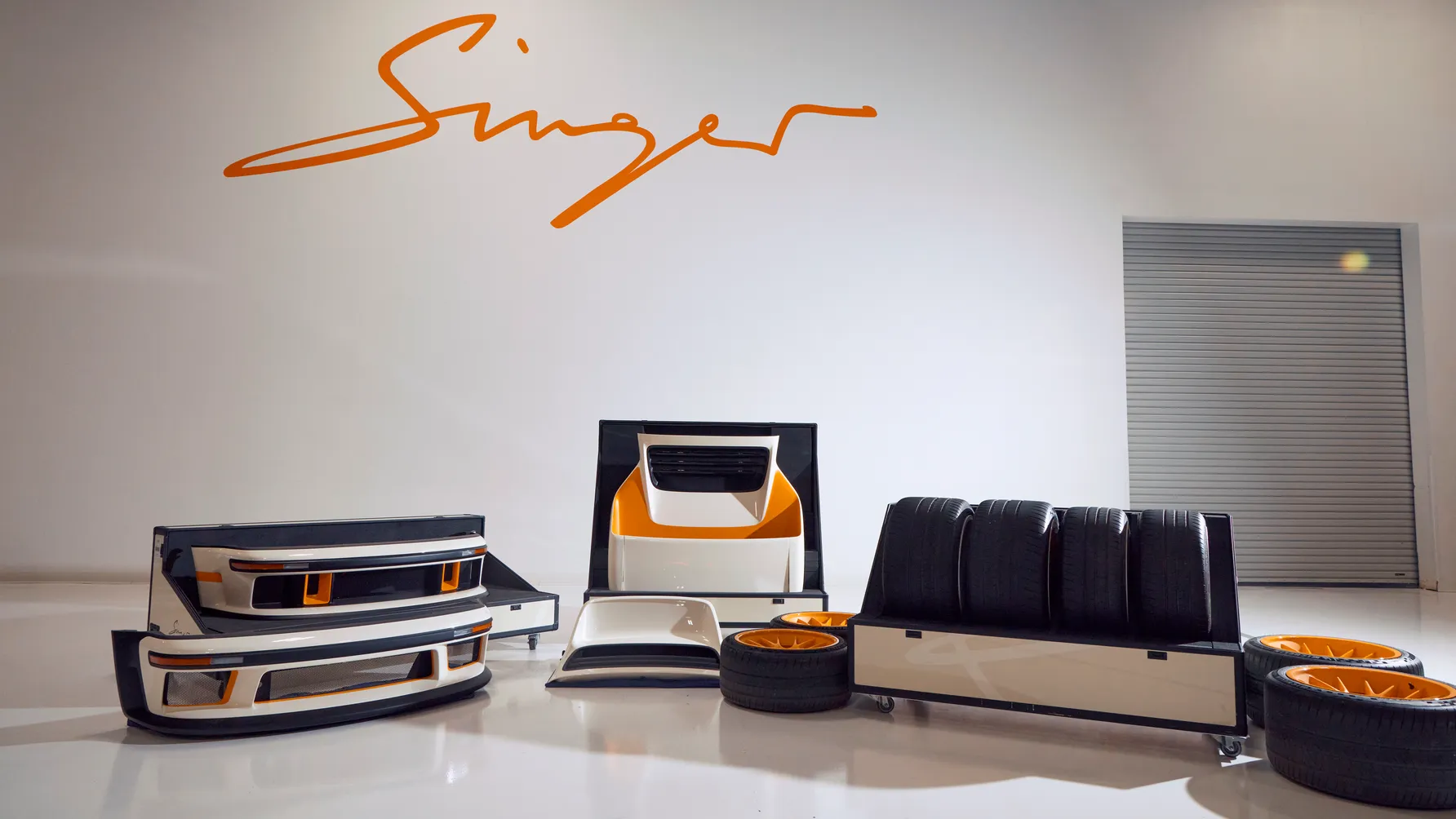
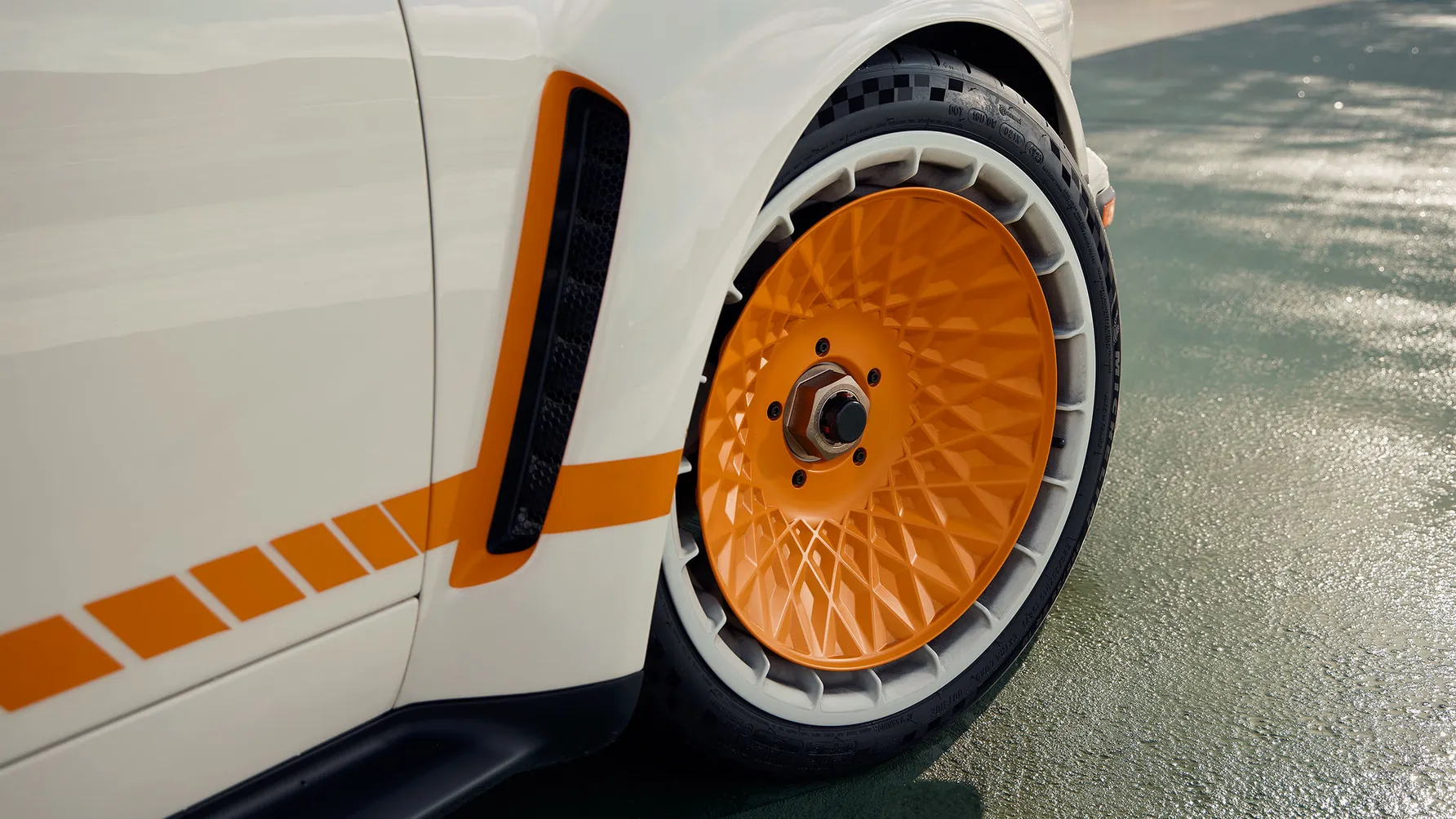
And Singer lets you have them. For the small matter of $175,000 (around P10.5 million), you get a pair of giant flight cases with the other front/rear ends in them, plus another with a different set of wheels if you fancy. The take-up for having both is around 75% of the 99 cars being produced. Switchable body panels aren’t unheard of, but it’s close to unique and, in this case, it gives owners two very different looks.
Probably makes spec’ing a nightmare. Incidentally, average spend on the car is around $2.9 million (around P173.7 million)—Singer doesn’t quote a base price as everyone goes wild with bespokery.
We switched nose and tail over during our shoot. Not the work of a moment but of approaching two hours, as it involves removing the front wheel-arch liners, among other inconveniences. For me, the ducktail looks too apologetic nestled between those vast haunches, and doesn’t really improve rear visibility, which is largely obstructed by the roll cage and the tiny side mirrors.
Is it still an old 964 underneath?
Let’s talk about the chassis. An original 964 frame had a torsional rigidity (resistance to twisting, essentially) of about 7,000Nm per degree. With the naturally aspirated DLS, extra bracing and reinforcement took that up to 15,000Nm. Now, with DLS Turbo, it’s around 25,000Nm. That’s a figure plenty of modern supercars would be happy to boast about.
It needs to be stiffer than the regular DLS because: 1) it develops a lot more torque (749Nm rather than 429Nm), and 2) it grips much harder thanks to 265-width front and barrel-like 345-width rear tires. But looking around the car, you can’t see what’s been done.
To cut a long list short: Everything. New damper top mounts, a lattice brace in the front, a roll cage buried into the cabin pillars, extra welds, and strengthening arms underneath. The works. All hidden. It’s a neat job.
I think there’s a temptation with Singer to assume it’s all about the cosmetics and that everything else takes a back seat. To a certain extent, that’s true—the design dictates the engineering. But the engineering that flows once the design is set is fabulously comprehensive.
Tell me about the engine.
The DLS used an air-cooled 4.0-liter with four valve heads. About the only thing this has in common with that is the block, only it’s now a shorter stroke 3.8. The heads, the cooling system, everything is new. There’s still an air-cooled element—an electrically driven (rather than belt-driven, so it doesn’t kidnap engine power) fan that blows vertically down, but given the pressures and temperatures generated inside the tiny 964 engine bay, the DLS Turbo needed much more.
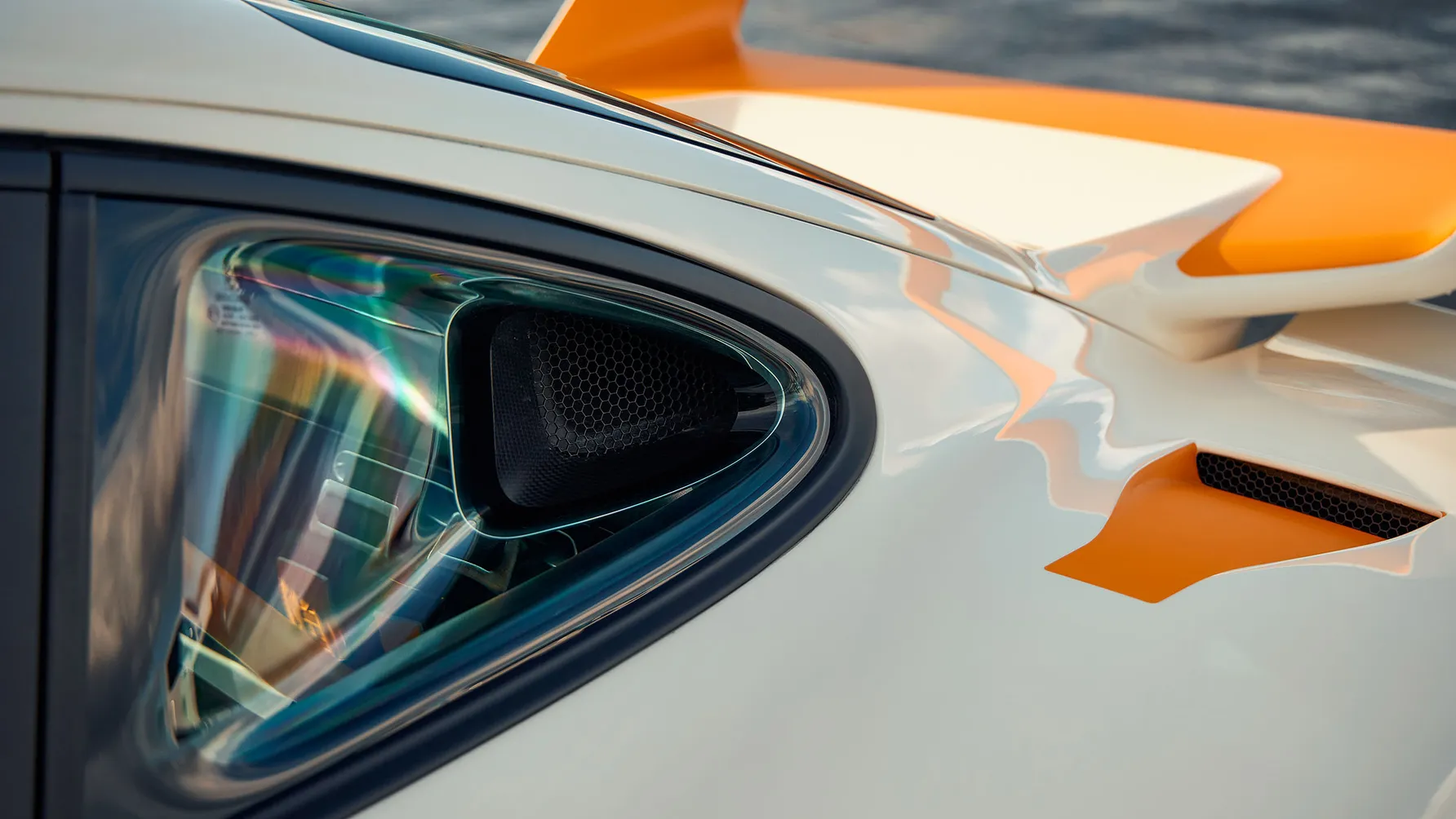
So pipes run from radiators at the front, and in total, there are five cooling fans, three water pumps, and a massive oil reservoir with its own cooling vanes. Tucking all this in, plus the intercooler and turbos themselves, means the ancillaries have burst out of the engine bay—most notably the turbos, which are mounted down near the back of each side pod. And yes, side-exit exhausts.
Hang on, do side exit pipes mean it sounds like a triple?
You’re right that each side vents one bank of cylinders, but wrong to be concerned that this is going to sound like a GR Yaris. It just doesn’t. The noise is deep and guttural, distinctly Porsche, but even at idle it’s more muscular, more purposeful than the DLS.
And muscular to drive as well?
Got it in one. However, even before you get moving, there’s a sense of intimidation to the DLS Turbo. The visuals suggest all the power and weight lies on the back axle, and, well, they’re not wrong. Compared with the DLS, the weight has both increased and moved rearwards—with fluids it’s 1,450kg, distributed 38/62 front to rear. It’s got the weight distribution of a mallet and has the potential to hit like one as well.
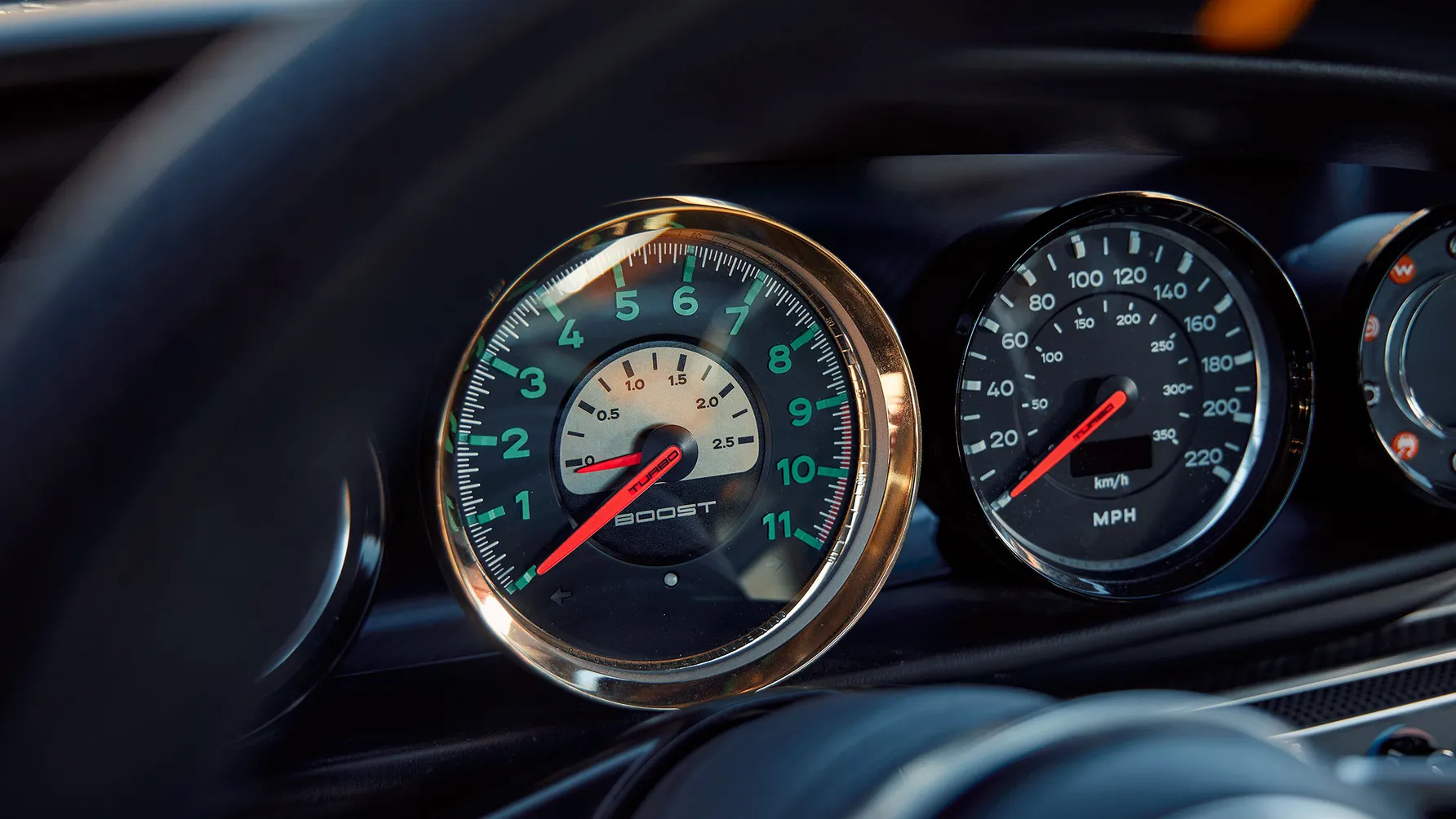
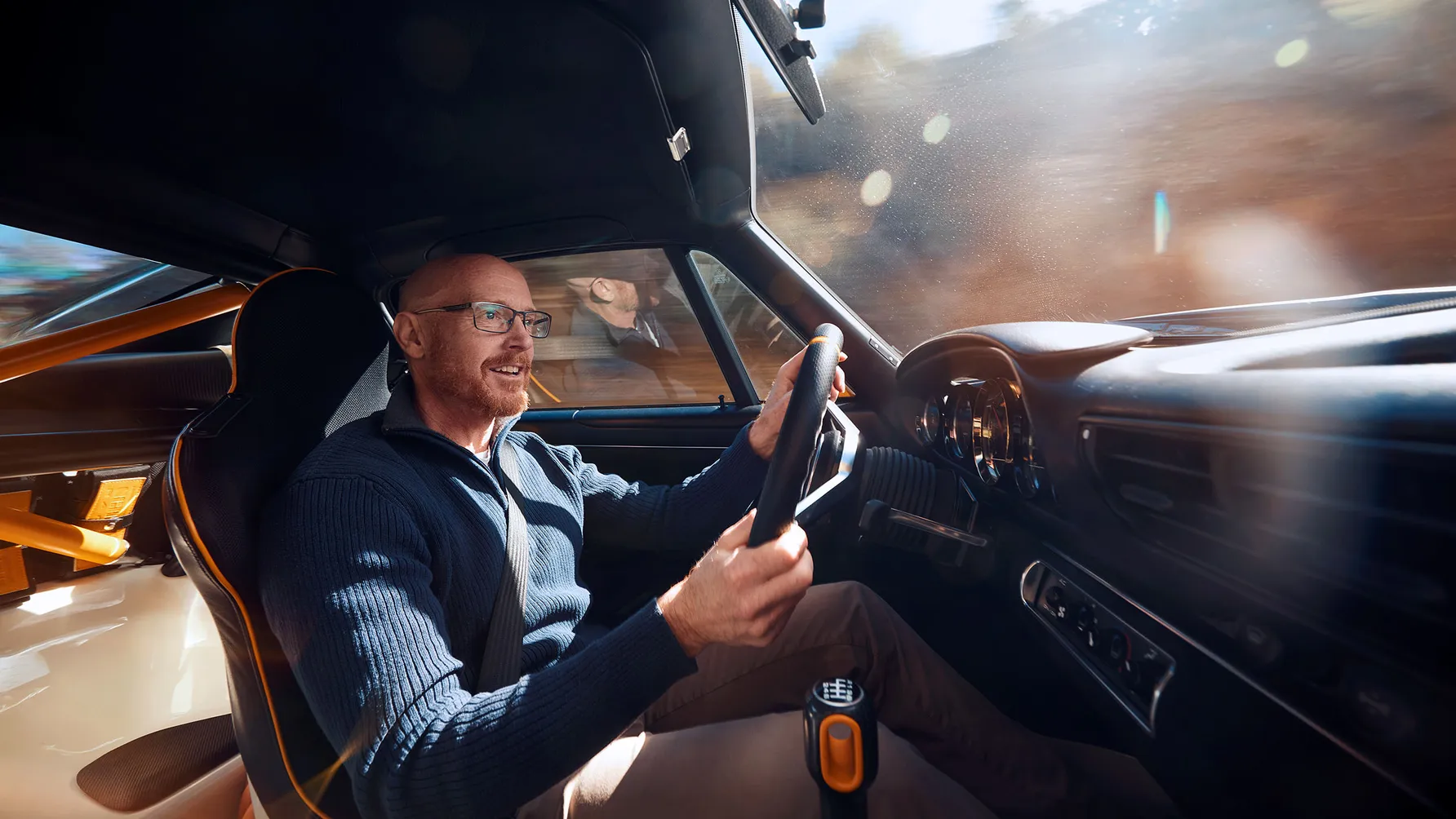
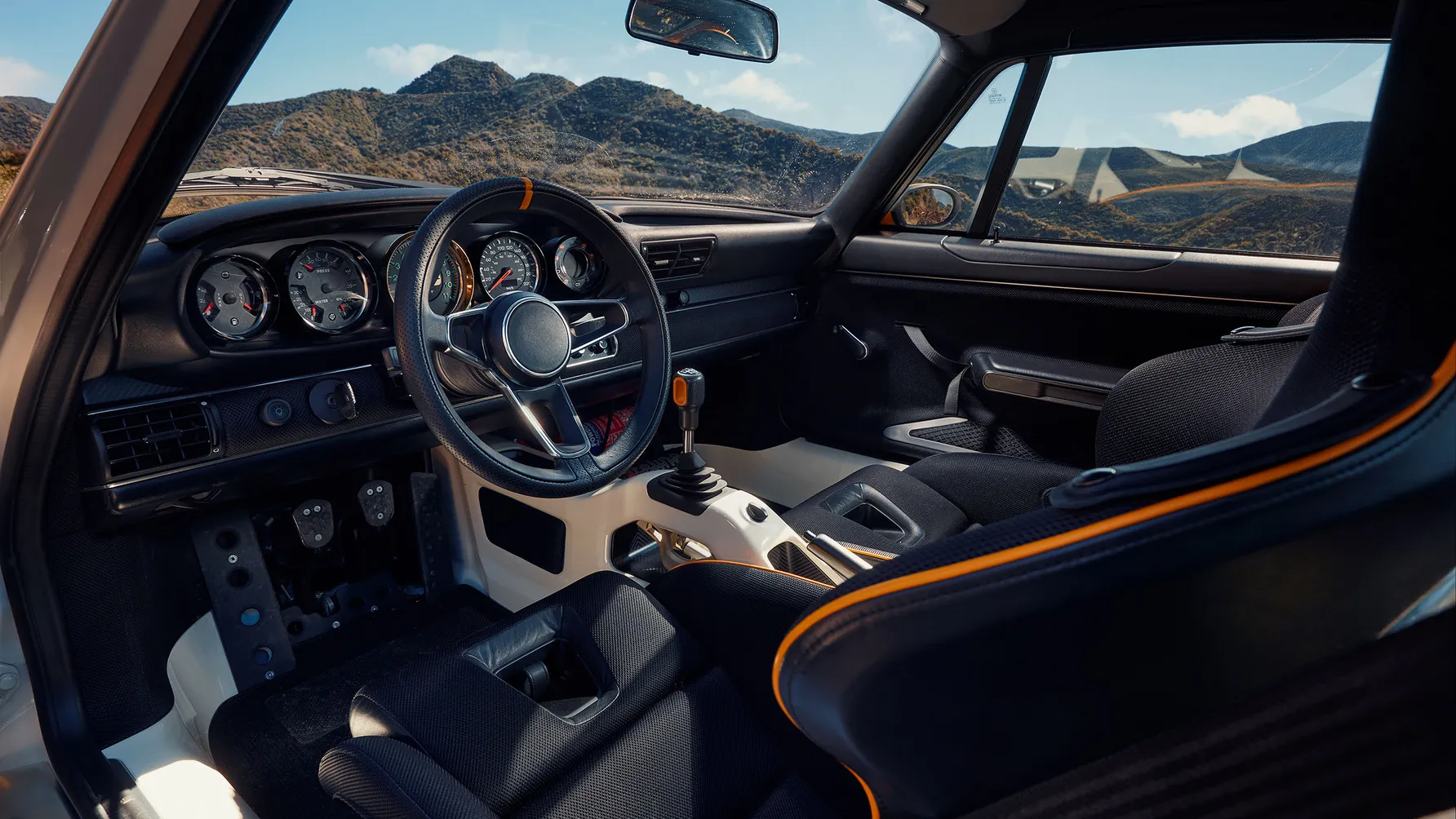
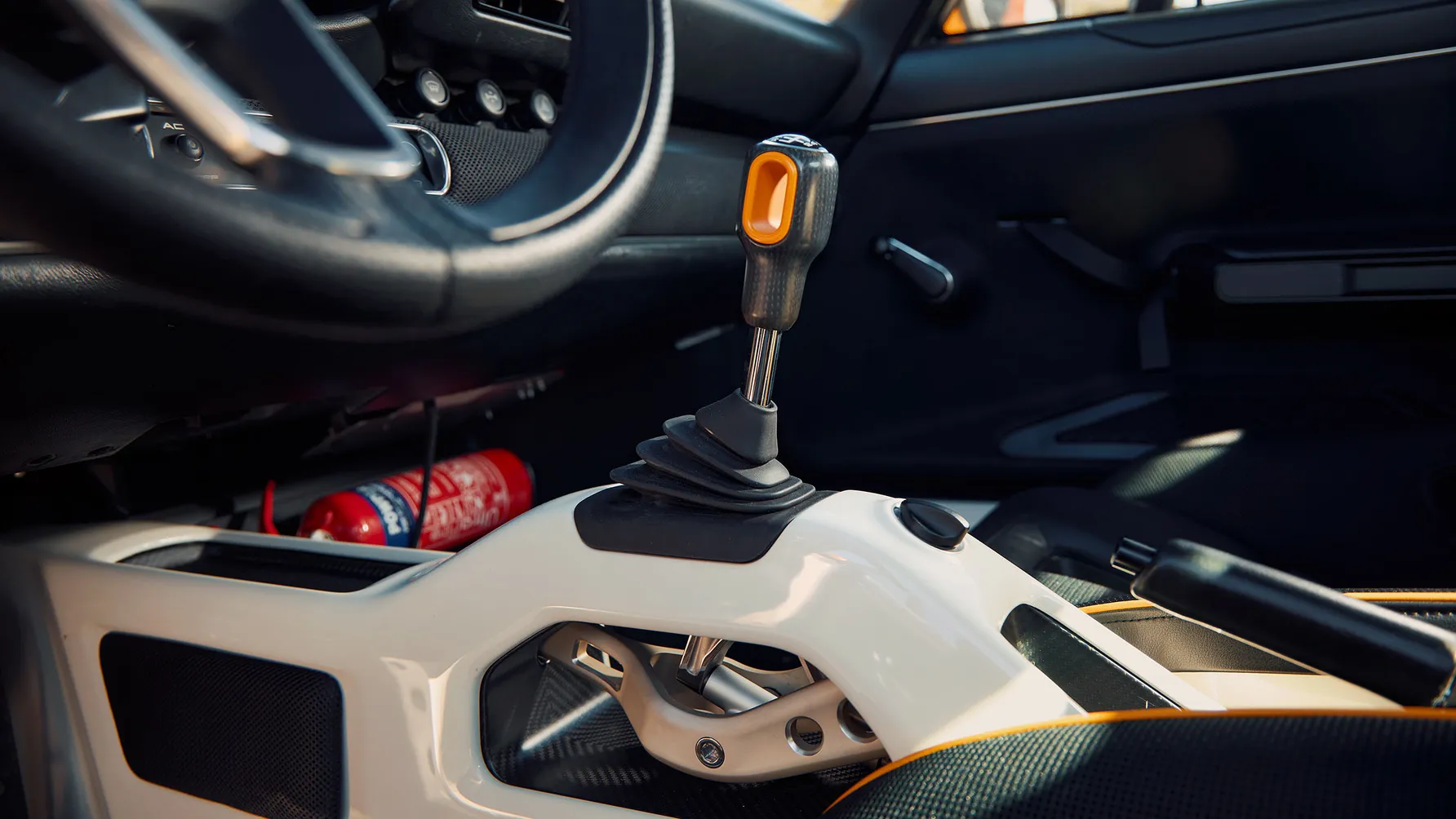
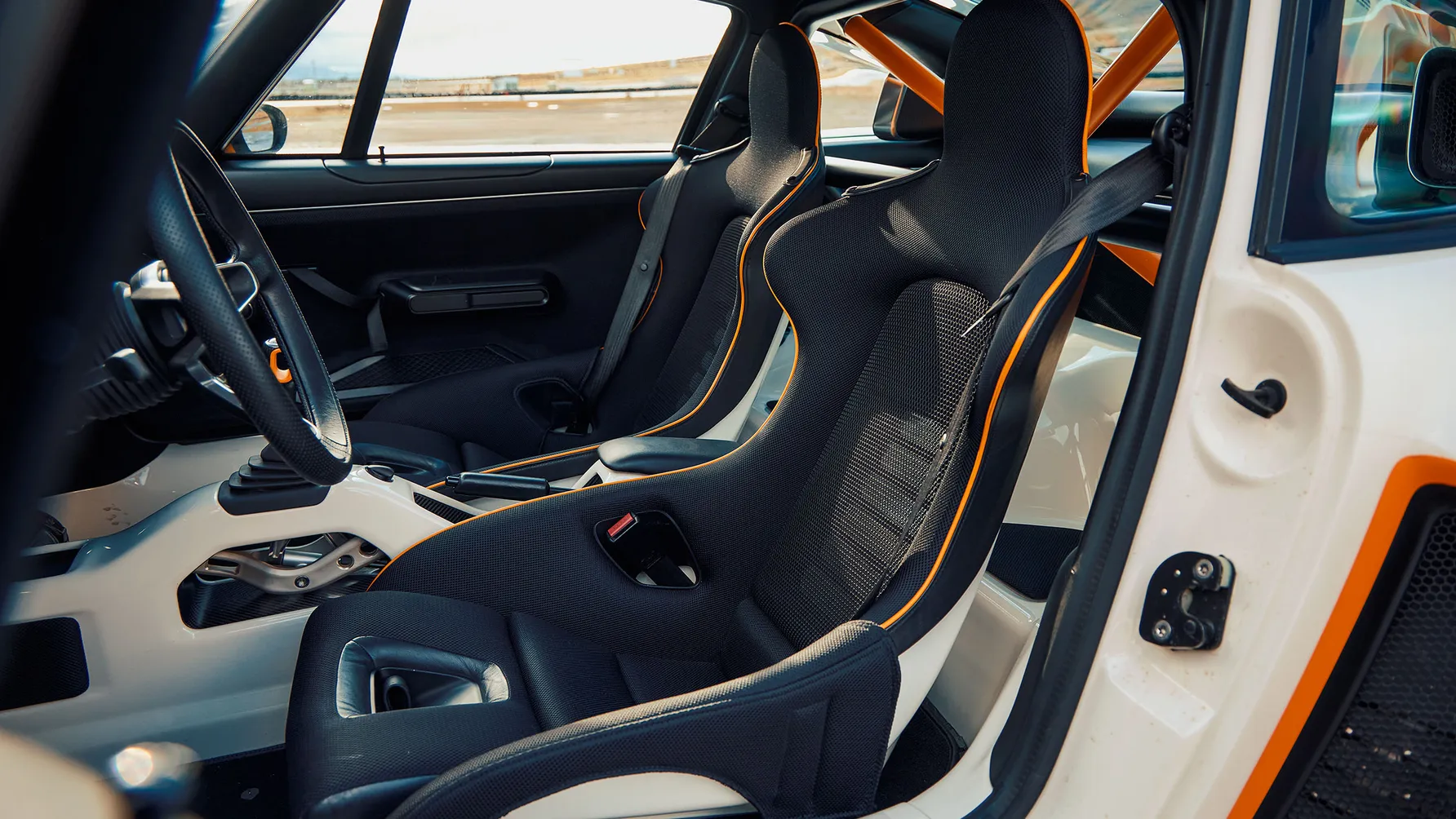
Offsetting any nervousness on my part is the cabin. So simple. No screens or confusion when you have windy windows, super-simple heating controls, no steering wheel adjustment, and three pedals in the footwell. The only thing an original 964 owner might find unusual is the mode dial. It’s the only real evidence that electrics are involved anywhere, here condensing considerable work by Bosch into a simple rotary switch behind the open-gate gearshifter.
Does it work as a road car?
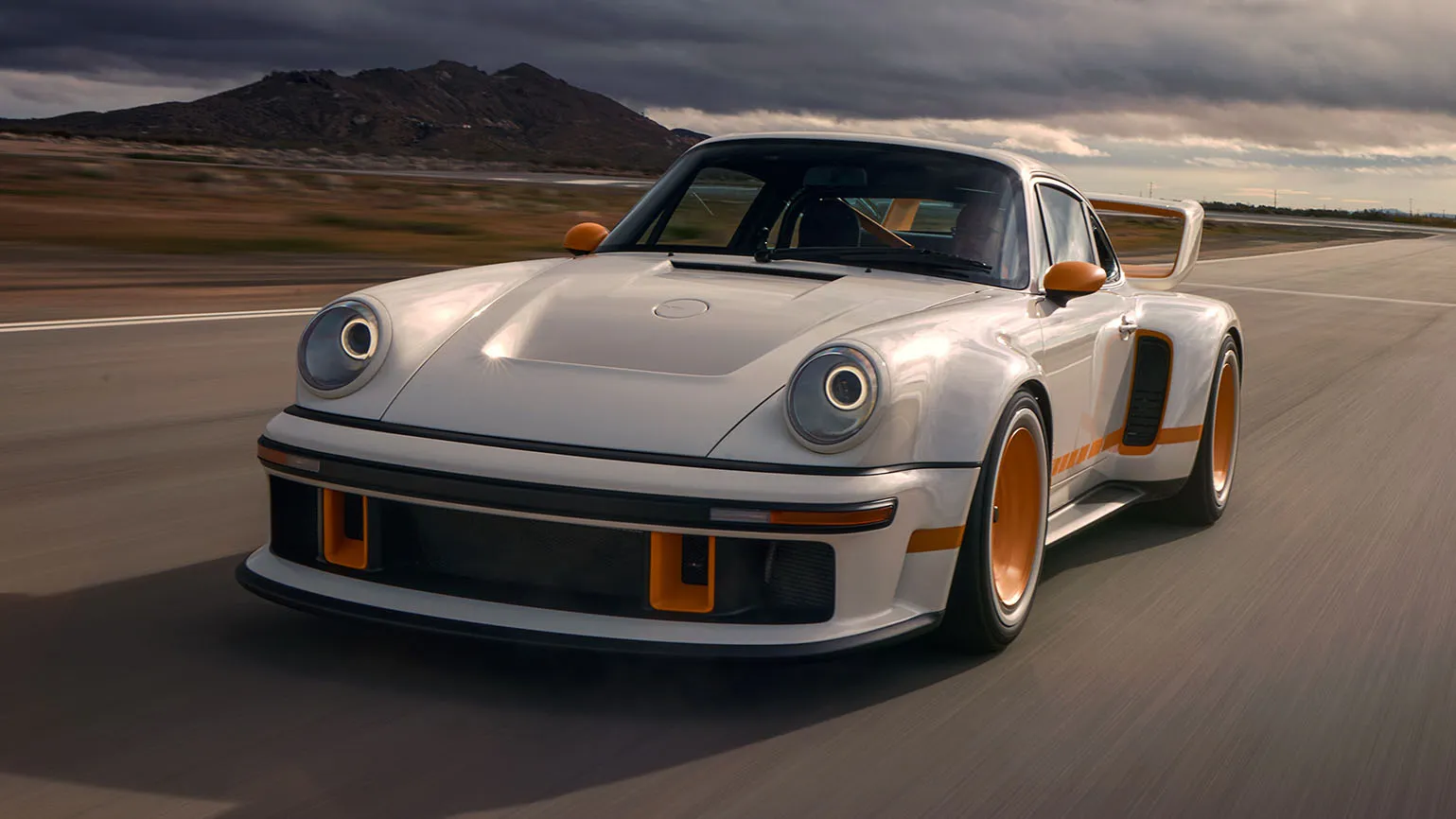
Absolutely. Just don’t go thinking this is a modern supercar and that you can take liberties with it. The handling traits are still old-school. But boy, does it have a big personality to go with its big turbos. Initially, it’s a car that makes you chuckle nervously to yourself each time you hear the turbos gust into life and the pressure build. But you quickly learn just how adept this engine is.
The only thing fearsome about it is the performance. Its manners are almost faultless. What stood out most for me was how responsive it was mid-corner or just rolling on and off the throttle. Really reactive before you even get to the main event. I suspect Singer has done this by throwing fuel at the issue, where a major OEM has always got to keep an eye on emissions—anyway, it’s got great response and a smooth ramp into the boost. Hadn’t expected that.
And then it just takes off?
It’s got a better power-to-weight ratio than the latest Porsche 911 Turbo, so safe to say it’s deeply, deeply fast. But more than that, it’s just so exciting. It’s that free-fall feeling only big turbos and lots of power in a lightweight package can deliver, the kind that feels riotously old-school. The kind you explore with trepidation for fear of it breaking traction.
There’s a reason to be fearful: The wheelbase is short, the track widths are wide, and through third and fourth, it’s utterly rampant. Great gearshift, though—tight, quick, and precise. Made by Riccardo this time, where it was Hewland for the regular DLS. Pretty much identical ratios, so they feel short here, but that just means you’re never far away from the boost.
And what about the chassis?
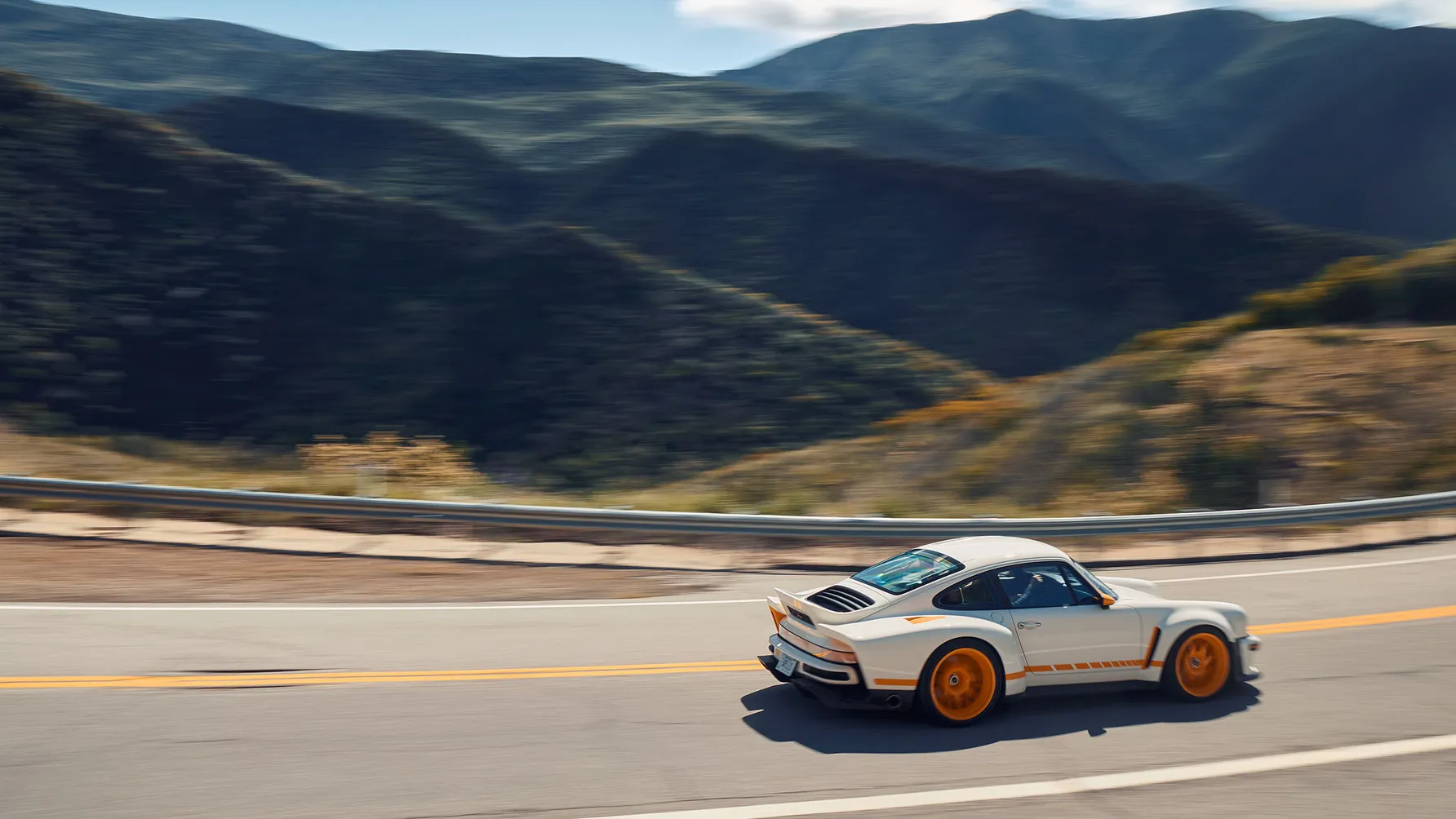
No old 964 was ever this together. Even classic cars built by Singer writhe and wriggle and twist through the chassis. None of that here. It feels locked down, giving the suspension a strong, stable platform to operate from. The double-wishbone front is largely from the DLS, but refined; the trailing arm rear is an original design, but completely reworked.
Shut the throttle abruptly mid-corner, and the DLS Turbo will twitch. It’s not viceless. I was glad of the Bosch stability control—and blown away by how effective and unobtrusive it was. It’s not quite at Ferrari/McLaren skid-control levels, but it’s a big step on from the regular DLS.
How was it on track?
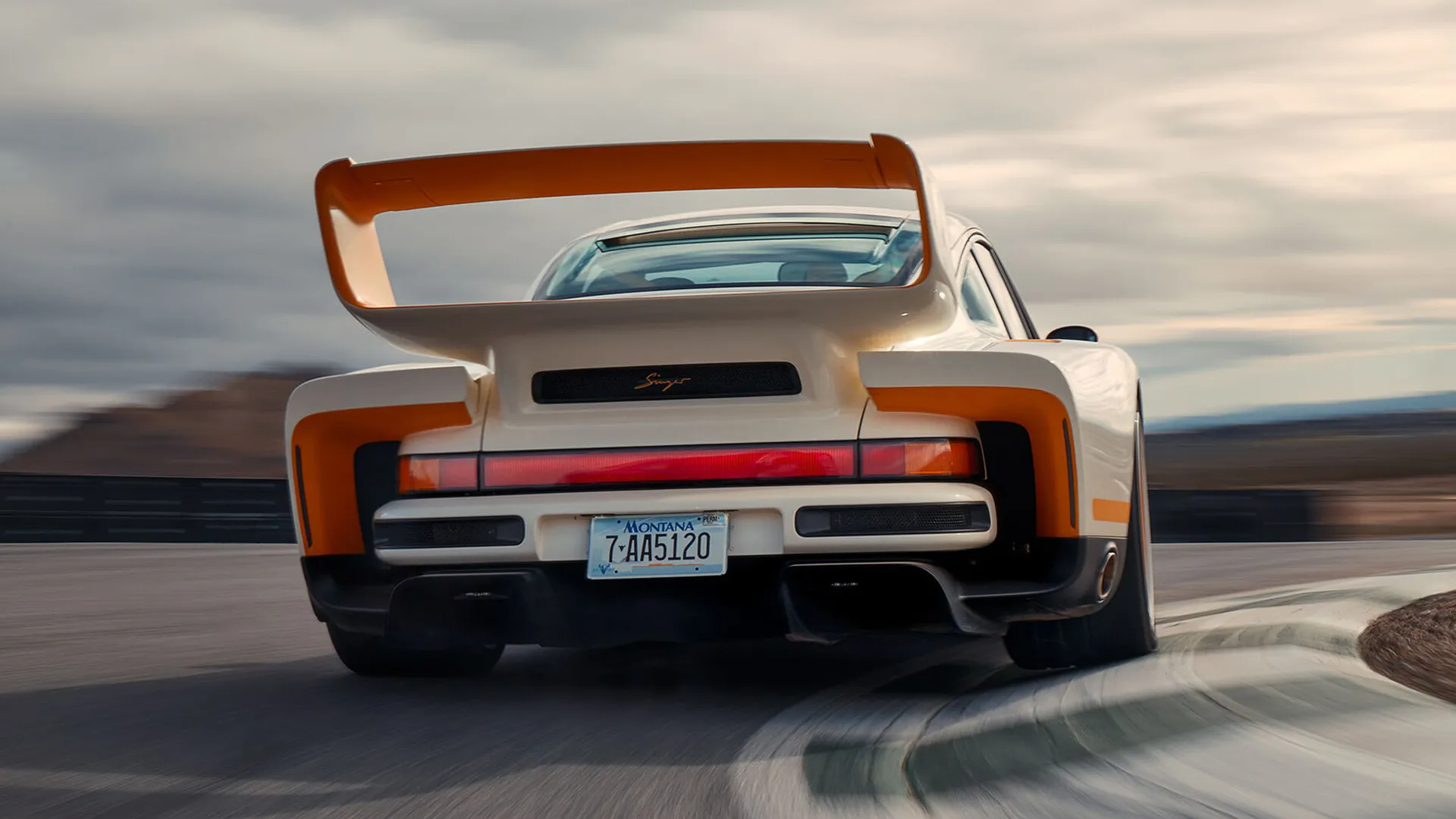
At Willow Springs, I drove it until the fuel light came on. Couldn’t resist. And this despite conditions being more Cardiff than California. It rained. Willow has no drainage, so puddles sat on the track and the DLS would wriggle across them. But I was confident it was looking after me—not least because it was so communicative through suspension and steering.
Just don’t get too greedy with speed on the way into or out of corners. You’ve got to slow it down and get the front end turning first, or it’ll just understeer. Try to push past that with power alone and you’ll probably eventually succeed, but you won’t be in a happy place as you’ll be in a world of scrappy, sudden oversteer.
Instead, go in deep on the magnificent brakes (Brembo’s top-line carbon ceramics), get everything pointed in the right direction, and then feed the power in. In other words, get it straight, then sit back and enjoy the take-off. It’s still an old-school Porsche with old-school Porsche mannerisms. There’s a level of finesse and capability alien to a 35-year-old Porsche, but this is still not as clean, direct, forgiving, and effortlessly fast as a new supercar such as Ferrari’s 849 Testarossa. No, it’s way more engaging than that.
But it obviously can skid about quite nicely.
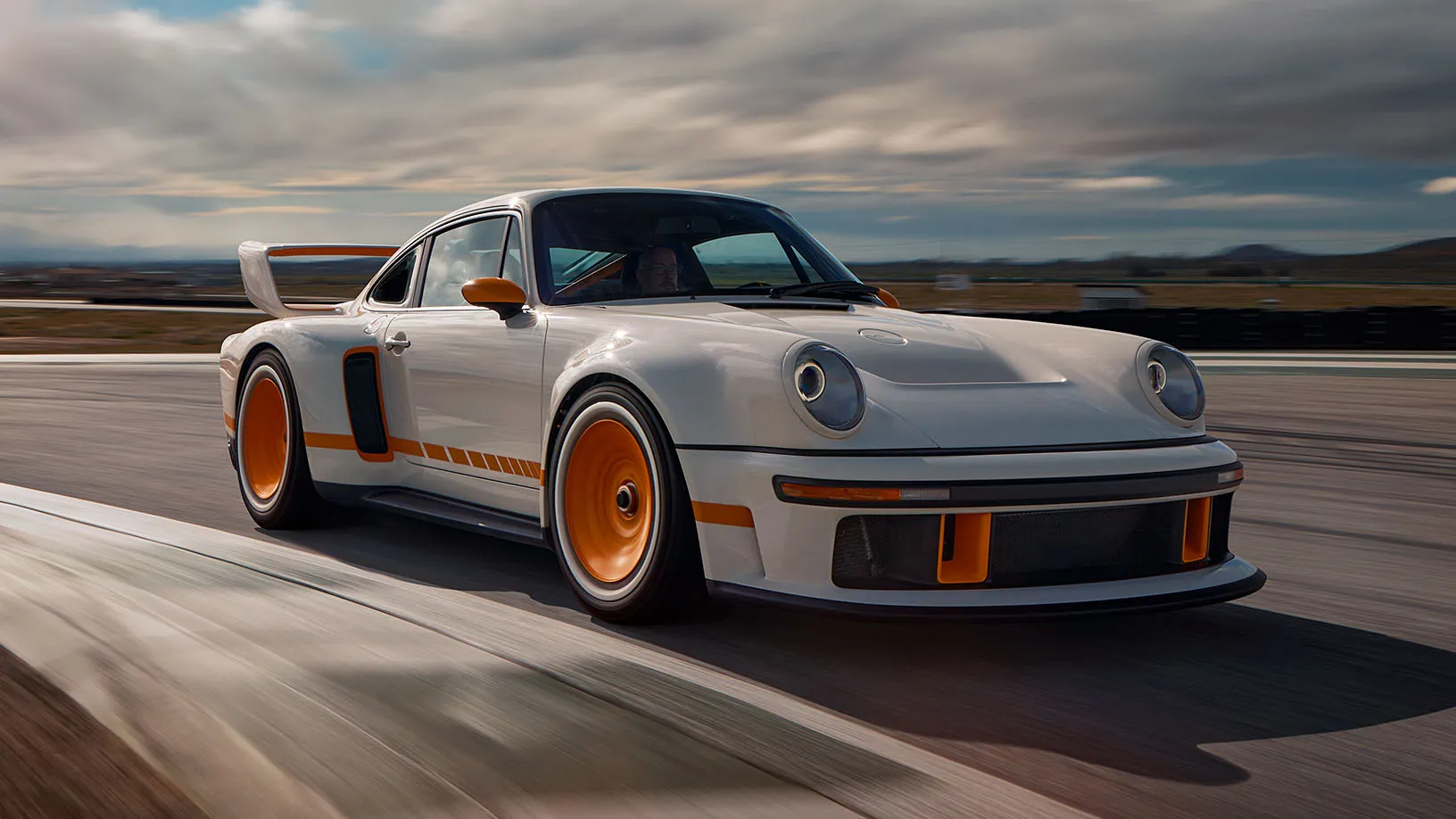
It can, which was a surprise. Partly because it has good steering lock, mainly because the torque is so accessible and progressive. And the suspension squats just so. The whole package, in other words.
And what about downforce?
I suspect Singer was more concerned about skids than lap times. They freely admit it’s not a lap time car, and they have no idea how fast it accelerates or what the top speed is, beyond that it’s geared for 351kph and has been beyond 321kph a few times. Likewise, they make no claims about actual downforce figures. They just want the wing to look cool and not cause any handling issues.
When I drove it on track, development driver Marino Franchitti insisted it was best in low-downforce mode (the rear wing’s top element adjusts to three different angles). More grip at the rear through high corners tends to lever the nose up and introduce more understeer.
How is it compared to the naturally aspirated DLS?
It’s a very different car indeed. That is light, supple, rev-hungry, and intoxicating. The Turbo is rolling thunder, heavier in your hands, more muscular and boisterous. You have to plan more, but the rewards are just as great.
And I mean that. Before I drove the DLS Turbo, I feared it might be a bit of a blunt instrument, and although it’s not as deft as the regular DLS, the slingshot thrust is downright addictive. Put it like this: The DLS made me tingle with excitement; in the DLS Turbo, I trembled with excitement.
Didn’t Singer say it was targeting the Ferrari F40?
Correct. Singer wanted its take on the Turbo to be as explosive, rampant, and wild as the iconic F40. It’s not as raw as that, but then you wouldn’t want it to be as it would mean doing without power steering, assisted brakes, and any form of traction control. But the way the turbos hit, that sense that there’s more power than the chassis can cope with, that tension under load...that’s all there. It’s thoroughly capable of giving you a bit of a scare, but in a modern way.
Wrap it up for me.
It’s a big, friendly monster of a car.
More photos of the Singer DLS Turbo:
NOTE: This article first appeared on TopGear.com. Minor edits have been made.